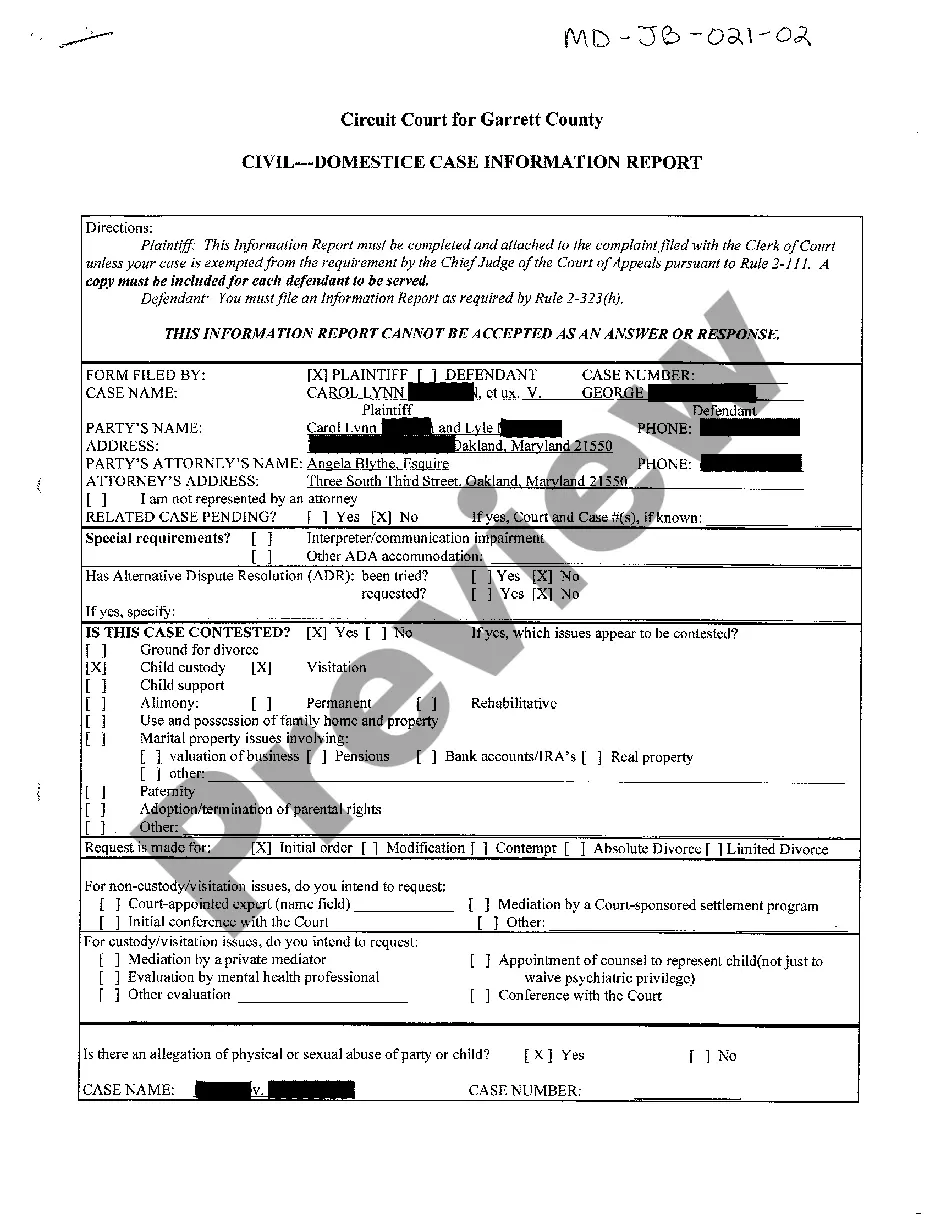
Arizona Motion and Affidavit of Judgment by Default Without Hearing
About this form
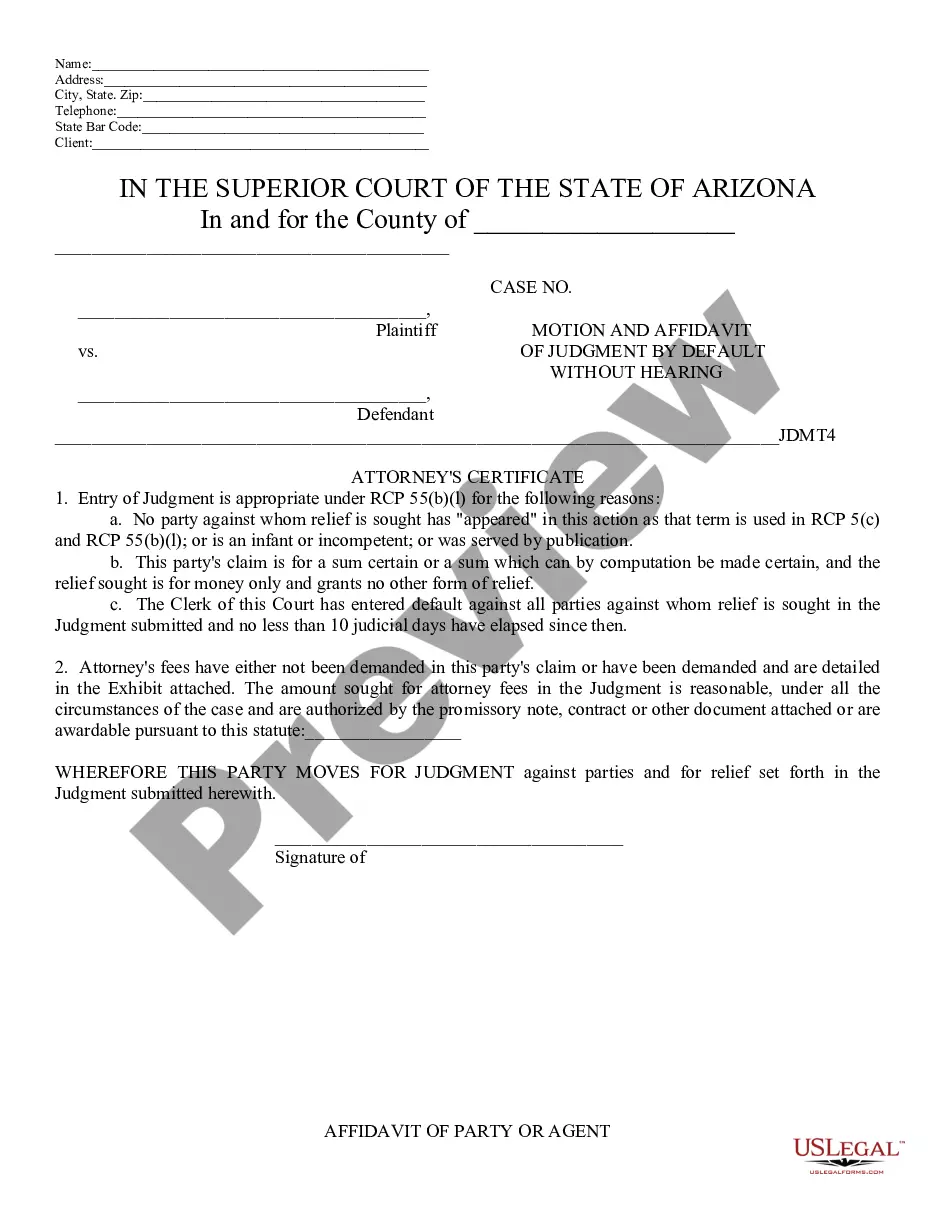
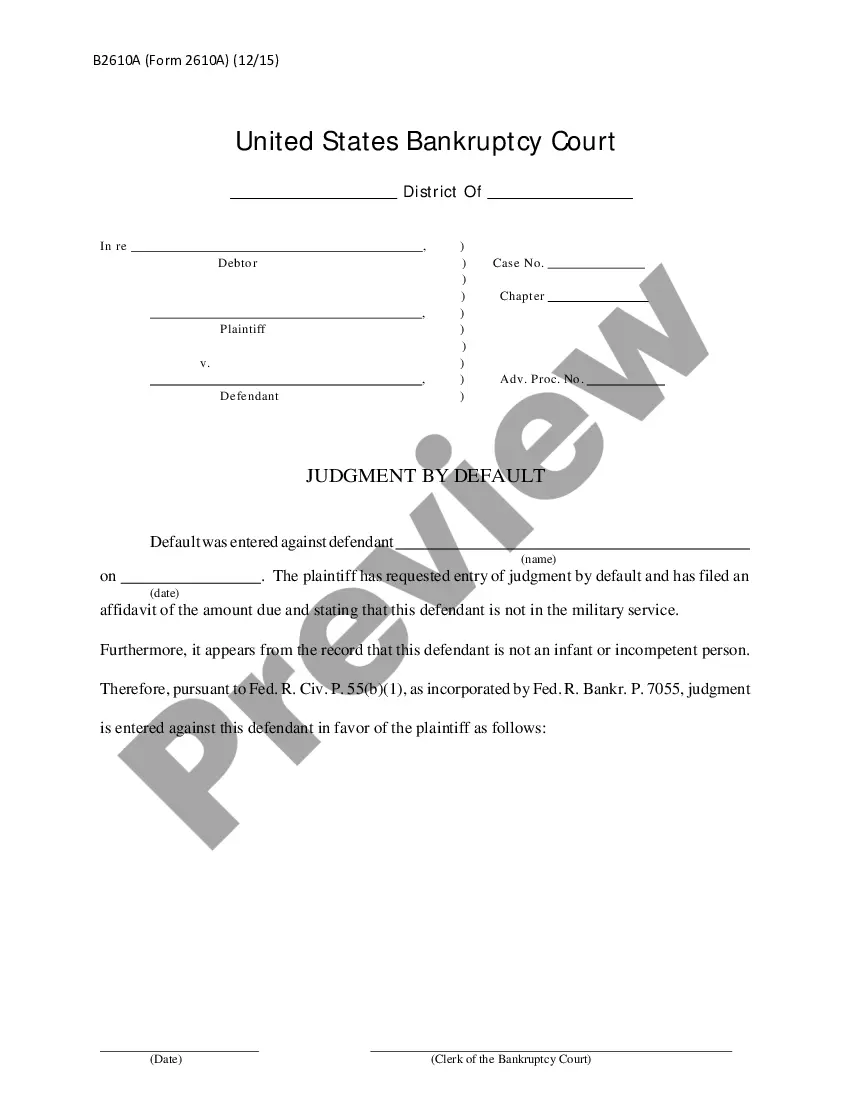
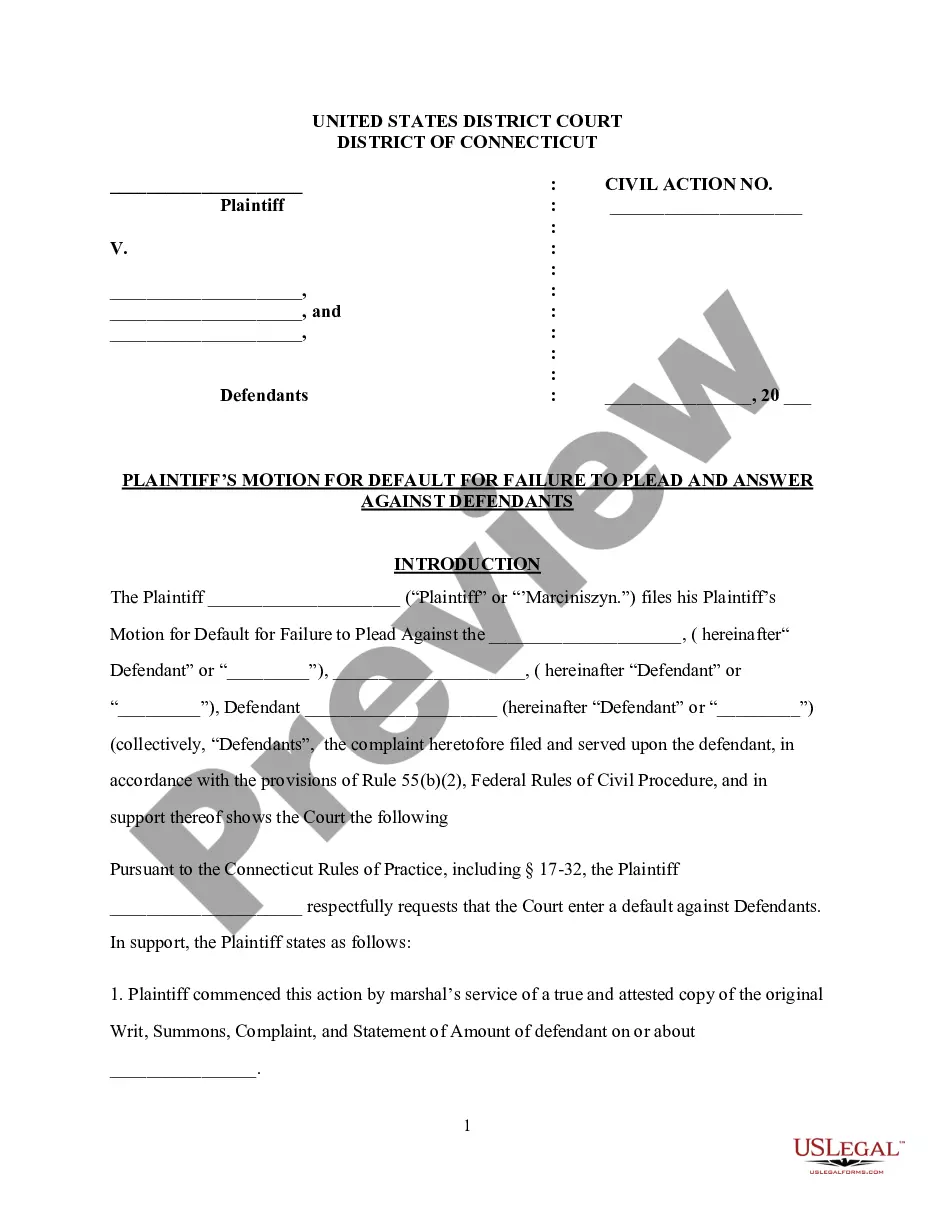
The Motion and Affidavit of Judgment by Default Without Hearing is a legal document used to request a court judgment when the other party has not responded or appeared in the case. Unlike other motions, this form allows you to seek a default judgment without needing a court hearing, streamlining the process for obtaining relief when the opposing party is absent. This motion is designed for situations where only financial compensation is sought and no additional forms of relief are necessary.
Main sections of this form
- Address and contact information of the party filing the motion.
- Details of the case including the case number and parties involved.
- Certification of attorney stating the reasons for seeking default judgment.
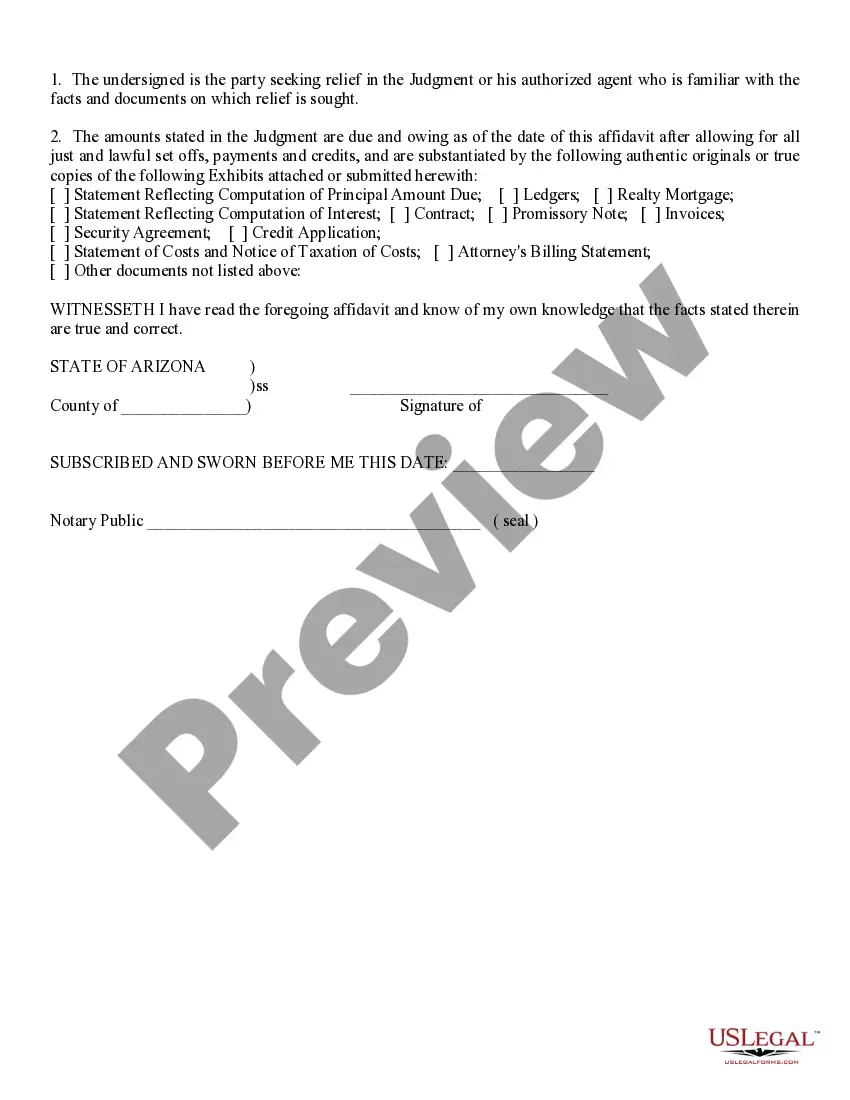
- Affidavit from the party or authorized agent confirming amounts due and evidence provided.
- Signature fields for the party and notary public for verification.
When to use this document
This form is used in circumstances where the opposing party has failed to respond to a lawsuit, and you wish to secure a judgment for money owed. It is particularly useful for cases involving breach of contract, unpaid debts, or other financial claims where a clear sum is established, and you have complied with the procedural requirements of notifying the other party.
Who can use this document
- Individuals or businesses that are plaintiffs in a civil case.
- Parties seeking a judgment due to the non-response of a defendant.
- Those looking for a legal remedy for a financial claim.
How to complete this form
- Fill in your address and contact information at the top of the form.
- Provide the details regarding the case, including case number and names of the parties involved.
- Include the reasons for seeking a default judgment in the attorney's certification section.
- Complete the affidavit by stating the amounts owed and attaching supporting evidence.
- Sign and date the affidavit in the presence of a notary public.
Notarization guidance
This document requires notarization to meet legal standards. US Legal Forms provides secure online notarization powered by Notarize, allowing you to complete the process through a verified video call, available 24/7.
Get your form ready online
Our built-in tools help you complete, sign, share, and store your documents in one place.
Make edits, fill in missing information, and update formatting in US Legal Forms—just like you would in MS Word.
Download a copy, print it, send it by email, or mail it via USPS—whatever works best for your next step.
Sign and collect signatures with our SignNow integration. Send to multiple recipients, set reminders, and more. Go Premium to unlock E-Sign.
If this form requires notarization, complete it online through a secure video call—no need to meet a notary in person or wait for an appointment.
We protect your documents and personal data by following strict security and privacy standards.

Make edits, fill in missing information, and update formatting in US Legal Forms—just like you would in MS Word.

Download a copy, print it, send it by email, or mail it via USPS—whatever works best for your next step.

Sign and collect signatures with our SignNow integration. Send to multiple recipients, set reminders, and more. Go Premium to unlock E-Sign.

If this form requires notarization, complete it online through a secure video call—no need to meet a notary in person or wait for an appointment.

We protect your documents and personal data by following strict security and privacy standards.
Common mistakes to avoid
- Failing to provide accurate case details or party information.
- Not attaching necessary supporting documents to substantiate the amounts claimed.
- Omitting the notarization, which can invalidate the affidavit.
- Submitting the motion without waiting the required judicial days after the default is entered.
Advantages of online completion
- Instant access to download the form at any time.
- Editability allows users to personalize the document while ensuring compliance with legal language.
- Access to templates created by licensed attorneys, ensuring the forms are accurate and up-to-date.
Looking for another form?

Form popularity
FAQ
Vacating a judgment in Arizona requires filing a motion that clearly states your reasons for the request. This could be due to various factors, including new evidence or a failure to appear due to unforeseen circumstances. Using the Arizona Motion and Affidavit of Judgment by Default Without Hearing can assist in presenting your case effectively. Legal resources are available through platforms like uslegalforms to help you navigate this process.
Getting a set aside in Arizona involves filing a specific motion with the court where the judgment was issued. You will need to present valid reasons, such as lack of notification or an error in the process. The Arizona Motion and Affidavit of Judgment by Default Without Hearing may simplify this procedure for you. Reaching out to a legal expert can provide guidance tailored to your situation.
To remove a default judgment in Arizona, you typically need to file a motion to set aside the judgment. This process often requires showing that you did not receive proper notice of the lawsuit or that you have a strong defense against the claim. Utilizing the Arizona Motion and Affidavit of Judgment by Default Without Hearing can streamline your approach. Consider consulting a legal professional to ensure you meet all the necessary requirements.
A default hearing in Arizona occurs when one spouse does not respond to a divorce petition. The petitioner can request the court to proceed without the absent party. In such cases, an Arizona Motion and Affidavit of Judgment by Default Without Hearing can simplify the process, ensuring you receive a fair resolution in your divorce case, even if the other spouse does not participate.
A Rule 11 motion in Arizona is a request made to the court claiming that an opposing party has acted in bad faith or engaged in frivolous litigation. By filing this motion, you seek to have the court impose sanctions. While this is unrelated to the Arizona Motion and Affidavit of Judgment by Default Without Hearing, understanding Rule 11 is important for navigating legal disputes.
To set aside a default judgment in Arizona, you must file a motion with the court demonstrating a valid reason for not responding initially. Common grounds include lack of proper notice or excusable neglect. Using the Arizona Motion and Affidavit of Judgment by Default Without Hearing can also be advantageous if you believe your case warrants reconsideration.
Yes, judgments do expire in Arizona after a certain period. Specifically, a judgment is valid for five years but can be renewed. When considering an Arizona Motion and Affidavit of Judgment by Default Without Hearing, it is crucial to keep track of these timelines to ensure you can enforce your rights effectively.
The default judgment rule in Arizona allows a party to win a case when the opposing side fails to respond. If the defendant does not file a response within the specified timeframe, you may file an Arizona Motion and Affidavit of Judgment by Default Without Hearing. This process helps expedite resolution in your favor without the need for a hearing.
In the context of a default judgment, both a motion and an affidavit play essential roles. A motion requests the court to grant the judgment, while an affidavit serves as a sworn statement providing evidence that supports the claim for default. Together, these documents are used to effectively communicate the request for a judgment. By utilizing the Arizona Motion and Affidavit of Judgment by Default Without Hearing, you can streamline the process and ensure all necessary components are properly addressed.
Once a default judgment is issued in Arizona, the plaintiff can commence enforcement actions to collect the judgment amount. This may include garnishing wages, seizing assets, or placing liens on property. If you find yourself facing such a situation, it's vital to understand your options and consult legal resources. The Arizona Motion and Affidavit of Judgment by Default Without Hearing provides clear pathways to navigate the implications of default judgments efficiently.