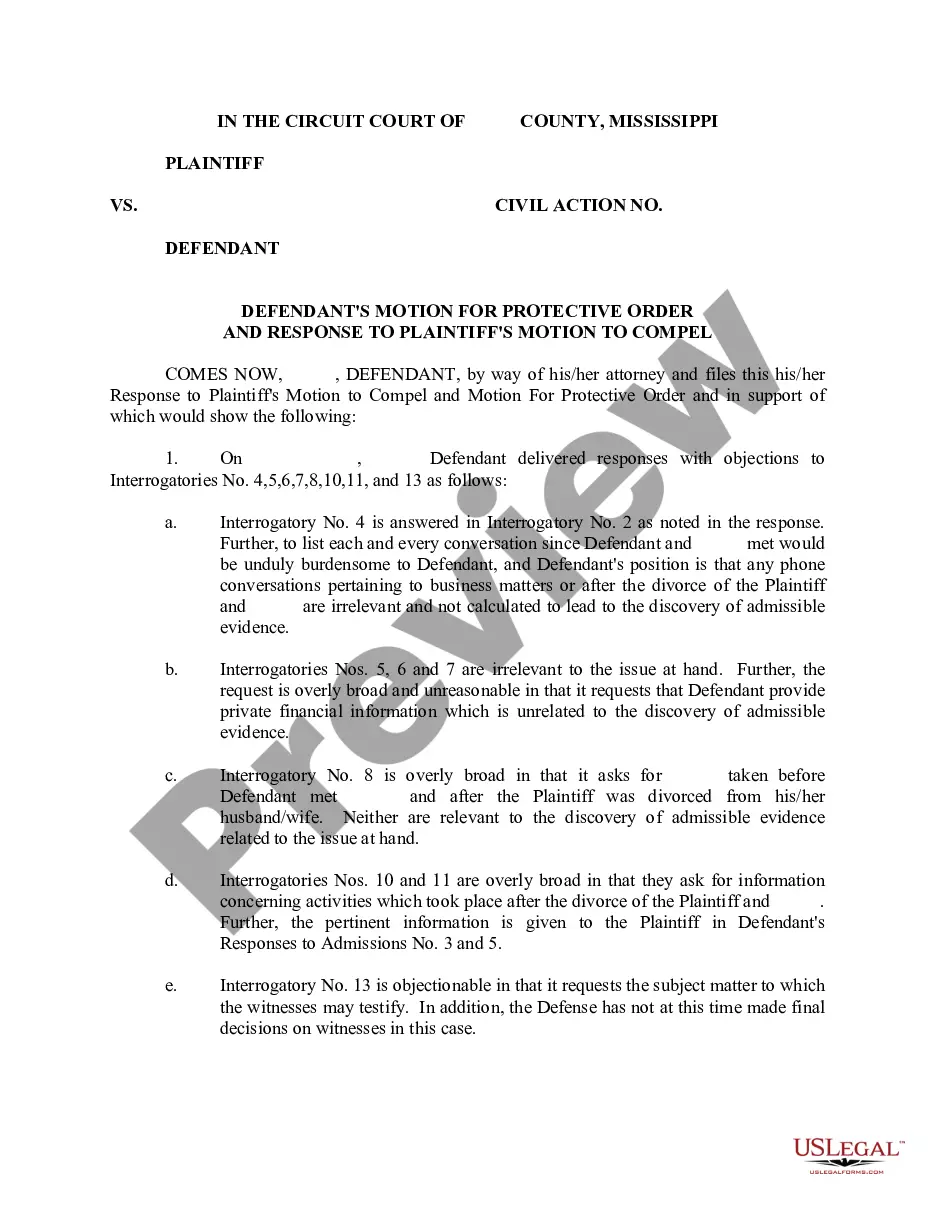
Asset Purchase and Assumption of Liabilities Agreement
What this document covers
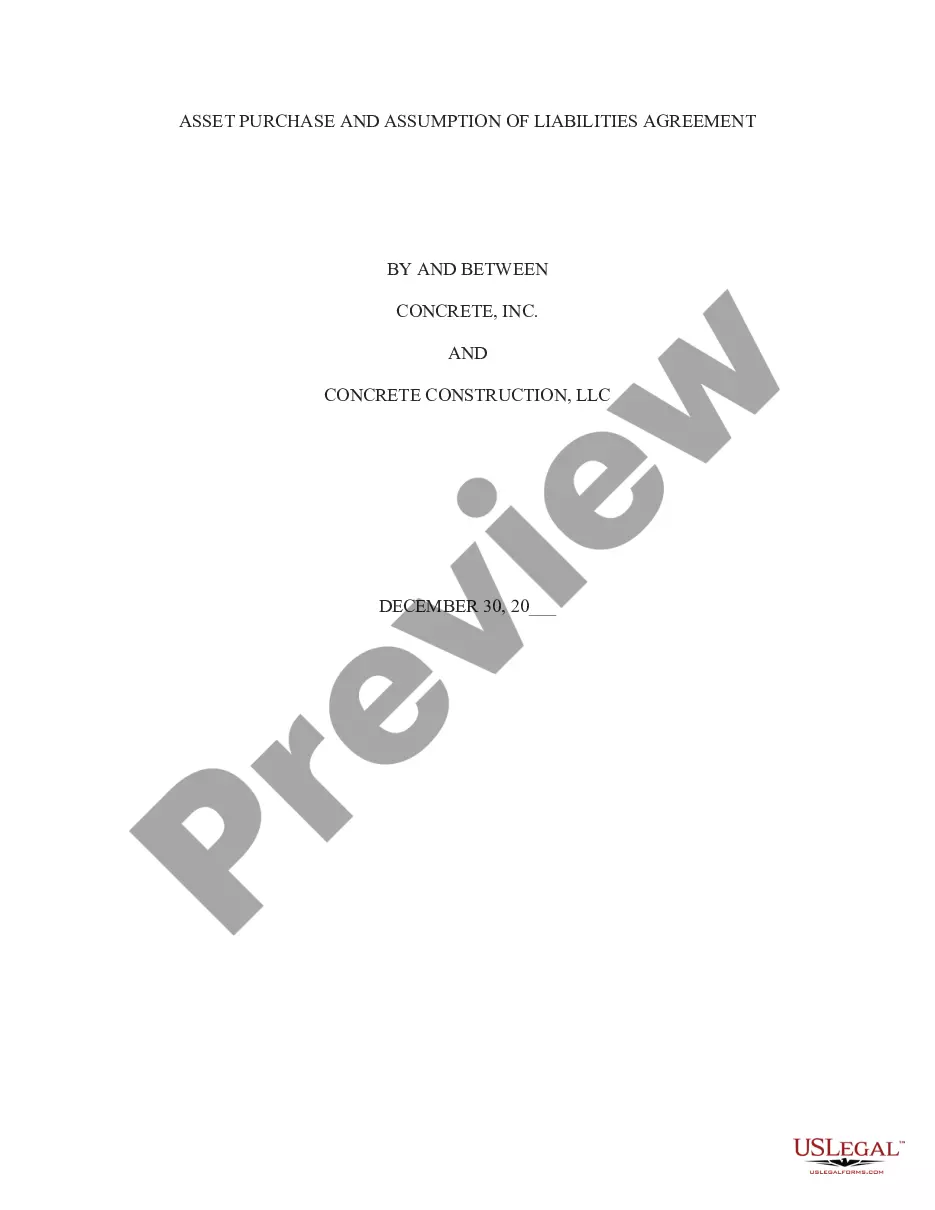
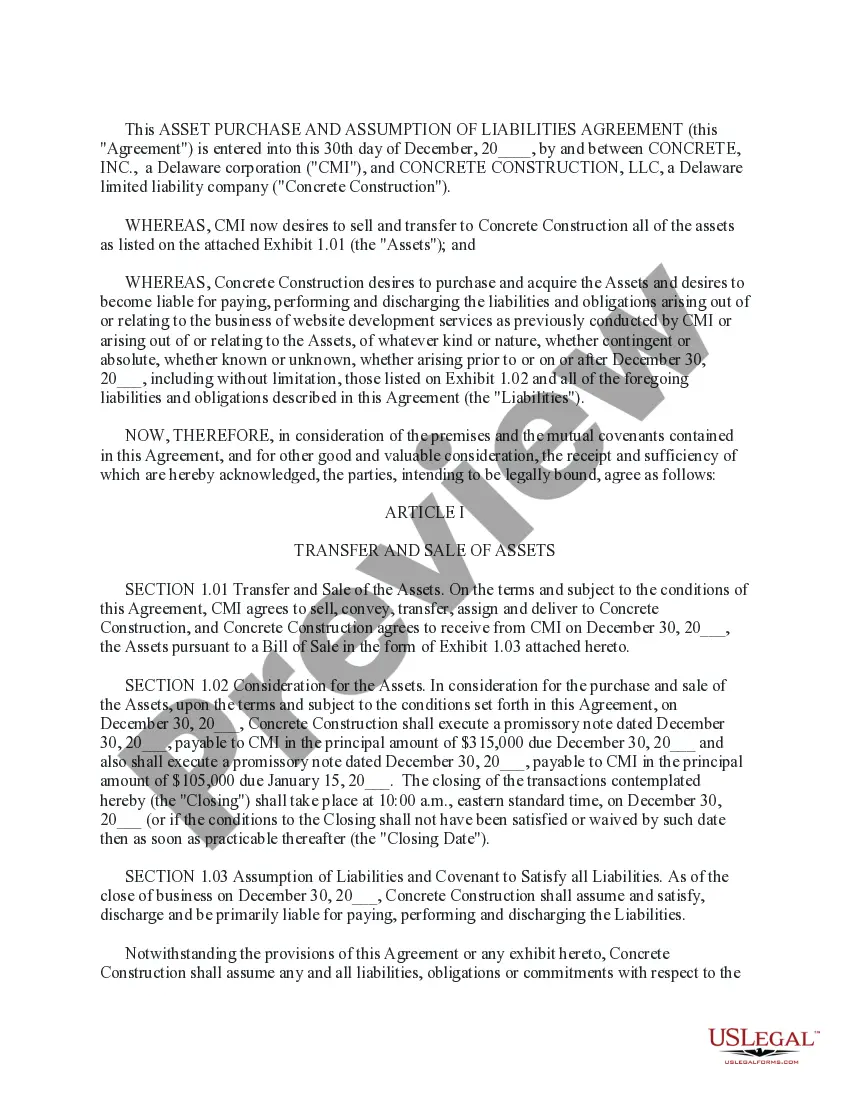
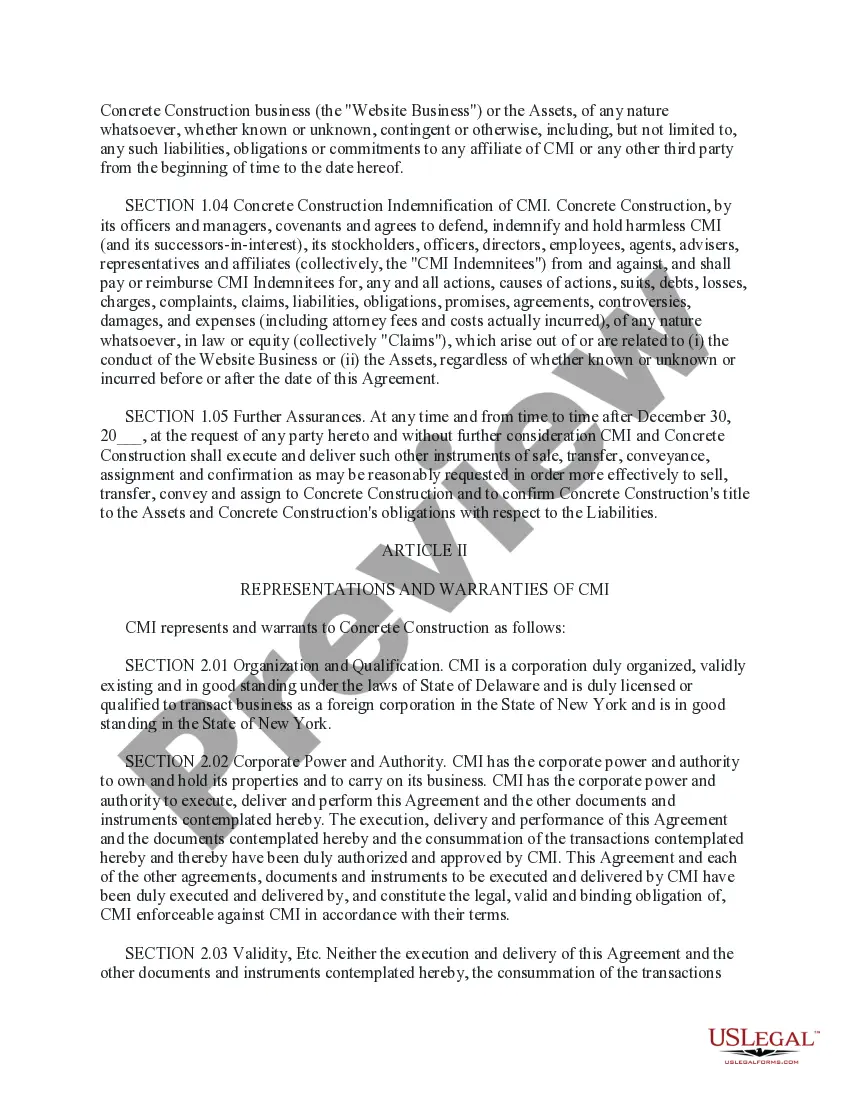
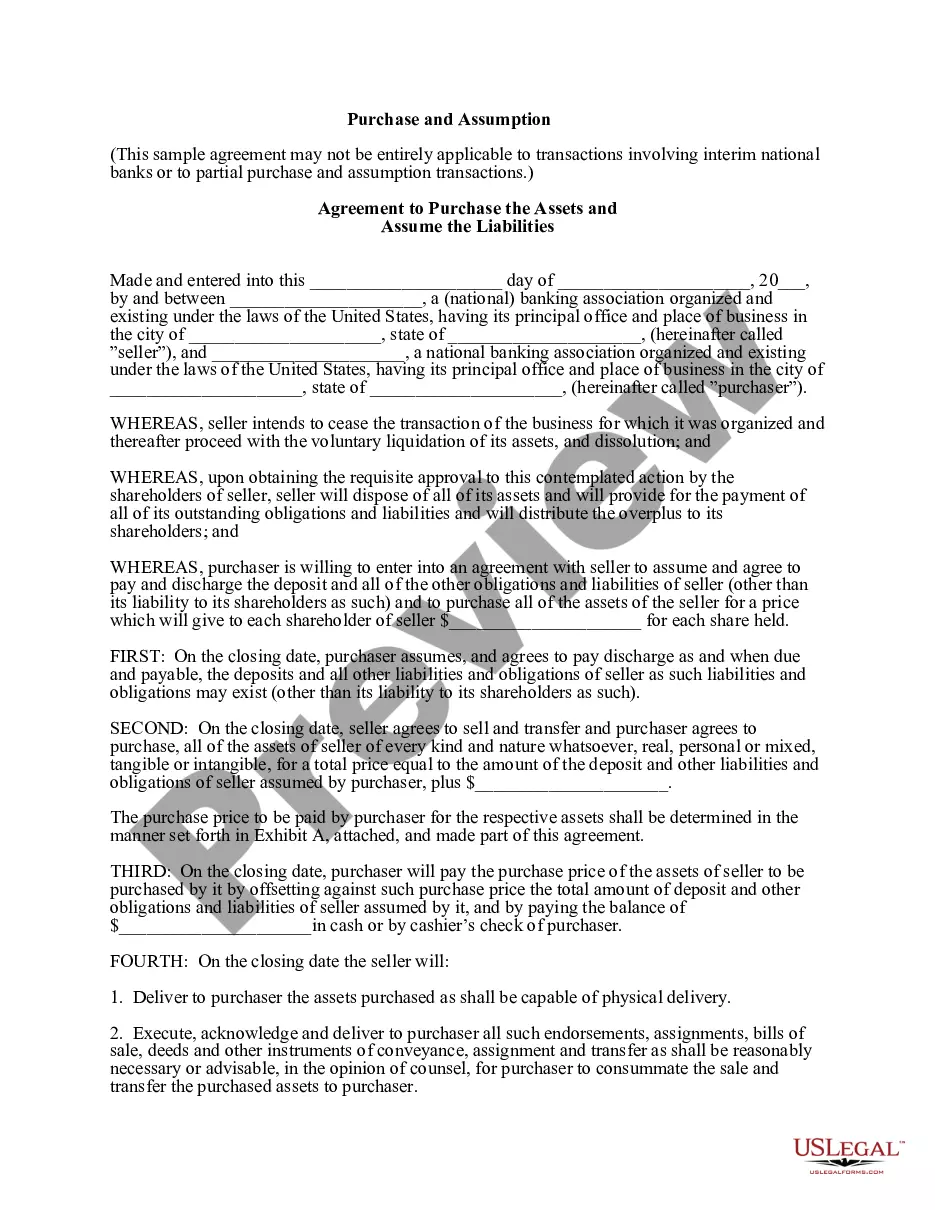
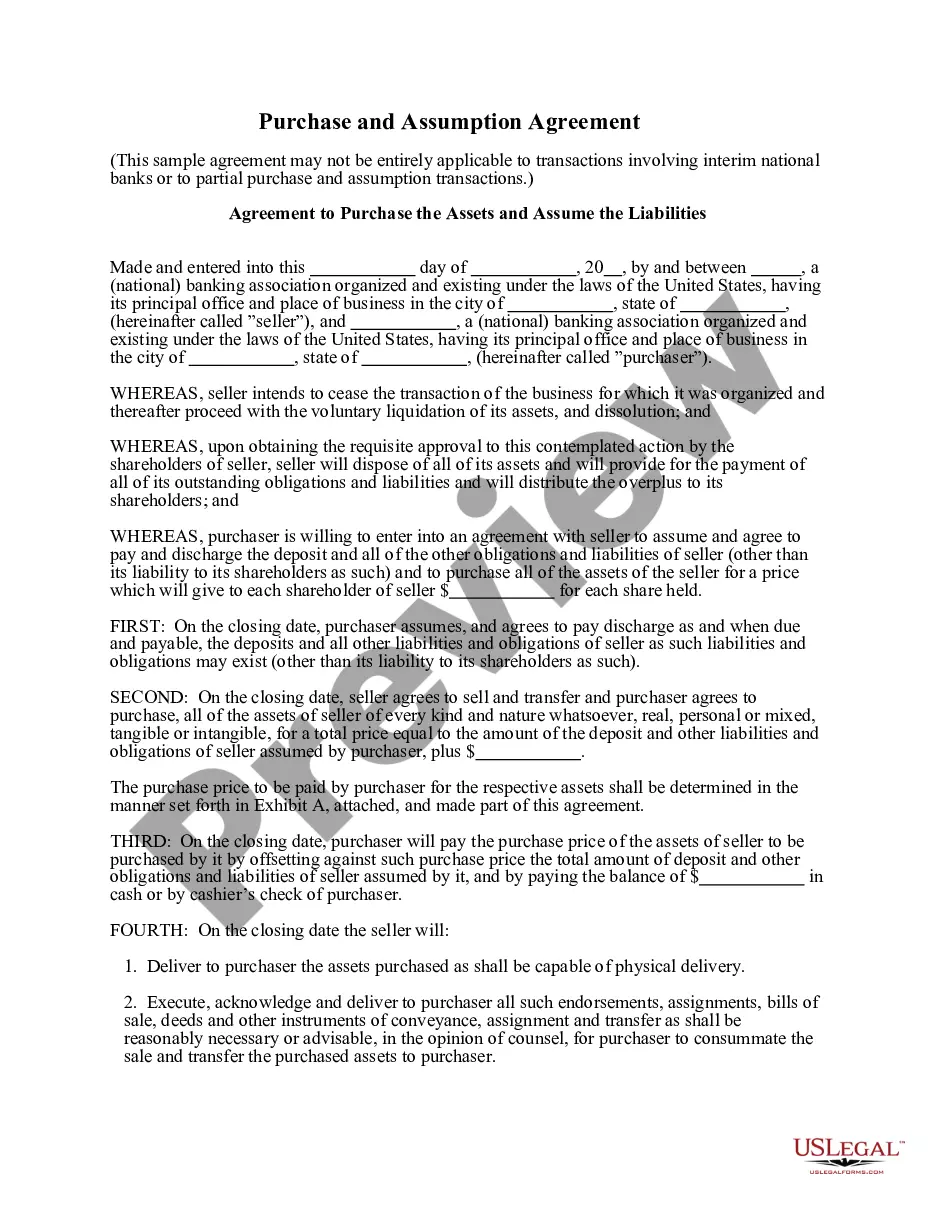
The Asset Purchase and Assumption of Liabilities Agreement is a legal document designed to facilitate the transfer of assets and liabilities from one company to another. This form is crucial when a business is being sold, enabling the buyer to assume certain debts and obligations related to the purchased assets. Unlike other agreements that may only address asset transfers, this form specifically allows one party to take on responsibilities of the selling company, making it an essential tool for a smooth business acquisition process.
Main sections of this form
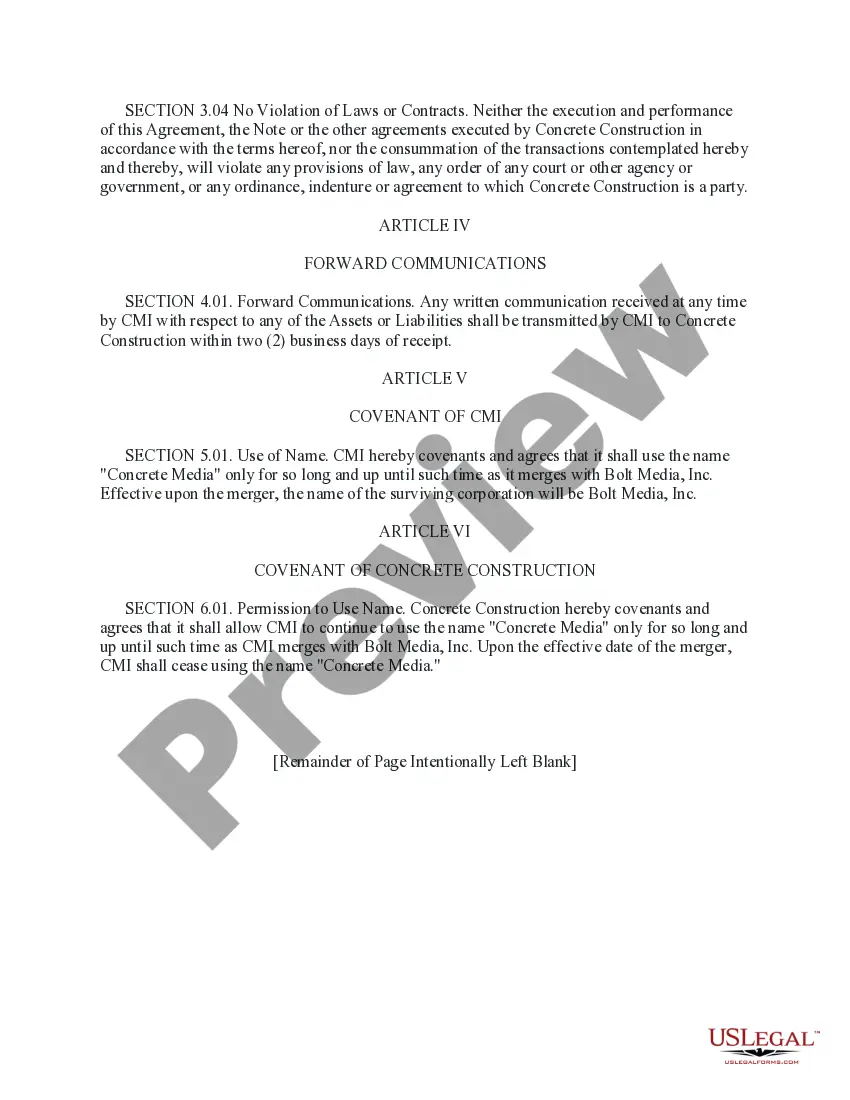
- Transfer and Sale of Assets: Details the assets being sold and transferred.
- Assumption of Liabilities: Outlines the specific liabilities the buyer agrees to take on.
- Consideration: Specifies the financial arrangements, including payment terms.
- Indemnification Clause: Details the buyerâs responsibility to protect the seller from liabilities associated with the transferred assets.
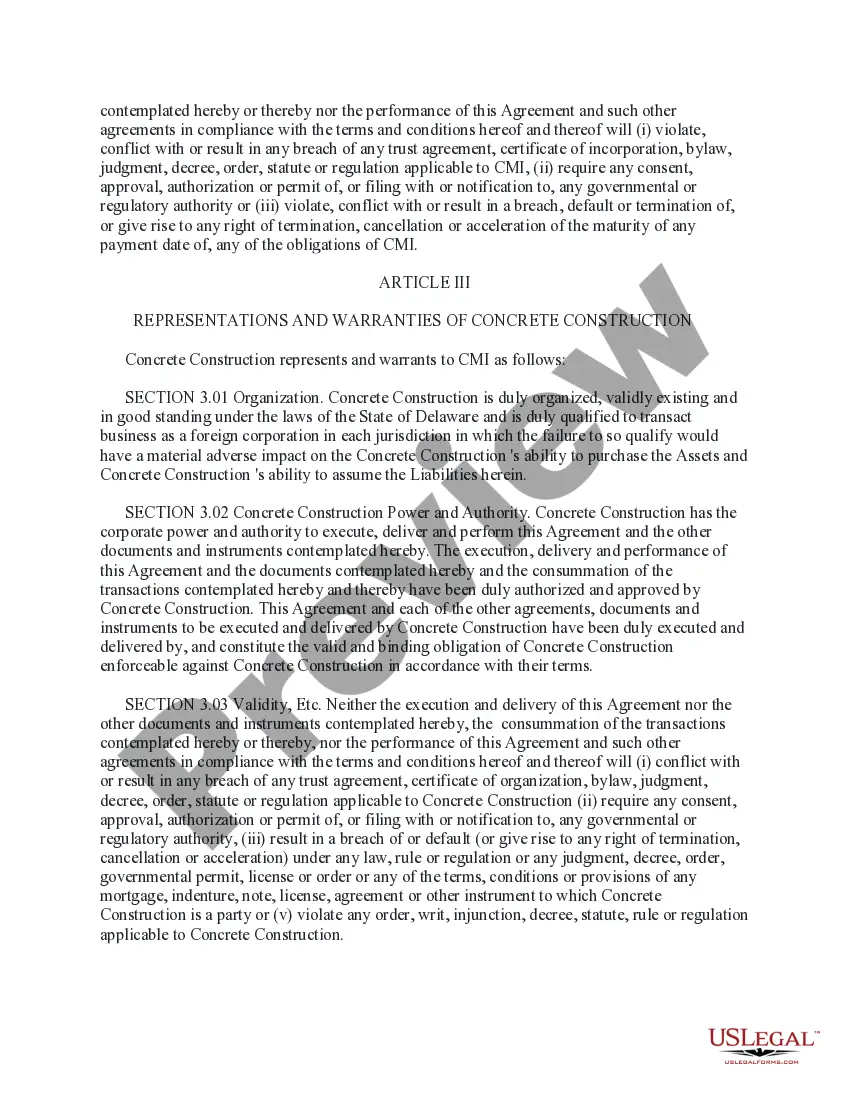
- Representations and Warranties: Provides assurances from both parties regarding their authority to enter the agreement.

When to use this document
This form is typically used in situations where one company intends to purchase the assets of another company while also assuming certain liabilities. Common scenarios include mergers, acquisitions, or when a business is sold as part of a restructuring process. Use this agreement when you want to ensure that liabilities associated with the purchased assets are legally taken over by the buyer, thereby protecting the seller from future claims.
Who can use this document
This form is ideal for:
- Business owners looking to sell their company assets while ensuring the buyer assumes related obligations.
- Purchasers who want to acquire assets from another company and are willing to take on certain liabilities.
- Legal professionals assisting clients with business transactions involving asset purchases.
How to complete this form
- Identify the parties involved: Clearly name the seller and buyer in the agreement.
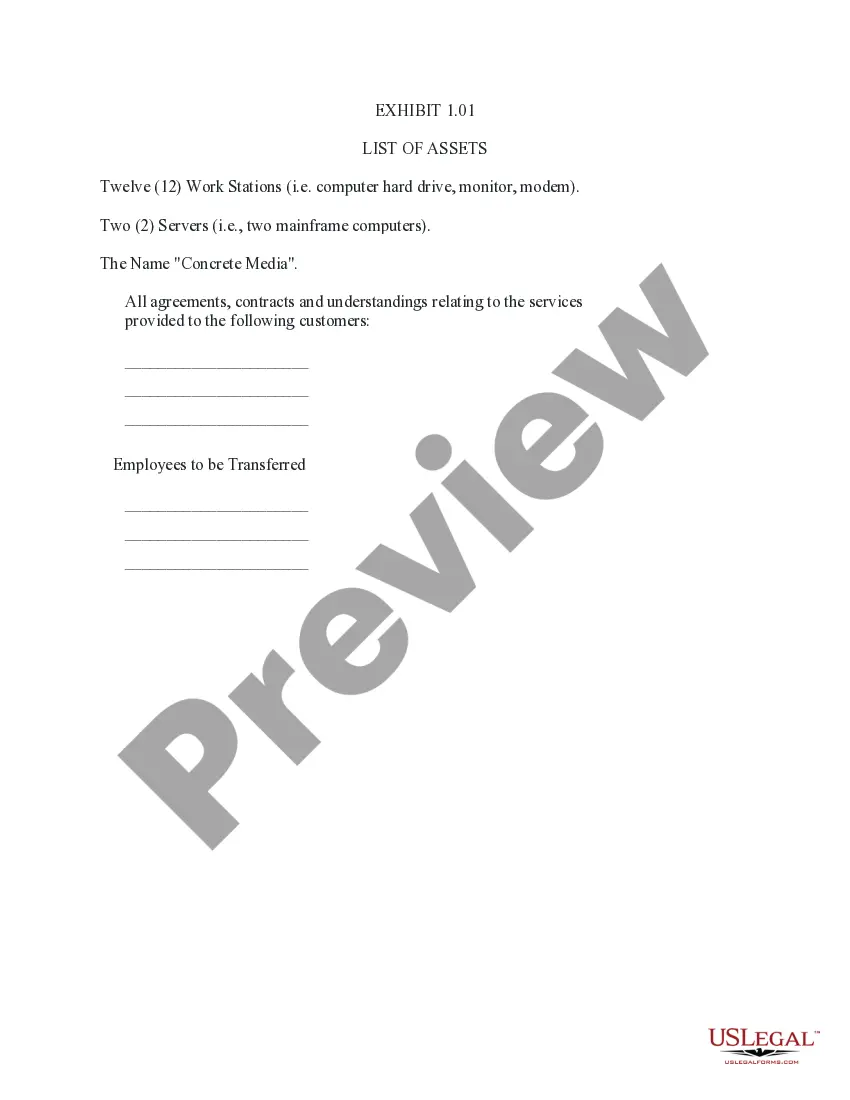
- Detail the assets being sold: Include a comprehensive list of the assets to be transferred.
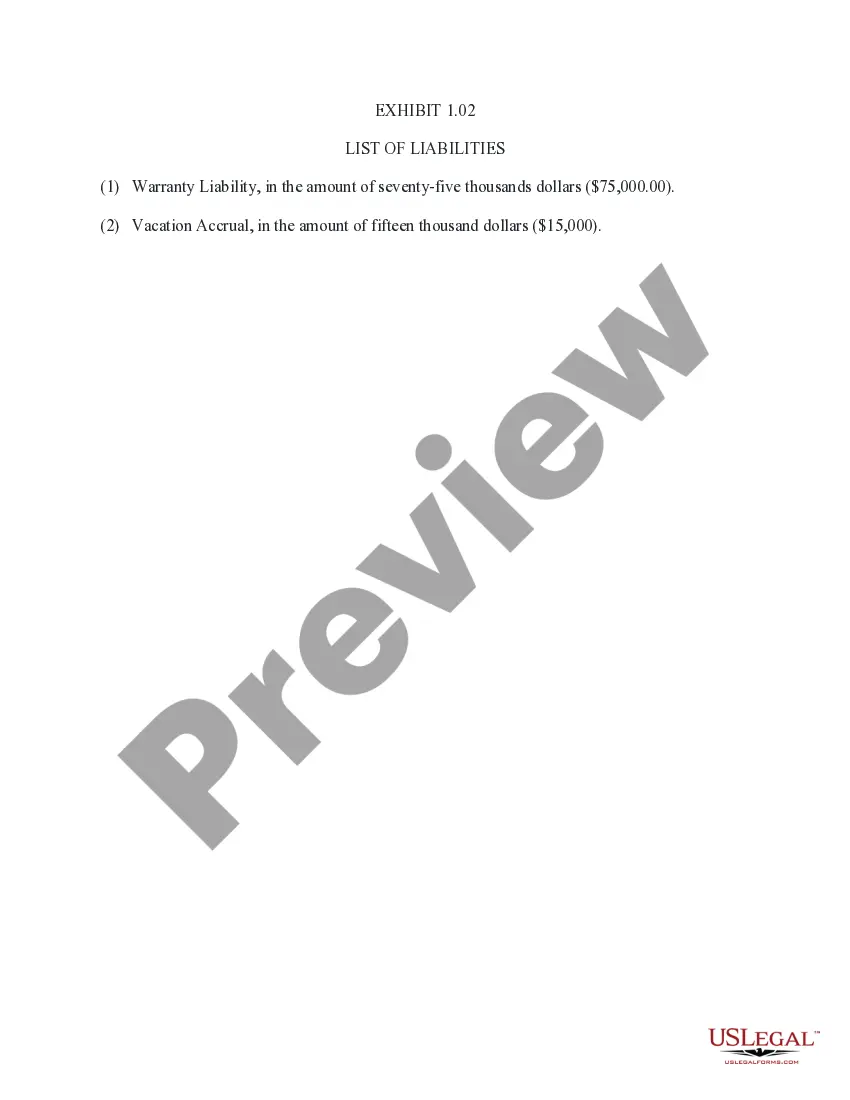
- Specify the liabilities being assumed: Clearly outline which obligations the buyer will take on.
- Determine the consideration: State the payment terms and any promissory notes associated with the transaction.
- Sign and date the agreement: Ensure both parties execute the agreement on the specified closing date.
Notarization guidance
This form does not typically require notarization unless specified by local law. However, it is advisable to check state regulations regarding the validity of business agreements in your jurisdiction.
Get your form ready online
Our built-in tools help you complete, sign, share, and store your documents in one place.
Make edits, fill in missing information, and update formatting in US Legal Forms—just like you would in MS Word.
Download a copy, print it, send it by email, or mail it via USPS—whatever works best for your next step.
Sign and collect signatures with our SignNow integration. Send to multiple recipients, set reminders, and more. Go Premium to unlock E-Sign.
If this form requires notarization, complete it online through a secure video call—no need to meet a notary in person or wait for an appointment.
We protect your documents and personal data by following strict security and privacy standards.
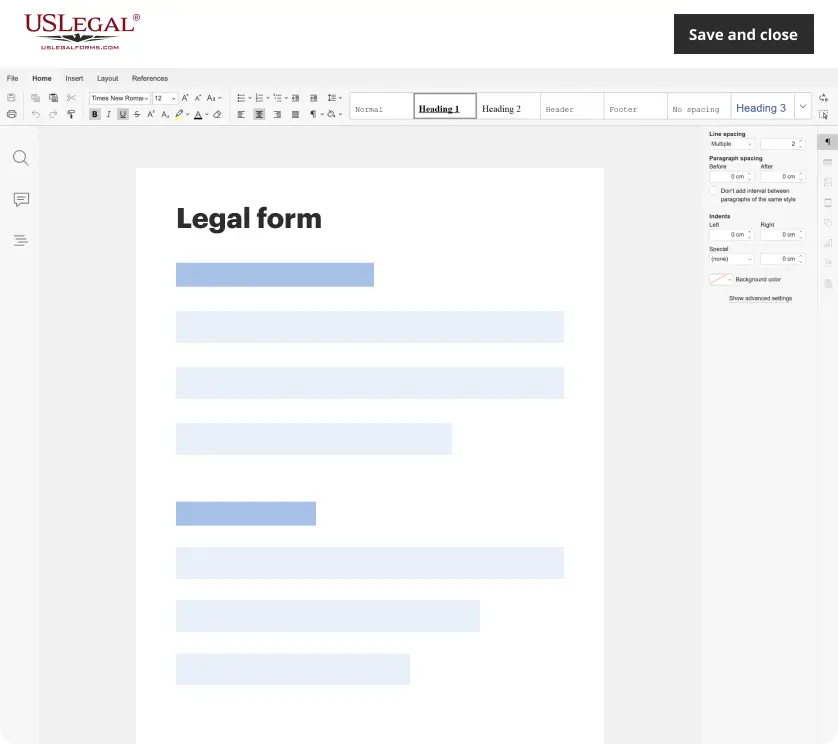
Make edits, fill in missing information, and update formatting in US Legal Forms—just like you would in MS Word.
Download a copy, print it, send it by email, or mail it via USPS—whatever works best for your next step.
Sign and collect signatures with our SignNow integration. Send to multiple recipients, set reminders, and more. Go Premium to unlock E-Sign.

If this form requires notarization, complete it online through a secure video call—no need to meet a notary in person or wait for an appointment.
We protect your documents and personal data by following strict security and privacy standards.
Typical mistakes to avoid
- Failing to clearly identify all assets and liabilities can lead to future disputes.
- Not including proper indemnification clauses, which can leave sellers vulnerable to claims.
- Overlooking state-specific legal requirements that may impact enforceability.
Why complete this form online
- Convenience: Easily download and complete the agreement from anywhere.
- Editability: Modify the template to suit your specific transaction needs.
- Reliability: Access forms drafted by licensed attorneys to ensure legal compliance.
Looking for another form?
Form popularity
FAQ
Under Workers' Compensation Law § 50(3) a former self-insured employer may request to execute a loss transfer agreement, known as an Assumption of Liability Policy ( ALP ), when a Workers' Compensation Board ( Board ) approved private insurance carrier agrees to assume full liability for all remaining self-insured
In general, when a buyer assumes a liability of a seller in a taxable asset sale, the assumption of the liability is included in consideration paid to the seller. However, complications can arise when the seller has not yet claimed a deduction on that liability.
An asset purchase agreement is often drafted towards the end of the negotiation stage. This allows the parties to have a final record of their agreement. The asset purchase agreement essentially operates as a contract. This means it creates legally binding duties on each of the parties involved.
In an asset purchase, the buyer will only buy certain assets of the seller's company. The seller will continue to own the assets that were not included in the purchase agreement with the buyer. The transfer of ownership of certain assets may need to be confirmed with filings, such as titles to transfer real estate.
The Advantages of a Stock Purchase The parties sign the Stock Purchase Agreement and related documents that outline the terms of the deal, and the seller(s) transfer the target company's stock to the purchaser. With this the purchaser assumes all the target company's liabilities.
When a company purchases the assets of another company, the general rule is that all debts and liabilities of the selling company will remain with it and are not assumed by the buying company.
Successor Liability in Asset Sales In general, when a person or company buys the assets of a business, the purchaser is not liable for the pre-existing debts and liabilities of the seller.
In an asset purchase, the buyer agrees to purchase specific assets and liabilities. This means that they only take on the risks of those specific assets. This could include equipment, fixtures, furniture, licenses, trade secrets, trade names, accounts payable and receivable, and more.