Option to Renew that Updates the Tenant Operating Expense and Tax Basis
Understanding this form
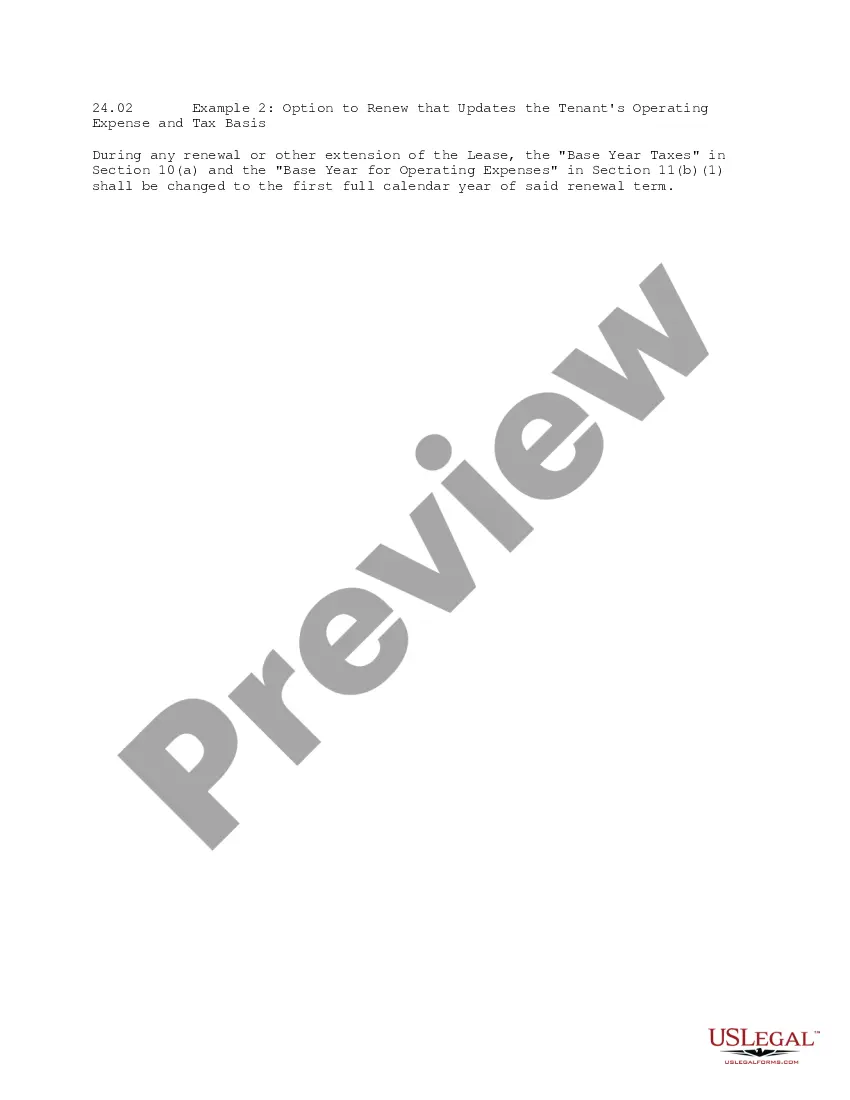
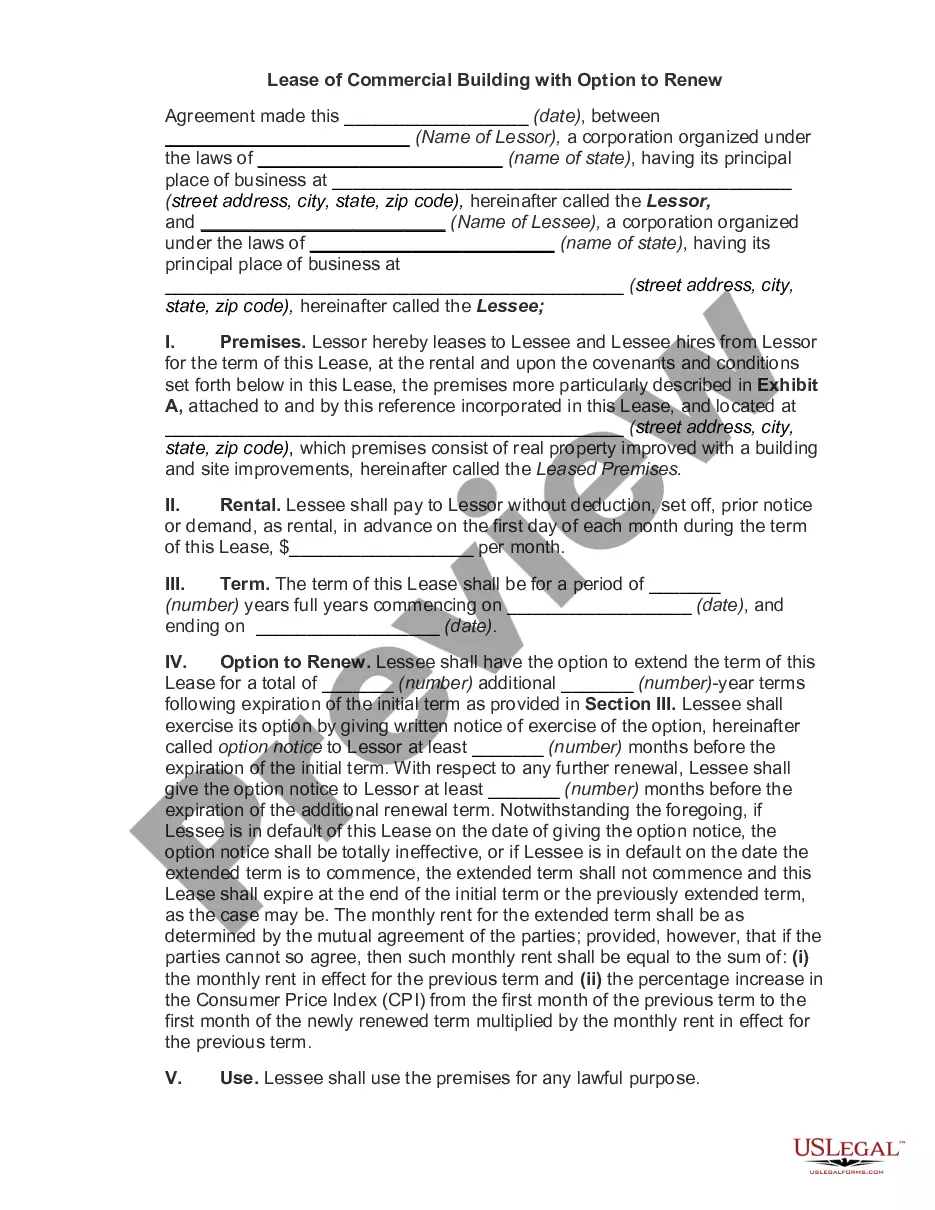
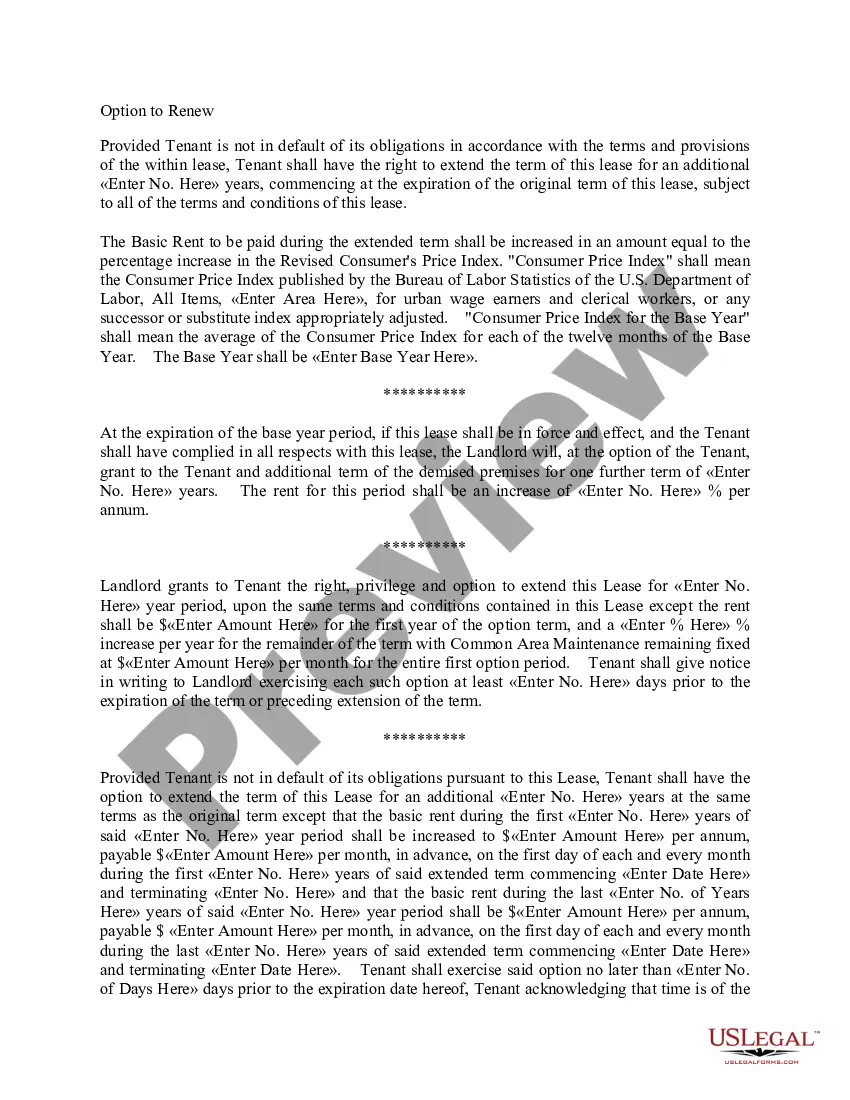
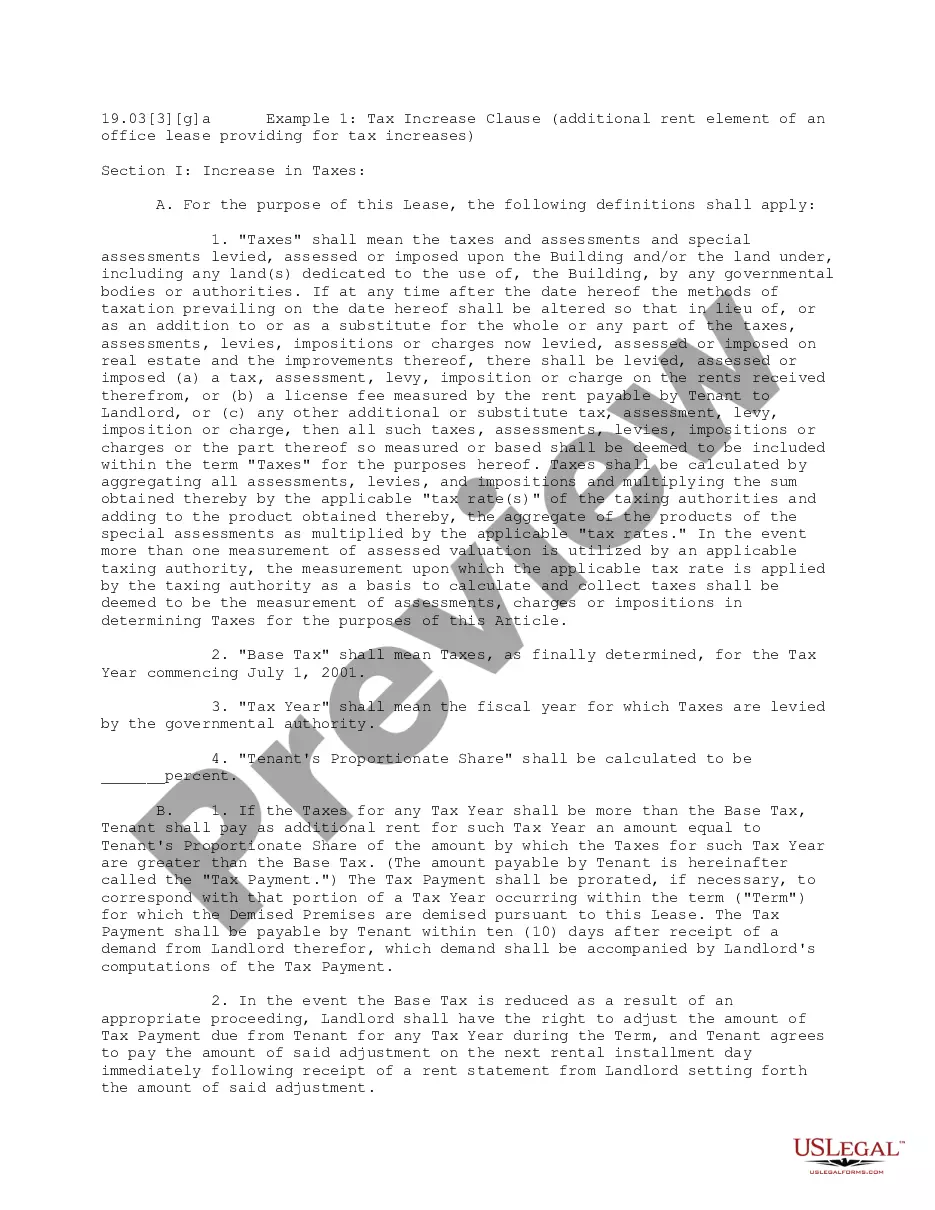
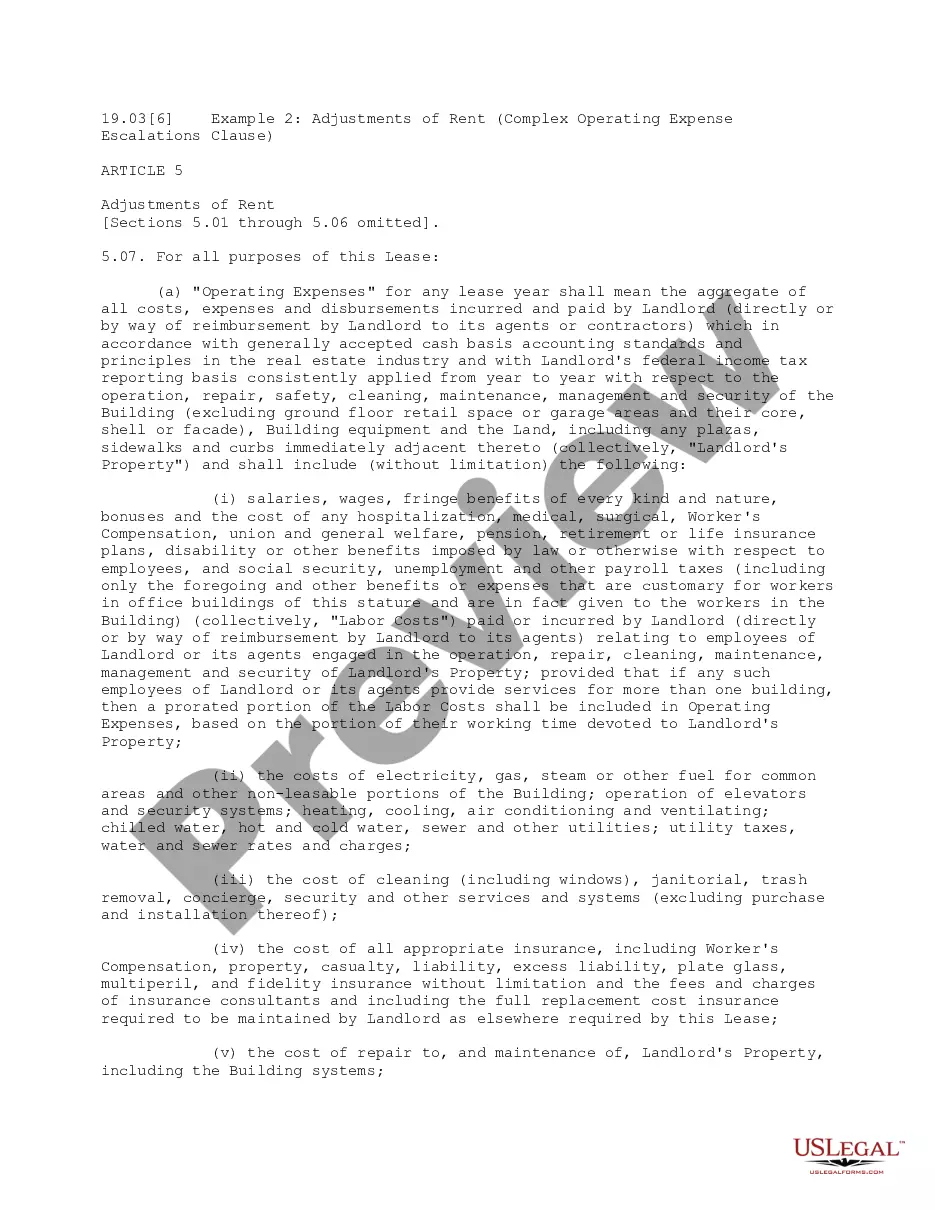
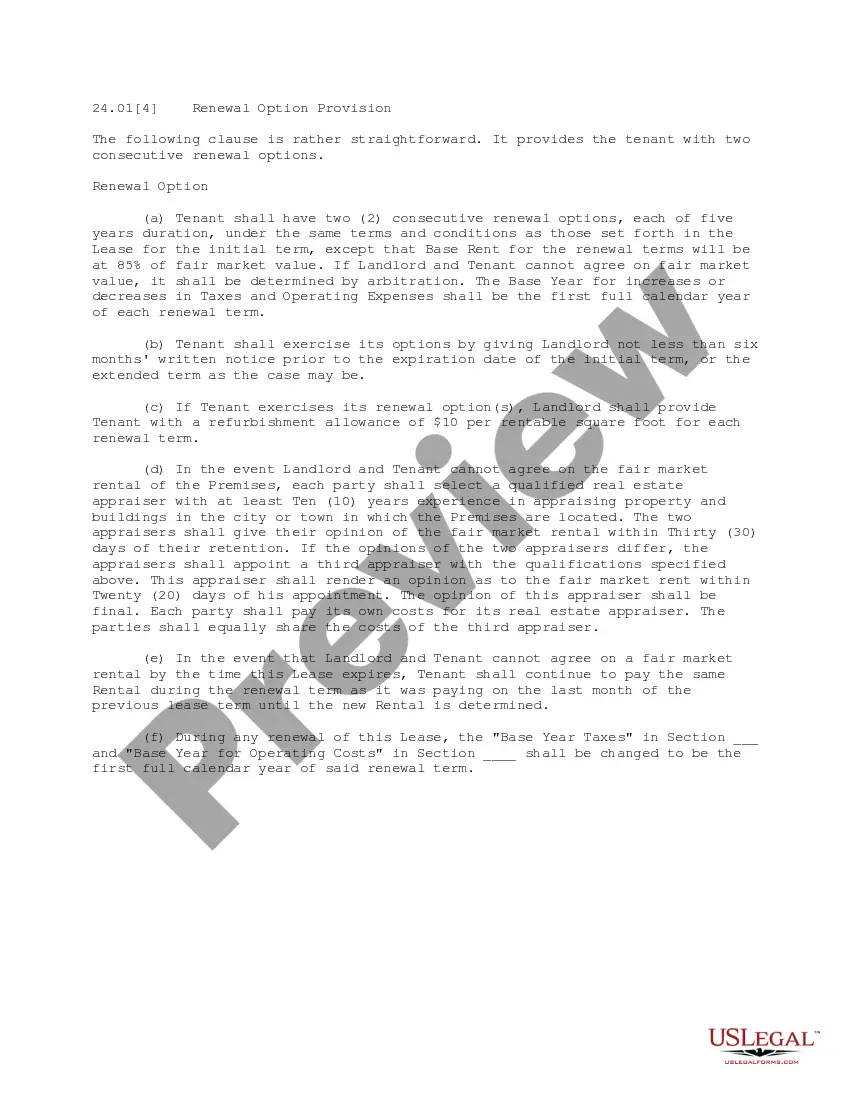
This form is an Option to Renew that Updates the Tenant Operating Expense and Tax Basis, designed specifically for office leases. It allows landlords and tenants to renew their lease agreements while adjusting the Base Year Taxes and Operating Expenses to reflect the first full calendar year of the renewal term. This ensures that the expenses accurately represent the current financial responsibilities of both parties, setting it apart from standard lease renewal forms which might not specifically address these critical expense updates.
What’s included in this form
- Section 10(a): Defines how the Base Year Taxes will be adjusted upon lease renewal.
- Section 11(b)(1): Specifies the changes to the Base Year for Operating Expenses during the renewal term.
- Identification fields: Necessary information about all parties involved and property details.
- Signature lines: For both parties to indicate agreement to the terms of the renewal.
Common use cases
You should use this form when you are entering into a renewal phase for your office lease and need to update your agreements regarding Base Year Taxes and Operating Expenses. It is particularly applicable when you want to formalize the revised terms of expenses after the original lease term ends, ensuring both parties have a clear understanding of their financial obligations moving forward.
Who should use this form
- Landlords looking to renew office leases with accurately updated expense terms.
- Tenants who are negotiating lease renewals that involve changes to operating costs.
- Property managers managing commercial properties with active lease agreements.
Instructions for completing this form
- Identify the parties involved in the lease agreement with their current contact information.
- Specify the property address that is subject to the lease renewal.
- Enter the new Base Year Taxes as defined in your lease agreement.
- Update the Base Year for Operating Expenses to reflect the first full calendar year of the renewal term.
- Both landlord and tenant must sign and date the form to confirm their agreement to the renewal provisions.
Does this document require notarization?
This form does not typically require notarization unless specified by local law. However, conducting a notarization can provide an added layer of legal assurance.
Get your form ready online
Our built-in tools help you complete, sign, share, and store your documents in one place.
Make edits, fill in missing information, and update formatting in US Legal Forms—just like you would in MS Word.
Download a copy, print it, send it by email, or mail it via USPS—whatever works best for your next step.
Sign and collect signatures with our SignNow integration. Send to multiple recipients, set reminders, and more. Go Premium to unlock E-Sign.
If this form requires notarization, complete it online through a secure video call—no need to meet a notary in person or wait for an appointment.
We protect your documents and personal data by following strict security and privacy standards.

Make edits, fill in missing information, and update formatting in US Legal Forms—just like you would in MS Word.

Download a copy, print it, send it by email, or mail it via USPS—whatever works best for your next step.

Sign and collect signatures with our SignNow integration. Send to multiple recipients, set reminders, and more. Go Premium to unlock E-Sign.

If this form requires notarization, complete it online through a secure video call—no need to meet a notary in person or wait for an appointment.

We protect your documents and personal data by following strict security and privacy standards.
Mistakes to watch out for
- Failing to specify the correct property address, leading to potential disputes.
- Not updating both the Base Year Taxes and Operating Expenses accurately.
- Skipping signatures from one or both parties, which invalidates the agreement.
Benefits of using this form online
- Convenience of downloading and completing the form from anywhere at any time.
- Editability allows you to make necessary changes before finalizing the document.
- Access to reliable legal templates drafted by licensed attorneys, ensuring compliance with legal standards.
What to keep in mind
- This form is essential for reflecting financial obligations during lease renewal.
- It provides a clear structure for updating base year taxes and operating expenses.
- Both landlords and tenants benefit from the clarity it offers regarding financial terms.
Looking for another form?
Form popularity
FAQ
The options are: Lessee owns the improvements. If the lessee owns the improvements, then the lessee initially records the allowance as an incentive (which is a deferred credit), and amortizes it over the lesser of either the term of the lease or the useful life of the improvements, with no residual value.
The names and contact information for the landlord and tenant. The address of the rental property and unit number, if applicable. A reference to (or copy of) the original lease. The renewal terms or any changes to the terms of the original lease.
What is Not Included In Operating Expenses? The short answer is they do not typically include capital expenses, debt service, commercial property marketing costs, leasing commissions, tenant improvement allowances, or capital reserves for future repairs.
Accounting for leasehold improvementsLeasehold improvements are assets, and are a part of property, plant, and equipment in the non-current assets section of the balance sheet. Therefore, they are accounted for with other fixed assets in accordance with ASC 360.
Generally, the party who pays for and owns the improvements may take the depreciation deductions.When landlords construct and pay for improvements, they own and depreciate the improvements, and there are no tax consequences to the tenant.
Create an account called Leasehold Improvements in the assets section of your accounting general ledger. Record the entire cost of the leasehold improvements as an increase to the leasehold improvements account.
A renewal option in a leasing agreement provides the lessee the option, but not the obligation, to renew or extend a lease agreement beyond its initial terms.A renewal option would allow the business to renew or extend the lease to remain in the office space beyond the three-year lease term.
The real estate definition of Leasehold improvements, also known as tenant improvements (TI), are the customized alterations a building owner makes to rental space as part of a lease agreement, in order to configure the space for the needs of that particular tenant.