Jury Instruction - Coercion and Intimidation
Understanding this form
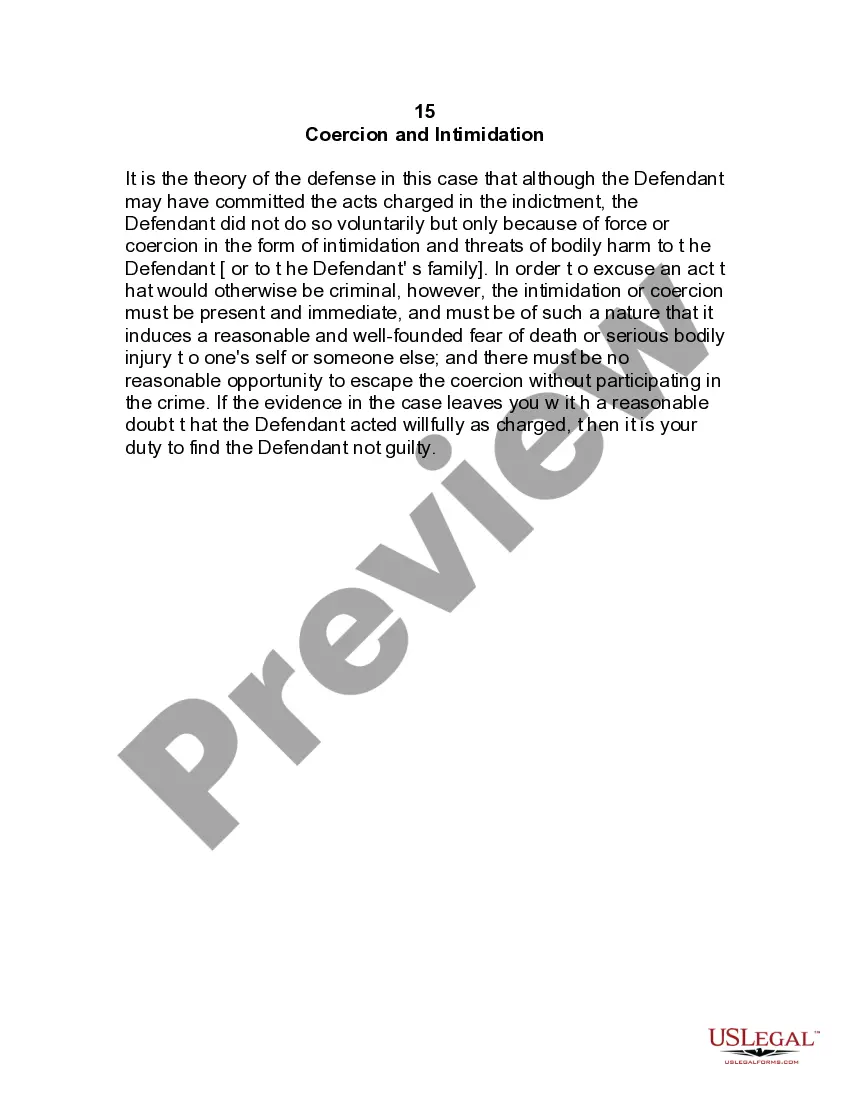
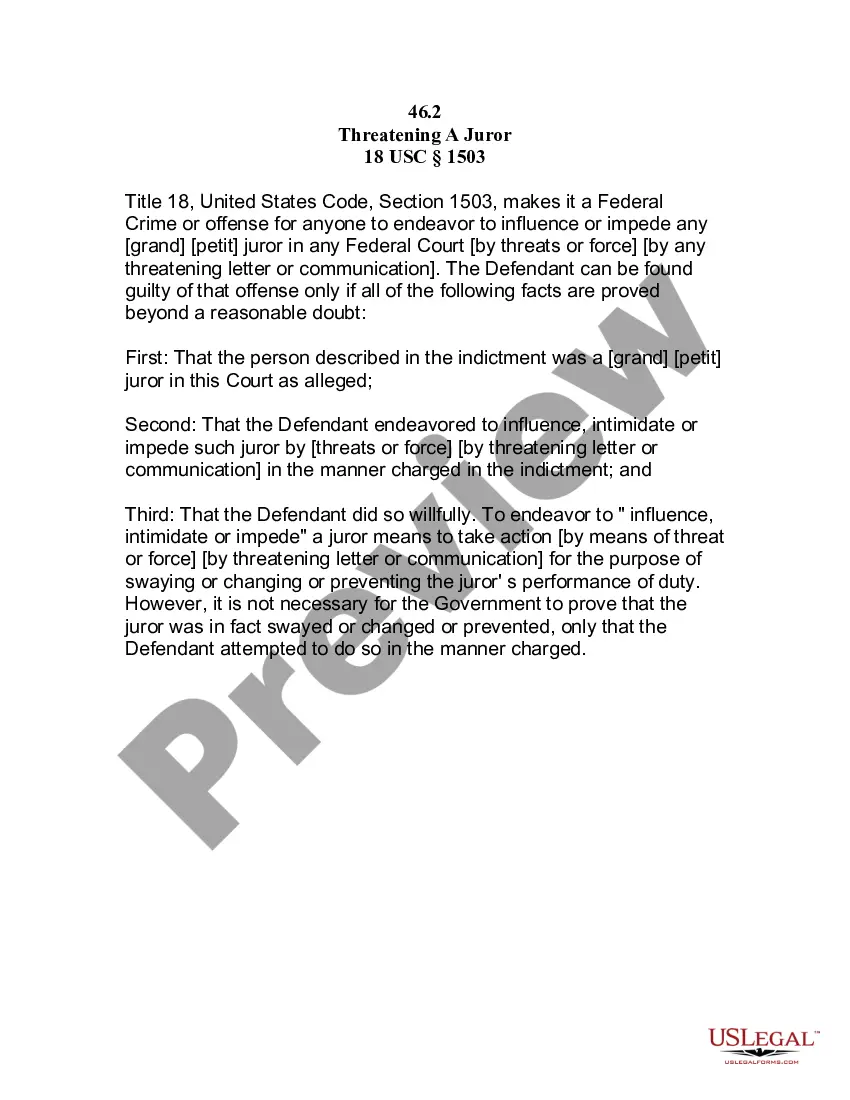
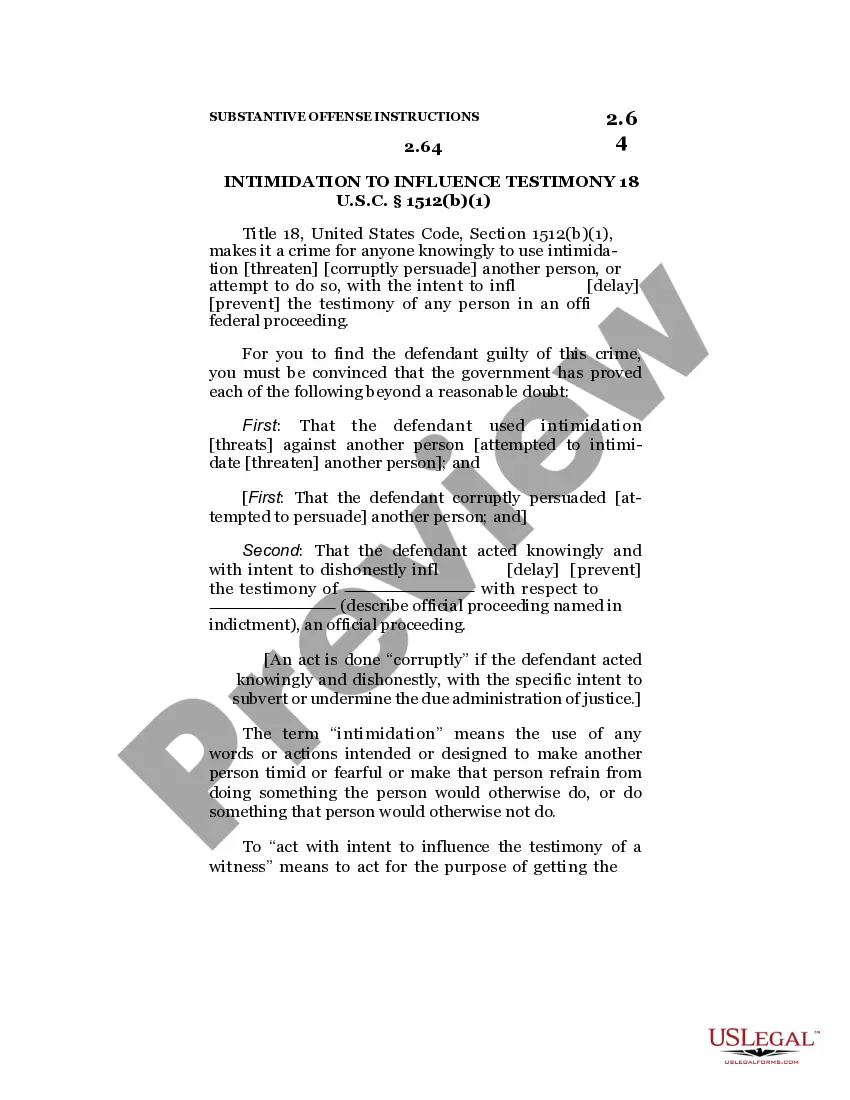
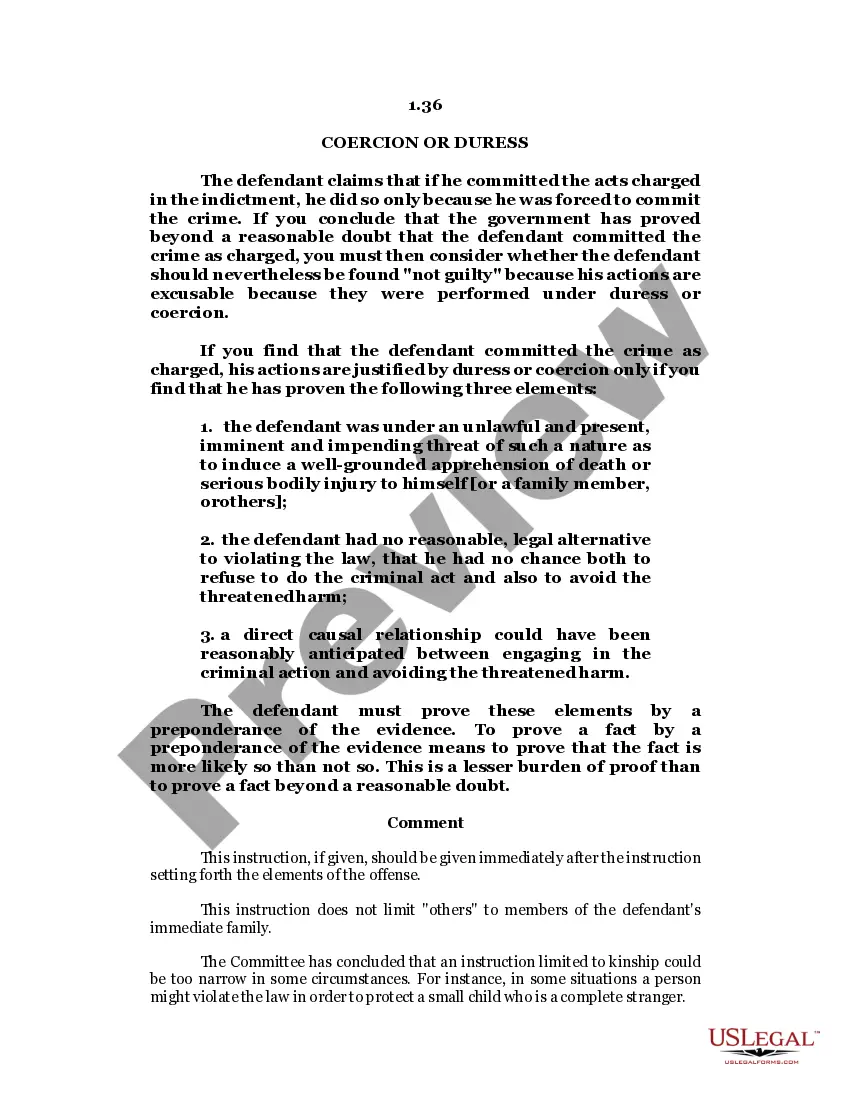
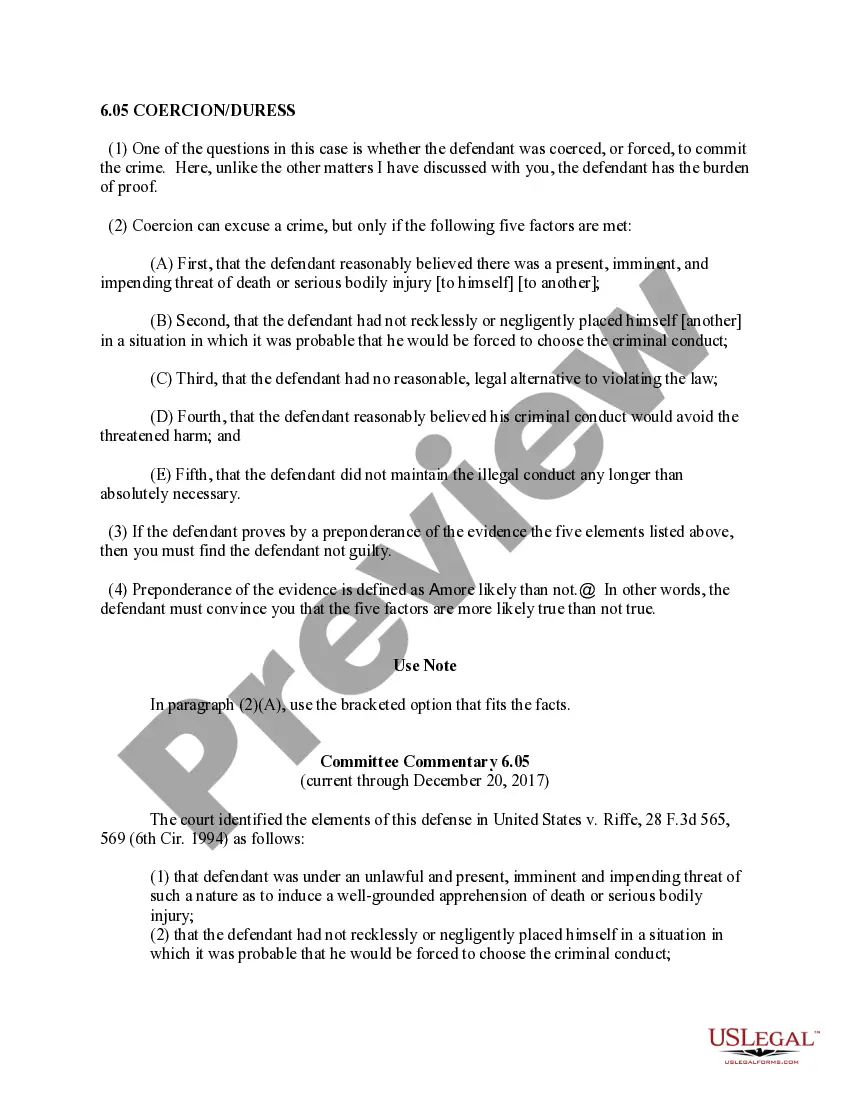
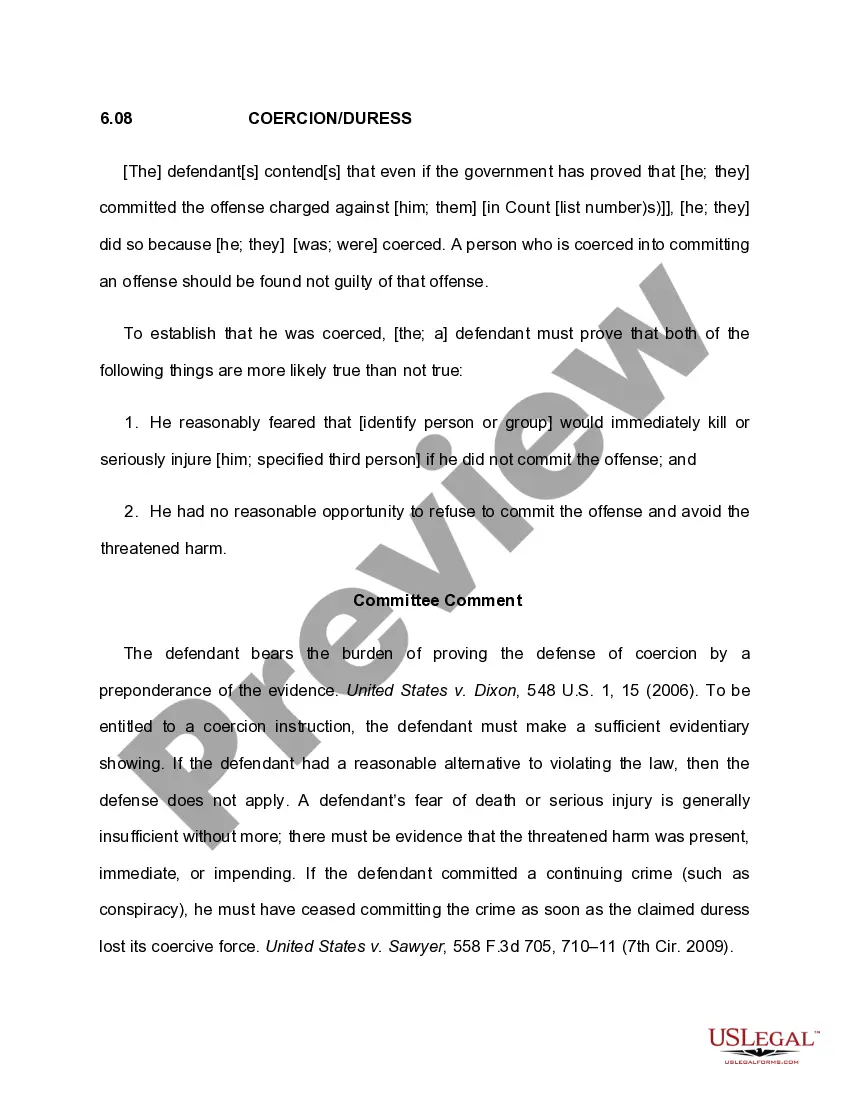
The Jury Instruction on Coercion and Intimidation is a legal template designed to provide guidance to juries on how to consider defenses based on coercion. This form helps clarify a defendant's claim that they committed an act under the duress of intimidation and threats of bodily harm. Unlike other jury instructions, this form specifically addresses situations where the defendantâs actions may not be voluntary due to immediate threats, emphasizing the necessity of reasonable fear and lack of escape options.
Main sections of this form
- Definition of coercion and intimidation as a defense strategy.
- Requirement for immediate and credible threats to establish coercion.
- Clarification of the reasonable opportunity to escape the situation.
- Consequences of reasonable doubt regarding the defendant's voluntary actions.
- Legal precedent reference to support the instructionâs applicability.

Common use cases
This form should be used in criminal trials where the defense argues that the defendant acted under coercion or intimidation. For instance, if a defendant claims they committed a crime because they were threatened with serious bodily harm, this jury instruction will help jurors understand how to evaluate that claim. It is applicable in cases where immediate threats are used to influence behavior and where the defendant had no reasonable means of escape.
Who should use this form
- Defense attorneys representing clients who assert coercion as a defense.
- Judges seeking to instruct juries on the legal standards of coercion.
- Law students studying jury instructions and defense strategies.
- Legal professionals preparing for criminal trials involving threats or duress.
How to prepare this document
- Review the key elements of coercion and intimidation defined in the instruction.
- Customize the instruction to fit the specifics of your case.
- Ensure the definition of immediate threats aligns with legal standards in your jurisdiction.
- Incorporate relevant case law that supports the defense position.
- Provide the jury with clear instructions that focus on the standard of reasonable doubt.
Is notarization required?
Notarization is generally not required for this form. However, certain states or situations might demand it. You can complete notarization online through US Legal Forms, powered by Notarize, using a verified video call available anytime.
Get your form ready online
Our built-in tools help you complete, sign, share, and store your documents in one place.
Make edits, fill in missing information, and update formatting in US Legal Forms—just like you would in MS Word.
Download a copy, print it, send it by email, or mail it via USPS—whatever works best for your next step.
Sign and collect signatures with our SignNow integration. Send to multiple recipients, set reminders, and more. Go Premium to unlock E-Sign.
If this form requires notarization, complete it online through a secure video call—no need to meet a notary in person or wait for an appointment.
We protect your documents and personal data by following strict security and privacy standards.

Make edits, fill in missing information, and update formatting in US Legal Forms—just like you would in MS Word.

Download a copy, print it, send it by email, or mail it via USPS—whatever works best for your next step.

Sign and collect signatures with our SignNow integration. Send to multiple recipients, set reminders, and more. Go Premium to unlock E-Sign.

If this form requires notarization, complete it online through a secure video call—no need to meet a notary in person or wait for an appointment.

We protect your documents and personal data by following strict security and privacy standards.
Common mistakes
- Failing to define coercion in a way that aligns with legal standards.
- Not presenting sufficient evidence of immediate threats.
- Neglecting to address the defendant's opportunity to escape the situation.
- Overlooking jurisdiction-specific jury instruction requirements.
Benefits of using this form online
- Convenience of downloading and filling out from anywhere.
- Editability to tailor the instructions to your specific needs.
- Access to templates drafted by licensed legal professionals.
- Compliance with current legal standards and practices.
Legal use & context
- The instruction is applicable in criminal trials involving coercion and intimidation defenses.
- It provides a framework that juries can use to evaluate the validity of such defenses.
- Coercion must be immediate and credible to be considered a legitimate defense.
- Legal precedent reinforces the necessity of adequate evidence to support claims of duress.
Key takeaways
- The Jury Instruction for Coercion and Intimidation is crucial for cases involving claims of duress.
- It helps ensure juries understand the legal significance of coercion when deliberating on a verdict.
- Legal practitioners should tailor the instructions to fit the specific facts and local laws of their cases.
Looking for another form?
Form popularity
FAQ
Coercion (/ko028a02c8025c02d0r02920259n, -02830259n/) is compelling a party to act in an involuntary manner by use of threats, including propaganda or force.In law, coercion is codified as a duress crime. Such actions are used as leverage, to force the victim to act in a way contrary to their own interests.
Essential elements of Coercion are as follows : a) Committing or threatening to commit any act forbidden by Indian Penal Code or, b) The unlawful detaining or threatening to detain any property to the prejudice of any person whatever. c) with the intention of causing any person to enter into an agreement.
These actions may include extortion, blackmail, torture, threats to induce favors, or even sexual assault.
Coercive Add to list Share. If you use coercive measures to get people to join your club, it means that you intimidate or force people to make them feel like they have to join.It can take nothing more than a strong sense of authority to come across as coercive, or the intimidation can take the form of physical threats
Coercion means forcing a person to do something that they would not normally do by making threats against their safety or well-being, or that of their relatives or property.For example, pointing a gun at someone's head or holding a knife to someone's throat is an actual physical threat.
Coercive psychological systems use psychological force in a coercive way to cause the learning and adoption of an ideology or designated set of beliefs, ideas, attitudes, or behaviors. In a psychologically coercive environment, the victim is forced to adapt in a series of small "invisible" steps.
Formal : using force or threats to make someone do something : using coercion. See the full definition for coercive in the English Language Learners Dictionary. coercive. adjective. co·200berA·200bcive \\ k014d-02c80259r-siv \\
Subtle coercion can be conceptualized as an interper- sonal and dynamic activity, involving one person (or several) exerting his or her will upon another. The moral component becomes apparent because the principle of autonomy (meaning self-choice) is compromised.