COERCION/DURESS
Overview of this form
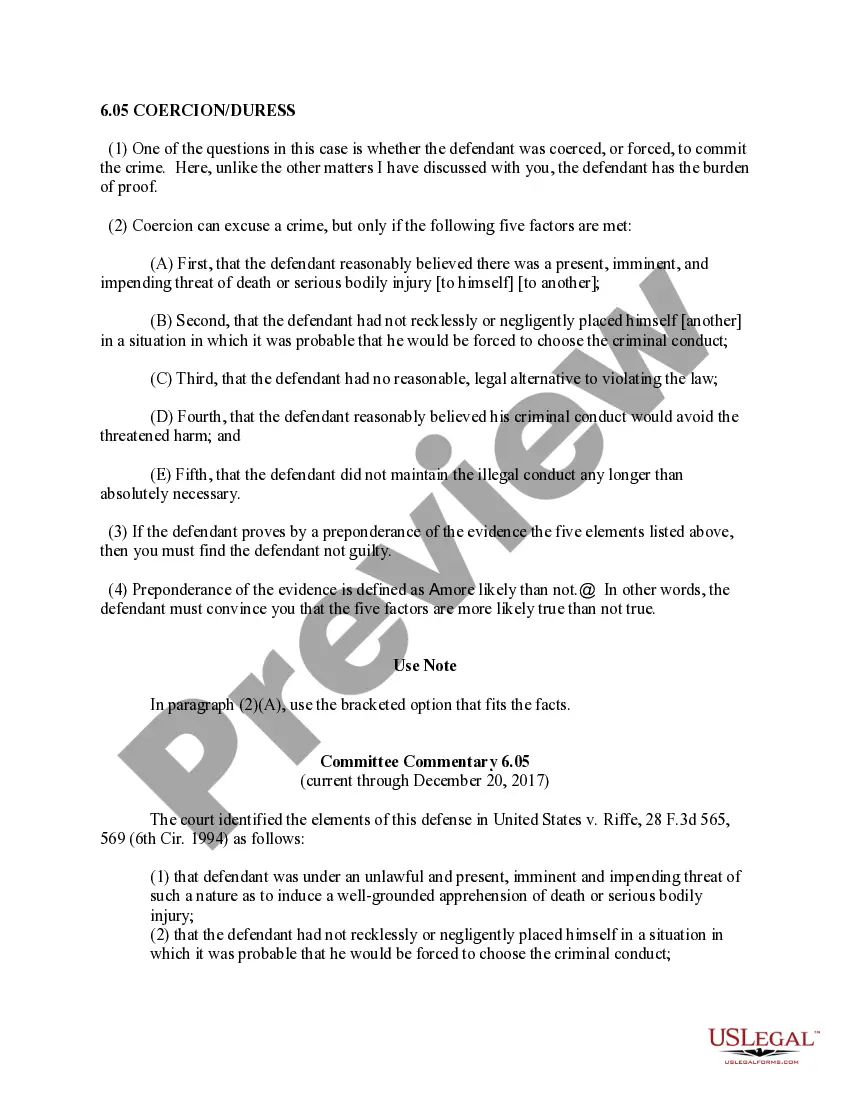
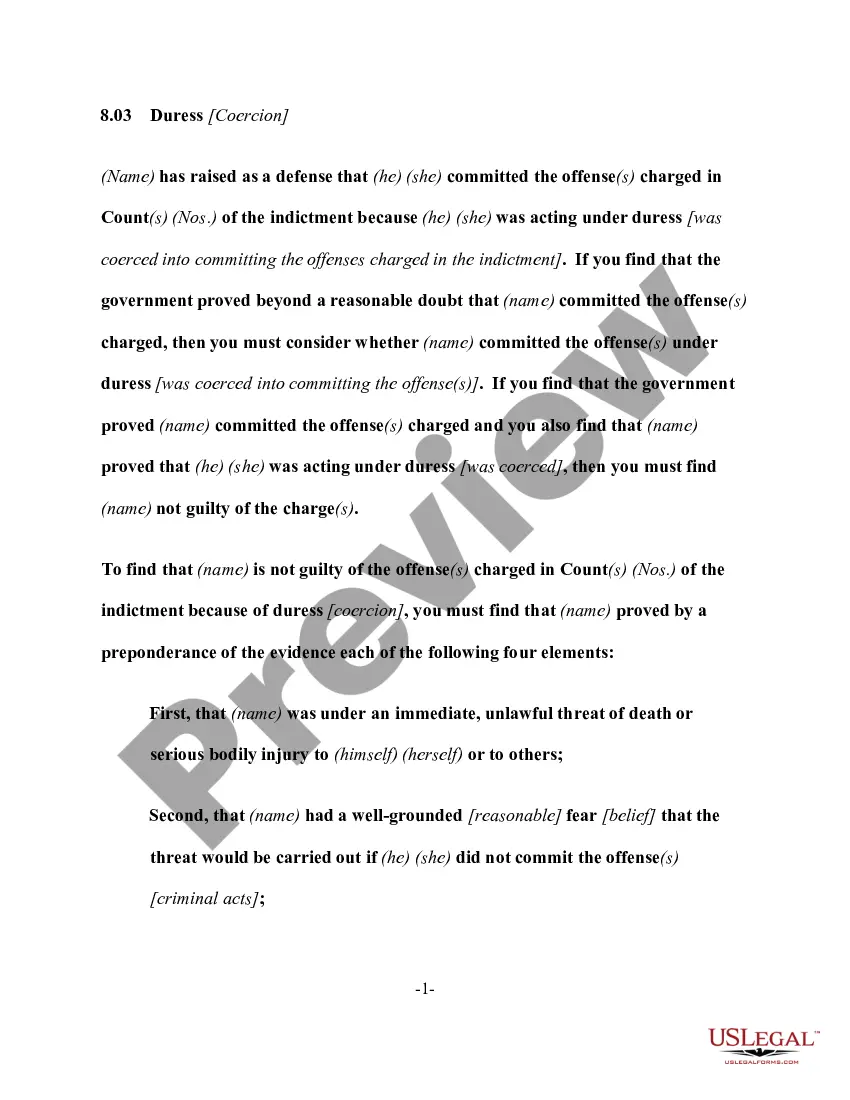
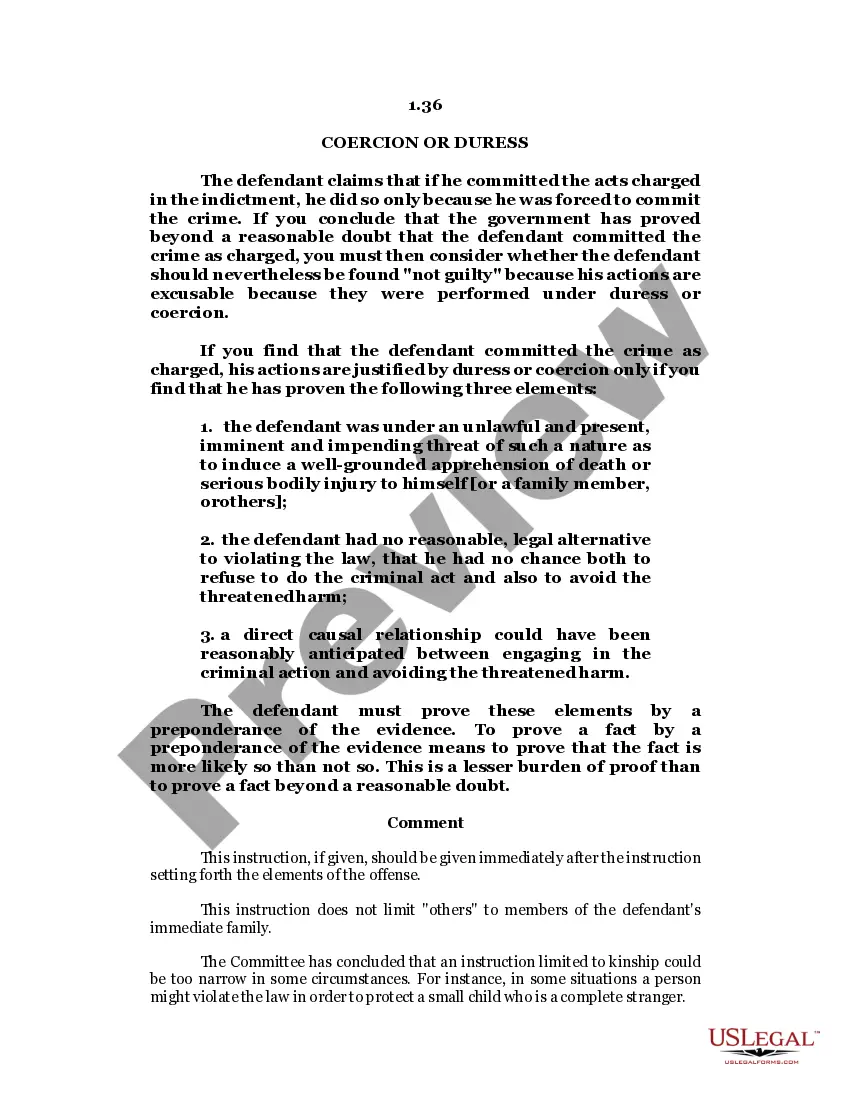
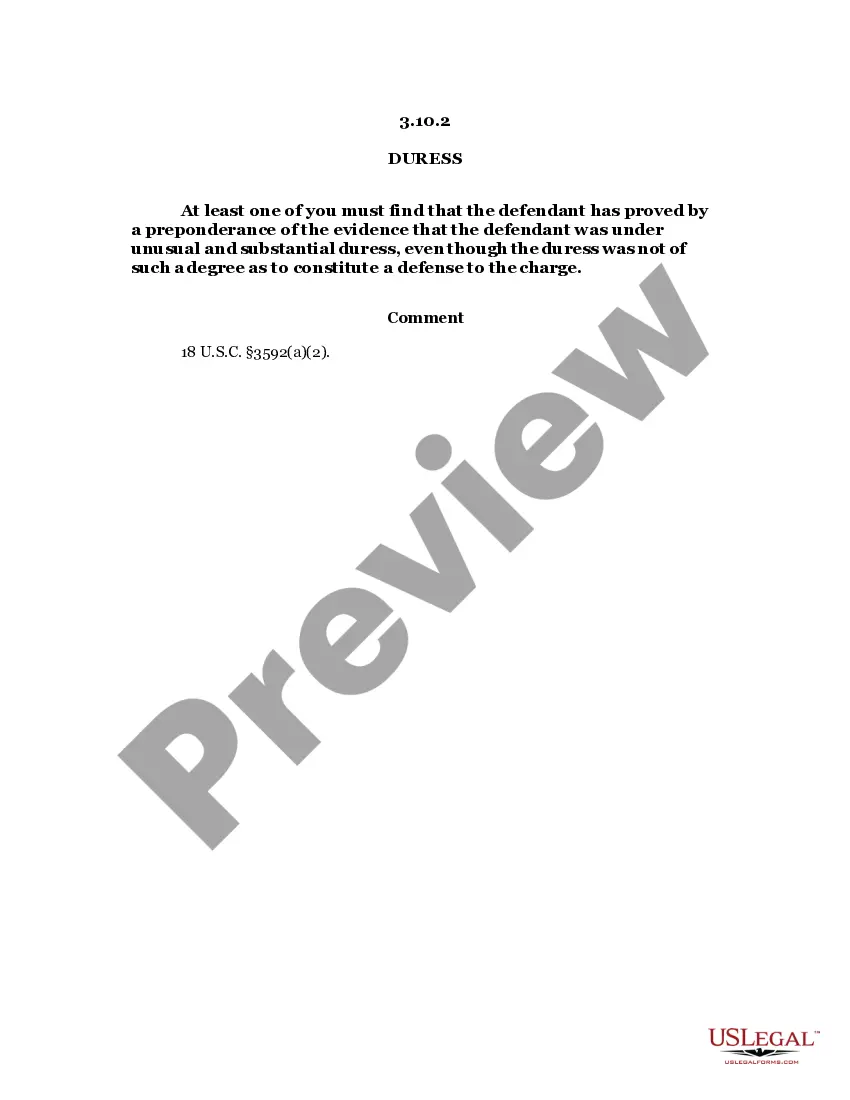
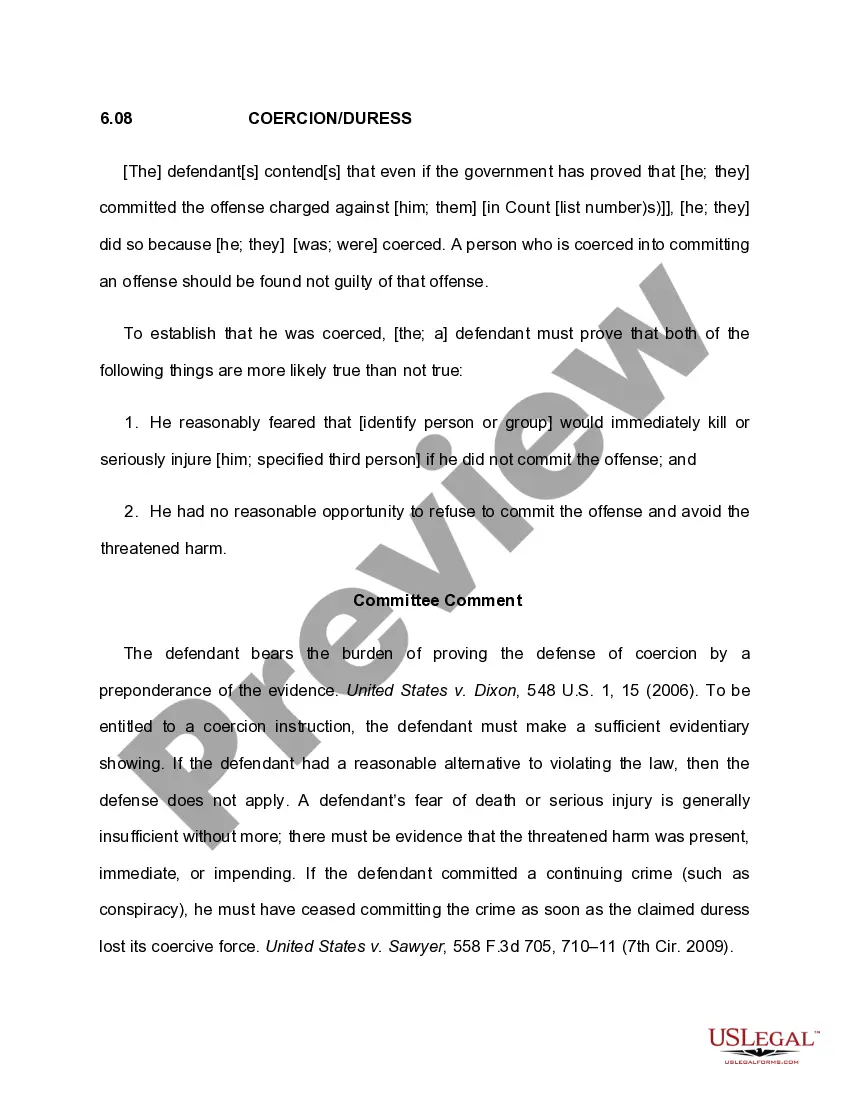
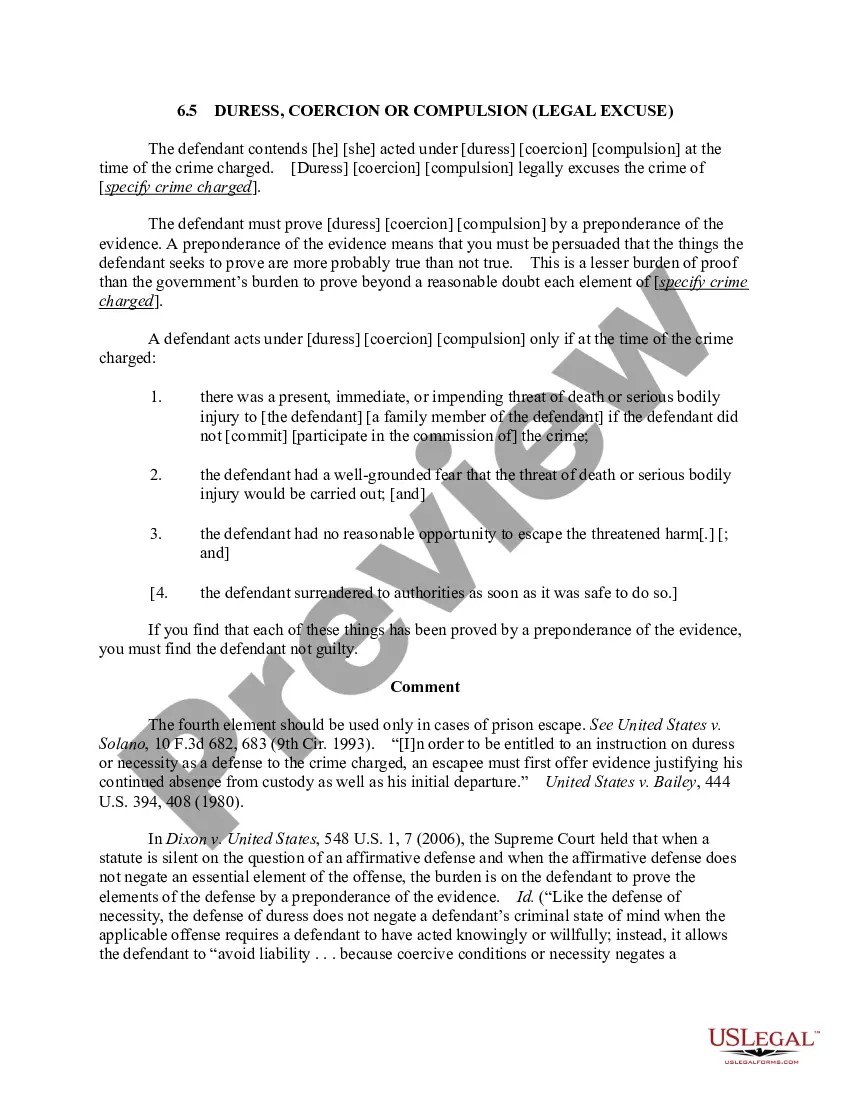
The Coercion/Duress form provides a legal framework for a defendant to argue that they committed a crime under duress, meaning they were forced to do so due to a credible threat. This form outlines the specific elements that must be proven to successfully establish a defense based on coercion. It differs from other legal defenses by placing the burden of proof on the defendant, who must demonstrate that their actions were a response to a legitimate threat of serious harm.
Form components explained
- Definition of coercion and the legal basis for the defense.
- Five key elements that must be established to prove coercion.
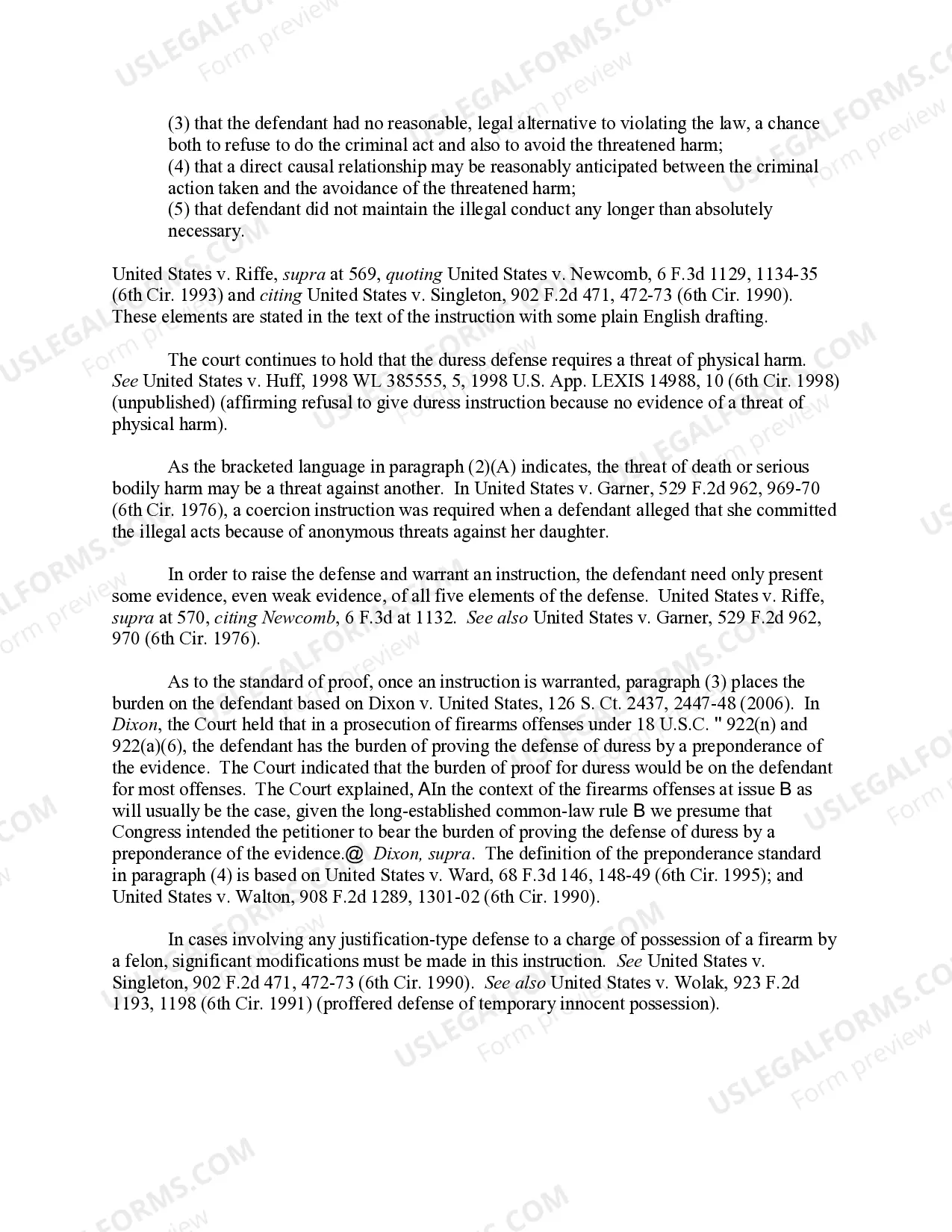
- Explanation of the burden of proof required from the defendant.
- Standards used to measure evidence and the definition of "preponderance of the evidence."
Common use cases
This form should be used in criminal defense cases where the defendant contends that they committed an illegal act due to coercion. It is particularly applicable in scenarios where the defendant was threatened with immediate physical harm, or where they acted to protect another person from being harmed. This form helps the defendant articulate their position in court to seek an acquittal based on the duress they experienced.
Who should use this form
- Defendants facing criminal charges who believe they acted under coercion.
- Criminal defense attorneys who need to establish a duress defense for their clients.
- Individuals who have experienced threats and need to document their legal defense strategy.
How to complete this form
- Identify the specific crime involved and state your claim of coercion.
- Gather evidence that supports your assertion, including any threats made against you or others.
- Clearly articulate how each of the five key elements of coercion is met.
- Review the evidence to ensure it meets the "preponderance of the evidence" standard.
- Submit the form to your legal counsel or court as part of your defense strategy.
Does this document require notarization?
Notarization is generally not required for this form. However, certain states or situations might demand it. You can complete notarization online through US Legal Forms, powered by Notarize, using a verified video call available anytime.
Get your form ready online
Our built-in tools help you complete, sign, share, and store your documents in one place.
Make edits, fill in missing information, and update formatting in US Legal Forms—just like you would in MS Word.
Download a copy, print it, send it by email, or mail it via USPS—whatever works best for your next step.
Sign and collect signatures with our SignNow integration. Send to multiple recipients, set reminders, and more. Go Premium to unlock E-Sign.
If this form requires notarization, complete it online through a secure video call—no need to meet a notary in person or wait for an appointment.
We protect your documents and personal data by following strict security and privacy standards.

Make edits, fill in missing information, and update formatting in US Legal Forms—just like you would in MS Word.

Download a copy, print it, send it by email, or mail it via USPS—whatever works best for your next step.

Sign and collect signatures with our SignNow integration. Send to multiple recipients, set reminders, and more. Go Premium to unlock E-Sign.

If this form requires notarization, complete it online through a secure video call—no need to meet a notary in person or wait for an appointment.

We protect your documents and personal data by following strict security and privacy standards.
Mistakes to watch out for
- Failing to provide sufficient evidence for the five elements of coercion.
- Neglecting to establish that there were no reasonable alternatives to the illegal conduct.
- Misunderstanding the burden of proof and how to effectively present evidence.
- Not adequately documenting the threat or coercive situation faced.
Why use this form online
- Convenience of downloading and completing the form at any time.
- Editability, allowing for tailored responses based on individual circumstances.
- Reliability of templates drafted by licensed attorneys with legal expertise.
Legal use & context
- The coercion defense is grounded in proving immediate threats to oneself or others.
- While coercion can be a valid defense, it must meet all outlined criteria to be accepted in court.
- Each jurisdiction may interpret duress differently, impacting how this form is used in practice.
Quick recap
- The Coercion/Duress form outlines important legal standards necessary for a successful defense.
- Understanding the five key elements is crucial for defendants using this form.
- This form can help defendants clearly present their case in a legal context.
Looking for another form?
Form popularity
FAQ
Requirements of Duress The party is in immediate threat of serious bodily harm or death. The threat made to the victim must be constant.The party believes that the perpetrator of the act will carry out the threat.There is no opportunity to escape safely, except by committing the unlawful act.
Duress vs. They are different. Undue Influence results from improper use of influence while Duress results from a threat or the actual performance of violence that coerces the testator to change the Will.
1 Coercion (Section 15) For example, A threatens to hurt B if he does not sell his house to A for 5 lakh rupees. Here even if B sells the house to A, it will not be a valid contract since B's consent was obtained by coercion. Now the effect of coercion is that it makes the contract voidable.
Duress in contract law is focused on the concept of undue influence. This means the use of false imprisonment, threats, force, psychological pressure, or coercion to influence someone to act in a way that is not in their best interest or to act in a manner they do not wish to act.
"Coercion" is the committing, or threatening to commit, any act forbidden by the Indian Penal Code (45 of 1860) or the unlawful detaining, or threatening to detain, any property, to the prejudice of any person whatever, with the intention of causing any person to enter into an agreement. Explanation.
Difference between duress and coercion While duress is exercised concerning the life threats to an individual or his/her family or close relatives, coercion can be exercised against any person. Duress causes an imminent threat to an individual while coercion does not cover the ambits of imminent threat.
What is duress? Duress refers to coercion that causes a person to perform an act against his or her will. Duress is an important concept in both civil and criminal law that recognizes that a person who is acting without free will should not be held responsible for the conduct.