DURESS
What is this form?
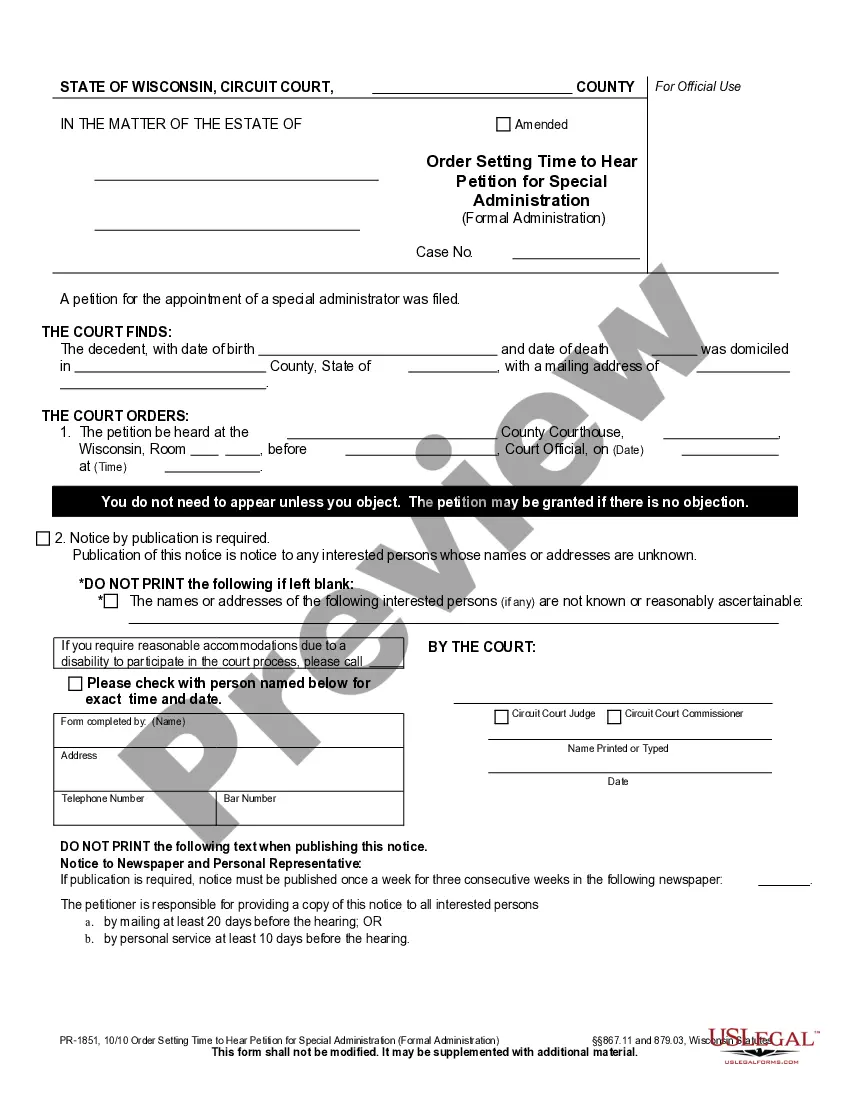
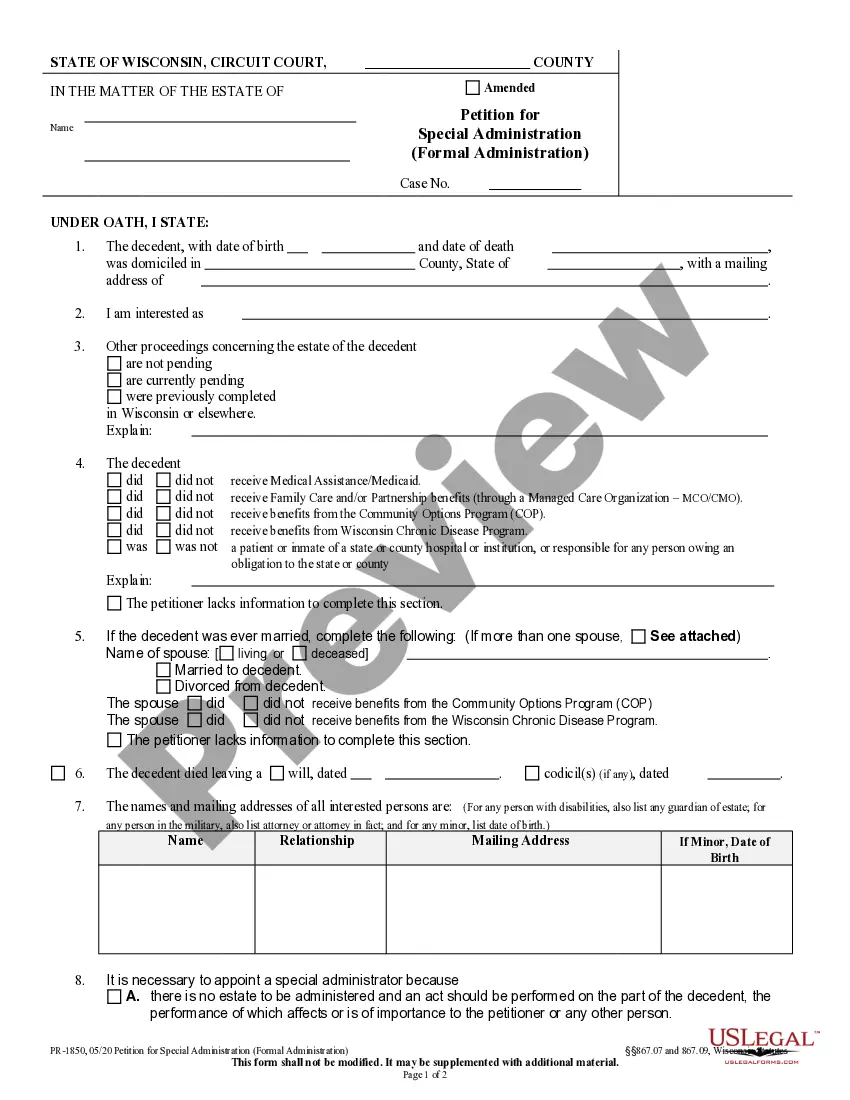
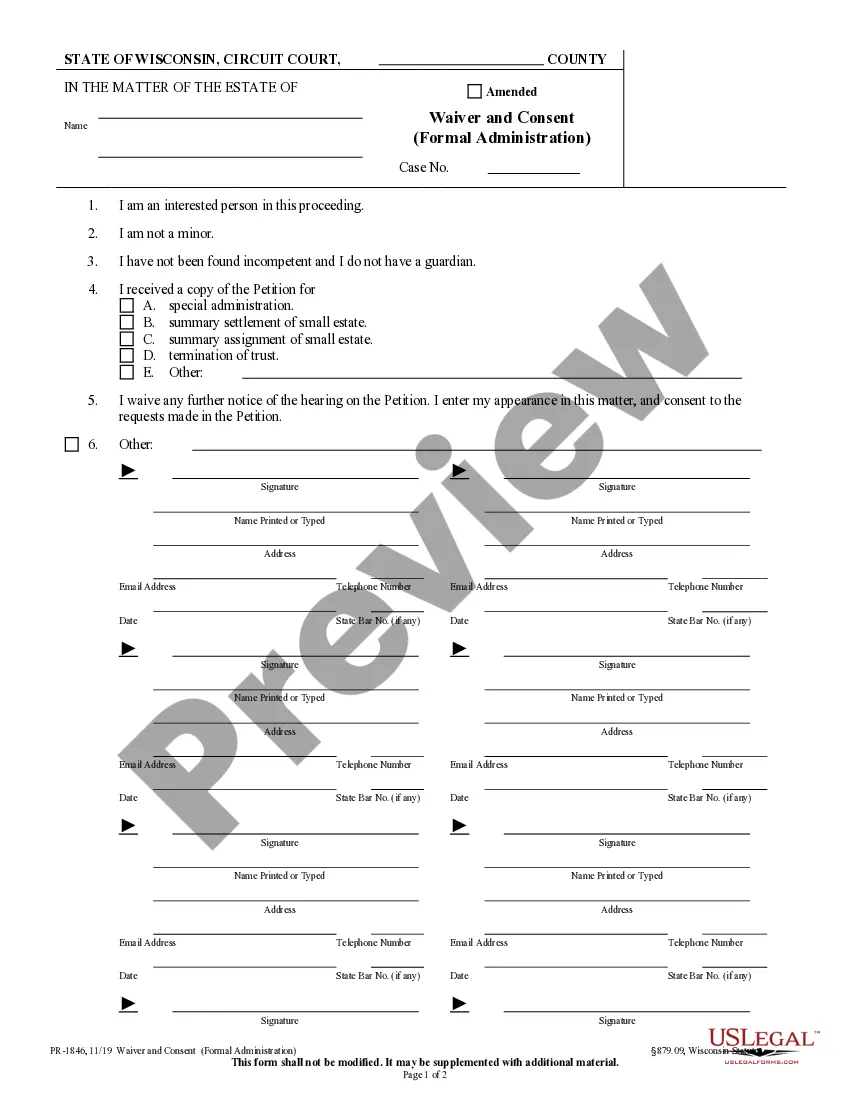
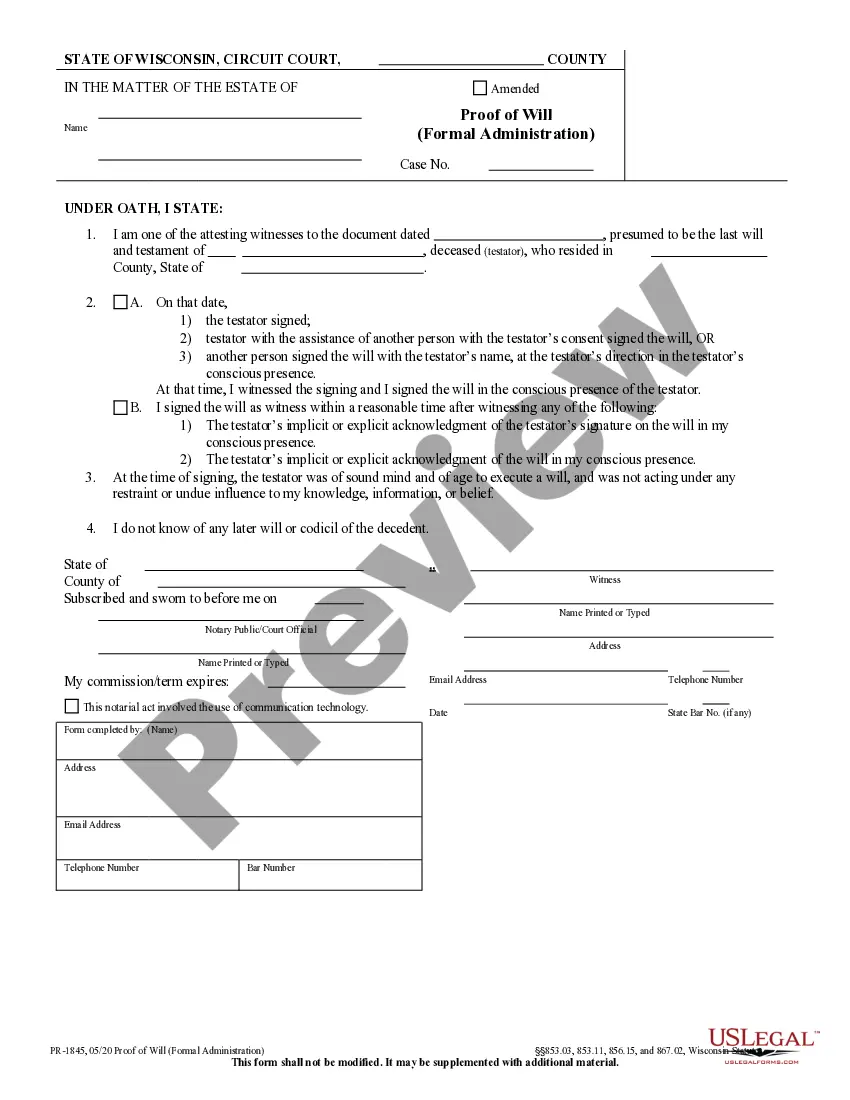
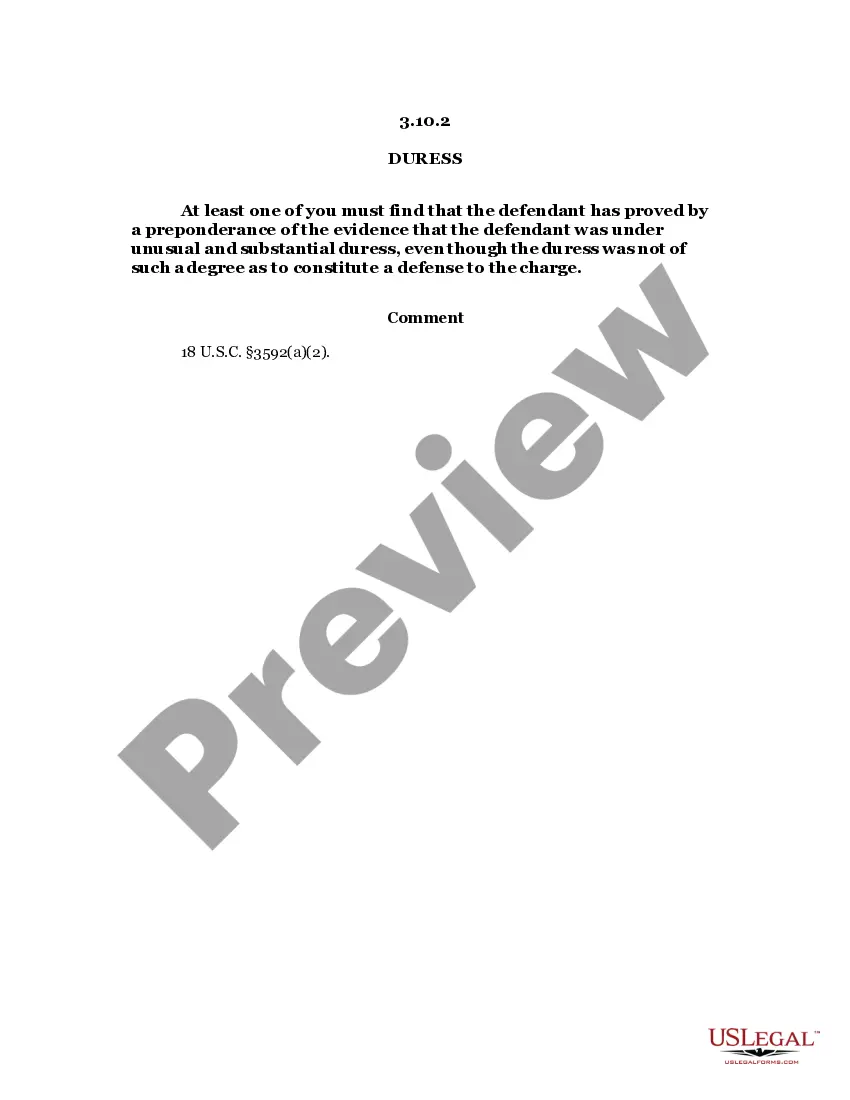
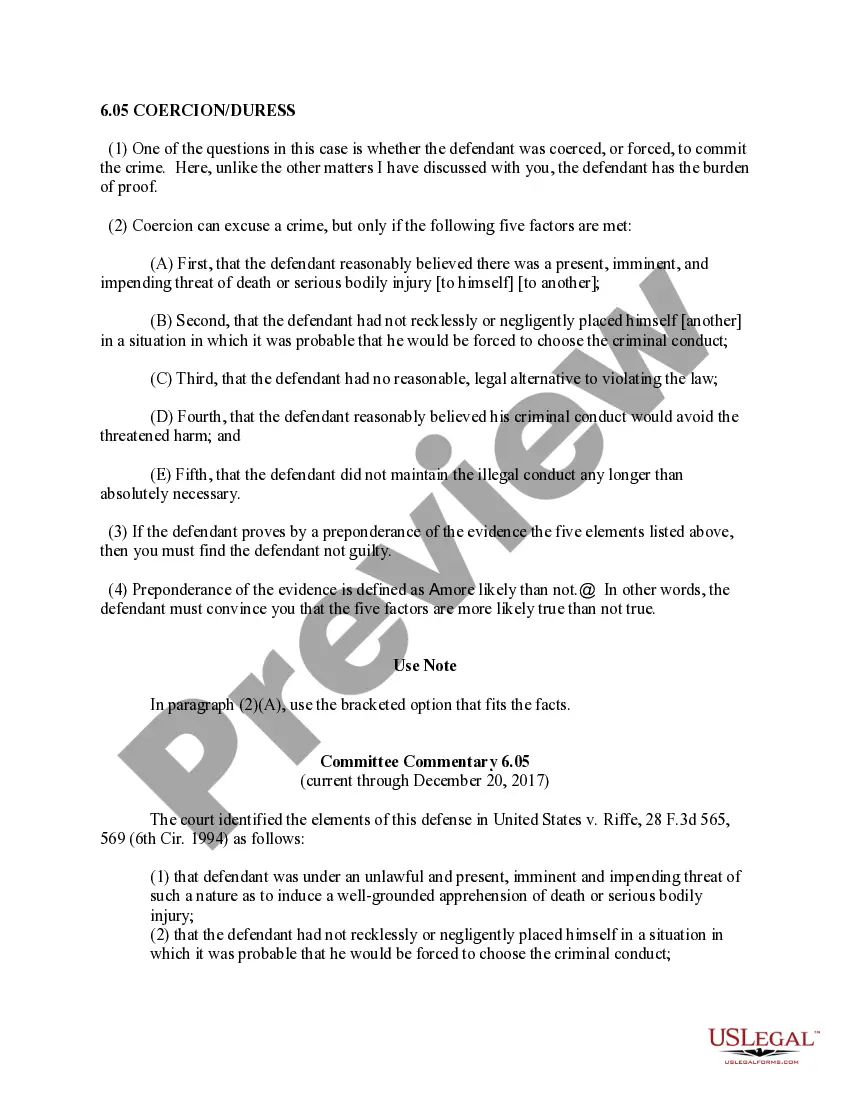
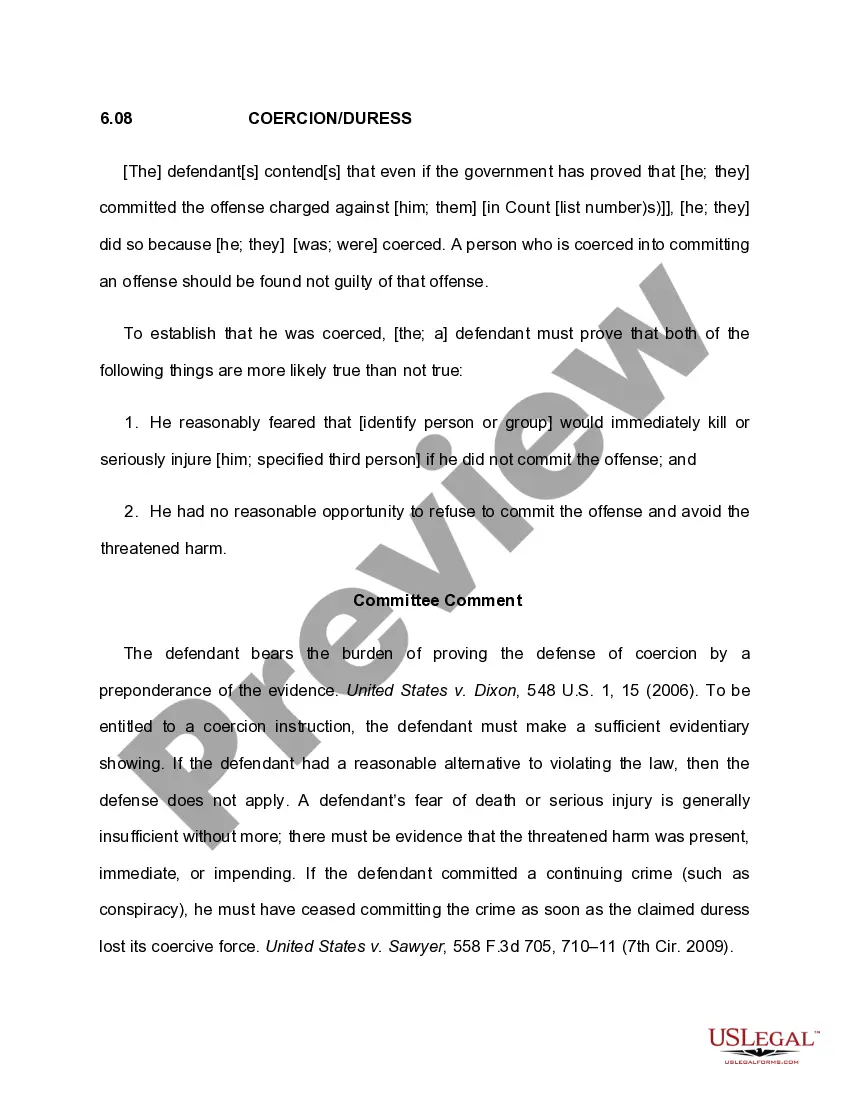
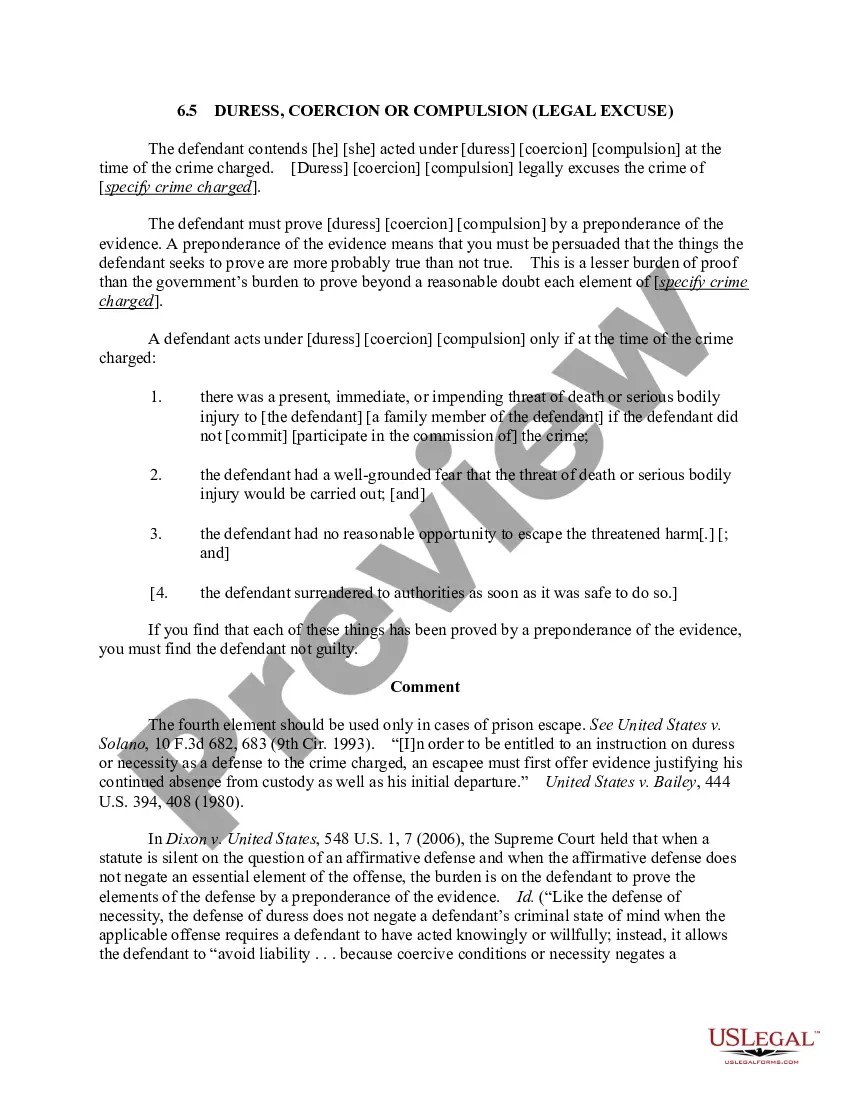
The Duress form is a legal document used in court cases to assert that the defendant acted under significant pressure or coercion, which may not be sufficient to completely absolve them of liability but can influence the outcome of the case. This form specifically addresses situations where the defendant proves, by a preponderance of evidence, that they were under unusual and substantial duress. Understanding the nuances of this form is crucial as it differs from outright defenses that suggest lack of intent or wrongful action due to external pressures.
Key components of this form
- Definition of duress: Clarifies what constitutes duress in the legal context.
- Evidence requirement: Specifies that duress must be proven by a preponderance of evidence.
- Legal commentary: Includes references to relevant statutes that provide context for the use of the form.
When this form is needed
This form is typically used in criminal cases where a defendant claims that their actions were influenced by significant coercion. Scenarios can include cases where the defendant acted under threat to themselves or others, or when they were forced to commit a crime against their will. Using this form helps establish a defense strategy that acknowledges the circumstances surrounding the defendant's actions.
Who can use this document
- Defendants in criminal cases who intend to claim duress as a factor in their defense.
- Legal representatives or attorneys seeking to craft a narrative around coercion or force in their client's case.
- Individuals appearing in court who wish to present their circumstances regarding duress to mitigate liability.
Steps to complete this form
- Begin by identifying all parties involved in the case, including the defendant and the prosecution.
- Clearly state the specific circumstances of the duress faced by the defendant.
- Provide evidence or documentation that supports the claim of duress, such as witness statements or police reports.
- Ensure that the form is signed and dated appropriately to validate the claim.
- Submit the completed form in accordance with local court procedures.
Notarization guidance
This form does not typically require notarization unless specified by local law. Always check your stateâs regulations to confirm if notarization is necessary for your case.
Get your form ready online
Our built-in tools help you complete, sign, share, and store your documents in one place.
Make edits, fill in missing information, and update formatting in US Legal Forms—just like you would in MS Word.
Download a copy, print it, send it by email, or mail it via USPS—whatever works best for your next step.
Sign and collect signatures with our SignNow integration. Send to multiple recipients, set reminders, and more. Go Premium to unlock E-Sign.
If this form requires notarization, complete it online through a secure video call—no need to meet a notary in person or wait for an appointment.
We protect your documents and personal data by following strict security and privacy standards.

Make edits, fill in missing information, and update formatting in US Legal Forms—just like you would in MS Word.

Download a copy, print it, send it by email, or mail it via USPS—whatever works best for your next step.

Sign and collect signatures with our SignNow integration. Send to multiple recipients, set reminders, and more. Go Premium to unlock E-Sign.

If this form requires notarization, complete it online through a secure video call—no need to meet a notary in person or wait for an appointment.

We protect your documents and personal data by following strict security and privacy standards.
Common mistakes
- Failing to provide sufficient evidence to support the claim of duress.
- Missing signatures or not dating the form properly.
- Not adhering to the specific requirements of the local jurisdiction regarding duress claims.
Benefits of completing this form online
- Convenience: Easily access and download the form from any device.
- Editability: Customize the form to fit your specific situation before printing.
- Reliability: Ensure that the form is drafted according to up-to-date legal standards.
Legal use & context
- This form serves as a supplementary document in court to explain the defendant's state of mind and circumstances during the alleged offense.
- Its use can potentially influence sentencing or charge reductions based on the nature of the duress experienced.
Key takeaways
- The Duress form is essential for defendants looking to assert their actions were influenced by coercion.
- Providing thorough evidence is crucial for the form to be effective in legal proceedings.
- Each jurisdiction may have unique requirements that must be met for the form to be valid.
Looking for another form?


Form popularity
FAQ
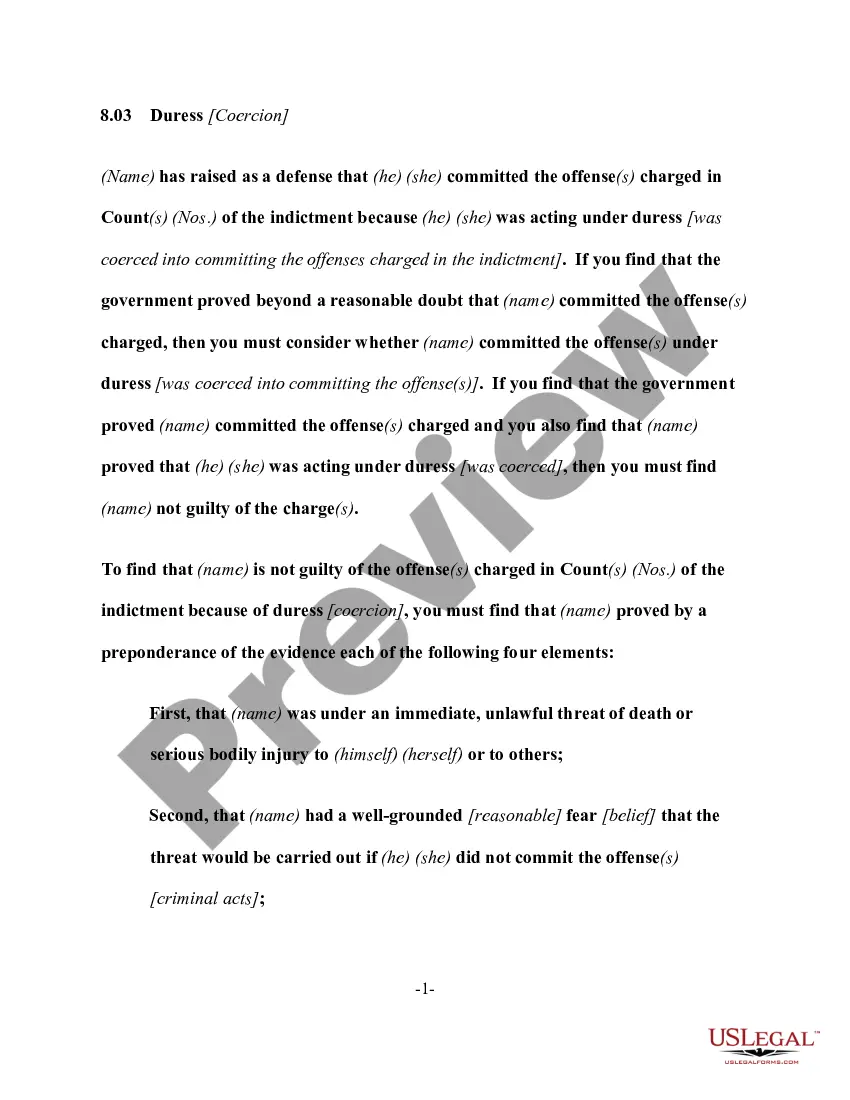
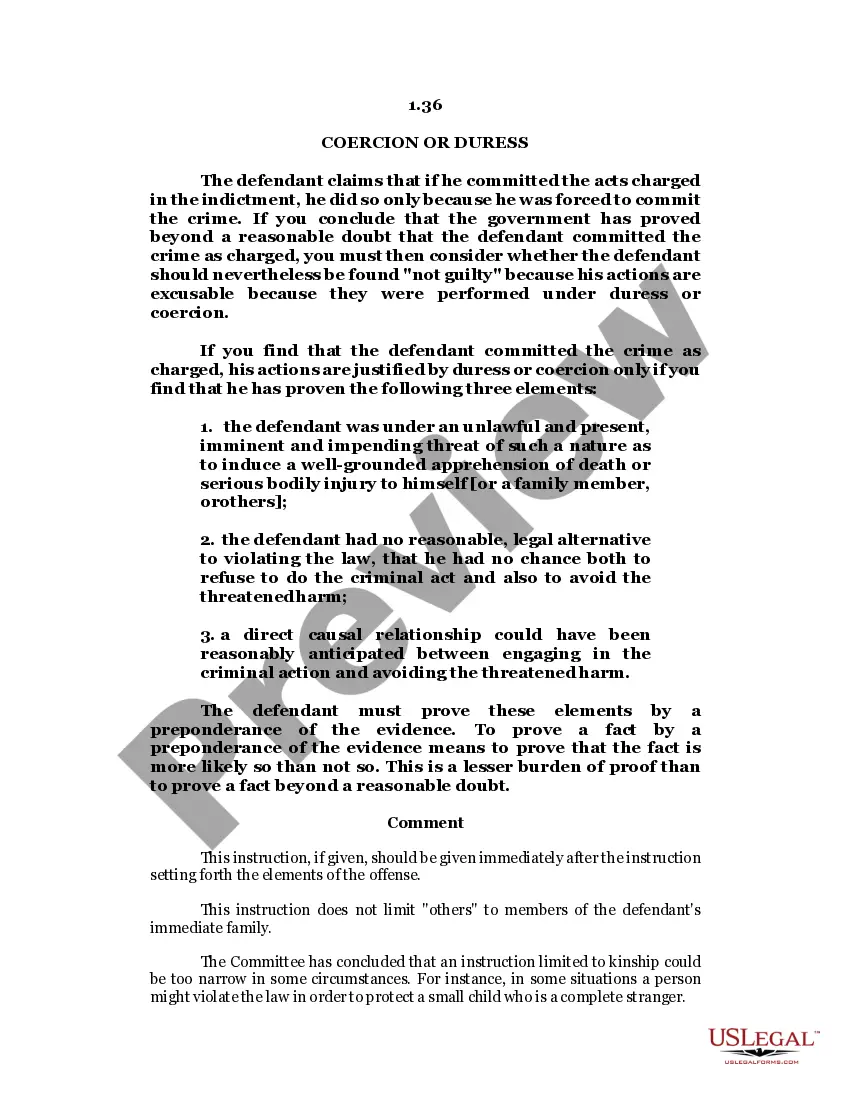
Requirements of Duress The party is in immediate threat of serious bodily harm or death. The threat made to the victim must be constant.The party believes that the perpetrator of the act will carry out the threat.There is no opportunity to escape safely, except by committing the unlawful act.
For example, if a person is forced to sign a contract at gunpoint, that would obviously be a case of signing under duress. However, any type of threat or other cause of stress that one party puts on another party may be considered duress; a physical weapon is not required.
Contracts Entered Under Duress Duress to an Individual. When an individual enters into a contract because of threats to that person physically, then the contract may be set aside as long as the threat of physical violence was the reason the person entered into the contract.Duress to Goods.Economic Duress.
Duress refers to a situation where one person makes unlawful threats or otherwise engages in coercive behavior that causes another person to commit acts that they would otherwise not commit. In McCord v. Goode, 308 S.W.
For example, if Bob makes unlawful threats or engages in a coercive behavior that causes his Aunt Sally to sign an agreement or execute a will against her will, then Bob is causing Aunt Sally to be "under duress."
CALIFORNIA LEGAL DEFENSES: DURESS Duress is a rarely-used defense that applies in situations in which someone commits a crime only because of an immediate threat to life posed by another. The typical example is committing a criminal act only because there is literally ?a gun to your head.?
Defense. The Duress or Necessity defense arises when a person commits an offense when they felt they had no choice but to commit it. For example, committing a DUI when you were fleeing from danger and the only reasonable option was to drive while impaired.