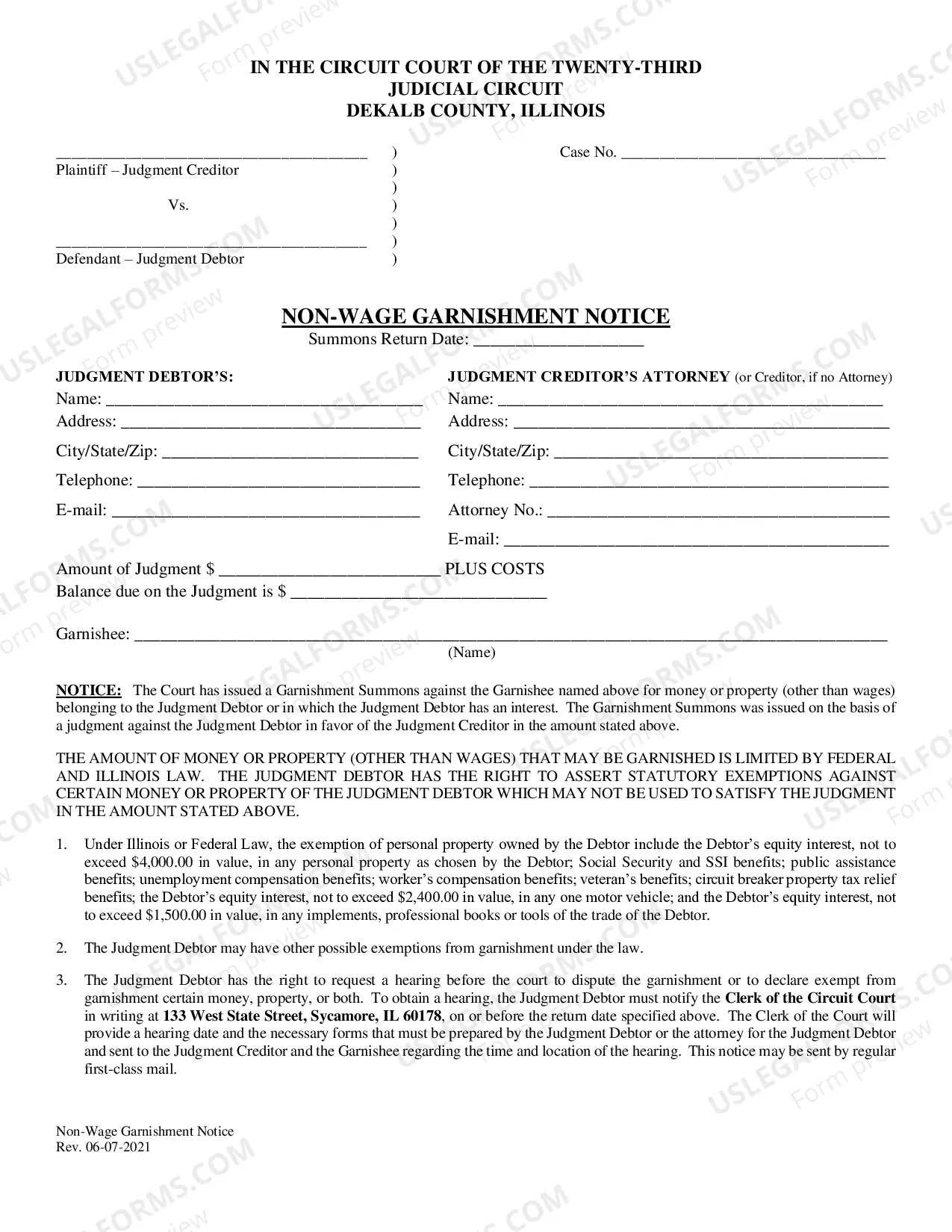
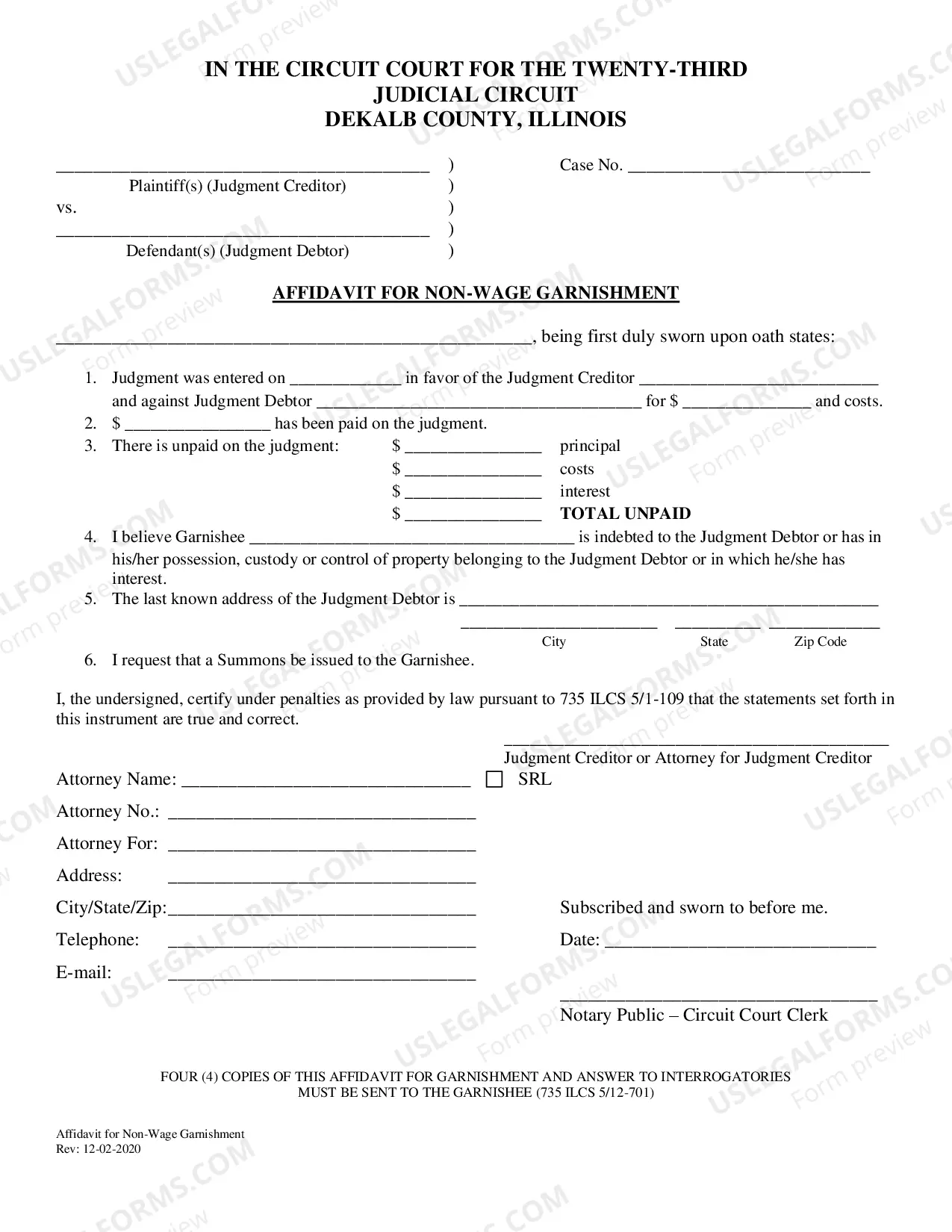
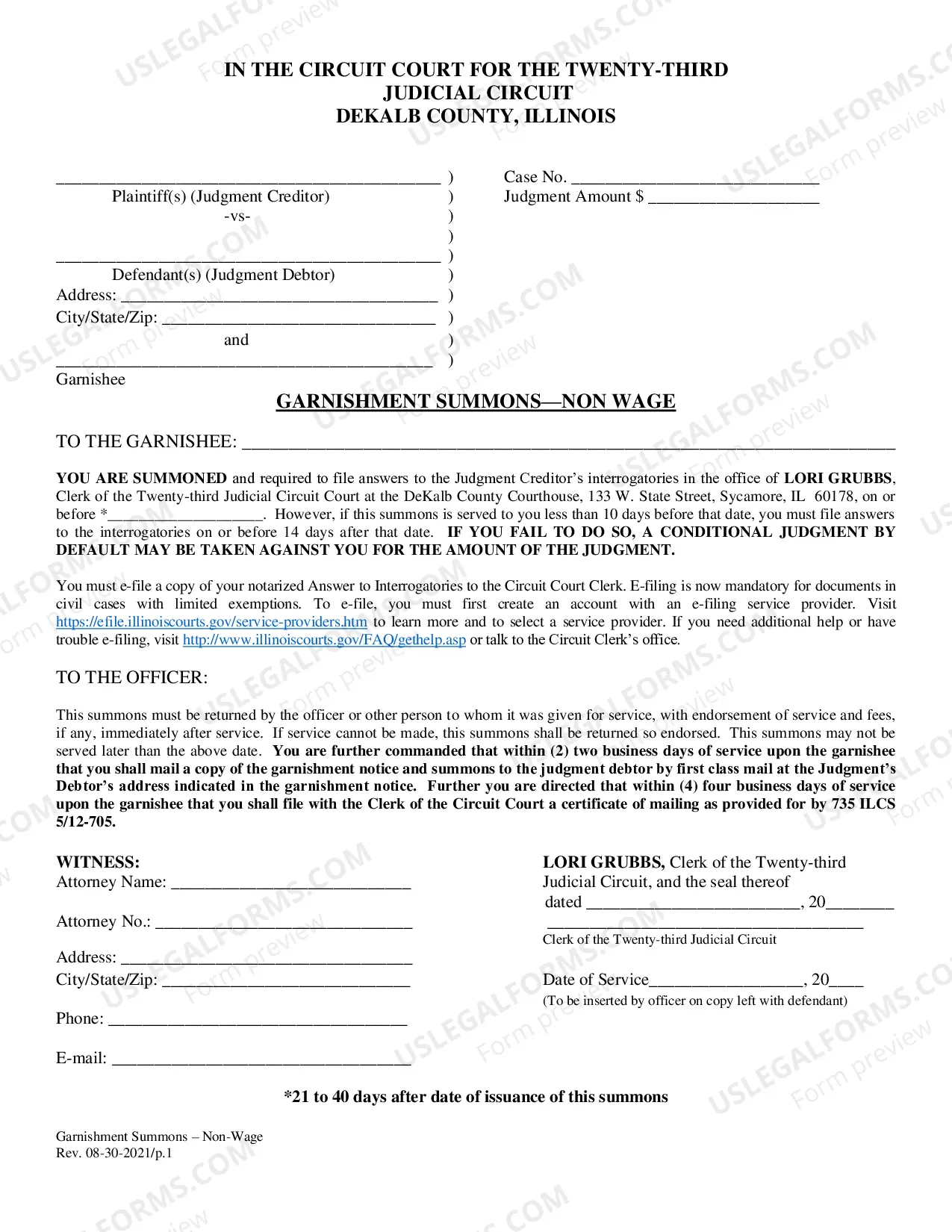
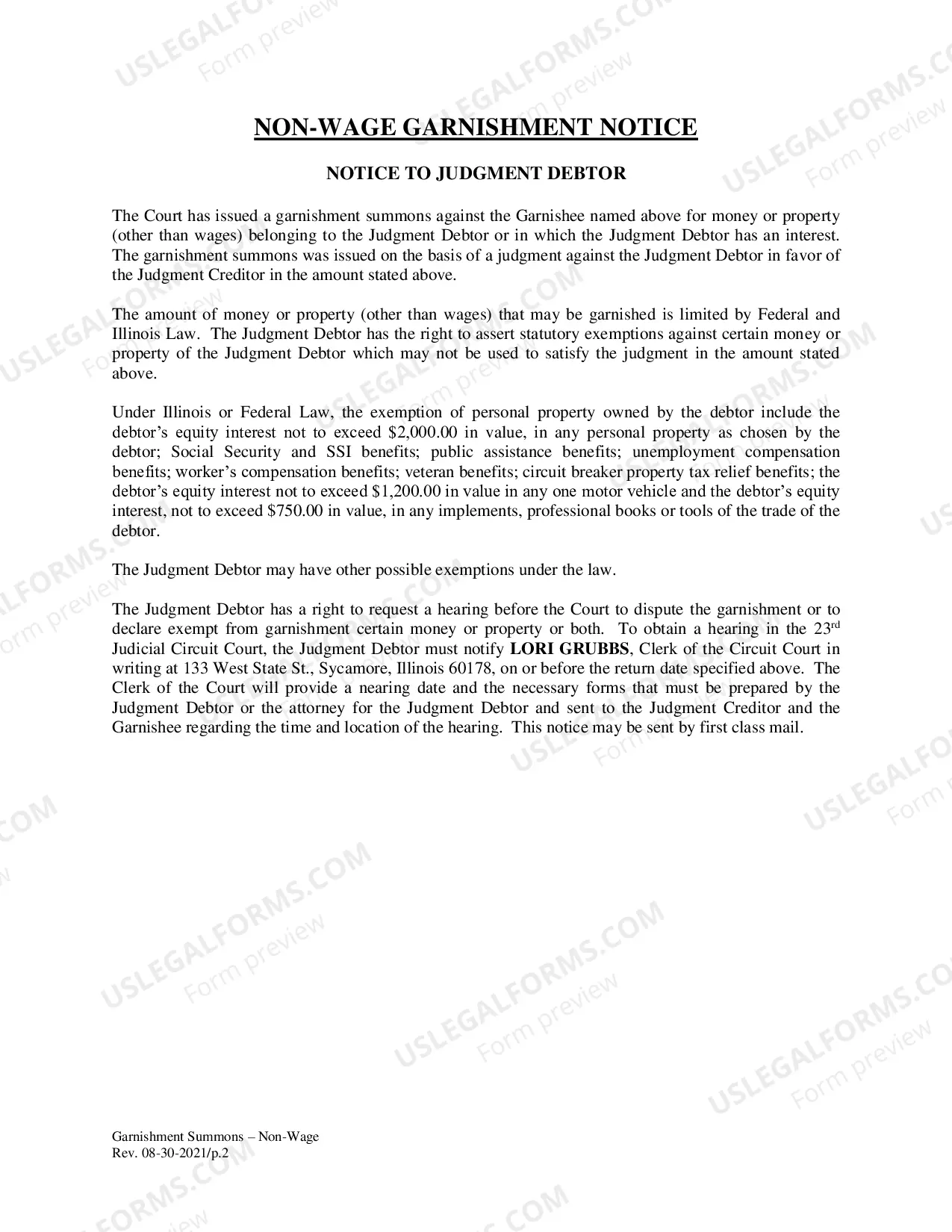
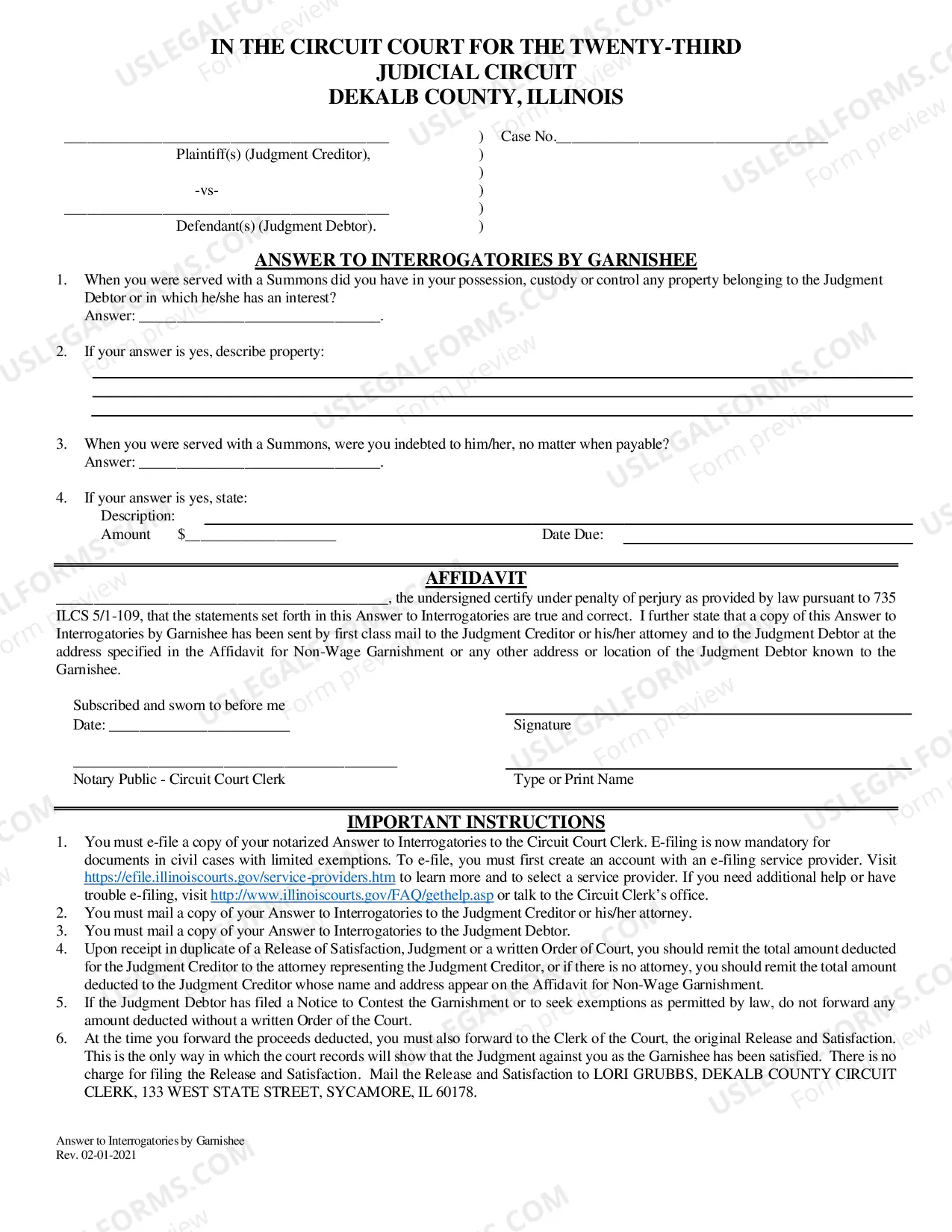
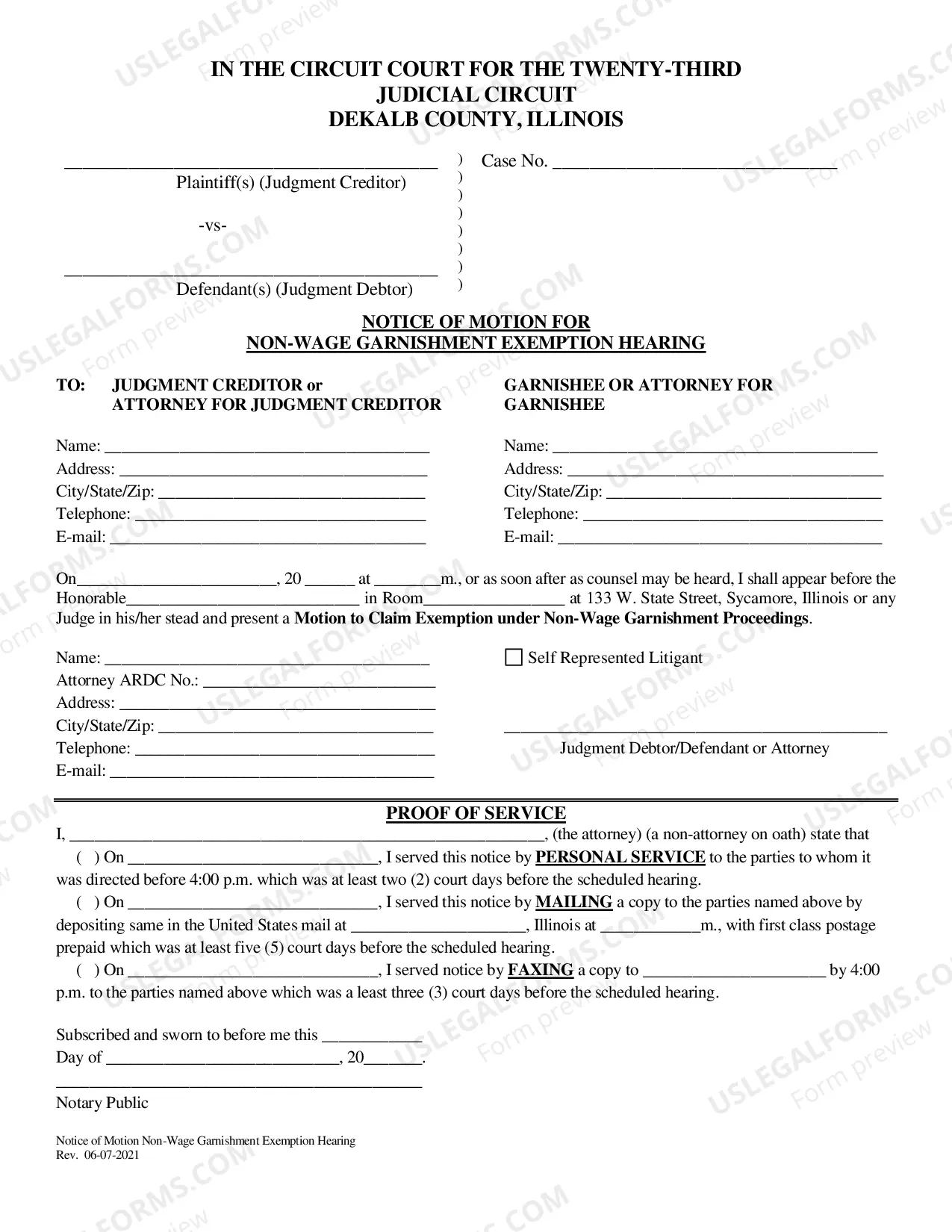
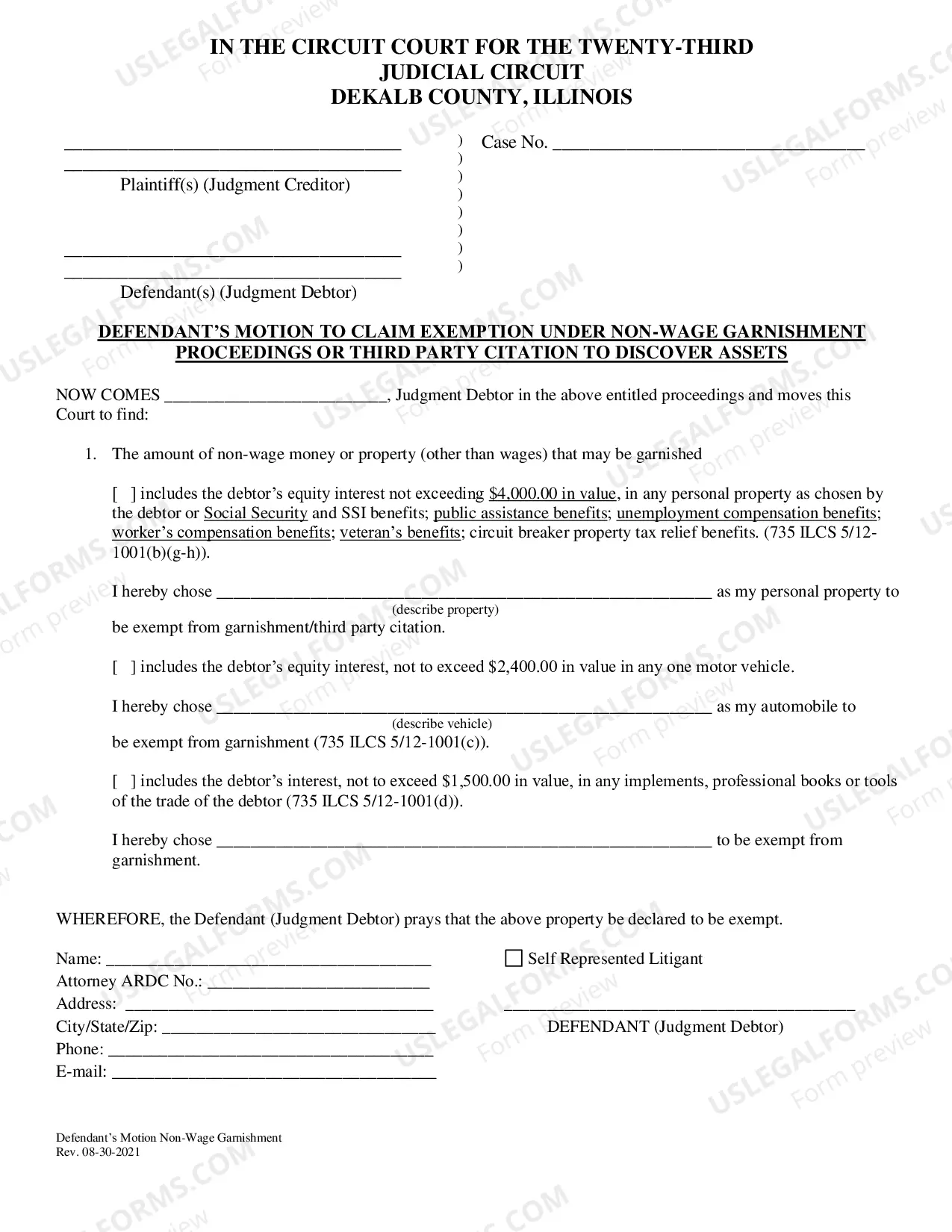
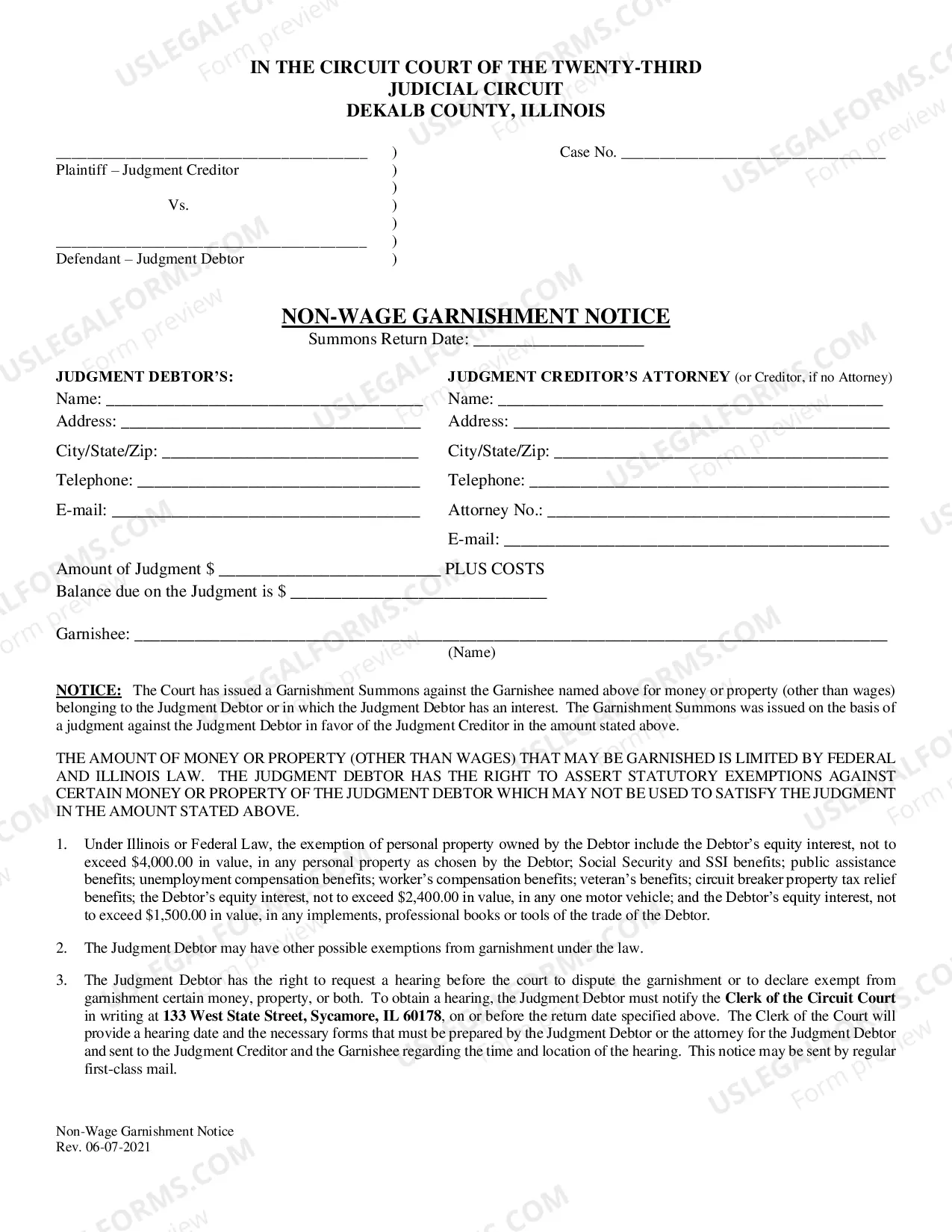
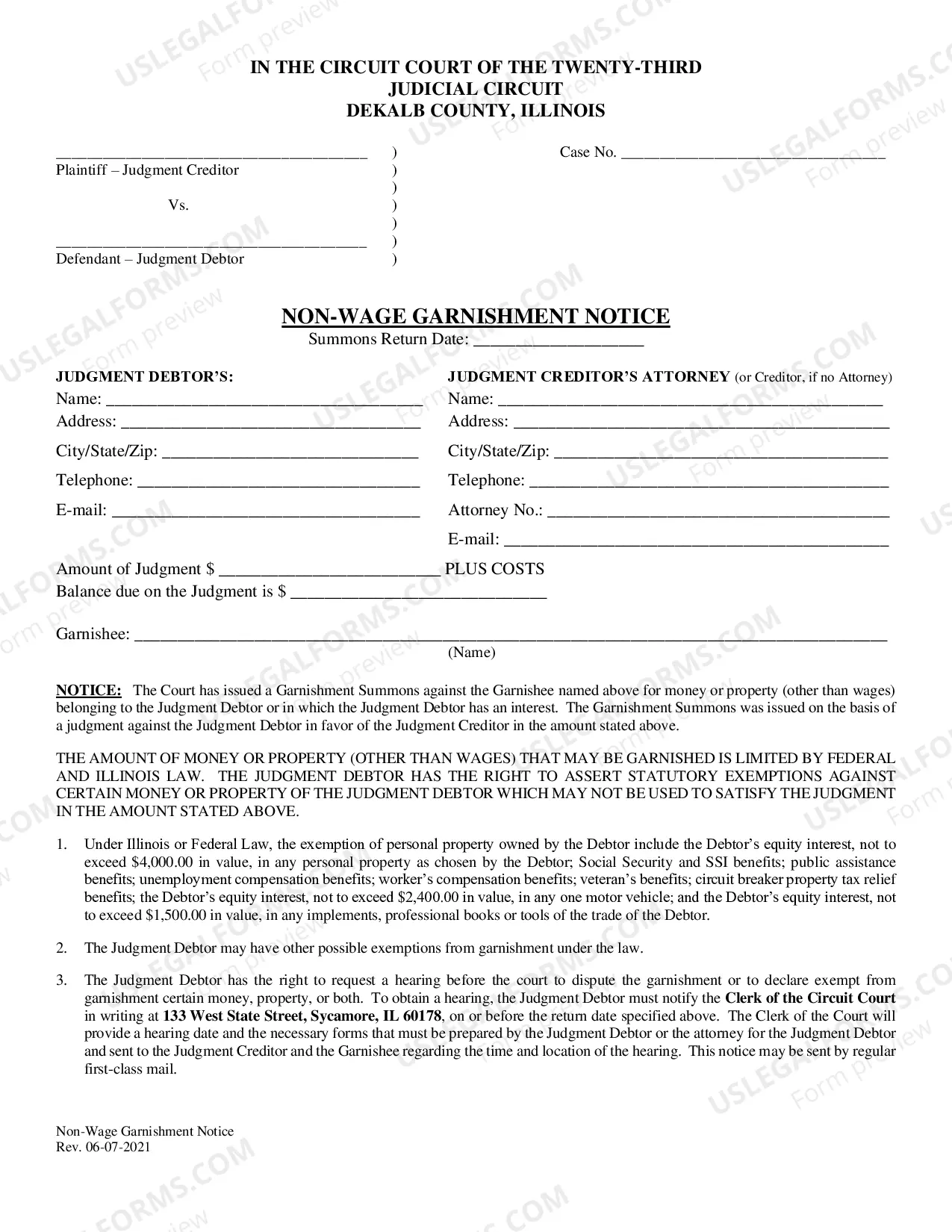
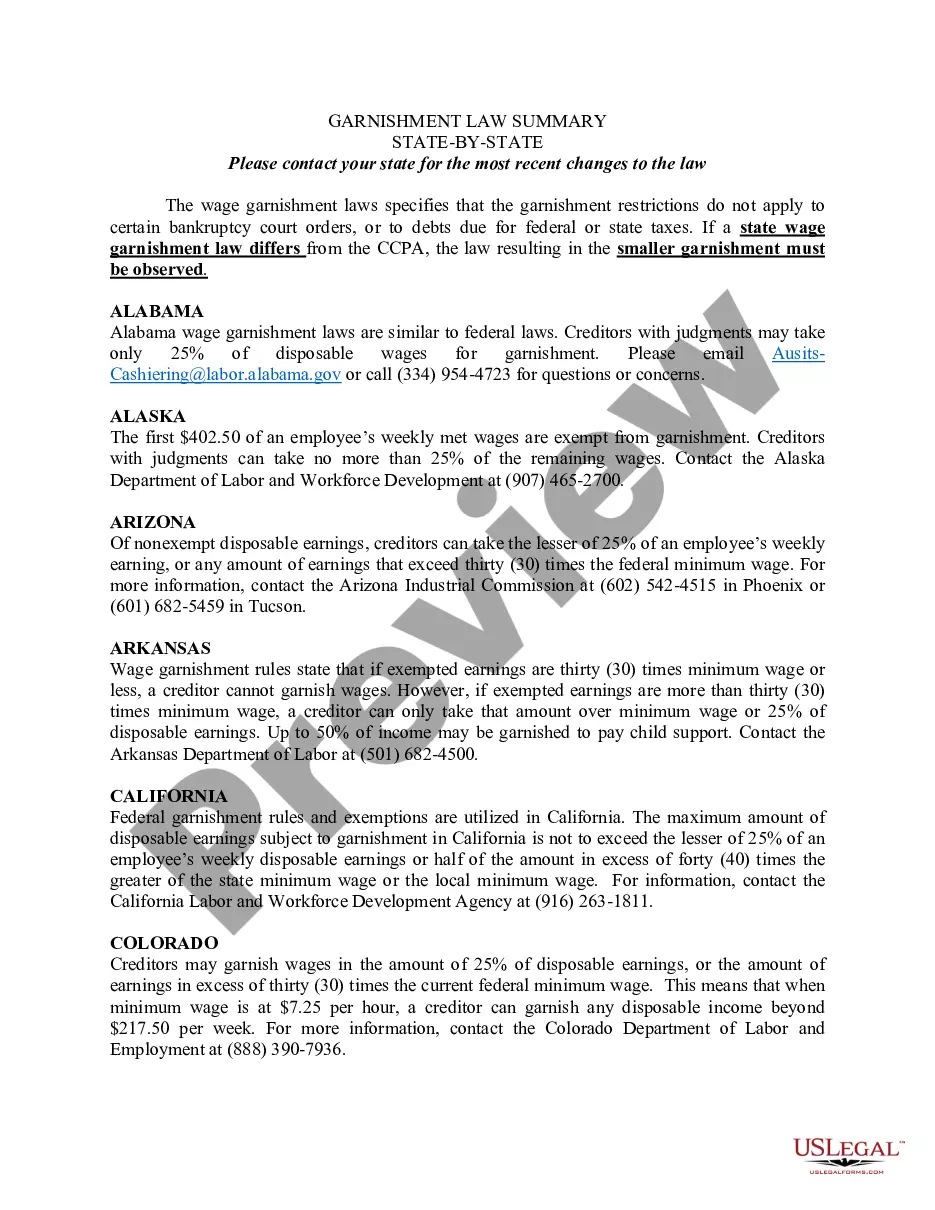
The Illinois Non-Wage Garnishment Notice is a legal document that is used to inform debtors that their wages are being garnished. It is issued by the Illinois Department of Revenue and is typically served on the employer of the debtor. The notice outlines the amount of money that is to be withheld from the debtor’s wages, as well as any additional fees associated with the garnishment. There are two types of Illinois Non-Wage Garnishments: a Notice of Income Withholding and a Notice of Bank Levy. The Notice of Income Withholding is used to inform the employer that the debtor’s wages must be withheld and sent to the creditor. The Notice of Bank Levy is used to inform the debtor’s bank that a portion of their account must be paid to the creditor. Both notices are subject to Illinois law, and must be served upon the debtor and their employer to be valid.
Illinois Non-Wage Garnishment Notice
Description
Get your form ready online
Our built-in tools help you complete, sign, share, and store your documents in one place.
Make edits, fill in missing information, and update formatting in US Legal Forms—just like you would in MS Word.
Download a copy, print it, send it by email, or mail it via USPS—whatever works best for your next step.
Sign and collect signatures with our SignNow integration. Send to multiple recipients, set reminders, and more. Go Premium to unlock E-Sign.
If this form requires notarization, complete it online through a secure video call—no need to meet a notary in person or wait for an appointment.
We protect your documents and personal data by following strict security and privacy standards.

Make edits, fill in missing information, and update formatting in US Legal Forms—just like you would in MS Word.

Download a copy, print it, send it by email, or mail it via USPS—whatever works best for your next step.

Sign and collect signatures with our SignNow integration. Send to multiple recipients, set reminders, and more. Go Premium to unlock E-Sign.

If this form requires notarization, complete it online through a secure video call—no need to meet a notary in person or wait for an appointment.

We protect your documents and personal data by following strict security and privacy standards.
Looking for another form?


How to fill out Illinois Non-Wage Garnishment Notice?
Drafting legal documents can be quite a hassle if you lack ready-made fillable templates. With the US Legal Forms online collection of official paperwork, you can be assured that the placeholders you access adhere to federal and state statutes and are verified by our experts.
Obtaining your Illinois Non-Wage Garnishment Notice through our service is as straightforward as ABC. Existing users with an active subscription simply need to Log In and click the Download button once they find the appropriate template. Additionally, if needed, users can retrieve the same document from the My documents section of their account.
Haven't you experienced US Legal Forms yet? Join our service now to obtain any official document promptly and effortlessly each time you require it, and maintain your paperwork organized!
- Document compliance verification. You should meticulously assess the content of the form you require and ensure it meets your expectations and complies with your state's legal stipulations. Examining your document and reviewing its overall outline will assist you in this.
- Alternative search (optional). If any discrepancies arise, explore the library via the Search tab above until you discover a fitting form, and click Buy Now once you identify the one desired.
- Account creation and form acquisition. Sign up for a US Legal Forms account. After verifying your account, Log In and select your desired subscription option. Make a payment to proceed (both PayPal and credit card methods are accepted).
- Template acquisition and subsequent use. Choose the file format for your Illinois Non-Wage Garnishment Notice and click Download to store it on your device. Print it to finalize your documents manually or utilize a versatile online editor to prepare a digital version more swiftly and effectively.
Form popularity
FAQ
The Debt Collection Improvement Act authorizes federal agencies or collection agencies under contract with them to garnish up to 15% of disposable earnings to repay defaulted debts owed to the U.S. government.
We often get asked, how do I stop IRS wage garnishments, and what is the maximum amount the IRS can garnish from your paycheck? Generally, the IRS will take 25 to 50% of your disposable income. Disposable income is the amount left after legally required deductions such as taxes and Social Security (FICA).
The total amount garnished cannot be more than 25% of the employee's monthly disposable earnings. Exemptions from garnishment, including, but not limited to, worker's compensation, unemployment compensation, disability payments, OWF payments, or child support or spousal support, and most pensions.
In Texas, wage garnishment is prohibited by the Texas Constitution except for a few kinds of debt: child support, spousal support, student loans, or unpaid taxes. A debt collector cannot garnish your wages for ordinary debts. However, Texas does allow for a bank account to be frozen.
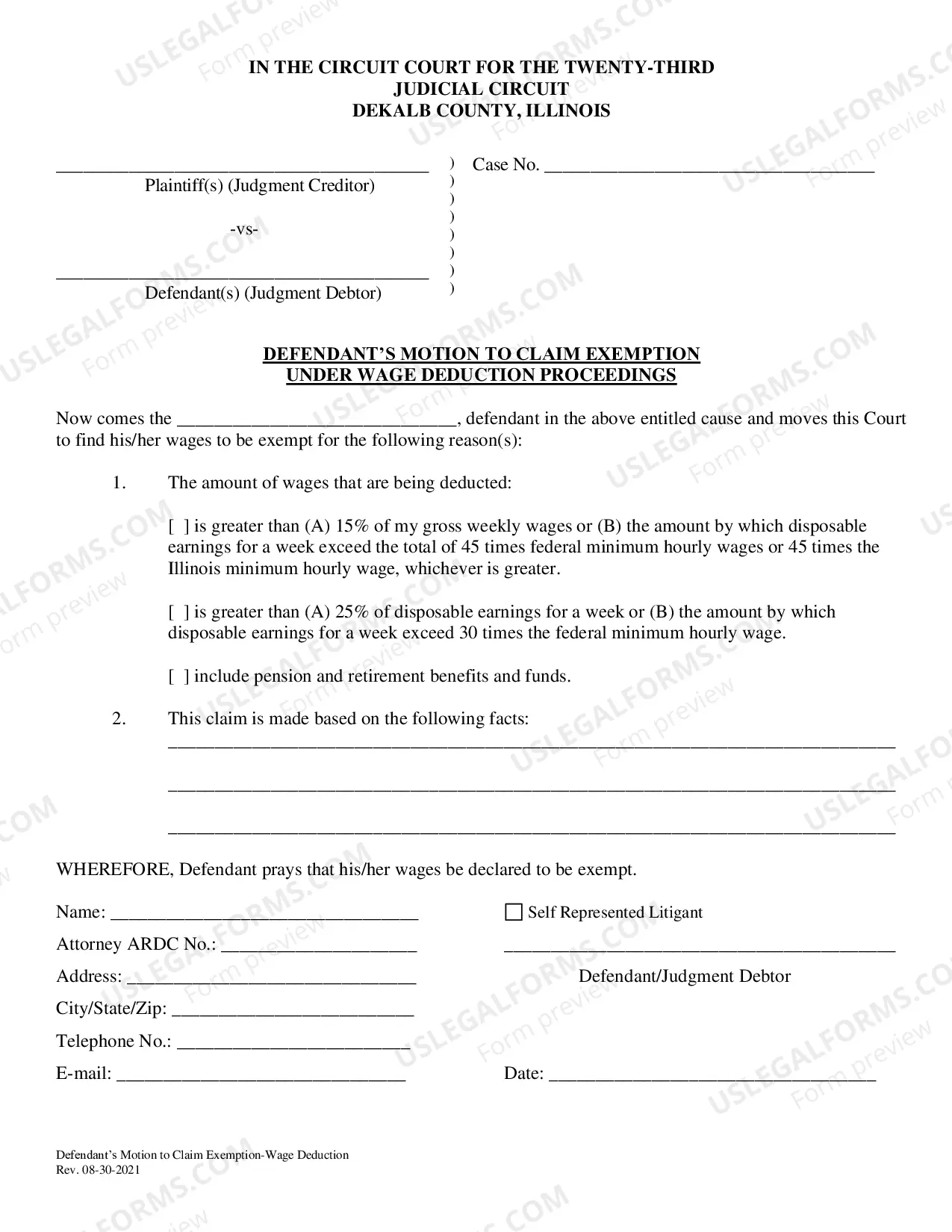
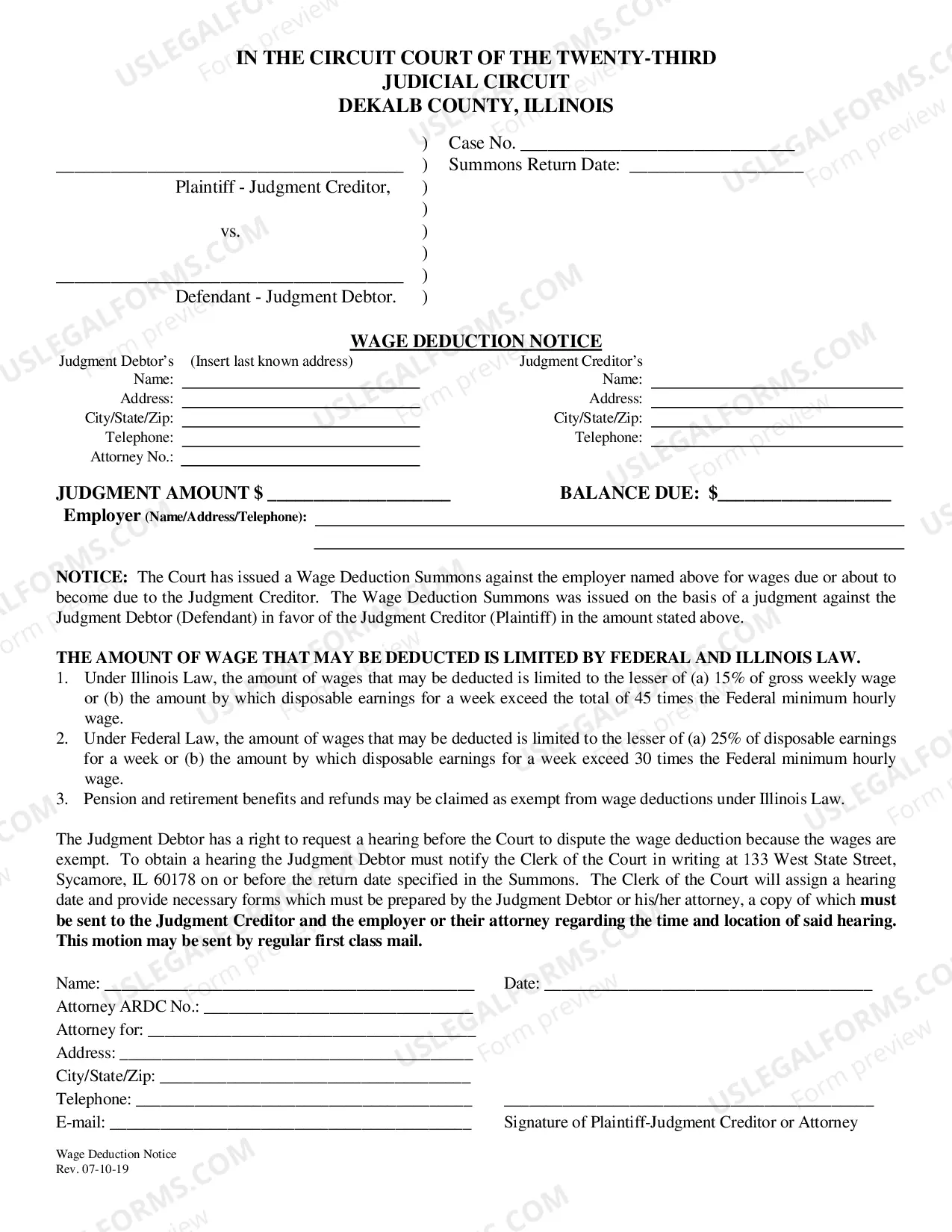
The most the employer can hold out for you is 15% of the debtor's gross income before taxes or deductions. However, the withholding can't leave the debtor with less than 45 times the state minimum wage as weekly take-home pay.
Wage Garnishment in Illinois In Illinois, if a creditor wins a court judgment against you, the maximum your employer can garnish from your weekly earnings is either 15 percent of your earnings or the amount left over after you deduct 45 hours' worth of Illinois' minimum wage.
Non-wage garnishment is the judgment creditor's attachment, after judgment, of the judgment debtor's property, other than wages, which is in the possession, custody or control of third parties. Example: A creditor files a non-wage garnishment to attach funds your client has deposited in the local bank.
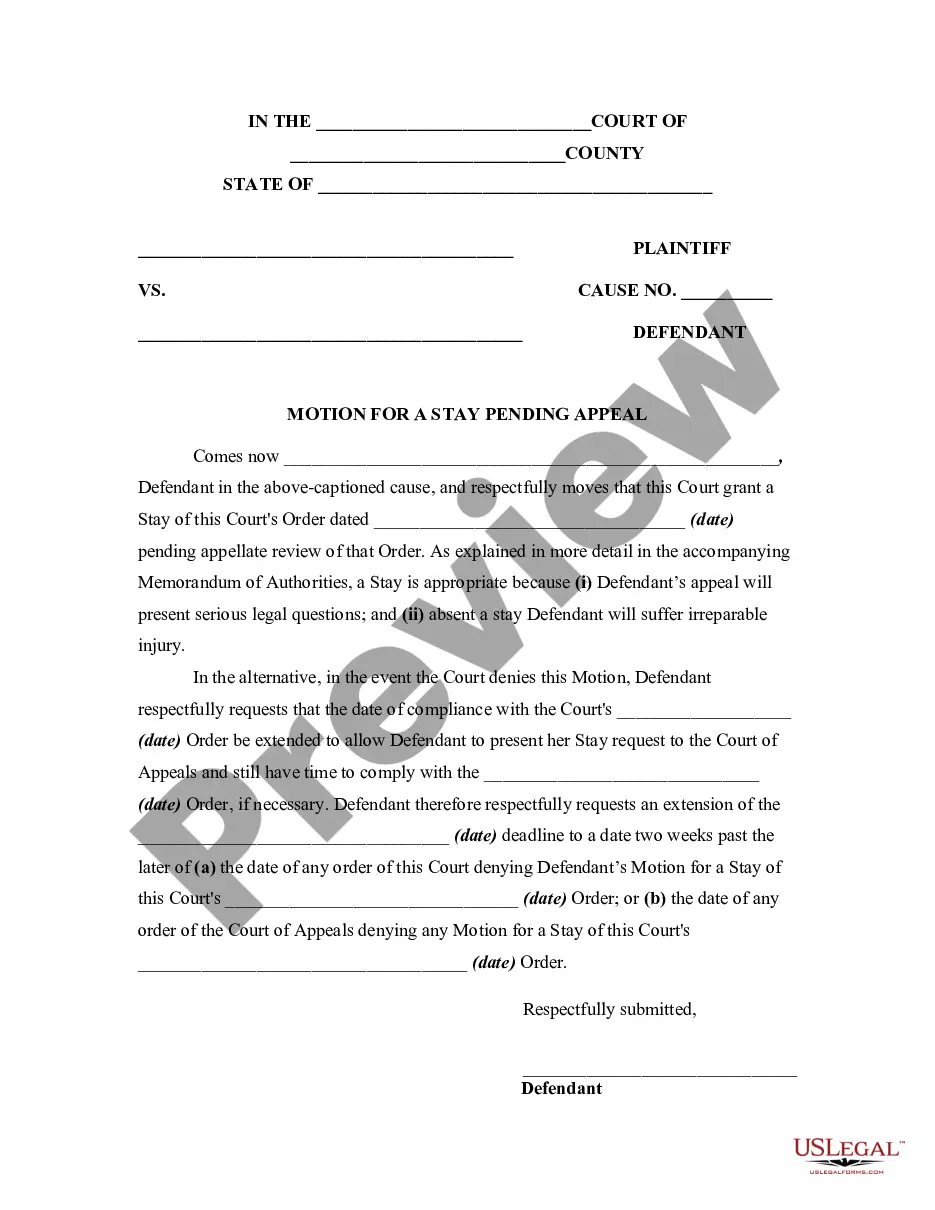
A creditor can garnish whichever is less: up to 25% of your disposable earnings or the amount of your disposable earnings that's more than 30 times the federal minimum wage (currently $217.50).