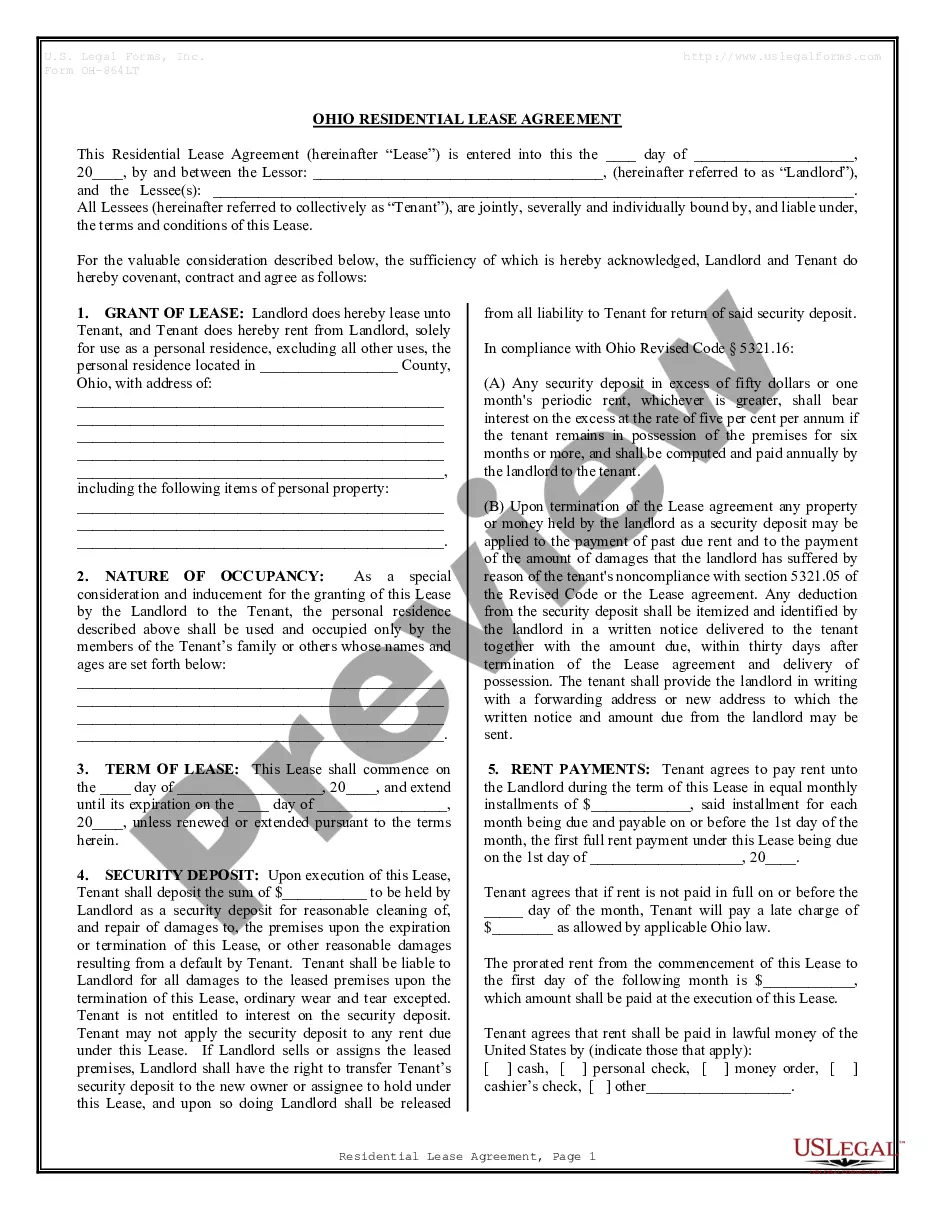
Domain Name Infringement Letter
What is this form?
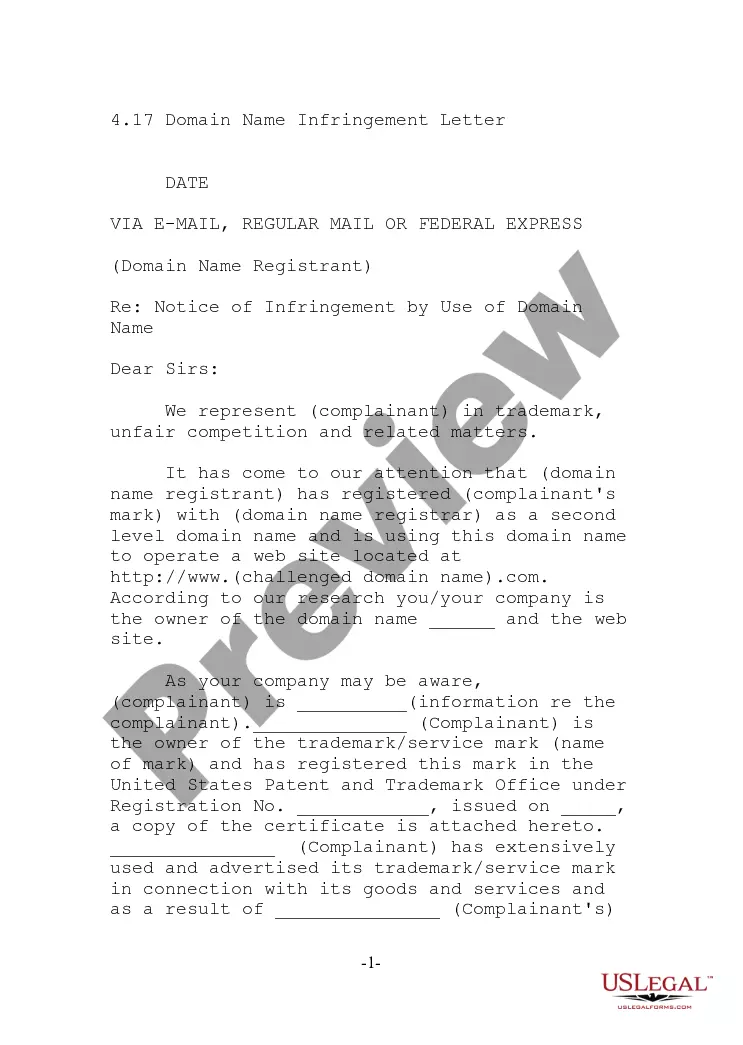
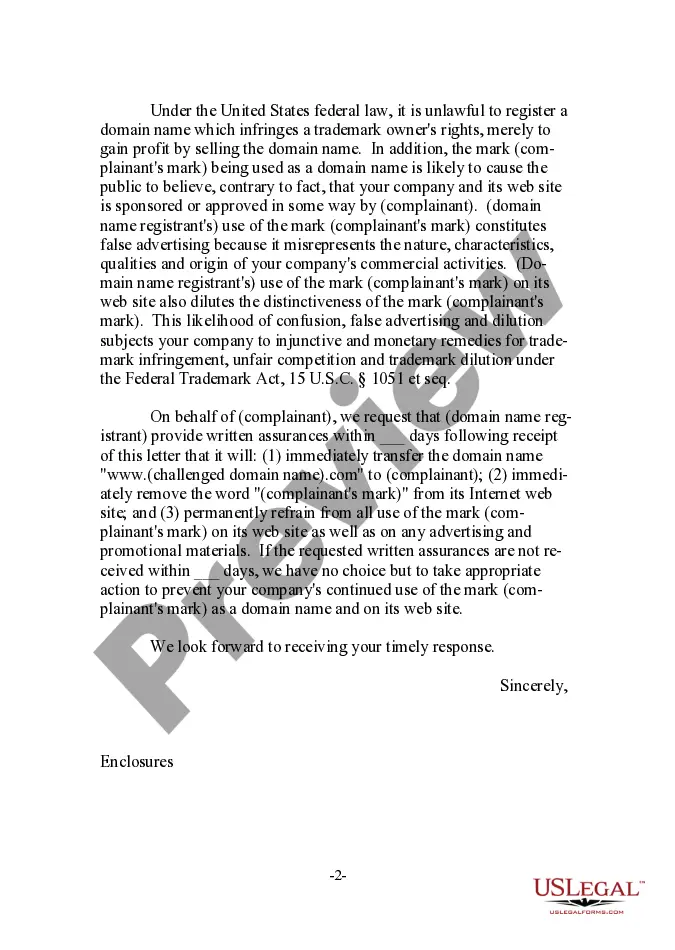
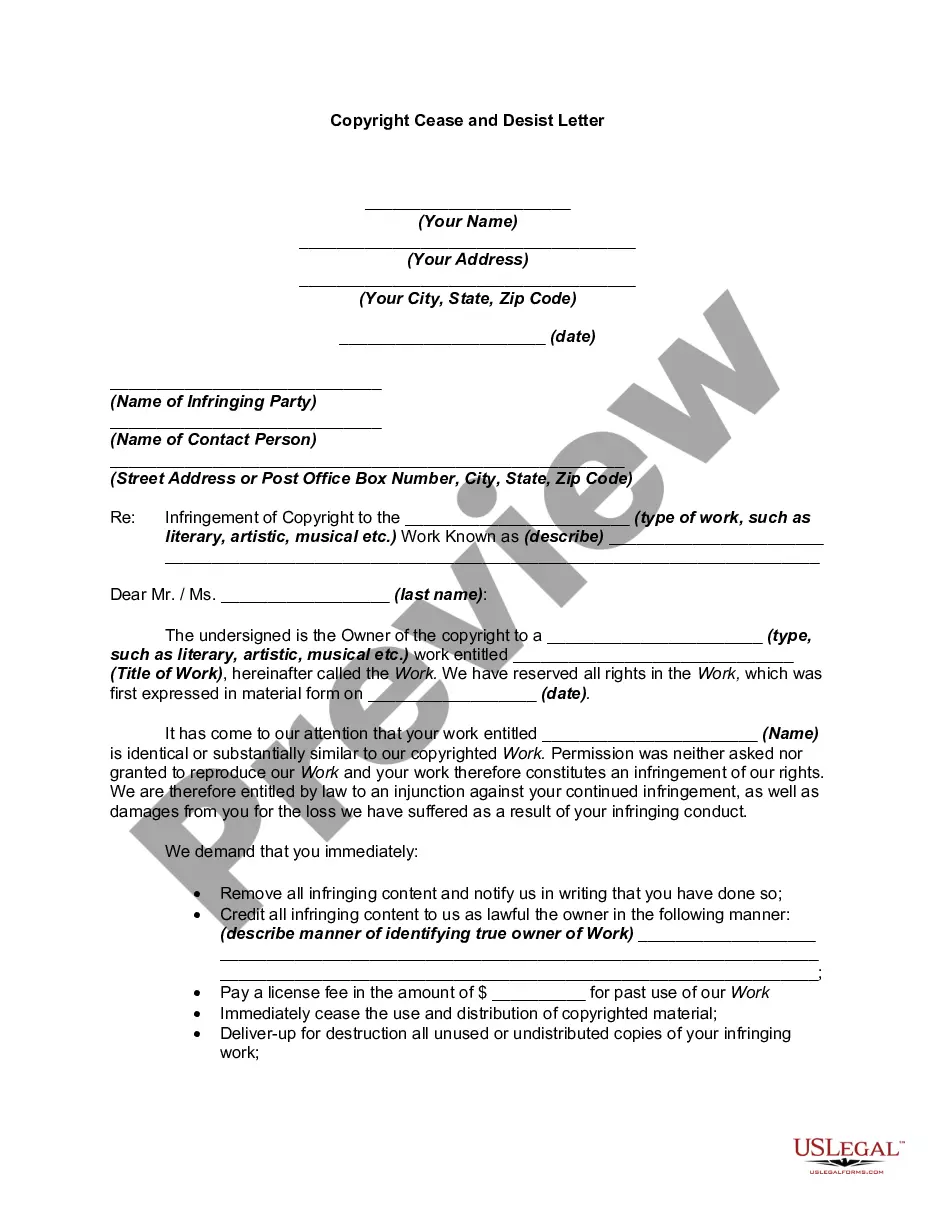
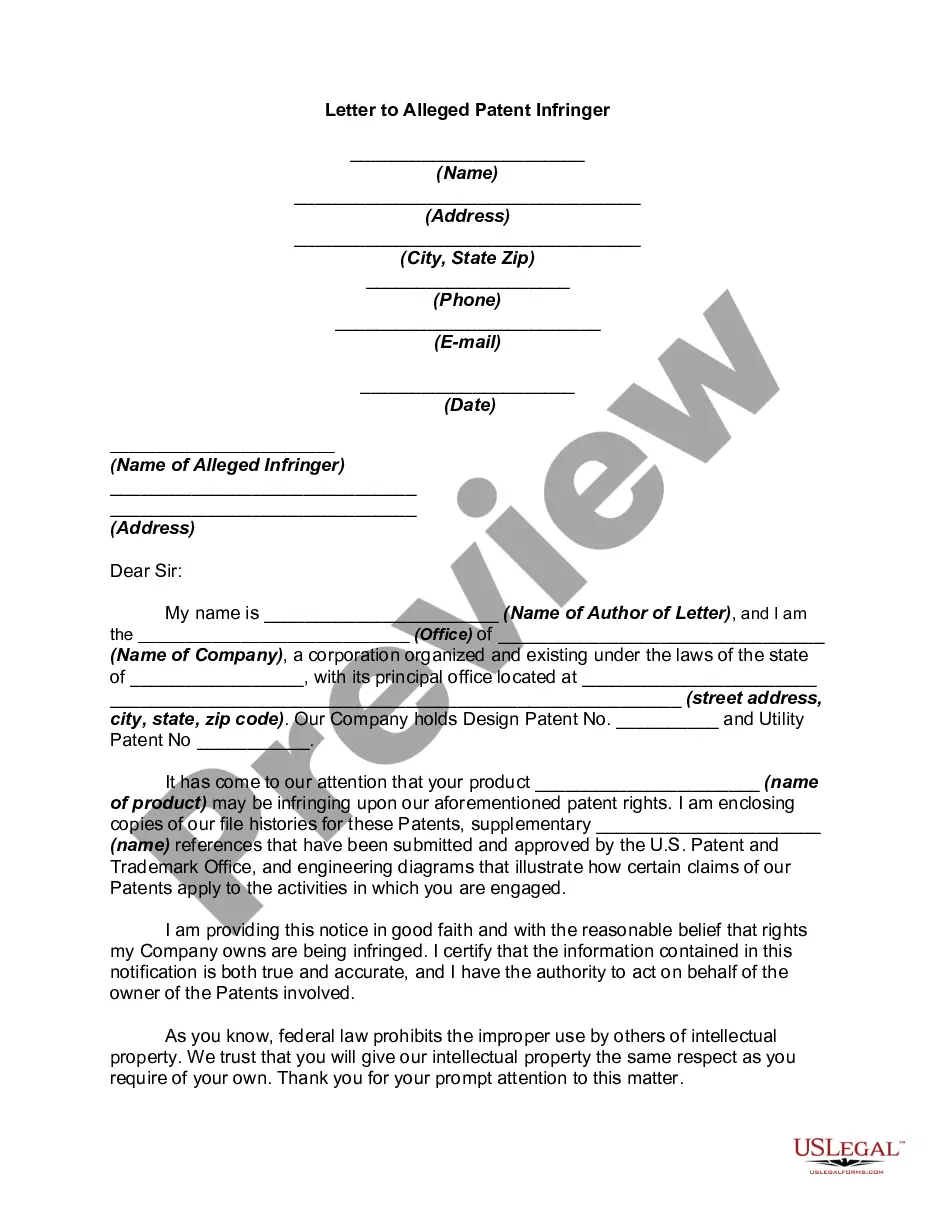
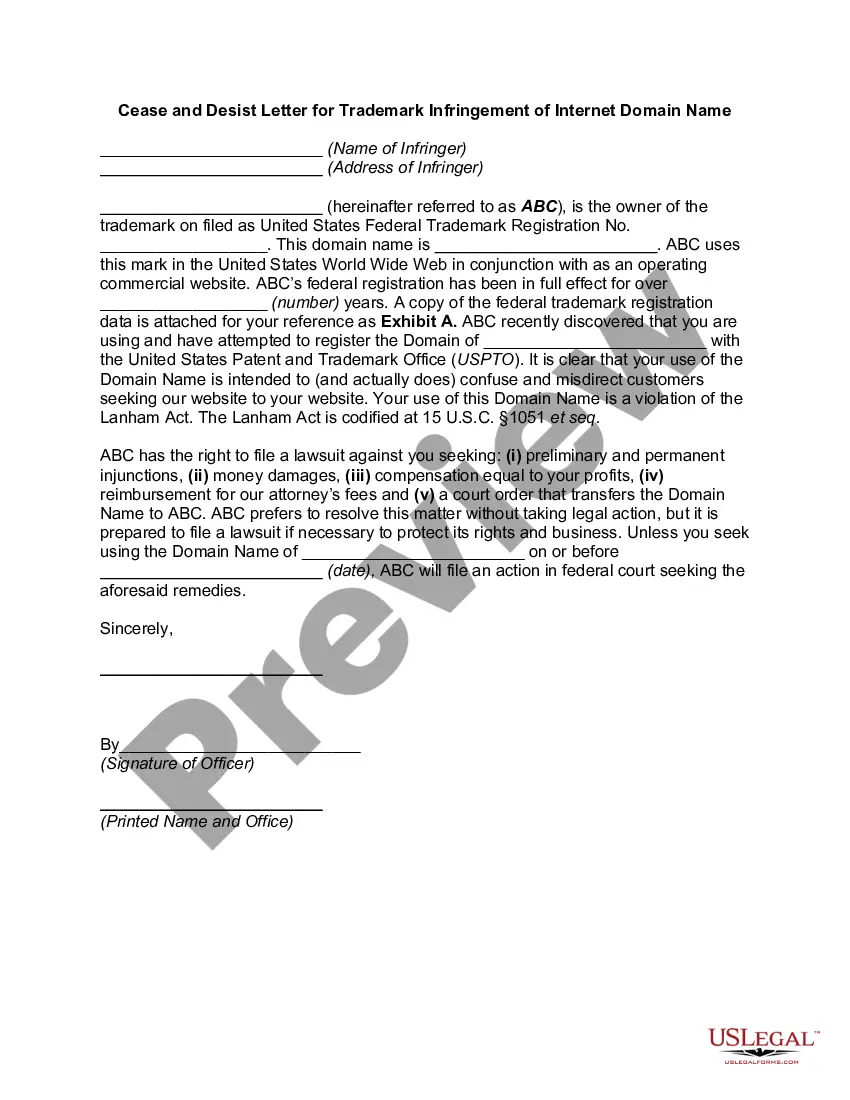
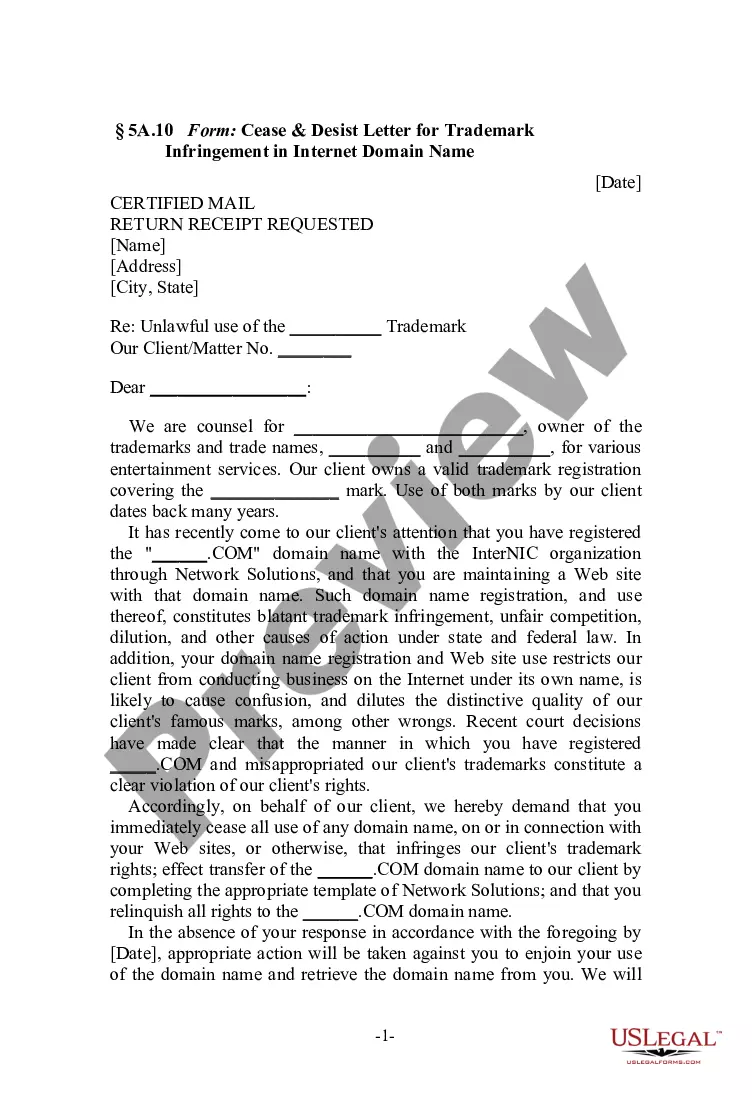
The Domain Name Infringement Letter is a legal document used to address disputes regarding trademark infringement related to domain names. This letter is tailored to notify a domain name registrant that their use of a specific domain infringes on the trademark rights of another party. Unlike other forms of trademark enforcement, this letter directly addresses domain registration issues and seeks an immediate resolution, such as the transfer of the domain name.
Key parts of this document
- Date and method of delivery
- Identification of the complainant and the domain name registrant
- Description of the trademark and its registration details
- Statement of infringement and explanation of legal grounds
- Request for actions to be taken by the domain name registrant
When to use this form
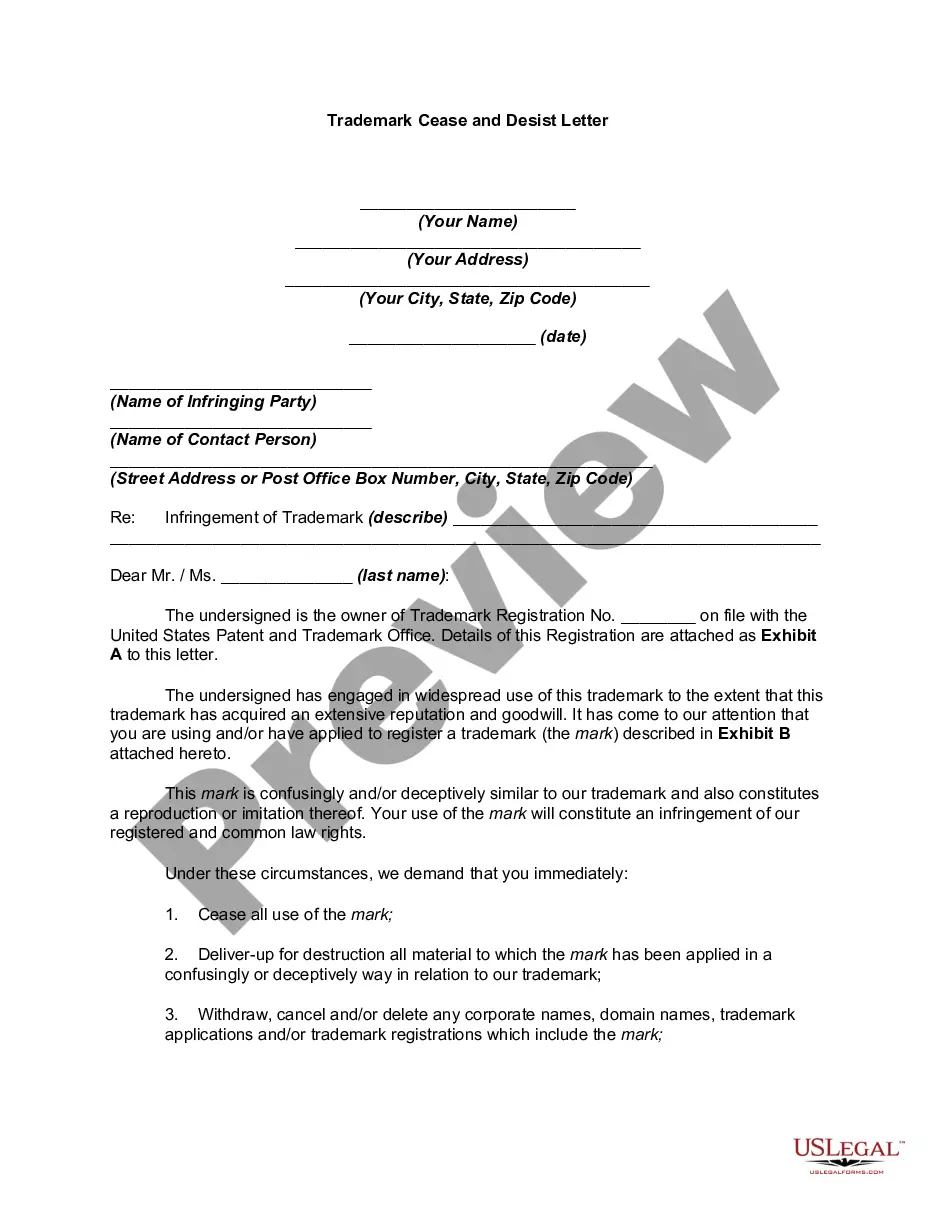
This form should be used when a business or individual believes that their trademark rights are being infringed upon by a registered domain name. Common scenarios include situations where a domain name closely resembles a trademark, leading to potential confusion among consumers, or when a domain is being used in a way that falsely advertises affiliations or endorsements.
Who can use this document
Participants suitable for this form include:
- Trademark owners concerned about possible infringements
- Attorneys representing clients in trademark disputes
- Businesses seeking to protect their brand identity online
- Individuals who wish to assert their trademark rights against domain name registrants
Instructions for completing this form
- Identify the parties involved, including the complainant and the domain name registrant.
- Enter the domain name in question and relevant trademark details.
- Specify the actions you are requesting the domain name registrant to take.
- Indicate the date of the letter and how it will be delivered.
- Include any necessary attachments, such as trademark registrations, for reference.
Notarization guidance
In most cases, this form does not require notarization. However, some jurisdictions or signing circumstances might. US Legal Forms offers online notarization powered by Notarize, accessible 24/7 for a quick, remote process.
Get your form ready online
Our built-in tools help you complete, sign, share, and store your documents in one place.
Make edits, fill in missing information, and update formatting in US Legal Forms—just like you would in MS Word.
Download a copy, print it, send it by email, or mail it via USPS—whatever works best for your next step.
Sign and collect signatures with our SignNow integration. Send to multiple recipients, set reminders, and more. Go Premium to unlock E-Sign.
If this form requires notarization, complete it online through a secure video call—no need to meet a notary in person or wait for an appointment.
We protect your documents and personal data by following strict security and privacy standards.

Make edits, fill in missing information, and update formatting in US Legal Forms—just like you would in MS Word.

Download a copy, print it, send it by email, or mail it via USPS—whatever works best for your next step.

Sign and collect signatures with our SignNow integration. Send to multiple recipients, set reminders, and more. Go Premium to unlock E-Sign.

If this form requires notarization, complete it online through a secure video call—no need to meet a notary in person or wait for an appointment.

We protect your documents and personal data by following strict security and privacy standards.
Typical mistakes to avoid
- Failing to properly identify the trademark owner or the infringing domain.
- Not including sufficient evidence of trademark registration.
- Missing the deadline for the domain registrant to respond.
- Using overly complex legal language that may confuse the recipient.
Advantages of online completion
- Convenience of downloading and customizing the form to meet your specific needs.
- Editable format allows for quick adjustments to be made based on your situation.
- Access to trusted templates drafted by licensed attorneys, ensuring legal reliability.
Legal use & context
- The form serves as an initial attempt to resolve a trademark dispute before pursuing legal action.
- It outlines the rights of the trademark owner and the legal obligations of the domain registrant.
- This letter can serve as evidence of good faith attempts to resolve disputes, should litigation arise.
Looking for another form?

Form popularity
FAQ
Suing Under the ACPA The Anticybersquatting Consumer Protection Act (ACPA) authorizes a trademark owner to sue an alleged cybersquatter in federal court and obtain a court order transferring the domain name back to the trademark owner. In some cases, the cybersquatter must pay money damages.
Copyright law does not protect domain names. The Internet Corporation for Assigned Names and Numbers (ICANN), a nonprofit organization that has assumed the responsibility for domain name system management, administers the assigning of domain names through accredited registers.
Sometimes, they may even be "squatting" on these domain names hoping to make a quick buck off of you, the person that wants to buy it. Unless there's a trademark issue involved, though, you can't really force someone to give up a domain name they own.
The brand owner is usually justifiably upset because one of local or direct competitors took advantage of the brand owner's oversight in not registering all possible permutations of its brand as a domain name.
It makes good sense to do so. Buying multiple domains for your business can improve its online identity and protect your brand from fierce competitors.Keeping domain names out of the hands of competitors is just one of the reasons why it is a great idea to invest in multiple variations of your primary domain.
Although you cannot register a domain name that someone else has already registered, almost all registrars will accept domain names for registration that are similar to existing names.
Yes you can get sued. The issue is whether your use of the domain name violates the trademark rights of this competitor. Trademarks identify the source of goods and services.
A business registered a domain name that was already trademarked by a competitor but had not yet been registered as a domain name.In such cases, the owner of the domain name unfairly benefits from the deceptive domain name. Courts will find the domain name constitutes trademark infringement.
Buying and selling real estate is considered an investment, while domain squatting is illegal.If a domain squatter can't prove a legal intent in owning the domain name, it is considered to be a bad faith registration, and he or she is considered guilty of domain squatting.