Accessory After the Fact
Understanding this form
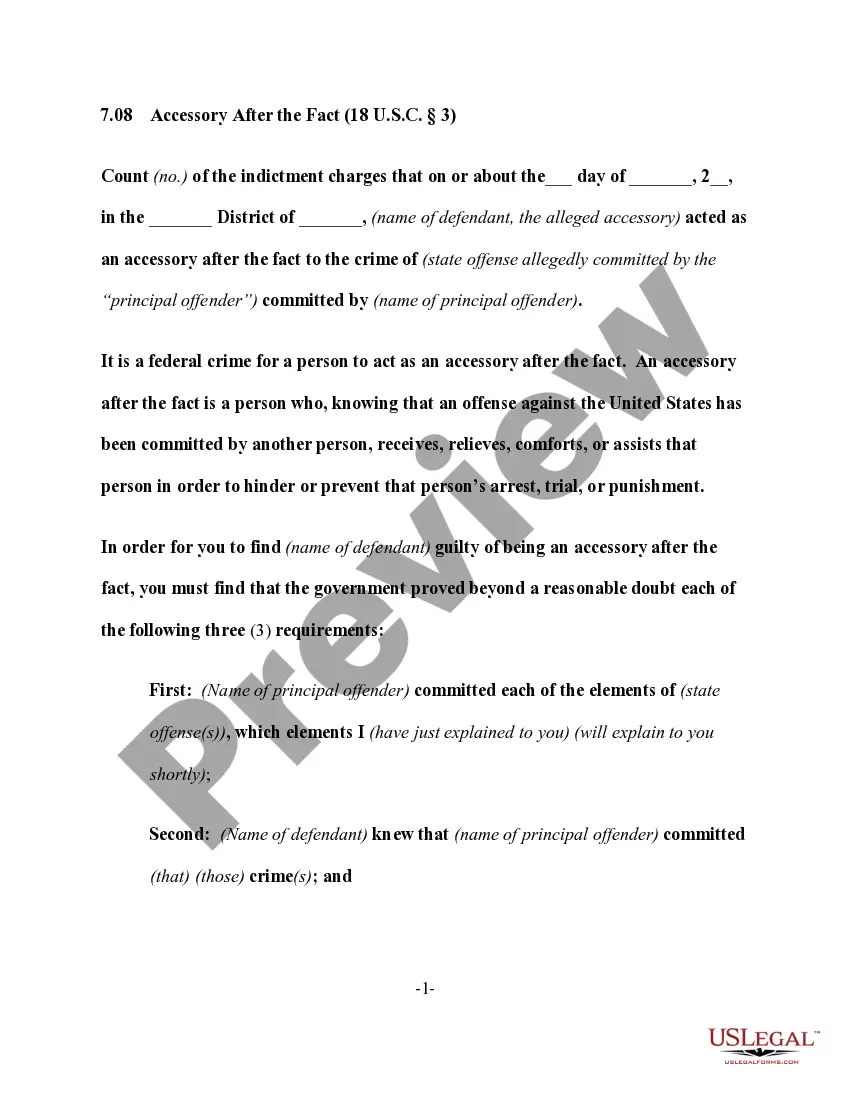
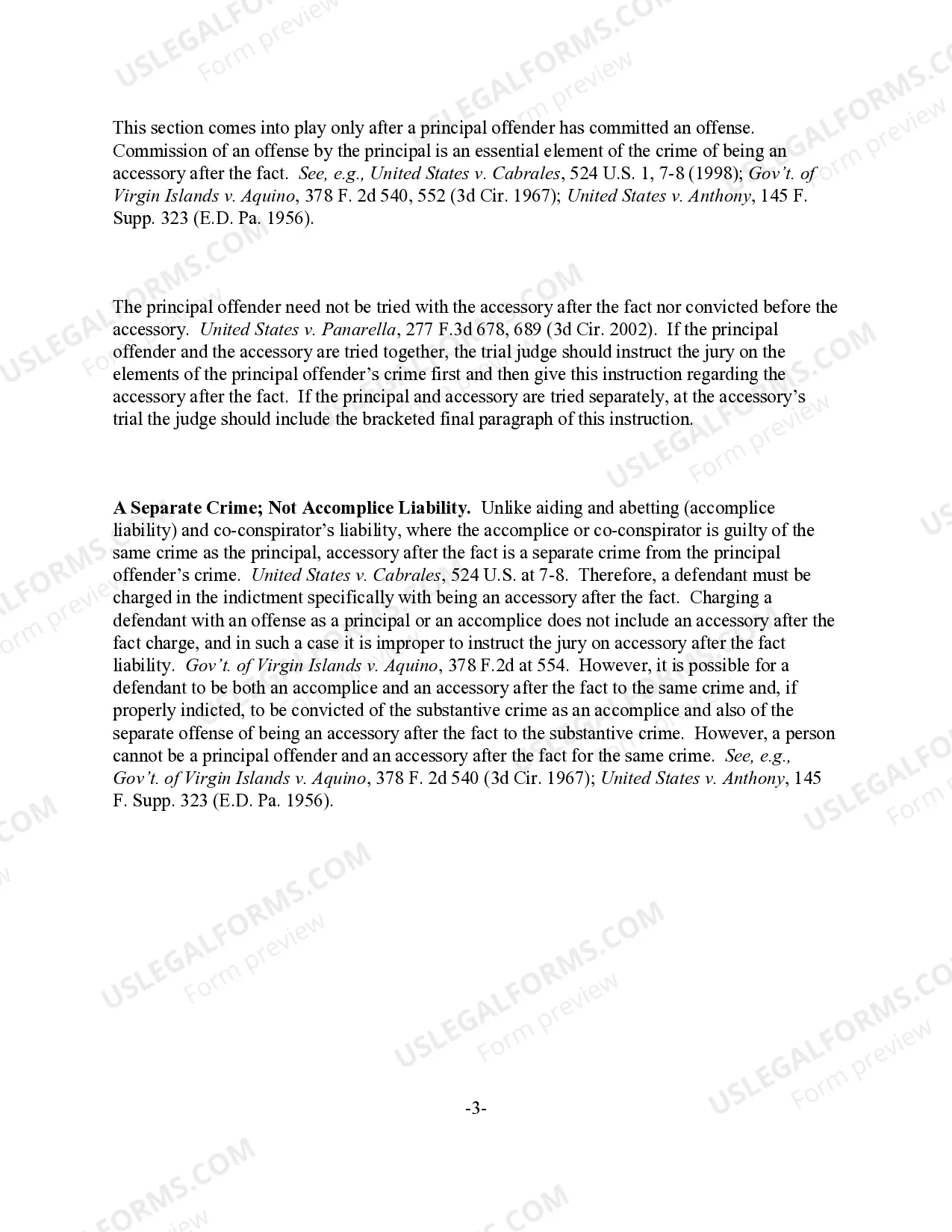
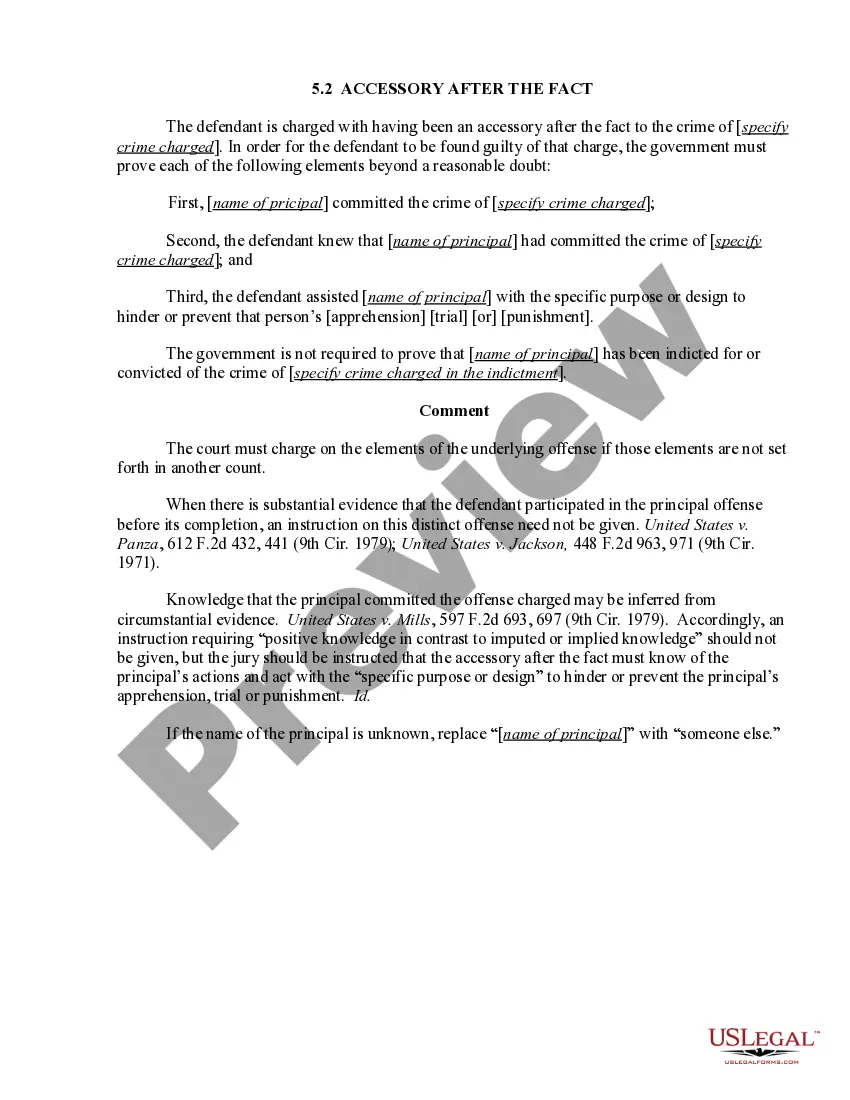
The Accessory After the Fact form is a legal document used in cases where an individual is charged with aiding a principal offender after the commission of a crime. It distinguishes itself from other forms by addressing the separate offense of being an accessory, which involves providing assistance to someone knowing they have committed a crime. Understanding this form is crucial for anyone facing charges or involved in legal proceedings surrounding accessory roles in criminal activities.
Key parts of this document
- Identification of the defendant and the principal offender.
- Details of the alleged crime committed by the principal offender.
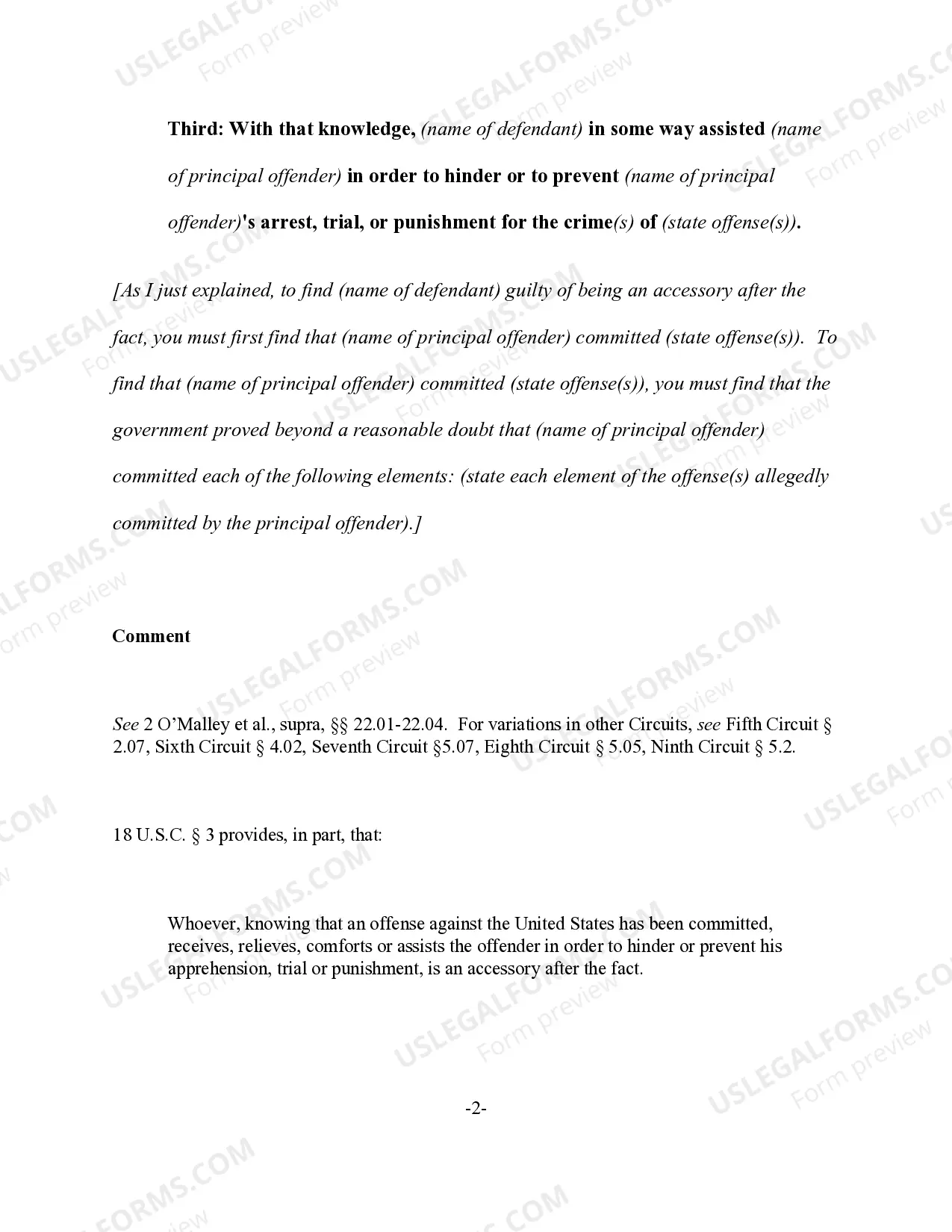
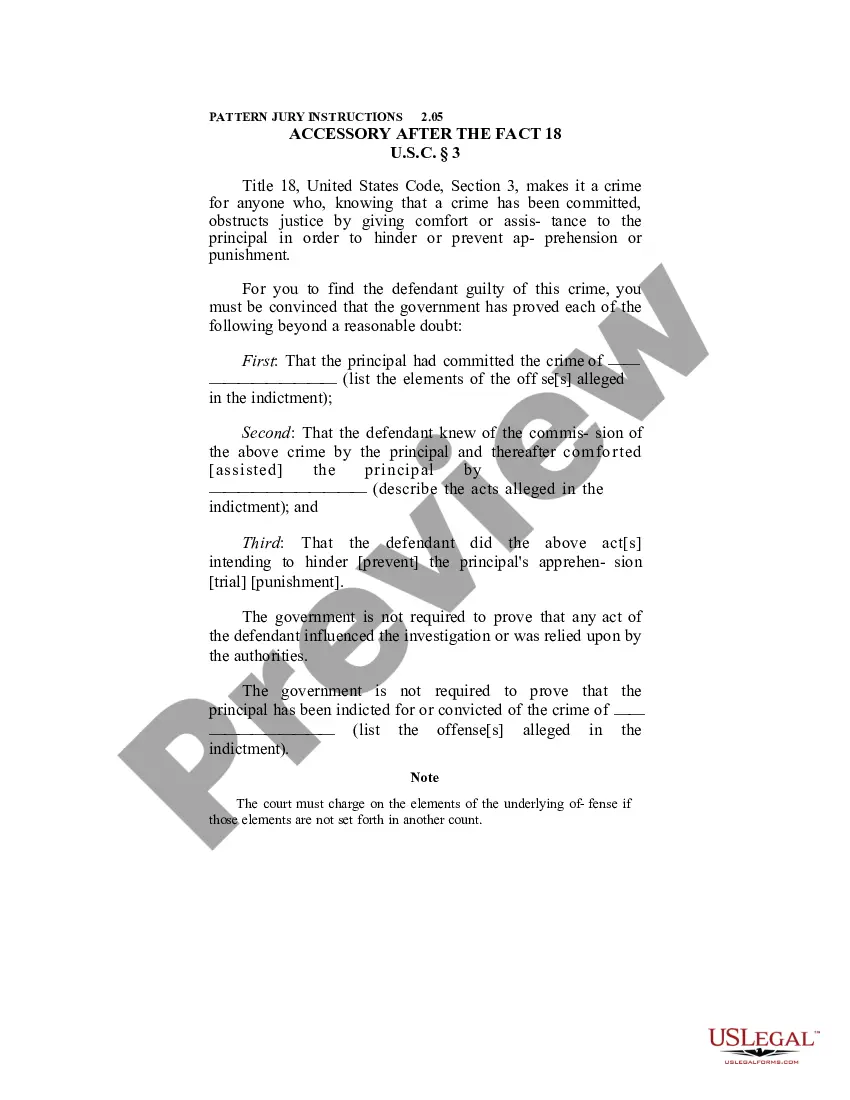
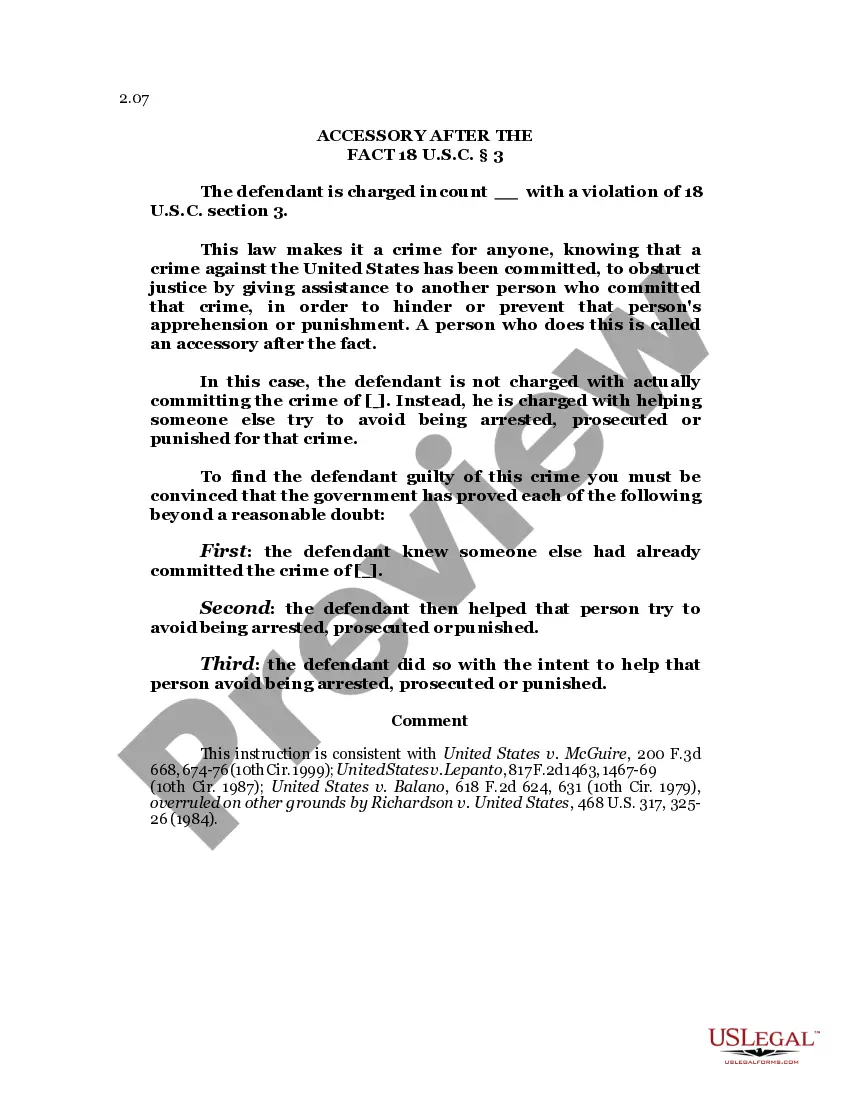
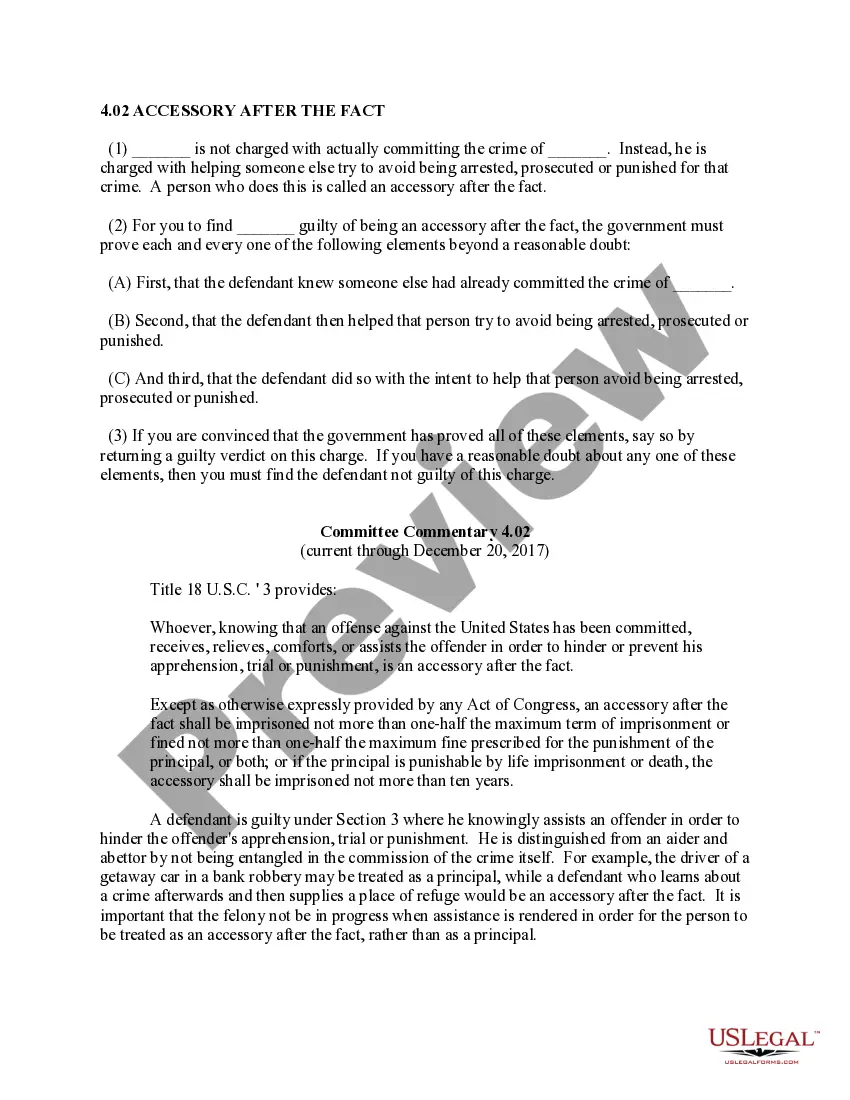
- Three elements required for proving guilt: commission of the crime, knowledge of the crime, and provision of assistance.
- Explanation of the legal ramifications for accessories after the fact.
Common use cases
This form is used when an individual is accused of being an accessory after the fact to a crime. It is necessary in situations where the person knowingly helps another who has committed an offense, aiming to prevent their arrest, trial, or punishment. It is particularly relevant in federal cases involving serious crimes against the United States.
Intended users of this form
- Individuals accused of being an accessory after the fact.
- Legal representatives preparing a defense for a client facing accessory charges.
- Parties involved in criminal proceedings where accessory after the fact charges are present.
Instructions for completing this form
- Fill in the date and location of the alleged crime.
- Provide the names of both the defendant and the principal offender.
- Clearly state the crime committed by the principal offender.
- Detail the actions taken by the defendant to assist the principal offender after the crime.
- Ensure all necessary signatures and declarations are included before submitting.
Does this form need to be notarized?
This form usually doesn’t need to be notarized. However, local laws or specific transactions may require it. Our online notarization service, powered by Notarize, lets you complete it remotely through a secure video session, available 24/7.
Get your form ready online
Our built-in tools help you complete, sign, share, and store your documents in one place.
Make edits, fill in missing information, and update formatting in US Legal Forms—just like you would in MS Word.
Download a copy, print it, send it by email, or mail it via USPS—whatever works best for your next step.
Sign and collect signatures with our SignNow integration. Send to multiple recipients, set reminders, and more. Go Premium to unlock E-Sign.
If this form requires notarization, complete it online through a secure video call—no need to meet a notary in person or wait for an appointment.
We protect your documents and personal data by following strict security and privacy standards.

Make edits, fill in missing information, and update formatting in US Legal Forms—just like you would in MS Word.

Download a copy, print it, send it by email, or mail it via USPS—whatever works best for your next step.

Sign and collect signatures with our SignNow integration. Send to multiple recipients, set reminders, and more. Go Premium to unlock E-Sign.

If this form requires notarization, complete it online through a secure video call—no need to meet a notary in person or wait for an appointment.

We protect your documents and personal data by following strict security and privacy standards.
Avoid these common issues
- Failing to properly identify the principal offender.
- Not providing sufficient details about the crime committed.
- Omitting relevant actions taken by the accessory.
- Misunderstanding the legal definition of being an accessory after the fact.
Advantages of online completion
- Convenient access to legal documents anytime.
- Editable fields allow for accurate and personalized entries.
- Secure storage of completed forms for easy retrieval.
- Assured compliance with federal legal standards.
Looking for another form?


Form popularity
FAQ
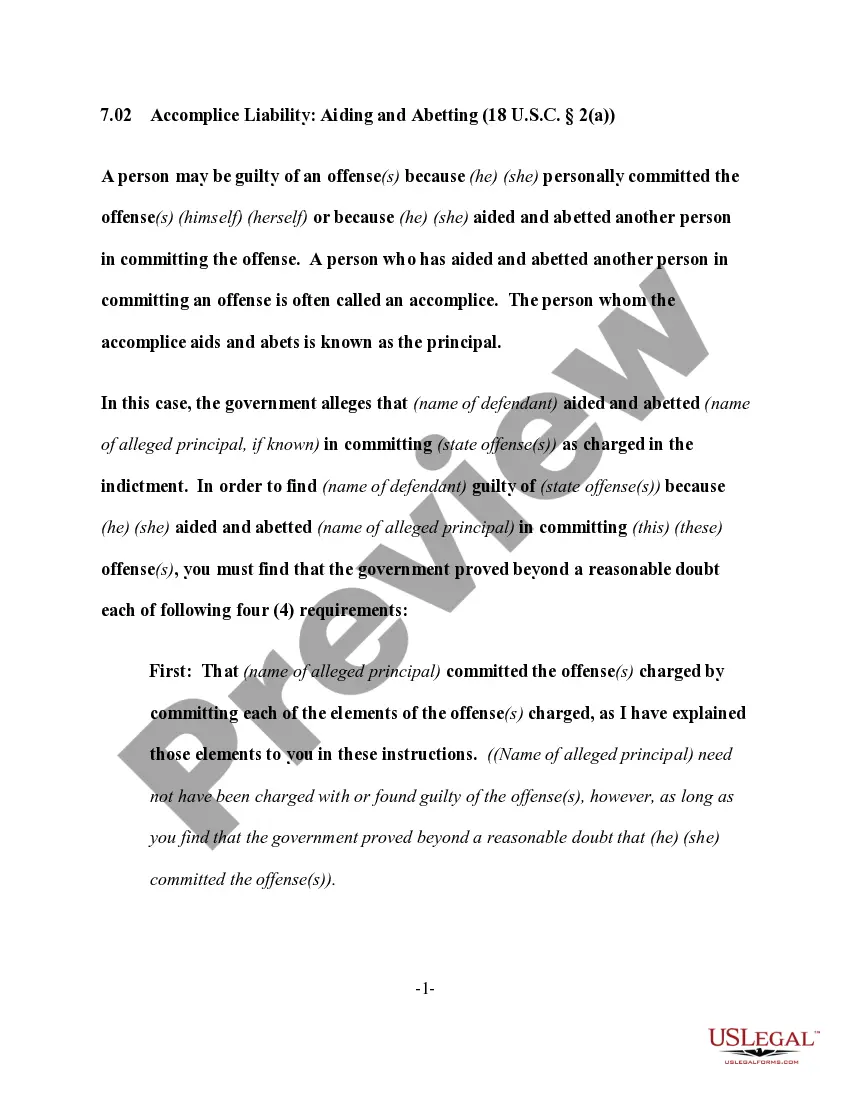
Whoever, knowing that an offense against the United States has been committed, receives, relieves, comforts or assists the offender in order to hinder or prevent his apprehension, trial or punishment, is an accessory after the fact.
Common examples of being an accessory before the fact include: serving as a lookout, keeping an engine running in a car, and. supplying the tools necessary for the commission of a criminal offense.
An accessory before the fact is defined as someone who ?counsels, hires or otherwise procures a felony to be committed.? An accessory after the fact is defines as someone who, after the commission of the felony, ?harbors, conceals, maintains, or assists the principal felon.? As the names of the crimes suggest, one is
Examples of an accessory after the fact include: intentionally misleading or lying to police, giving a false alibi for another person, helping another person hide evidence, and destroying evidence related to a crime.
While accessory after the fact focuses on a person helping a criminal avoid punishment, obstructing justice focuses on a person getting in the way of police involvement or the judicial process.
An accessory before the fact is defined as someone who ?counsels, hires or otherwise procures a felony to be committed.? An accessory after the fact is defines as someone who, after the commission of the felony, ?harbors, conceals, maintains, or assists the principal felon.? As the names of the crimes suggest, one is
An accessory-after-the-fact is someone who assists 1) someone who has committed a crime, 2) after the person has committed the crime, 3) with knowledge that the person committed the crime, and 4) with the intent to help the person avoid arrest or punishment.
An accessory before-the-fact is a person who aids, abets, or encourages another to commit a crime but who is not present at the scene. An accessory before the fact, like an accomplice may be held criminally liable to the same extent as the principal.