Accesory After the Fact
What this document covers
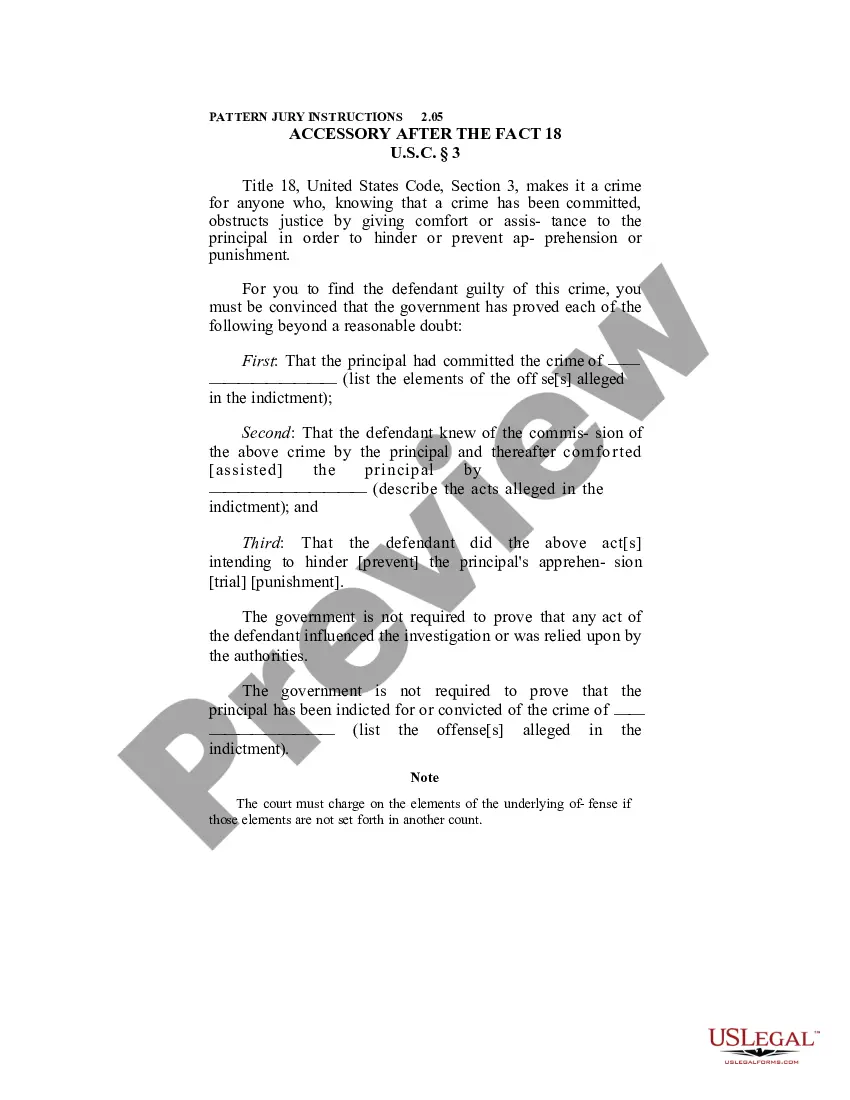
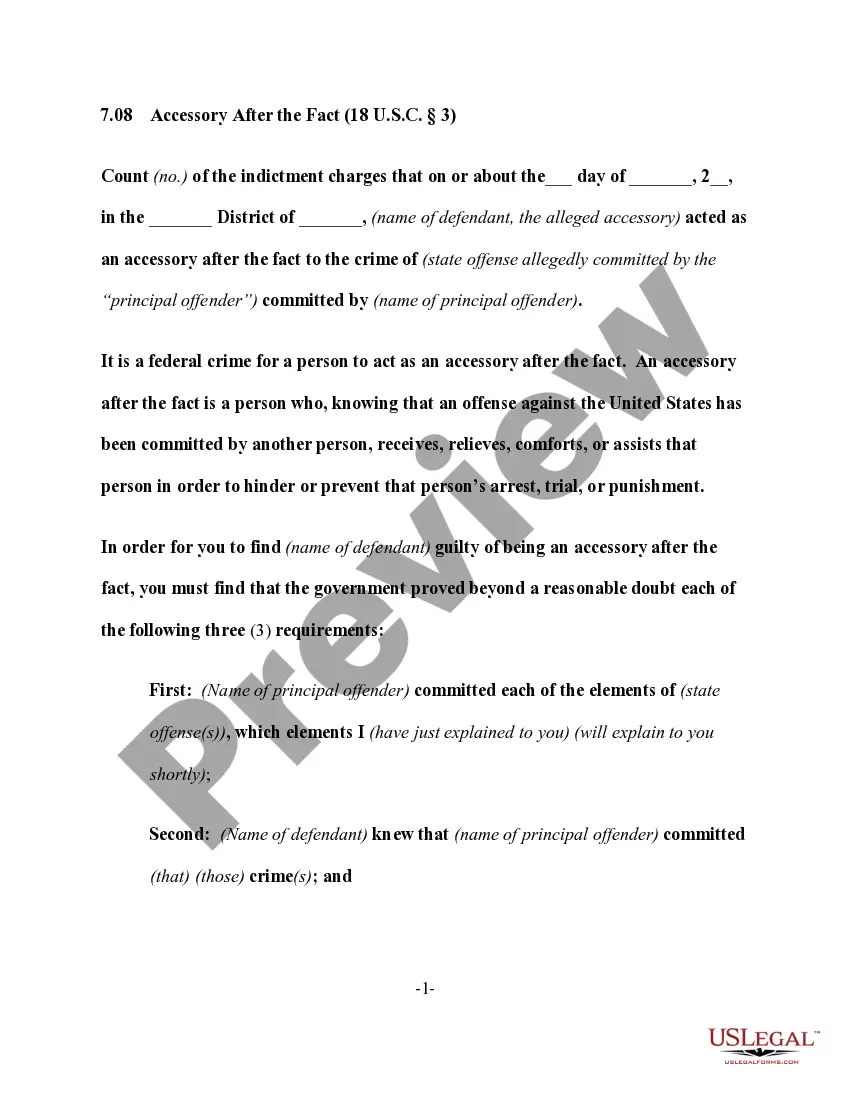
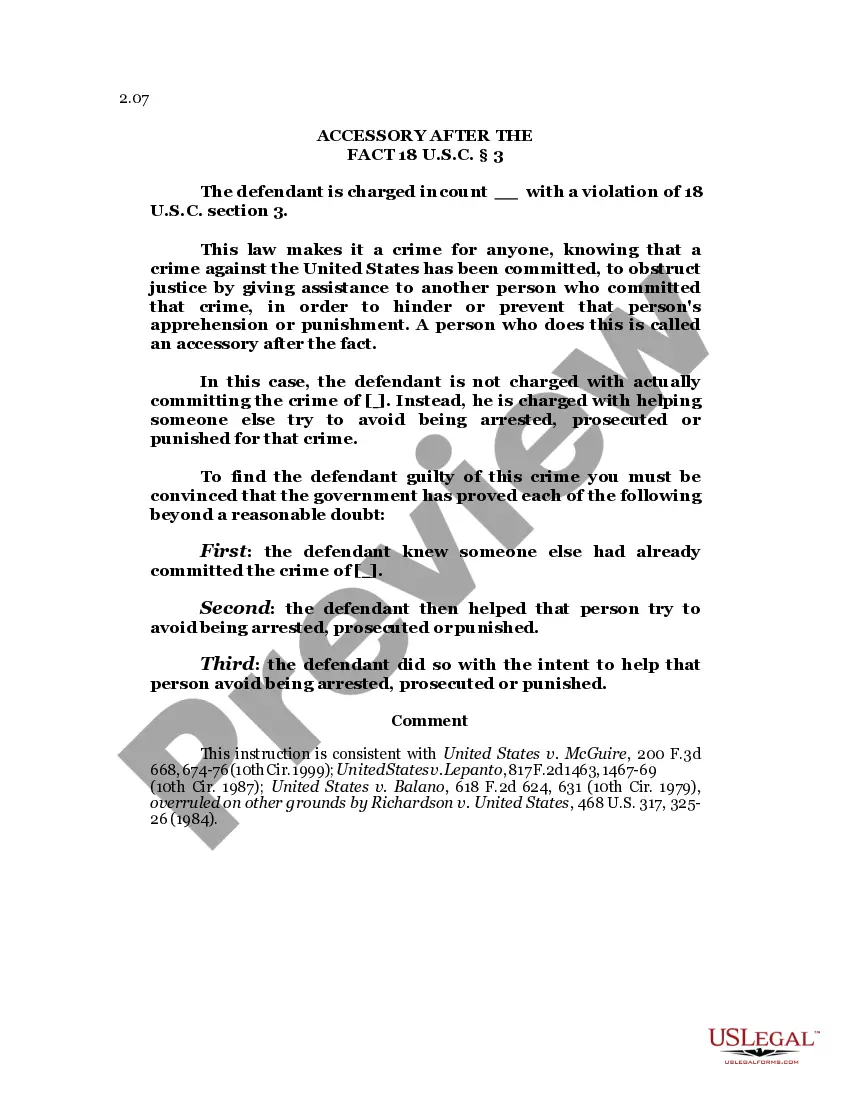
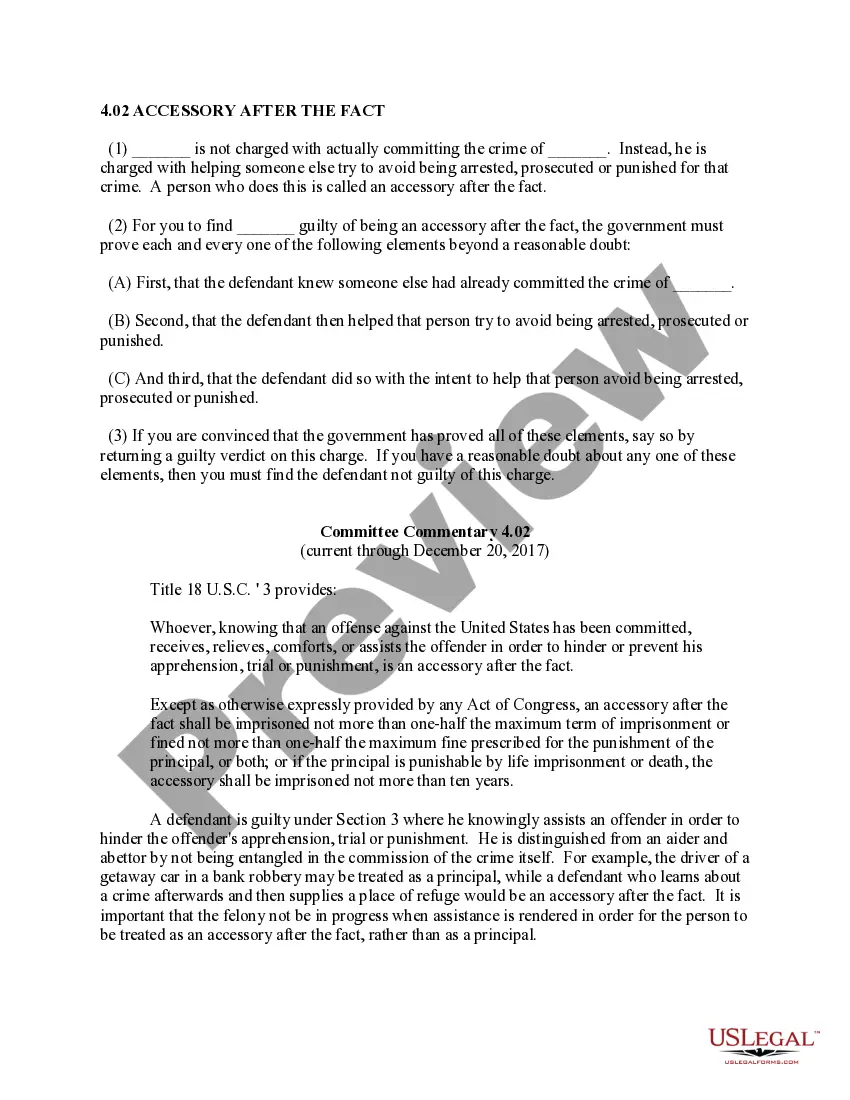
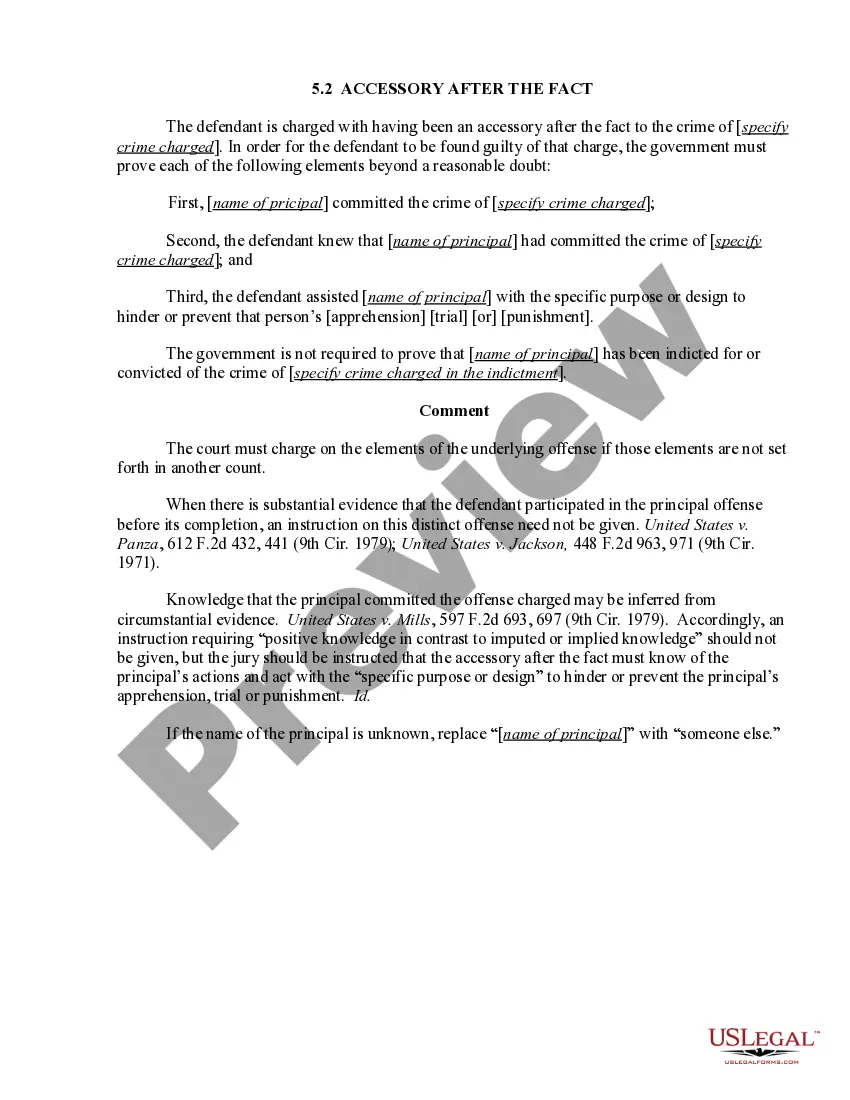
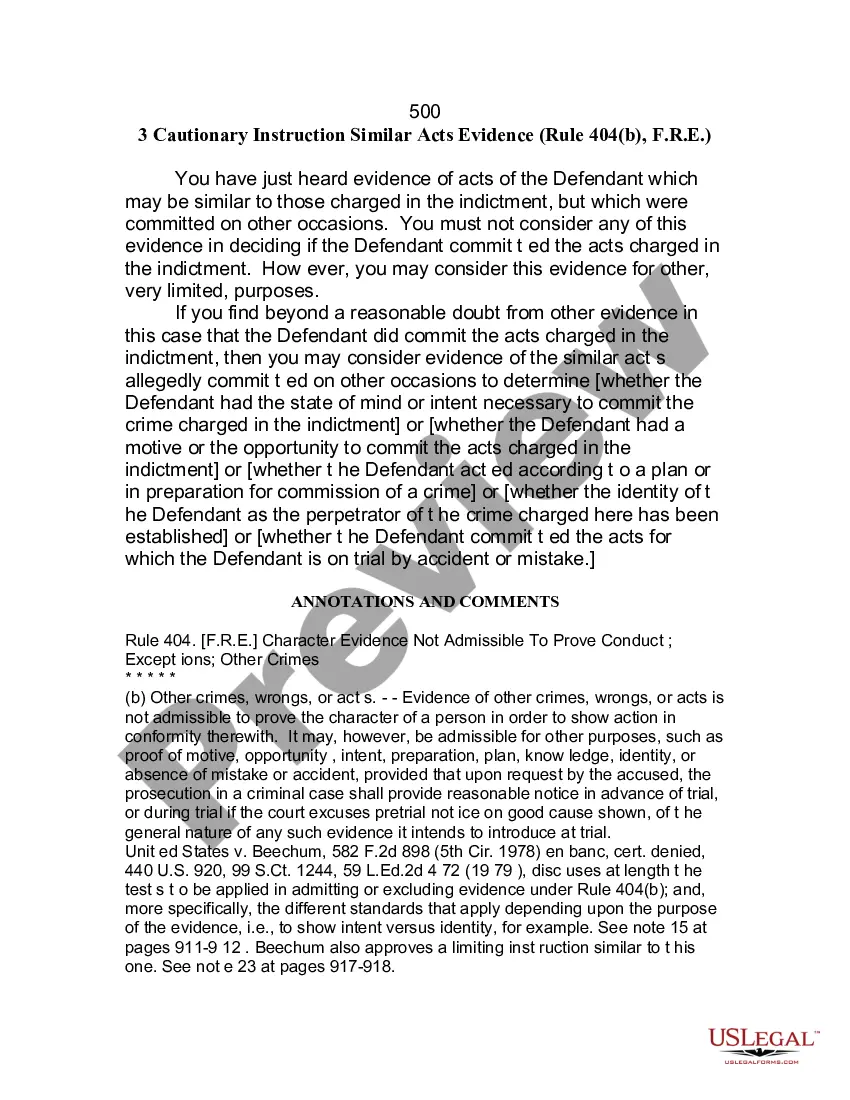
The Accessory After the Fact form is a legal document used to outline the elements of the crime defined in Title 18, United States Code, Section 3. This form delineates the role of an accessory after the fact, which refers to a person who assists another knowing that a crime has been committed, with the intention of hindering their apprehension. This form is critical for legal proceedings related to accessory charges, ensuring that all necessary elements are clearly defined and documented.
Key components of this form
- Definition of the offense of accessory after the fact.
- Details of the principal crime committed.
- Explanation of the actions taken by the accessory.
- Intention behind assisting the principal.
- Legal standards required for a conviction.

When to use this form
This form is typically used in legal contexts where a defendant is charged with being an accessory after the fact. It may be necessary when a person is accused of helping someone who has committed a crime, and the prosecution must establish the elements of the offense. Legal professionals and defendants may utilize this form to prepare for court proceedings, ensuring that all relevant facts and intentions are presented clearly.
Who should use this form
- Legal professionals representing defendants accused of being an accessory after the fact.
- Defendants who want to understand the charges against them.
- Individuals involved in legal proceedings related to accessory charges.
How to prepare this document
- Identify the principal crime committed and outline the relevant elements.
- Specify the actions taken by the defendant to assist the principal.
- Document the defendant's knowledge of the crime and intention behind their actions.
- Ensure all sections are clearly filled out to comply with legal standards.
- Review the form for accuracy before submission.
Does this document require notarization?
In most cases, this form does not require notarization. However, some jurisdictions or signing circumstances might. US Legal Forms offers online notarization powered by Notarize, accessible 24/7 for a quick, remote process.
Get your form ready online
Our built-in tools help you complete, sign, share, and store your documents in one place.
Make edits, fill in missing information, and update formatting in US Legal Forms—just like you would in MS Word.
Download a copy, print it, send it by email, or mail it via USPS—whatever works best for your next step.
Sign and collect signatures with our SignNow integration. Send to multiple recipients, set reminders, and more. Go Premium to unlock E-Sign.
If this form requires notarization, complete it online through a secure video call—no need to meet a notary in person or wait for an appointment.
We protect your documents and personal data by following strict security and privacy standards.

Make edits, fill in missing information, and update formatting in US Legal Forms—just like you would in MS Word.

Download a copy, print it, send it by email, or mail it via USPS—whatever works best for your next step.

Sign and collect signatures with our SignNow integration. Send to multiple recipients, set reminders, and more. Go Premium to unlock E-Sign.

If this form requires notarization, complete it online through a secure video call—no need to meet a notary in person or wait for an appointment.

We protect your documents and personal data by following strict security and privacy standards.
Common mistakes
- Failing to clearly outline the principal crime committed.
- Not providing sufficient detail about the actions taken by the accessory.
- Overlooking the necessity to establish the defendant's intention.
Benefits of using this form online
- Convenient access to customized templates tailored to your needs.
- Edit and download forms easily from home or office.
- Guidance provided through each section to ensure completeness.
Looking for another form?
Form popularity
FAQ
Whoever, knowing that an offense against the United States has been committed, receives, relieves, comforts or assists the offender in order to hinder or prevent his apprehension, trial or punishment, is an accessory after the fact.
An accessory-after-the-fact is someone who assists 1) someone who has committed a crime, 2) after the person has committed the crime, 3) with knowledge that the person committed the crime, and 4) with the intent to help the person avoid arrest or punishment.
Examples of an accessory after the fact include: intentionally misleading or lying to police, giving a false alibi for another person, helping another person hide evidence, and destroying evidence related to a crime.
While accessory after the fact focuses on a person helping a criminal avoid punishment, obstructing justice focuses on a person getting in the way of police involvement or the judicial process.
An accessory before the fact is defined as someone who ?counsels, hires or otherwise procures a felony to be committed.? An accessory after the fact is defines as someone who, after the commission of the felony, ?harbors, conceals, maintains, or assists the principal felon.? As the names of the crimes suggest, one is
Accessories that are worn may include jackets, boots and shoes, cravats, ties, hats, bonnets, belts and suspenders, gloves, muffs, necklaces, bracelets, watches, eyewear, sashes, shawls, scarves, lanyards, socks, pins, piercings, rings, and stockings.
An accessory before the fact is defined as someone who ?counsels, hires or otherwise procures a felony to be committed.? An accessory after the fact is defines as someone who, after the commission of the felony, ?harbors, conceals, maintains, or assists the principal felon.? As the names of the crimes suggest, one is