Confidentiality Agreement between LifeScience Company and Venture Captalist
About this form
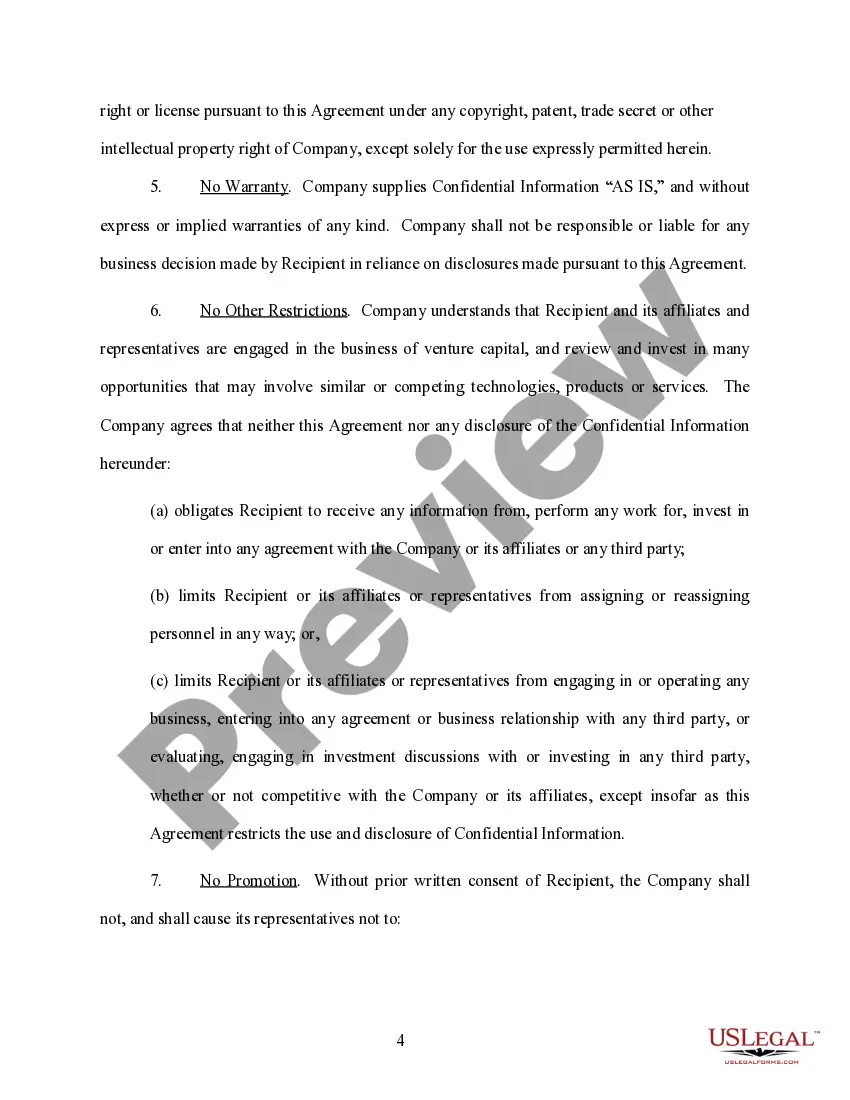
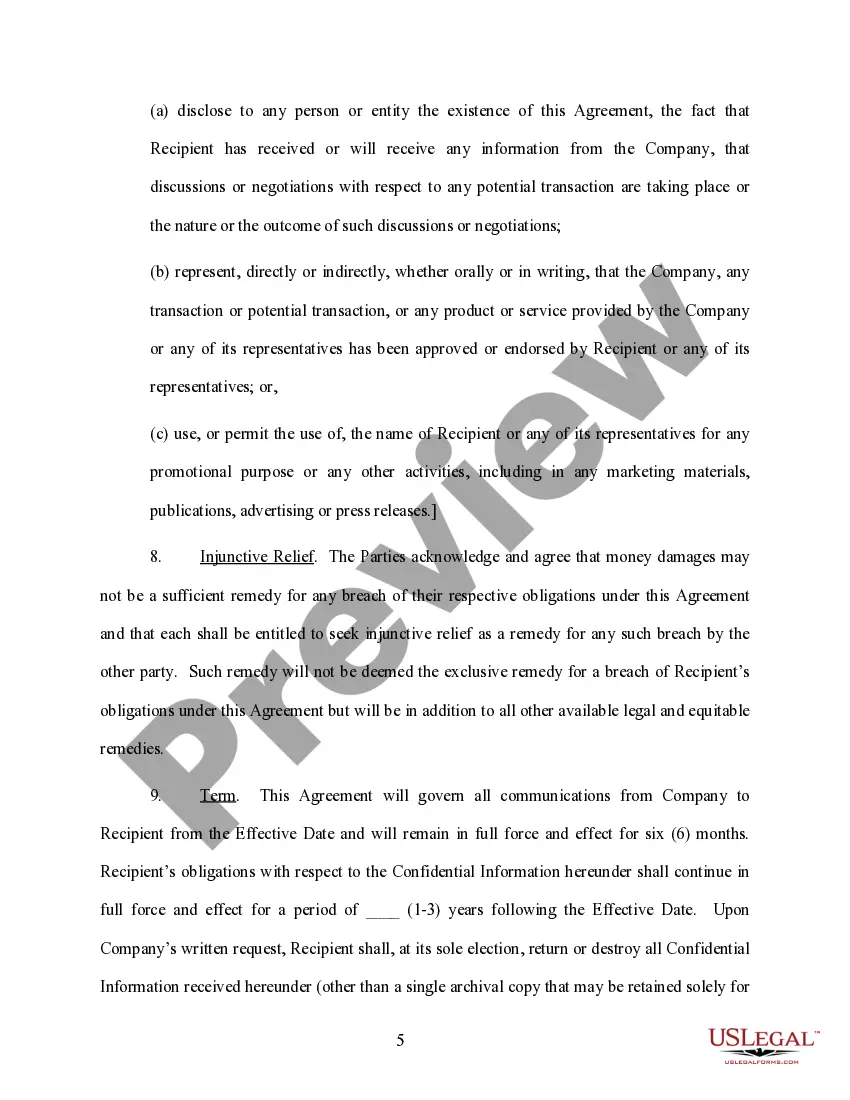
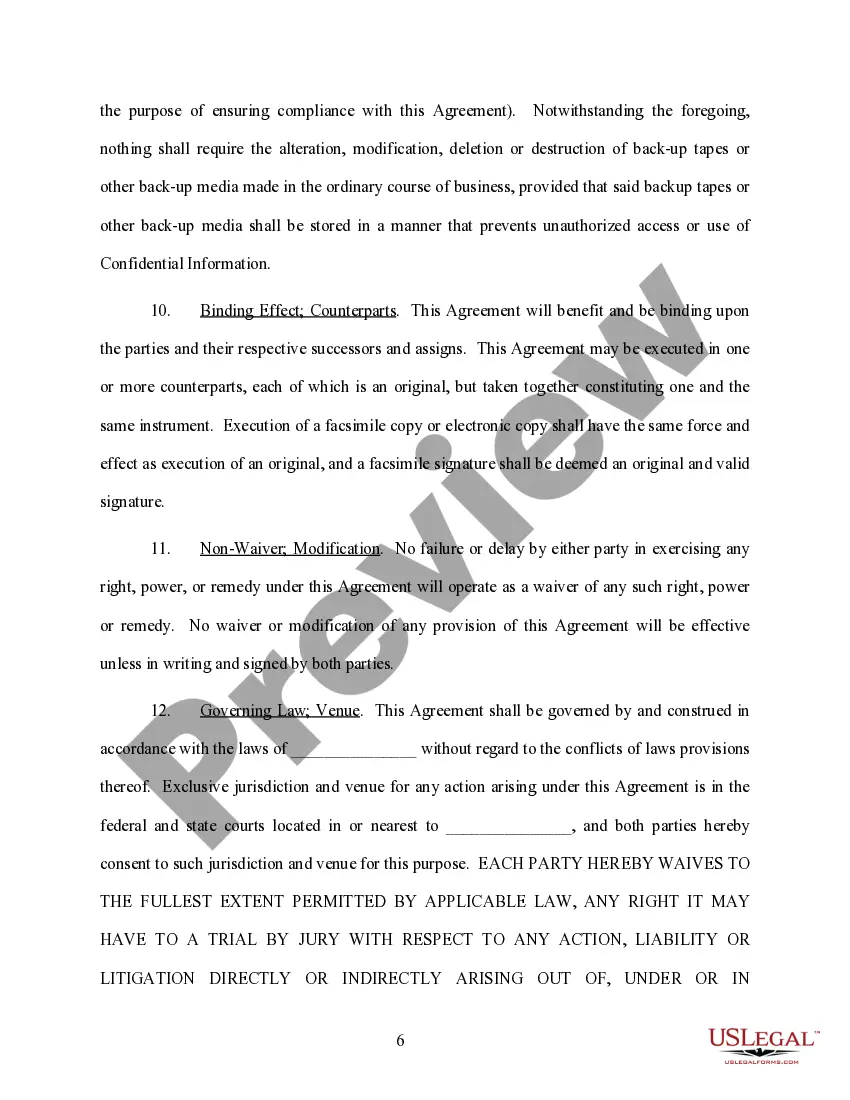
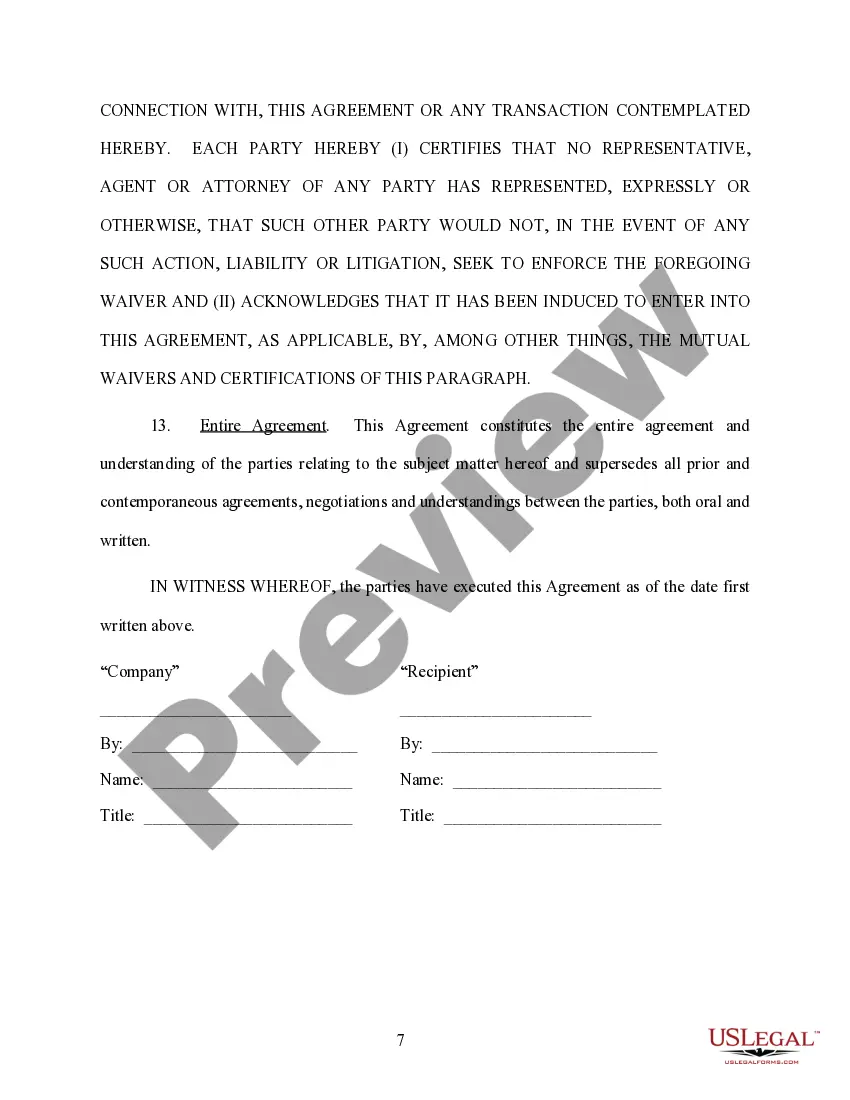
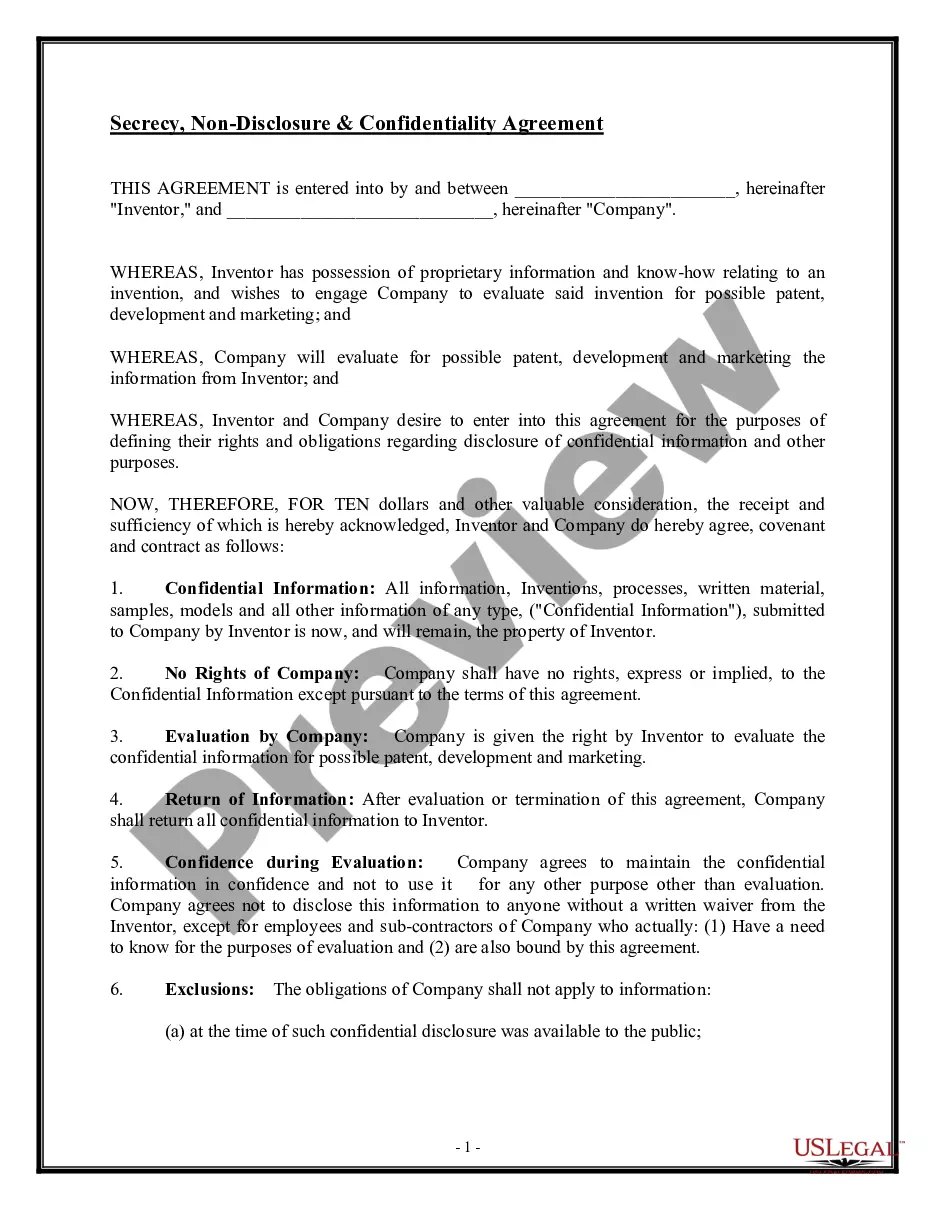
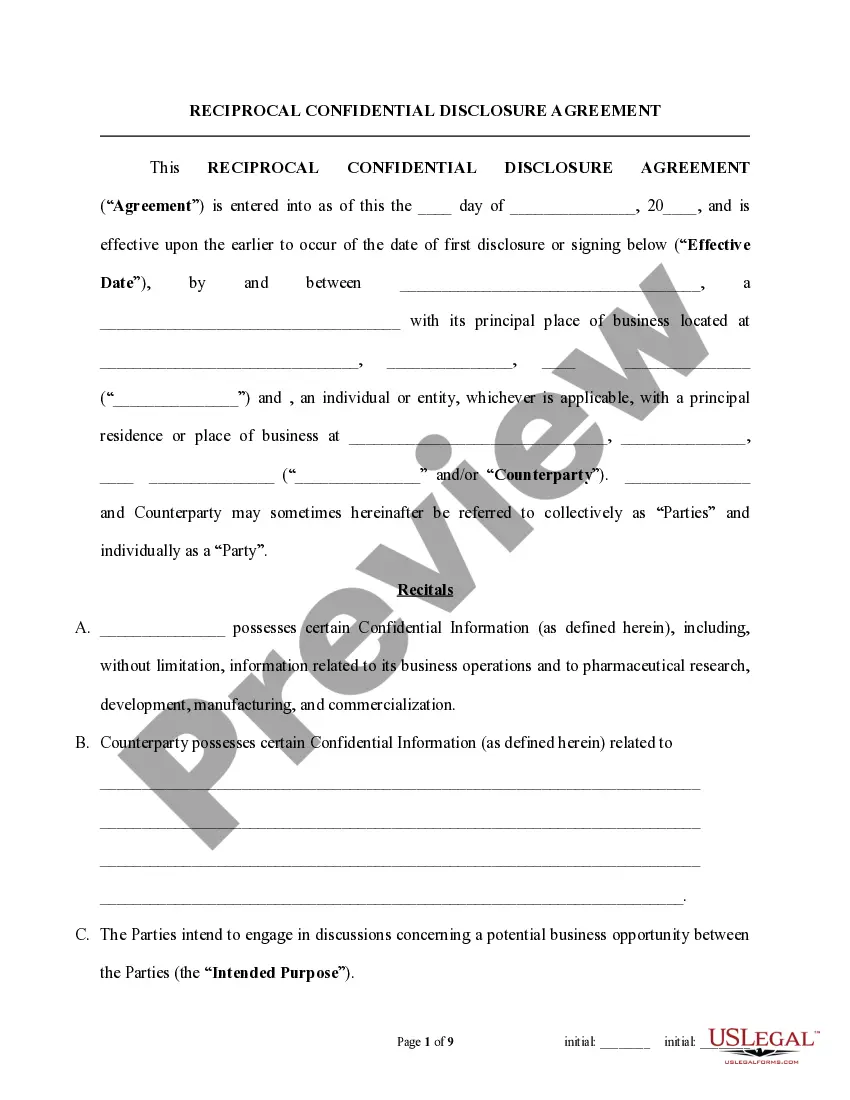
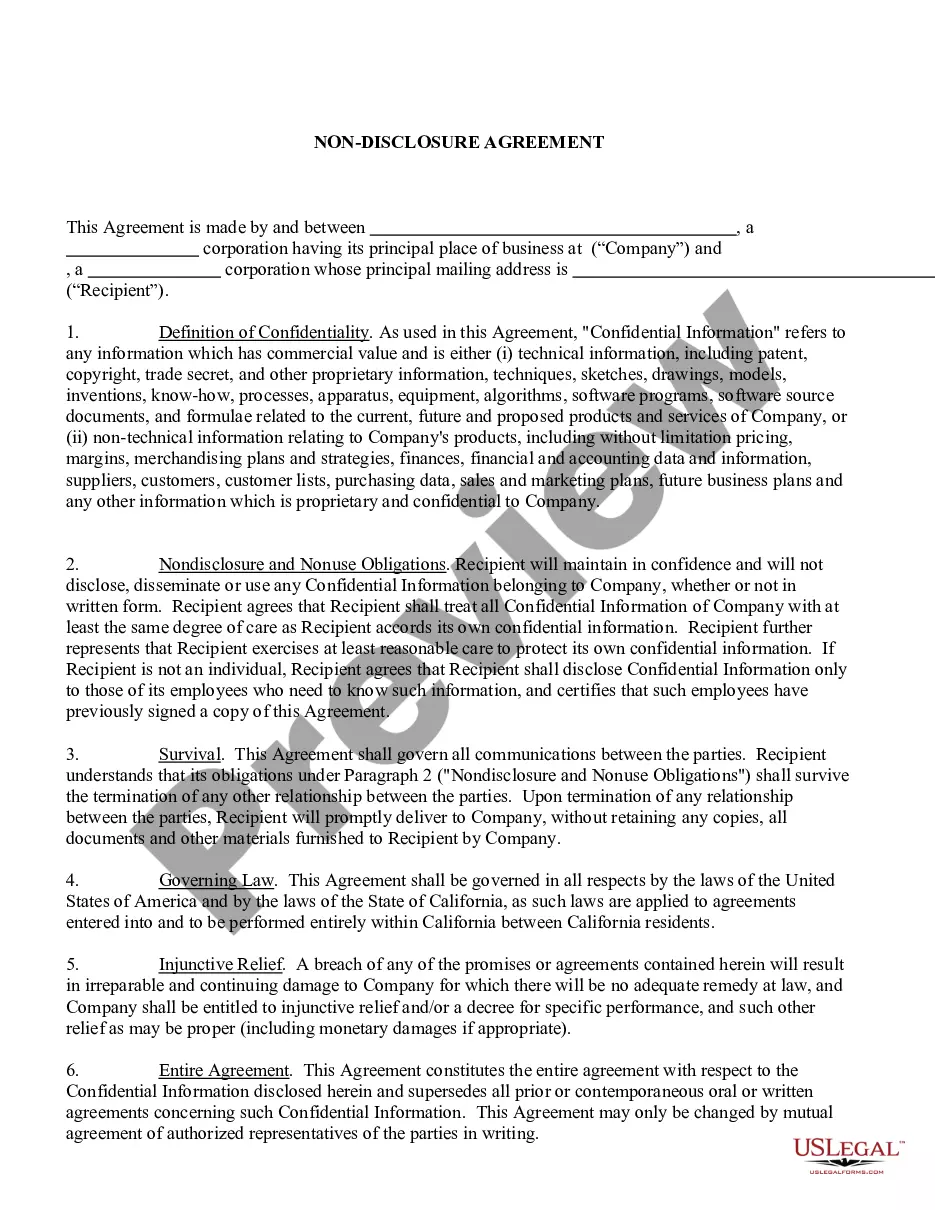
This Confidentiality Agreement between a LifeScience Company and a Venture Capitalist is a specialized non-disclosure agreement (NDA) designed to protect the proprietary information communicated between the parties. Unlike standard NDAs, this form addresses the unique nature of the LifeScience industry, which often involves sensitive data and intellectual property not typically disclosed in other sectors.
Main sections of this form
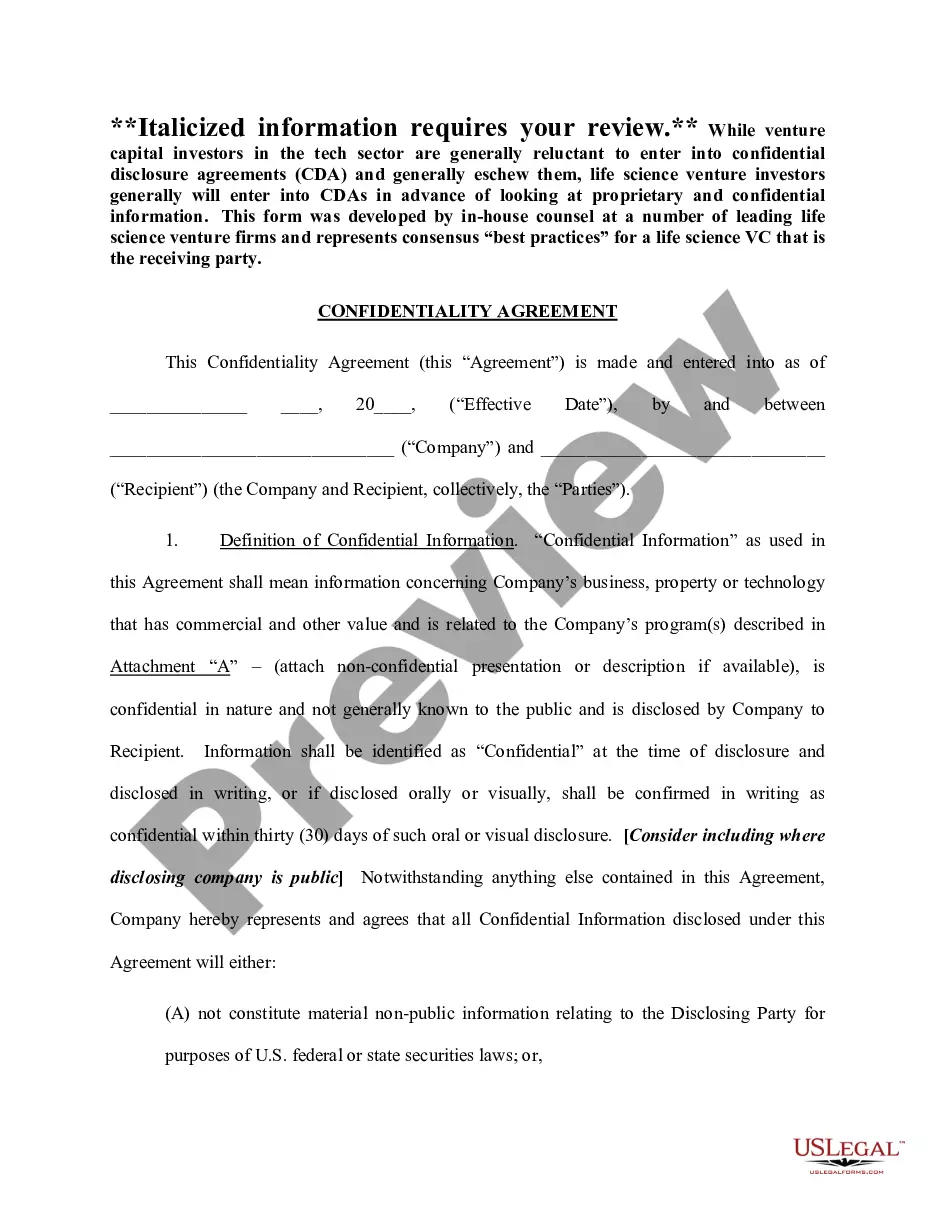
- Definition of Confidential Information: Clearly outlines what constitutes confidential information.
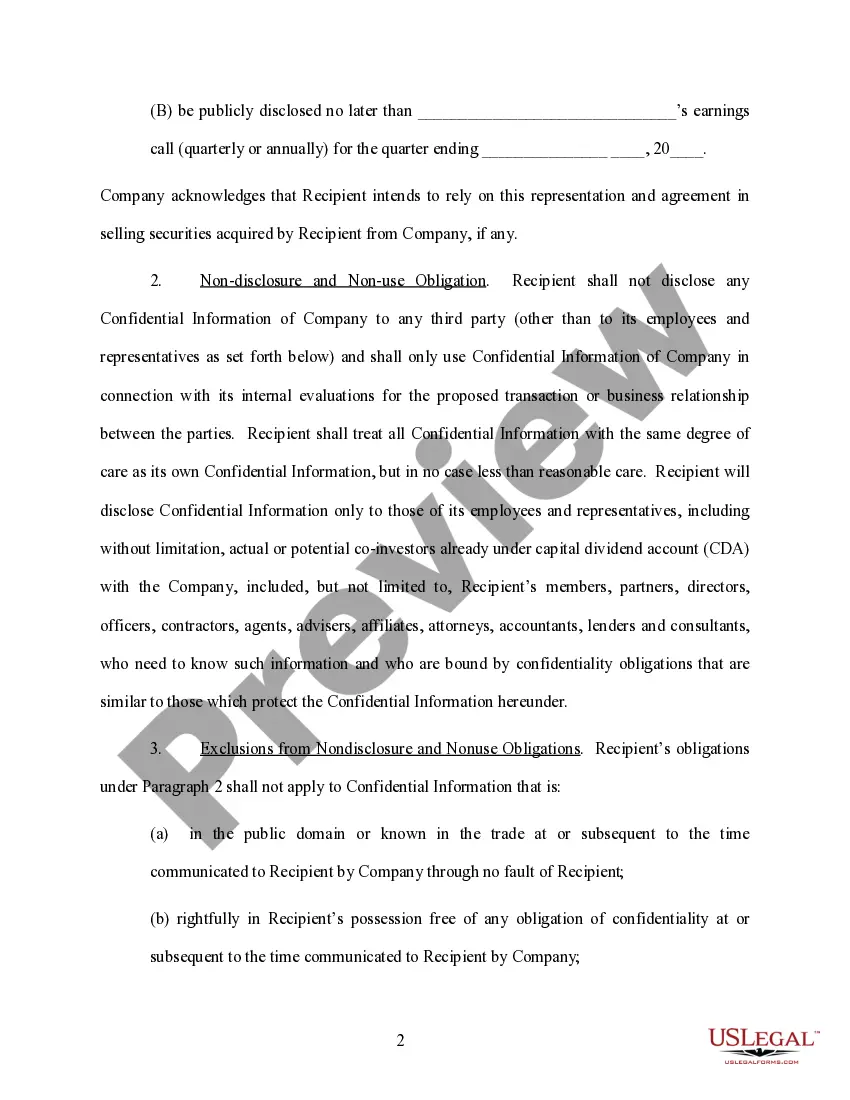
- Non-disclosure and Non-use Obligation: Specifies the responsibilities of the Recipient regarding the handling of confidential information.
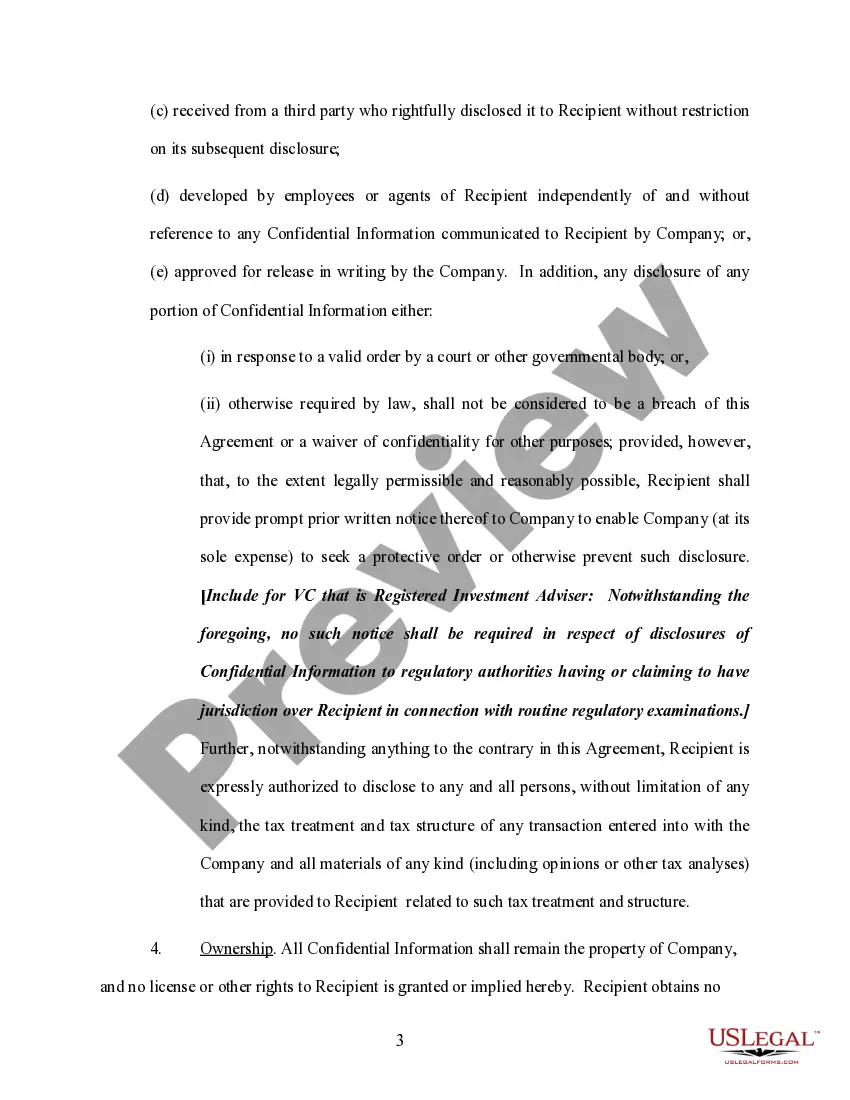
- Exclusions from Obligations: Lists conditions under which disclosure does not violate the agreement.
- Term of Agreement: States the duration of confidentiality obligations.
- Governing Law and Jurisdiction: Indicates which state's laws apply to the agreement and the venue for legal actions.
When this form is needed
This form should be used when a LifeScience Company seeks to share confidential data with a Venture Capitalist during discussions for potential investments or collaborations. It is particularly essential when the information shared includes proprietary technology, research data, or business strategies that may give competitive advantage.
Who should use this form
- LifeScience companies looking to protect sensitive business information.
- Venture capitalists who need assurance regarding the confidentiality of the information they receive.
- Legal professionals advising companies or investors in the LifeScience sector.
Instructions for completing this form
- Identify the parties: Enter the names of the LifeScience Company and the Venture Capitalist.
- Specify the Effective Date: Input the date when the agreement will commence.
- Describe Confidential Information: Clearly define what information will be considered confidential in Attachment A.
- Enter the duration: Specify the term during which the confidentiality will be maintained.
- Execute the agreement: Have both parties sign and date the document to make it legally binding.
Does this form need to be notarized?
This form does not typically require notarization unless specified by local law. Always check your stateâs requirements to ensure compliance.
Get your form ready online
Our built-in tools help you complete, sign, share, and store your documents in one place.
Make edits, fill in missing information, and update formatting in US Legal Forms—just like you would in MS Word.
Download a copy, print it, send it by email, or mail it via USPS—whatever works best for your next step.
Sign and collect signatures with our SignNow integration. Send to multiple recipients, set reminders, and more. Go Premium to unlock E-Sign.
If this form requires notarization, complete it online through a secure video call—no need to meet a notary in person or wait for an appointment.
We protect your documents and personal data by following strict security and privacy standards.

Make edits, fill in missing information, and update formatting in US Legal Forms—just like you would in MS Word.

Download a copy, print it, send it by email, or mail it via USPS—whatever works best for your next step.

Sign and collect signatures with our SignNow integration. Send to multiple recipients, set reminders, and more. Go Premium to unlock E-Sign.

If this form requires notarization, complete it online through a secure video call—no need to meet a notary in person or wait for an appointment.

We protect your documents and personal data by following strict security and privacy standards.
Common mistakes to avoid
- Failing to clearly define what constitutes Confidential Information.
- Not providing written confirmation of oral disclosures within the specified timeframe.
- Neglecting to specify the term of confidentiality obligations.
- Overlooking legal review, which may overlook potential state-specific requirements.
Benefits of completing this form online
- Convenience of immediate access and downloadable formats, allowing for quick completion.
- Editability to tailor the agreement to specific needs without physical paperwork.
- Reliability due to the thorough drafting by licensed attorneys, ensuring legal compliance.
Looking for another form?
Form popularity
FAQ
Examples of confidentiality clauses include: Example 1: Preventing employees from talking to the press. Example 2: Limiting the disclosure of on-site business practices. Example 3: Stopping business partners from sharing IP rights.
Non disclosure agreement for investors refers to a deal between at least two parties, that makes one of them legally responsible for revealing any information marked as confidential.
This agreement is made between ("Employee") and Company Name on 20. Employee will perform services for Company Name that may require Company Name to disclose confidential and proprietary information ("Confidential Information") to Employee.
Depending on your needs, you can choose from three types of NDAs: unilateral, bilateral, and unilateral. Unilateral NDAs only require one party to disclose confidential information, while bilateral NDAs require two parties to disclose private information.
Having a signed NDA from a potential VC investor is a strong indication?but not a guarantee?that your sensitive company data will be safe in the investor's hands. There are compelling reasons for startups to get investors to sign an NDA. However, there are also good reasons for both parties not to sign.
What are examples of Confidential Information? Examples of confidential information include a person's phone number and address, medical records, and social security. Companies also have confidential information such as financial records, trade secrets, customer information, and marketing strategies.
Limitations of Confidentiality Agreements Essentially, asking an employee not to report violations in a confidentiality agreement renders the contract invalid. Federal and state whistleblower laws prevent employers from firing employees that report valid company violations to legal authorities.
A confidentiality agreement is often used in situations wherein sensitive corporate information or proprietary knowledge is not to be made available to the general public or to competitors.