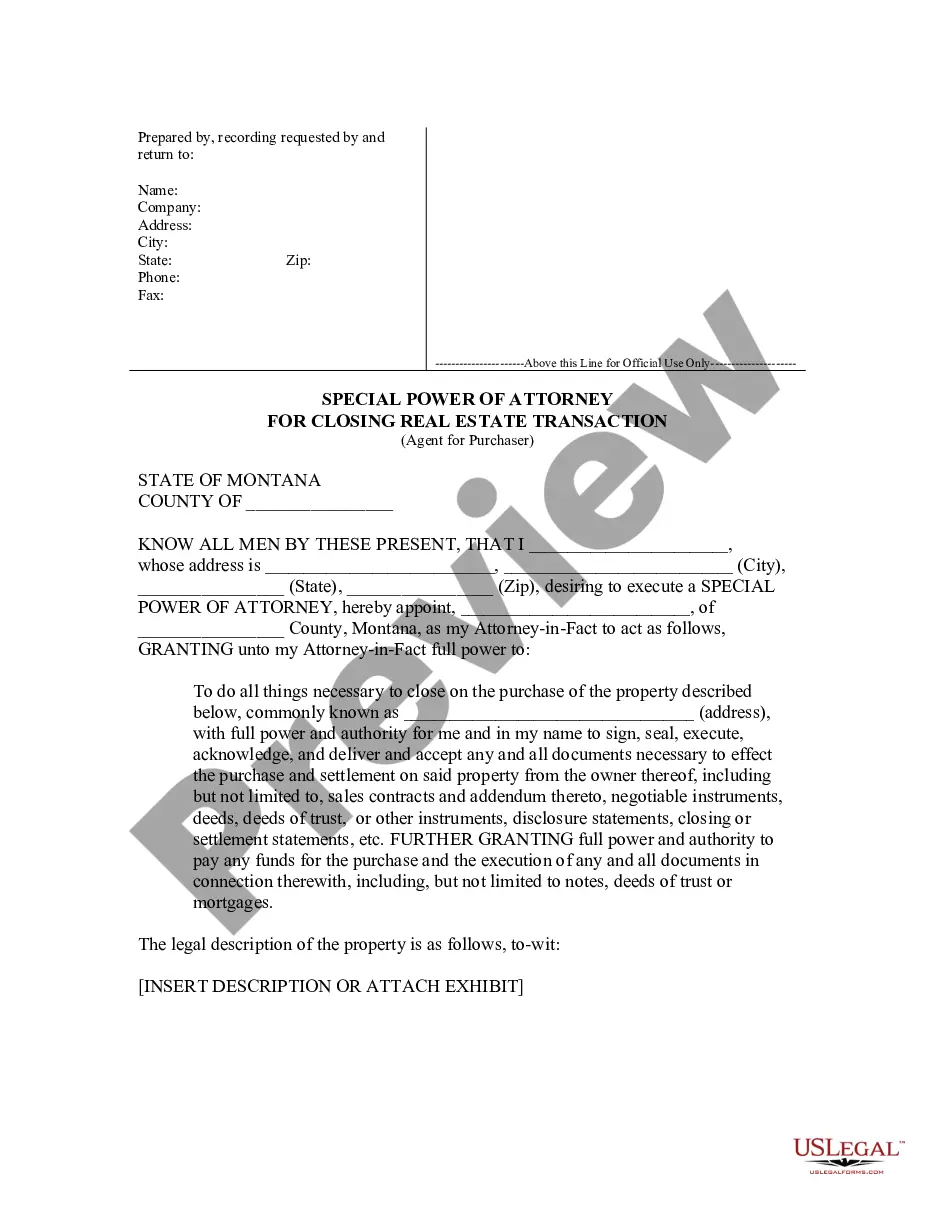
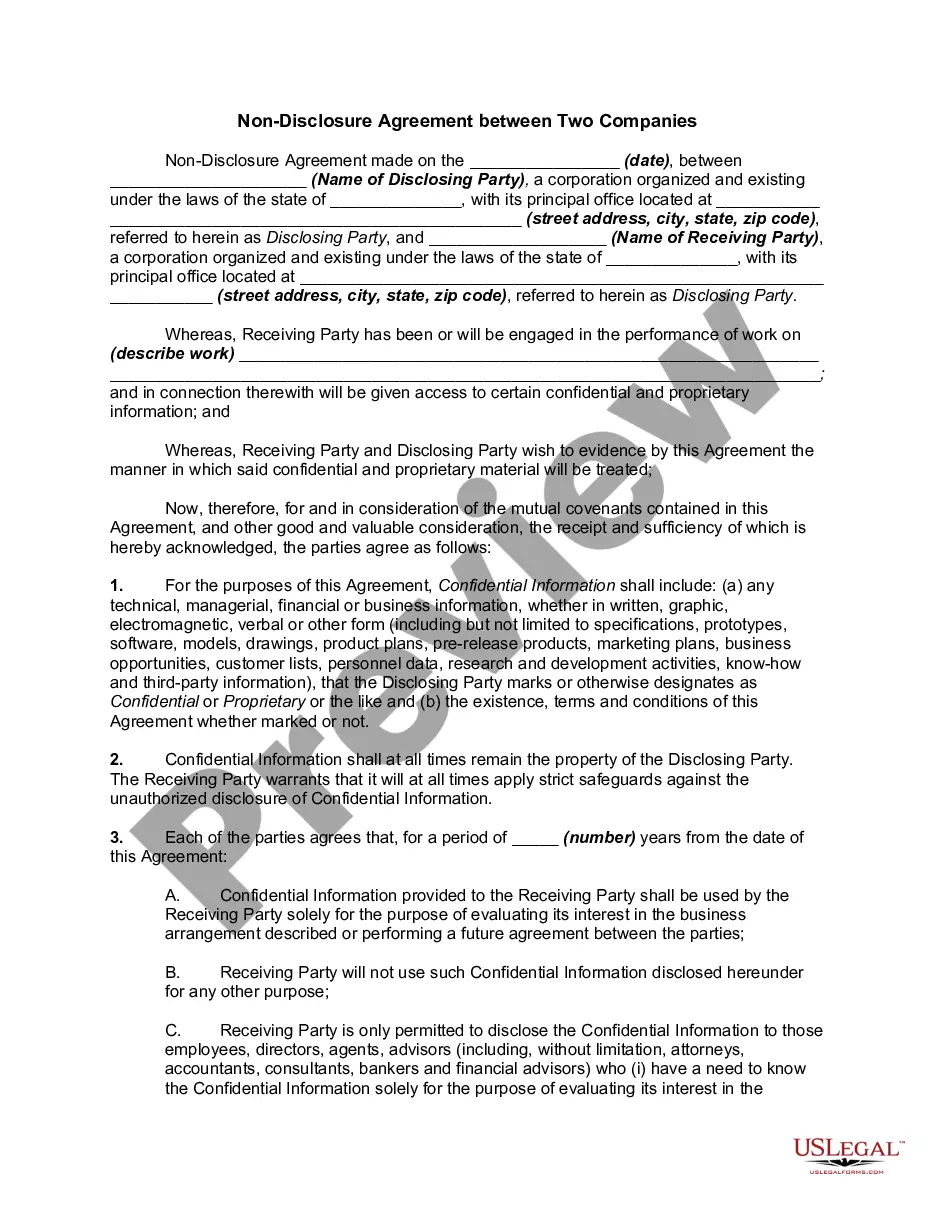
Non-Disclosure Agreement between Companies
What this document covers
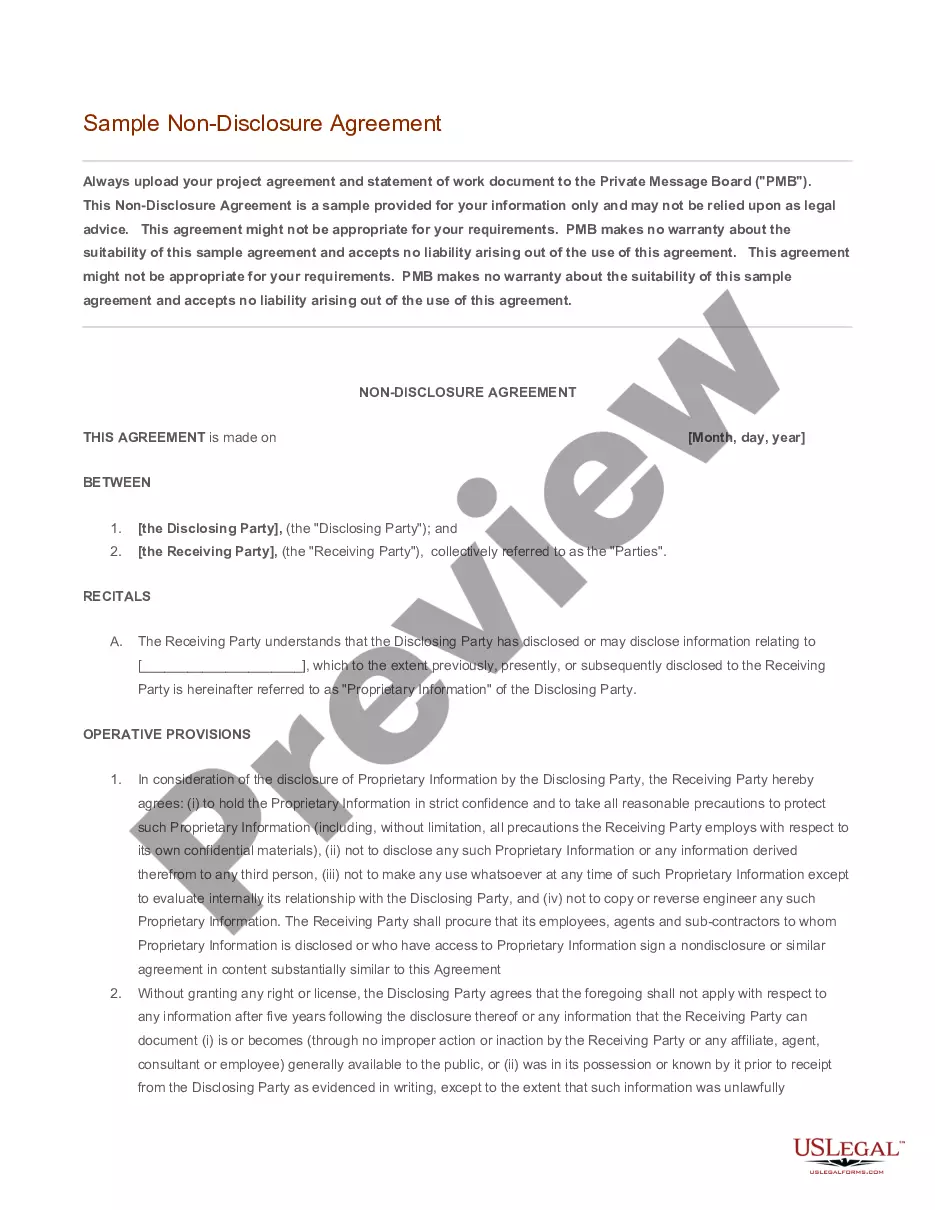
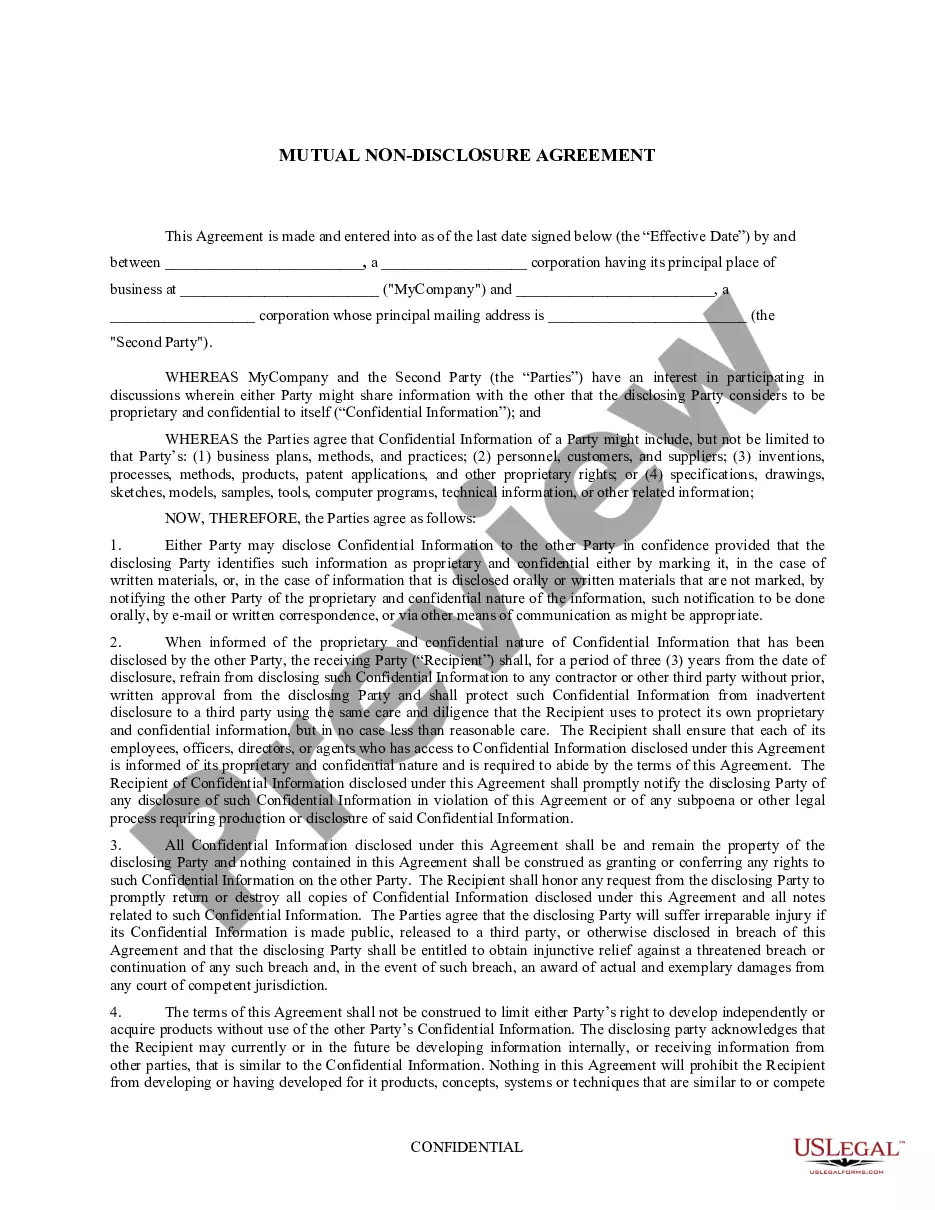
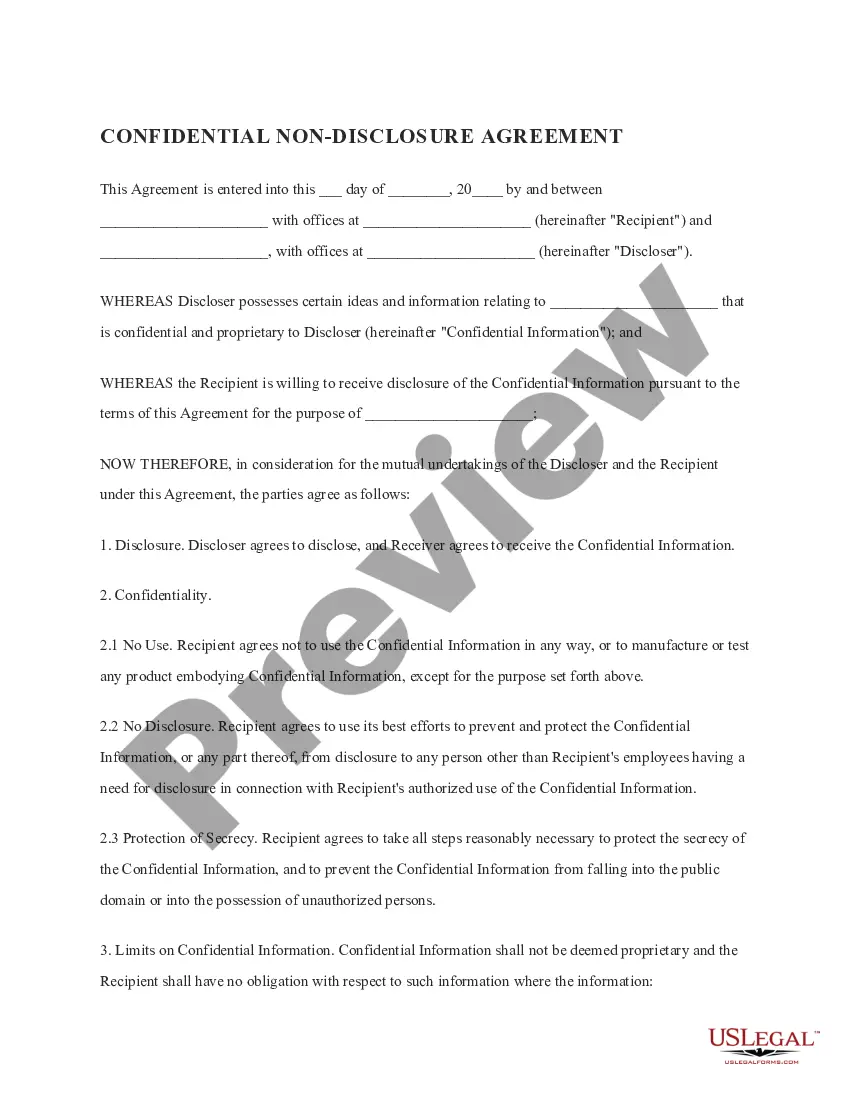
A Non-Disclosure Agreement (NDA) between companies is a legally binding contract designed to protect confidential information shared between two businesses. This agreement ensures that sensitive information does not get disclosed to unauthorized parties. While other forms of confidentiality agreements exist, this NDA is specifically tailored for corporate relationships, emphasizing the definition of confidentiality, obligations to protect information, and the consequences of breach.
Key components of this form
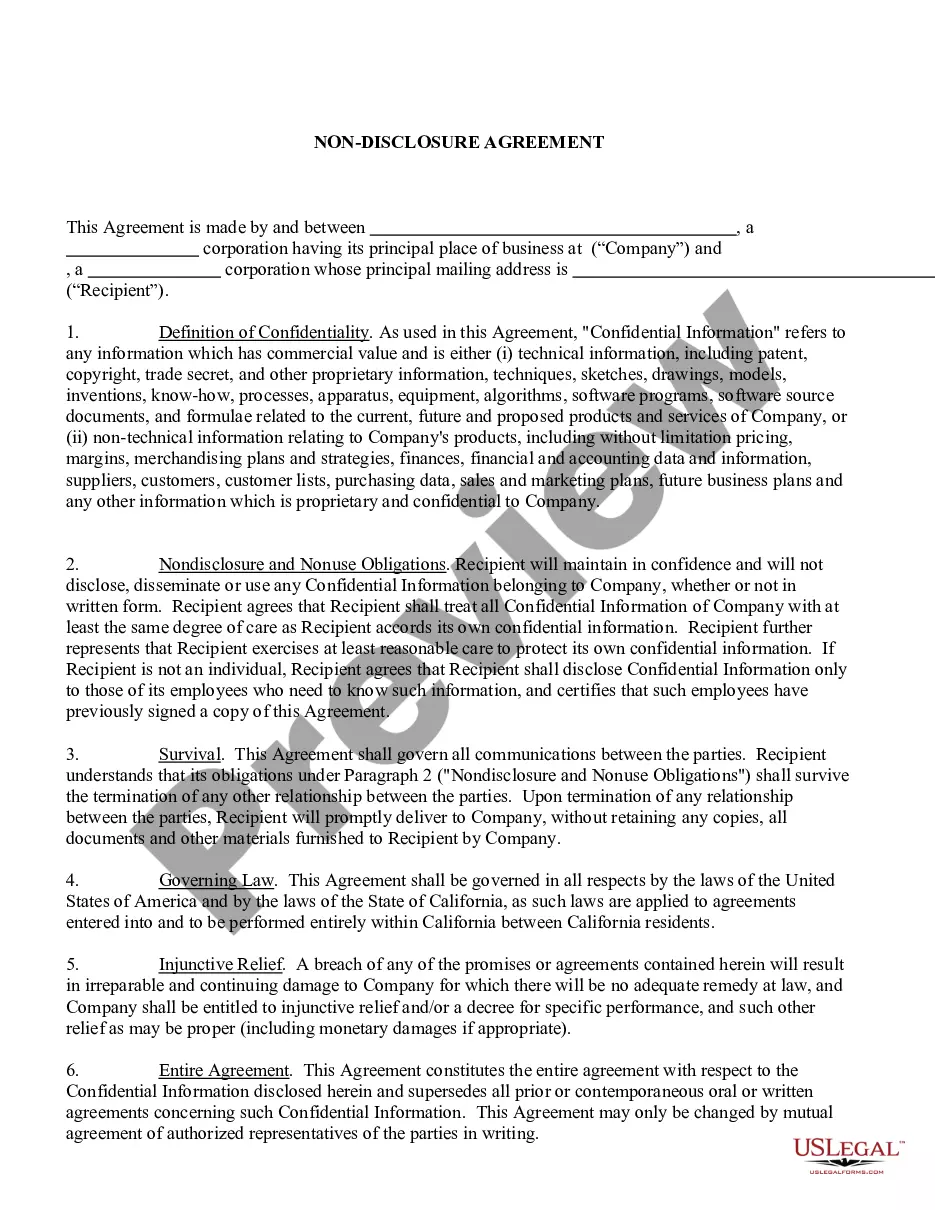
- Definition of Confidentiality: Explains what constitutes "Confidential Information" relevant to the agreement.
- Nondisclosure and Nonuse Obligations: Outlines the responsibilities of the recipient in maintaining confidentiality.
- Survival Clause: States that confidentiality obligations continue beyond the termination of the relationship.
- Governing Law: Specifies that the agreement is subject to the laws of the State of California.
- Injunctive Relief: Addresses the legal remedies available in the event of a breach.
- Entire Agreement: Confirms that this document supersedes any prior agreements related to confidentiality.
When to use this form
This form is essential when two companies plan to share sensitive business information, whether during negotiations, collaborations, or partnerships. Use this Non-Disclosure Agreement whenever confidential data, such as trade secrets, financial details, or proprietary strategies, needs protection from unauthorized sharing or exploitation.
Intended users of this form
- Businesses entering into partnerships or collaborations.
- Companies sharing proprietary or sensitive information with potential vendors or suppliers.
- Organizations involved in mergers or acquisitions where confidential information will be exchanged.
- Any company that needs to protect its trade secrets from competitors.
Steps to complete this form
- Identify the parties involved by filling in the names and addresses of both the Company and Recipient.
- Define what constitutes confidential information specifically to your situation.
- Detail the obligations for maintaining confidentiality, ensuring all parties understand their responsibilities.
- Include the governing law clause that specifies California as the applicable jurisdiction.
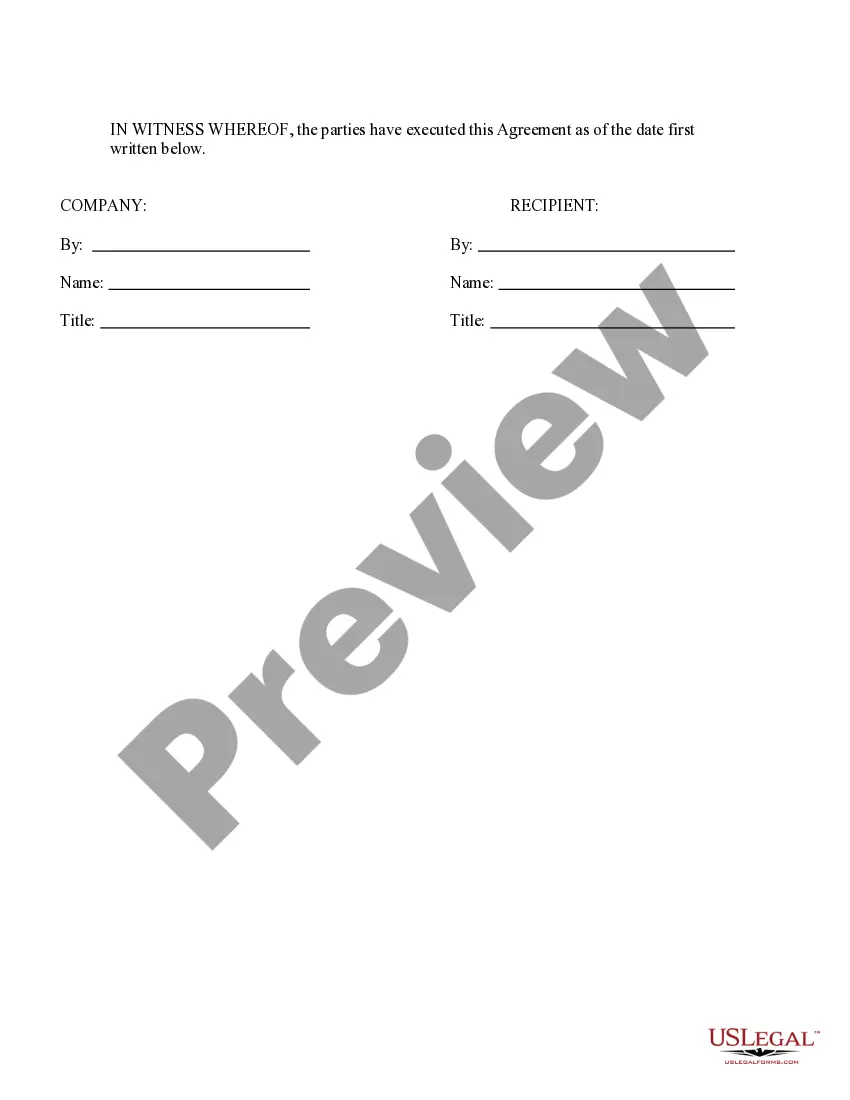
- Have authorized representatives sign and date the agreement to finalize it.
Does this document require notarization?
This form does not typically require notarization unless specified by local law. However, having signatures notarized can add an extra layer of verification if desired.
Get your form ready online
Our built-in tools help you complete, sign, share, and store your documents in one place.
Make edits, fill in missing information, and update formatting in US Legal Forms—just like you would in MS Word.
Download a copy, print it, send it by email, or mail it via USPS—whatever works best for your next step.
Sign and collect signatures with our SignNow integration. Send to multiple recipients, set reminders, and more. Go Premium to unlock E-Sign.
If this form requires notarization, complete it online through a secure video call—no need to meet a notary in person or wait for an appointment.
We protect your documents and personal data by following strict security and privacy standards.

Make edits, fill in missing information, and update formatting in US Legal Forms—just like you would in MS Word.

Download a copy, print it, send it by email, or mail it via USPS—whatever works best for your next step.

Sign and collect signatures with our SignNow integration. Send to multiple recipients, set reminders, and more. Go Premium to unlock E-Sign.

If this form requires notarization, complete it online through a secure video call—no need to meet a notary in person or wait for an appointment.

We protect your documents and personal data by following strict security and privacy standards.
Common mistakes to avoid
- Failing to clearly define what constitutes "Confidential Information."
- Not including a survival clause to protect confidentiality after the agreement ends.
- Neglecting to specify the governing law, leading to jurisdictional issues.
- Forgetting to have all relevant employees sign the NDA before disclosing sensitive information.
Advantages of online completion
- Convenient access to legally vetted template without the need for an attorney visit.
- Editable fields allow for customization to meet specific business needs.
- Instant download ensures that you can promptly protect your confidential information.
Looking for another form?
Form popularity
FAQ
There are several reasons why an NDA might be unenforceable, however. If the NDA is too broad, the information under the NDA is not actually confidential, or if the agreement requires the employee to do something illegal. NDAs must be carefully crafted for proper enforcement.
Civil penalties for breaking the terms of the NDA can include monetary damages or an injunction to prevent further violations of the agreement. The company or person that the NDA violation has damaged has the ability to seek legal remedy in a civil court.
What is an NDA? NDAs, or non-disclosure agreements, are legally enforceable contracts that create a confidential relationship between a person who has sensitive information and a person who will gain access to that information.
The red flag of misuse is when you ask for an NDA for a pitch meeting, a meet and greet, or a job interview. If your idea can be stolen after meeting someone for an hour for the first time, causing you irreparable harm in market, it's probably not a very good idea, or you're a terrible business person.
Since NDAs are civil contracts, breaking one isn't technically a crime. However, it could come with severe financial penalties. Violating an NDA leaves you open to lawsuits from your employer, and you could be required to pay financial damages and possibly associated legal costs.
Violating an NDA can have serious consequences ? NDAs are legally binding contracts. If an employee has violated an NDA, then the company may take legal action. The most common claims in NDA lawsuits include: Breach of the contract (such as the breach of NDA)
NDAs can be either mutual or one way. A mutual NDA requires each party to protect the confidential information to the other party. A one-way NDA contemplates that only one party will be disclosing confidential information. If you won't be disclosing any confidential information, then you may not need a mutual NDA.
Besides naming all parties to the NDA, five essential elements every NDA should include are: Description Of The Confidential Information.Requirements And Obligations Of The Parties.Exclusions To The Confidentiality Agreement.Term Of The Non-Disclosure Agreement.Consequences Of Breach Of The NDA.