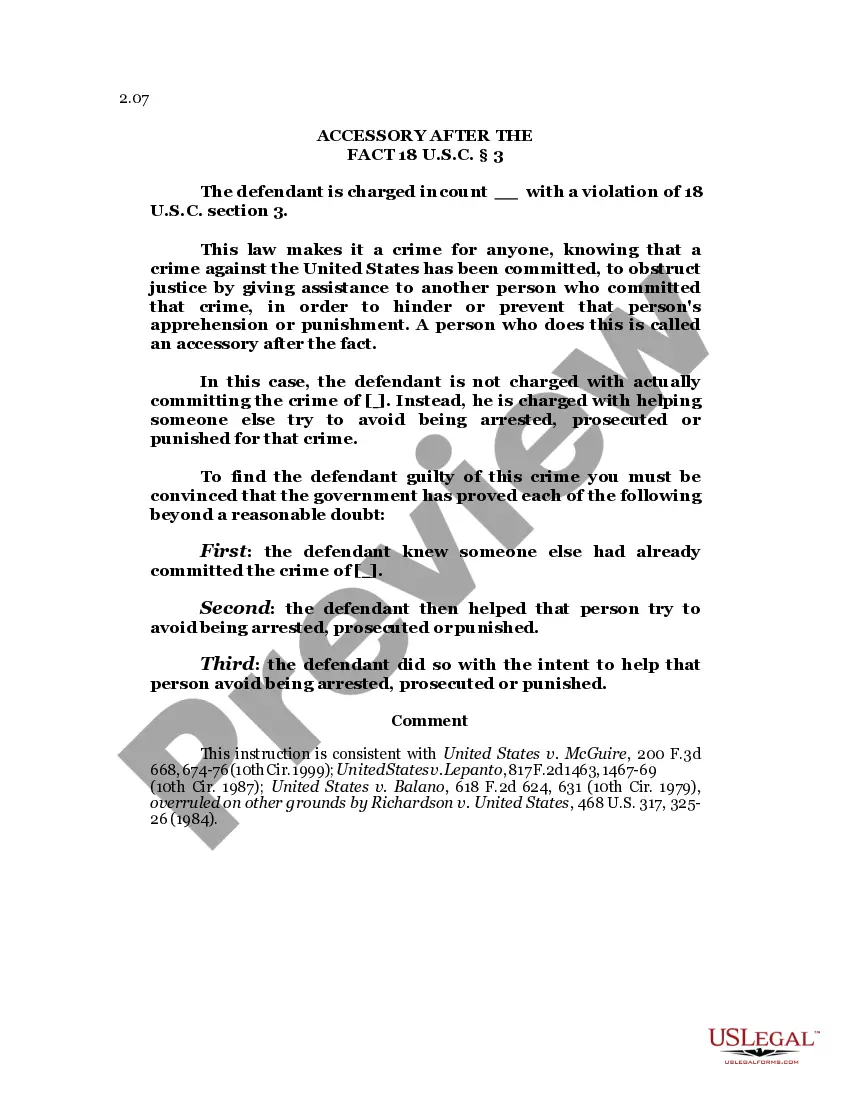
ACCESSORY AFTER THE FACT / 18 U.S.C. Sec. 3
What this document covers
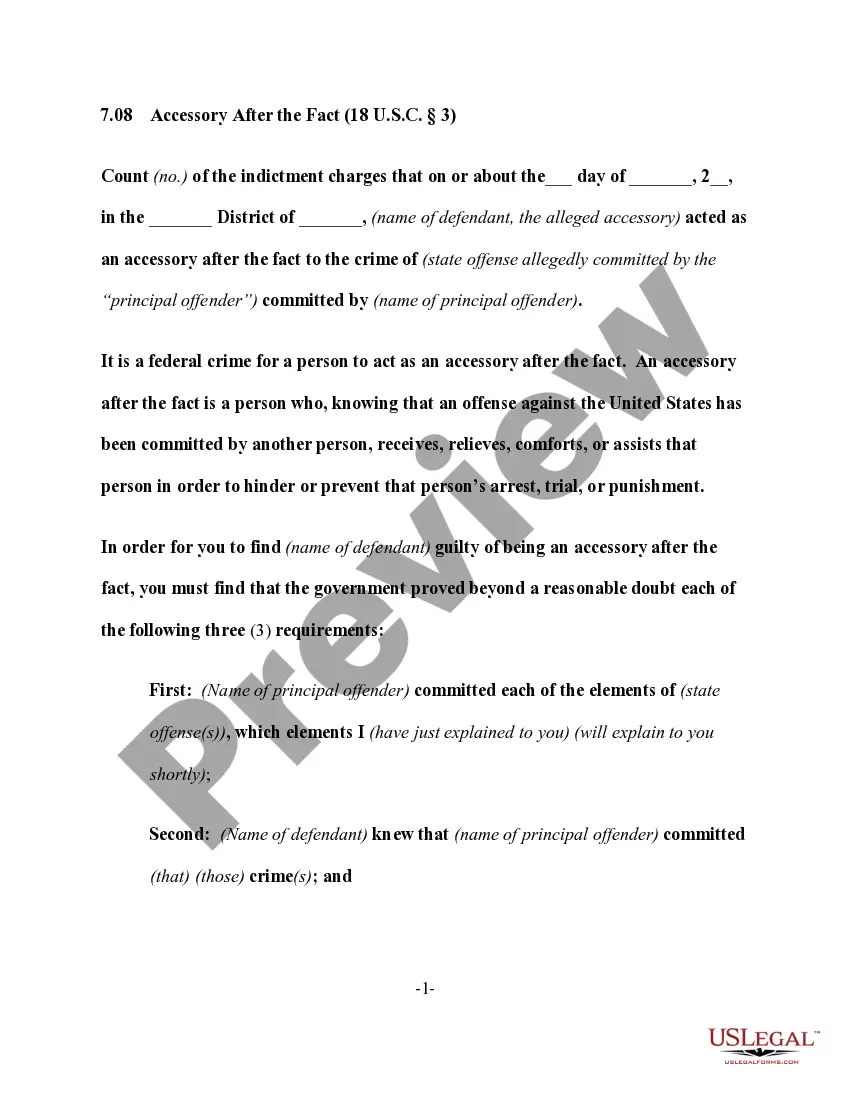
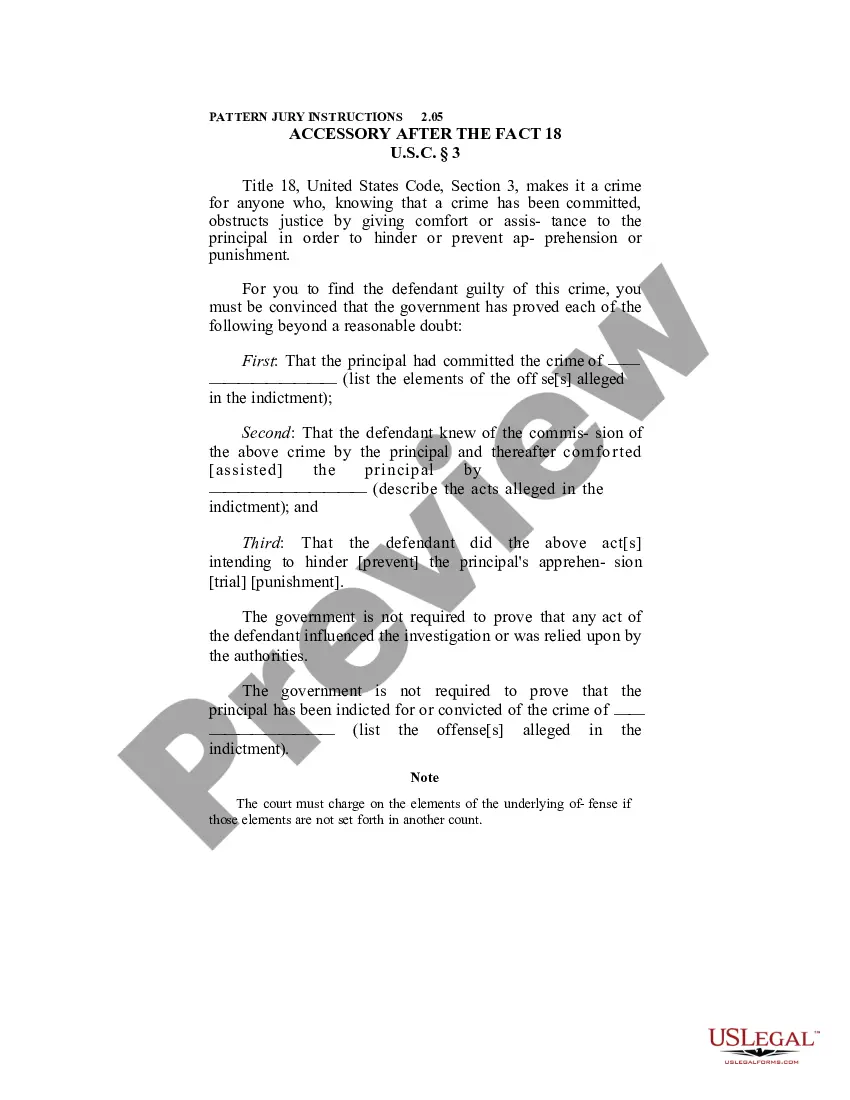
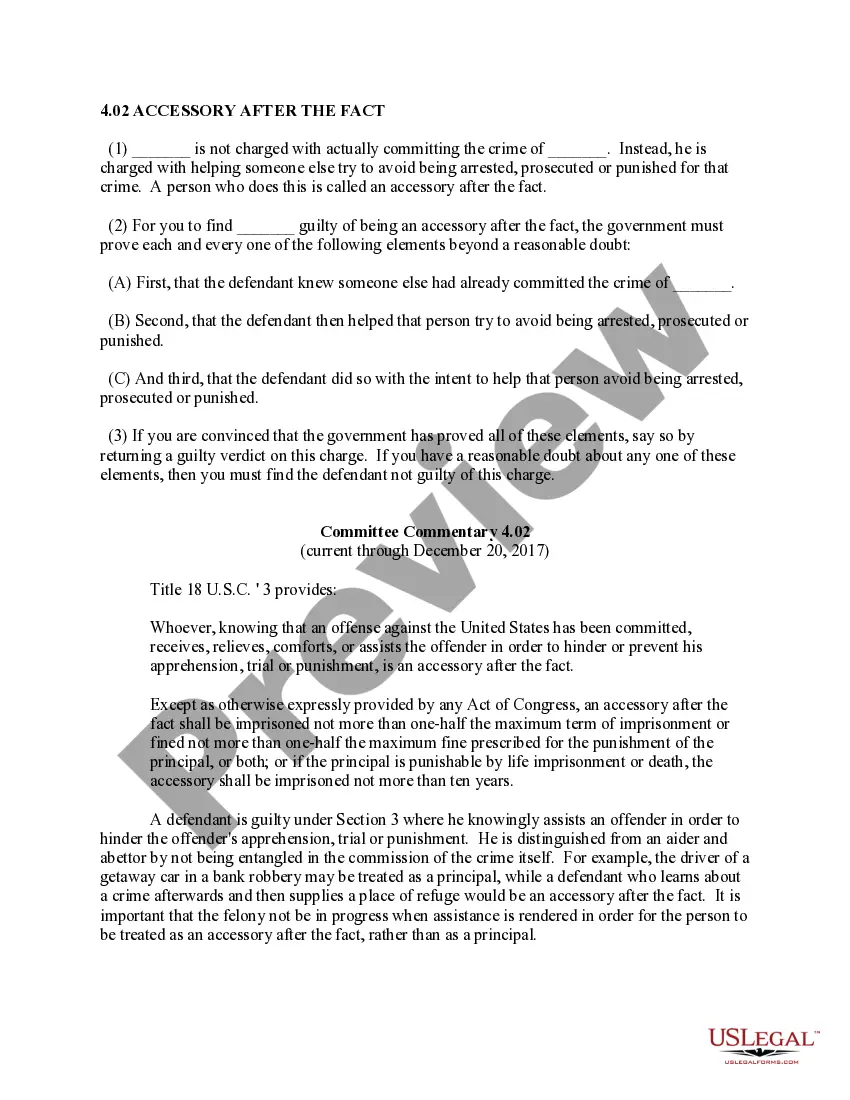
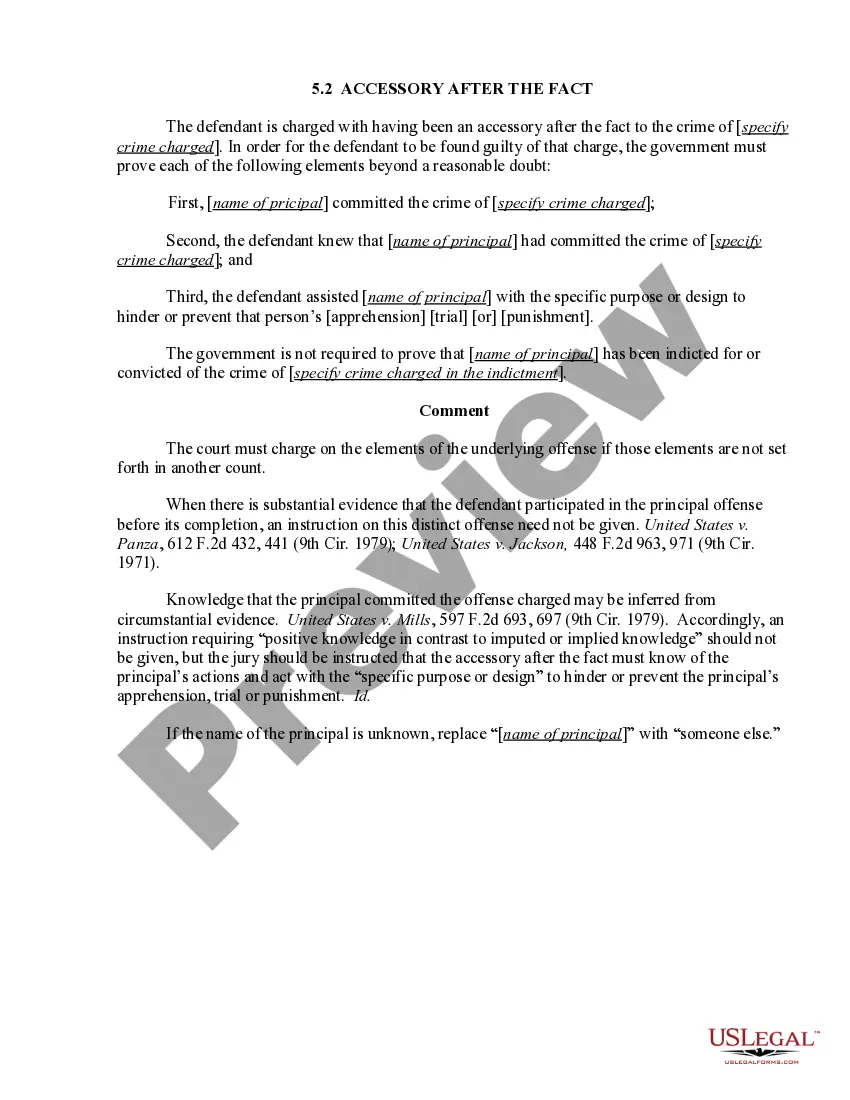
The Accessory After the Fact form under 18 U.S.C. Section 3 is a legal document that charges an individual with assisting another person who has committed a crime against the United States. This assistance typically involves actions aimed at hindering or preventing the apprehension or punishment of the offender. Understanding this form is crucial as it does not pertain to actual participation in the crime but rather to the support provided after the fact.
What’s included in this form
- Identification of the crime committed by another person.
- Details regarding the defendant's knowledge of the crime.
- Explanation of the assistance provided by the defendant.
- Intent requirement, indicating that the assistance was meant to prevent legal consequences for the offender.
When to use this form
This form is used when someone is accused of the crime of being an accessory after the fact, meaning they provided help to another individual who has already committed a crime. Common situations may involve providing shelter, financial support, or advice aimed at evading law enforcement.
Intended users of this form
This form should be utilized by individuals who find themselves charged with being an accessory after the fact. Legal representation is highly recommended to properly address the nuances of the charge.
- Defendants facing charges of accessory after the fact.
- Individuals seeking to understand their potential legal consequences.
- Attorneys representing clients in similar legal situations.
Steps to complete this form
- Clearly identify the parties involved in the alleged crime.
- Specify the details of the crime for which the other person is being charged.
- Describe the assistance provided by the defendant to the offender.
- Establish the intent behind the actions taken to assist the offender.
Does this document require notarization?
This form does not typically require notarization unless specified by local law, making it simpler to prepare and submit without the need for notarization services.
Get your form ready online
Our built-in tools help you complete, sign, share, and store your documents in one place.
Make edits, fill in missing information, and update formatting in US Legal Forms—just like you would in MS Word.
Download a copy, print it, send it by email, or mail it via USPS—whatever works best for your next step.
Sign and collect signatures with our SignNow integration. Send to multiple recipients, set reminders, and more. Go Premium to unlock E-Sign.
If this form requires notarization, complete it online through a secure video call—no need to meet a notary in person or wait for an appointment.
We protect your documents and personal data by following strict security and privacy standards.

Make edits, fill in missing information, and update formatting in US Legal Forms—just like you would in MS Word.

Download a copy, print it, send it by email, or mail it via USPS—whatever works best for your next step.

Sign and collect signatures with our SignNow integration. Send to multiple recipients, set reminders, and more. Go Premium to unlock E-Sign.

If this form requires notarization, complete it online through a secure video call—no need to meet a notary in person or wait for an appointment.

We protect your documents and personal data by following strict security and privacy standards.
Mistakes to watch out for
- Failing to adequately describe the assistance provided.
- Neglecting to include the specifics of the crime committed by the other person.
- Overlooking the intent behind the actions taken, which is a critical component of this charge.
Why complete this form online
- Convenient access to legal templates that can be downloaded and completed at any time.
- Editable forms that allow users to tailor the document to their specific circumstances.
- Reliable resources drafted by licensed attorneys to ensure compliance with legal standards.
Legal use & context
- Accessory after the fact charges can lead to significant penalties, making understanding this form crucial.
- This law is designed to prevent the obstruction of justice and uphold the integrity of legal proceedings.
Looking for another form?
Form popularity
FAQ
For example, if a person provides a gun to someone who uses it to commit a murder, the person who provided it can be charged with murder as an accessory.
If you are convicted of felony accessory after the fact, the offense is punishable by: custody in jail or state prison for up to three years, and/or. a maximum fine of $5,000.
An accessory-after-the-fact is someone who assists 1) someone who has committed a crime, 2) after the person has committed the crime, 3) with knowledge that the person committed the crime, and 4) with the intent to help the person avoid arrest or punishment.
Examples of an accessory after the fact include: intentionally misleading or lying to police, giving a false alibi for another person, helping another person hide evidence, and destroying evidence related to a crime.
Any person who knowingly gives assistance, relief, or monetary help to a criminal after a crime has been committed is considered an ?accessory after the fact?. Punishments for being an accessory after the fact can include fines, criminal prosecution, and jail time.