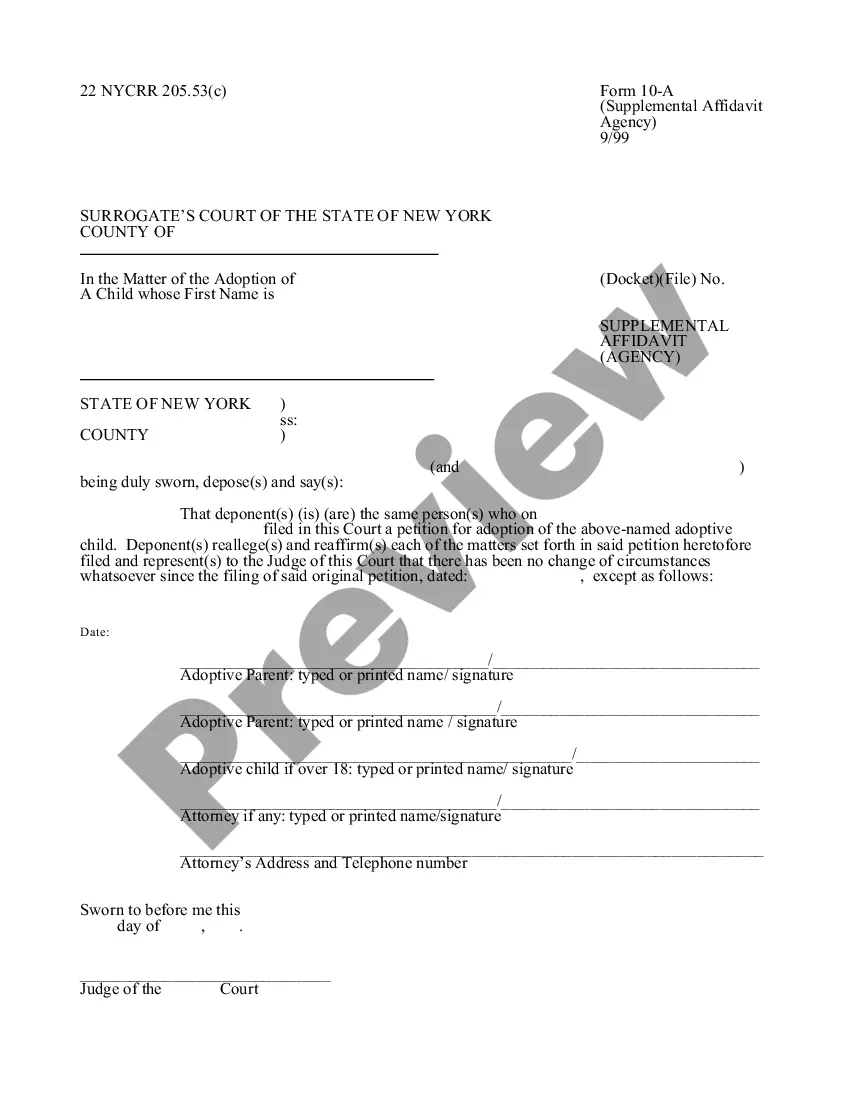
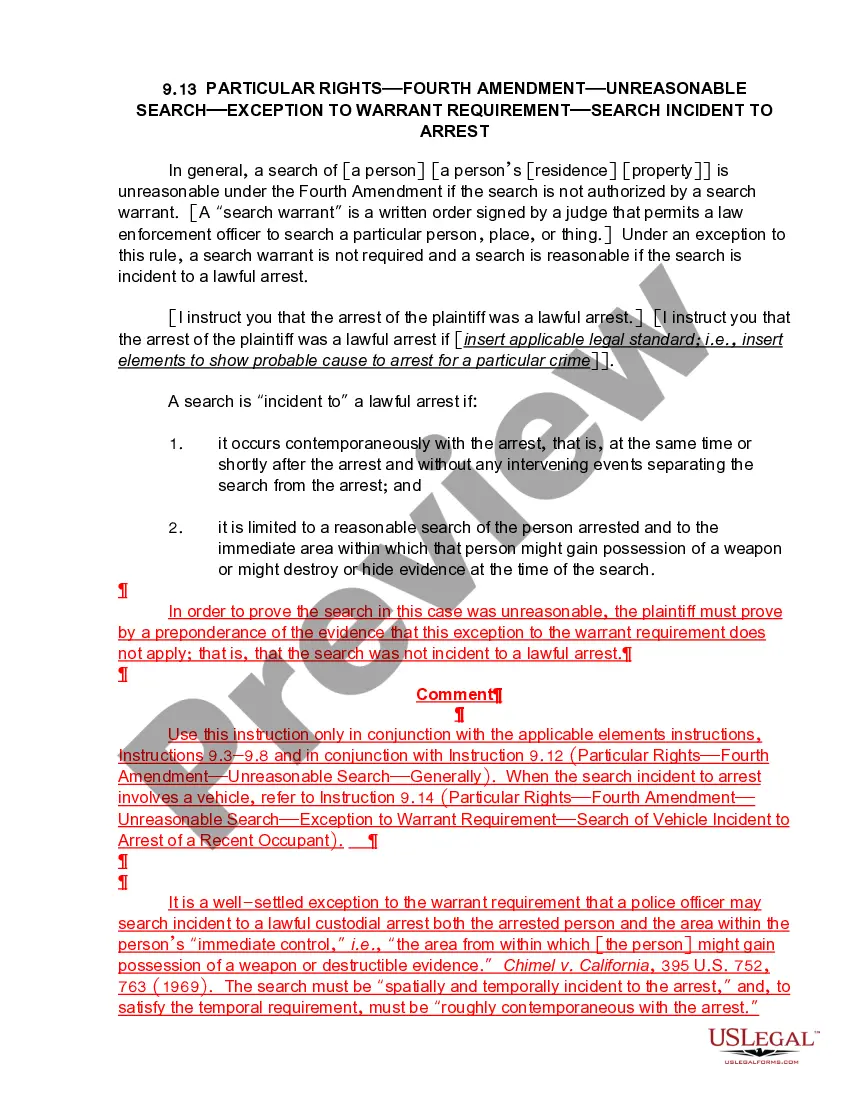
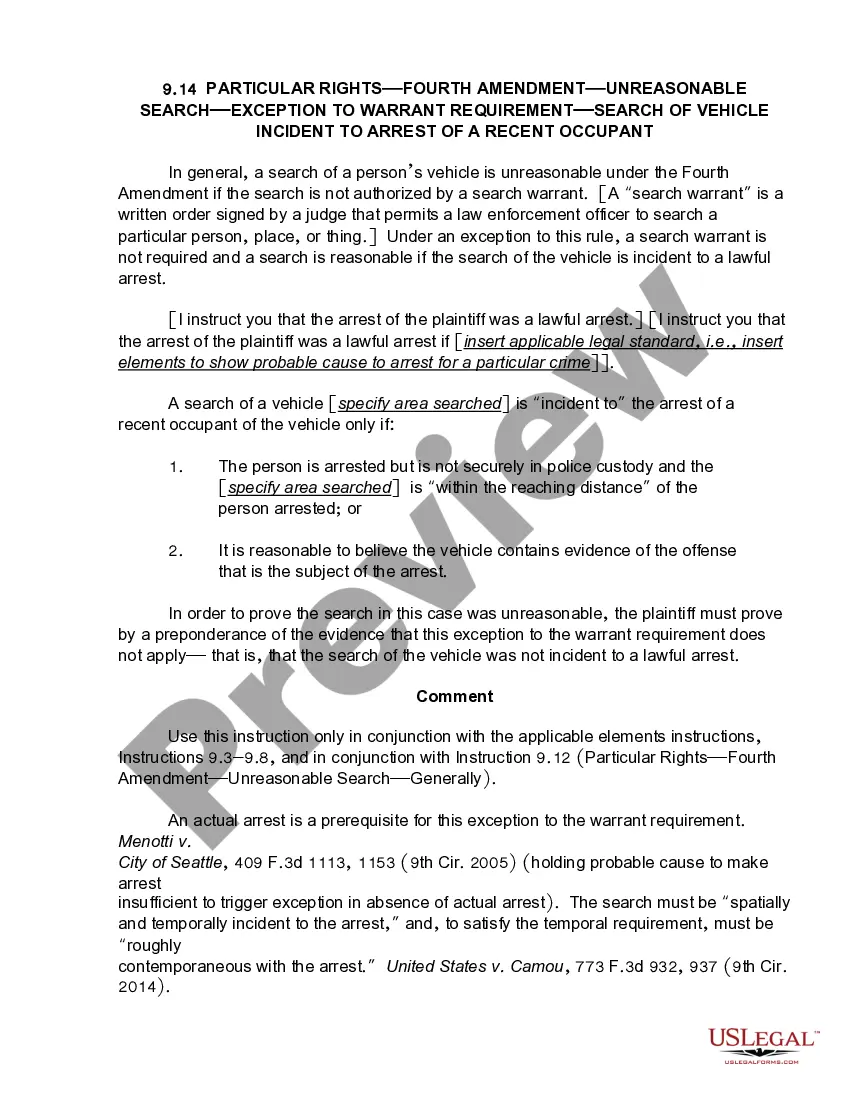
9.13 Particular Rights-Fourth Amendment-Unreasonable Search-Exception to Warrant Requirement-Search Incident to Arrest
Does this document require notarization?
In most cases, this form does not require notarization. However, some jurisdictions or signing circumstances might. US Legal Forms offers online notarization powered by Notarize, accessible 24/7 for a quick, remote process.
Get your form ready online
Our built-in tools help you complete, sign, share, and store your documents in one place.
Make edits, fill in missing information, and update formatting in US Legal Forms—just like you would in MS Word.
Download a copy, print it, send it by email, or mail it via USPS—whatever works best for your next step.
Sign and collect signatures with our SignNow integration. Send to multiple recipients, set reminders, and more. Go Premium to unlock E-Sign.
If this form requires notarization, complete it online through a secure video call—no need to meet a notary in person or wait for an appointment.
We protect your documents and personal data by following strict security and privacy standards.

Make edits, fill in missing information, and update formatting in US Legal Forms—just like you would in MS Word.

Download a copy, print it, send it by email, or mail it via USPS—whatever works best for your next step.

Sign and collect signatures with our SignNow integration. Send to multiple recipients, set reminders, and more. Go Premium to unlock E-Sign.

If this form requires notarization, complete it online through a secure video call—no need to meet a notary in person or wait for an appointment.

We protect your documents and personal data by following strict security and privacy standards.
Looking for another form?
Form popularity
FAQ
Search incident to a lawful arrest, commonly known as search incident to arrest (SITA) or the Chimel rule (from Chimel v. California), is a U.S. legal principle that allows police to perform a warrantless search of an arrested person, and the area within the arrestee's immediate control, in the interest of officer
An unreasonable search and seizure is a search and seizure executed 1) without a legal search warrant signed by a judge or magistrate describing the place, person, or things to be searched or seized or 2) without probable cause to believe that certain person, specified place or automobile has criminal evidence or 3)
An individual is pulled over for a minor traffic infraction, and the police officer searches the vehicle's trunk. An individual is arrested. Police officers enter an individual's house to place them under arrest. Police officers enter an individual's apartment to search for evidence of a crime.
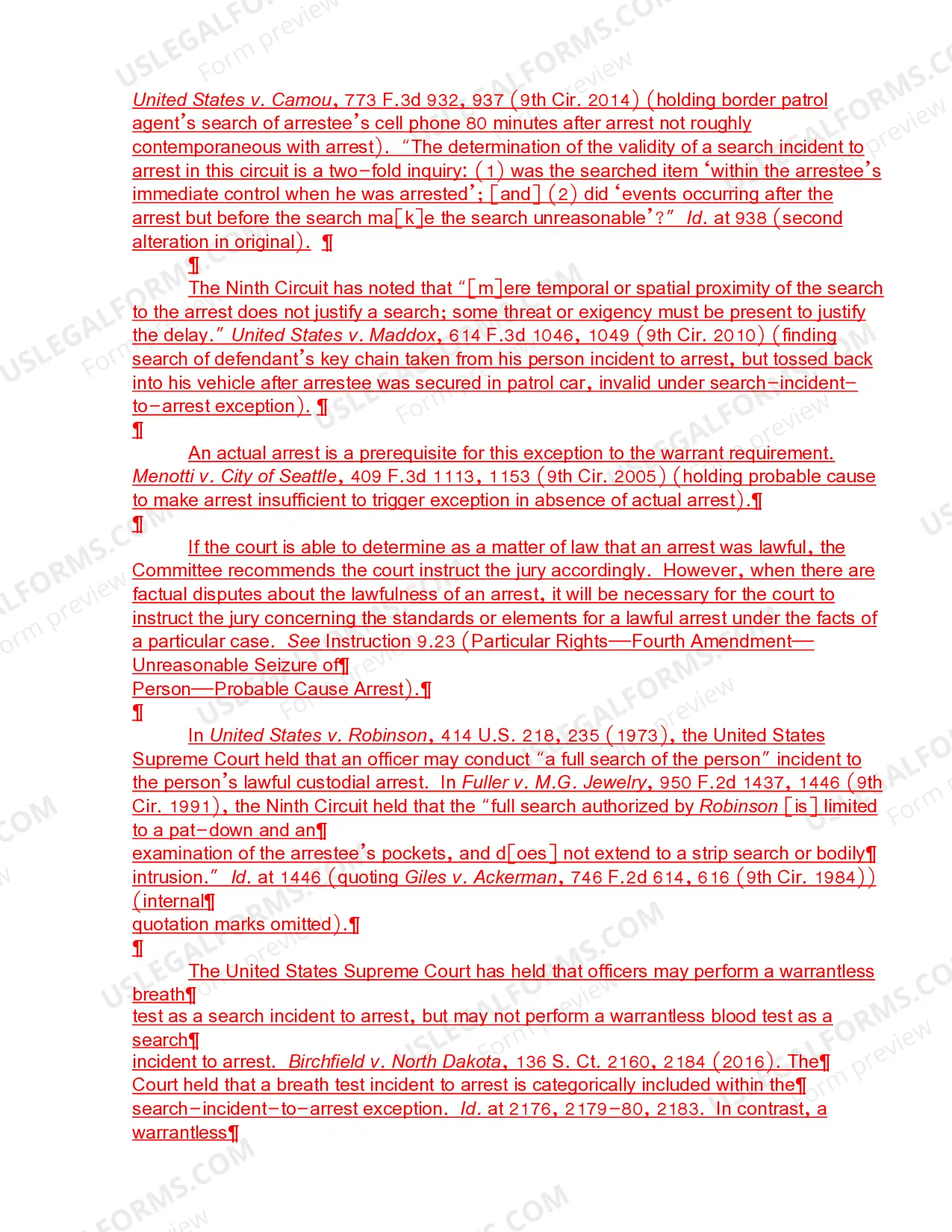
United States v. Robinson (1973) ? The U.S. Supreme Court held that "in the case of a lawful custodial arrest a full search of the person is not only an exception to the warrant requirement of the Fourth Amendment, but is also a reasonable search under that Amendment."
The right of the people to be secure in their persons, houses, papers, and effects, against unreasonable searches and seizures, shall not be violated, and no Warrants shall issue, but upon probable cause, supported by Oath or affirmation, and particularly describing the place to be searched, and the persons or things
The Fourth Amendment prohibits the United States government from conducting ?unreasonable searches and seizures." In general, this means police cannot search a person or their property without a warrant or probable cause. It also applies to arrests and the collection of evidence.
For example, if they had a warrant to search your car they could not also search your home. However, they can search outside the scope of the warrant and seize other items if they are in plain view. They can also act to prevent the destruction of evidence.
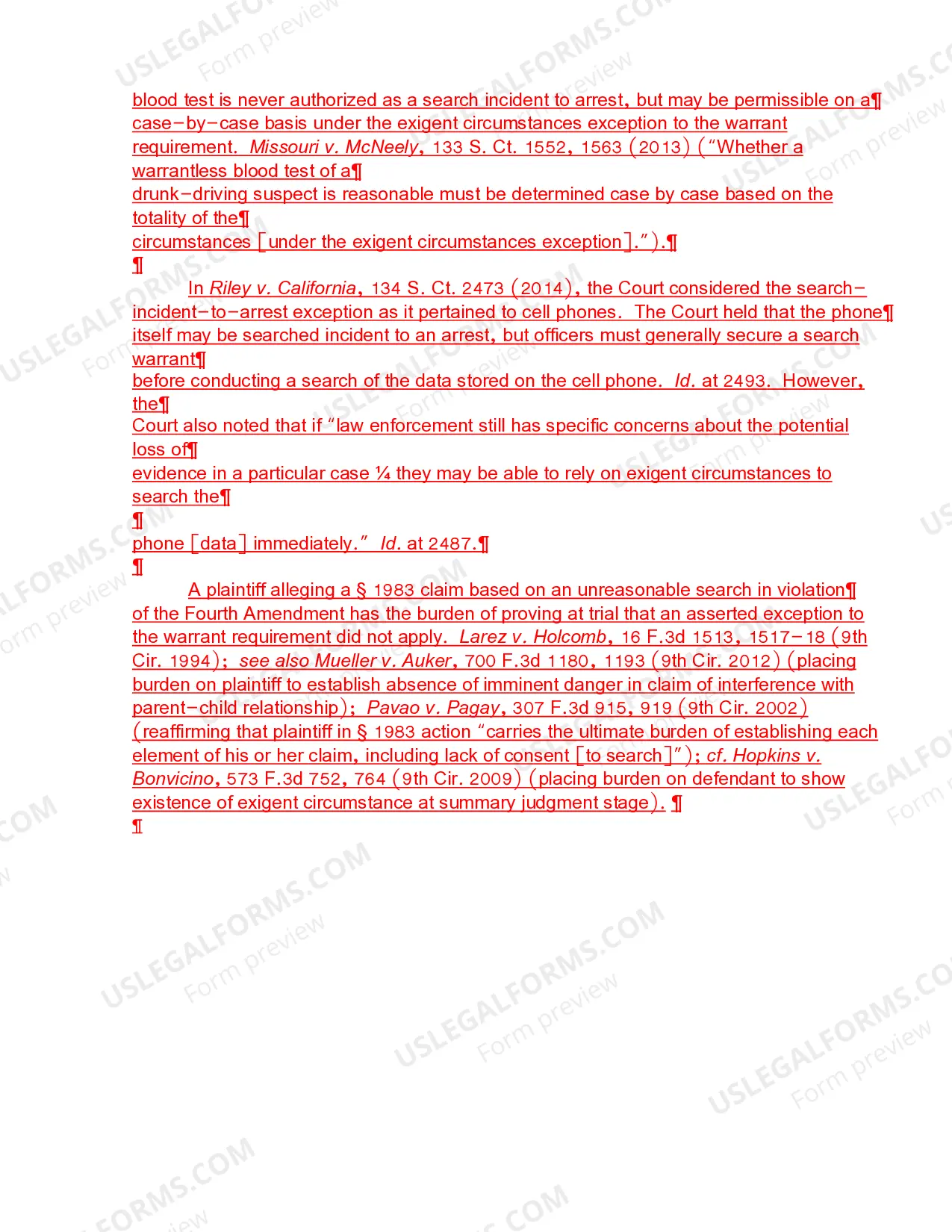
The arresting officer found a cell phone on the defendant and downloaded its entire memory at the time. The court upheld the search of the defendant's cell phone under the preserve evidence prong of the search incident to arrest exception.