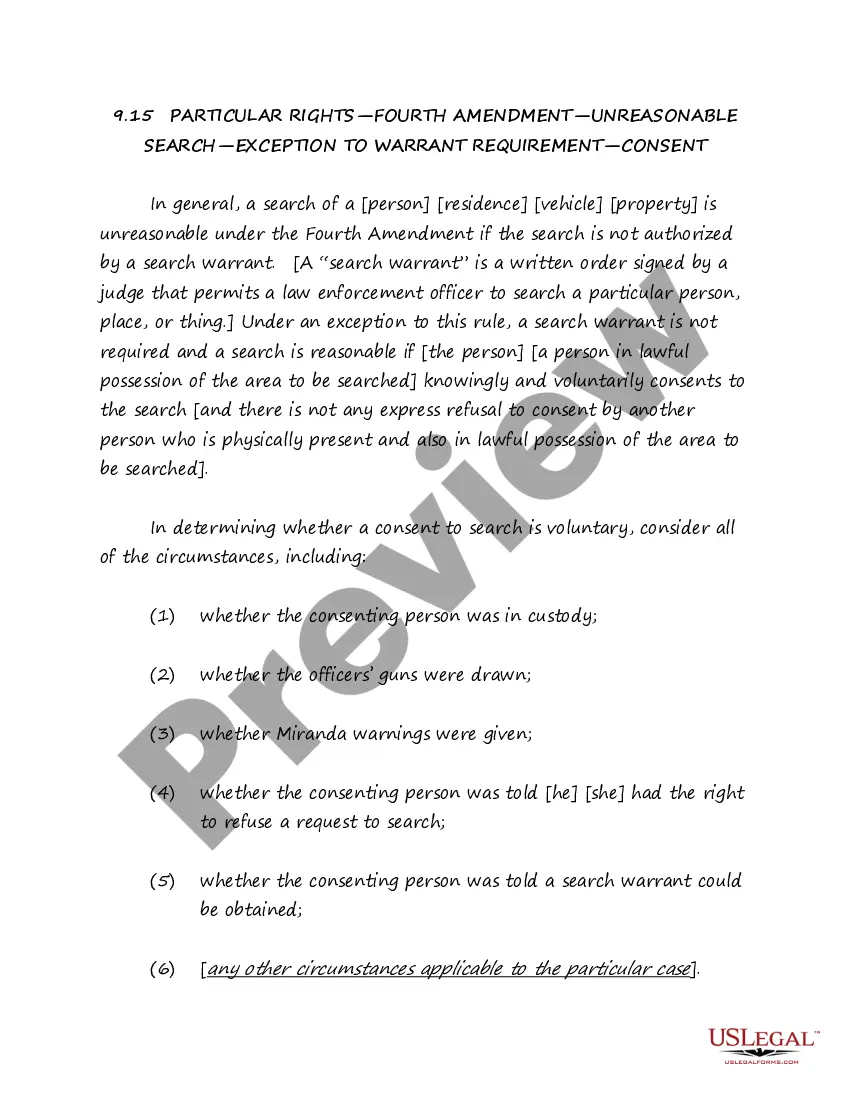
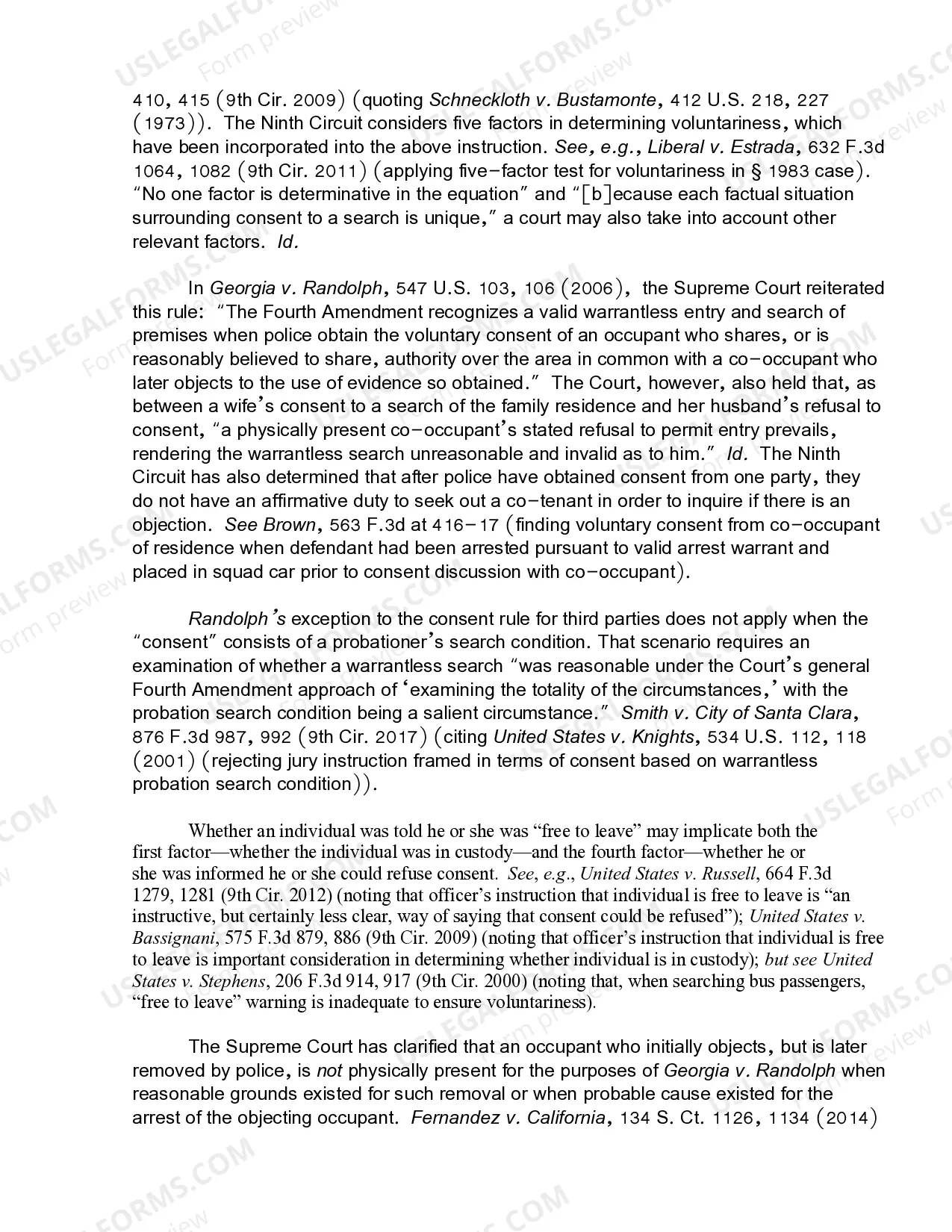
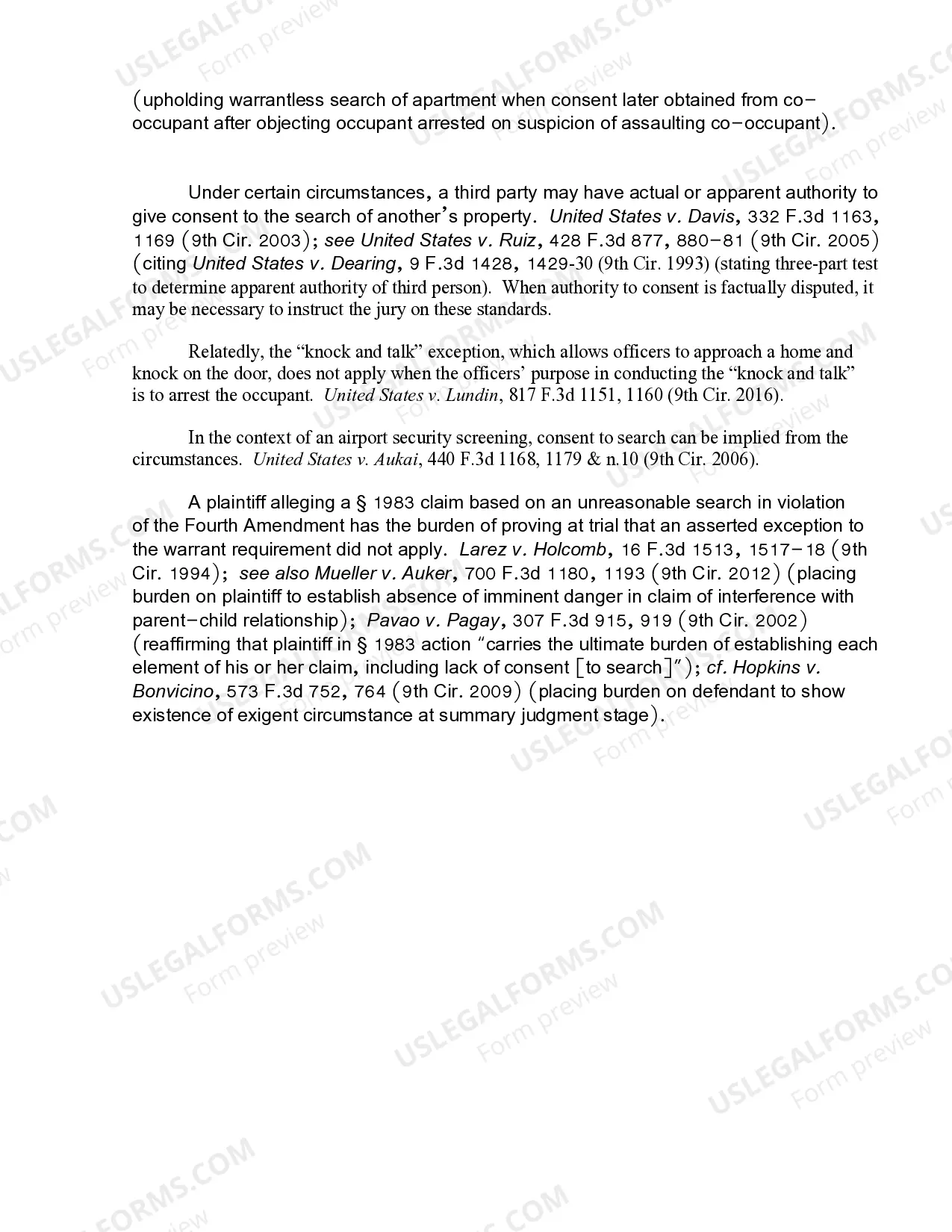
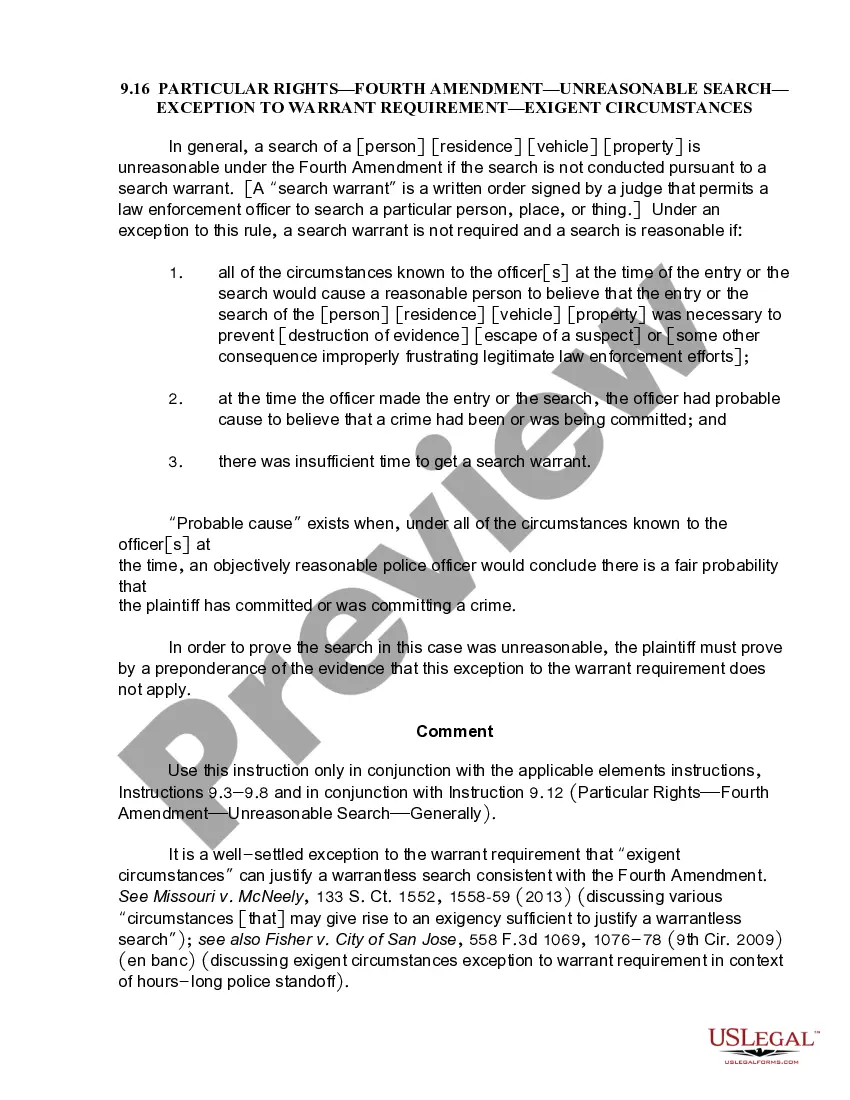
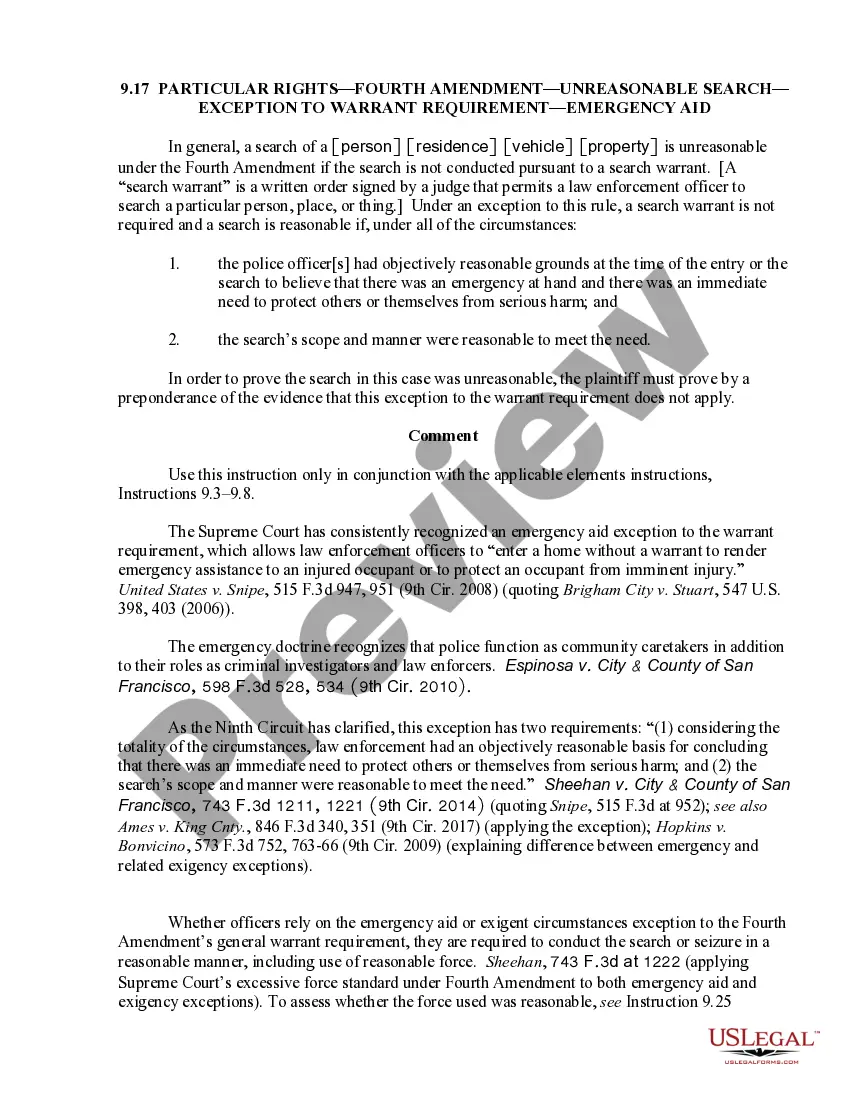
9.15 Particular Rights-Fourth Amendment-Unreasonable Search-Exception to Warrant Requirement-Consent

Notarization guidance
This form does not typically require notarization to be legally valid. However, some jurisdictions or document types may still require it. US Legal Forms provides secure online notarization powered by Notarize, available 24/7 for added convenience.
Get your form ready online
Our built-in tools help you complete, sign, share, and store your documents in one place.
Make edits, fill in missing information, and update formatting in US Legal Forms—just like you would in MS Word.
Download a copy, print it, send it by email, or mail it via USPS—whatever works best for your next step.
Sign and collect signatures with our SignNow integration. Send to multiple recipients, set reminders, and more. Go Premium to unlock E-Sign.
If this form requires notarization, complete it online through a secure video call—no need to meet a notary in person or wait for an appointment.
We protect your documents and personal data by following strict security and privacy standards.

Make edits, fill in missing information, and update formatting in US Legal Forms—just like you would in MS Word.

Download a copy, print it, send it by email, or mail it via USPS—whatever works best for your next step.

Sign and collect signatures with our SignNow integration. Send to multiple recipients, set reminders, and more. Go Premium to unlock E-Sign.

If this form requires notarization, complete it online through a secure video call—no need to meet a notary in person or wait for an appointment.

We protect your documents and personal data by following strict security and privacy standards.
Looking for another form?

Form popularity
FAQ
The Fourth Amendment is important because it protects American citizens from unreasonable search and seizure by the government, which includes police officers. It sets the legal standard that police officers must have probable cause and acquire a warrant before conducting a search.
Under the exigent circumstances exception to the fourth amendment warrant requirement, the courts have recognized three threats as providing justification for warrantless action. These include danger to life, danger of escape, and danger of destruction or removal of evidence.
For example, consider the following scenarios: An arrest is found to violate the Fourth Amendment because it was not supported by probable cause or a valid warrant. Any evidence obtained through that unlawful arrest, such as a confession, will be kept out of the case.
The Fourth Amendment prohibits the United States government from conducting ?unreasonable searches and seizures." In general, this means police cannot search a person or their property without a warrant or probable cause. It also applies to arrests and the collection of evidence.
The Fourth Amendment prohibits the United States government from conducting ?unreasonable searches and seizures." In general, this means police cannot search a person or their property without a warrant or probable cause. It also applies to arrests and the collection of evidence.
An unreasonable search and seizure is a search and seizure executed 1) without a legal search warrant signed by a judge or magistrate describing the place, person, or things to be searched or seized or 2) without probable cause to believe that certain person, specified place or automobile has criminal evidence or 3)