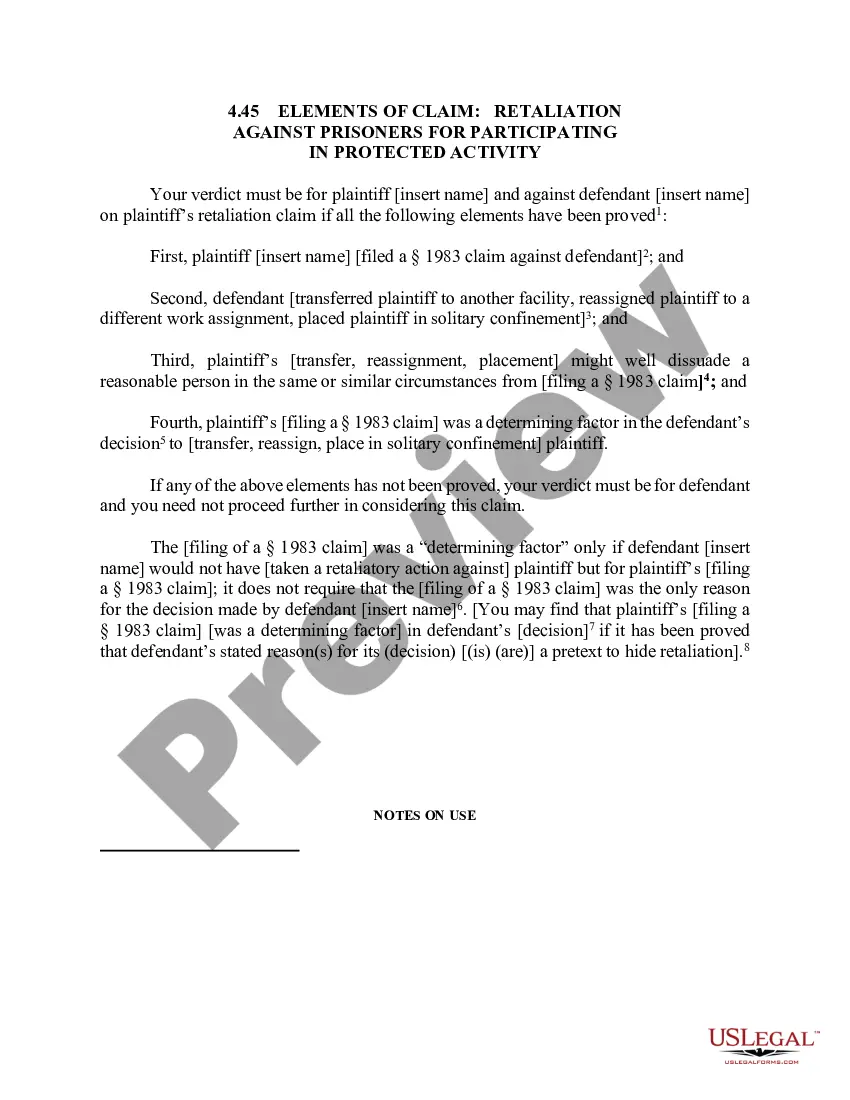
4.45 ELEMENTS OF CLAIM: RETALIATION AGAINST PRISONERS FOR PARTICIPATING IN PROTECTED ACTIVITY
Understanding this form
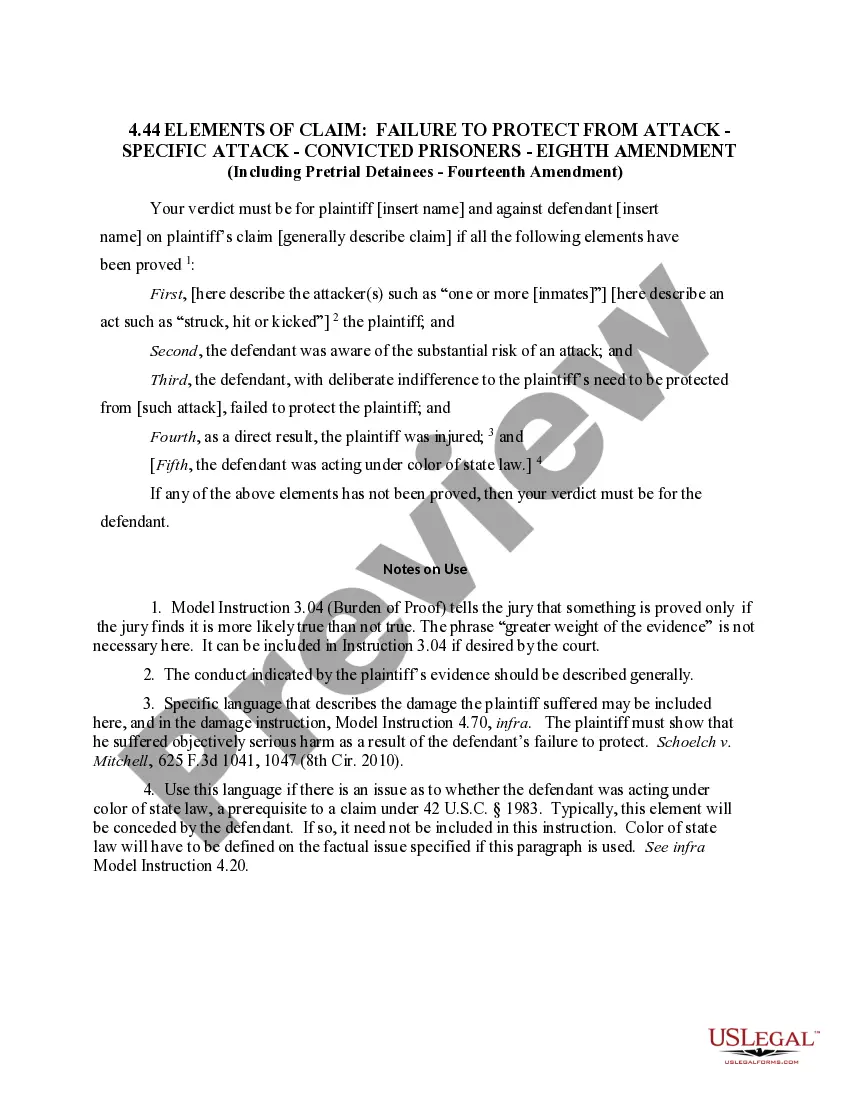
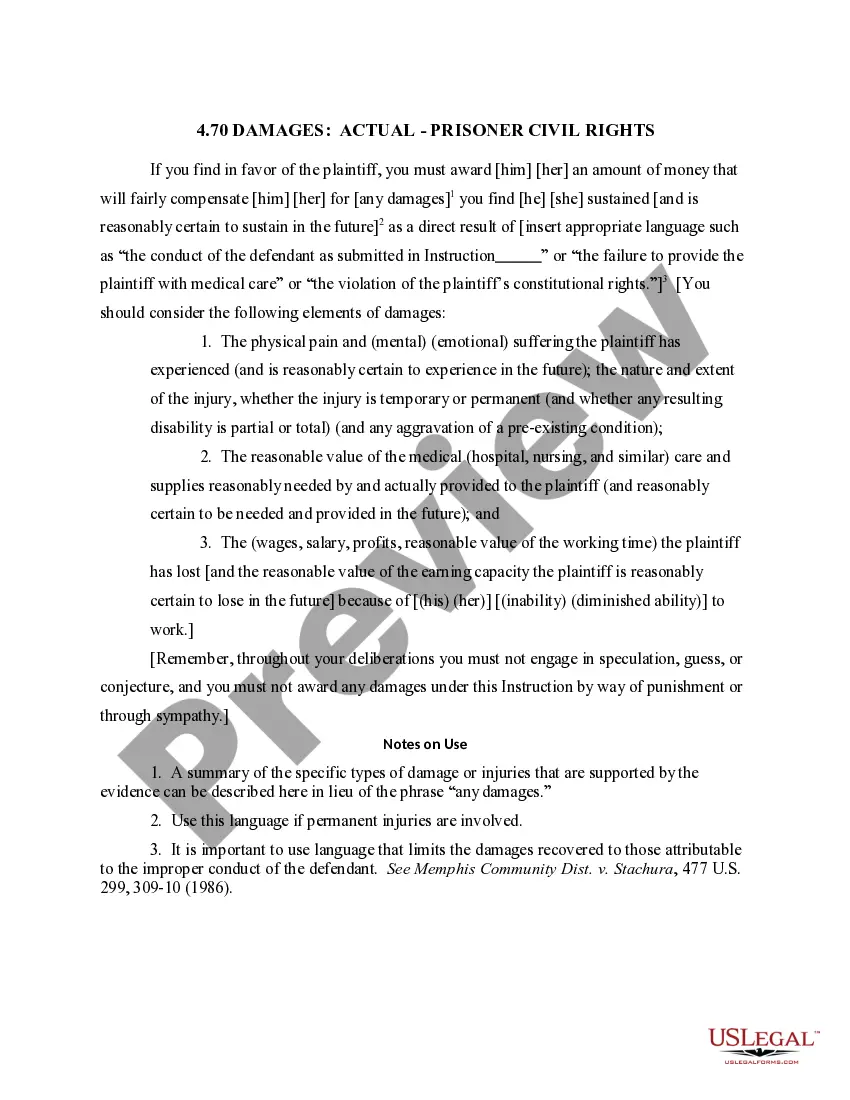
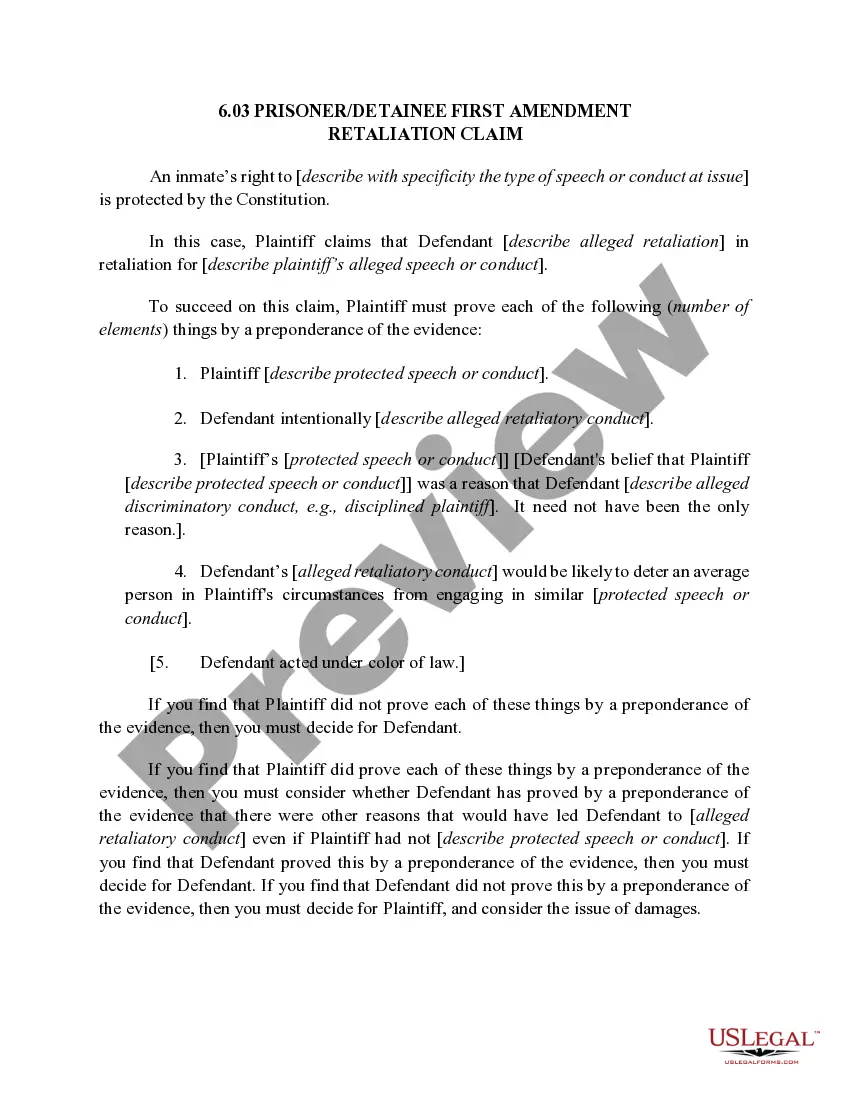
This form, titled "Elements of Claim: Retaliation Against Prisoners for Participating in Protected Activity," is a legal document used in cases where prisoners claim retaliation from prison officials for exercising their rights, specifically related to filing a § 1983 claim. It outlines the necessary elements that must be proven in court to establish a case of retaliation, distinguishing it from other claims related to prisoner rights.
Form components explained
- Identification of the plaintiff and defendant.
- Detailing the retaliatory actions taken against the plaintiff.
- Establishing whether the actions could dissuade a reasonable person from filing a claim.
- Demonstrating that the plaintiff's filing was a determining factor in the defendantâs actions.
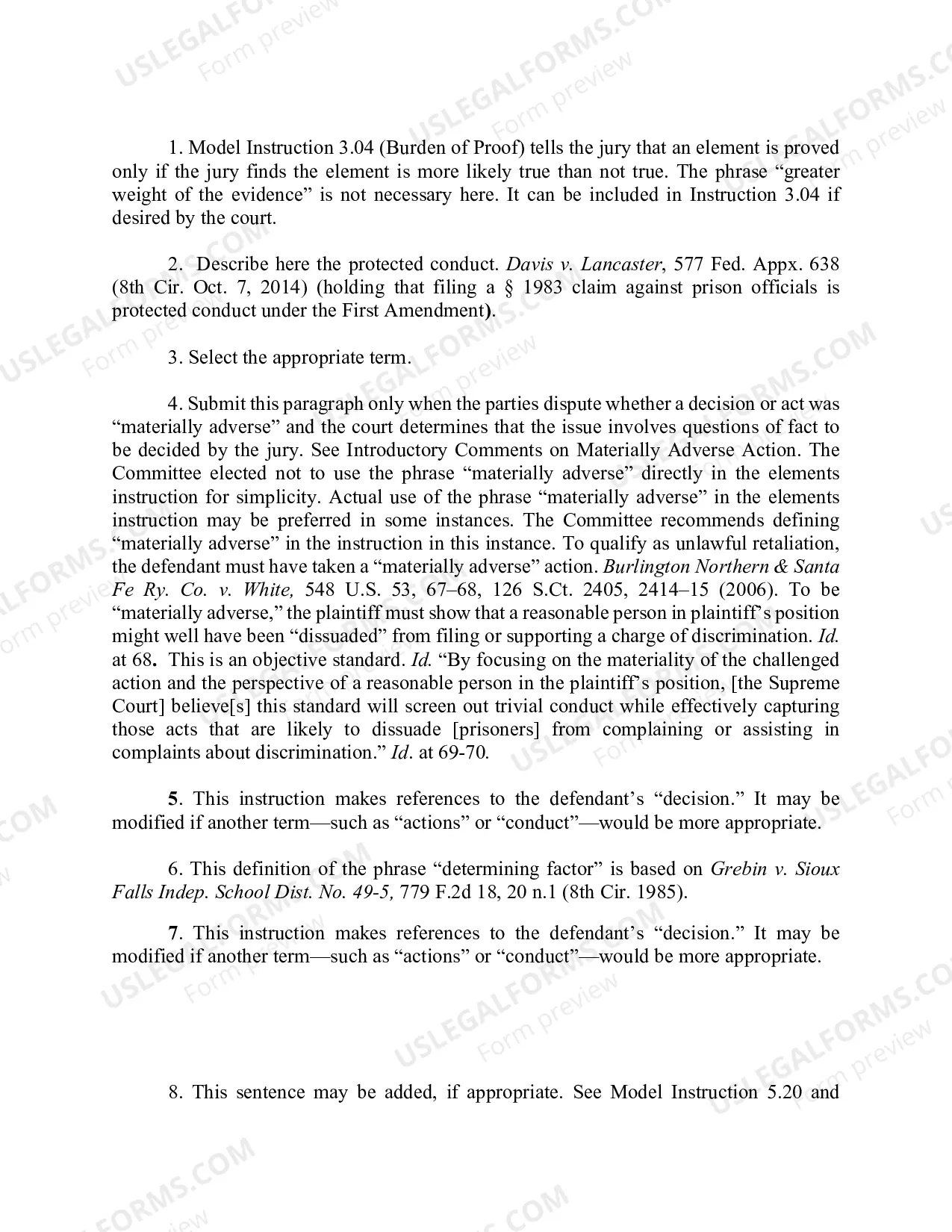
- Clarification on the concept of "determining factor" in the context of retaliation.

When to use this form
This form should be used by prisoners who believe they have been subjected to retaliation by prison officials after filing a § 1983 claim. It applies in situations where a prisoner has faced negative consequences, such as transfer to another facility or placement in solitary confinement, directly linked to their legal actions.
Intended users of this form
- Prisoners who have filed a § 1983 claim against prison officials.
- Individuals seeking to document instances of alleged retaliation by prison authorities.
- Legal representatives or advocates assisting prisoners in making retaliation claims.
How to prepare this document
- Identify and insert the names of the plaintiff and defendant where indicated.
- Clearly describe the retaliatory actions that were taken against the plaintiff.
- Assess whether these actions might dissuade a reasonable person from filing a legal claim.
- Establish that the retaliatory actions were a direct result of the plaintiff's legal filings.
- Include any additional evidence or context to support the claim as needed.
Notarization guidance
This form usually doesn’t need to be notarized. However, local laws or specific transactions may require it. Our online notarization service, powered by Notarize, lets you complete it remotely through a secure video session, available 24/7.
Get your form ready online
Our built-in tools help you complete, sign, share, and store your documents in one place.
Make edits, fill in missing information, and update formatting in US Legal Forms—just like you would in MS Word.
Download a copy, print it, send it by email, or mail it via USPS—whatever works best for your next step.
Sign and collect signatures with our SignNow integration. Send to multiple recipients, set reminders, and more. Go Premium to unlock E-Sign.
If this form requires notarization, complete it online through a secure video call—no need to meet a notary in person or wait for an appointment.
We protect your documents and personal data by following strict security and privacy standards.

Make edits, fill in missing information, and update formatting in US Legal Forms—just like you would in MS Word.

Download a copy, print it, send it by email, or mail it via USPS—whatever works best for your next step.

Sign and collect signatures with our SignNow integration. Send to multiple recipients, set reminders, and more. Go Premium to unlock E-Sign.

If this form requires notarization, complete it online through a secure video call—no need to meet a notary in person or wait for an appointment.

We protect your documents and personal data by following strict security and privacy standards.
Mistakes to watch out for
- Failing to clearly connect the retaliatory action to the plaintiffâs legal filing.
- Not providing sufficient evidence to demonstrate that the actions were materially adverse.
- Misunderstanding the definition of âdetermining factorâ which can weaken the case.
- Omitting necessary names or details that identify the involved parties.
Why complete this form online
- Convenience of downloading the form instantly without the need for physical paperwork.
- Ability to edit the form as needed to fit specific circumstances promptly.
- Access to templates drafted by licensed attorneys, ensuring legal compliance.
Legal use & context
- This form is designed to assist prisoners in establishing claims of retaliation as protected by the First Amendment.
- A successful claim requires proving that the retaliatory action was a reaction to the plaintiff's exercise of legal rights.
- Understanding the legal requirements strengthens the case for retaliation claims against prison officials.
Looking for another form?



Form popularity
FAQ
Administrative rules do not discuss compensation. ?Researchers are not to provide compensation or other rewards to an inmate for his/her participation in research, unless special permission is granted by the RRC (Research Review Committee).? Compensation decisions are made on a case-by-case basis.
The eighth amendment provides prisoners with limited rights of protection against cruel and unusual punishment during the course of confinement. These rights extend to the existence of humane living conditions, adequate medical care, and protection from violence by other inmates.
Prisoners' rights have four legal foundations: the U.S. Constitution, federal statutes, states constitutions, and state statutes.
California law prohibits all biomedical research on prisoners (Section 3502). However, prisoner participation in investigational new drug (IND) research may be allowed under certain circumstances. The prisoner-participant has given informed consent Section 3521.
But prisoners have also been excluded from the trials out of concern that they might be coerced into participating or exploited if they do. Now, some researchers argue that including prisoners in studies could offer outsize health benefits.
Courts have held that the Equal Protection Clause of the 14th Amendment has been held to apply to prison inmates so prisoners are protected against discrimination or unequal treatment based on race, sex, religion, age, national origin, and creed.
45 CFR 46. The Common Rule prohibits the involvement of prisoners in exempt research except for research aimed at involving a broader subject population that only incidentally includes prisoners.
Prisoners are considered to be vulnerable because the constraints of incarceration can affect their ability to make truly voluntary decisions to serve as research subjects. Further, the prison setting offers limited confidentiality and presents unique risks.