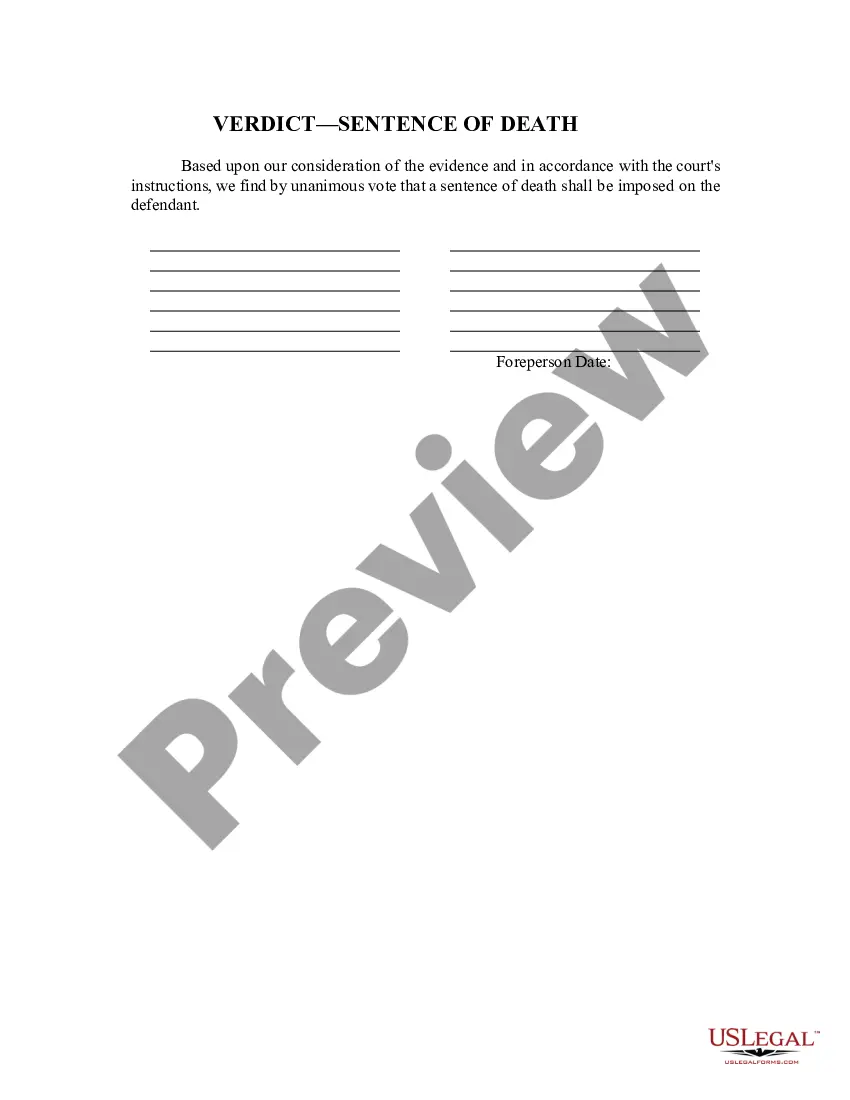
VERDICT-SENTENCE OF DEATH
What this document covers
The Verdict-Sentence of Death is a formal legal document used by juries to declare their decision in a capital case, specifically indicating that a sentence of death is to be imposed on the defendant. This form differs from standard verdict forms due to its specific application in capital punishment cases, ensuring that the jury's decision is recorded clearly and in accordance with legal requirements. A properly executed Verdict-Sentence of Death is crucial for ensuring that the legal process surrounding capital punishment is followed precisely.
What’s included in this form
- Unanimous vote clause: A statement confirming the jury's unanimous agreement on the sentence.
- Defendant identification: A clear mention of the defendant's name or identification number.
- Foreperson signature: Signature of the jury foreperson to authenticate the verdict.
- Date of verdict: The date when the verdict is rendered, which is critical for legal documentation.
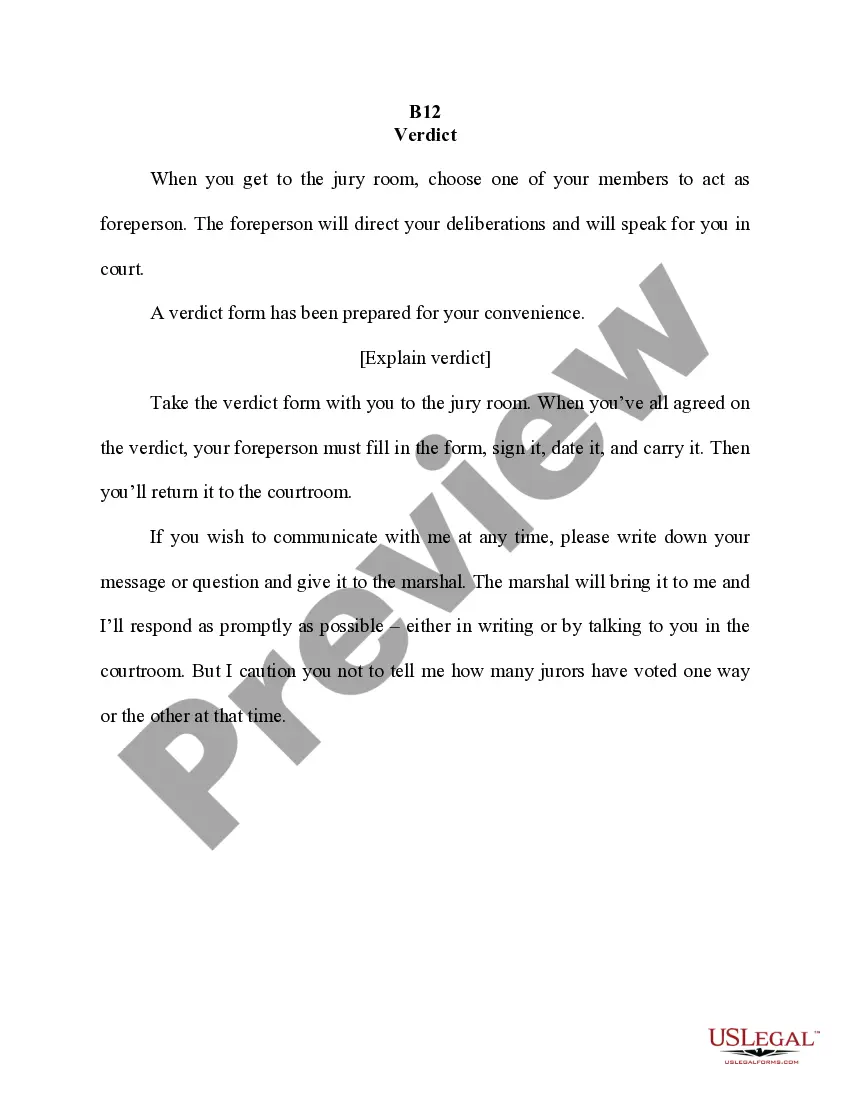
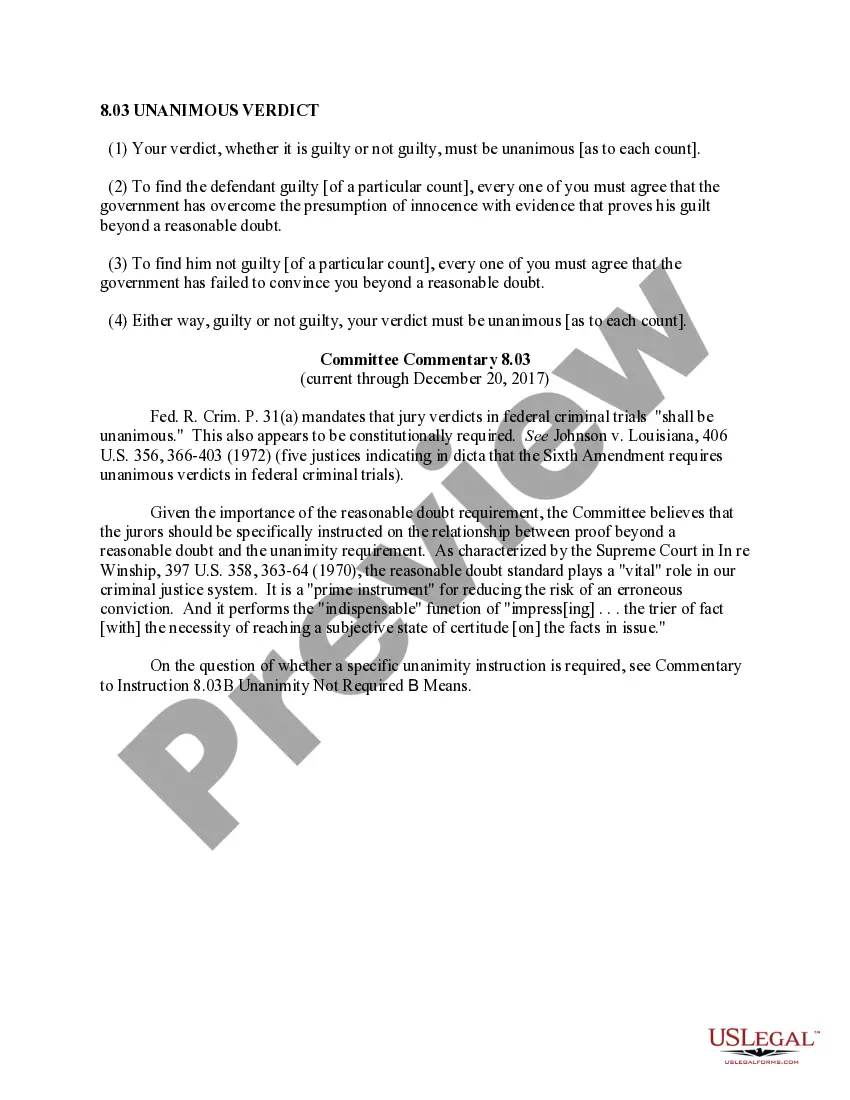
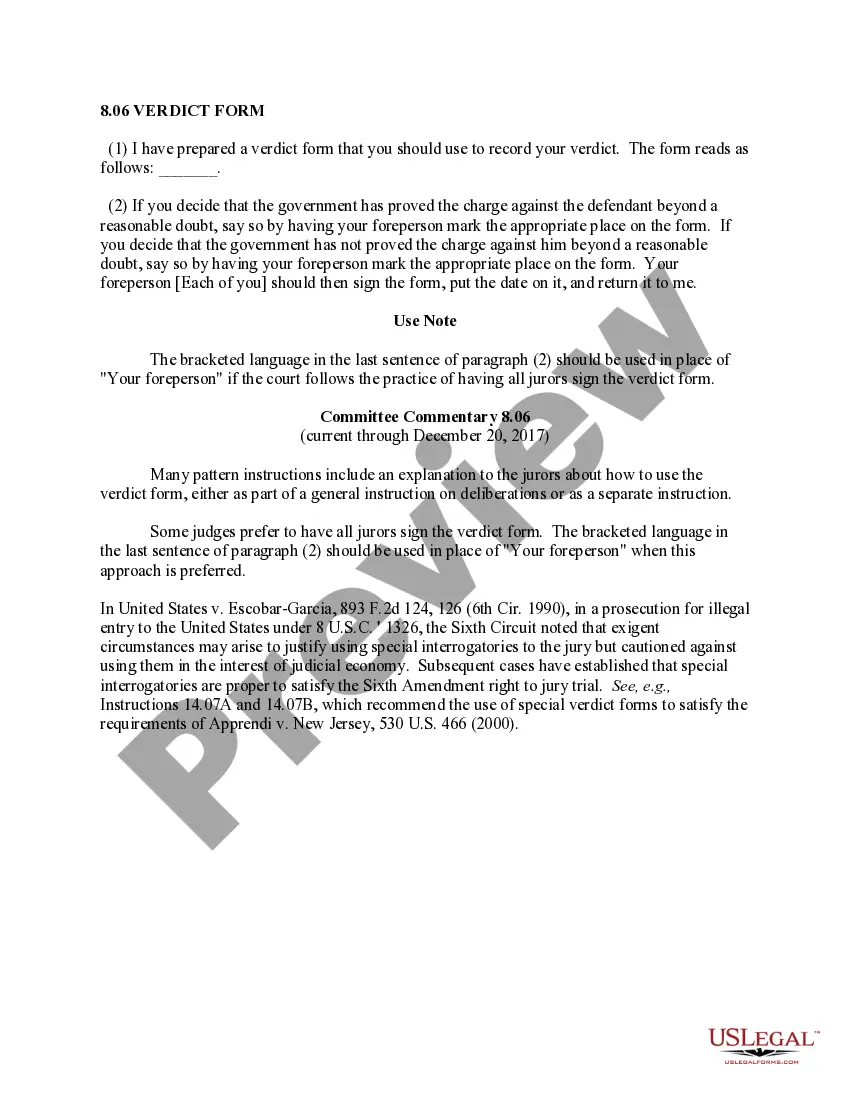
Situations where this form applies
This form is used during the penalty phase of a criminal trial when a jury must decide whether to impose a death sentence on a convicted defendant. It is relevant in cases involving serious crimes, such as murder, where the state seeks capital punishment as a legal consequence. It is essential for juries to utilize this form to ensure that their decision is officially recognized and documented.
Who should use this form
This form is intended for the following individuals and groups:
- Members of the jury involved in a capital case.
- Legal professionals managing capital punishment cases.
- Court clerks responsible for maintaining court records related to the verdict.
Instructions for completing this form
- Gather the jury's evidence and discussions as instructed by the court.
- Ensure all jurors reach a unanimous decision regarding the sentence of death.
- Clearly write the decision in the designated section of the form.
- The foreperson must sign and date the form to validate the verdict.
- Submit the completed form to the court administrator as part of the official case record.
Is notarization required?
In most cases, this form does not require notarization. However, some jurisdictions or signing circumstances might. US Legal Forms offers online notarization powered by Notarize, accessible 24/7 for a quick, remote process.
Get your form ready online
Our built-in tools help you complete, sign, share, and store your documents in one place.
Make edits, fill in missing information, and update formatting in US Legal Forms—just like you would in MS Word.
Download a copy, print it, send it by email, or mail it via USPS—whatever works best for your next step.
Sign and collect signatures with our SignNow integration. Send to multiple recipients, set reminders, and more. Go Premium to unlock E-Sign.
If this form requires notarization, complete it online through a secure video call—no need to meet a notary in person or wait for an appointment.
We protect your documents and personal data by following strict security and privacy standards.

Make edits, fill in missing information, and update formatting in US Legal Forms—just like you would in MS Word.

Download a copy, print it, send it by email, or mail it via USPS—whatever works best for your next step.

Sign and collect signatures with our SignNow integration. Send to multiple recipients, set reminders, and more. Go Premium to unlock E-Sign.

If this form requires notarization, complete it online through a secure video call—no need to meet a notary in person or wait for an appointment.

We protect your documents and personal data by following strict security and privacy standards.
Common mistakes
- Failing to ensure unanimous consent among jurors prior to signing.
- Not accurately recording the date of the verdict.
- Leaving the defendant's details incomplete or incorrect.
- Not having the foreperson sign the form before submission.
Advantages of online completion
- Convenient access to the form from any location, allowing for timely documentation.
- Editability ensures accurate completion without the risk of errors from handwritten text.
- Reliable templates drafted by legal professionals, ensuring compliance with legal standards.
What to keep in mind
- The Verdict-Sentence of Death is a specialized legal document used to formalize a jury's decision on a death sentence.
- Use this form when the jury reaches a unanimous decision in capital cases.
- Ensure all details are accurately filled out, including signatures and dates, to maintain legal integrity.
Looking for another form?

Form popularity
FAQ
The death penalty can only be imposed on defendants convicted of capital offenses ? such as murder, treason, genocide, or the killing or kidnapping of a Congressman, the President, or a Supreme Court justice. Unlike other punishments, a jury must decide whether to impose the death penalty.
Hakamada's sister, Hideko, said: ?I was waiting for this day for 57 years and it has come.? Iwao Hakamada is now 87 years old. The average time on death row from sentencing to execution in the U.S. has grown considerably from about 6 years in 1985 to over 20 years in 2019.
Shortest Time on Death Row Prior to Execution: NameTime on Death Row1.Joe Gonzales252 days2.Steven Renfro263 days
Death-sentenced prisoners in the U.S. typically spend more than a decade on death row prior to exoneration or execution. Some prisoners have been on death row for well over 20 years.
1. : the decision by a court of law that the punishment for someone's crime will be death. She received a death sentence for the murders.
The verdict If a defendant is found not guilty, by the magistrate, jury or judge, they will be 'acquitted' and free to go. If the defendant pleads guilty or is found guilty by the judge or jury, they are convicted and the judge will pass sentence.
In the United States, prisoners may wait many years before execution can be carried out due to the complex and time-consuming appeals procedures mandated in the jurisdiction.
Their recommendation was merely advisory to the judge, who then looked at aggravating and mitigating factors and decided on a death or life sentence. The new law importantly removes the language saying that judges, ?notwithstanding the recommendation of a majority of the jury,? can determine the final sentence.