Home Inspection Services Contract - Self-Employed
What this document covers
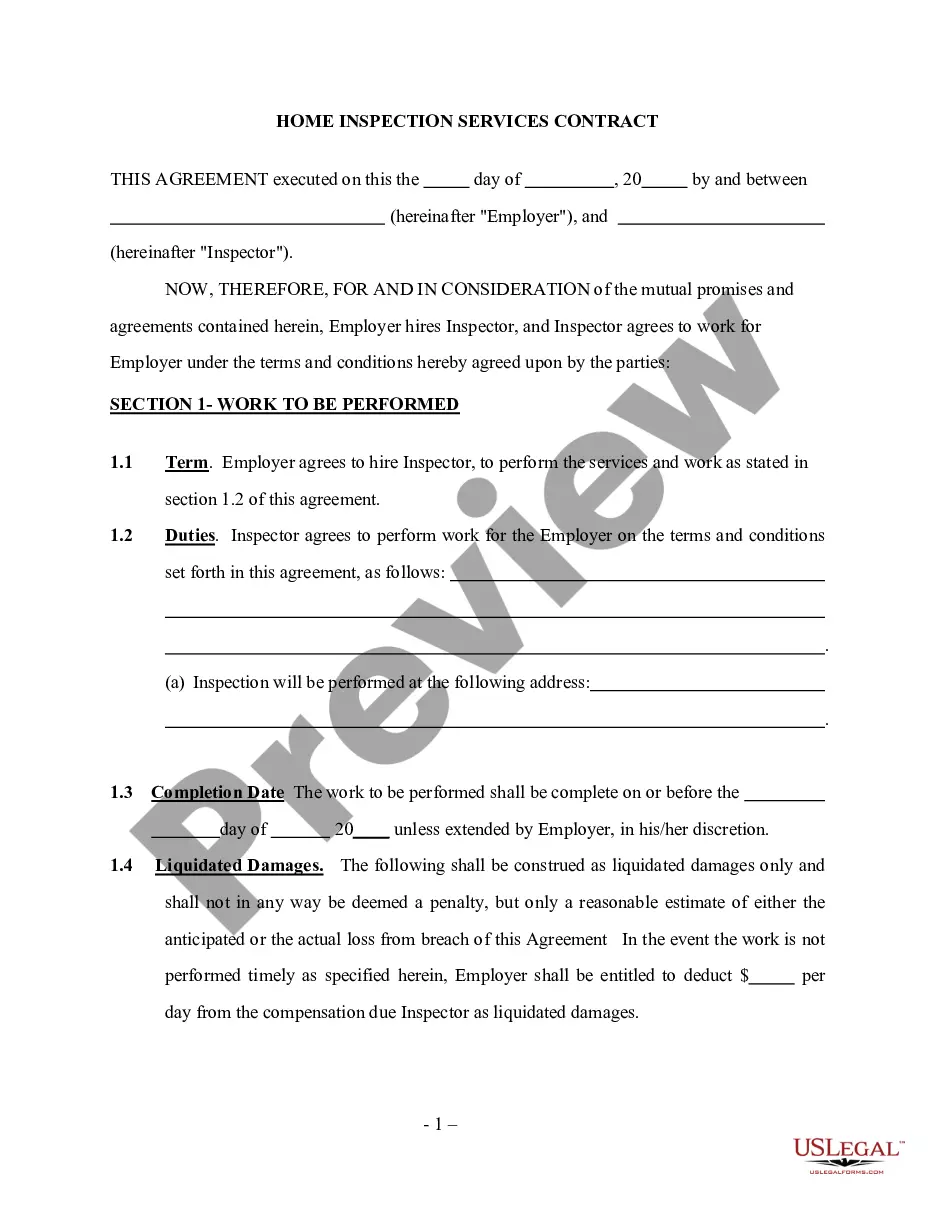
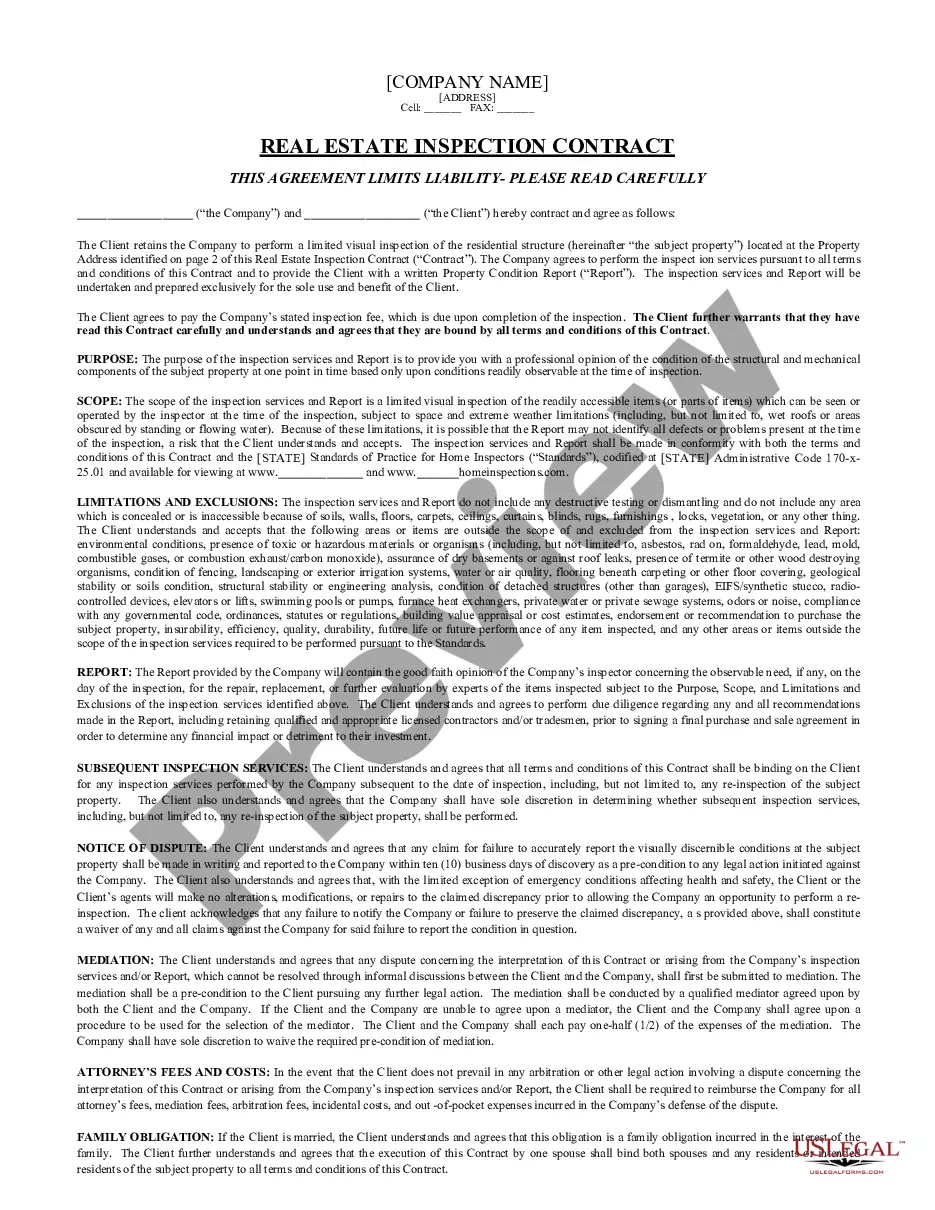
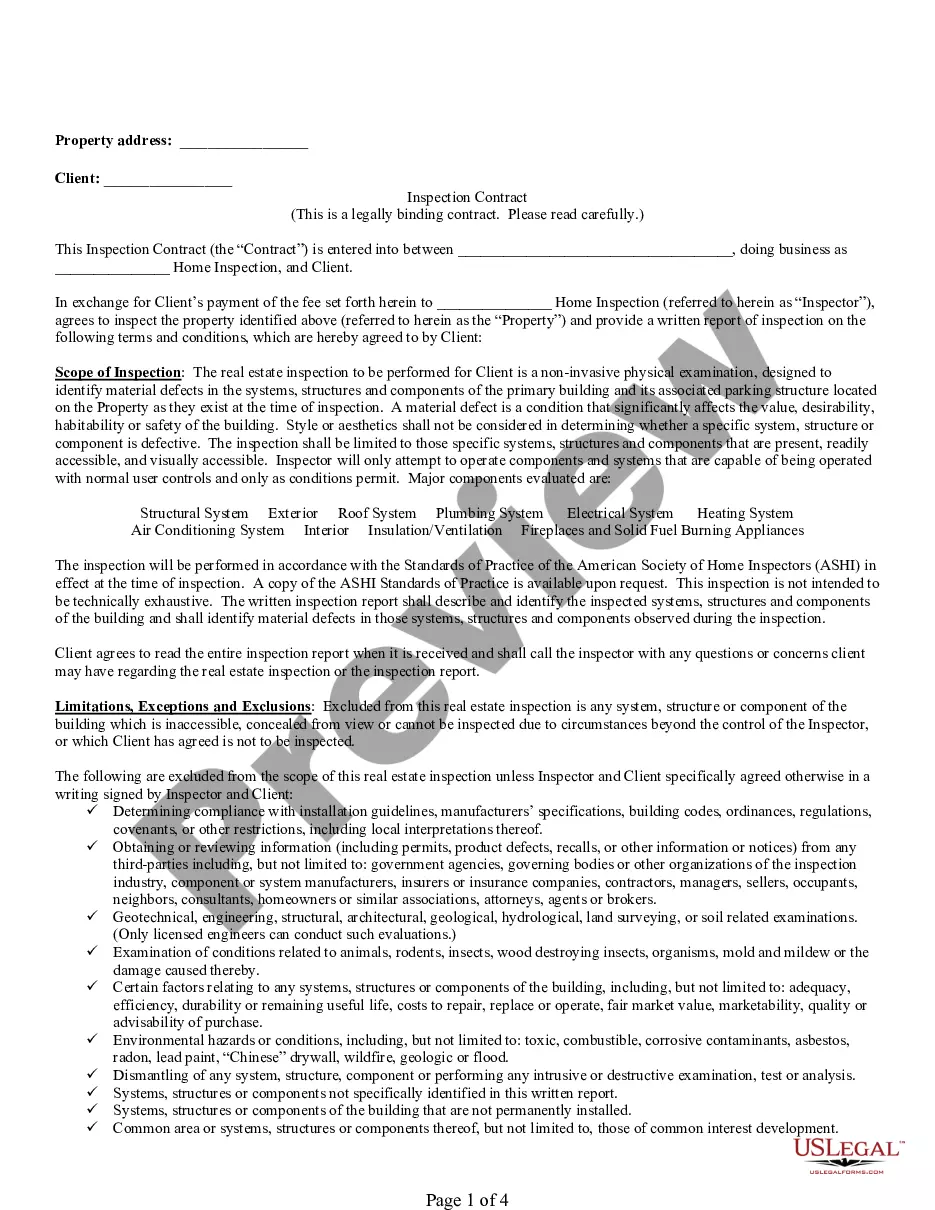
The Home Inspection Services Contract - Self-Employed is a legal agreement that formally establishes the relationship between an employer and a self-employed home inspector. This contract outlines the terms under which the inspector will perform services as an independent contractor, distinguishing it from employment agreements or other types of service contracts.
What’s included in this form
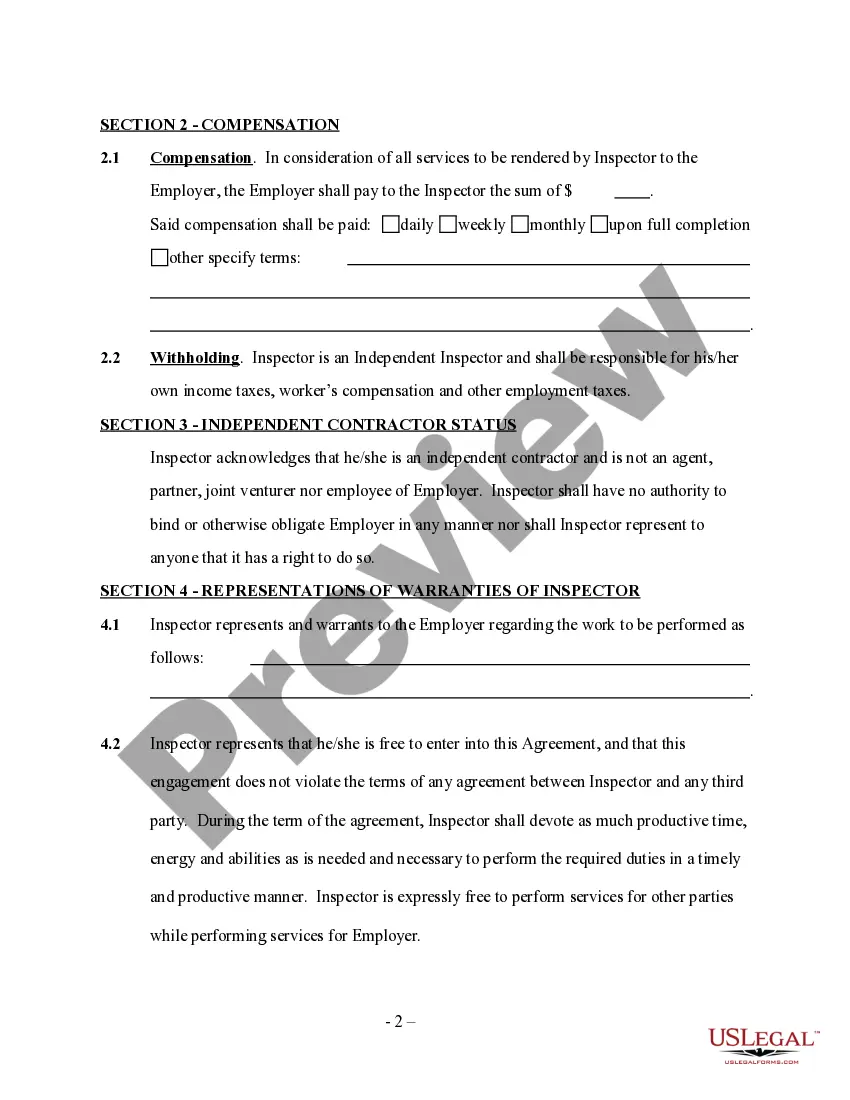
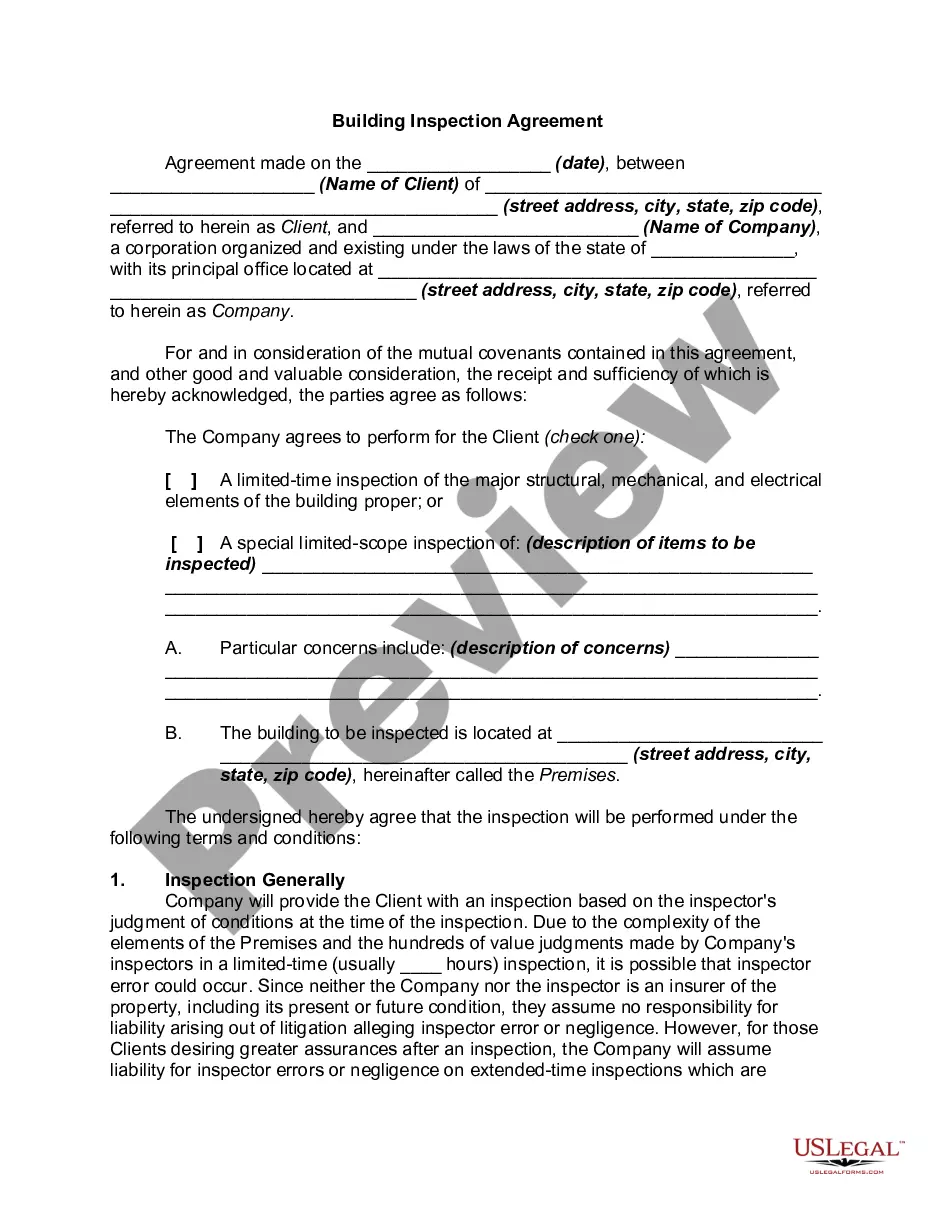
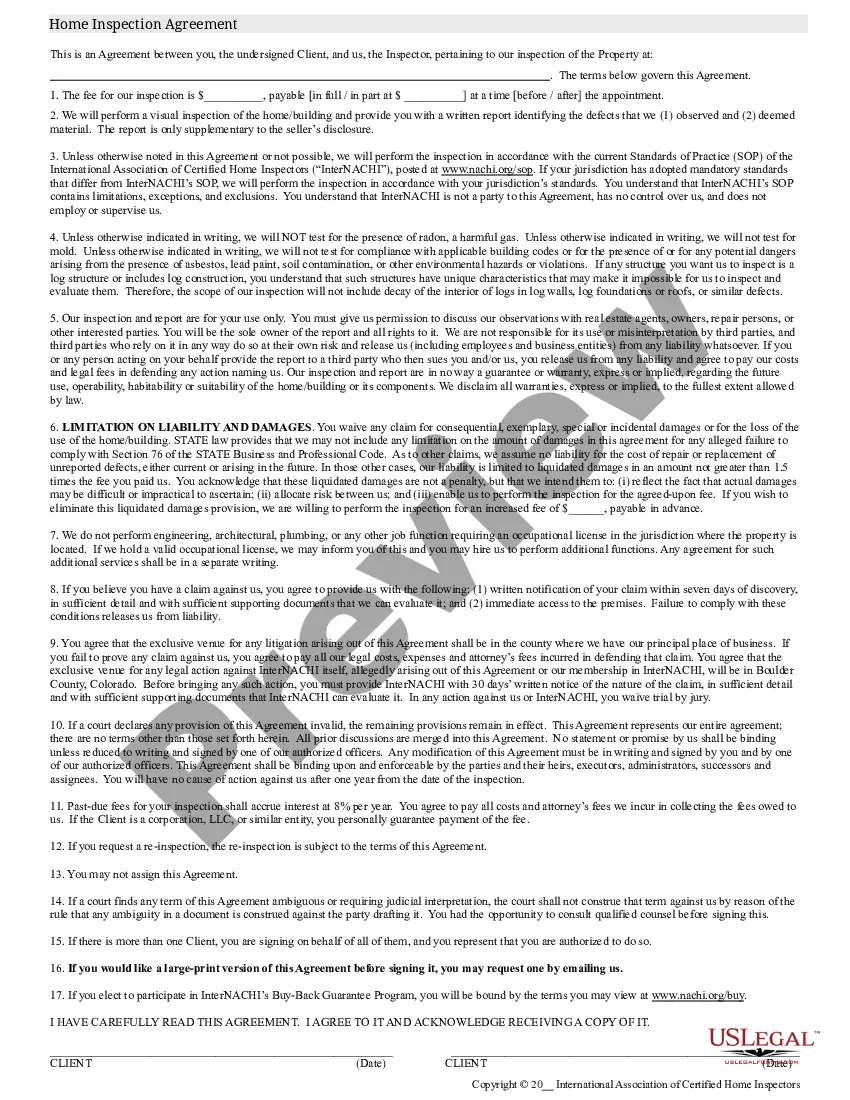
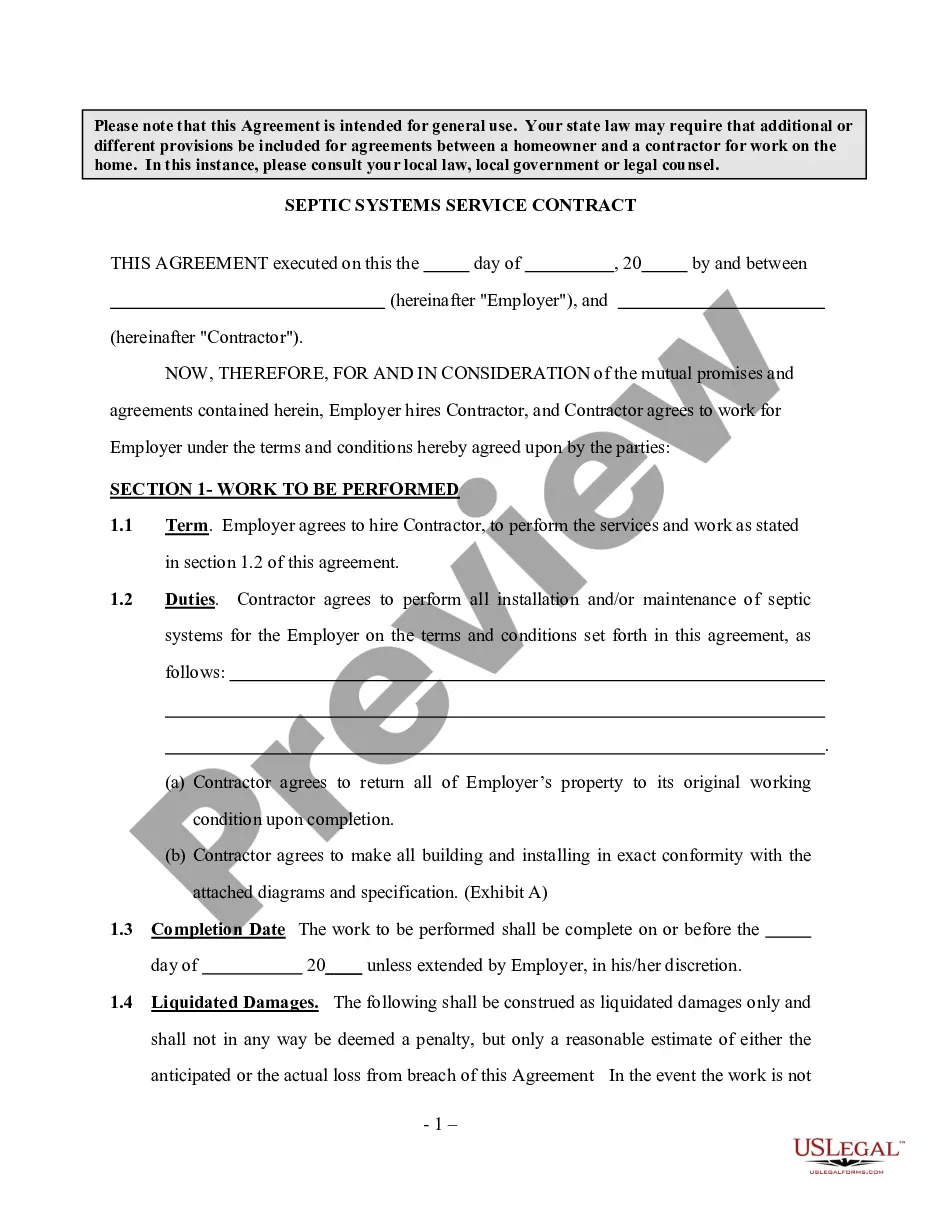
- Work to Be Performed: Details the specific services the inspector is hired to perform.
- Independent Contractor Status: Clarifies that the inspector is not an employee or agent of the employer.
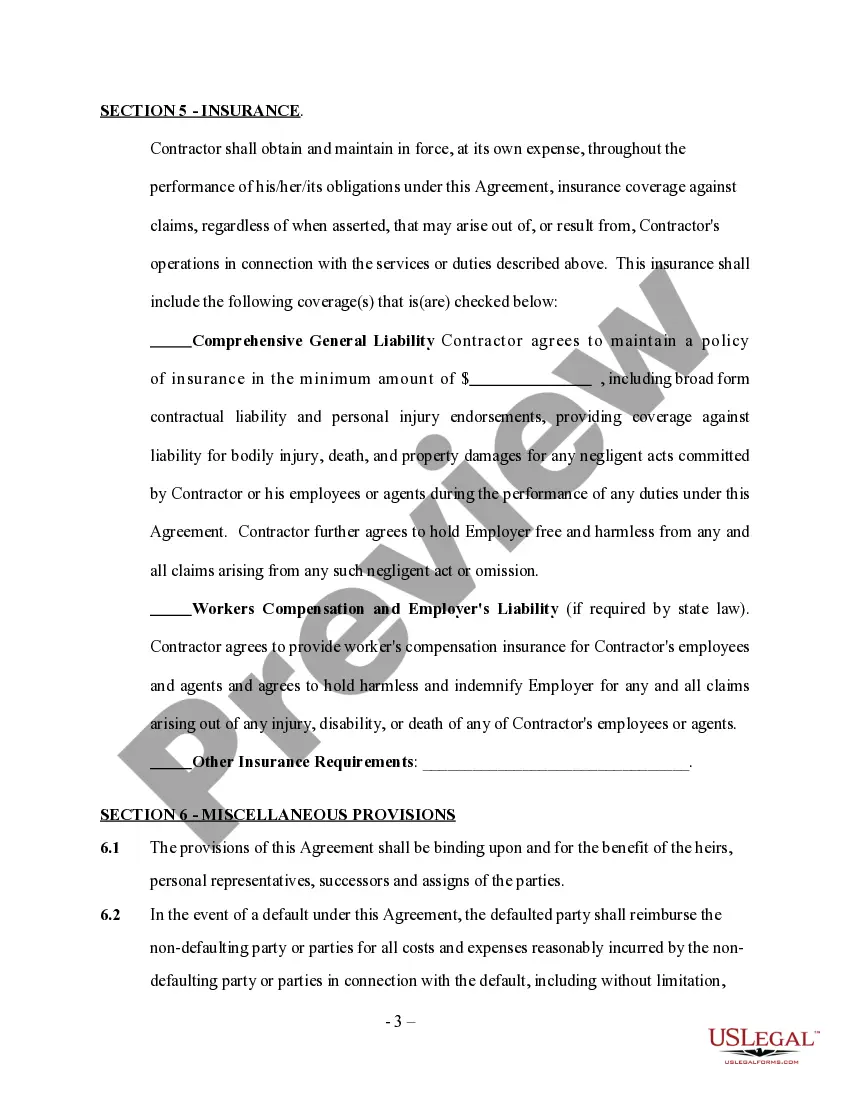
- Insurance Requirements: Specifies the types of insurance coverage the inspector must maintain.
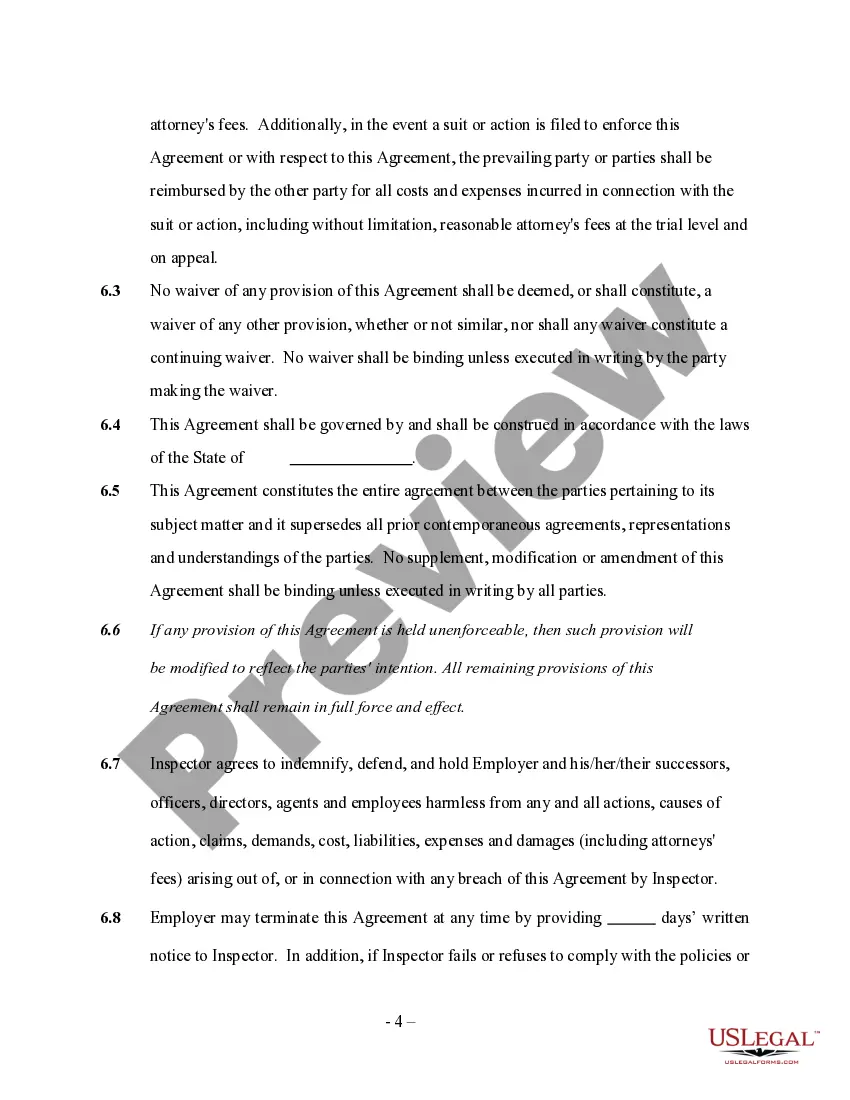
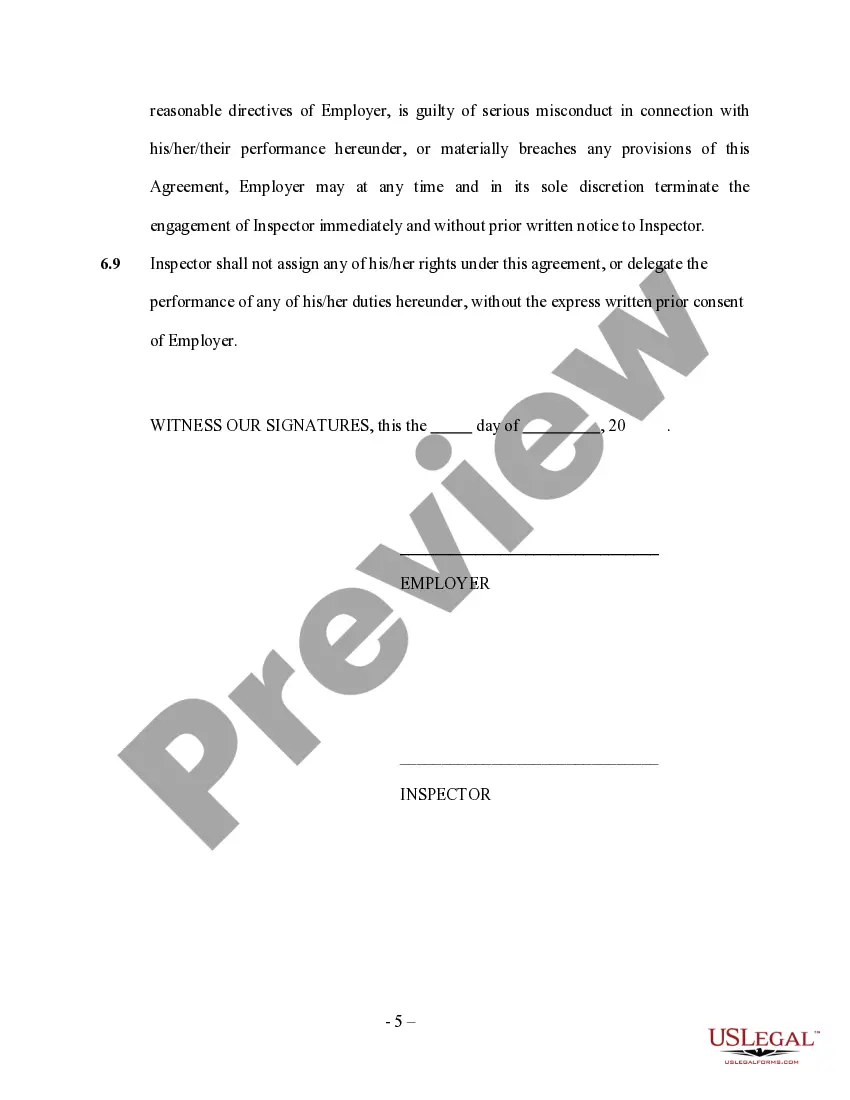
- Indemnification Clause: Outlines the inspector's responsibility to protect the employer from legal claims related to the inspector's work.
- Assignment of Rights: Prohibits the inspector from transferring their rights or duties under the contract without written consent from the employer.
When to use this form
This form is useful when an individual or company wants to hire a home inspector on a contract basis to perform home inspections. It ensures both parties understand their rights and obligations. It is typically used in real estate transactions, rental property assessments, or when property evaluations are needed prior to purchase or sale.
Who can use this document
- Real estate agents seeking to hire inspectors for property evaluations.
- Property owners requiring inspection services for maintenance or sale.
- Self-employed home inspectors looking to formalize their working relationship with clients or employers.
- Contractors and service companies that need independent inspectors for various projects.
How to complete this form
- Identify the parties involved: Include the names and contact information of both the employer and the inspector.
- Specify the scope of work: Clearly outline the inspection services to be performed, including any specific details or deliverables.
- Enter the contract terms: Include the start date, duration of the agreement, and any termination conditions.
- Review insurance requirements: Ensure the inspector provides proof of the necessary insurance coverage as outlined in the form.
- Sign and date the agreement: Both parties must sign the contract to make it legally binding.
Notarization requirements for this form
This form does not typically require notarization to be legally valid. However, some jurisdictions or document types may still require it. US Legal Forms provides secure online notarization powered by Notarize, available 24/7 for added convenience.
Get your form ready online
Our built-in tools help you complete, sign, share, and store your documents in one place.
Make edits, fill in missing information, and update formatting in US Legal Forms—just like you would in MS Word.
Download a copy, print it, send it by email, or mail it via USPS—whatever works best for your next step.
Sign and collect signatures with our SignNow integration. Send to multiple recipients, set reminders, and more. Go Premium to unlock E-Sign.
If this form requires notarization, complete it online through a secure video call—no need to meet a notary in person or wait for an appointment.
We protect your documents and personal data by following strict security and privacy standards.

Make edits, fill in missing information, and update formatting in US Legal Forms—just like you would in MS Word.

Download a copy, print it, send it by email, or mail it via USPS—whatever works best for your next step.

Sign and collect signatures with our SignNow integration. Send to multiple recipients, set reminders, and more. Go Premium to unlock E-Sign.

If this form requires notarization, complete it online through a secure video call—no need to meet a notary in person or wait for an appointment.

We protect your documents and personal data by following strict security and privacy standards.
Common mistakes to avoid
- Failing to specify the services clearly, leading to misunderstandings.
- Not verifying the inspector's insurance coverage before signing.
- Omitting important terms such as payment amounts and deadlines.
- Neglecting to keep a signed copy of the contract for records.
Benefits of completing this form online
- Convenient access to templates that are easily downloadable and printable.
- Editability allows users to customize the contract to fit specific needs.
- Reliable legal forms drafted by licensed attorneys ensure compliance with legal standards.
- Efficiency in processing as forms can be completed quickly online.
Looking for another form?
Form popularity
FAQ
Sellers have a legal obligation to either repair or disclose serious issues with the home. If the repair request is a big oneand it's not a surprise to themthey're almost always going to be required to spring for the cost or lose the sale.
Potential red flags that can arise during a property home inspection include evidence of water damage, structural defects, problems with the plumbing or electrical systems, as well as mold and pest infestations. The presence of one or more of these issues could be a dealbreaker for some buyers.
The inspector will check that major appliances are functional, scrutinize the heating and air-conditioning system, examine the plumbing and electrical systems and may even poke around in the attic and basement. The goal of a home inspection is to uncover issues with the home itself.
Problem #1: Rundown roofing. Problem #2: Drainage issues. Problem #3: Faulty foundation. Problem #4: Plumbing problems. Problem #5: Pest infestations. Problem #6: Hidden mold. Problem #7: Failing heating systems. Problem#8: Electrical wiring.