WIRE FRAUD
What is this form?
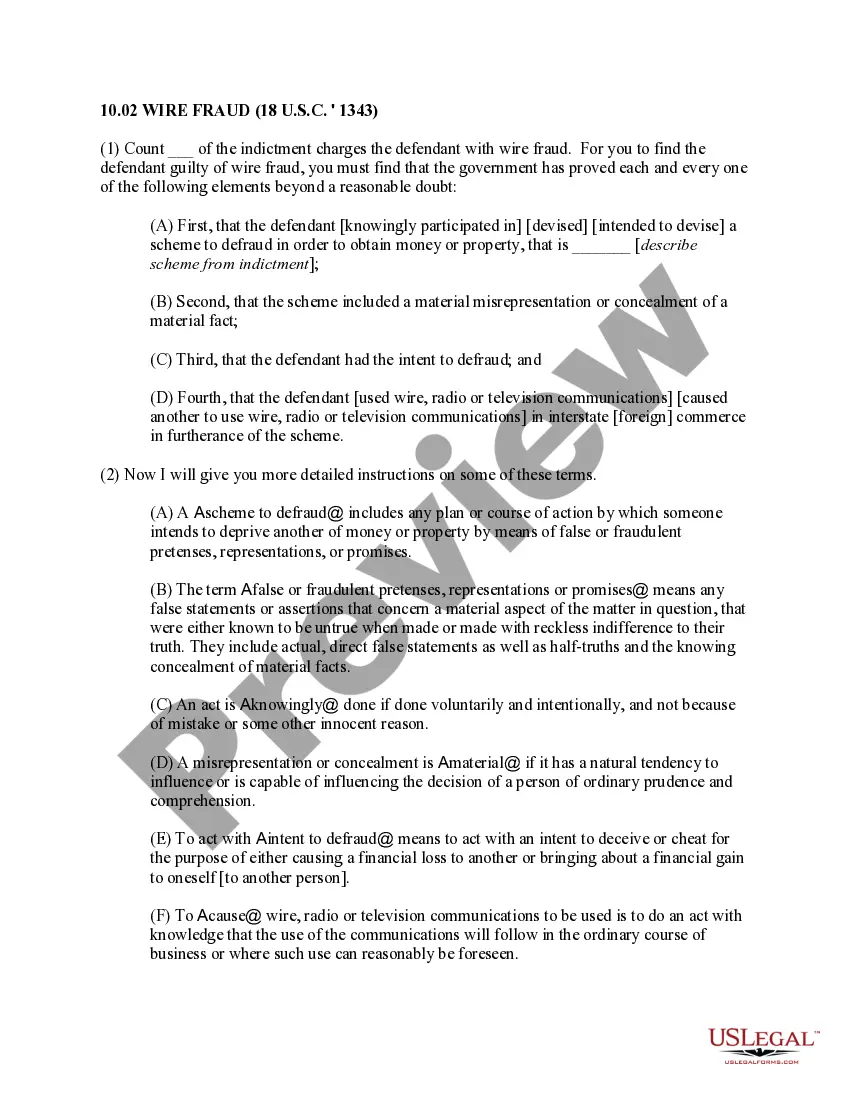
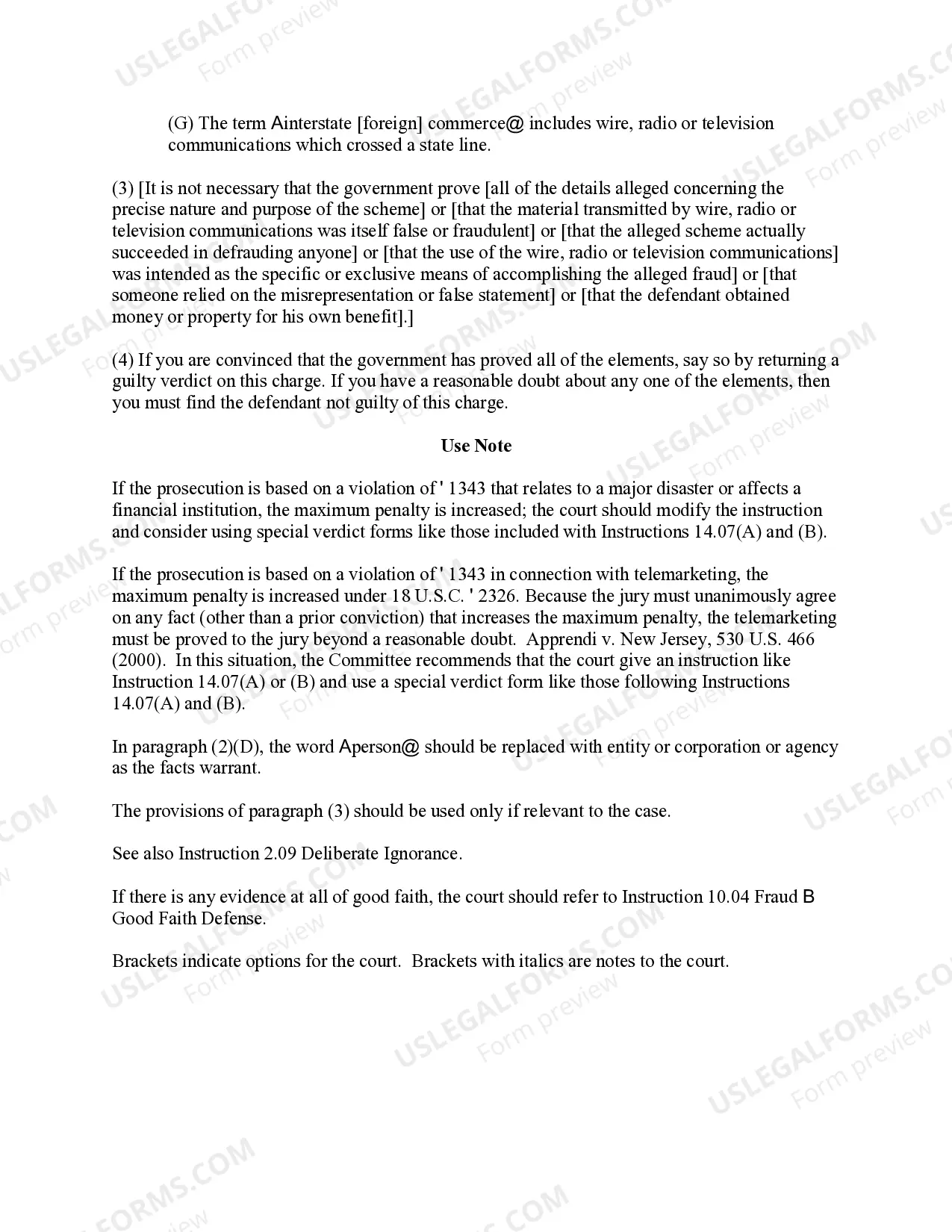
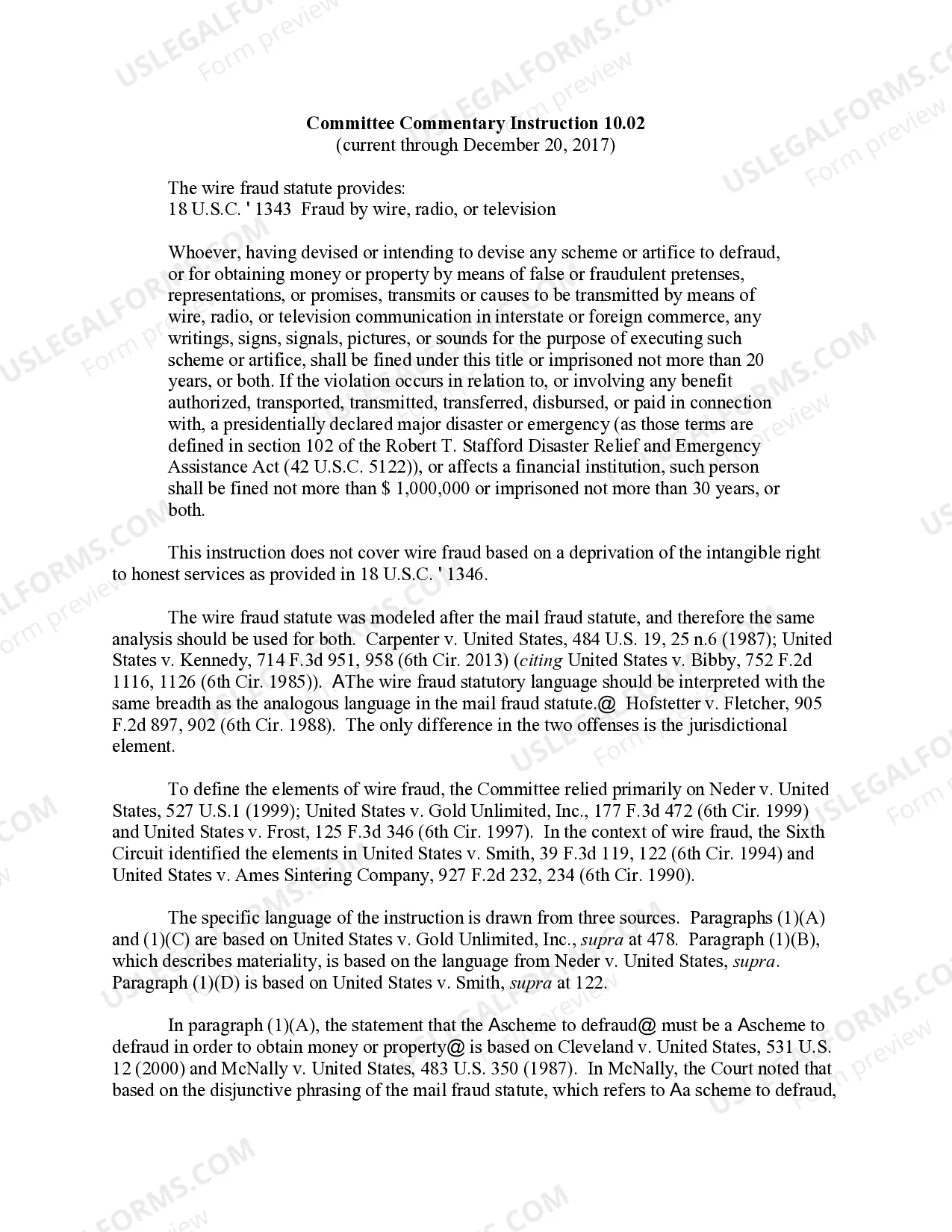
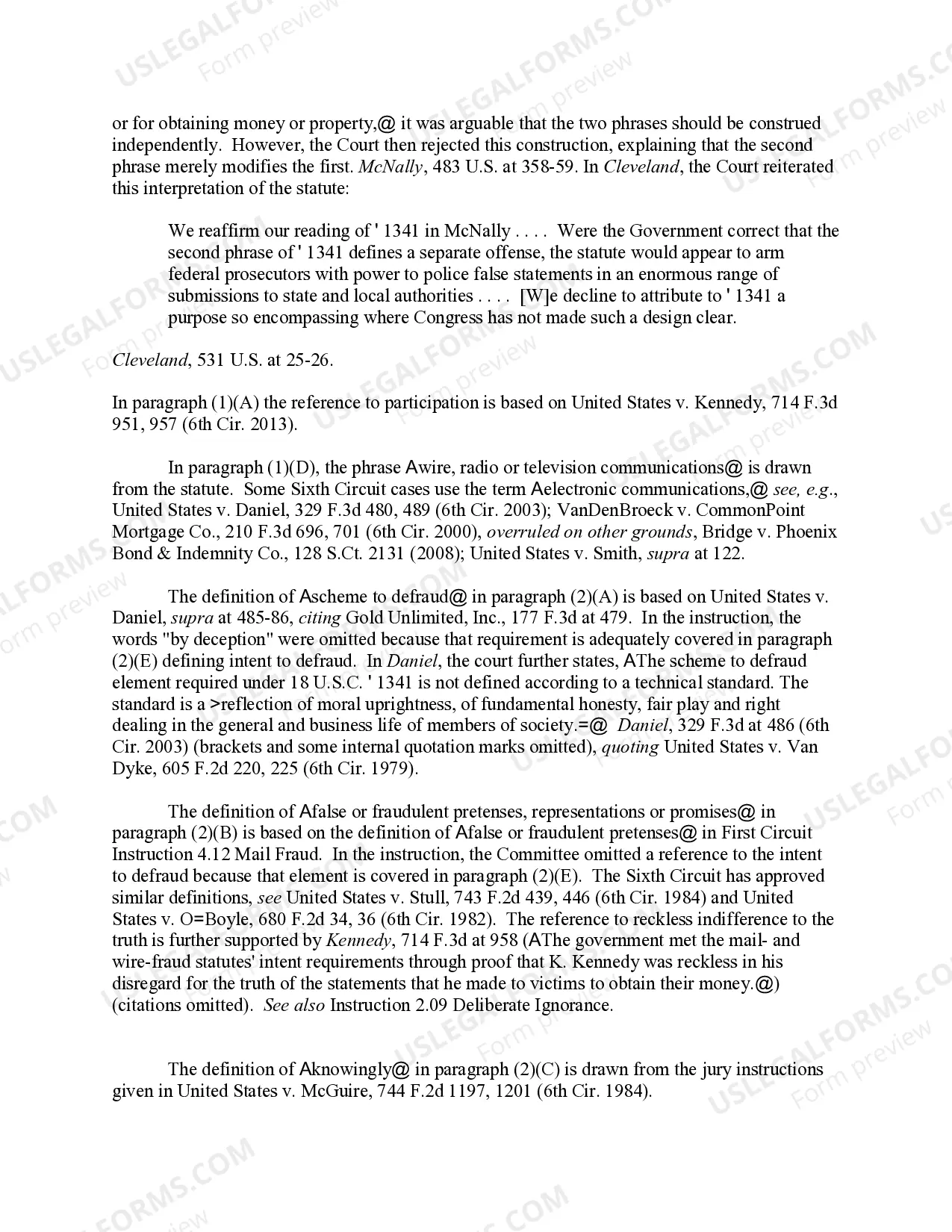
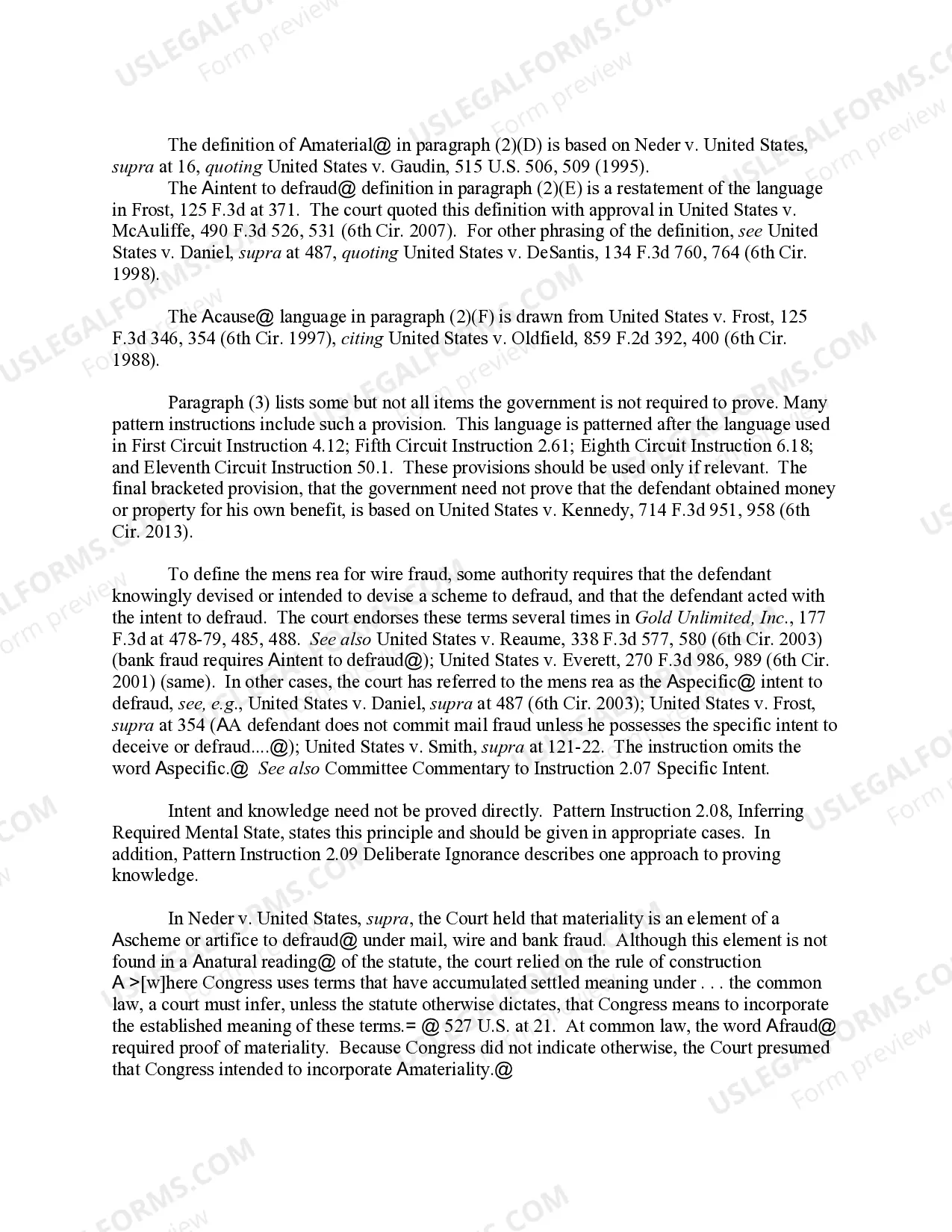
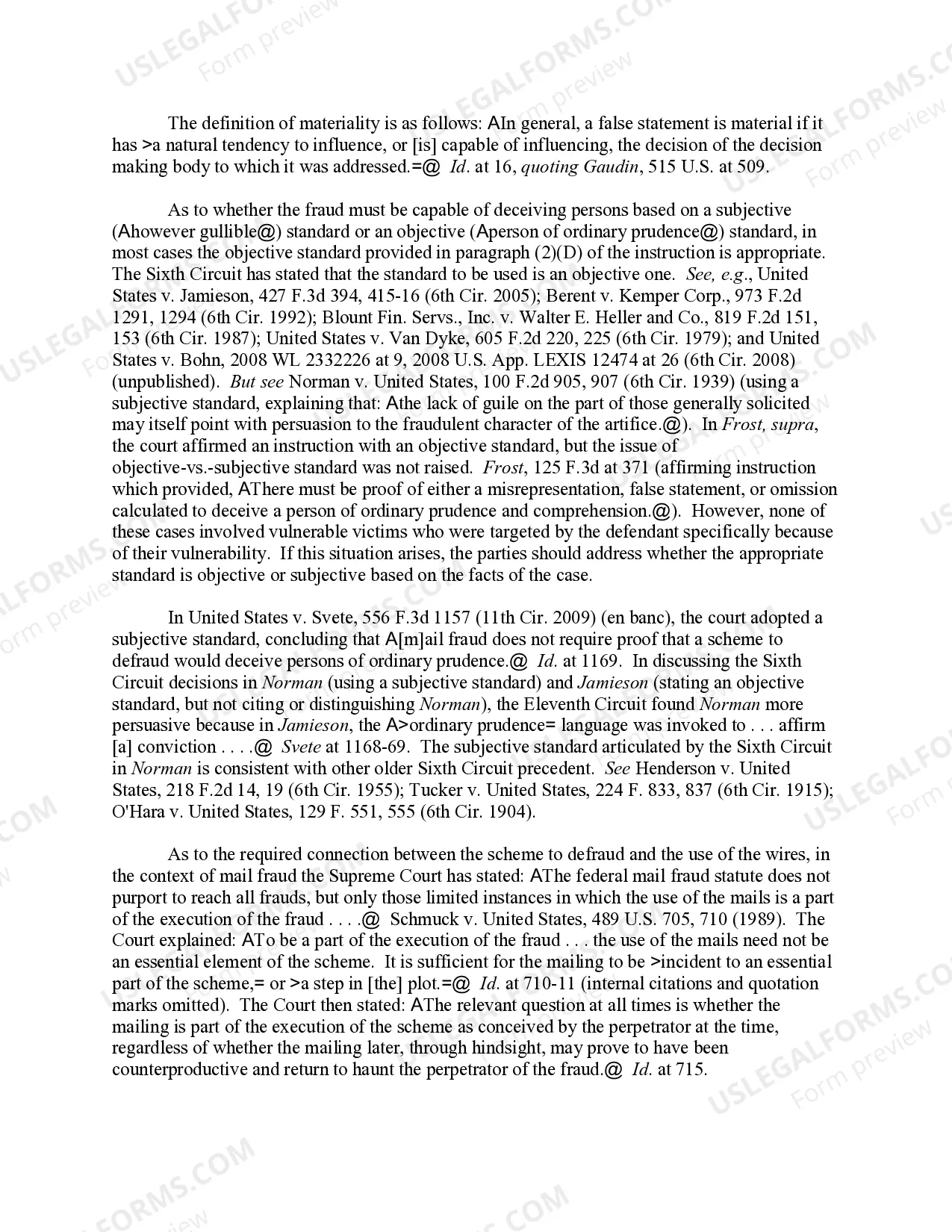
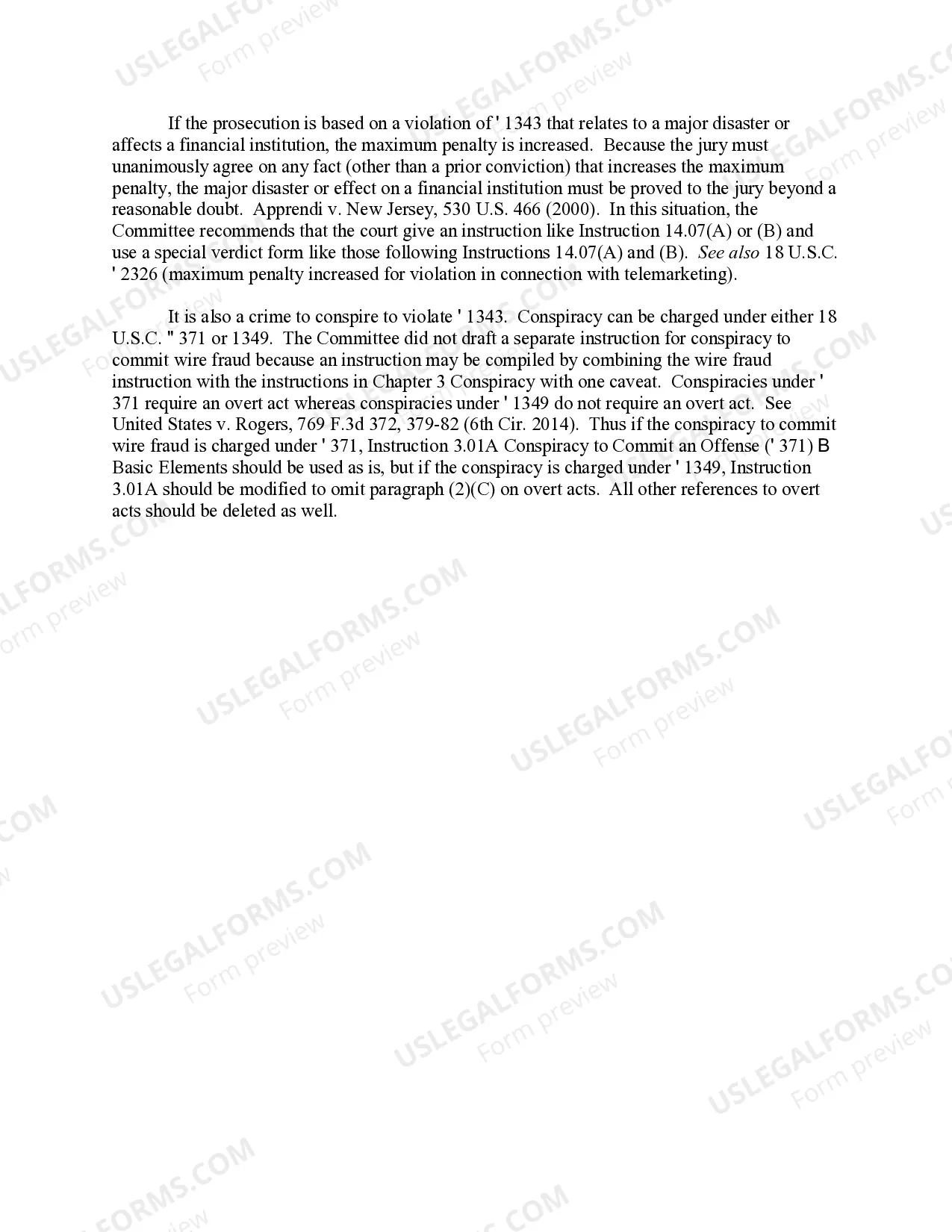
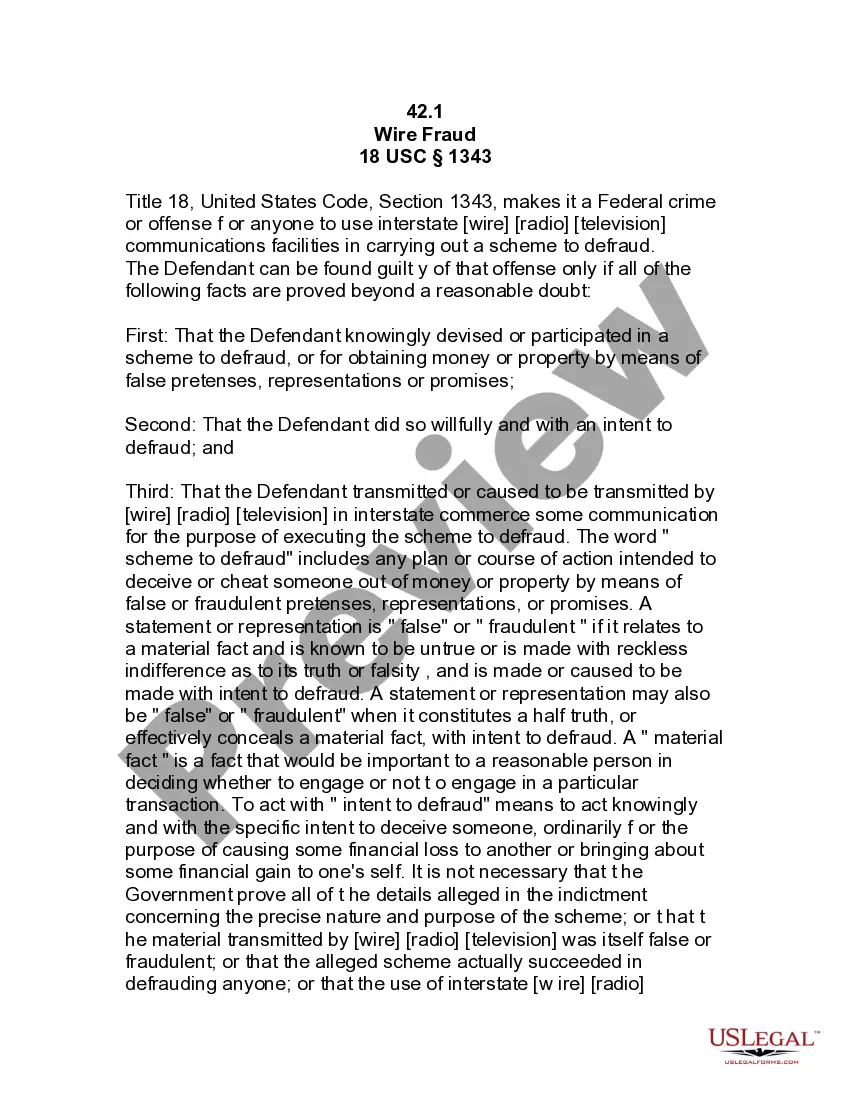
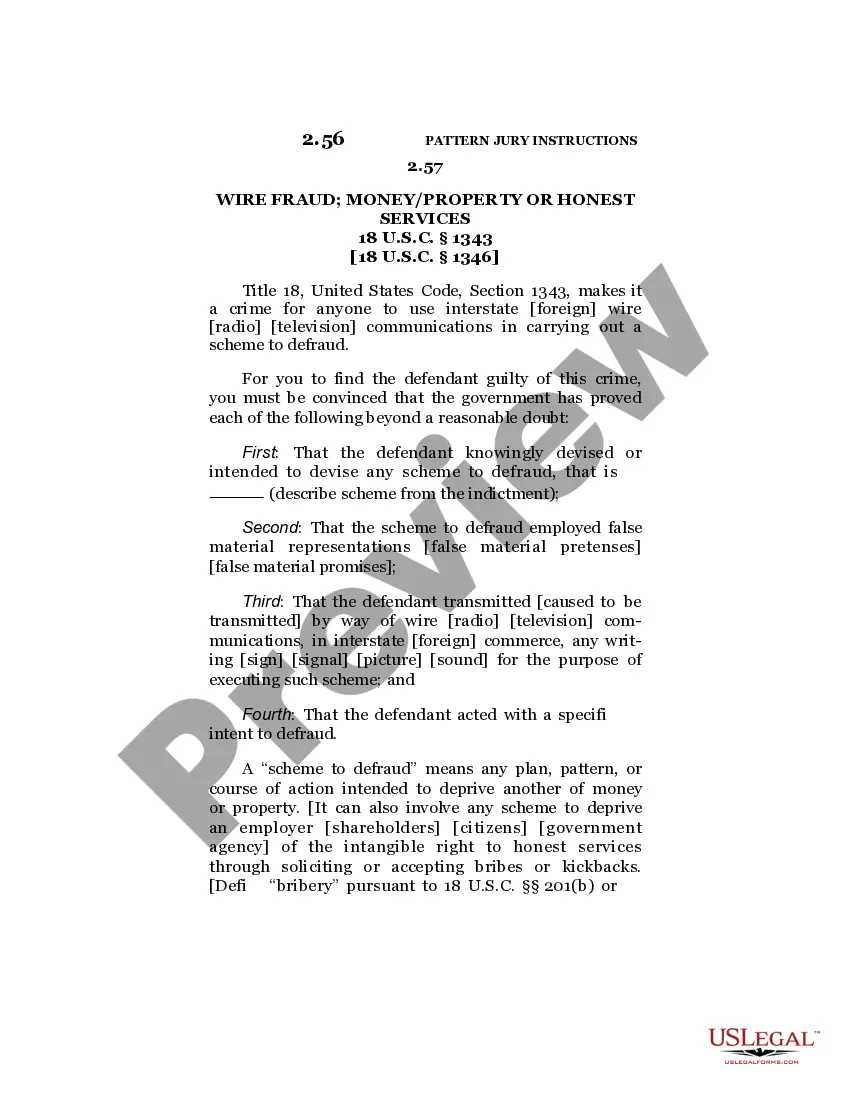
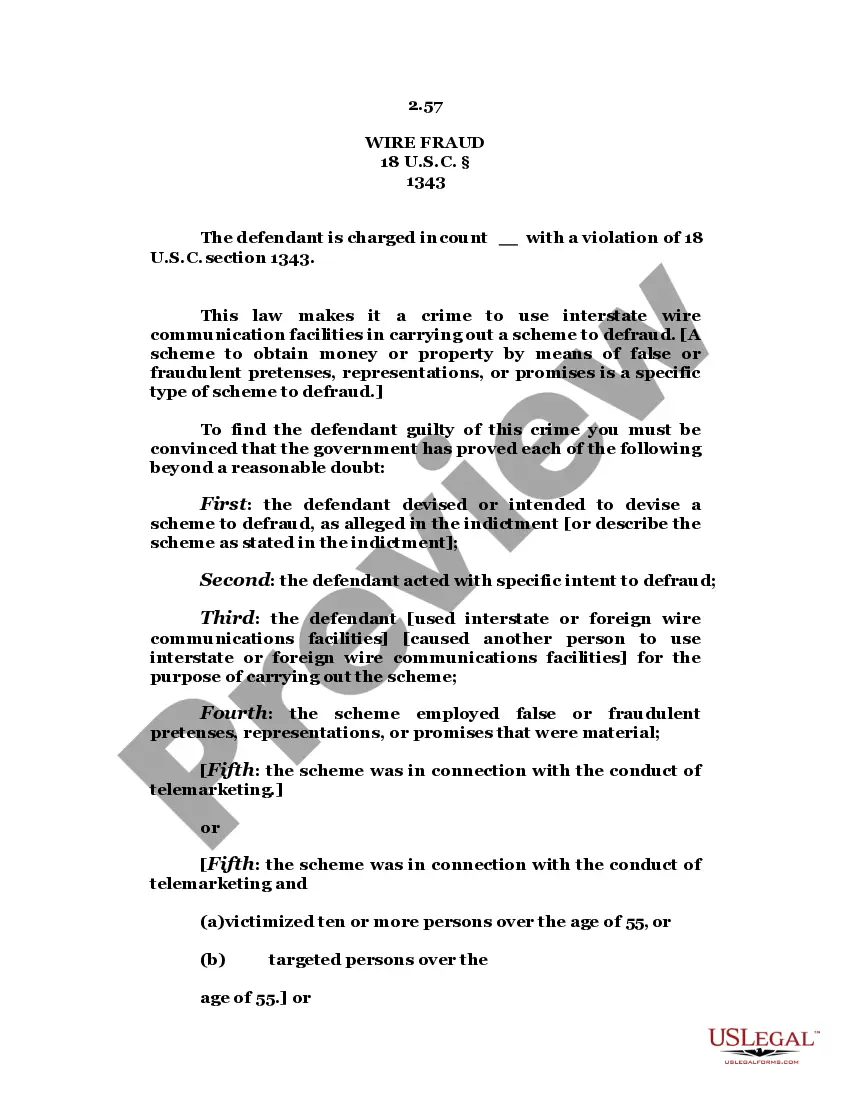
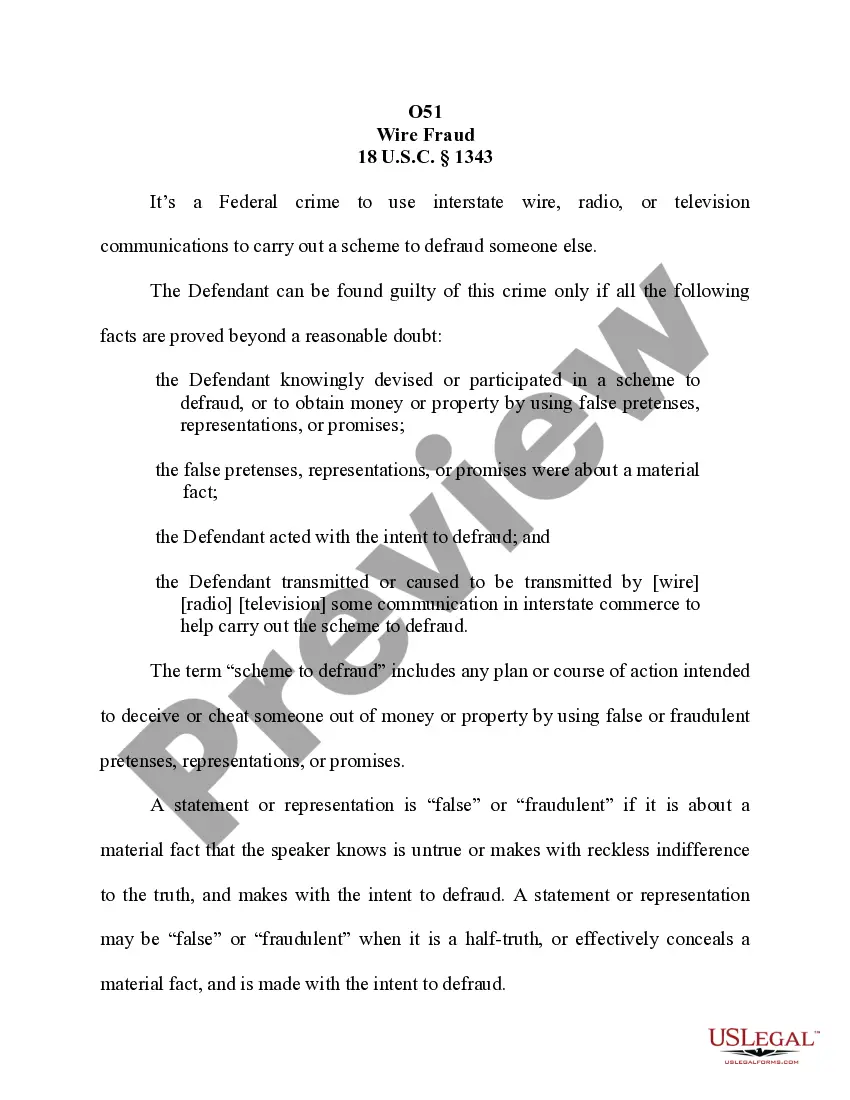
The Wire Fraud form outlines the legal structure surrounding wire fraud offenses under federal law. It defines the key elements necessary for proving a charge of wire fraud, differentiating it from similar forms of fraud, particularly in terms of communication methods used (e.g., wire, radio, television). This form helps clarify the nature of the offense and the legal responsibilities involved in such cases.
What’s included in this form
- Definition of wire fraud and its elements.
- Explanation of what constitutes a scheme to defraud.
- Description of material misrepresentation and intent to defraud.
- Requirements regarding interstate commerce for wire communications.
- Instructions on what the prosecution must prove to establish guilt.

When to use this document
This form is necessary when filing charges against someone suspected of wire fraud. It is used in legal proceedings to outline the specific elements of the crime, helping juries understand the prosecution's obligations and the defendant's rights. It is applicable in cases involving deception to obtain money or property through electronic means.
Who should use this form
- Prosecutors preparing to charge an individual with wire fraud.
- Defense attorneys representing clients accused of wire fraud.
- Law students or legal professionals studying fraud statutes.
- Individuals compiling data for a legal case involving wire fraud allegations.
Completing this form step by step
- Identify the defendant and the specific charges being levied against them.
- Clearly outline the scheme to defraud, including relevant details of the communications used.
- Include descriptions of material misrepresentations made during the scheme.
- Establish intent by detailing how and why the defendant acted with deception.
- Provide evidence of the wire communications used in relation to the fraud.
Does this form need to be notarized?
Notarization is not commonly needed for this form. However, certain documents or local rules may make it necessary. Our notarization service, powered by Notarize, allows you to finalize it securely online anytime, day or night.
Get your form ready online
Our built-in tools help you complete, sign, share, and store your documents in one place.
Make edits, fill in missing information, and update formatting in US Legal Forms—just like you would in MS Word.
Download a copy, print it, send it by email, or mail it via USPS—whatever works best for your next step.
Sign and collect signatures with our SignNow integration. Send to multiple recipients, set reminders, and more. Go Premium to unlock E-Sign.
If this form requires notarization, complete it online through a secure video call—no need to meet a notary in person or wait for an appointment.
We protect your documents and personal data by following strict security and privacy standards.

Make edits, fill in missing information, and update formatting in US Legal Forms—just like you would in MS Word.

Download a copy, print it, send it by email, or mail it via USPS—whatever works best for your next step.

Sign and collect signatures with our SignNow integration. Send to multiple recipients, set reminders, and more. Go Premium to unlock E-Sign.

If this form requires notarization, complete it online through a secure video call—no need to meet a notary in person or wait for an appointment.

We protect your documents and personal data by following strict security and privacy standards.
Common mistakes
- Failing to prove all essential elements of the wire fraud charge.
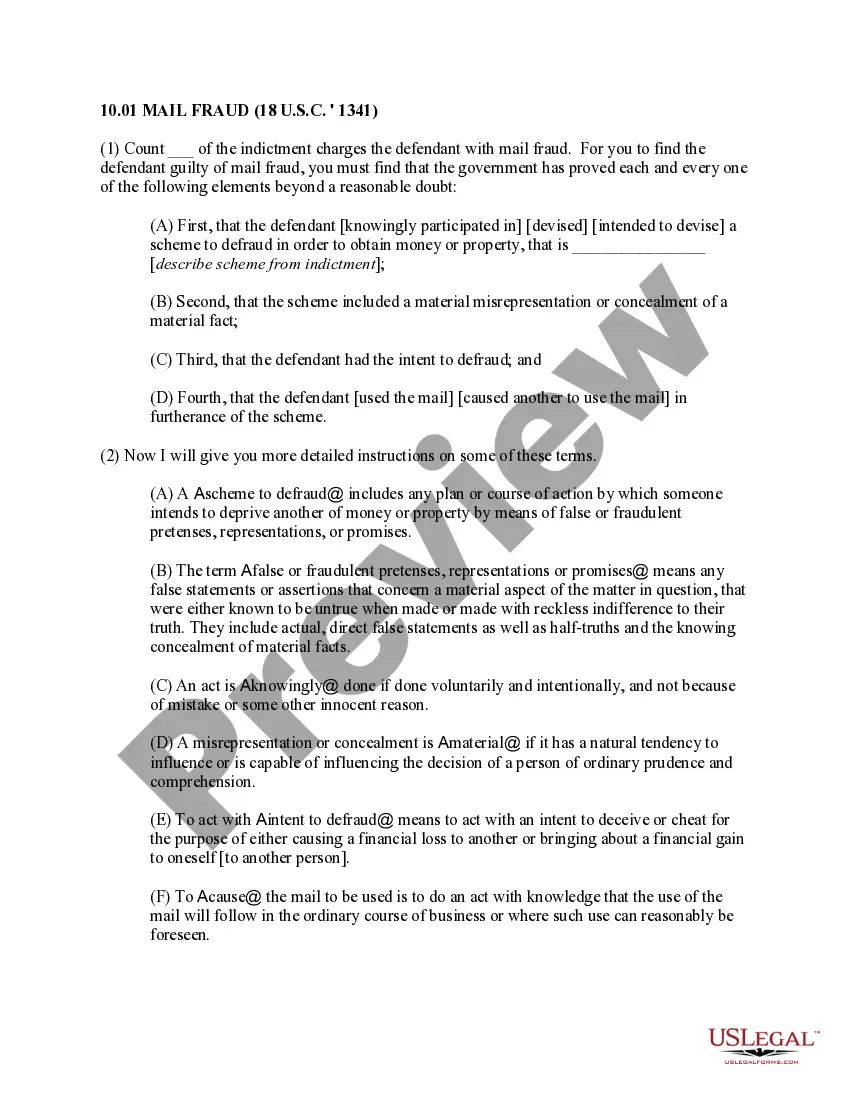
- Confusing wire fraud with mail fraud, which may have different legal standards.
- Neglecting to specify the interstate nature of communications.
- Using vague language that does not clearly outline the scheme to defraud.
Why use this form online
- Convenient access for legal professionals at any time.
- Easy to edit and customize the form as needed for specific cases.
- Ensures that you are using the most up-to-date legal definitions and structures.
- Streamlines the legal preparation process, saving time in court proceedings.
Legal use & context
- This form is used in federal prosecutions for wire fraud crimes.
- Wire fraud is considered a serious offense, with penalties including fines and imprisonment.
- Understanding and filling out this form accurately is crucial for a valid legal argument in court.
Looking for another form?

Form popularity
FAQ
Mail and wire fraud: Both carry a maximum prison sentence of up to 20 years. If the scheme also involved a bank, the potential fine increases to up to $100,000: 18 U.S.C. Section 1343
Wire fraud is a federal crime and, as such, can come with serious consequences. Committing wire fraud against most people and entities, like small businesses, carries a sentence of not more than 20 years imprisonment and fines of up to $250,000 for individuals and $500,000 for organizations.
Individuals who commit wire fraud face a maximum of twenty years in prison and a $250,000 fine. The maximum penalties in cases involving financial institutions are 30 years in prison and a $1 million fine.
A single act of wire fraud can result in fines and up to 20 years in prison. However, if the wire fraud scheme affects a financial institution or is connected to a presidentially declared disaster or emergency, the potential penalties are fines of up to $1,000,000 and up to 30 years in prison.
Differences Between Mail Fraud and Wire Fraud The key difference between mail fraud and wire fraud is the type of communication that is used to further the fraudulent scheme. Mail fraud uses the U.S. Postal Service or any private or commercial interstate carrier, while wire fraud uses electronic communications.
Phishing, telemarketing frauds, Nigerian prince scams, identity thefts, etc., are common examples of wire fraud. The wire fraud penalty depends on whether it was an individual or financial institution that the fraudster targeted. For individuals, a single act of fraud can result in a prison sentence of up to 20 years.
Mail and wire fraud: Both carry a maximum prison sentence of up to 20 years. If the scheme also involved a bank, the potential fine increases to up to $100,000: 18 U.S.C. Section 1343