Wire Fraud 18 U.S.C. Sec. 1343
About this form
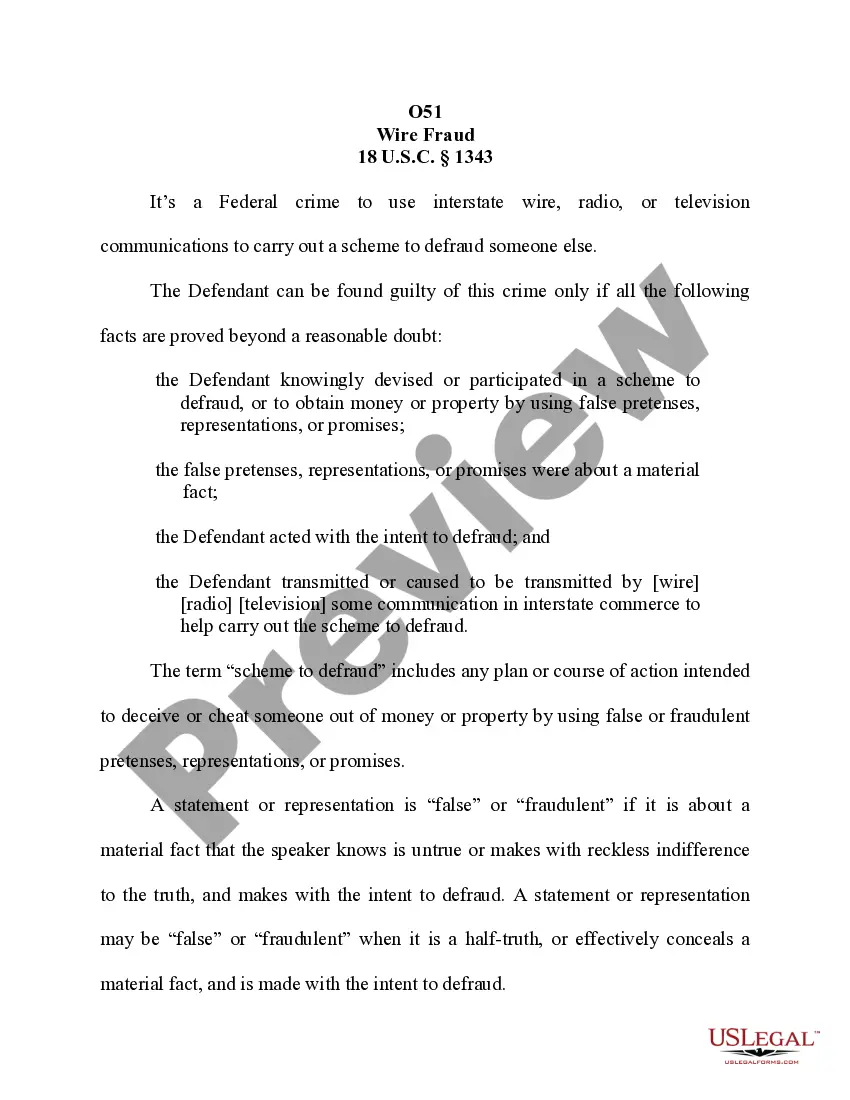
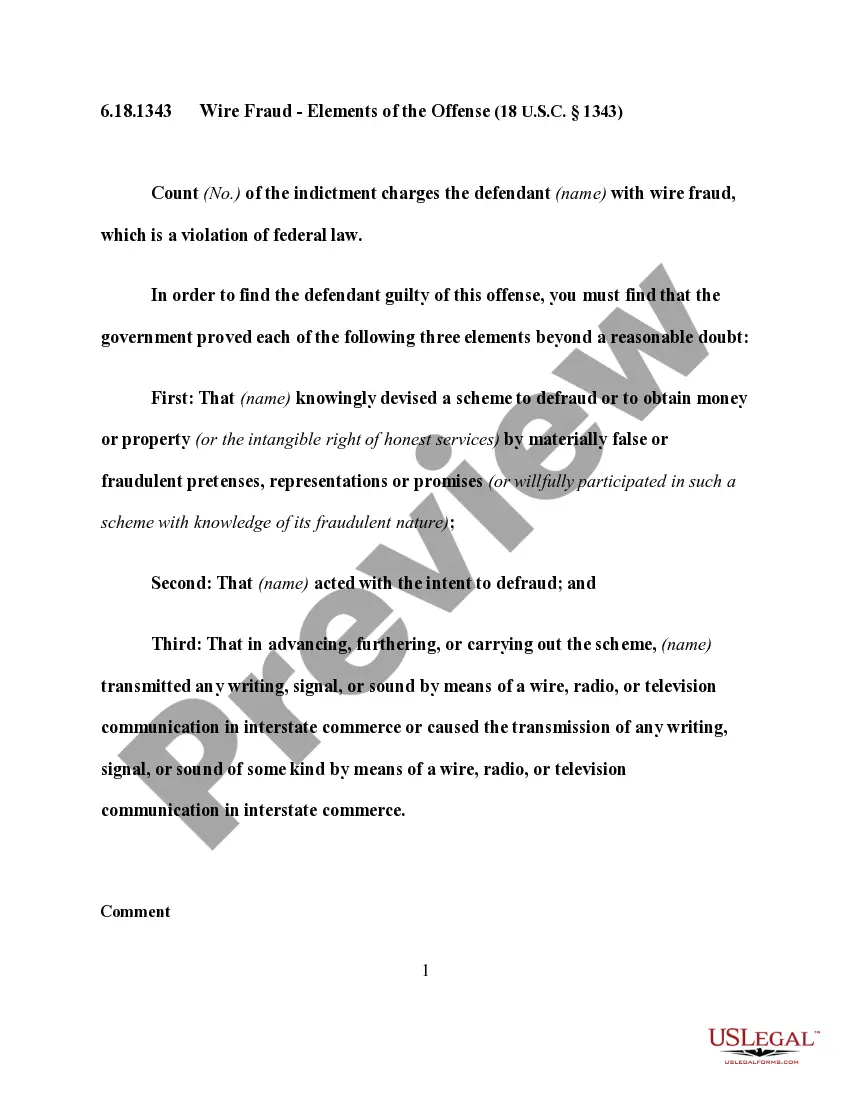
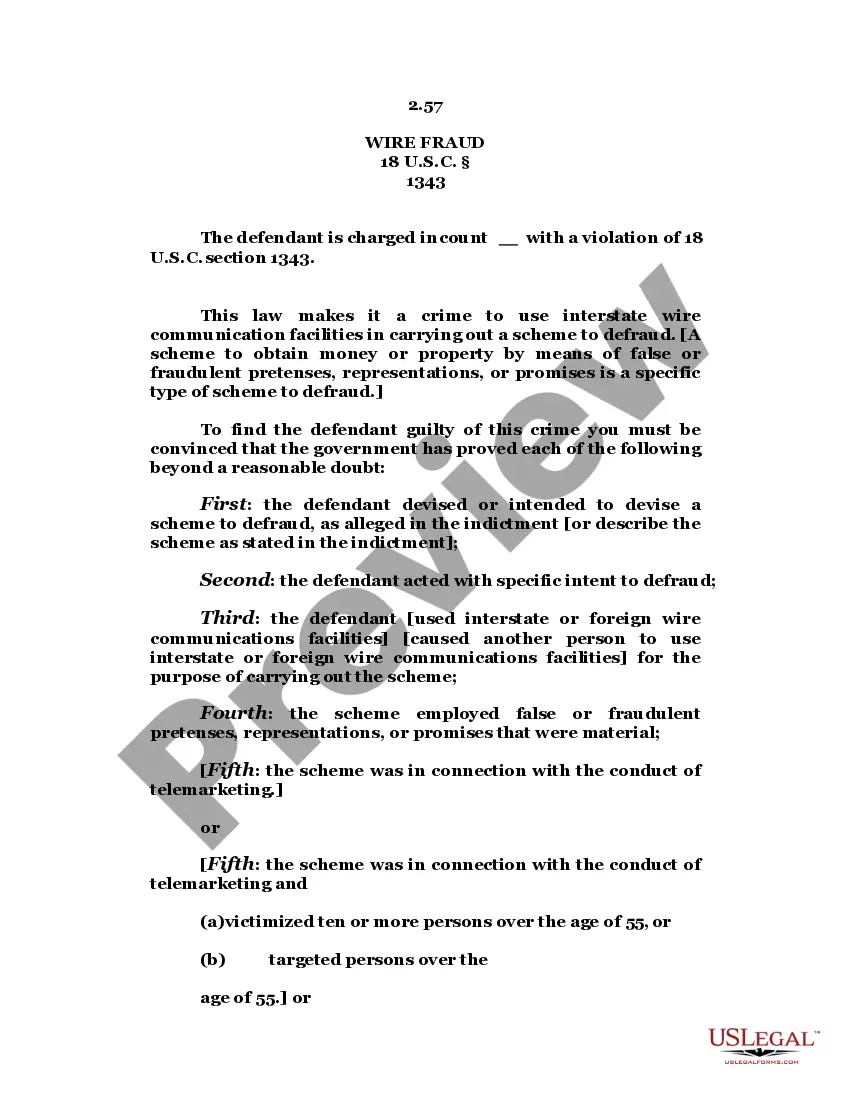
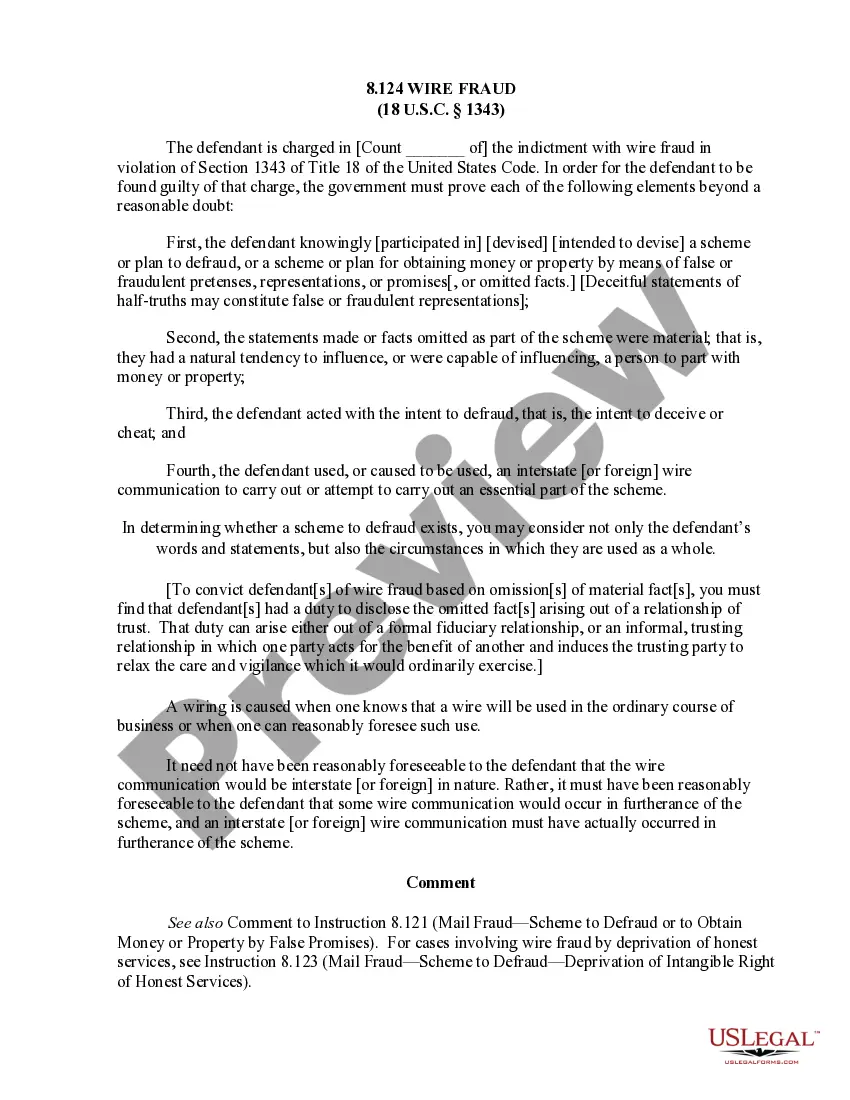
The Wire Fraud form under 18 U.S.C. Sec. 1343 outlines the legal framework for prosecuting wire fraud in federal court. This form is essential for understanding the elements required to prove wire fraud, distinguishing it from other forms of fraud. It provides a basis for jury instructions, vital for federal cases involving schemes to defraud others using electronic communications. The focus is on the unlawful use of wire, radio, or television communications to deceive others for financial gain.
Key components of this form
- Definition of wire fraud and its legal implications.
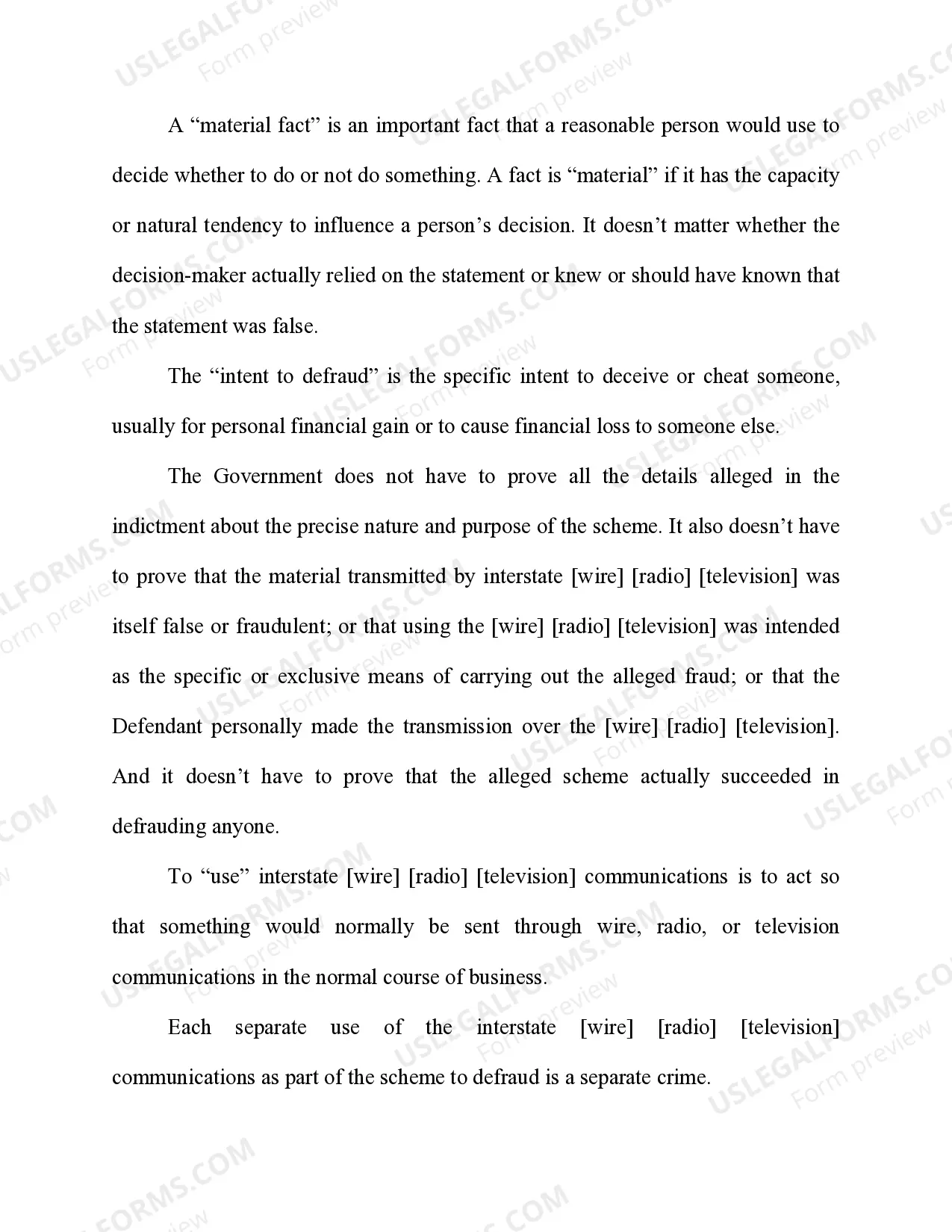
- Elements required for a conviction, including intent, knowledge, and materiality.
- Clarification of what constitutes false pretenses or representations.
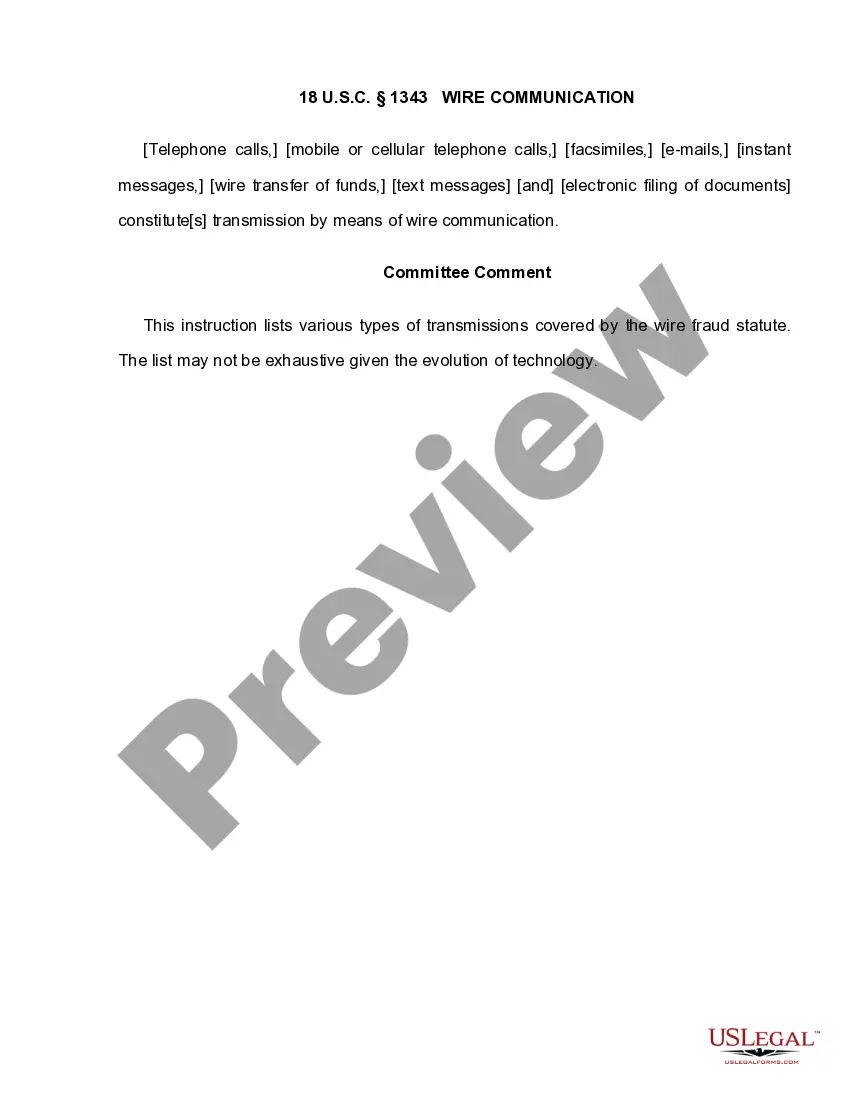
- Explanation of communication methods involved, such as wire, radio, or television transmissions.
- Outline of how separate uses of interstate communications are treated as distinct offenses.
When this form is needed
This form should be used when charges of wire fraud are brought against an individual or entity. It is pertinent in cases where individuals have allegedly engaged in deceptive practices using electronic communications to commit fraud against another party. Whether in court or preparing for a legal defense, this form is crucial for understanding the jury instructions related to wire fraud allegations.
Who should use this form
The following individuals or groups may find this form relevant:
- Defendants facing wire fraud charges in federal court.
- Legal practitioners specializing in criminal defense or federal fraud cases.
- Students or professionals studying federal criminal law.
- Individuals seeking to understand the legal definitions and implications of wire fraud for compliance or legal purposes.
Completing this form step by step
- Identify and describe the defendant involved in the alleged wire fraud.
- Detail the elements of the scheme to defraud, including false representations.
- Specify the communications made via wire, radio, or television relevant to the charge.
- Establish the intent to defraud by outlining the fraudulent actions taken.
- Gather any supporting evidence or documentation related to the accusations or defense.
Does this form need to be notarized?
This form does not typically require notarization unless specified by local law. It serves as a legal guide for jury instructions in wire fraud cases and is utilized in federal court proceedings where formal notarization is not mandated.
Get your form ready online
Our built-in tools help you complete, sign, share, and store your documents in one place.
Make edits, fill in missing information, and update formatting in US Legal Forms—just like you would in MS Word.
Download a copy, print it, send it by email, or mail it via USPS—whatever works best for your next step.
Sign and collect signatures with our SignNow integration. Send to multiple recipients, set reminders, and more. Go Premium to unlock E-Sign.
If this form requires notarization, complete it online through a secure video call—no need to meet a notary in person or wait for an appointment.
We protect your documents and personal data by following strict security and privacy standards.

Make edits, fill in missing information, and update formatting in US Legal Forms—just like you would in MS Word.

Download a copy, print it, send it by email, or mail it via USPS—whatever works best for your next step.

Sign and collect signatures with our SignNow integration. Send to multiple recipients, set reminders, and more. Go Premium to unlock E-Sign.

If this form requires notarization, complete it online through a secure video call—no need to meet a notary in person or wait for an appointment.

We protect your documents and personal data by following strict security and privacy standards.
Common mistakes
- Failing to clearly define the material facts involved in the alleged fraud.
- Neglecting to establish the specific intent required for a wire fraud conviction.
- Omitting details about the communication methods used in the fraudulent scheme.
- Assuming that the prosecution must prove the success of the fraud for a conviction.
Benefits of using this form online
- Convenient access to essential legal language and structure for wire fraud cases.
- Editable templates allow for customization based on specific case needs.
- Reliable resources drafted by licensed attorneys ensure accuracy and compliance.
Legal use & context
- The Wire Fraud form is derived from federal law, making it enforceable nationwide.
- It helps clarify how various forms of communication can be implicated in fraud cases.
- Understanding this form is crucial for navigating legal proceedings related to fraud.
Summary of main points
- Wire fraud is defined under federal law, emphasizing the use of interstate communications.
- Establishing intent and materiality are crucial for proving or defending against wire fraud claims.
- This form is a vital resource for anyone involved in or accused of wire fraud, providing clarity on legal standards.
Looking for another form?
Form popularity
FAQ
"There are two elements in mail fraud: (1) having devised or intending to devise a scheme to defraud (or to perform specified fraudulent acts), and (2) use of the mail for the purpose of executing, or attempting to execute, the scheme (or specified fraudulent acts)." Schmuck v.
Any person who attempts or conspires to commit any offense under this chapter shall be subject to the same penalties as those prescribed for the offense, the commission of which was the object of the attempt or conspiracy.
Under 18 U.S.C. Section 1343, the statute of limitations for wire fraud is five years. After the statute of limitations expires, the government is barred from prosecuting you.
Violations of § 1956 have a maximum potential twenty year prison sentence and a $500,000 fine or twice the amount involved in the transaction, whichever is greater. The general sentencing provisions in 18 U.S.C.
§ 1343 criminalizes the devising of (or the intent to devise) any scheme to defraud or to acquire money or property under false pretenses, by use of some form of electronic communication (wire, radio, television, internet, or even instant messages and text messages) in interstate or foreign commerce.
Fraud by wire, radio, or television.
Section 3282 of Title 18, United States Code, is the statute of general application. It states that, "(e)xcept as otherwise expressly provided by law," a prosecution for a non-capital offense shall be instituted within five years after the offense was committed.
Espionage Statute of Limitations Although federal statute USC 3282 provides for a five-year statute of limitation for the vast majority of federal crimes, this statute of limitations does not necessarily stand in the case of espionage prosecution.
§1956. Laundering of monetary instruments. (ii) to avoid a transaction reporting requirement under State or Federal law, shall be sentenced to a fine of not more than $500,000 or twice the value of the property involved in the transaction, whichever is greater, or imprisonment for not more than twenty years, or both.