New Mexico Written Revocation of Will
About this form
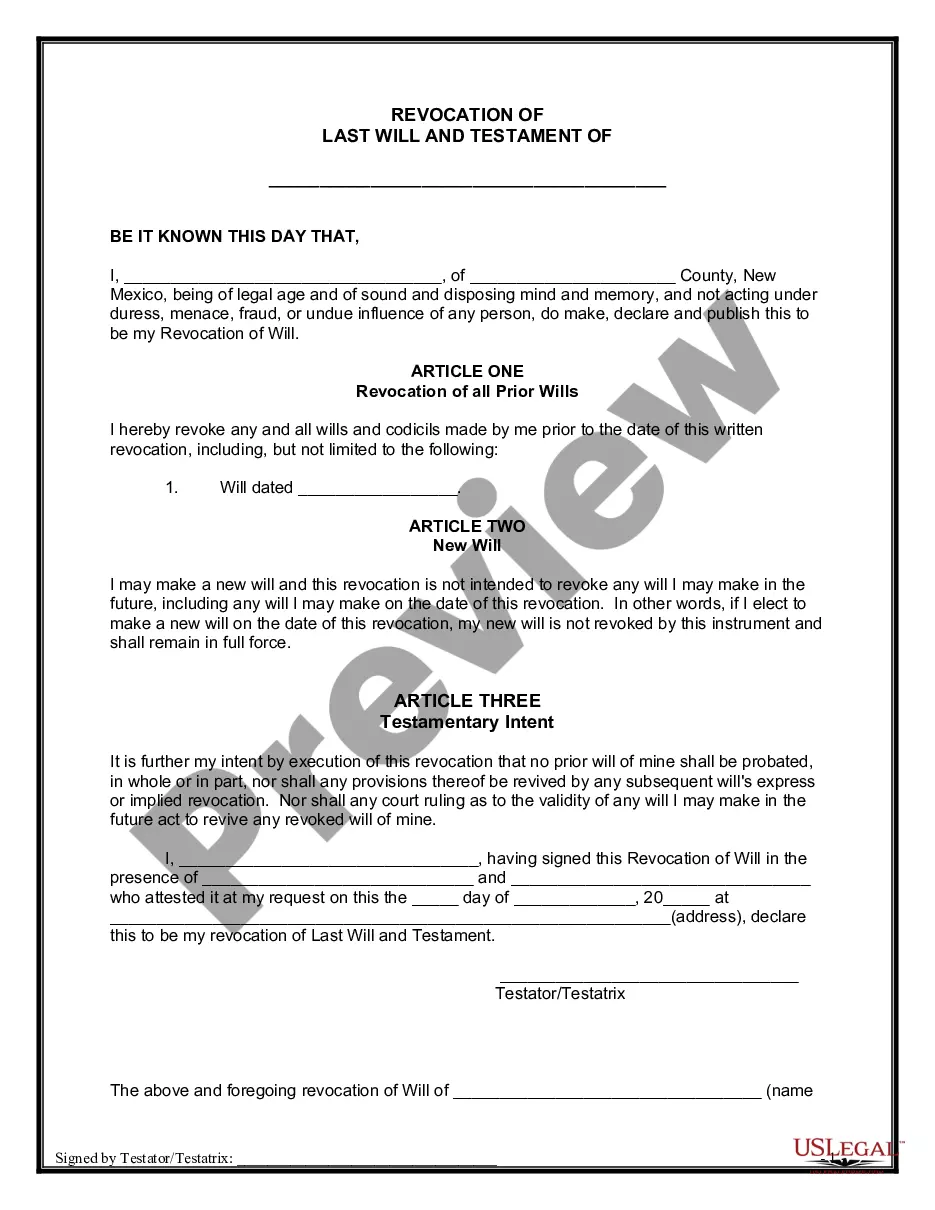
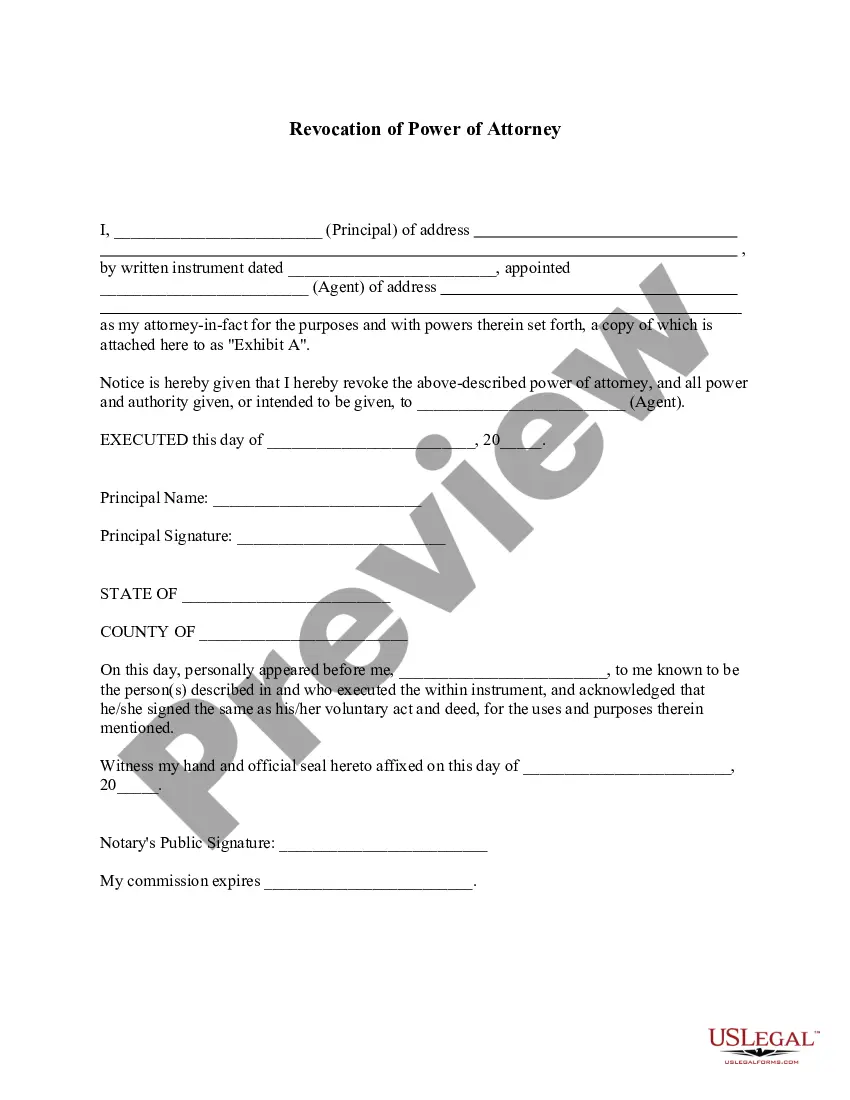
The Written Revocation of Will form serves to formally revoke any prior wills you may have created, ensuring that they are not considered valid after the date of this revocation. Unlike a new will that typically includes a clause to revoke previous documents, this form is necessary when you want to clarify your intentions directly. This prevents any potential confusion among heirs about which will to probate, especially if a newer will is not favored by them.
Form components explained
- Identification of the testator/testatrix, including their sound mind and legal age.
- Clear statement revoking all prior wills and codicils.
- Provisions that any new will created does not affect this revocation.
- Declaration of intent that no previous will shall be probated.
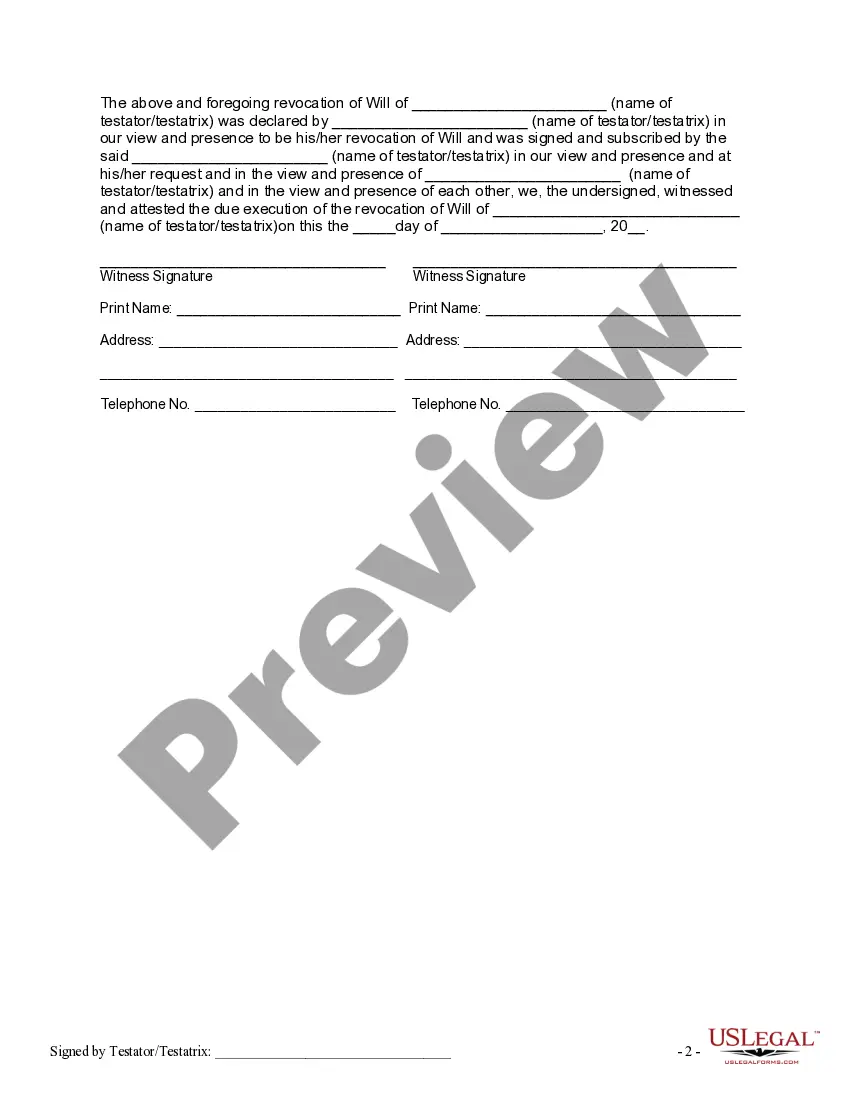
- Space for witnesses to attest the signing of the revocation.
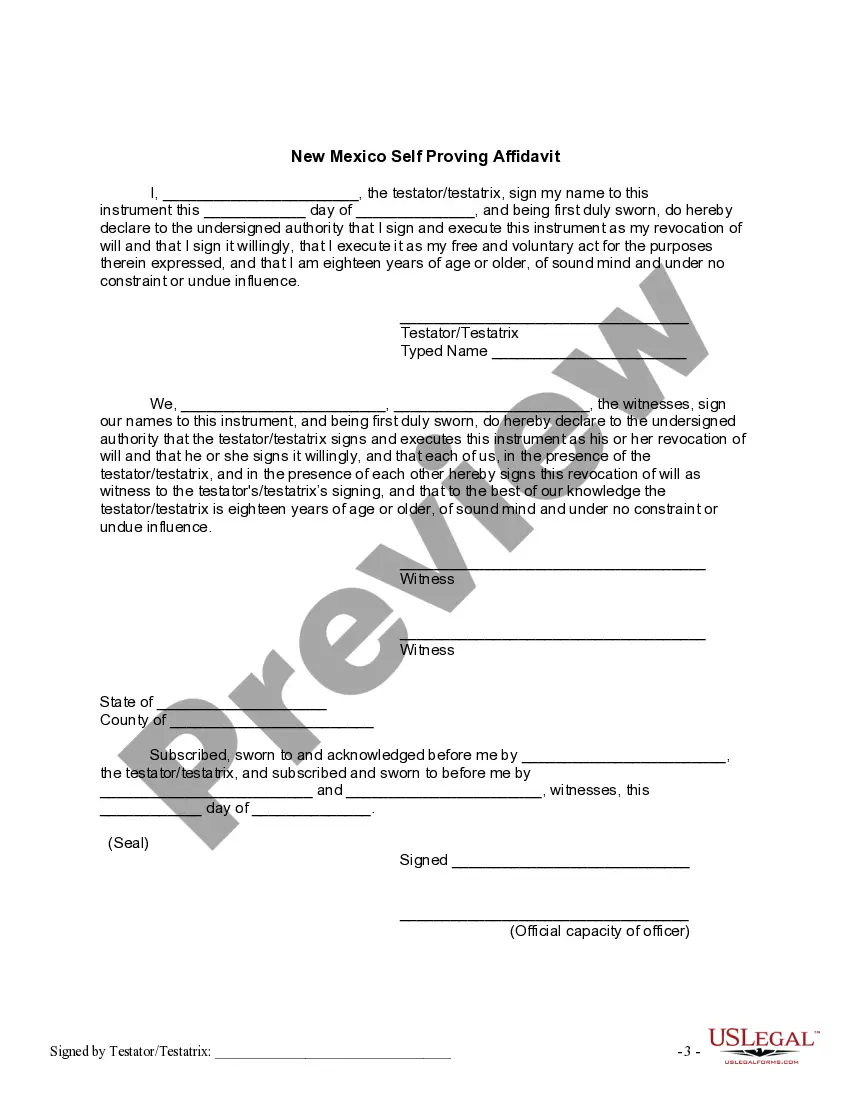
- A notary acknowledgment section for legal verification.

When to use this form
This form should be used when you want to ensure that all previous wills are invalidated, particularly if you have a new will with provisions that may not clearly express your intentions. It is essential in situations where your heirs may have differing opinions on which will to honor, or if a new will has not yet been made but you wish to eliminate old documents from being probated.
Who this form is for
- Individuals preparing to change their estate plans significantly.
- People who want to clarify previously stated wishes in their earlier wills.
- Those aware of potential conflict among heirs regarding which will to follow.
- Residents of New Mexico needing to revoke an existing will.
How to prepare this document
- Begin by filling out your full name and county of residence.
- State clearly that you are revoking all previous wills and provide the date of the old will if applicable.
- Sign the document in the presence of at least two witnesses who will also sign the form.
- Complete the notary acknowledgment section to validate the document legally.
- Keep copies of this revocation for your records and ensure that all beneficiaries are aware of this change.
Does this document require notarization?
This form needs to be notarized to ensure legal validity. US Legal Forms provides secure online notarization powered by Notarize, allowing you to complete the process through a verified video call, available anytime.
Get your form ready online
Our built-in tools help you complete, sign, share, and store your documents in one place.
Make edits, fill in missing information, and update formatting in US Legal Forms—just like you would in MS Word.
Download a copy, print it, send it by email, or mail it via USPS—whatever works best for your next step.
Sign and collect signatures with our SignNow integration. Send to multiple recipients, set reminders, and more. Go Premium to unlock E-Sign.
If this form requires notarization, complete it online through a secure video call—no need to meet a notary in person or wait for an appointment.
We protect your documents and personal data by following strict security and privacy standards.

Make edits, fill in missing information, and update formatting in US Legal Forms—just like you would in MS Word.

Download a copy, print it, send it by email, or mail it via USPS—whatever works best for your next step.

Sign and collect signatures with our SignNow integration. Send to multiple recipients, set reminders, and more. Go Premium to unlock E-Sign.

If this form requires notarization, complete it online through a secure video call—no need to meet a notary in person or wait for an appointment.

We protect your documents and personal data by following strict security and privacy standards.
Common mistakes
- Failing to sign the revocation in front of witnesses.
- Not including the full name or date of any prior wills being revoked.
- Omitting the notarization, which may be required for legal validity.
- Using unclear language that might confuse the intent of the revocation.
Benefits of using this form online
- Instant access to a professionally drafted legal document that you can customize to meet your needs.
- Easy download and printing options for quick use.
- Guidance through the process improves compliance with legal requirements without needing extensive legal knowledge.
Key takeaways
- The Written Revocation of Will is crucial for invalidating previous estate documents.
- Clear intent and formal witnessing are essential for enforceability.
- Always ensure to follow local legal requirements when completing this form.
Looking for another form?

Form popularity
FAQ
A will is revoked by a later will only to the extent that new provisions are inconsistent with it. But any confusion could motivate a 'losing' beneficiary to challenge your latest will.If you have made a more recent will (and signed it in the presence of witnesses), the old one is no longer valid.
No, in New Mexico, you do not need to notarize your will to make it legal. However, New Mexico allows you to make your will "self-proving" and you'll need to go to a notary if you want to do that. A self-proving will speeds up probate because the court can accept the will without contacting the witnesses who signed it.
No, in New Mexico, you do not need to notarize your will to make it legal. However, New Mexico allows you to make your will "self-proving" and you'll need to go to a notary if you want to do that. A self-proving will speeds up probate because the court can accept the will without contacting the witnesses who signed it.
To make a will self-proved in New Mexico, the testator and witnesses must sign a self proving affidavit before a notary public. An affidavit is a sworn statement, and a notary public is an officer of the court. Therefore, an affidavit before a notary public is like making a statement in court.
A handwritten will can be used in New Mexico, but only if it comports with other statutory requirements to create a valid will. Some states also require that the will be dated.
The will must be administered through probate once the will has been submitted. Probate also is necessary if a person dies without a will or a living trust. In this situation, the assets of the decedent are distributed based on a priority established under New Mexico intestate succession law.
Age: The testator must be at least 18 years old. Capacity: The testator must be of sound mind. Signature: The will must be signed by the testator or by someone else in the testator's name in his conscious presence, by his direction.
A testator can revoke a will by making changes to parts of an existing will. The newly-amended will, now called a codicil, has the effect of creating a new will because it can change key aspects of an existing will, including new beneficiaries and property designations.