Wire Fraud; Money / Property or Honest Services
About this form
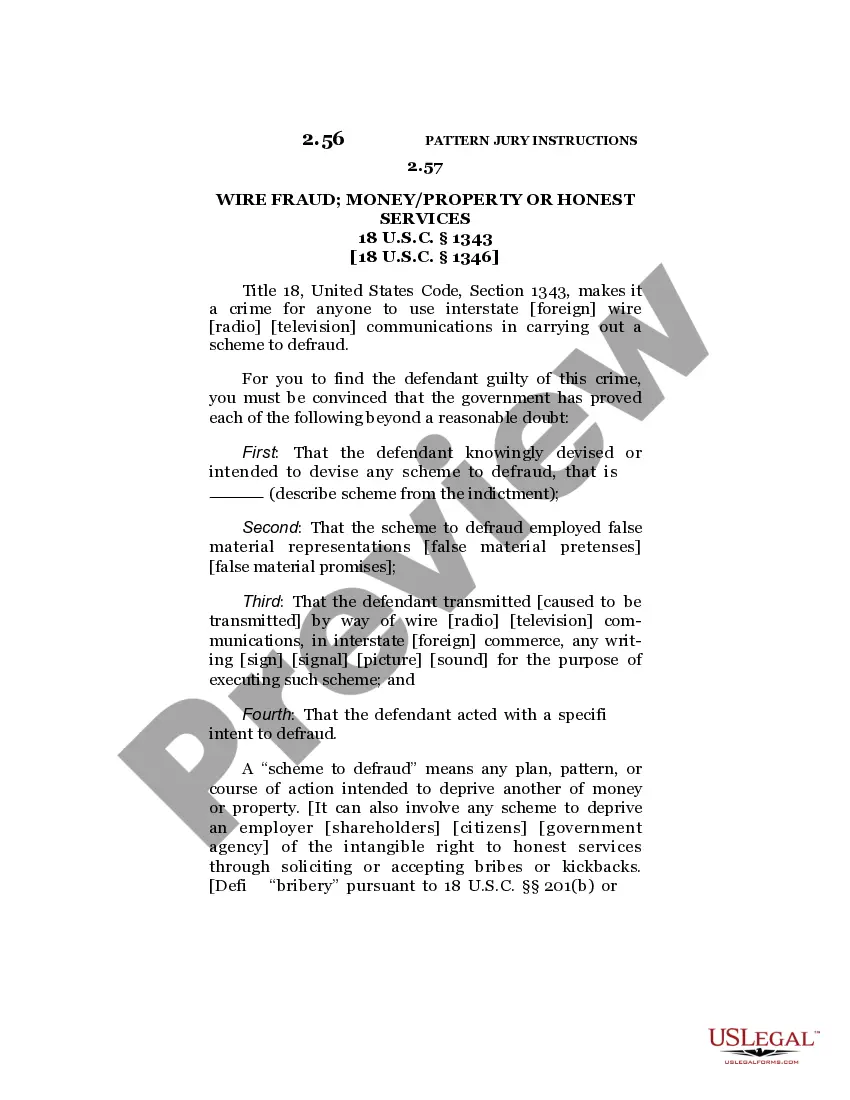
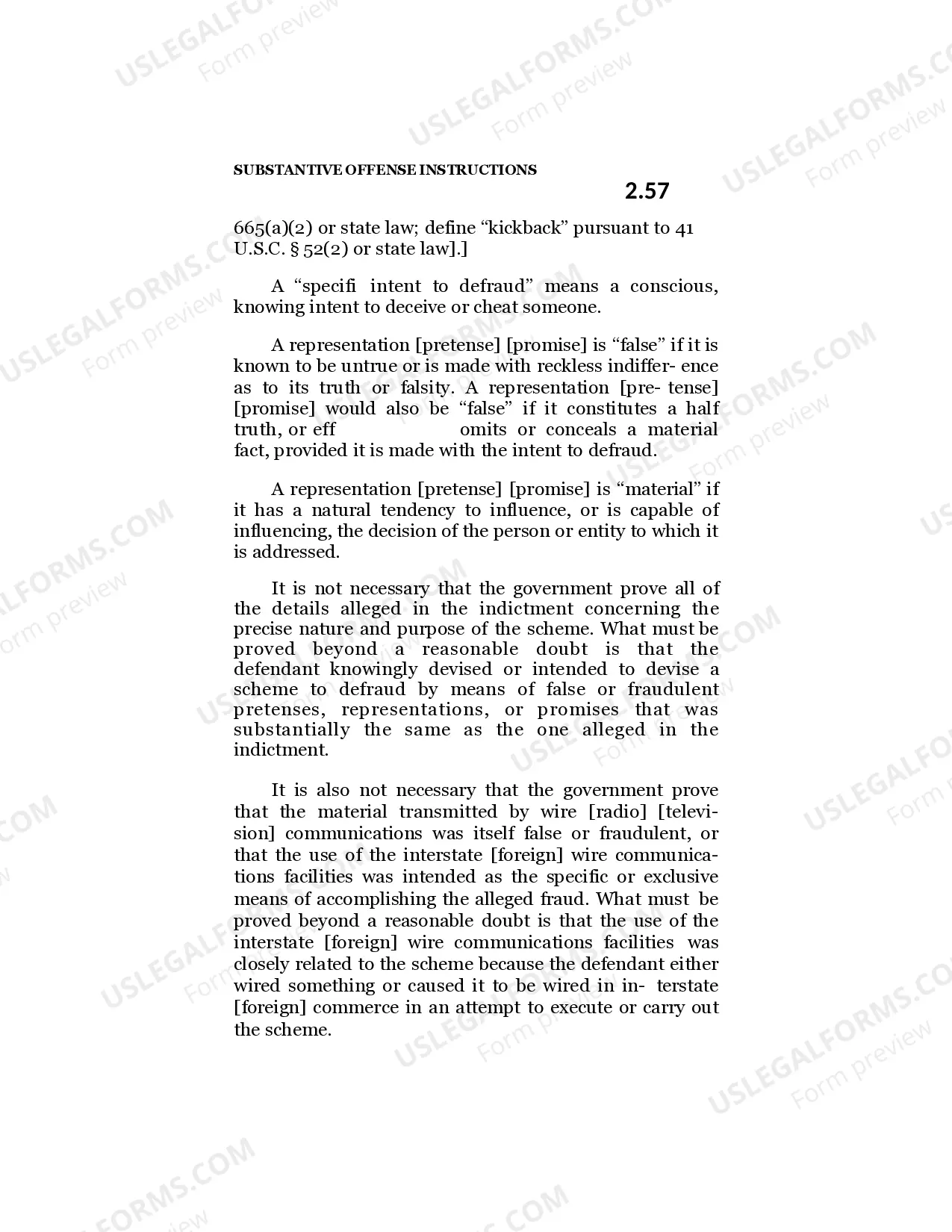
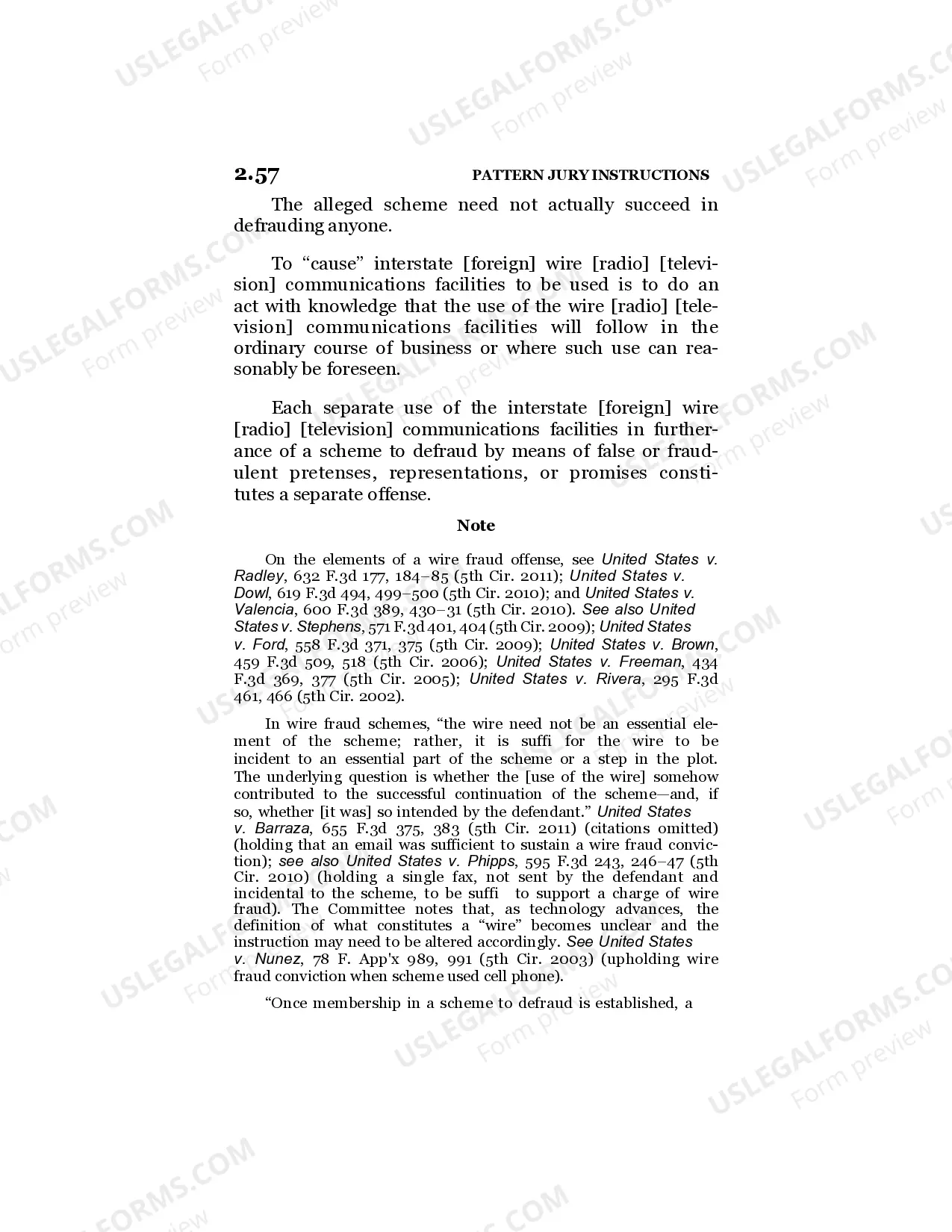
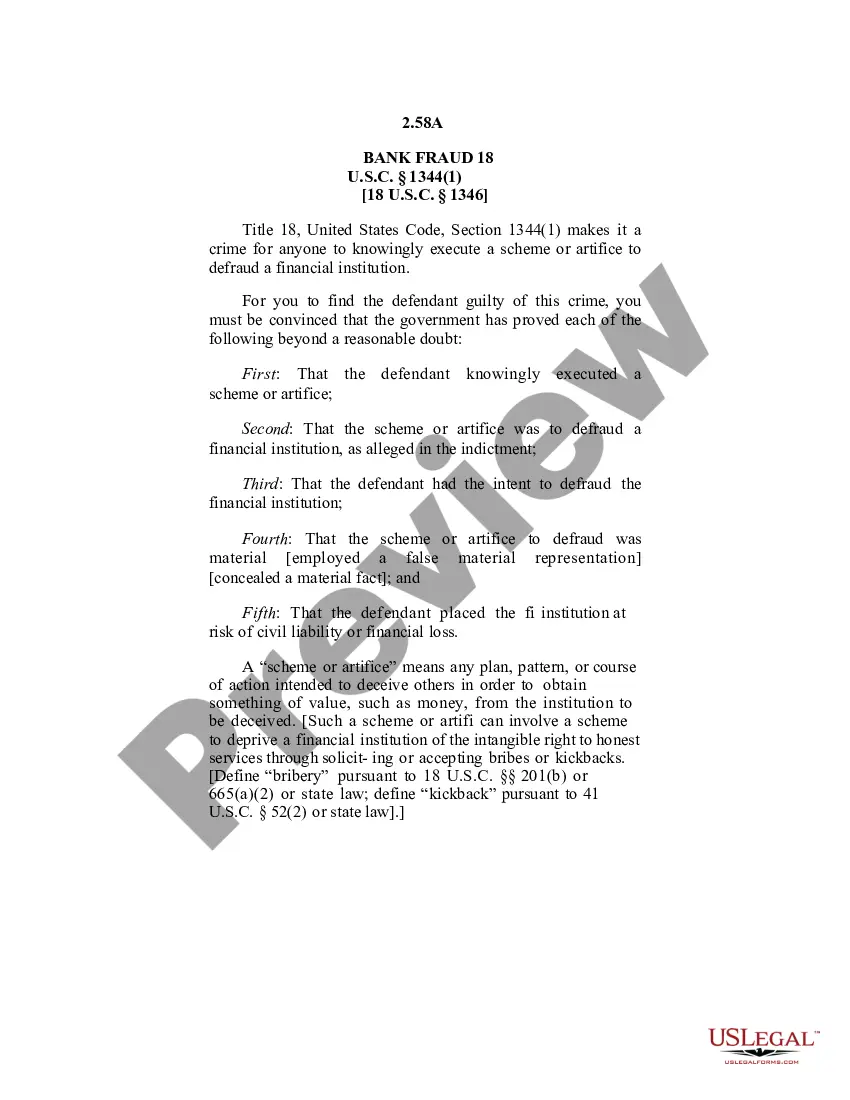
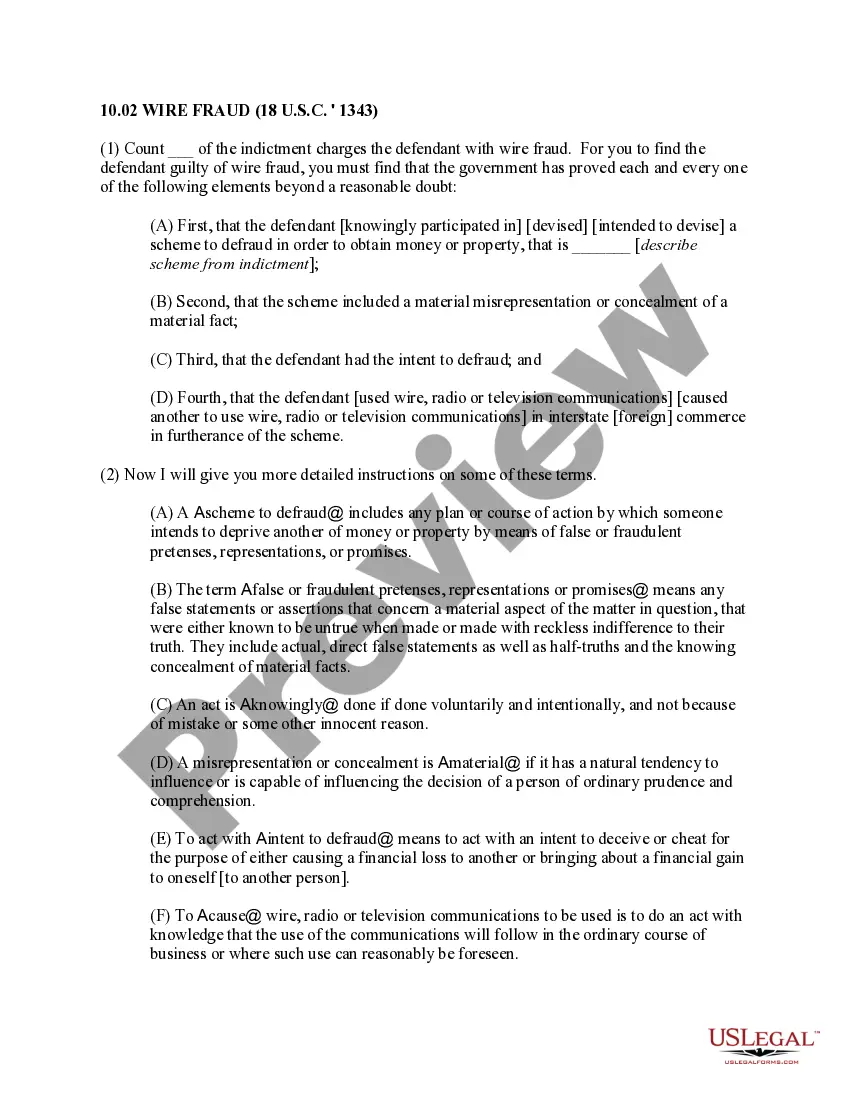
The Wire Fraud; Money/Property or Honest Services form is a legal document used in federal court cases involving charges of wire fraud under Title 18, United States Code. This form outlines the specific elements required to prove wire fraud, including the defendant's intent to deceive, the use of interstate wire communications, and the nature of the alleged fraud. It serves as an essential guide for jurors in understanding the legal criteria that define wire fraud, distinguishing it from related offenses. This form is distinct from other fraud-related forms as it specifically addresses wire communication aspects and the definition of honest services fraud.
Key parts of this document
- Definition of wire fraud and honest services fraud
- The requirement for intent to defraud
- Elements necessary to establish the use of interstate wire communications
- Guidance on material representations and their significance in wire fraud allegations
- Examples of schemes that may constitute wire fraud
Common use cases
This form is used in legal cases where a defendant is charged with wire fraud, either involving money or property, or for violations relating to honest services. It is relevant in scenarios involving telecommunications and across state lines where fraudulent activities have occurred. Legal counsel may refer to this form when preparing jury instructions or when seeking to clarify the elements of wire fraud in court.
Who this form is for
- Judges presiding over federal wire fraud cases
- Prosecutors preparing jury instructions
- Defense attorneys seeking to understand the criteria for wire fraud
- Jurors needing clarification on the legal definitions while deliberating
Completing this form step by step
- Identify the defendant and outline the alleged fraudulent scheme.
- Document the false material representations made by the defendant.
- Specify the interstate wire communications that were used in executing the scheme.
- Establish the defendantâs specific intent to defraud.
- Review the information to ensure all necessary elements of wire fraud are addressed.
Notarization guidance
This form does not typically require notarization unless specified by local law. However, if there are specific legal stipulations in your jurisdiction requiring notarized documents for wire fraud cases, itâs important to comply with those regulations.
Get your form ready online
Our built-in tools help you complete, sign, share, and store your documents in one place.
Make edits, fill in missing information, and update formatting in US Legal Forms—just like you would in MS Word.
Download a copy, print it, send it by email, or mail it via USPS—whatever works best for your next step.
Sign and collect signatures with our SignNow integration. Send to multiple recipients, set reminders, and more. Go Premium to unlock E-Sign.
If this form requires notarization, complete it online through a secure video call—no need to meet a notary in person or wait for an appointment.
We protect your documents and personal data by following strict security and privacy standards.

Make edits, fill in missing information, and update formatting in US Legal Forms—just like you would in MS Word.

Download a copy, print it, send it by email, or mail it via USPS—whatever works best for your next step.

Sign and collect signatures with our SignNow integration. Send to multiple recipients, set reminders, and more. Go Premium to unlock E-Sign.

If this form requires notarization, complete it online through a secure video call—no need to meet a notary in person or wait for an appointment.

We protect your documents and personal data by following strict security and privacy standards.
Mistakes to watch out for
- Failing to specify all elements of the fraudulent scheme.
- Not providing evidence of the defendant's intent to defraud.
- Inaccurately describing the use of wire communications.
- Omitting examples of material misrepresentations.
- Assuming that success in defrauding someone is required to prove wire fraud.
Advantages of online completion
- Convenience of accessing the form from anywhere at any time.
- Easy download for immediate use in legal proceedings.
- Prepared by licensed attorneys, ensuring reliability and adherence to legal standards.
- Editable format allows for customization based on specific case needs.
Legal use & context
- The form provides a clear framework for federal jury instructions related to wire fraud.
- It assists in ensuring that defendants receive fair trials based on clearly defined legal standards.
- The form covers both fraudulent schemes involving tangible property and honest services fraud.
Key takeaways
- Wire fraud involves using electronic communications to deceive for financial gain.
- The form helps clarify legal obligations and requirements in fraud allegations.
- Accuracy in describing the fraudulent scheme is crucial for legal success.
Looking for another form?

Form popularity
FAQ
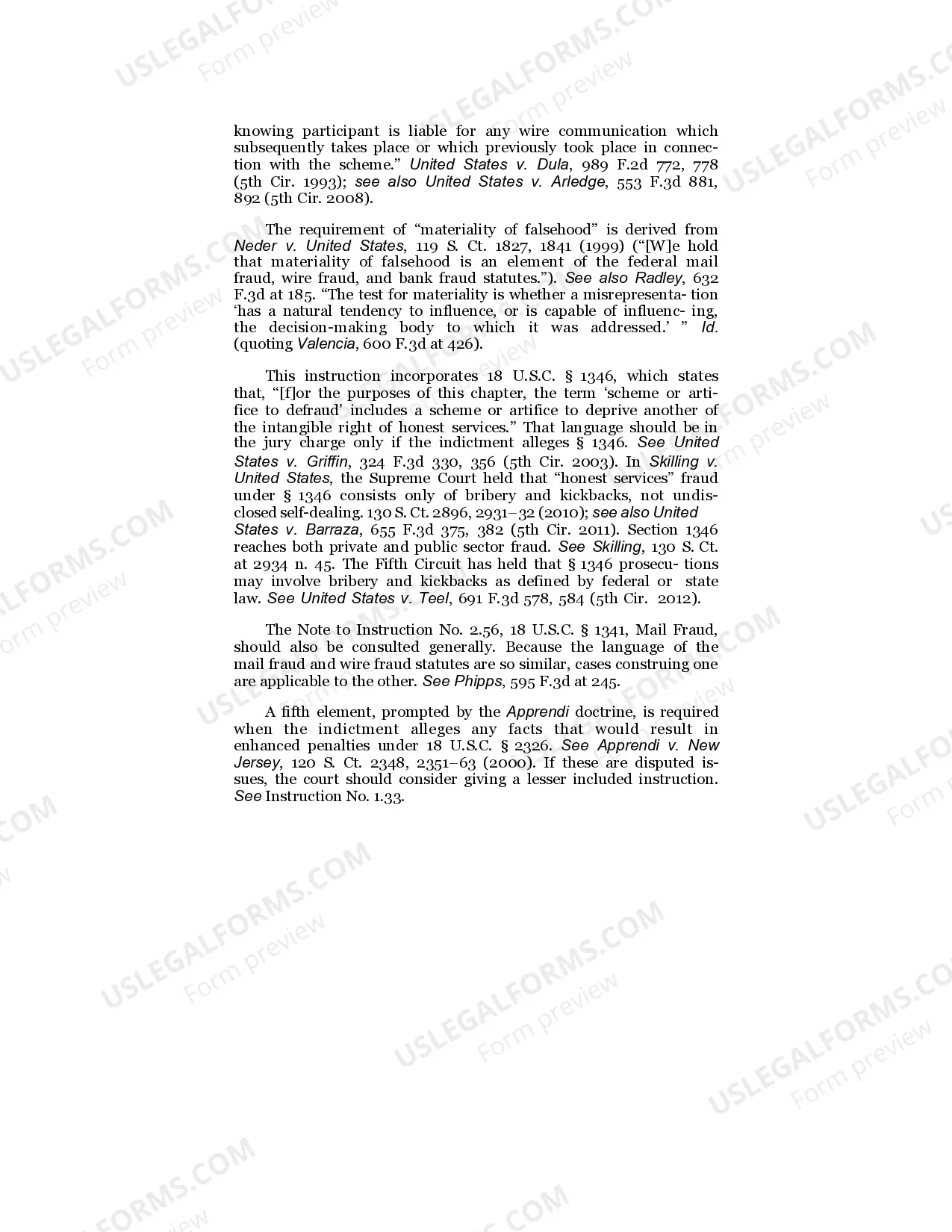
§1346. Definition of "scheme or artifice to defraud" For the purposes of this chapter, the term "scheme or artifice to defraud" includes a scheme or artifice to deprive another of the intangible right of honest services.
Simply put, honest services fraud is described under federal statute 18 U.S.C. 1346 as a scheme to defraud another of the intangible right to honest services using a scheme to violate a fiduciary duty by bribery or kickbacks.
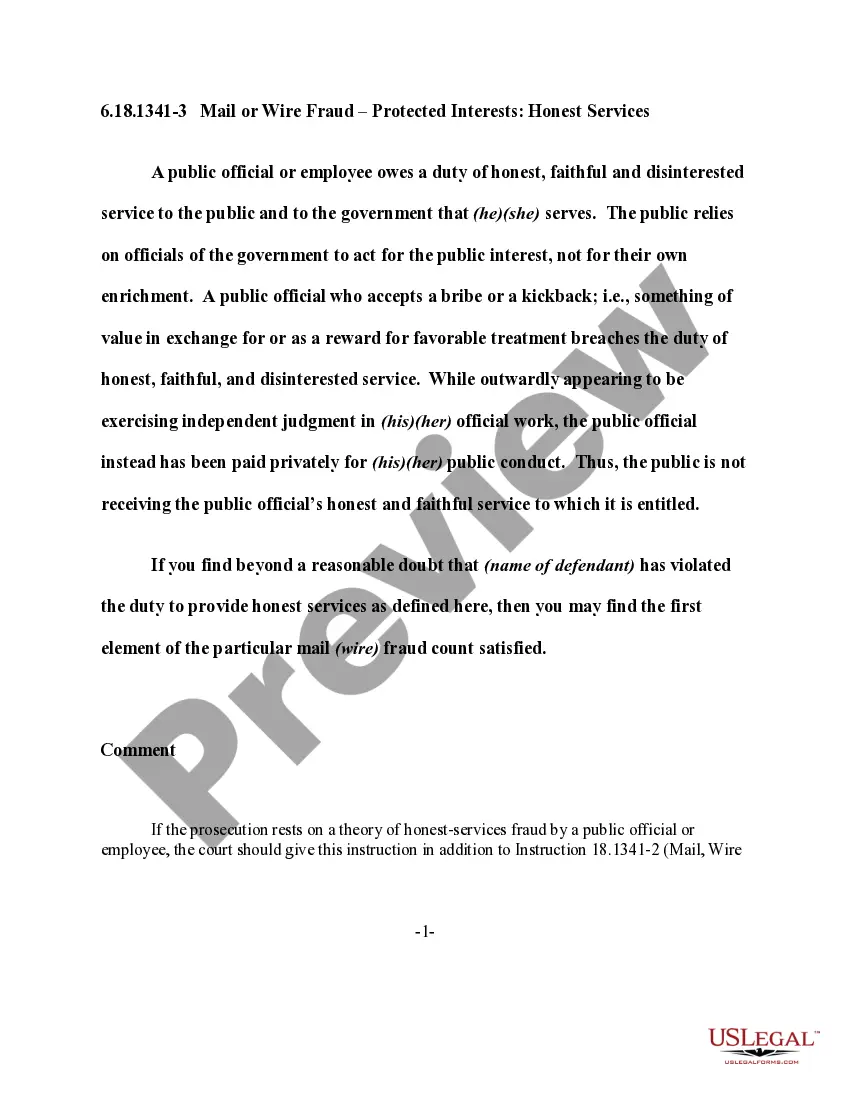
Federal courts have generally recognized two main areas of public-sector honest service fraud: bribery (direct or indirect), where a public official was paid in some way for a particular decision or action, and failure to disclose a conflict of interest, resulting in personal gain.
Wire fraud is the most simple and clear cut way for a prosecutor to convince a jury at trial that a crime was committed. Proving fraud can be tricky because it requires a jury to believe that someone knew what they were doing was wrong and illegal, and they did it anyway.
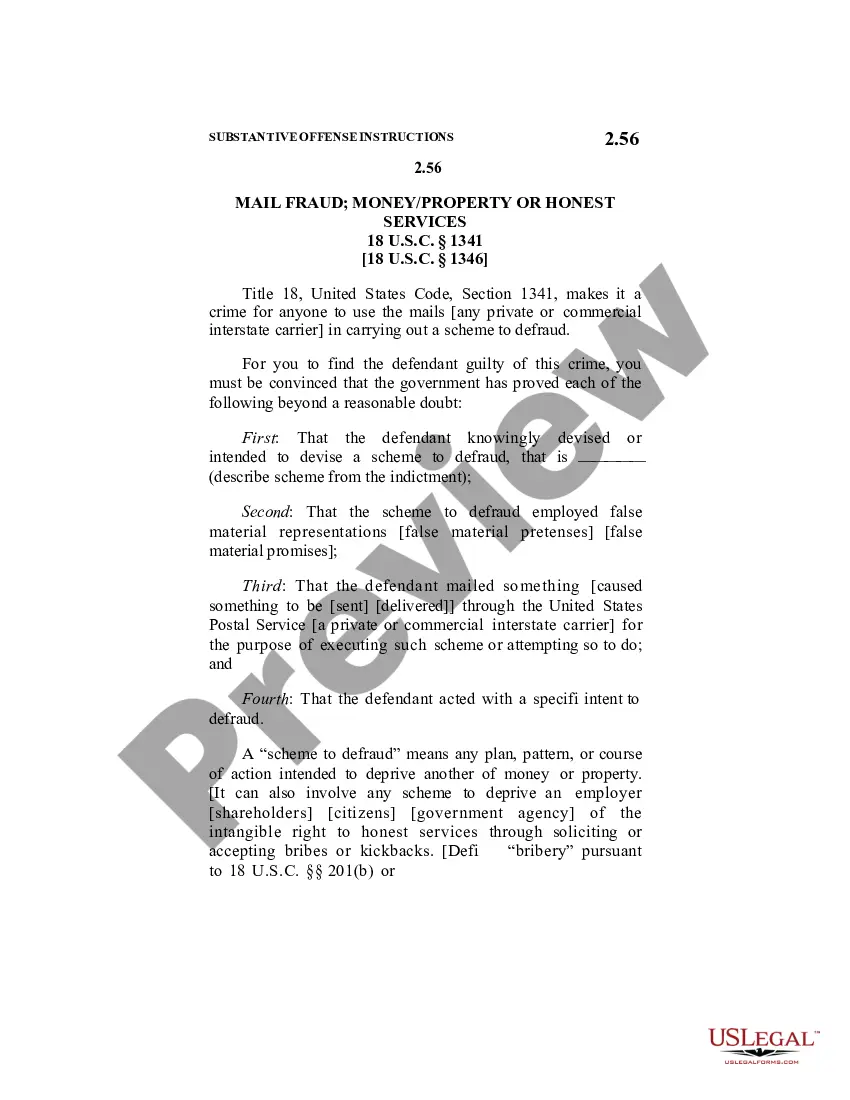
1343?Elements of Wire Fraud. The elements of wire fraud under Section 1343 directly parallel those of the mail fraud statute, but require the use of an interstate telephone call or electronic communication made in furtherance of the scheme. United States v.
Honest services fraud is defined in federal statute 18 U.S.C. §1346 as a scheme to defraud another of the intangible right to honest services through a scheme to violate a fiduciary duty by bribery or kickbacks. A fiduciary duty is a duty to act only for the benefit of the public, an employer, shareholders, or a union.
§ 1344 defines federal bank fraud as: ?knowingly executing or attempting a scheme or artifice to defraud a financial institution, or to obtain financial institution money, funds, credit, assets, securities, or other property by false or fraudulent pretenses, representations, or promises.?