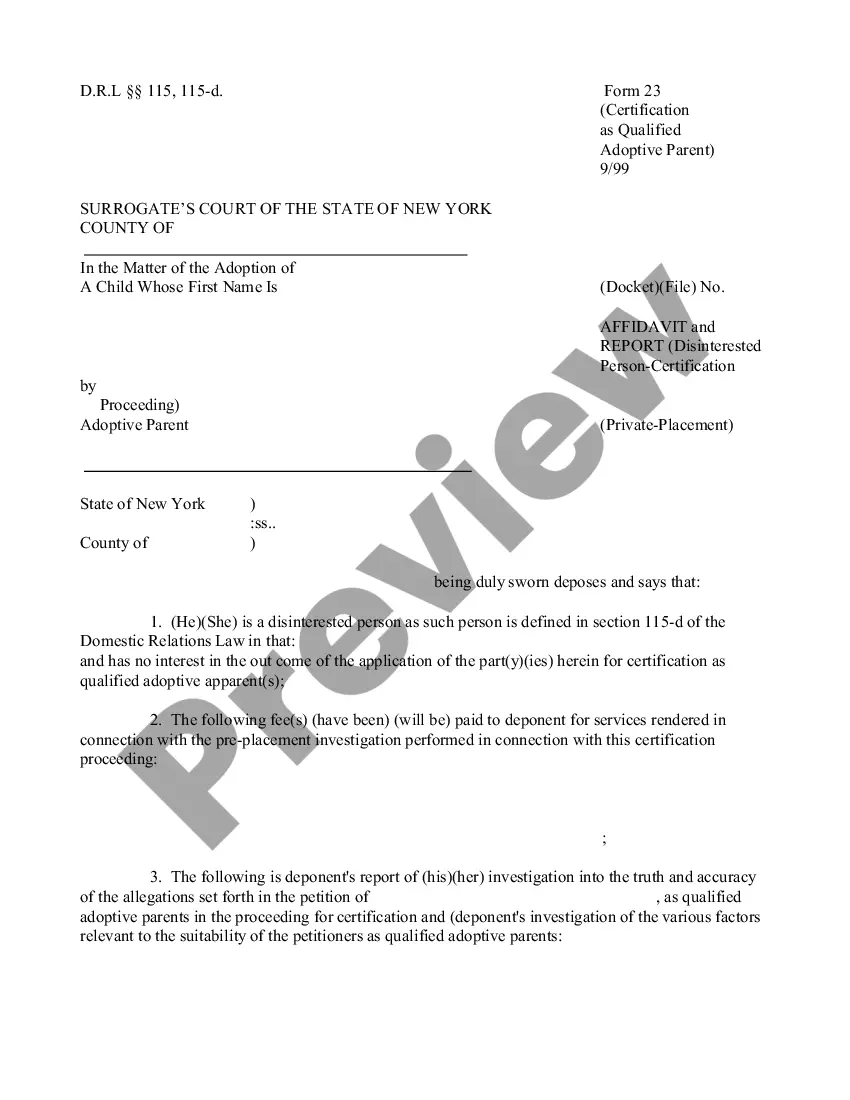
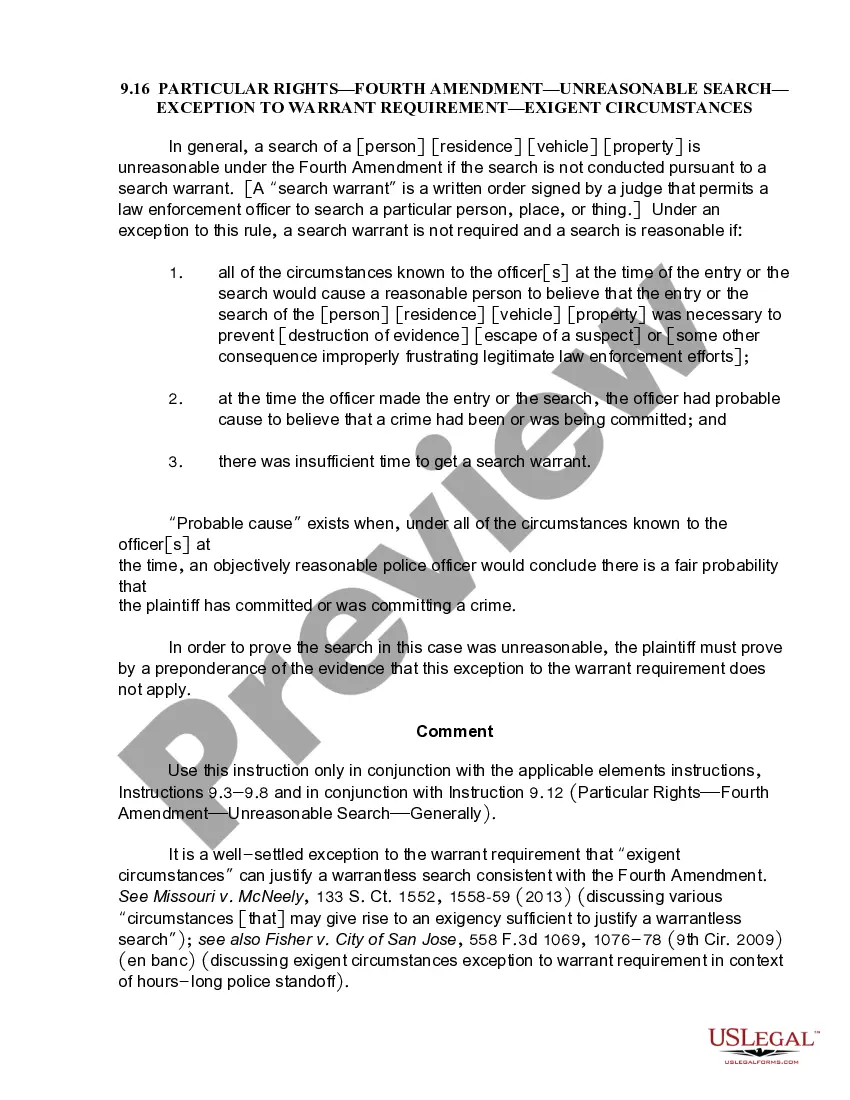
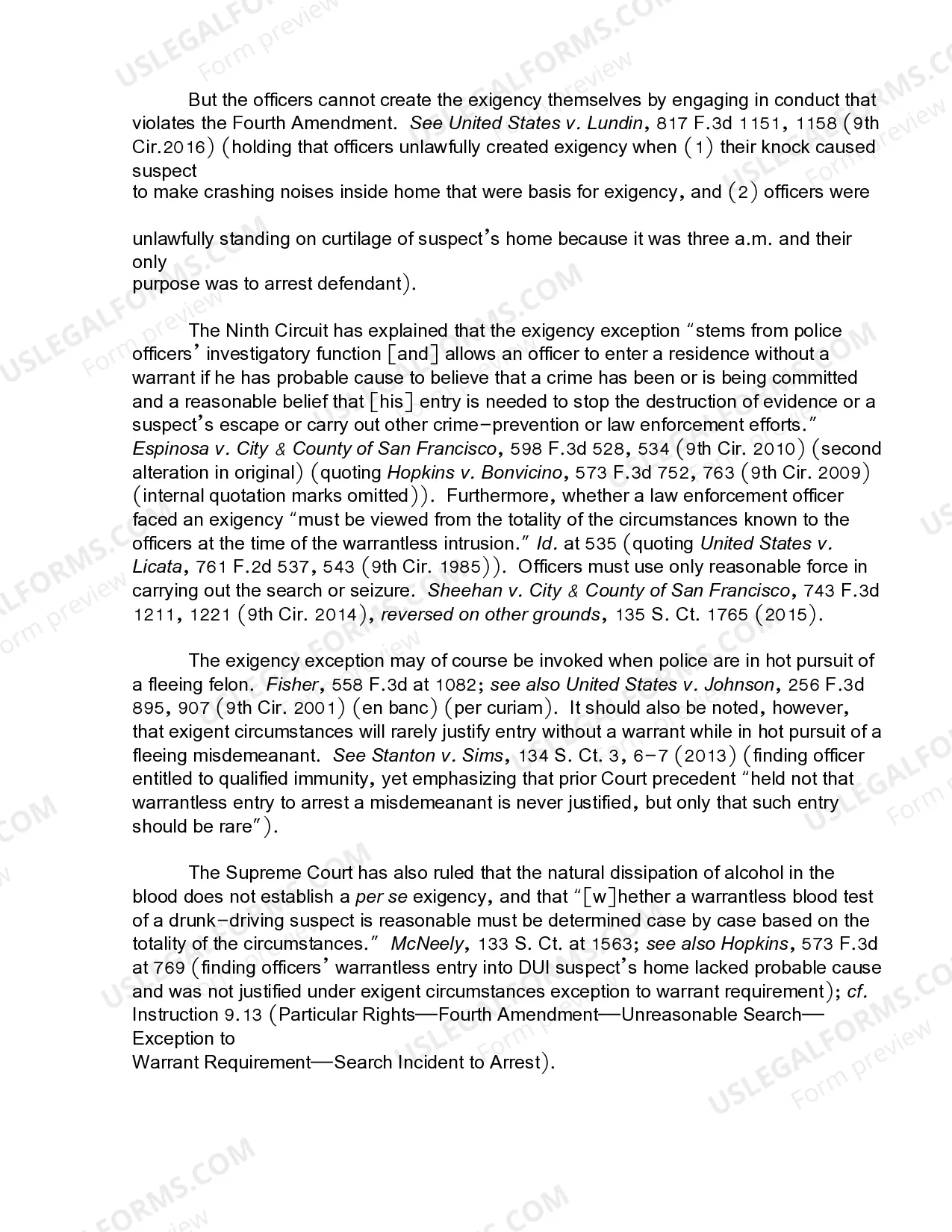
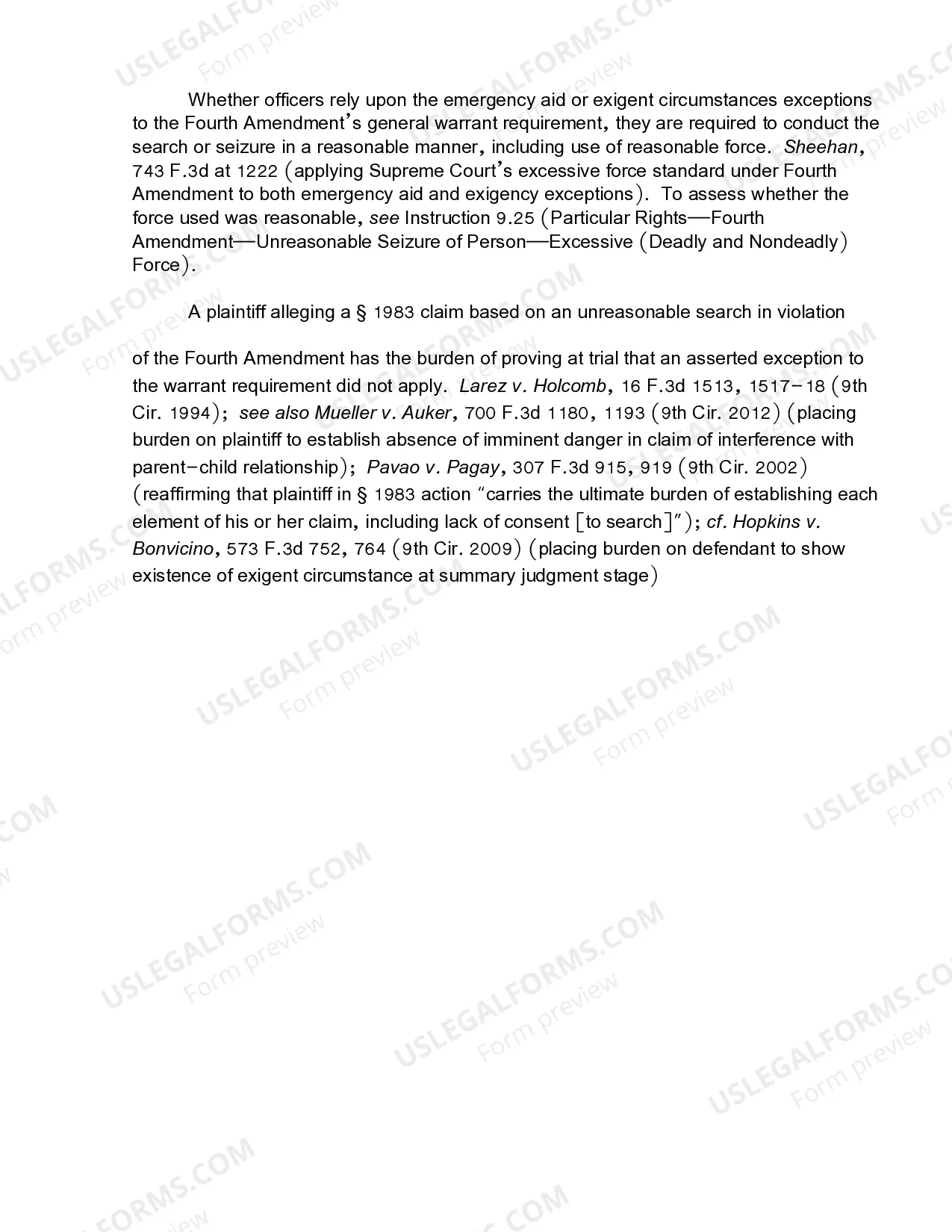
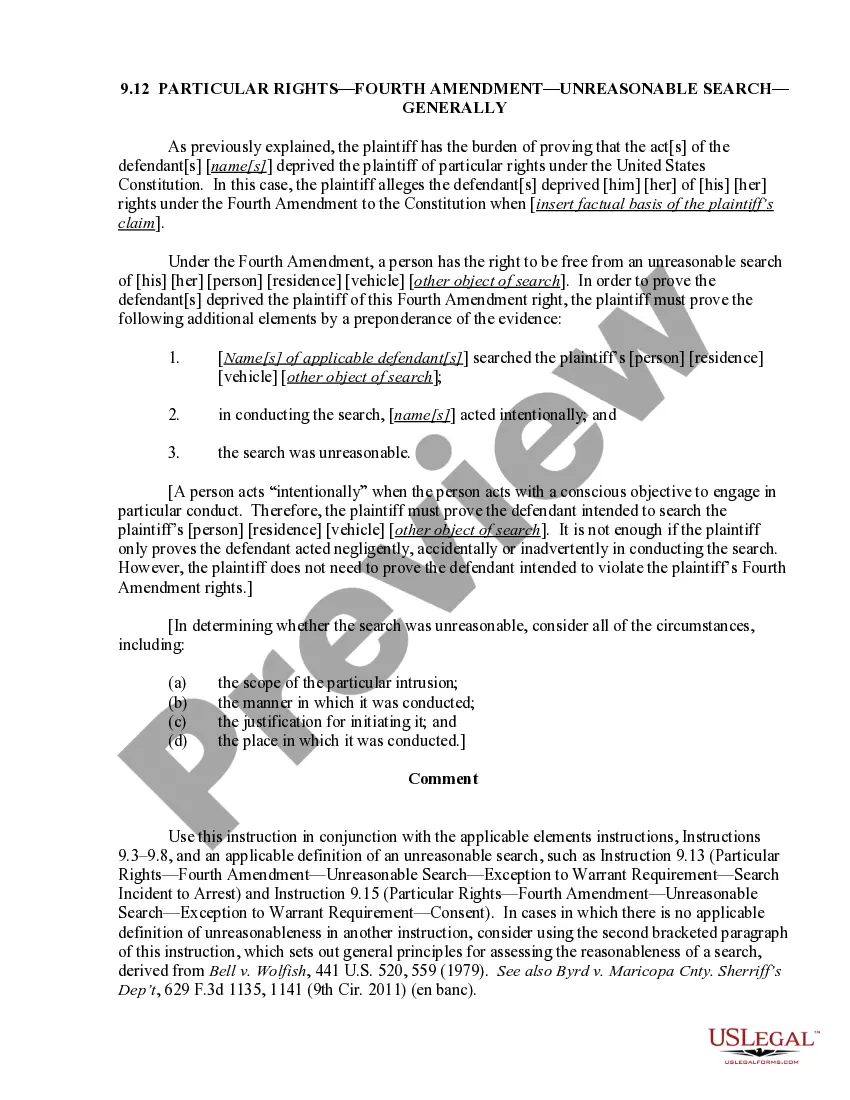
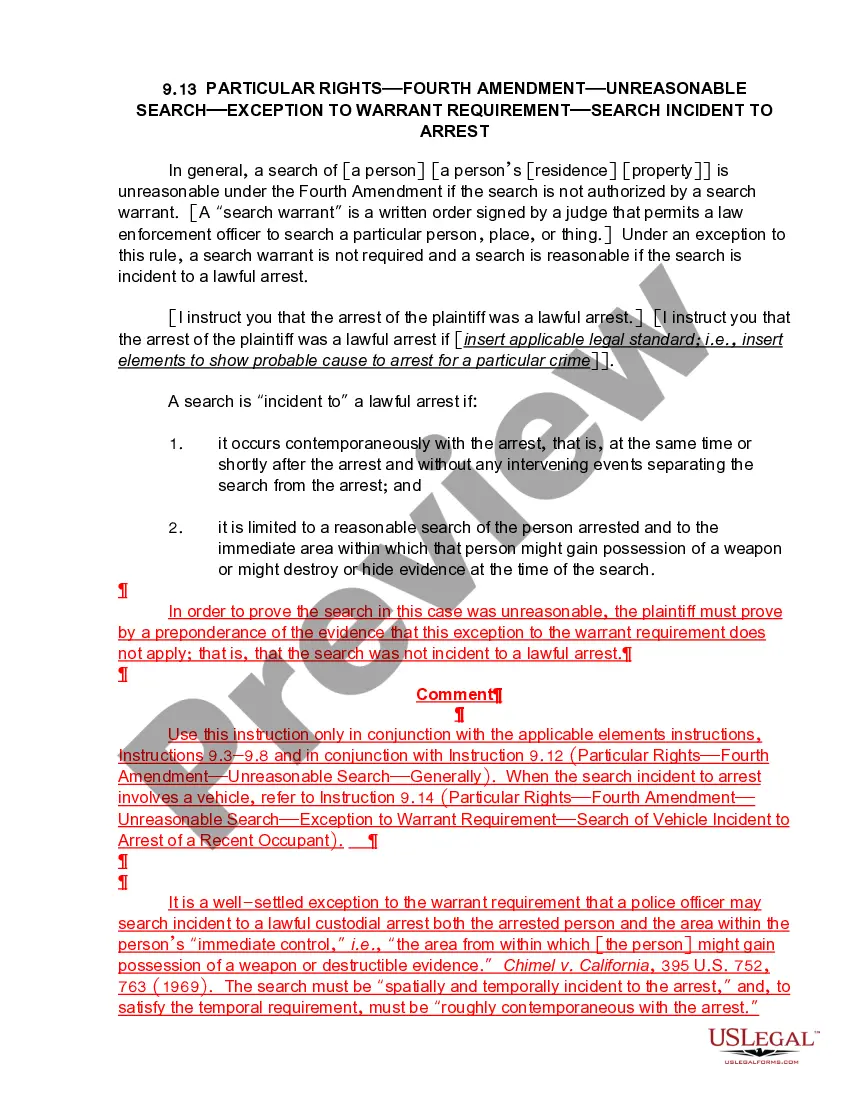
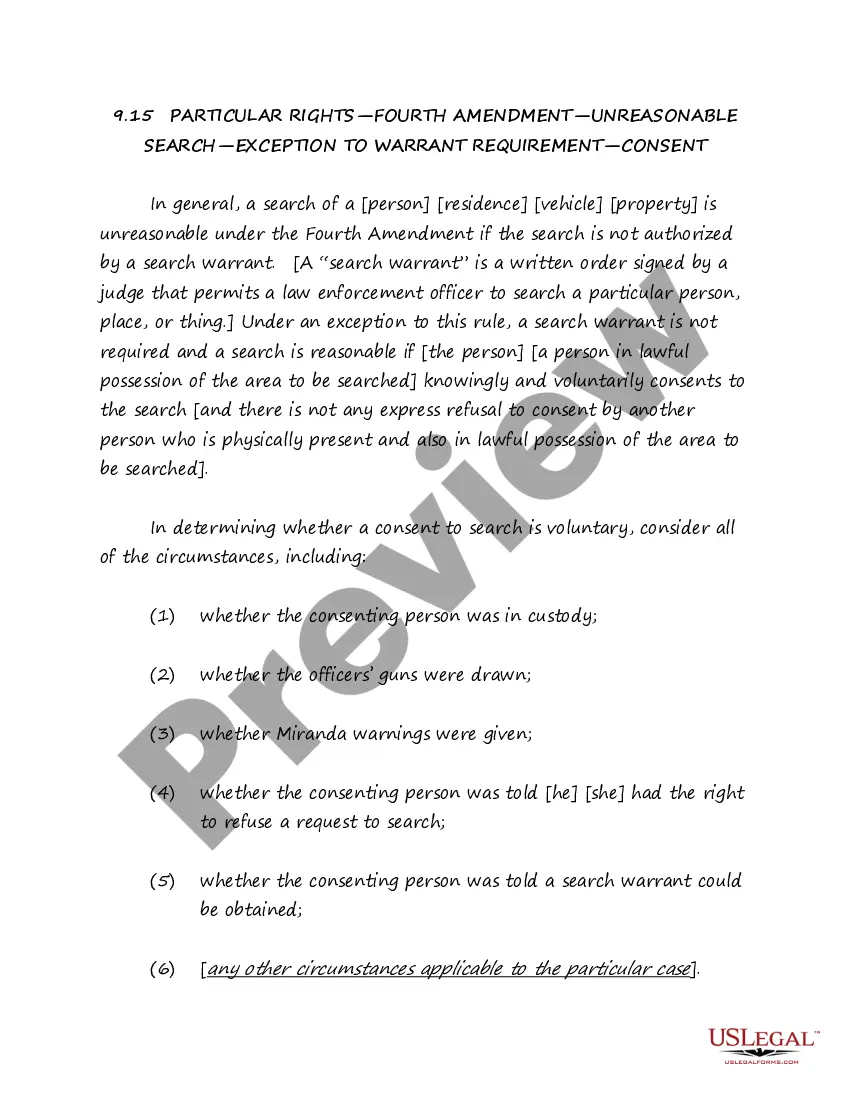
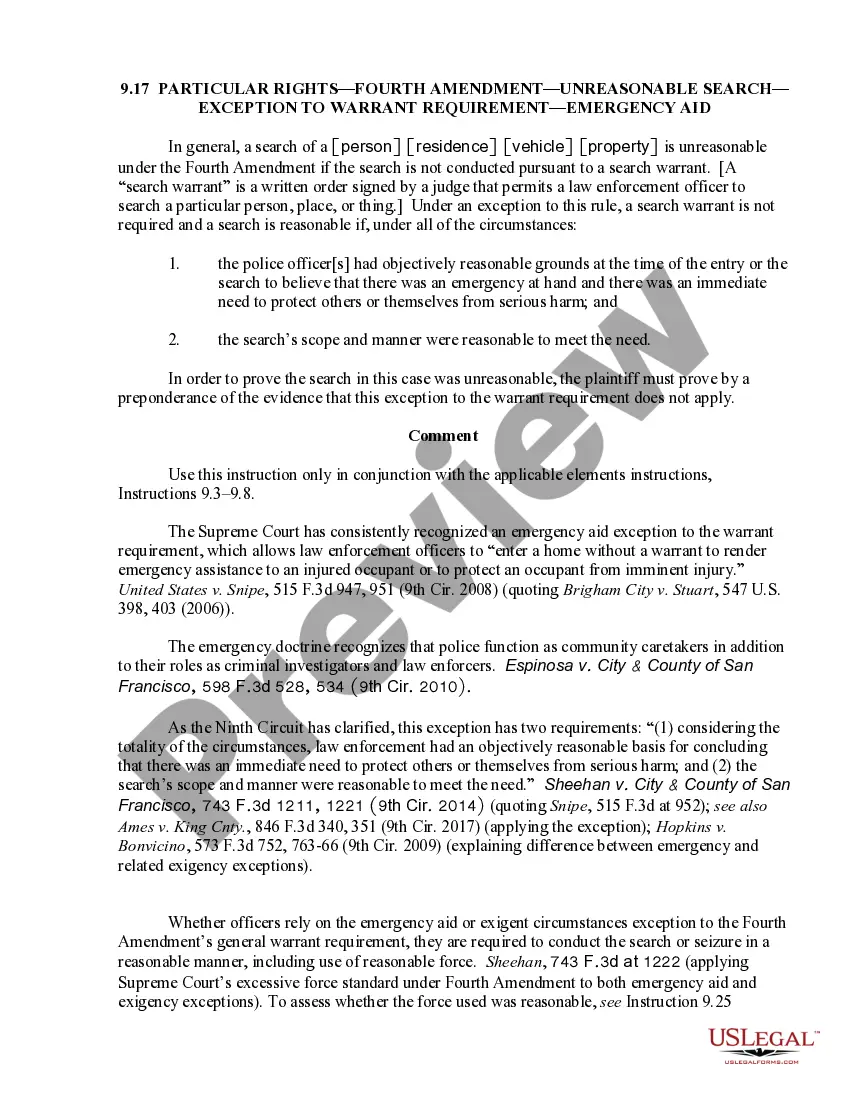
9.16 Particular Rights-Fourth Amendment-Unreasonable Search-Exception to Warrant Requirement-Exigent Circumstances

Notarization requirements for this form
Notarization is not commonly needed for this form. However, certain documents or local rules may make it necessary. Our notarization service, powered by Notarize, allows you to finalize it securely online anytime, day or night.
Get your form ready online
Our built-in tools help you complete, sign, share, and store your documents in one place.
Make edits, fill in missing information, and update formatting in US Legal Forms—just like you would in MS Word.
Download a copy, print it, send it by email, or mail it via USPS—whatever works best for your next step.
Sign and collect signatures with our SignNow integration. Send to multiple recipients, set reminders, and more. Go Premium to unlock E-Sign.
If this form requires notarization, complete it online through a secure video call—no need to meet a notary in person or wait for an appointment.
We protect your documents and personal data by following strict security and privacy standards.

Make edits, fill in missing information, and update formatting in US Legal Forms—just like you would in MS Word.

Download a copy, print it, send it by email, or mail it via USPS—whatever works best for your next step.

Sign and collect signatures with our SignNow integration. Send to multiple recipients, set reminders, and more. Go Premium to unlock E-Sign.

If this form requires notarization, complete it online through a secure video call—no need to meet a notary in person or wait for an appointment.

We protect your documents and personal data by following strict security and privacy standards.
Looking for another form?

Form popularity
FAQ
Specifically, the court held that ?the exigent circumstances rule applies when the police do not gain entry to premises by means of an actual or threatened violation of the Fourth Amendment.?
One occurs when an officer has probable cause to believe that the time it would take to go get a warrant would result in the destruction of the evidence. The second is when officers in hot pursuit of a fleeing felon chases that felon into a REP area.
Santana, 427 U.S. 38, 42?43 (1976); see also Birchfield v. North Dakota, 579 U.S. 438, 456 (2016) ( The exigent circumstances exception allows a warrantless search when an emergency leaves police insufficient time to seek a warrant.
The Constitution, through the Fourth Amendment, protects people from unreasonable searches and seizures by the government. The Fourth Amendment, however, is not a guarantee against all searches and seizures, but only those that are deemed unreasonable under the law.
Solari: An exigency is something that requires immediate attention; for instances, preventing the destruction of evidence, or preventing the escape of a fleeing felon, or preventing harm to somebody.
The exigent circumstance cases can be divided into two general types: those that involve the enforcement of the criminal law, and those that involve the community caretaking function of a police department.
McConney are "circumstances that would cause a reasonable person to believe that entry (or other relevant prompt action) was necessary to prevent physical harm to the officers or other persons, the destruction of relevant evidence, the escape of the suspect, or some other consequence improperly frustrating legitimate