Utility Easement (Electric Lines, Telephone Lines and Appurtenances)
Understanding this form
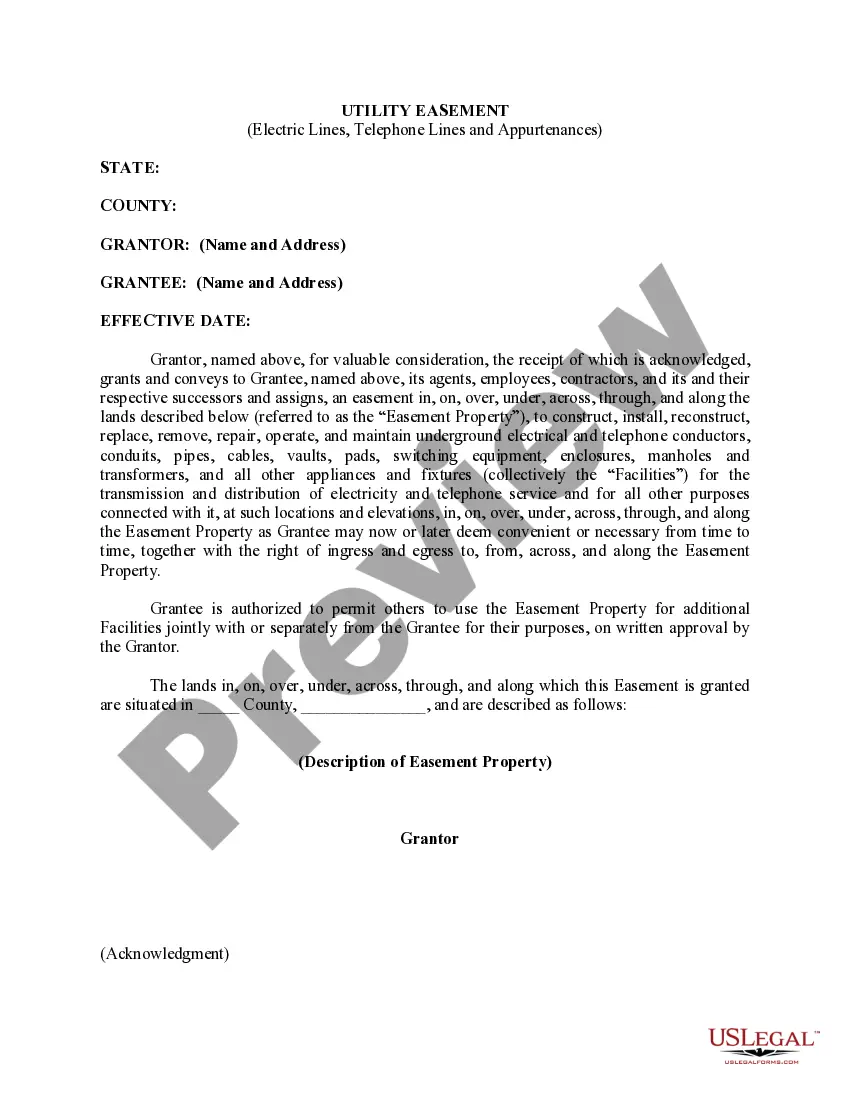
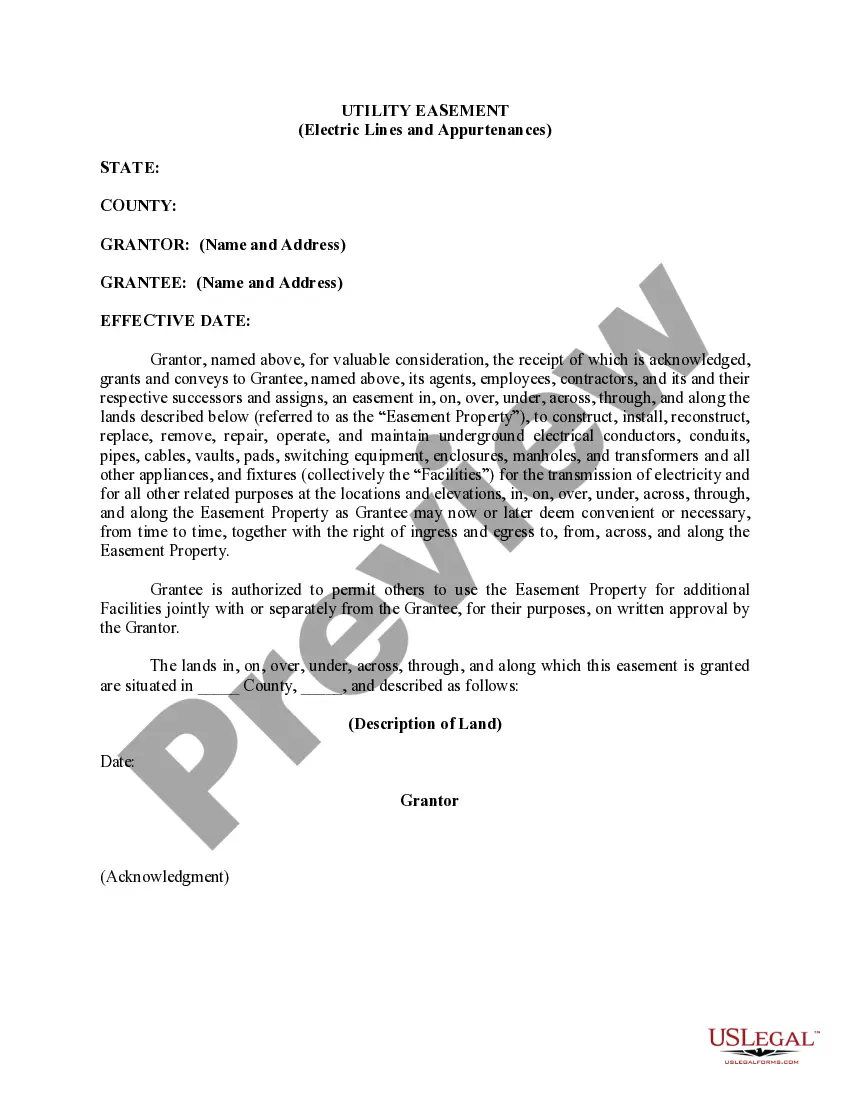
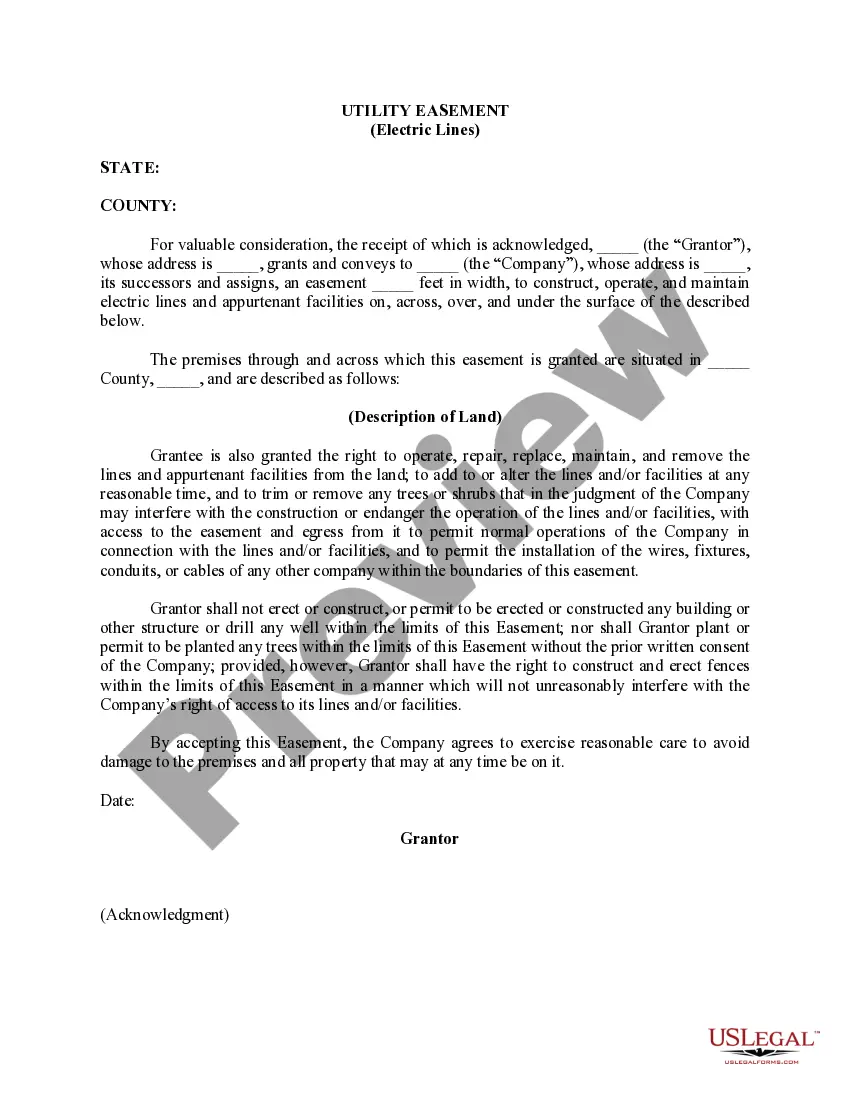
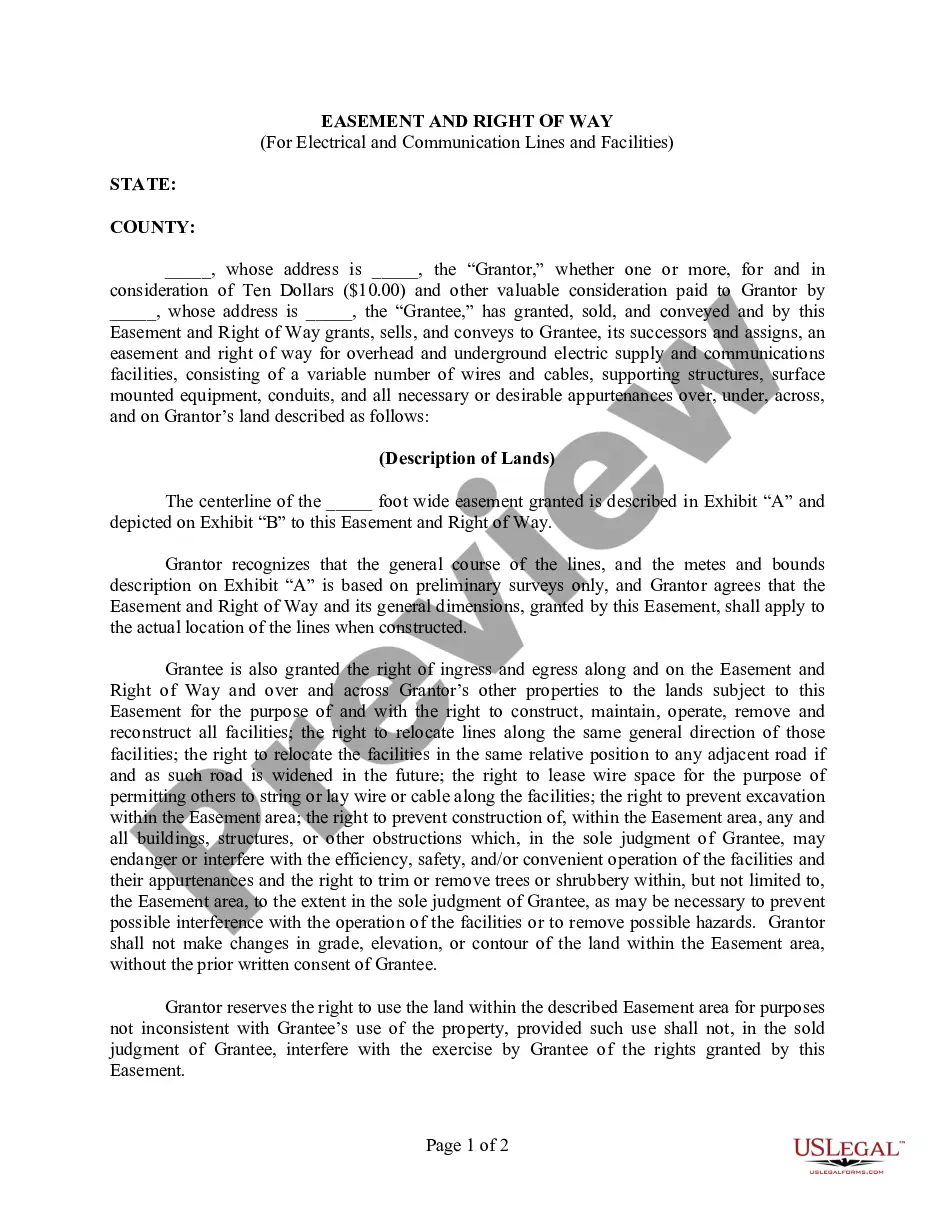
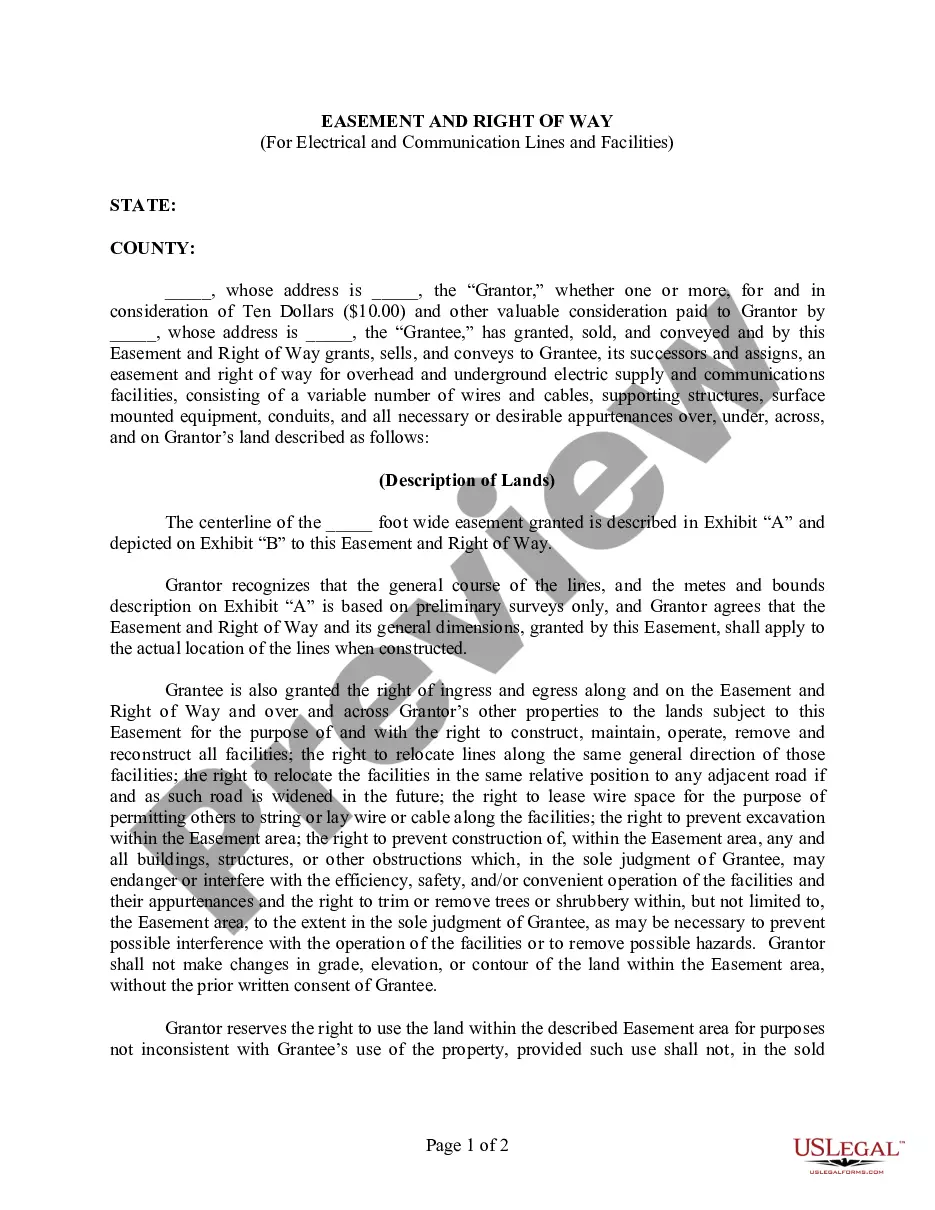
This form is a Utility Easement for Electric Lines, Telephone Lines, and Appurtenances. It allows the Grantor to grant the Grantee rights to use specific land for the construction, maintenance, and operation of electrical and telephone facilities. This easement is crucial for enabling utility companies to install and maintain necessary infrastructure while providing clear legal boundaries for both parties involved. Unlike other land use agreements, a utility easement specifically addresses rights pertaining to utility access and installation, ensuring that utility services can be delivered without legal hindrances.
Key parts of this document
- Identification of the parties: Names and addresses of the Grantor and Grantee.
- Legal description of the easement property: Clear boundaries of the land where the easement applies.
- Rights granted: Detailed list of the rights being conveyed, including construction, operation, and maintenance of facilities.
- Ingress and egress: Specifications on access to the easement property for the Grantee and any authorized users.
- Approval process: Procedures under which the Grantee can allow others to utilize the easement.
When to use this document
This form should be used when a property owner (Grantor) needs to allow a utility company (Grantee) access to their land for the installation or maintenance of electrical and telephone lines. Common situations include new construction projects that require utility access, upgrades to existing service lines, or any scenario where utility facilities must be placed on private property. Using this form ensures that the utility company has the legal authority to work on the property while protecting the Grantor's rights.
Who can use this document
This form is suitable for:
- Property owners wishing to grant easement rights to utility companies.
- Utility companies seeking legal permission to use private land for necessary facilities.
- Real estate professionals assisting clients with property agreements.
- Legal representatives facilitating agreements between property owners and utility providers.
How to complete this form
- Identify the parties: Clearly enter the names and contact details of both the Grantor and Grantee.
- Specify the property: Provide a detailed legal description of the easement property to avoid ambiguity.
- Outline rights and usage: Fill in the specific rights being granted and any conditions that apply.
- Enter effective date: Specify when the easement will begin to take effect.
- Sign and date: Ensure that both parties sign and date the document to make it legally binding.
Notarization requirements for this form
This form must be notarized to be legally valid. US Legal Forms provides secure online notarization powered by Notarize, allowing you to complete the process through a verified video call.
Get your form ready online
Our built-in tools help you complete, sign, share, and store your documents in one place.
Make edits, fill in missing information, and update formatting in US Legal Forms—just like you would in MS Word.
Download a copy, print it, send it by email, or mail it via USPS—whatever works best for your next step.
Sign and collect signatures with our SignNow integration. Send to multiple recipients, set reminders, and more. Go Premium to unlock E-Sign.
If this form requires notarization, complete it online through a secure video call—no need to meet a notary in person or wait for an appointment.
We protect your documents and personal data by following strict security and privacy standards.

Make edits, fill in missing information, and update formatting in US Legal Forms—just like you would in MS Word.

Download a copy, print it, send it by email, or mail it via USPS—whatever works best for your next step.

Sign and collect signatures with our SignNow integration. Send to multiple recipients, set reminders, and more. Go Premium to unlock E-Sign.

If this form requires notarization, complete it online through a secure video call—no need to meet a notary in person or wait for an appointment.

We protect your documents and personal data by following strict security and privacy standards.
Common mistakes
- Failing to include a clear legal description of the easement property.
- Not adequately defining the rights being granted.
- Leaving out signatures and dates from both parties.
- Overlooking local regulations that may impact the easement agreement.
Why use this form online
- Convenience: Easily download and customize the form to meet your specific needs.
- Editability: Quickly make changes and adjustments before finalizing the document.
- Reliability: Forms are drafted by licensed attorneys, ensuring legal compliance.
Legal use & context
- The utility easement grants specific access rights, making it enforceable under property law.
- It is essential to comply with local regulations regarding easement creation to ensure validity.
- This form helps avoid disputes by clearly outlining responsibilities and rights of both parties.
Key takeaways
- A utility easement allows utility companies necessary access to maintain services.
- Clear legal descriptions and rights are essential for the effectiveness of the form.
- Always consider local laws that may affect the easement agreement.
Looking for another form?
Form popularity
FAQ
More examples of appurtenances include in-ground swimming pools, a fence, or a shed that are all fixed to the land. The term can also be used to describe the acreage behind a home. This plot of land, or the backyard, is generally viewed as being part of the propertyan appurtenance of the house.
Appurtenant. adj. pertaining to something that attaches. In real property law this describes any right or restriction which goes with that property, such as an easement to gain access across the neighbor's parcel, or a covenant (agreement) against blocking the neighbor's view.
Types of Easements An easement may be classified as either an easement appurtenant or an easement in gross. Easement Appurtenant. An easement appurtenant is an easement that benefits one parcel of land, known as the dominant tenement, to the detriment of another parcel of land, known as the servient tenement.
An easement is a right which the owner or occupier of certain land possesses, as such, for the beneficial enjoyment of that land, to do and continue to do something, or to prevent and continue to prevent something being done, in or upon, or in respect of certain other land not his own. Kinds/ Types of Easement -
An easement held by an electricity provider allows it to erect and maintain electric power equipment on your land. The easement gives the electric power company the right to use a property for this specific purpose only.
Utility easements are one of the most common types of easements for private property, which generally allow public utility companies access to the property for the purpose of installing, repairing and maintaining utility lines.
An easement in gross is personal to the party that receives the benefit of easement. An example of an easement in gross is an easement to a utility company to run a power line across a burdened piece of property. The utility company is the benefited party and there isn't necessarily a benefited parcel of land.
A right, benefit, privilege, or improvement that allows for the full use and enjoyment of land that belongs to the owner of a dominant estate and may burden a servient estate.Common examples of appurtenances are driveways, drainage ditches, fences, and rights of way.
An example of an appurtenant easement would be an easement across your neighbor's land (the burdened parcel) for driveway purposes so that the owner of your property (the benefited parcel) can drive across your neighbor's land to access a public road.