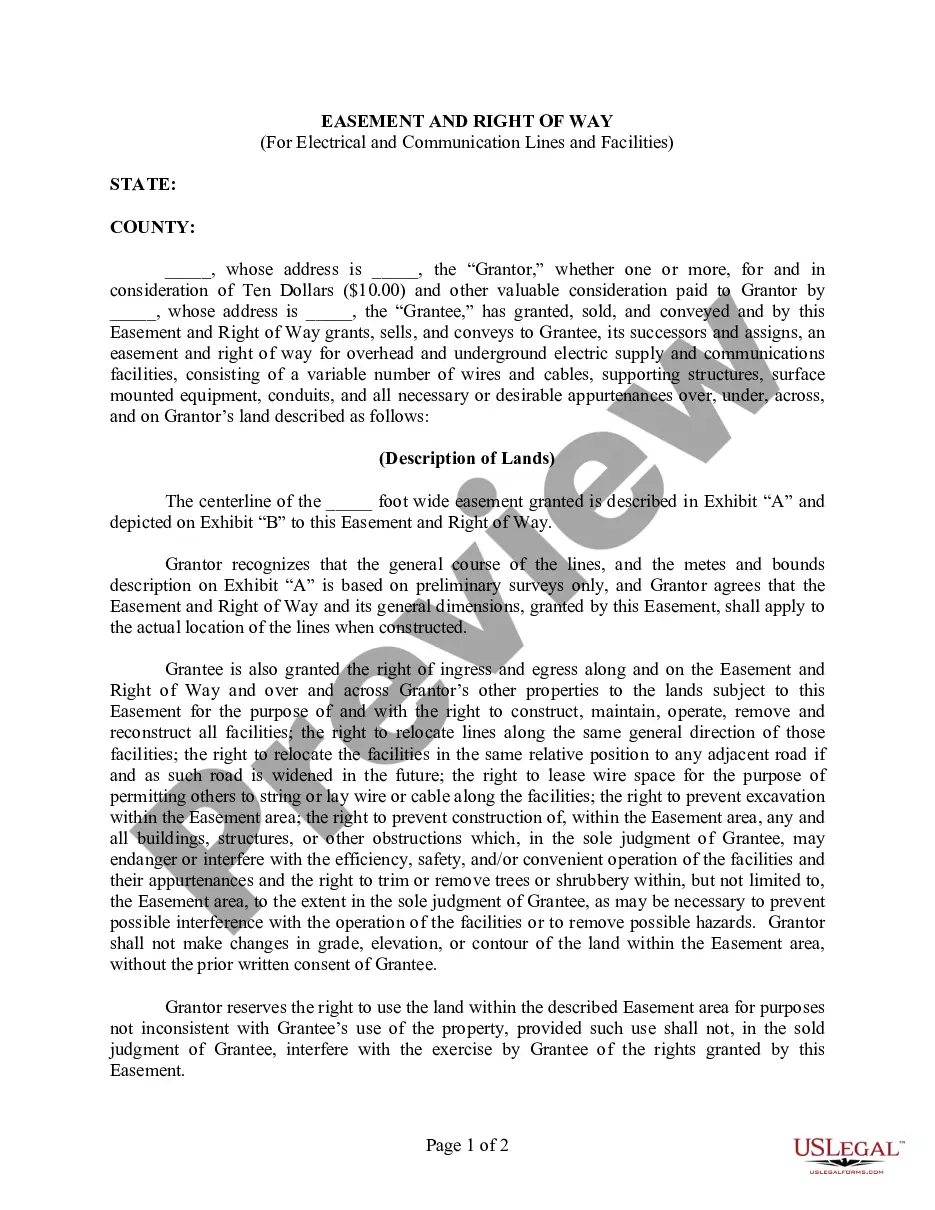
Easement and Right of Way For Electrical and Communication Lines and Facilities
Understanding this form
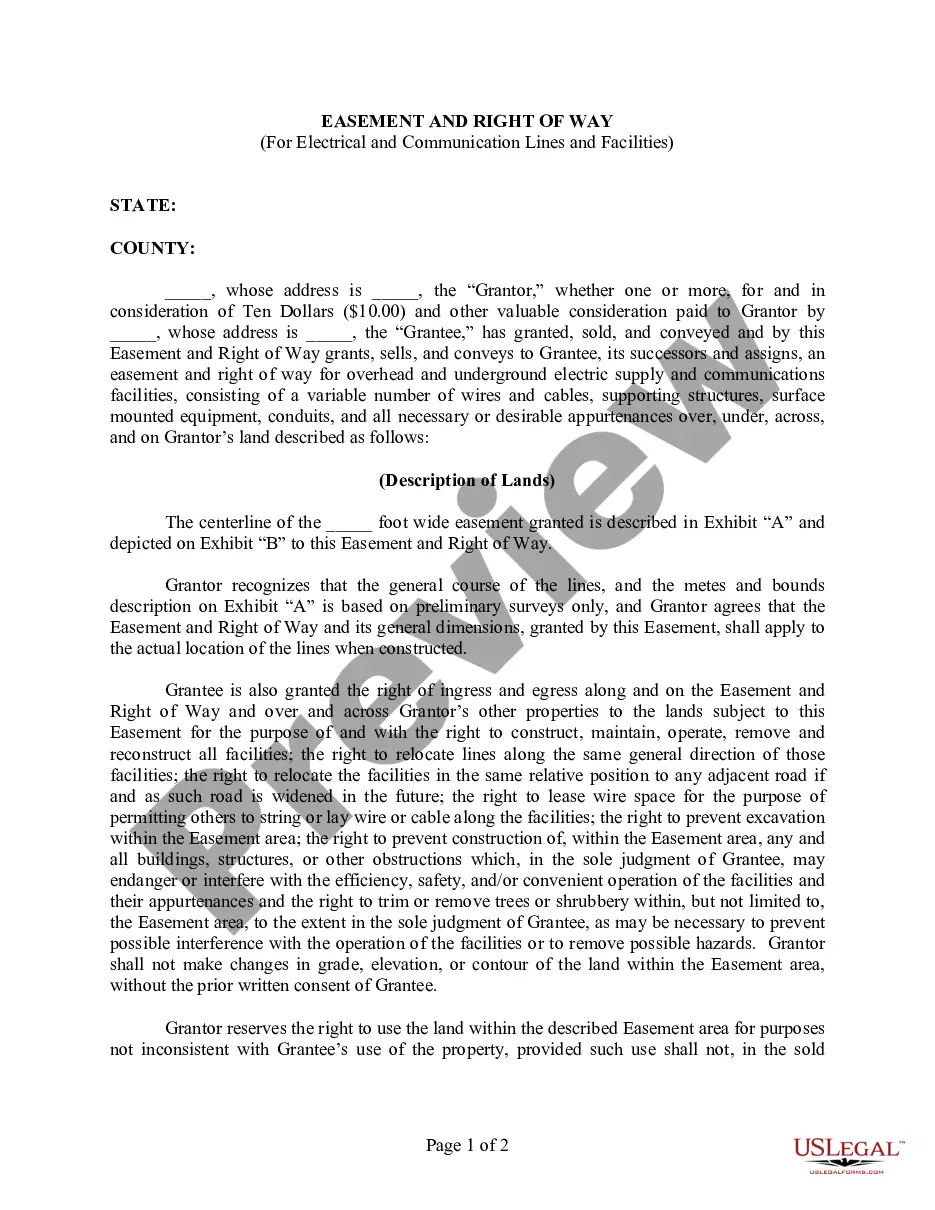
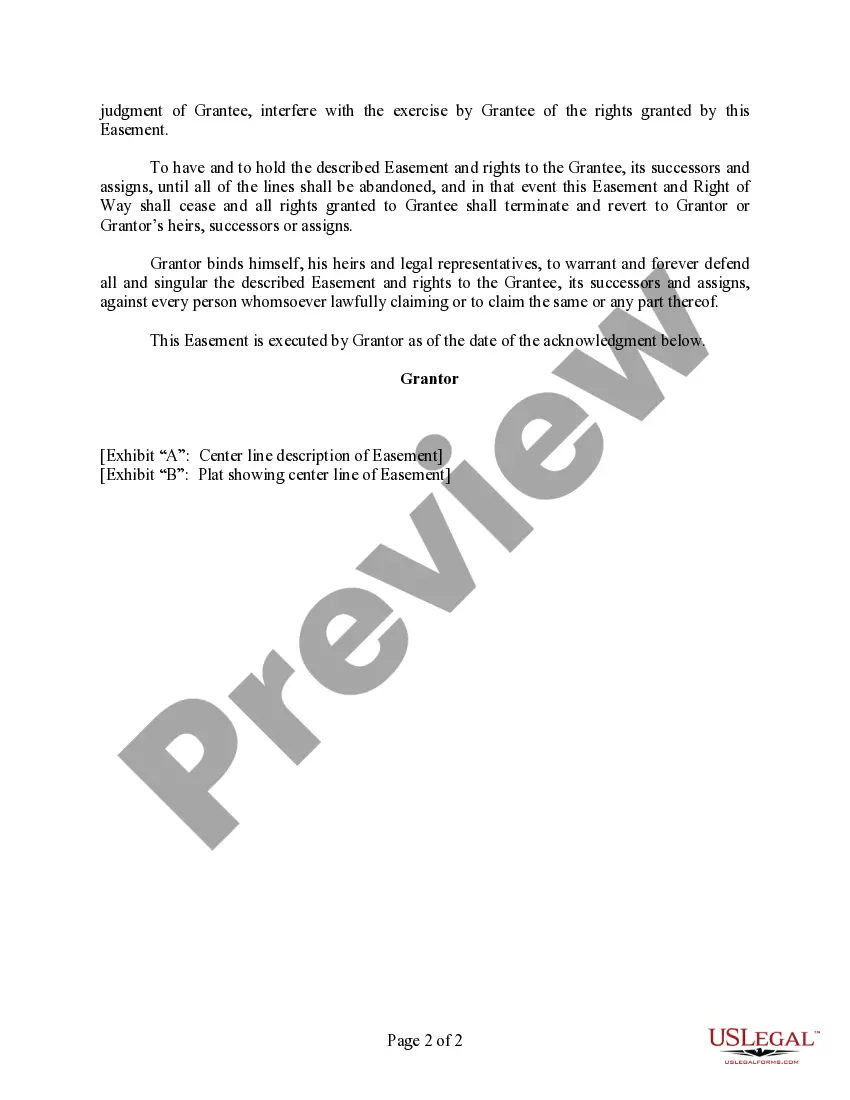
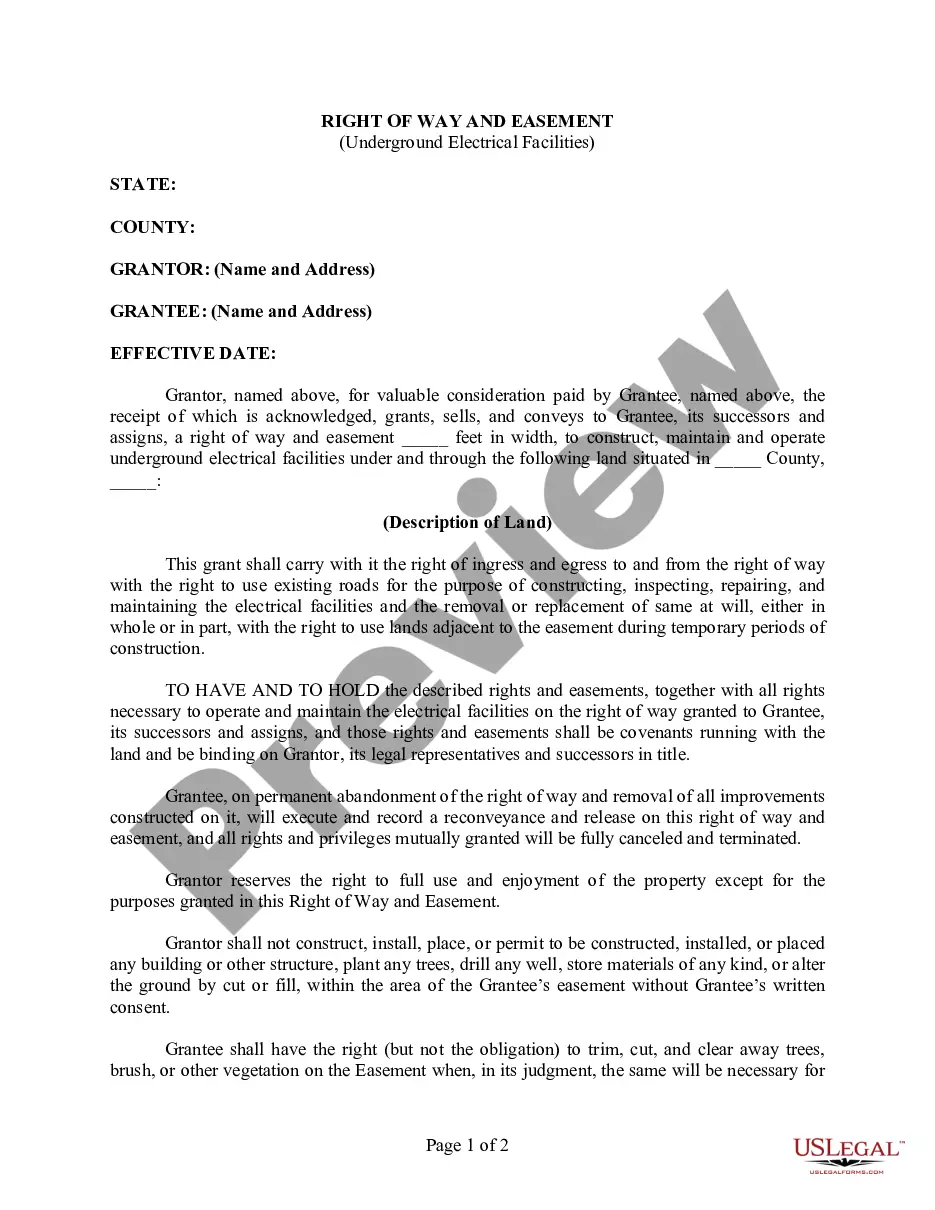
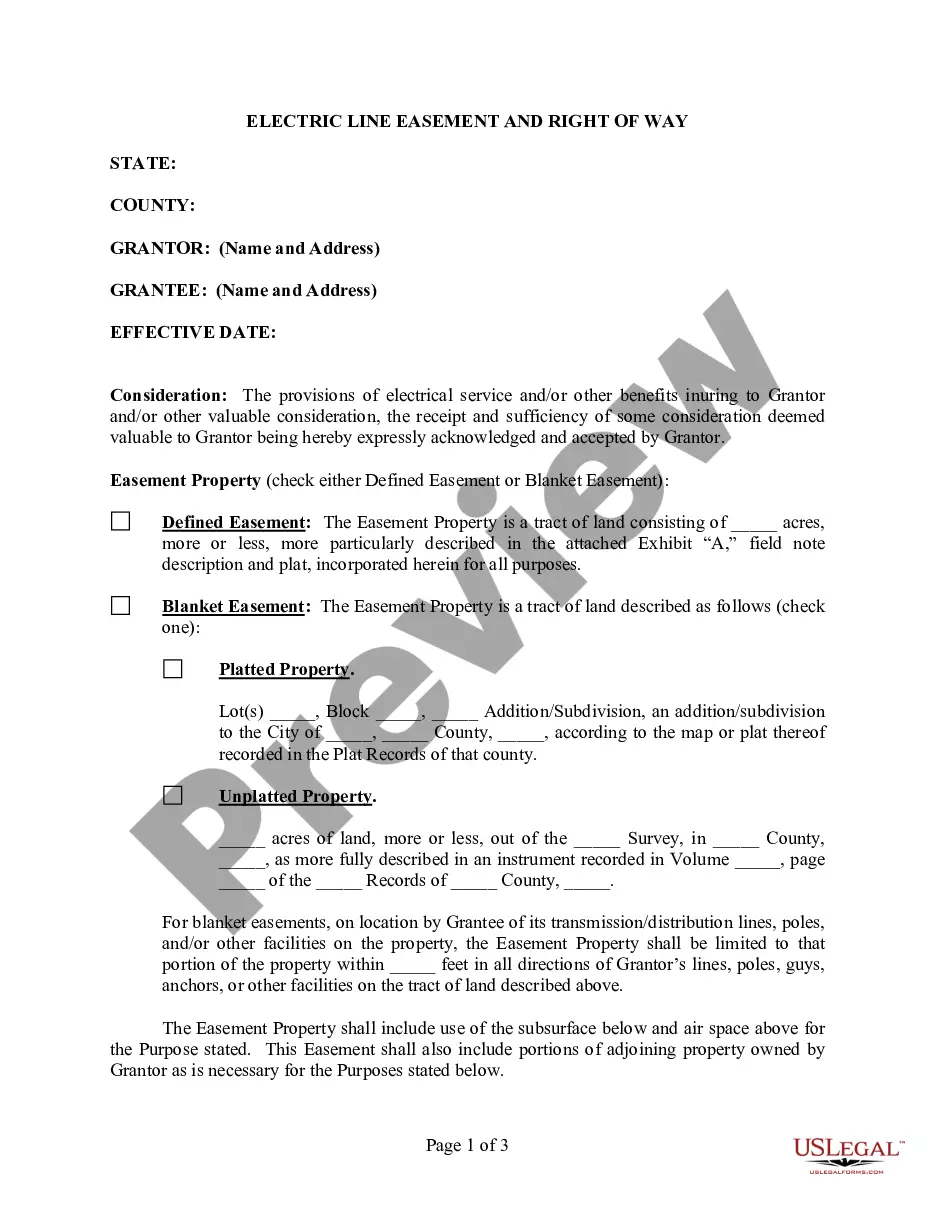
This form, titled Easement and Right of Way for Electrical and Communication Lines and Facilities, is a legal document used to grant an easement and right of way for overhead and underground electrical supply and communication facilities. The easement allows the Grantee to access and use the Grantor's land for the installation, maintenance, and operation of electrical and communication lines and equipment. This form specifically outlines the rights and parameters of the easement, distinguishing it from general land use agreements by focusing on utility and communication infrastructure.
What’s included in this form
- Identification of parties involved: the Grantor (landowner) and the Grantee (utility provider).
- Description of the easement area, including centerline location and dimensions.
- Rights granted to the Grantee for construction, maintenance, and operation of facilities.
- Terms for ingress and egress, allowing access through the grantor's land.
- Clauses to prevent construction and excavation within the easement area.
- Provision for termination upon abandonment of the facilities.
Situations where this form applies
This form should be used when a utility company or service provider requires permission to install and maintain electrical and communication lines on private property. It is applicable in situations where the Grantee needs to access the property for underground or overhead installations, especially when expansions or upgrades to existing services are planned. Additionally, this form is necessary when there's a need to define the rights and responsibilities concerning land use between the Grantor and Grantee.
Who can use this document
- Property owners (Grantors) who are granting easements for utility lines.
- Utility companies or service providers (Grantees) seeking to install or maintain electrical or communication lines.
- Real estate professionals advising clients on easement agreements.
- Legal representatives involved in property law and easement negotiations.
How to complete this form
- Identify the parties: enter the names and addresses of the Grantor and Grantee.
- Provide a description of the property where the easement will apply.
- Outline the dimensions of the easement area, referencing any attached exhibits.
- Specify any conditions or limitations regarding activities within the easement area.
- Sign and date the form, ensuring all parties acknowledge the agreement.
Is notarization required?
This document requires notarization to meet legal standards. US Legal Forms provides secure online notarization powered by Notarize, allowing you to complete the process through a verified video call, available 24/7.
Get your form ready online
Our built-in tools help you complete, sign, share, and store your documents in one place.
Make edits, fill in missing information, and update formatting in US Legal Forms—just like you would in MS Word.
Download a copy, print it, send it by email, or mail it via USPS—whatever works best for your next step.
Sign and collect signatures with our SignNow integration. Send to multiple recipients, set reminders, and more. Go Premium to unlock E-Sign.
If this form requires notarization, complete it online through a secure video call—no need to meet a notary in person or wait for an appointment.
We protect your documents and personal data by following strict security and privacy standards.

Make edits, fill in missing information, and update formatting in US Legal Forms—just like you would in MS Word.

Download a copy, print it, send it by email, or mail it via USPS—whatever works best for your next step.

Sign and collect signatures with our SignNow integration. Send to multiple recipients, set reminders, and more. Go Premium to unlock E-Sign.

If this form requires notarization, complete it online through a secure video call—no need to meet a notary in person or wait for an appointment.

We protect your documents and personal data by following strict security and privacy standards.
Avoid these common issues
- Failing to accurately describe the easement area, leading to potential disputes.
- Not specifying the rights granted to the Grantee clearly, causing misunderstandings.
- Leaving out necessary signatures or acknowledgments, rendering the form invalid.
Benefits of using this form online
- Convenience of immediate digital access and downloading.
- Editability allows users to customize the form to their specific needs.
- Reliability ensures the form is drafted with legal expertise and up-to-date compliance.
Legal use & context
- This easement grants defined rights for utility installations, which are enforceable under property law.
- It is essential to ensure clarity in agreements to prevent future legal disputes.
- Easements must comply with state and local regulations to be valid and enforceable.
Quick recap
- The Easement and Right of Way form is essential for granting utility access to private property.
- Properly complete and customize the form to reflect the specific needs of the Grantor and Grantee.
- Understand the state-specific requirements for compliance and validity.
Looking for another form?
Form popularity
FAQ
When termed as a utility easement, it means a utility company's right to access and control the portion of another person's land that is located near utility facilities and structures (i.e. utility poles, transformers, overhead or underground electrical lines).
The bottom line is that developers and builders who are presented with utility company easement forms should not just sign them, but think about the kinds of issues they can present. It is easier to negotiate these concessions up front before the lines go in, than to ask the utility company to amend its easement later.
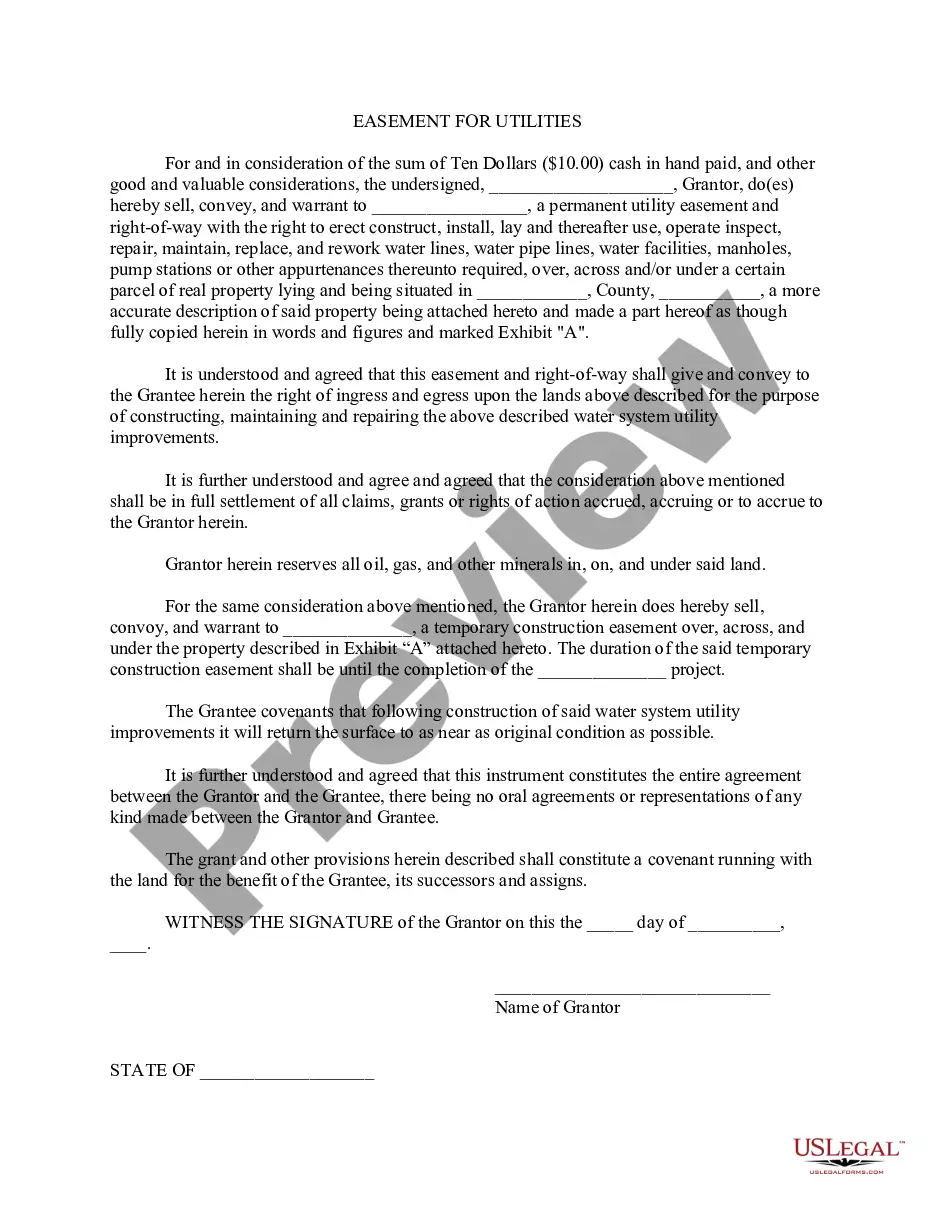
Utility easements are one of the most common types of easements for private property, which generally allow public utility companies access to the property for the purpose of installing, repairing and maintaining utility lines.
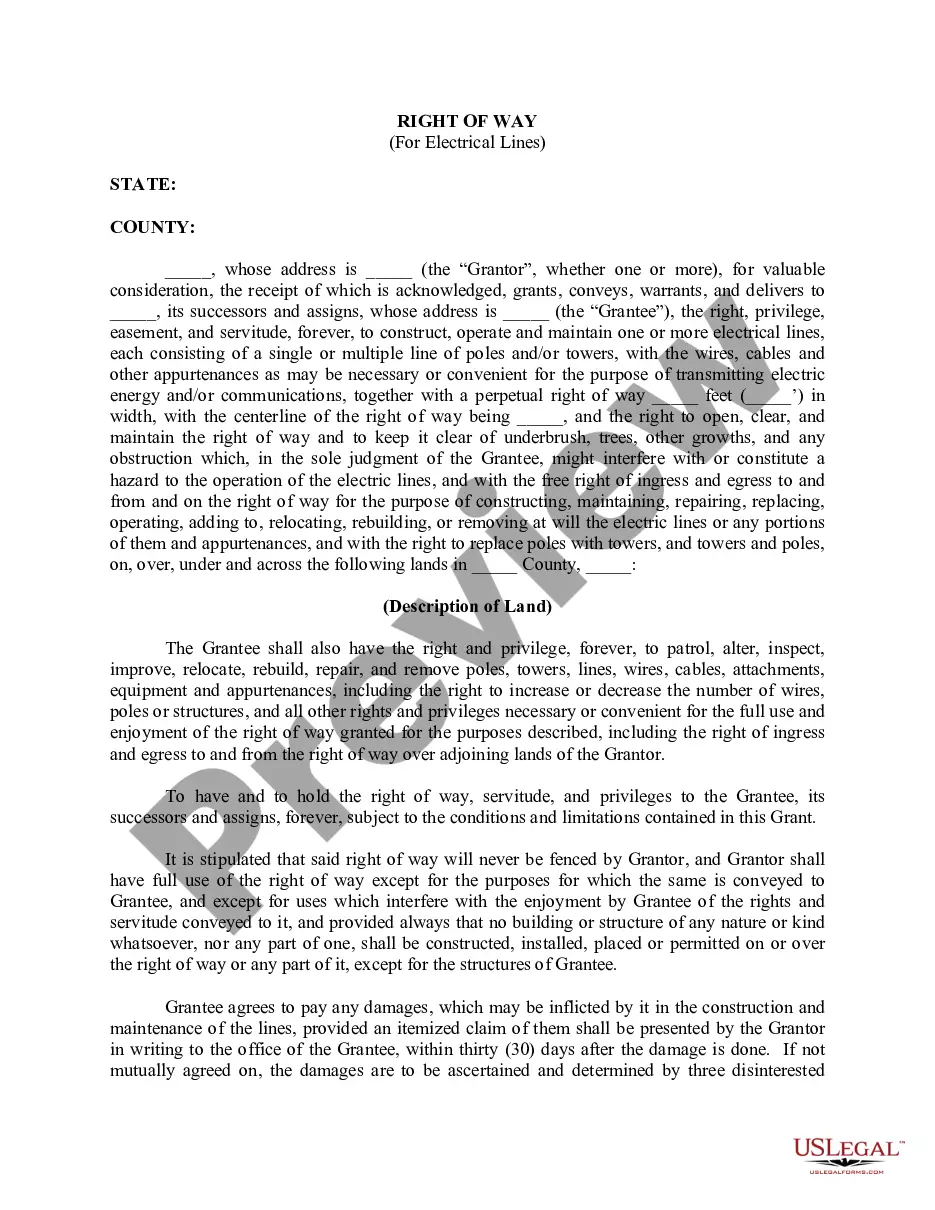
A transmission line usually is centered in the right-of-way. The width of a right-of-way depends on the voltage of the line and the height of the structures, but can be 75 to 150 feet or more depending on the type of facilities planned for or located on the right-of-way.
Express Grant by Instrument. An express grant by written instrument is the most common source of an easement. Implied. The owner of a large tract of land splits up the land with one or more parcels that do not abut a public highway or road. Necessity. Dedication.
Easements can be created in a variety of ways. They can be created by an express grant, by implication, by necessity, and by adverse possession.
What is a right-of-way? It is a legal agreement that allows us access to the property directly beneath and to either side of an electric power line. Also called an easement, the right-of-way allows us to enter the property at any time, to perform maintenance or repairs to our equipment.
An easement may be created by means of an appropriate dealing registered in NSW LRS or by the inclusion in a Section 88B instrument lodged with a new deposited plan.