Right of Way (For Electrical Lines)
What is this form?
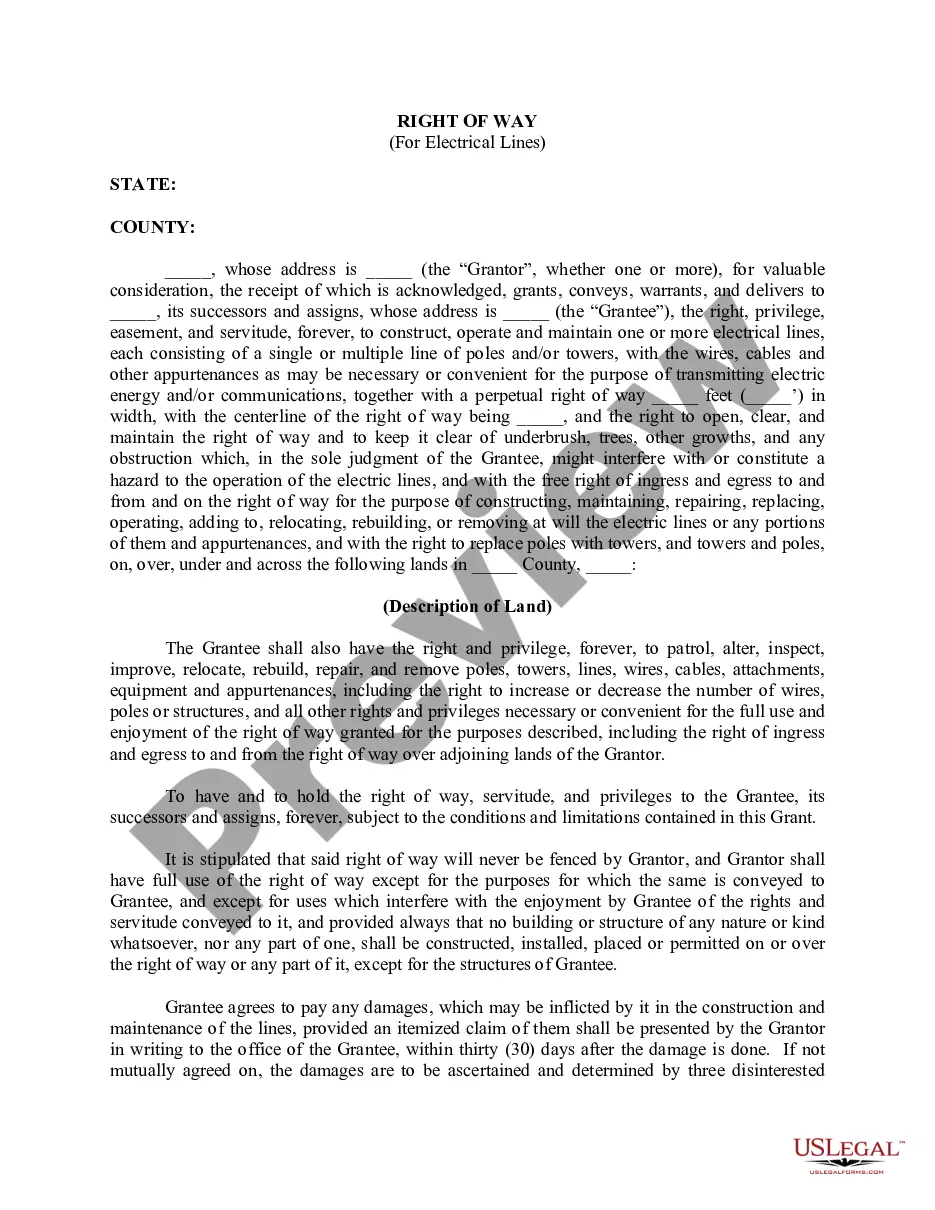
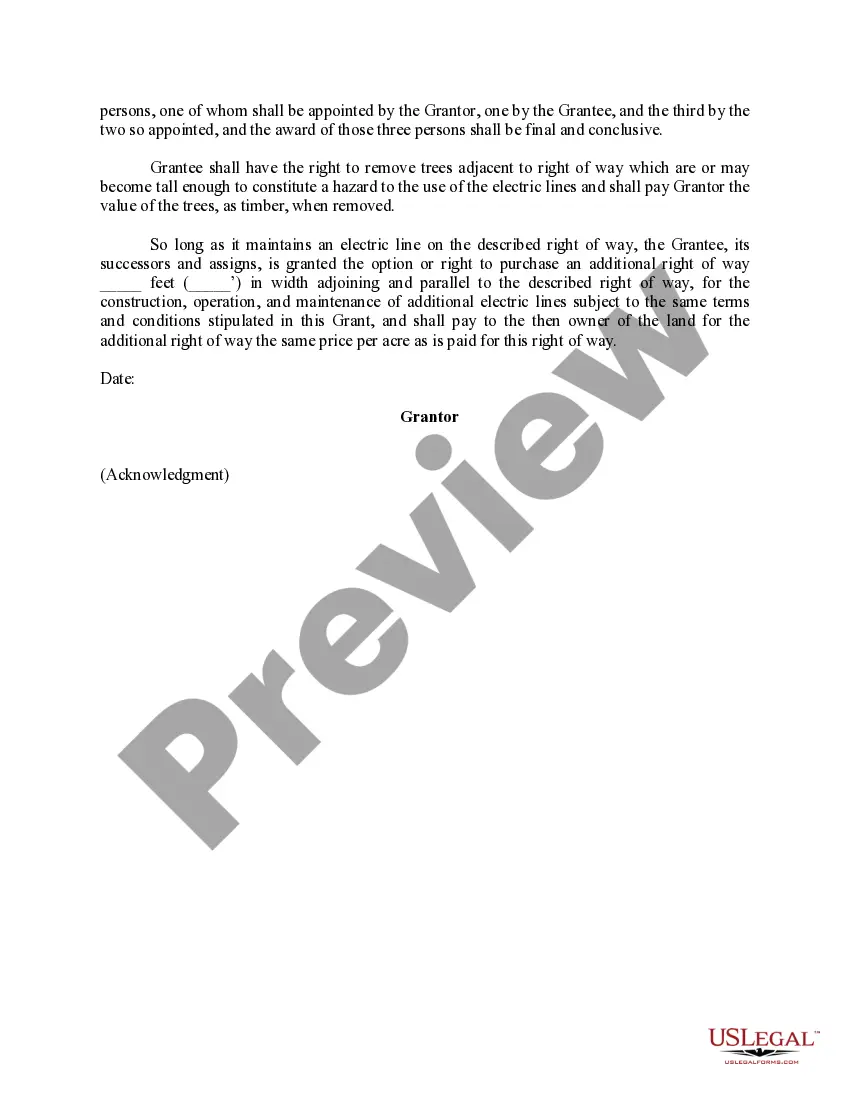
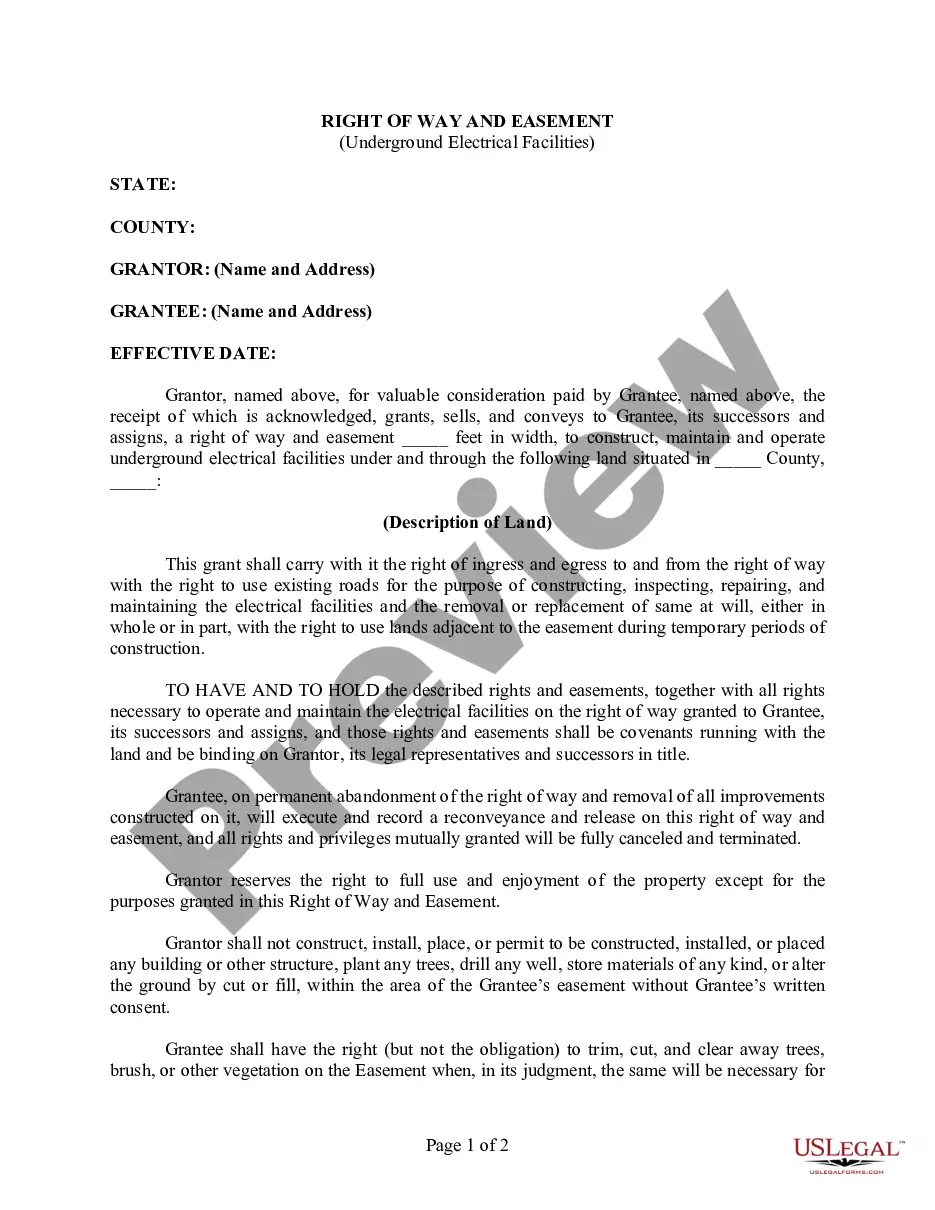
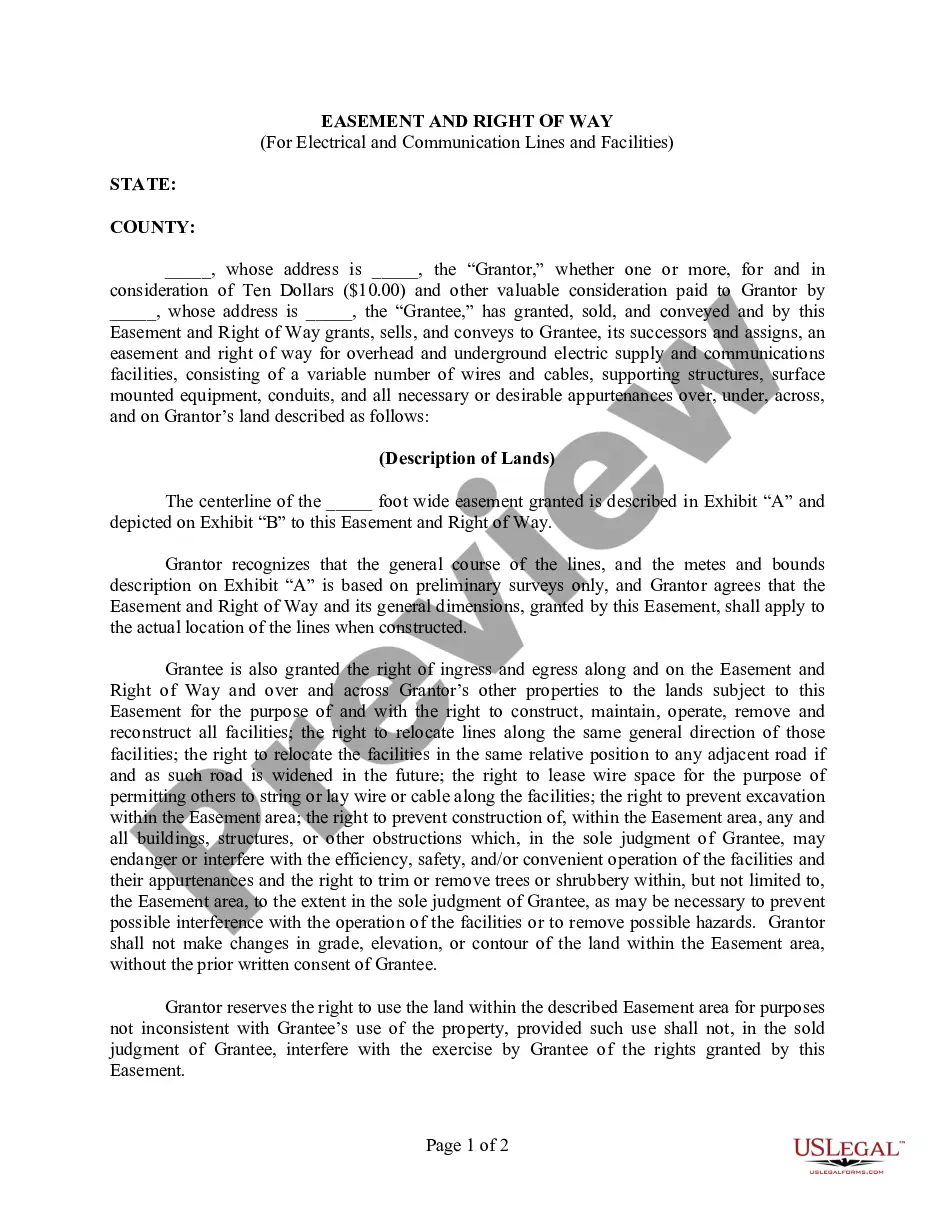
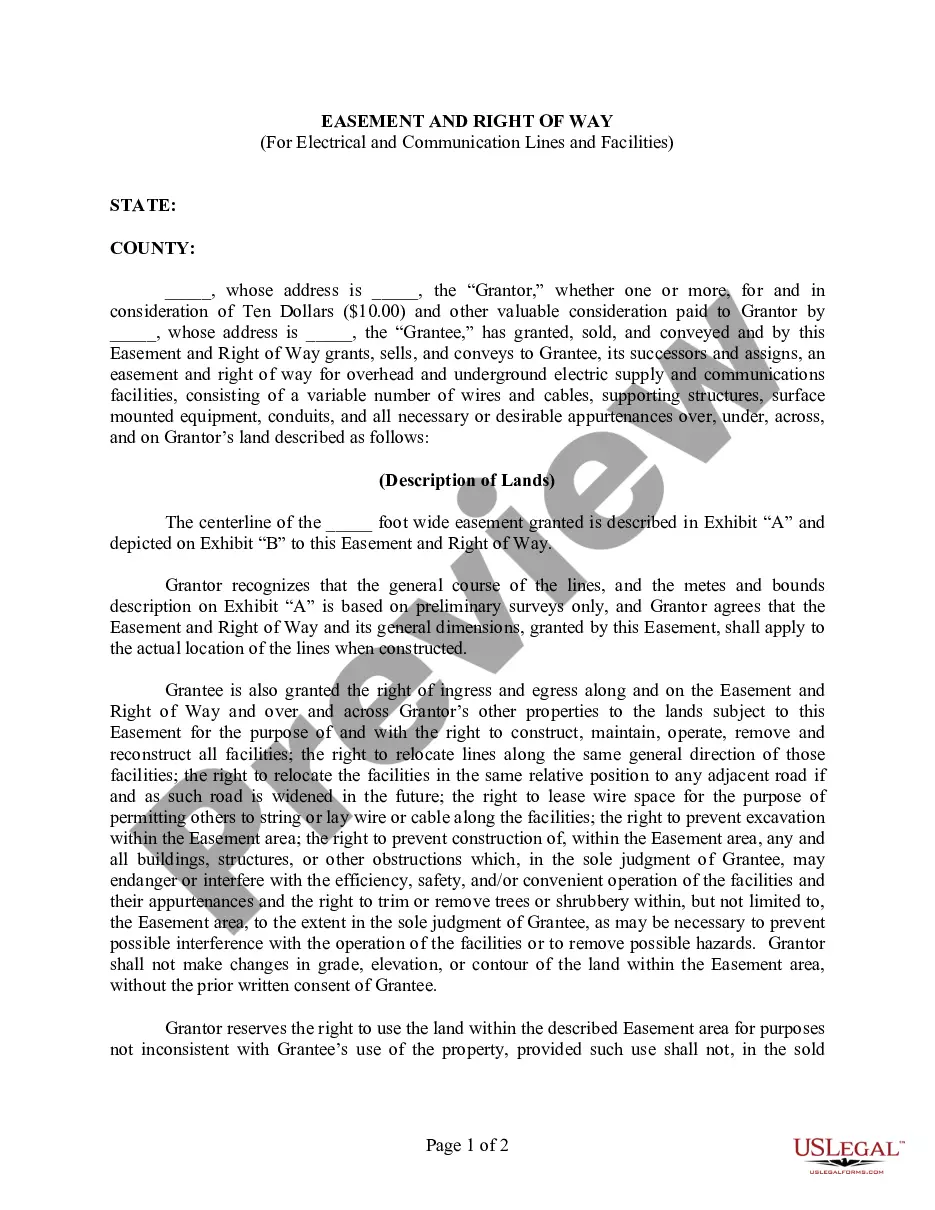
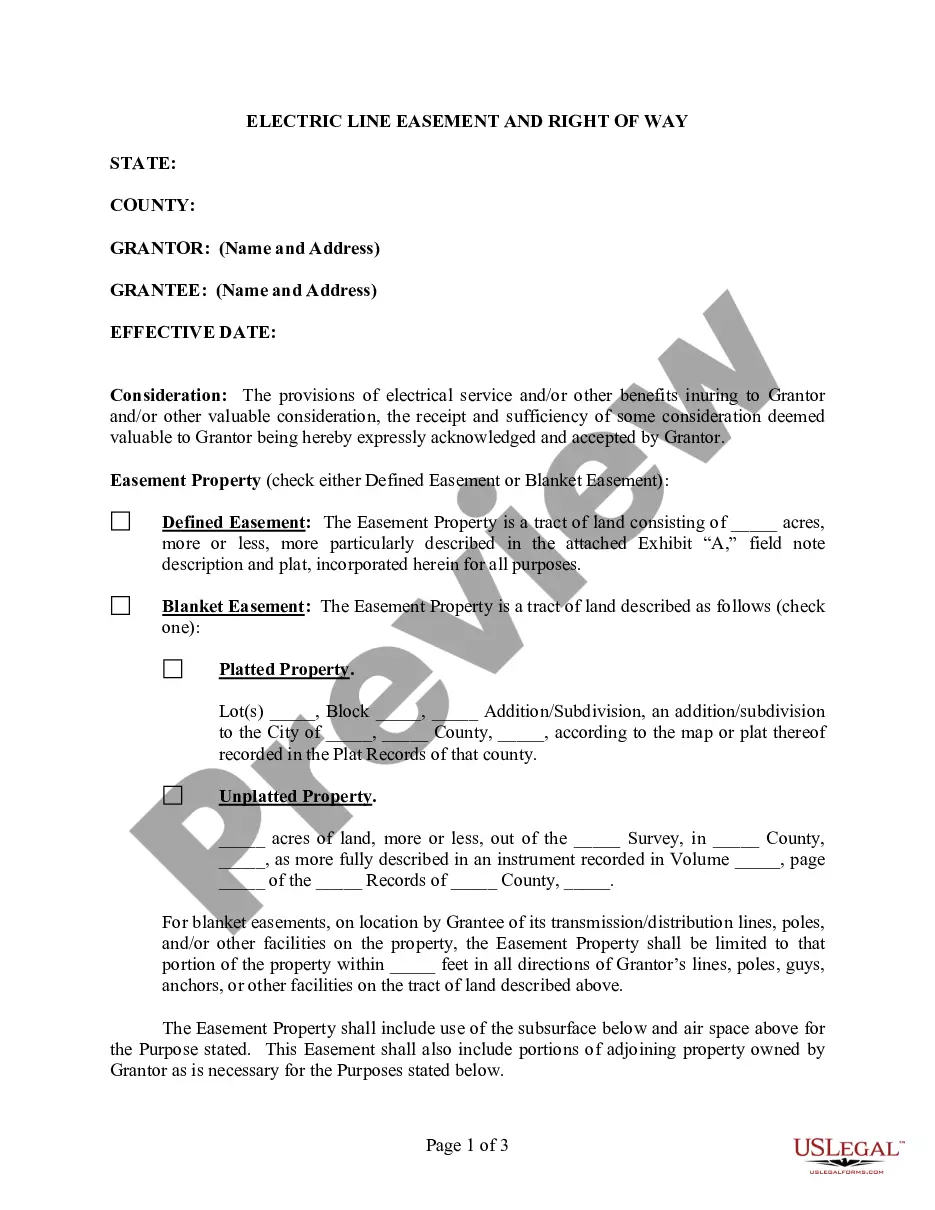
The Right of Way for Electrical Lines form is a legal document that grants the necessary easements for the construction, operation, and maintenance of electrical lines on a property. This form differs from other property easement agreements as it specifically addresses electrical infrastructure, ensuring that utility providers can maintain safe and reliable service while obtaining the appropriate permissions from landowners.
Key components of this form
- Grantor and Grantee Information: Identify the parties involved in the agreement, including their addresses.
- Description of Rights Granted: Outline the easements to install and maintain electrical lines, including specific usage rights.
- Width and Location of Right of Way: State the dimensions and exact location of the right of way on the property.
- Maintenance Rights: Grant permission to clear vegetation and maintain the right of way for safe operations.
- Compensation Terms: Establish the conditions under which the Grantee will compensate the Grantor for any damages caused during construction or maintenance.
When to use this form
This form should be used when a property owner (Grantor) wishes to allow a utility company (Grantee) to install and maintain electrical lines on their property. It is essential in situations where electrical lines need to cross private property, ensuring that the utility provider has the legal right to do so without hindrance.
Who can use this document
- Property owners granting access for electrical line installation.
- Utility companies requiring legal permission to operate on private land.
- Landowners dealing with existing rights of way and needing to formalize or update agreements.
Steps to complete this form
- Identify the Grantor and Grantee by entering their names and addresses.
- Specify the width and location of the right of way on the property.
- Describe the easement rights being granted to the Grantee.
- Fill in any compensation terms regarding damages caused during installation and maintenance.
- Ensure both parties sign and date the document to validate the agreement.
Notarization guidance
This form needs to be notarized to ensure legal validity. US Legal Forms provides secure online notarization powered by Notarize, allowing you to complete the process through a verified video call, available anytime.
Get your form ready online
Our built-in tools help you complete, sign, share, and store your documents in one place.
Make edits, fill in missing information, and update formatting in US Legal Forms—just like you would in MS Word.
Download a copy, print it, send it by email, or mail it via USPS—whatever works best for your next step.
Sign and collect signatures with our SignNow integration. Send to multiple recipients, set reminders, and more. Go Premium to unlock E-Sign.
If this form requires notarization, complete it online through a secure video call—no need to meet a notary in person or wait for an appointment.
We protect your documents and personal data by following strict security and privacy standards.

Make edits, fill in missing information, and update formatting in US Legal Forms—just like you would in MS Word.

Download a copy, print it, send it by email, or mail it via USPS—whatever works best for your next step.

Sign and collect signatures with our SignNow integration. Send to multiple recipients, set reminders, and more. Go Premium to unlock E-Sign.

If this form requires notarization, complete it online through a secure video call—no need to meet a notary in person or wait for an appointment.

We protect your documents and personal data by following strict security and privacy standards.
Mistakes to watch out for
- Failing to accurately describe the location and dimensions of the right of way.
- Not including all necessary signatures and dates, which can render the document invalid.
- Overlooking local regulations or statutory requirements that may apply to easements.
Why use this form online
- Convenient access to forms that can be downloaded and used immediately.
- Easily editable formats that allow users to customize their agreements as needed.
- Reliable templates drafted by licensed attorneys to ensure legal validity.
Looking for another form?

Form popularity
FAQ
As a general precaution, when under a line, never put yourself or any object any higher than 14 feet above the ground. The National Electrical Safety Code specifies a minimum safe clearance for each operating volt- age.
What is a right-of-way? It is a legal agreement that allows us access to the property directly beneath and to either side of an electric power line. Also called an easement, the right-of-way allows us to enter the property at any time, to perform maintenance or repairs to our equipment.
The spacing distance between transmission structures varies based on a number of factors. For distribution structures (35 kV and less), typical spacings range from about 75100m.
An easement held by an electricity provider allows it to erect and maintain electric power equipment on your land. The easement gives the electric power company the right to use a property for this specific purpose only.
BPA does not recommend that anyone attempt to calculate how close they can come to a power line. As a general precaution, when under a line, never put yourself or any object any higher than 14 feet above the ground. The National Electrical Safety Code specifies a minimum safe clearance for each operating volt- age.
A transmission line usually is centered in the right-of-way. The width of a right-of-way depends on the voltage of the line and the height of the structures, but can be 75 to 150 feet or more depending on the type of facilities planned for or located on the right-of-way.
Generally speaking; The closest a power line can be to a shed is 3m any closer than this is regarded as a 'No Go Zone'