Deed (Including Acceptance of Community Property with Right of Survivorship)
Overview of this form
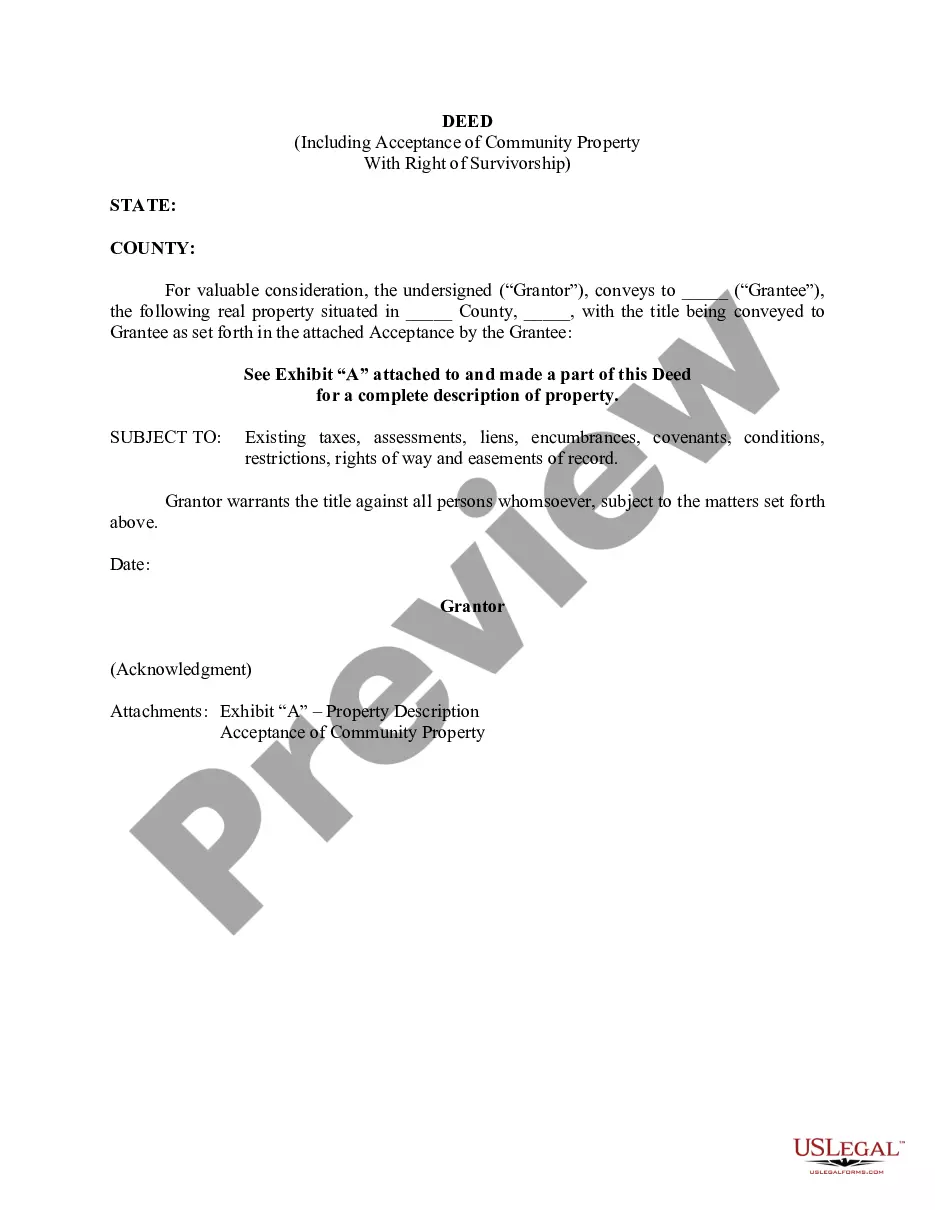
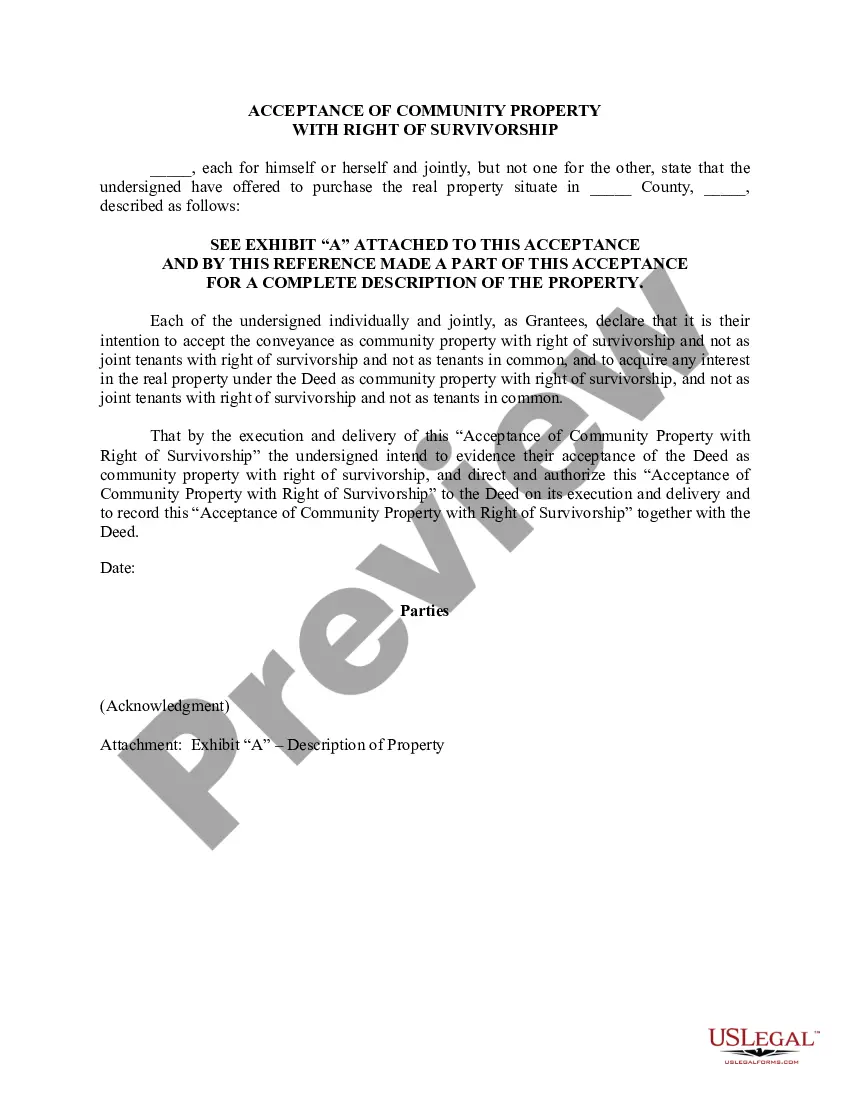
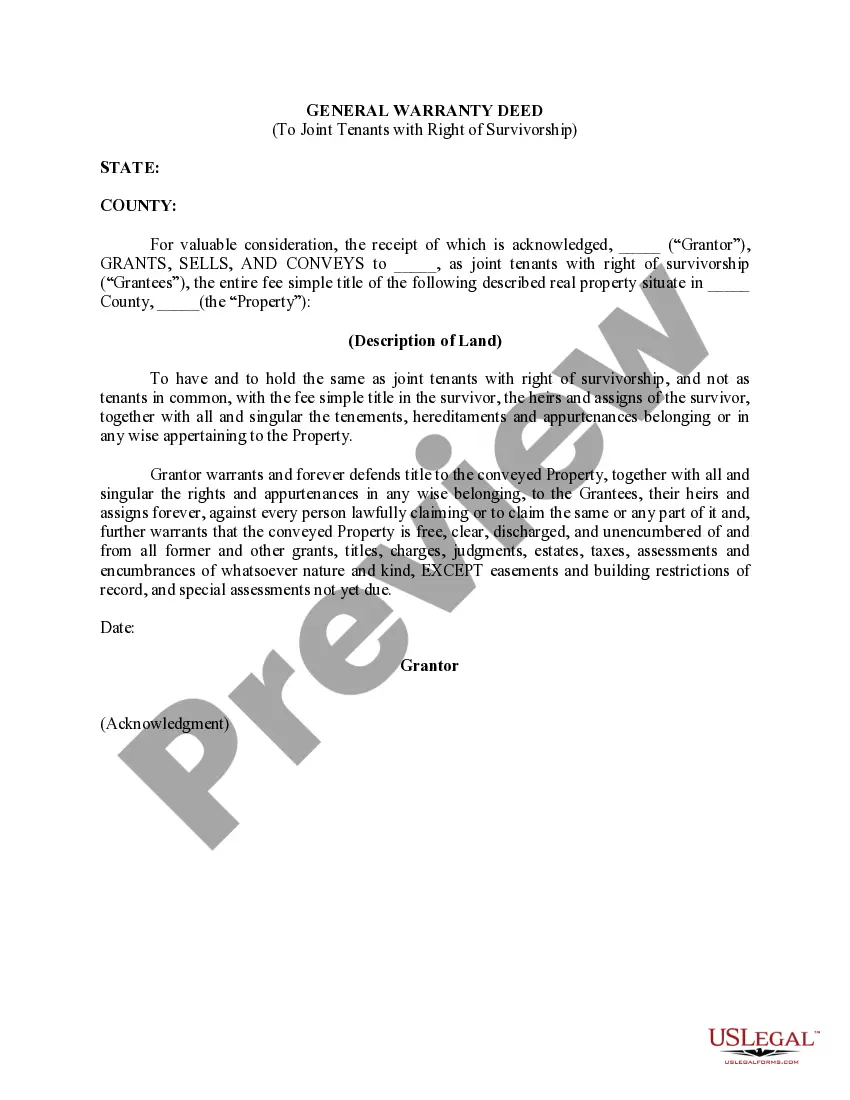
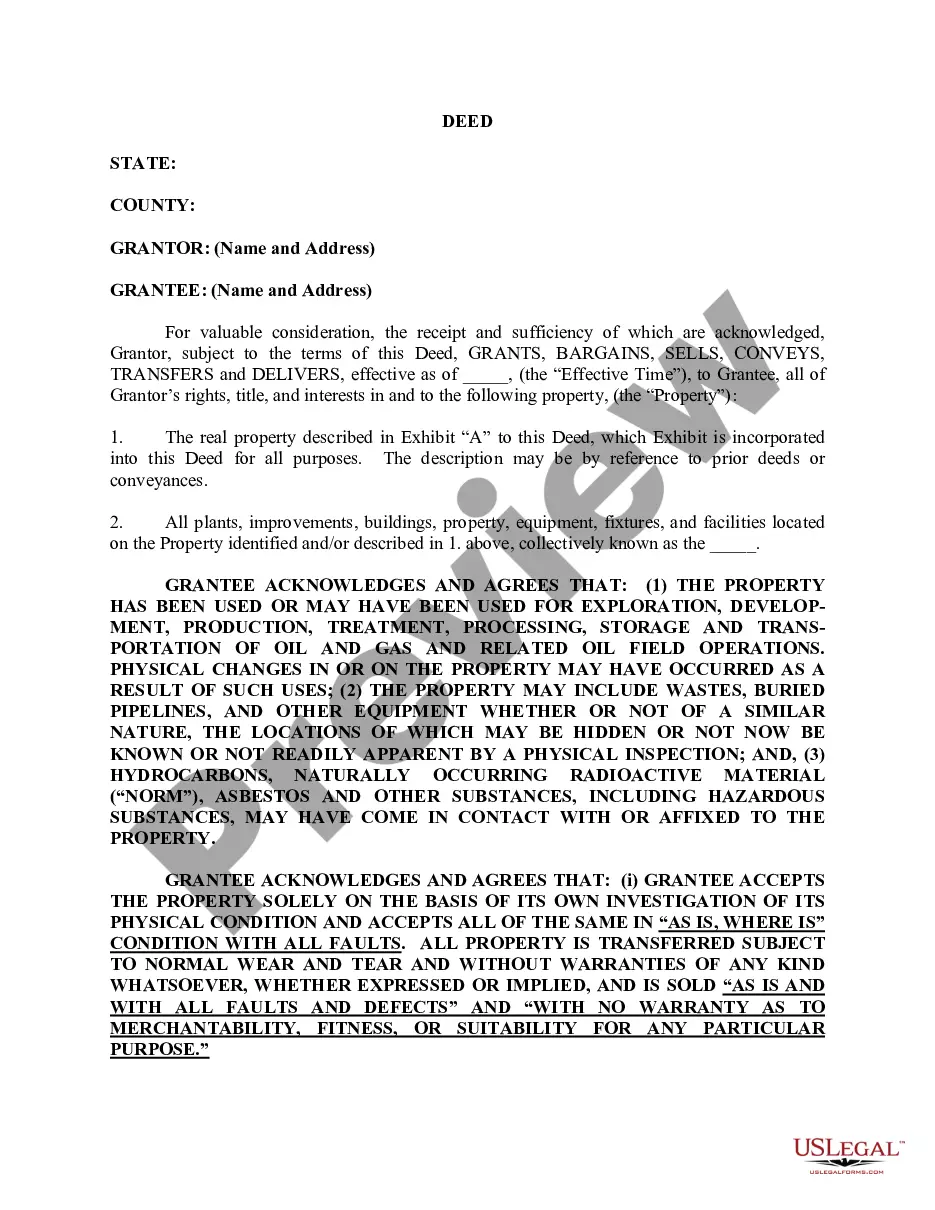
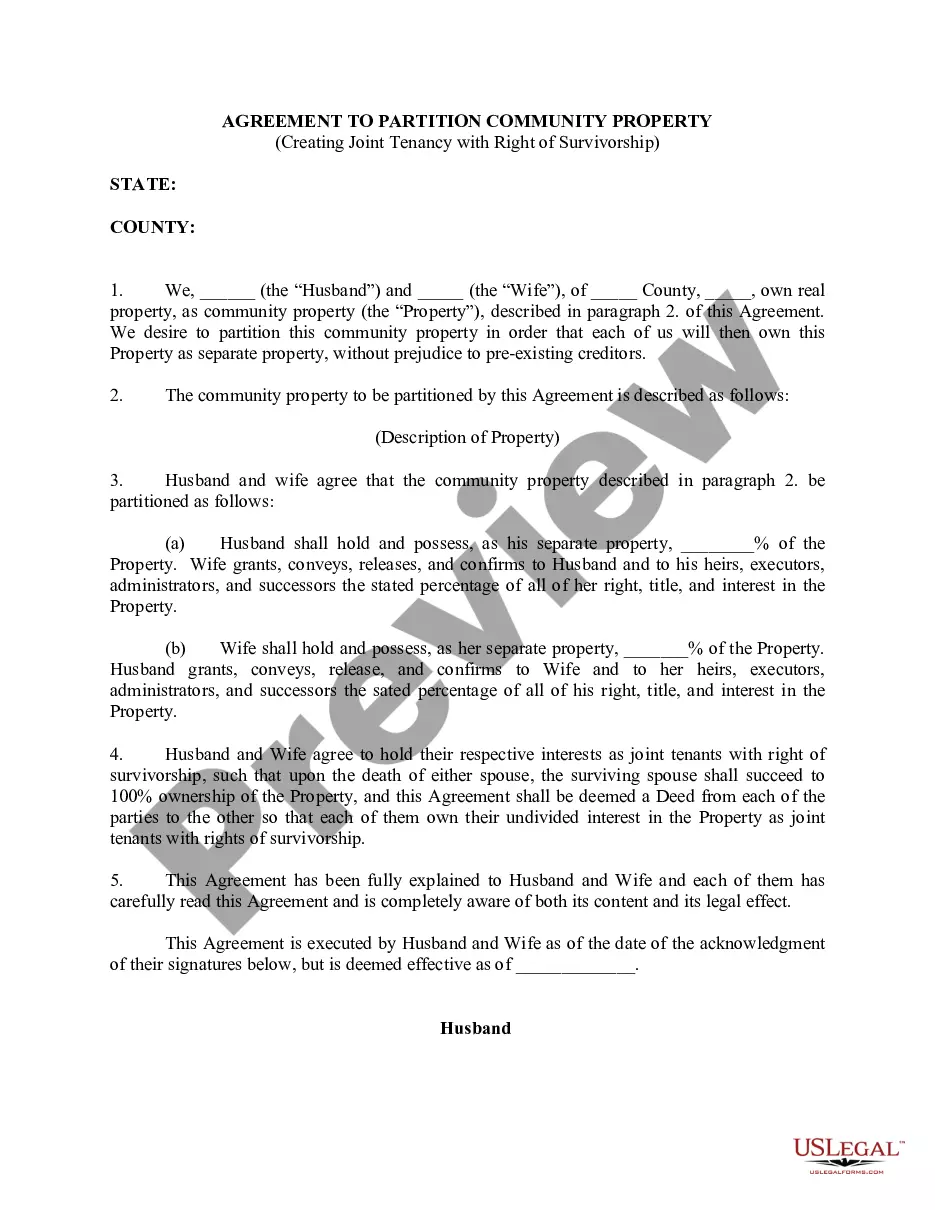
This Deed form, specifically including Acceptance of Community Property with Right of Survivorship, is a legal document that facilitates the transfer of real property ownership between individuals. It incorporates terms that designate how the property will be ownedâspecifically as community property with right of survivorshipâallowing both parties to retain ownership rights until the passing of one party, at which point the other automatically takes full ownership. This form differs from other deeds as it explicitly outlines community property ownership versus joint tenancy or tenancy in common.
Key parts of this document
- Grantor and Grantee: Identification of the current property owner (grantor) and the new owner (grantee).
- Property Description: Detailed description of the real property being transferred, including its location.
- Acceptance Clause: A declaration by the grantees to accept the property as community property with right of survivorship.
- Existing Liens and Encumbrances: Acknowledgment of any taxes, assessments, or encumbrances affecting the property.
- Signatures and Dates: Required signatures of both grantor and grantee, along with the date of execution.

When to use this document
This form is typically used when couples, married or in domestic partnerships, wish to acquire property together and want to ensure that both parties share ownership rights with the security of survivorship. It is particularly useful in situations where it is important for one partner to inherit the property automatically, without involving probate court, upon the death of the other partner.
Who should use this form
- Married couples looking to purchase property together.
- Domestic partners who want to establish property rights.
- Individuals who are co-owning property and desire legal protection for their ownership interests.
Completing this form step by step
- Identify the parties involved: Fill in the names of the grantor and grantee.
- Specify the property: Include the complete description of the real property as detailed in Exhibit A.
- Enter the date: Provide the date on which the deed is executed.
- Sign the deed: Both grantor and grantee should sign and date the document to validate it.
- Record the deed: Submit the completed form to the appropriate local county office for recording as required by your stateâs laws.
Does this document require notarization?
This form does not typically require notarization unless specified by local law. However, having it notarized can help verify the identities of the signers and bolster the document's validity if disputes arise.
Get your form ready online
Our built-in tools help you complete, sign, share, and store your documents in one place.
Make edits, fill in missing information, and update formatting in US Legal Forms—just like you would in MS Word.
Download a copy, print it, send it by email, or mail it via USPS—whatever works best for your next step.
Sign and collect signatures with our SignNow integration. Send to multiple recipients, set reminders, and more. Go Premium to unlock E-Sign.
If this form requires notarization, complete it online through a secure video call—no need to meet a notary in person or wait for an appointment.
We protect your documents and personal data by following strict security and privacy standards.

Make edits, fill in missing information, and update formatting in US Legal Forms—just like you would in MS Word.

Download a copy, print it, send it by email, or mail it via USPS—whatever works best for your next step.

Sign and collect signatures with our SignNow integration. Send to multiple recipients, set reminders, and more. Go Premium to unlock E-Sign.

If this form requires notarization, complete it online through a secure video call—no need to meet a notary in person or wait for an appointment.

We protect your documents and personal data by following strict security and privacy standards.
Common mistakes to avoid
- Failing to include a complete property description.
- Not having the correct signatures or dates on the document.
- Overlooking existing encumbrances or liens on the property.
- Filing the deed in the wrong jurisdiction.
Benefits of using this form online
- Convenience of downloading the form instantly without needing to visit a physical location.
- Editability allowing you to tailor the form to your specific needs.
- Access to attorney-drafted templates ensuring compliance with relevant laws.
Legal use & context
- Effective for ensuring rights of survivorship concerning property ownership in community property states.
- Provides a straightforward method for property transfer between spouses or partners.
- Reduces the need for probate proceedings upon the death of one spouse or partner.
Looking for another form?
Form popularity
FAQ
A joint tenant can indeed sever the right of survivorship WITHOUT the consent of the other joint tenants.In order to sever the right of survivorship, a tenant must only record a new deed showing that his or her interest in the title is now held in a Tenancy-in-Common or as Community Property.
Right of survivorship refers to the right of the surviving party (usually a husband or wife) to take over their deceased partner's interest in a property that they owned equal interest in without having to go through probate.An exception in a Survivorship Deed means anything that may limit the title of property.
The right of survivorship is an attribute of several types of joint ownership of property, most notably joint tenancy and tenancy in common. When jointly owned property includes a right of survivorship, the surviving owner automatically absorbs a dying owner's share of the property.
Survivorship rights take precedence over any contrary terms in a person's will because property subject to rights of survivorship is not legally part of their estate at death and so cannot be distributed through a will.
Joint Tenancy With Survivorship In this arrangement, tenants have an equal right to the account's assets. They are also afforded survivorship rights in the event of the death of another account holder. In simple terms, it means that when one partner or spouse dies, the other receives all of the money or property.
The General Rule. In the great majority of states, if you and the other owners call yourselves "joint tenants with the right of survivorship," or put the abbreviation "JT WROS" after your names on the title document, you create a joint tenancy. A car salesman or bank staffer may assure you that other words are enough.
To hold a real estate property in joint tenancy, you and the co-owners have to write the abbreviation for joint tenants with the right of survivorship, or JTWROS, on the official real estate deed or title. This creates a legally binding joint tenancy.
Joint tenants with right of survivorship means that you both own the property equally, and if one dies, the property is then owned by the survivor. Tenants in common means that you each own the whole property, but there is no right of survivorship with this type of tenancy.
Property that is jointly owned by both spouses; and on the death of one spouse their 1/2 share will pass directly to the other spouse without going through probate. For example, Husband and Wife own a house in a community property state.