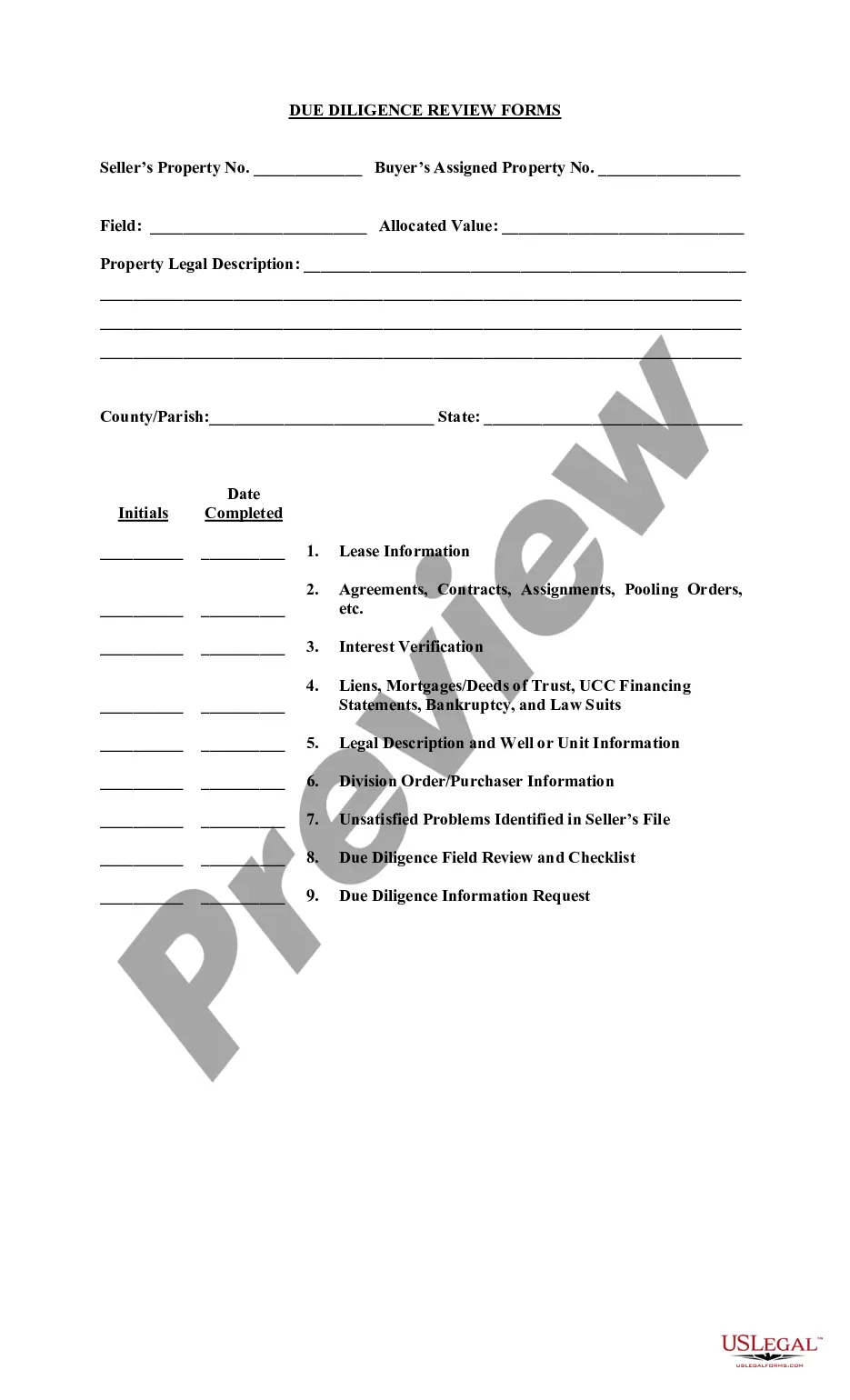
Due Diligence Review Form
Overview of this form
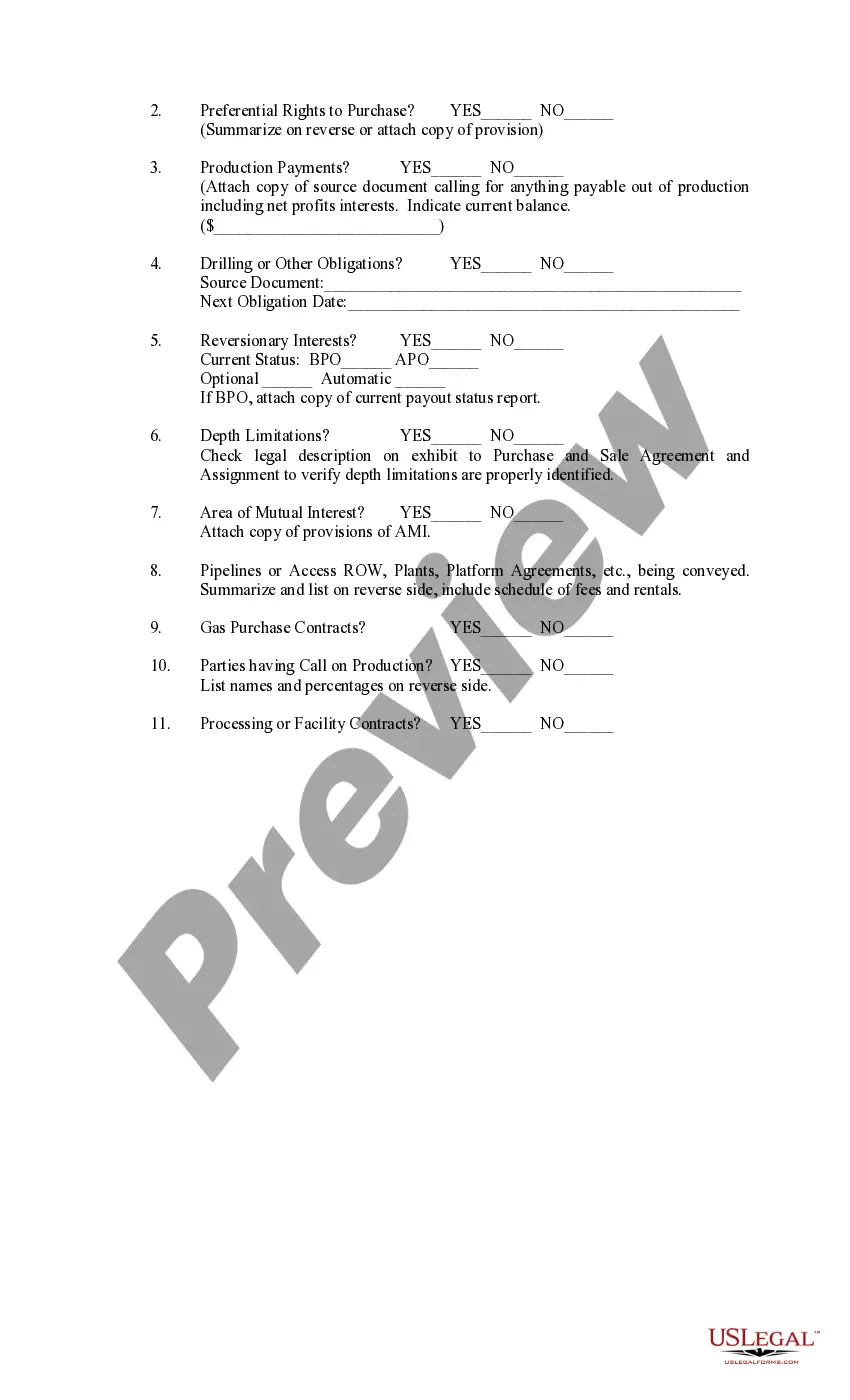
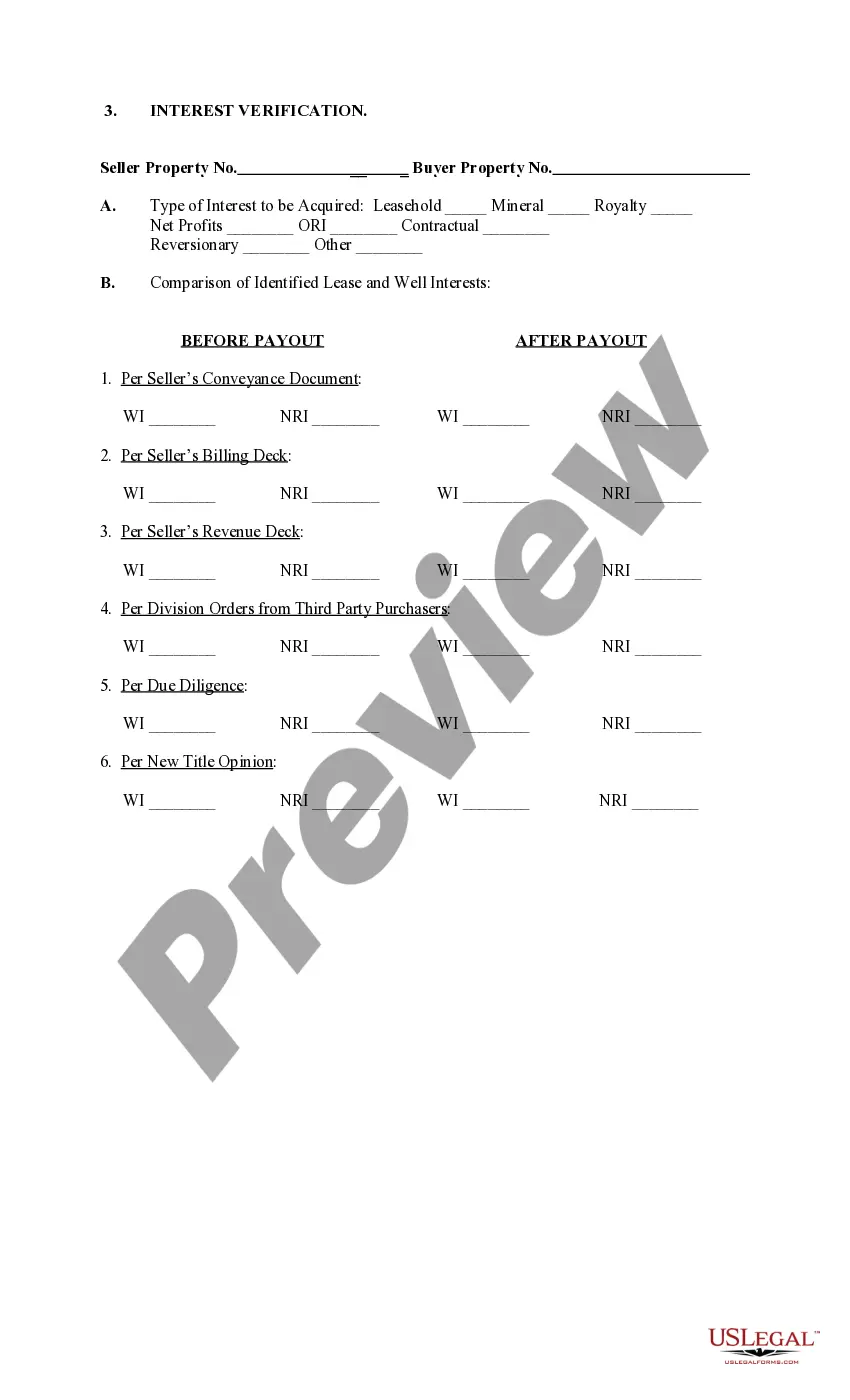
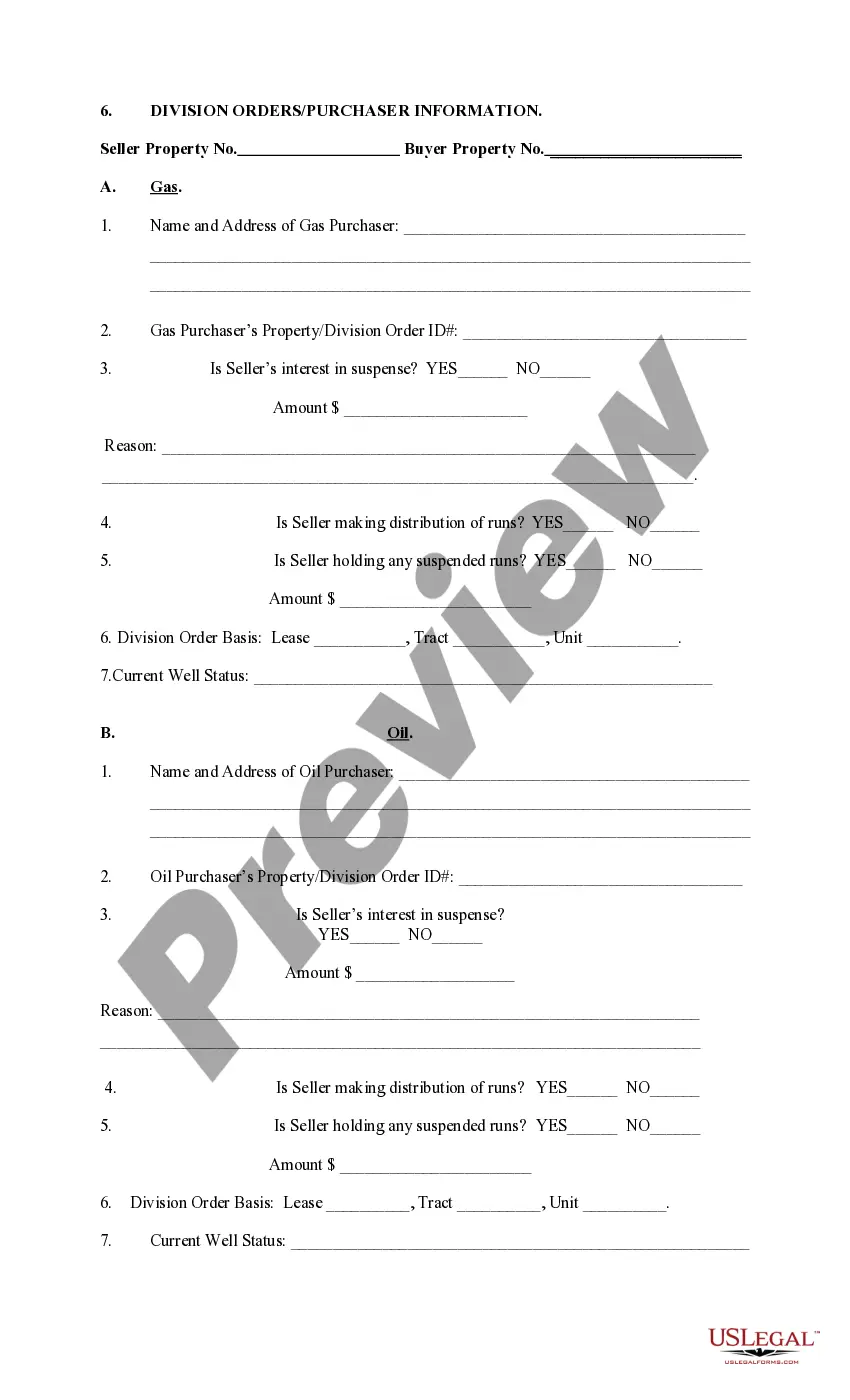
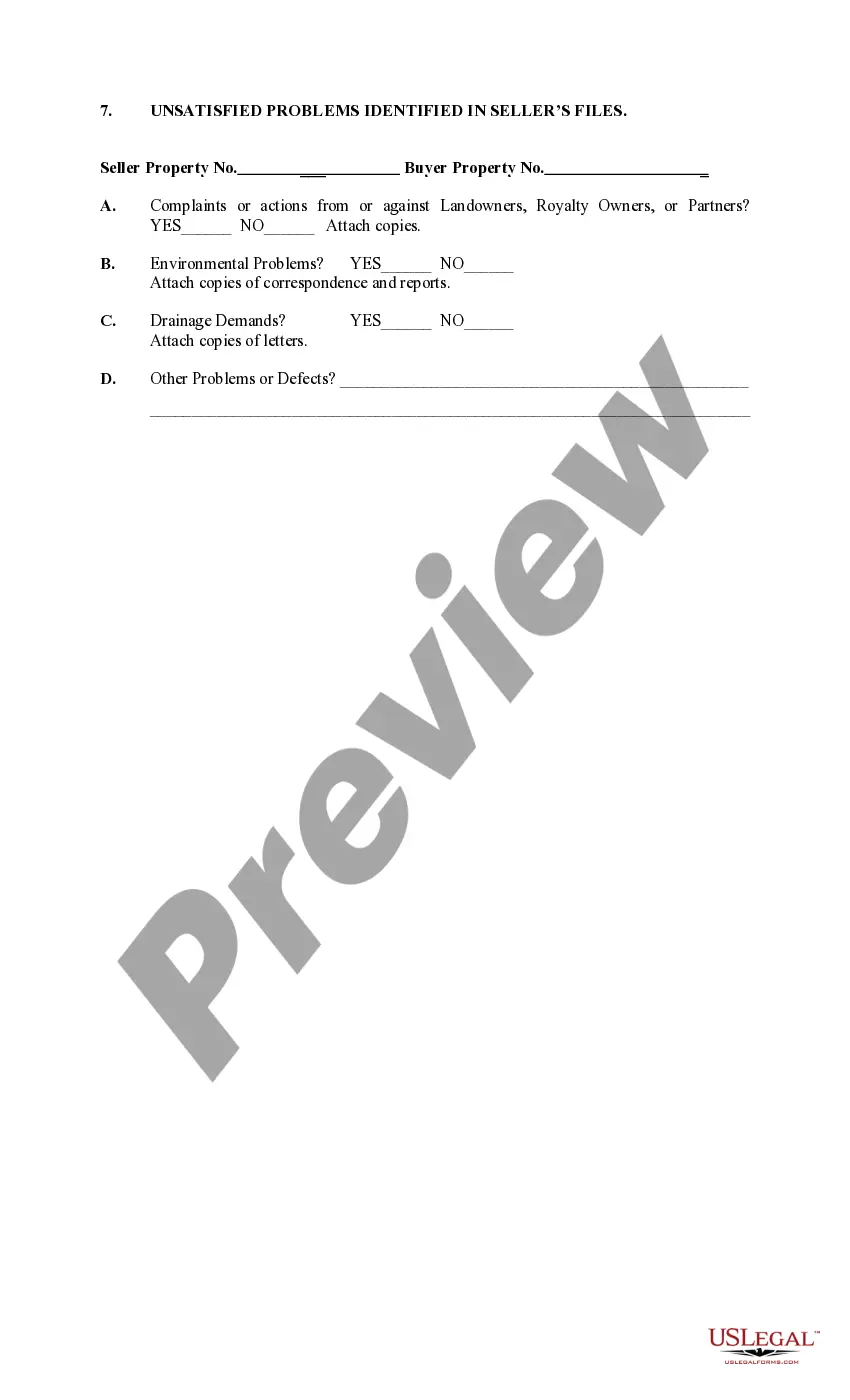
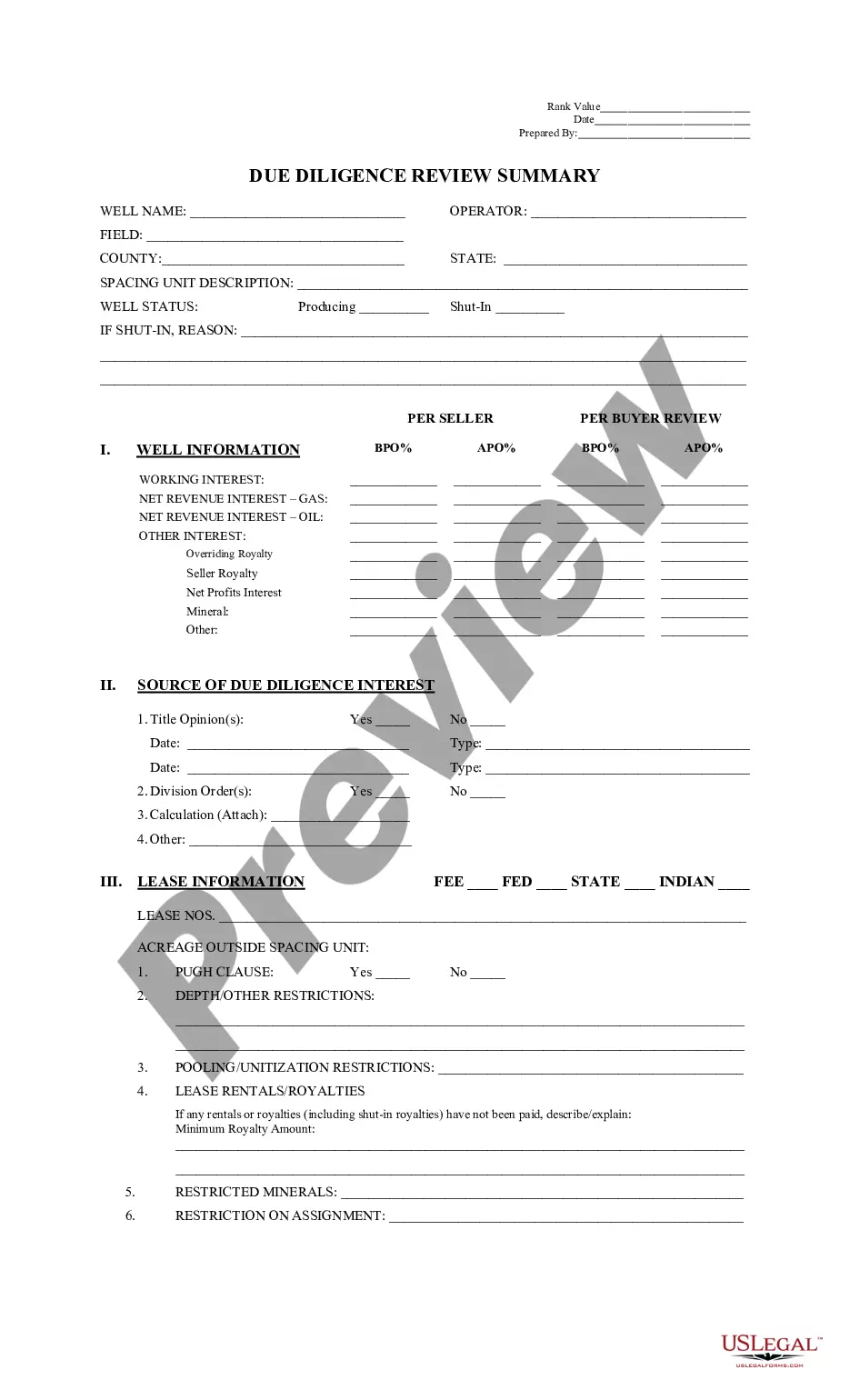
The Due Diligence Review Form is a vital document used in the evaluation process for oil, gas, or mineral transactions. This form aids parties in conducting a thorough review of legal and financial details pertaining to the assets being transferred. Unlike other generic forms, it includes specific categories related to leases, agreements, and interest verification to ensure comprehensive diligence is observed throughout the transaction process.
Form components explained
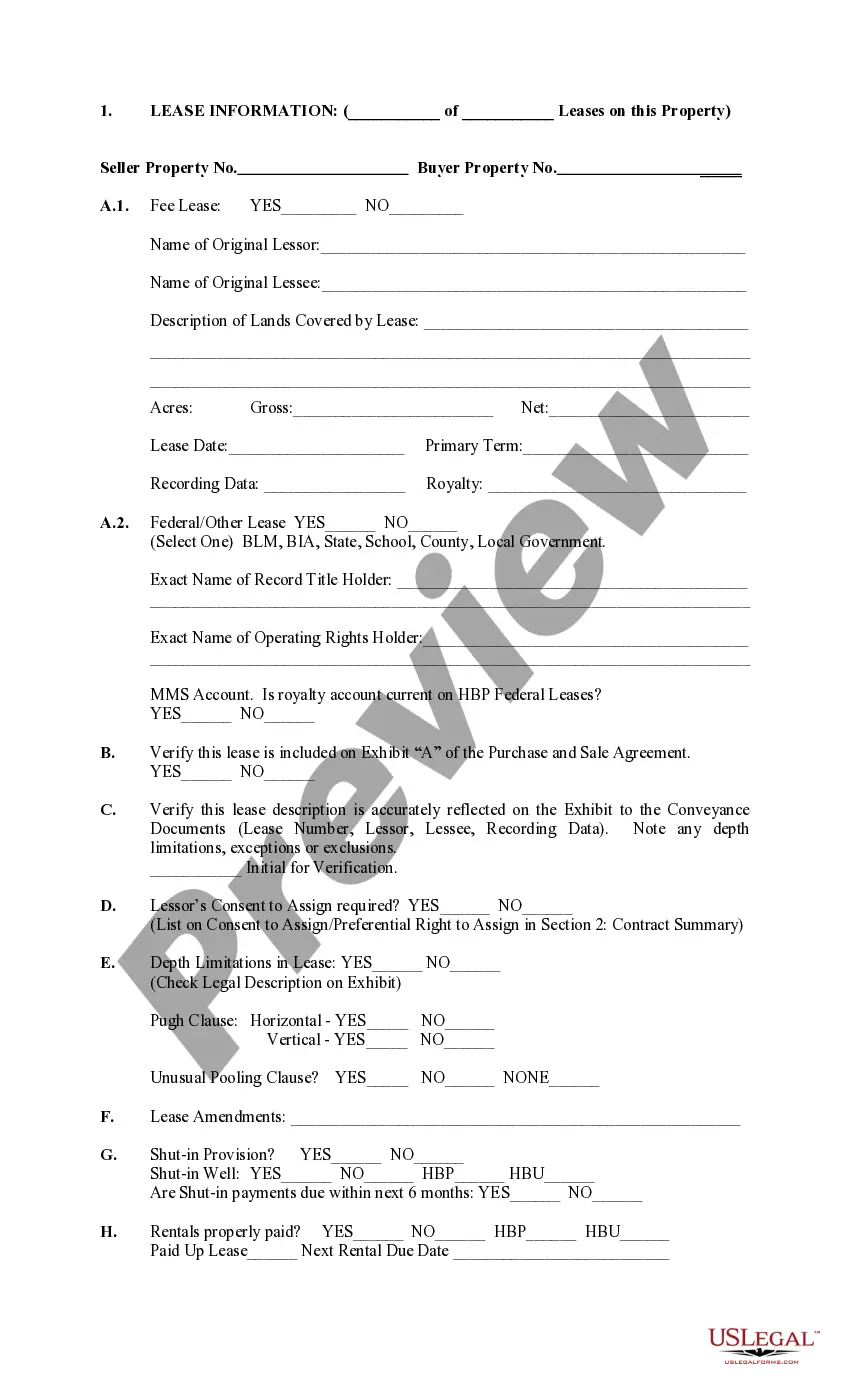
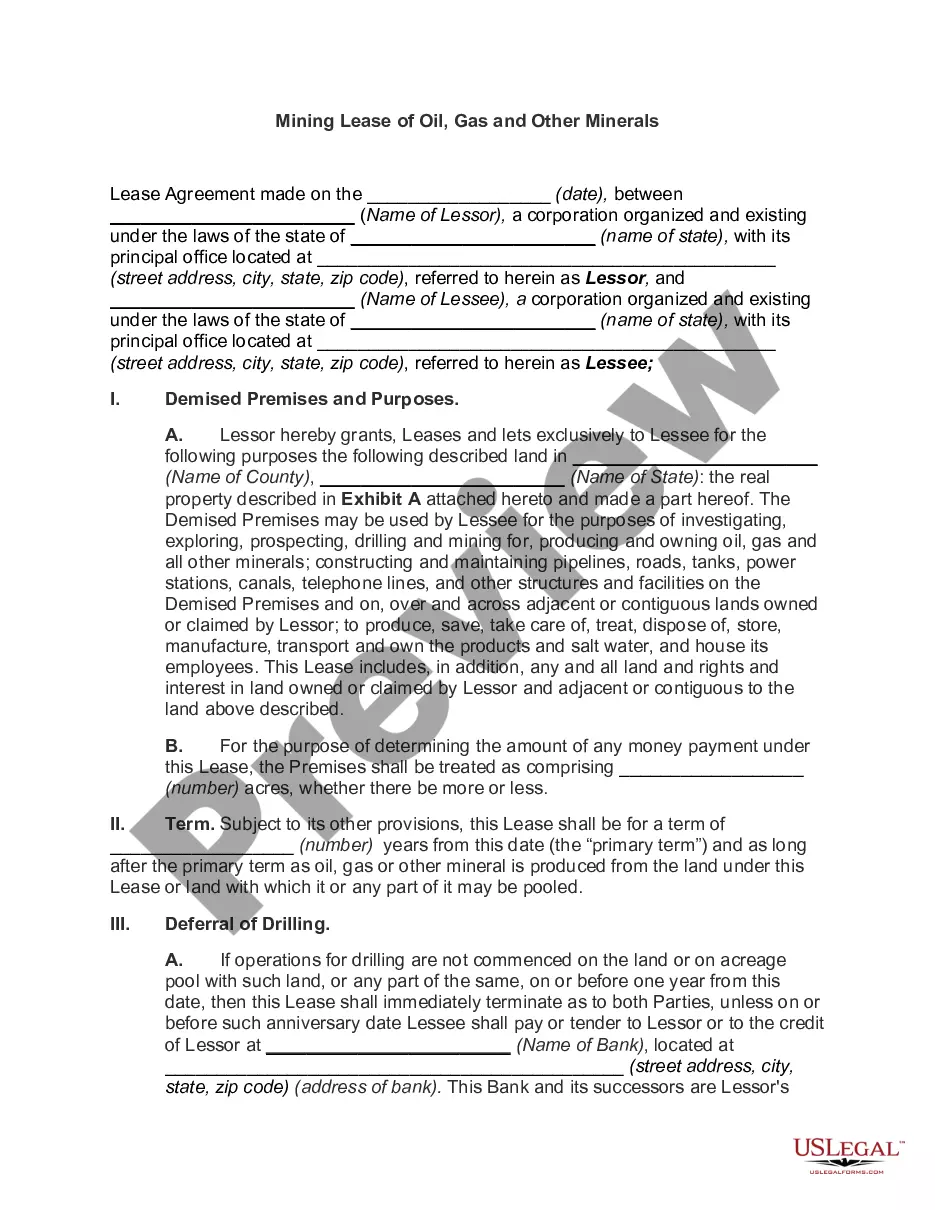
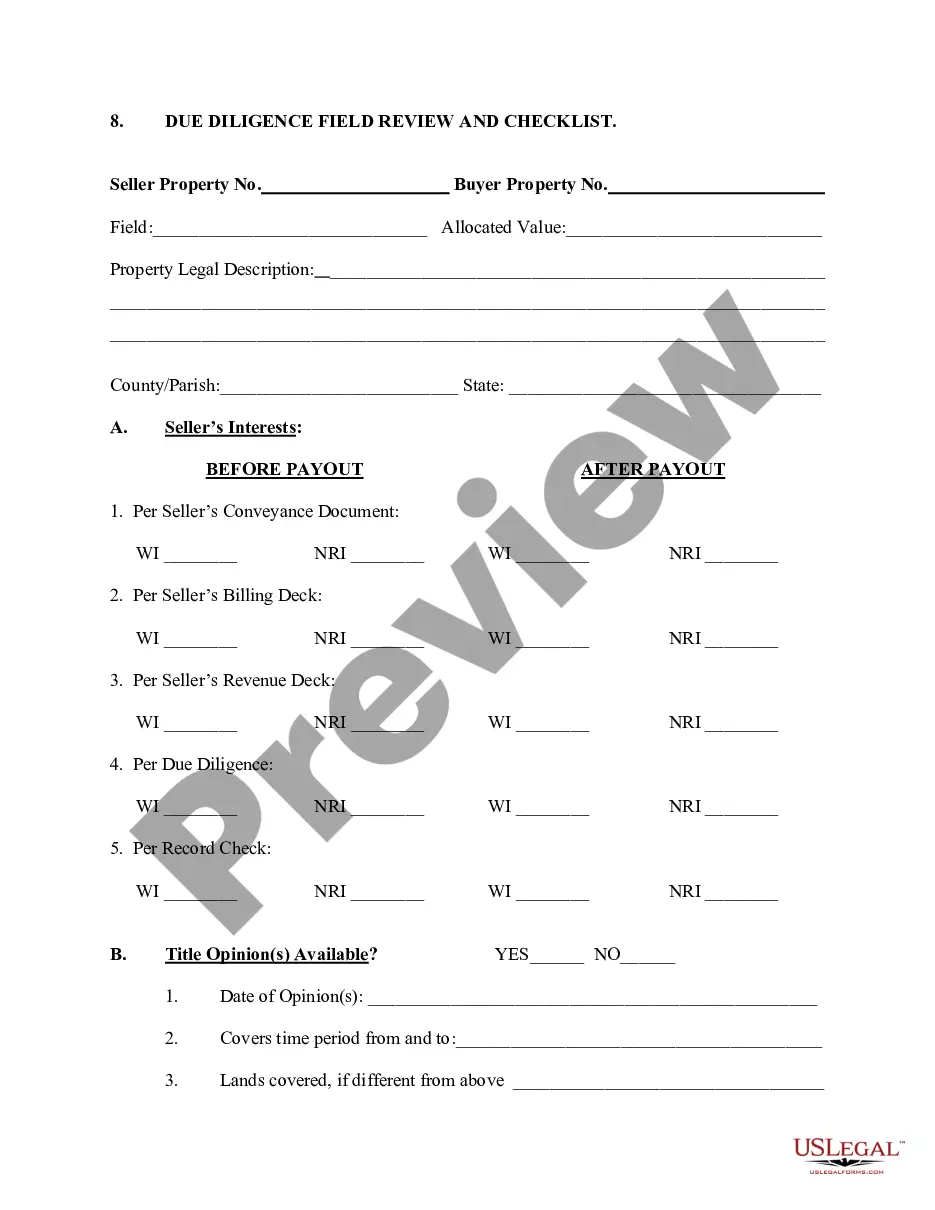
- Lease Information: Details about specific leases on the property, including terms and conditions.
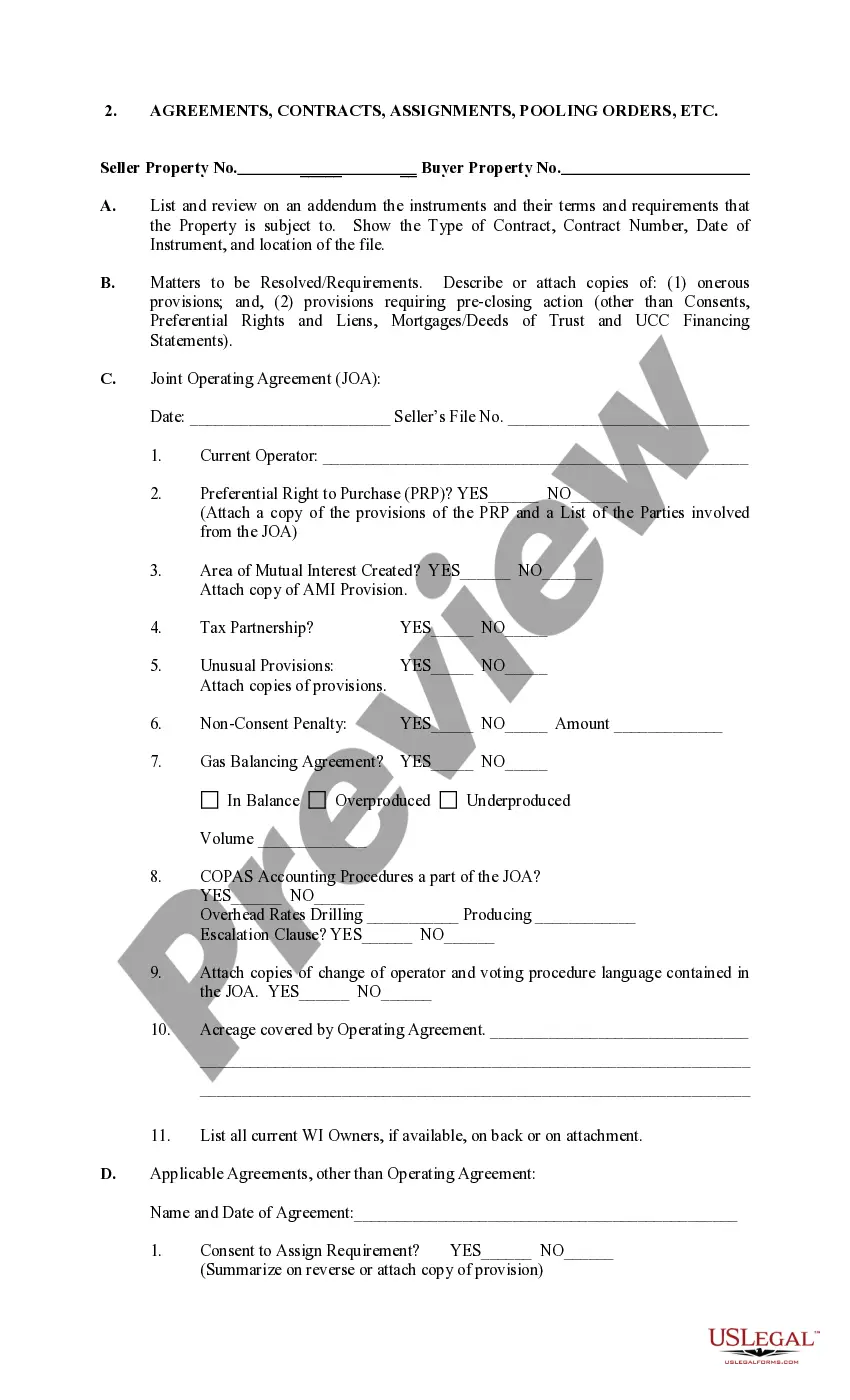
- Agreements, Contracts, and Assignments: Summary of all applicable legal agreements influencing the property.
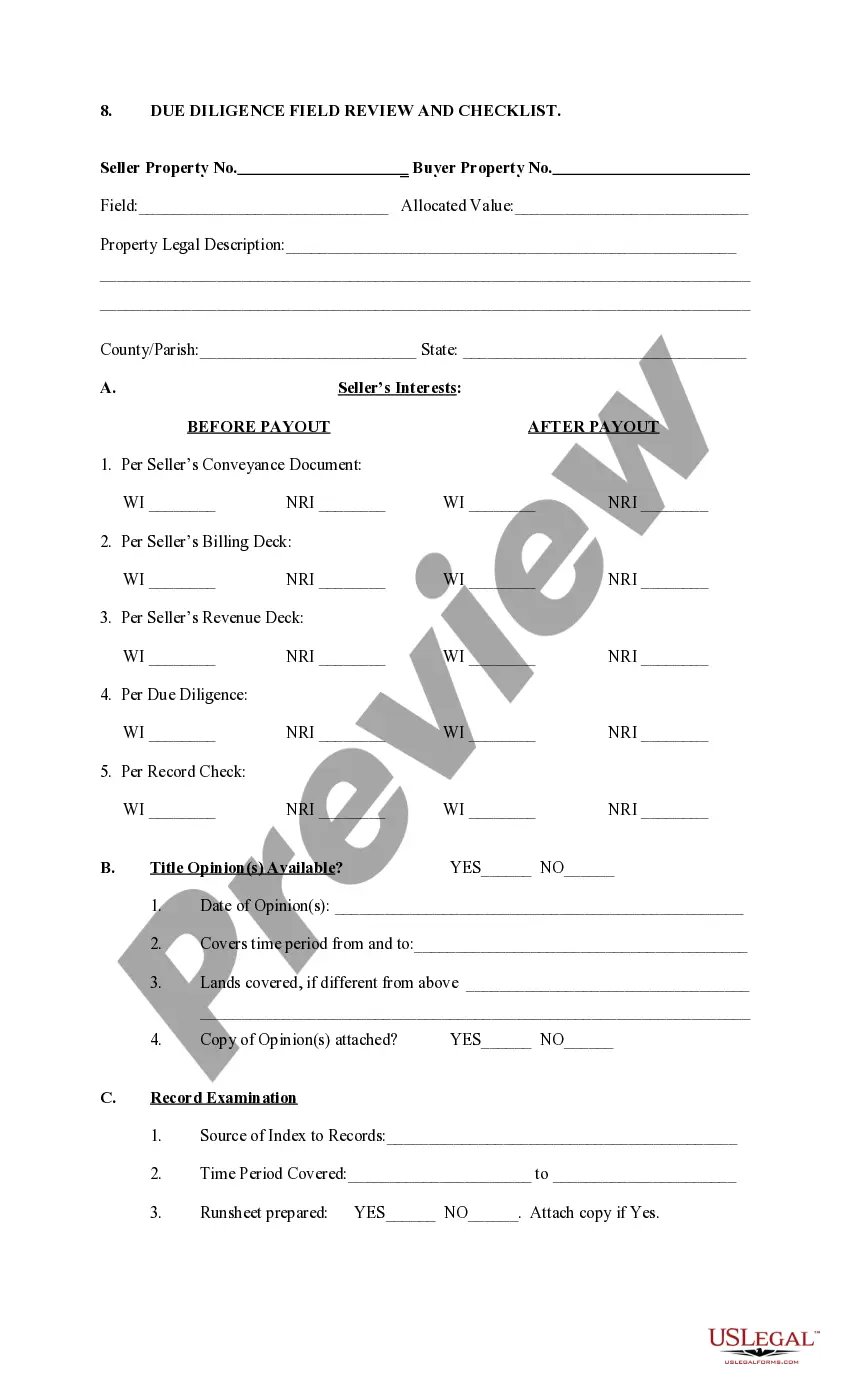
- Interest Verification: Verification of the type of interest being acquired, whether leasehold, mineral, or royalty.
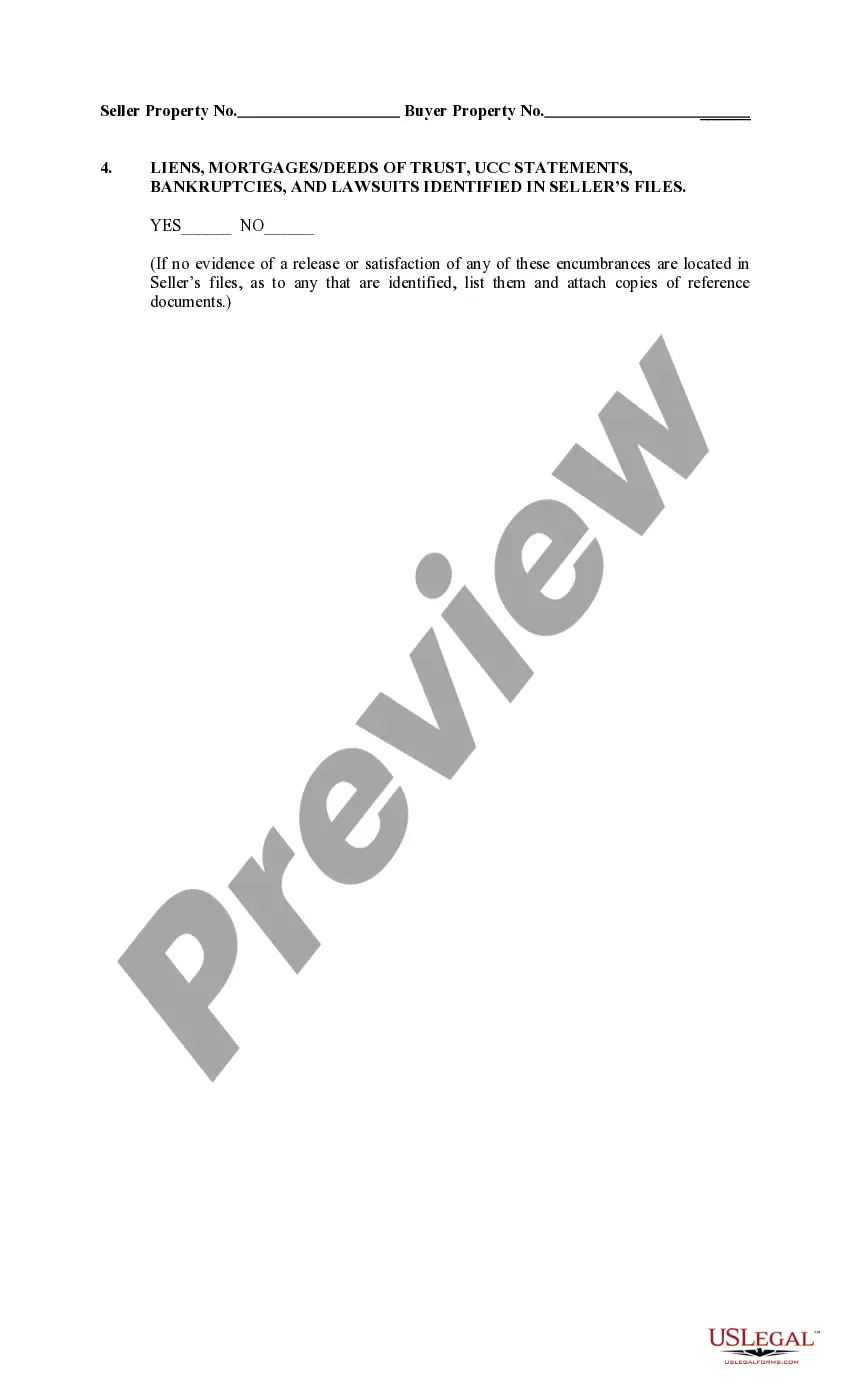
- Liens and Encumbrances: Identification of any financial liabilities that may affect the property.
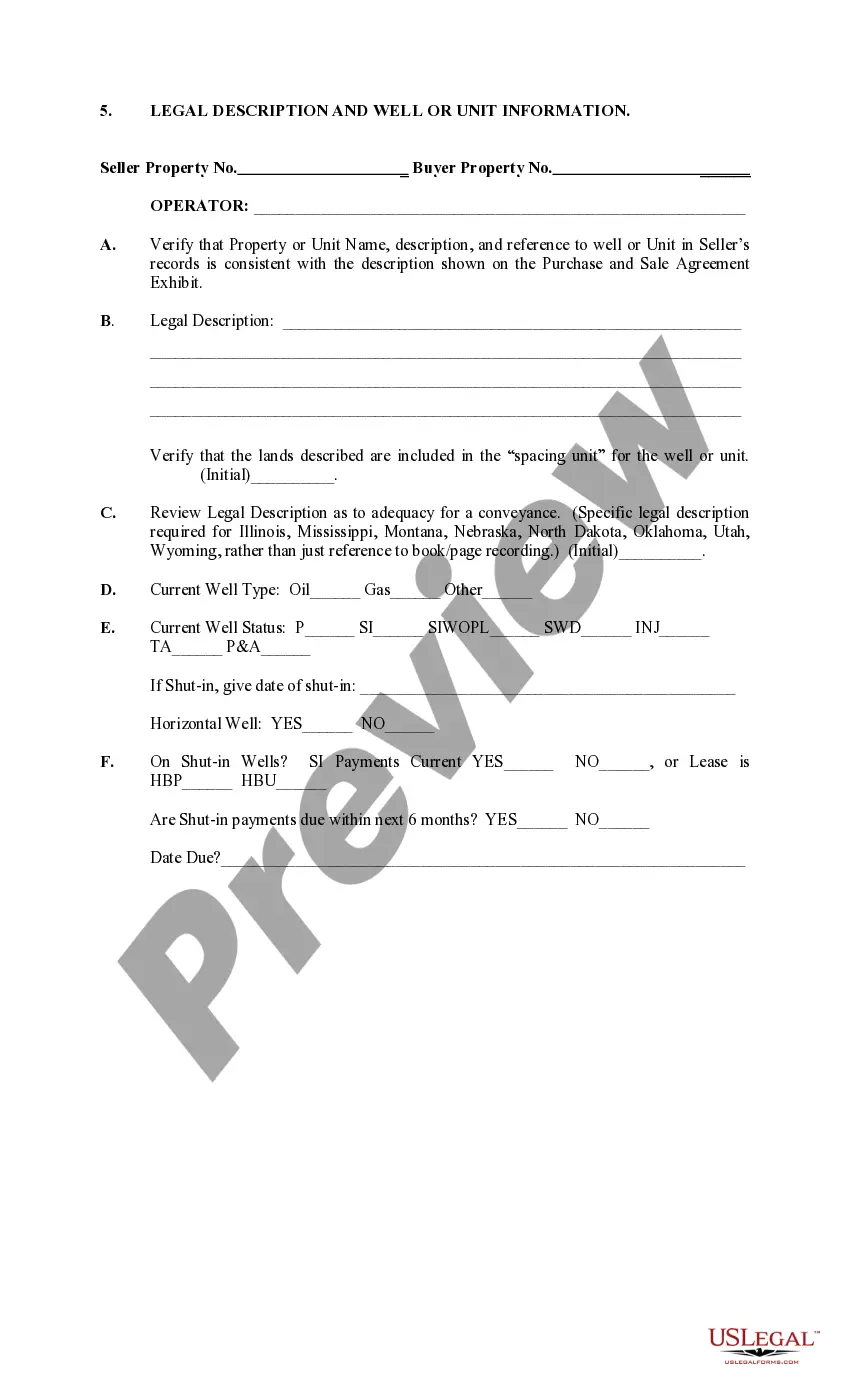
- Legal Description: A precise legal description of the property or mineral rights involved.
- Due Diligence Checklist: A structured checklist for conducting a field review of the property.

When to use this document
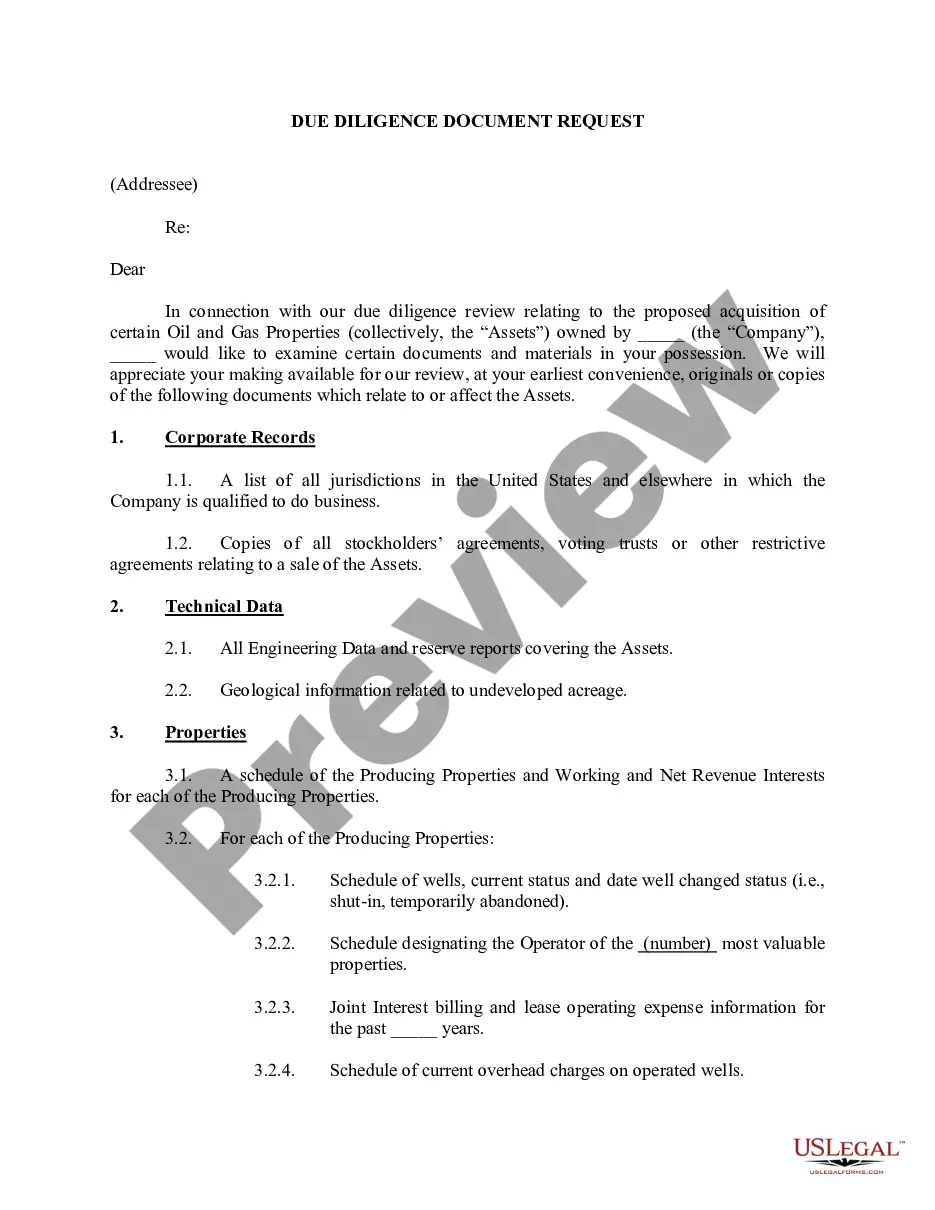
This form should be utilized whenever a buyer or seller is engaging in oil, gas, or mineral dealings. It's particularly useful when verifying leases, contracts, or any obligations that may affect the transaction. Parties may also need to use this form before signing purchase agreements to ensure that all relevant information has been reviewed and verified.
Who needs this form
This form is intended for:
- Sellers of oil, gas, or mineral rights who need to disclose all relevant information to potential buyers.
- Buyers looking to acquire mineral rights and needing to perform thorough due diligence.
- Legal professionals representing clients in mineral transactions.
- Financial advisers involved in the assessment of asset values in mineral dealings.
Steps to complete this form
- Identify the parties involved, including names for the seller and buyer, and enter relevant property numbers.
- Provide detailed lease information, including original lessor and lessee names, recording data, and any amendments.
- Review and list any agreements or contracts related to the property that may affect the transfer.
- Verify all interests being acquired and document any liens, mortgages, or other encumbrances.
- Complete the due diligence field review and checklist to ensure no issues are overlooked.
Notarization requirements for this form
This form usually doesn’t need to be notarized. However, local laws or specific transactions may require it. Our online notarization service, powered by Notarize, lets you complete it remotely through a secure video session, available 24/7.
Get your form ready online
Our built-in tools help you complete, sign, share, and store your documents in one place.
Make edits, fill in missing information, and update formatting in US Legal Forms—just like you would in MS Word.
Download a copy, print it, send it by email, or mail it via USPS—whatever works best for your next step.
Sign and collect signatures with our SignNow integration. Send to multiple recipients, set reminders, and more. Go Premium to unlock E-Sign.
If this form requires notarization, complete it online through a secure video call—no need to meet a notary in person or wait for an appointment.
We protect your documents and personal data by following strict security and privacy standards.

Make edits, fill in missing information, and update formatting in US Legal Forms—just like you would in MS Word.

Download a copy, print it, send it by email, or mail it via USPS—whatever works best for your next step.

Sign and collect signatures with our SignNow integration. Send to multiple recipients, set reminders, and more. Go Premium to unlock E-Sign.

If this form requires notarization, complete it online through a secure video call—no need to meet a notary in person or wait for an appointment.

We protect your documents and personal data by following strict security and privacy standards.
Common mistakes
- Failing to verify all lease details, leading to possible disputes post-transaction.
- Omitting critical agreements or contracts that might have a legal impact on the property.
- Neglecting to document existing liens or encumbrances, which can result in financial liabilities.
Benefits of completing this form online
- Convenience: Download the form anytime, anywhere, and fill it out at your convenience.
- Editability: Easily customize the form to fit your specific transaction needs.
- Reliability: Access forms drafted by licensed attorneys, ensuring all legal bases are covered.
Looking for another form?



Form popularity
FAQ
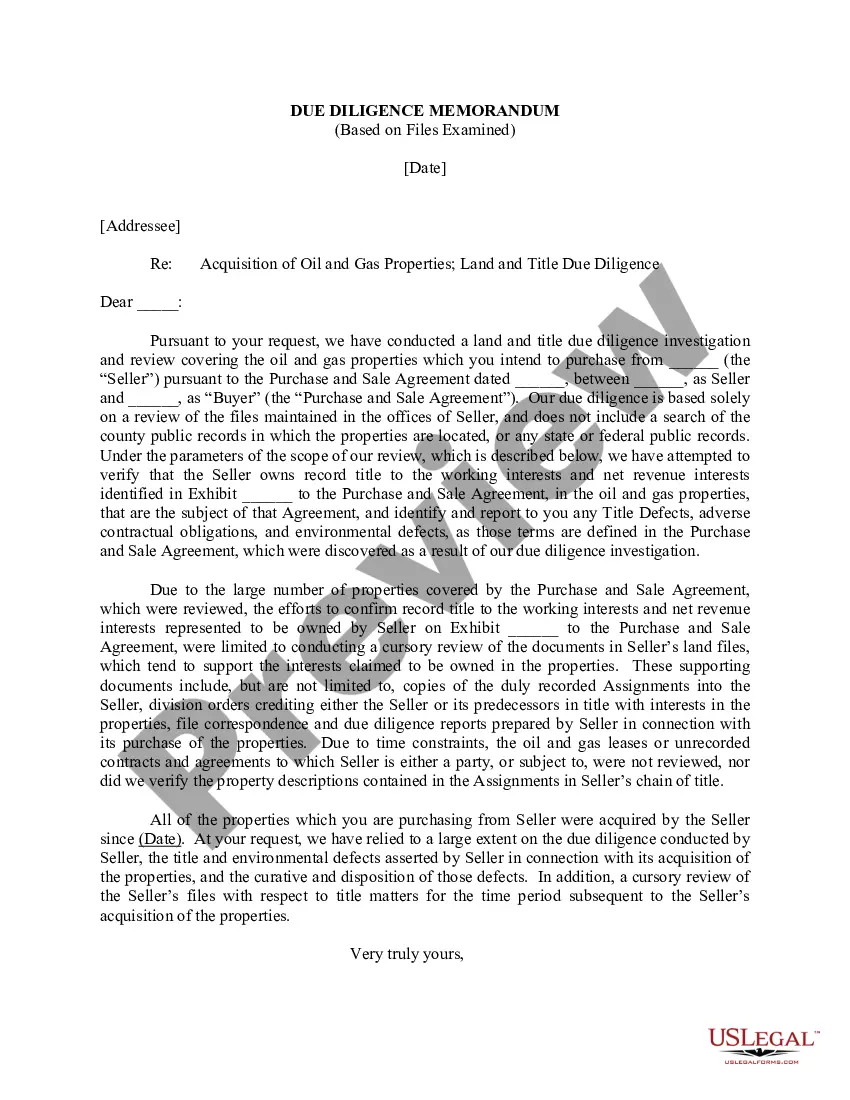
There are several reasons why due diligence is conducted: To confirm and verify information that was brought up during the deal or investment process. To identify potential defects in the deal or investment opportunity and thus avoid a bad business transaction.
The report will include a list of key findings and valid recommendations, as well as a reasoned conclusion with a financial analysis explaining the feasibility of our recommendations, and its impact on the company.
Due diligence is an investigation, audit, or review performed to confirm facts or details of a matter under consideration. In the financial world, due diligence requires an examination of financial records before entering into a proposed transaction with another party.
The due diligence business definition refers to organizations practicing prudence by carefully assessing associated costs and risks prior to completing transactions. Examples include purchasing new property or equipment, implementing new business information systems, or integrating with another firm.
Look at past annual and quarterly financial information, including: Review sales and gross profits by product. Look up the rates of return by product. Look at the accounts receivable. Get a breakdown of the business's inventory. Make a breakdown of real estate and equipment.
During the due diligence process, an investor will request information about your company that will inform their investment decision moving forward. In addition to asking questions of you and key members of your management team during meetings or phone calls, they will provide you with a request list.
Many organizations were uncomfortable reporting an average survey cost due to the inherent variations and instead reported a range of costs. The range of costs provided by all these organizations was $500 to $80,000. The average low cost was $3,488 and the average high cost was $15,665.
The due diligence stage is an essential element to a successful commercial transaction. When purchasing a business the due diligence stage allows the buyer to assess the value of the business and to verify the information pertaining to the business in order to determine whether to proceed with the purchase.
Statement of what is being studied, research or proposed. Background and supporting documentation on the proposal (corporate reports, financial statements, legal documents, copies of transaction history, market research)