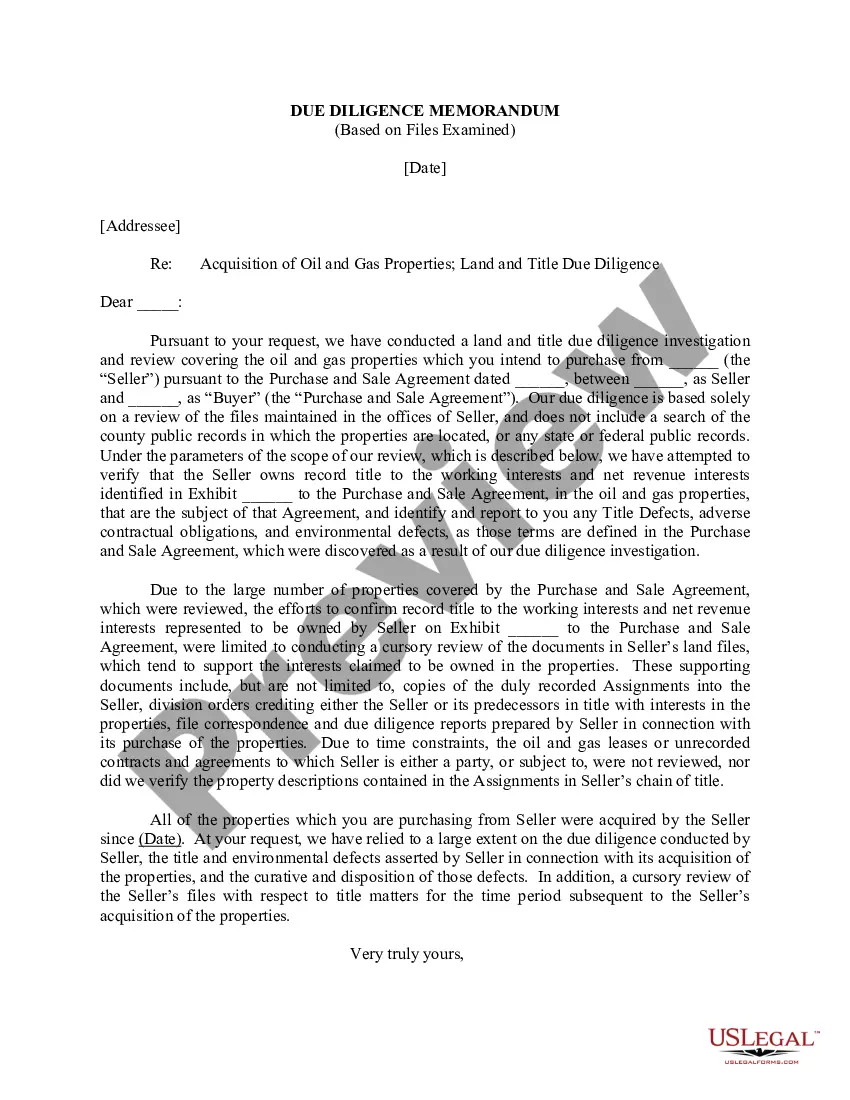
Due Diligence Memorandum Based on Files Examined
Understanding this form
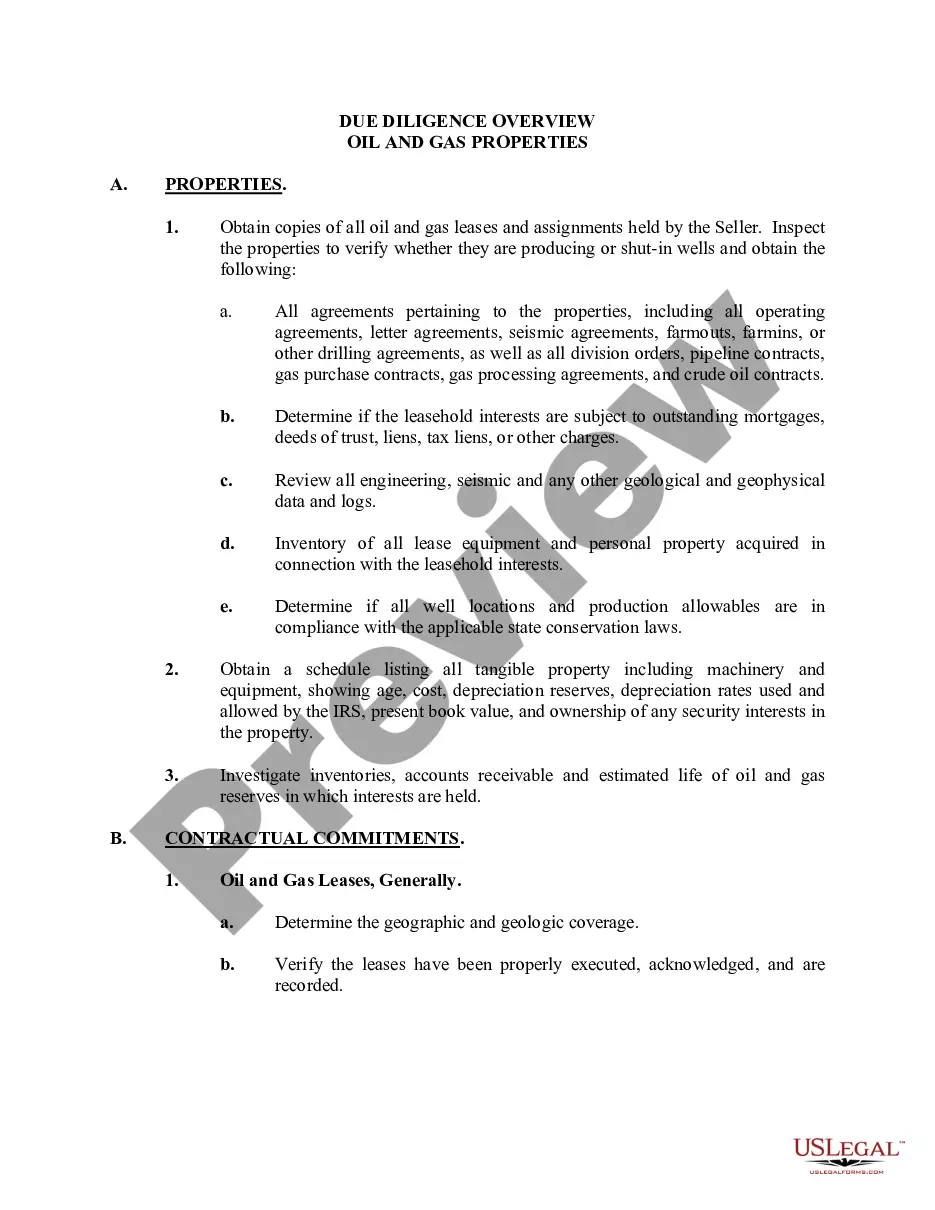
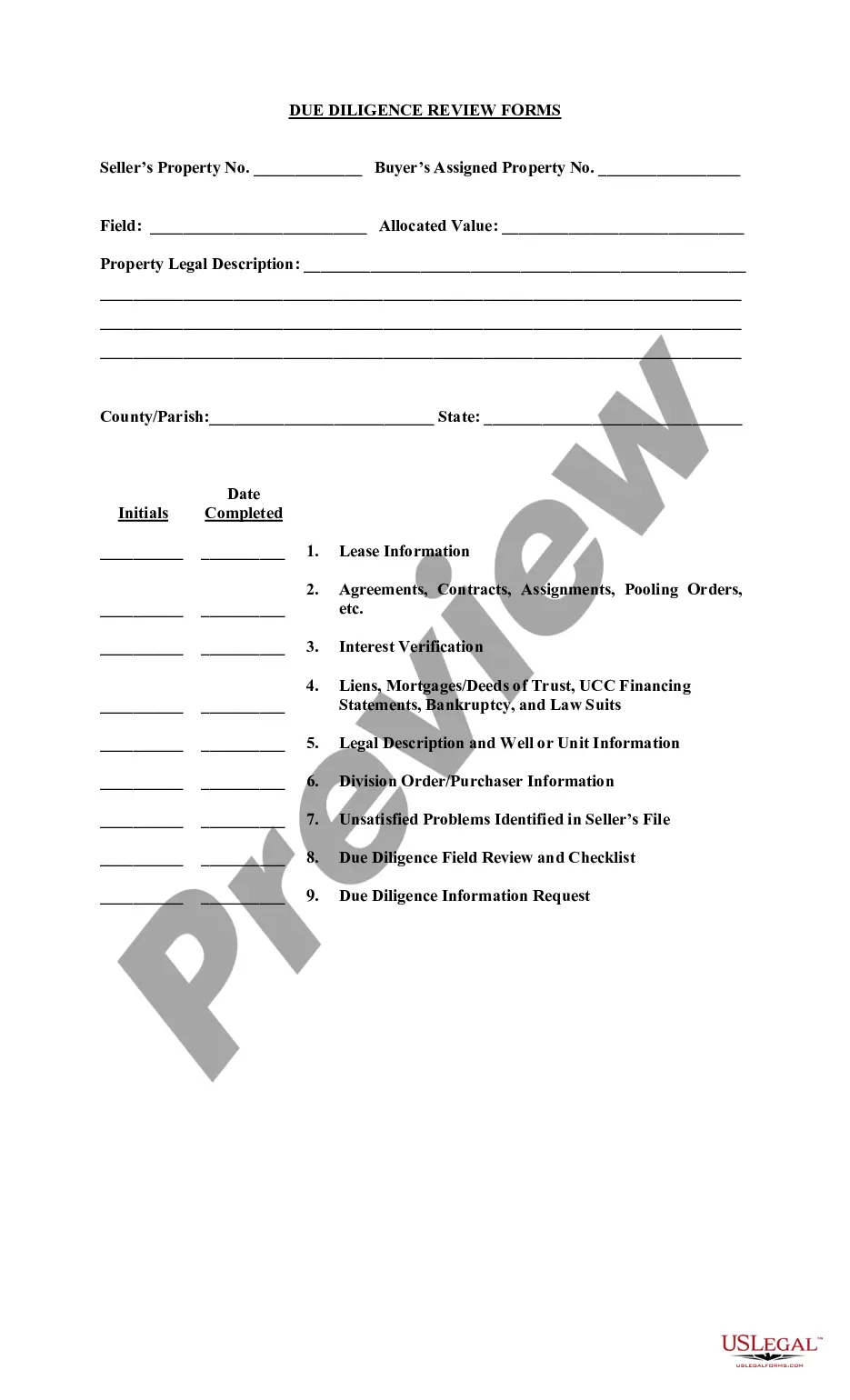
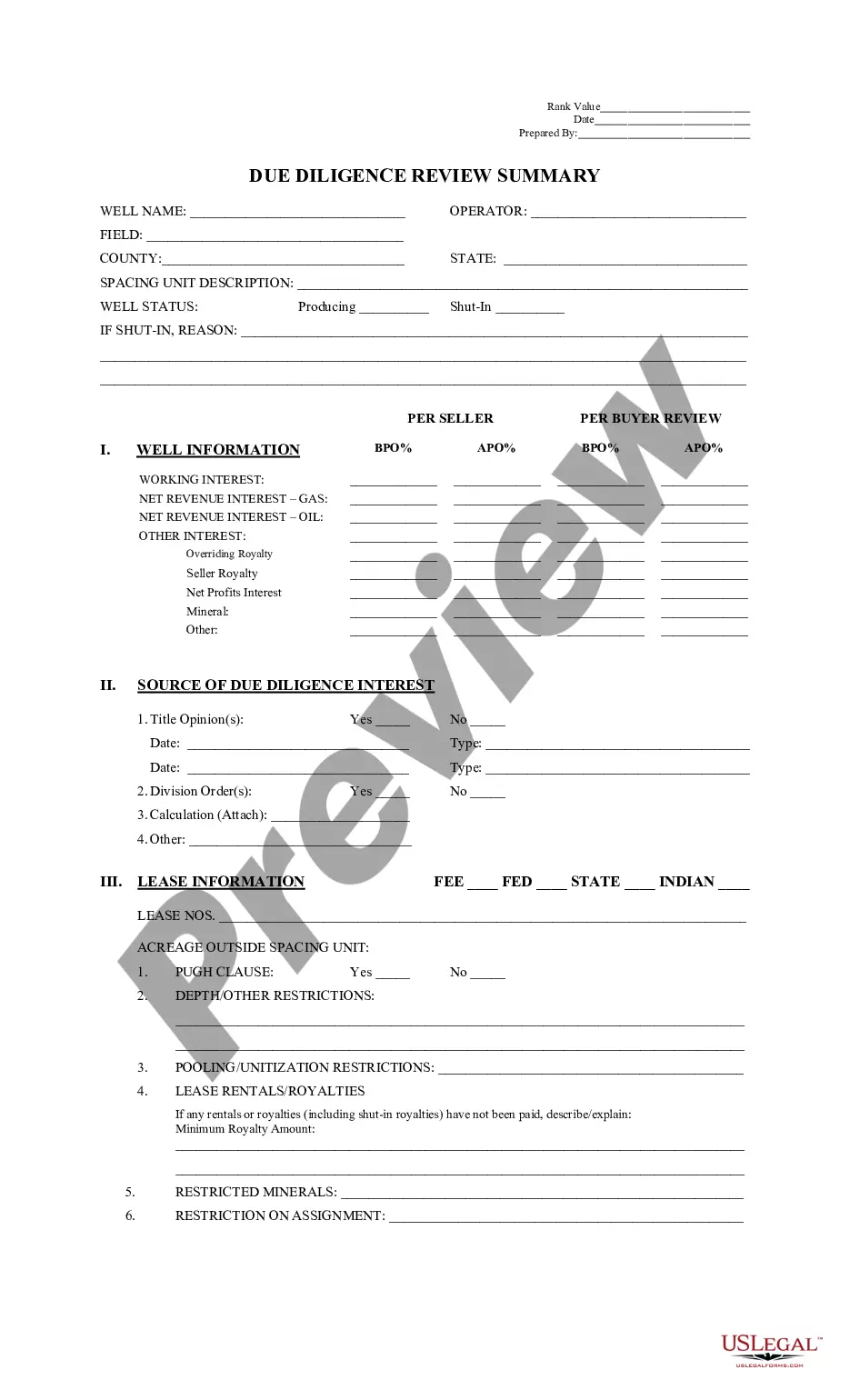
The Due Diligence Memorandum Based on Files Examined is a legal document designed to provide a summary of findings from a due diligence investigation regarding oil, gas, or mineral properties. This form is distinct from others as it specifically focuses on the examination of seller files to verify ownership and identify any potential title defects or contractual obligations related to the properties in question.
Form components explained
- Date and addressee information
- Details of the acquisition and associated parties
- Scope of the due diligence review specified
- Summary of supporting documents examined
- Identification of title defects and environmental issues
- Conclusions and recommendations based on findings
When to use this form
This form is used when you need a formal memorandum outlining the results of a due diligence review prior to acquiring oil and gas properties. It is particularly important when assessing the seller's title claims and verifying any potential issues that might affect ownership or value.
Who can use this document
- Buyers of oil and gas properties seeking to ensure the legitimacy of the seller's claims
- Real estate lawyers conducting due diligence for clients
- Investors in the energy sector requiring documentation of their findings
- Corporate executives involved in acquisitions of mineral rights
Completing this form step by step
- Identify the date and enter the addressee's name at the top of the memorandum.
- Clearly mention the acquisition details, including the properties involved and the names of the seller and buyer.
- Outline the scope of the due diligence investigation accurately, including what files were reviewed.
- Summarize the key findings concerning ownership, title defects, and any obligations noted during the review.
- Conclude with recommendations or findings and ensure to sign the memorandum appropriately.
Notarization requirements for this form
Notarization is not commonly needed for this form. However, certain documents or local rules may make it necessary. Our notarization service, powered by Notarize, allows you to finalize it securely online anytime, day or night.
Get your form ready online
Our built-in tools help you complete, sign, share, and store your documents in one place.
Make edits, fill in missing information, and update formatting in US Legal Forms—just like you would in MS Word.
Download a copy, print it, send it by email, or mail it via USPS—whatever works best for your next step.
Sign and collect signatures with our SignNow integration. Send to multiple recipients, set reminders, and more. Go Premium to unlock E-Sign.
If this form requires notarization, complete it online through a secure video call—no need to meet a notary in person or wait for an appointment.
We protect your documents and personal data by following strict security and privacy standards.

Make edits, fill in missing information, and update formatting in US Legal Forms—just like you would in MS Word.

Download a copy, print it, send it by email, or mail it via USPS—whatever works best for your next step.

Sign and collect signatures with our SignNow integration. Send to multiple recipients, set reminders, and more. Go Premium to unlock E-Sign.

If this form requires notarization, complete it online through a secure video call—no need to meet a notary in person or wait for an appointment.

We protect your documents and personal data by following strict security and privacy standards.
Avoid these common issues
- Failing to specify all relevant properties in the acquisition details.
- Overlooking to review necessary supporting documents.
- Not clearly identifying the parties involved in the transaction.
- Inadequately summarizing findings or omitting critical defects.
Why complete this form online
- Convenient access to templates drafted by licensed attorneys.
- Editable forms that allow for customization to fit specific needs.
- Reliable and up-to-date legal information to aid in property transactions.
- Immediate downloads to expedite the documentation process.
Looking for another form?
Form popularity
FAQ
Across most industries, a comprehensive due diligence report should include the company's financial data, information about business operations and procurement, and a market analysis. It may also include data about employees and payroll, taxes, intellectual property and the board of directors.
A Statement describing the subject of research. Documents in support of the research such as corporate reports, legal documents, transaction copies, market research, etc. SWOT Analysis i.e. an overview of the strengths, weaknesses, opportunities, and threats linked with the proposal.
The due diligence business definition refers to organizations practicing prudence by carefully assessing associated costs and risks prior to completing transactions. Examples include purchasing new property or equipment, implementing new business information systems, or integrating with another firm.
A due diligence checklist is an organized way to analyze a company. The checklist will include all the areas to be analyzed, such as ownership and organization, assets and operations, the financial ratios, shareholder value, processes and policies, future growth potential, management, and human resources.
Look at past annual and quarterly financial information, including: Review sales and gross profits by product. Look up the rates of return by product. Look at the accounts receivable. Get a breakdown of the business's inventory. Make a breakdown of real estate and equipment.
The due diligence period gives the homebuyer the opportunity to identify any potential issues or problems with the home that could compromise the purchase. It also gives the buyer the chance to back out of the transaction if certain contingencies aren't met.
The report will include a list of key findings and valid recommendations, as well as a reasoned conclusion with a financial analysis explaining the feasibility of our recommendations, and its impact on the company.
A due diligence checklist is an organized way to analyze a company that you are acquiring through sale, merger, or another method. By following this checklist, you can learn about a company's assets, liabilities, contracts, benefits, and potential problems.
Look at past annual and quarterly financial information, including: Review sales and gross profits by product. Look up the rates of return by product. Look at the accounts receivable. Get a breakdown of the business's inventory. Make a breakdown of real estate and equipment.