Utility Easement (Electric Lines and Appurtenances)
Overview of this form
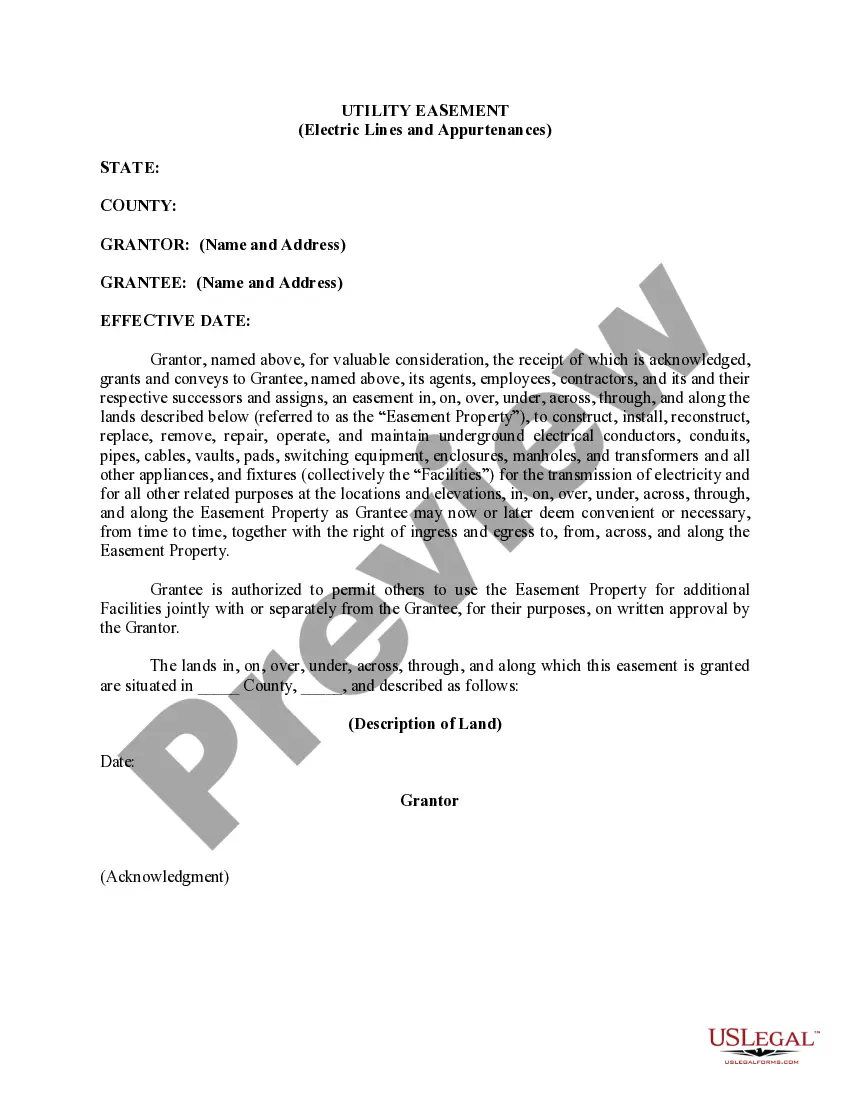
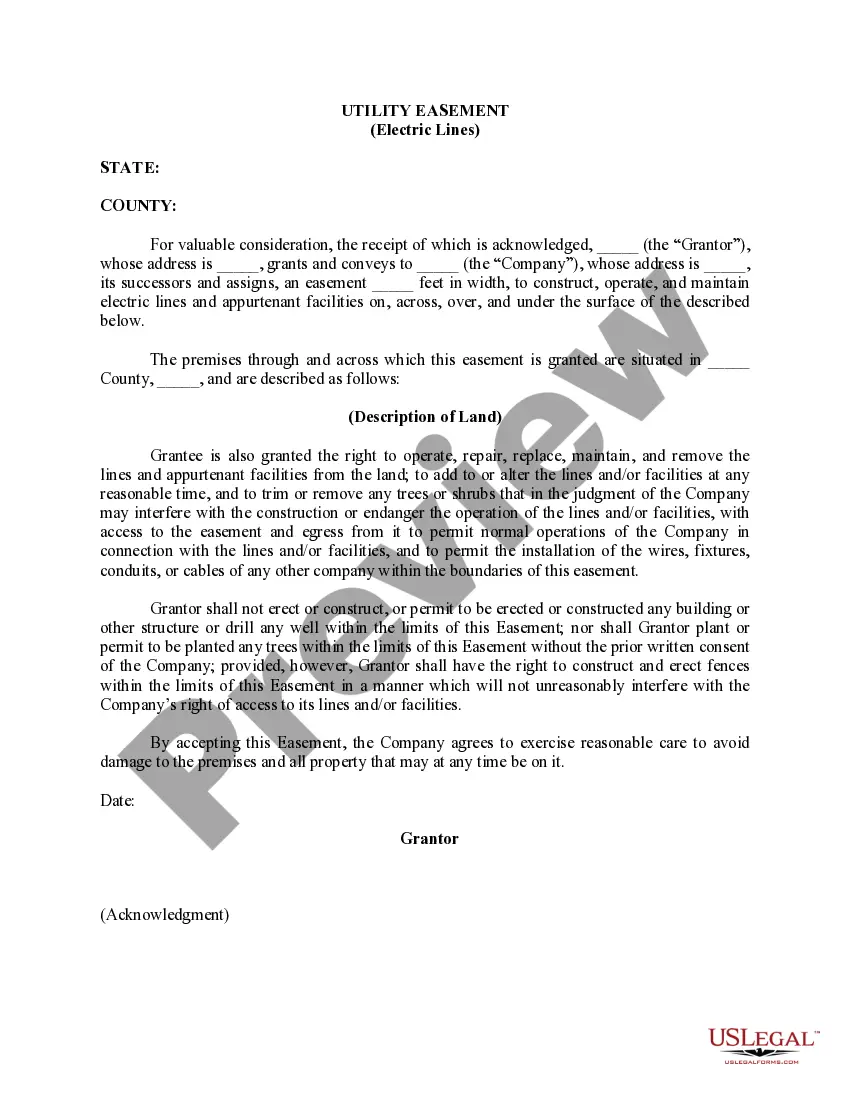
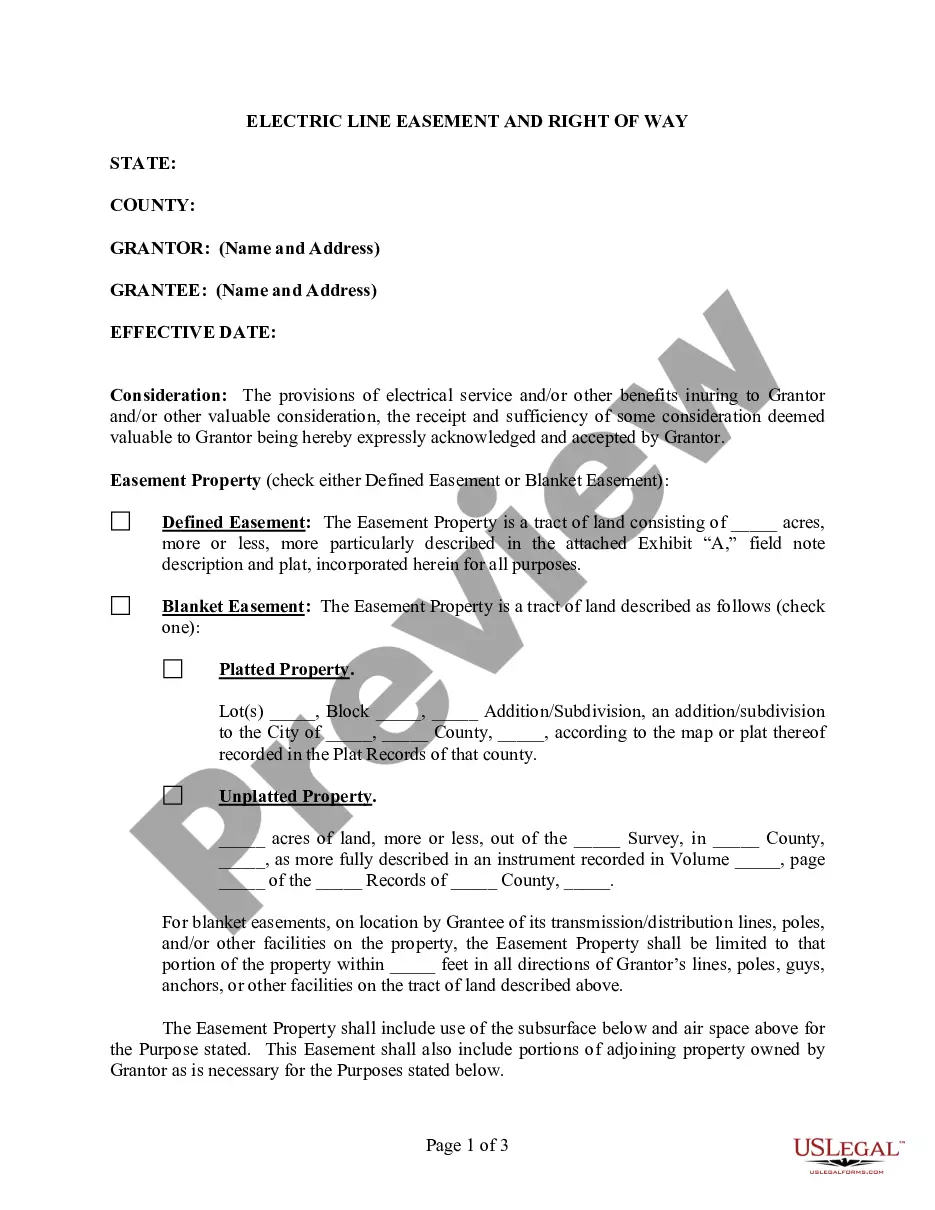
The Utility Easement for Electric Lines and Appurtenances is a legal document that grants permission to a utility company to install, maintain, and operate electric lines and related equipment on a specific property. This easement allows the utility to access the land for necessary repairs and upgrades without needing additional consent from the property owner each time. It is crucial for ensuring the proper functioning of electrical services while protecting the rights of property owners.
What’s included in this form
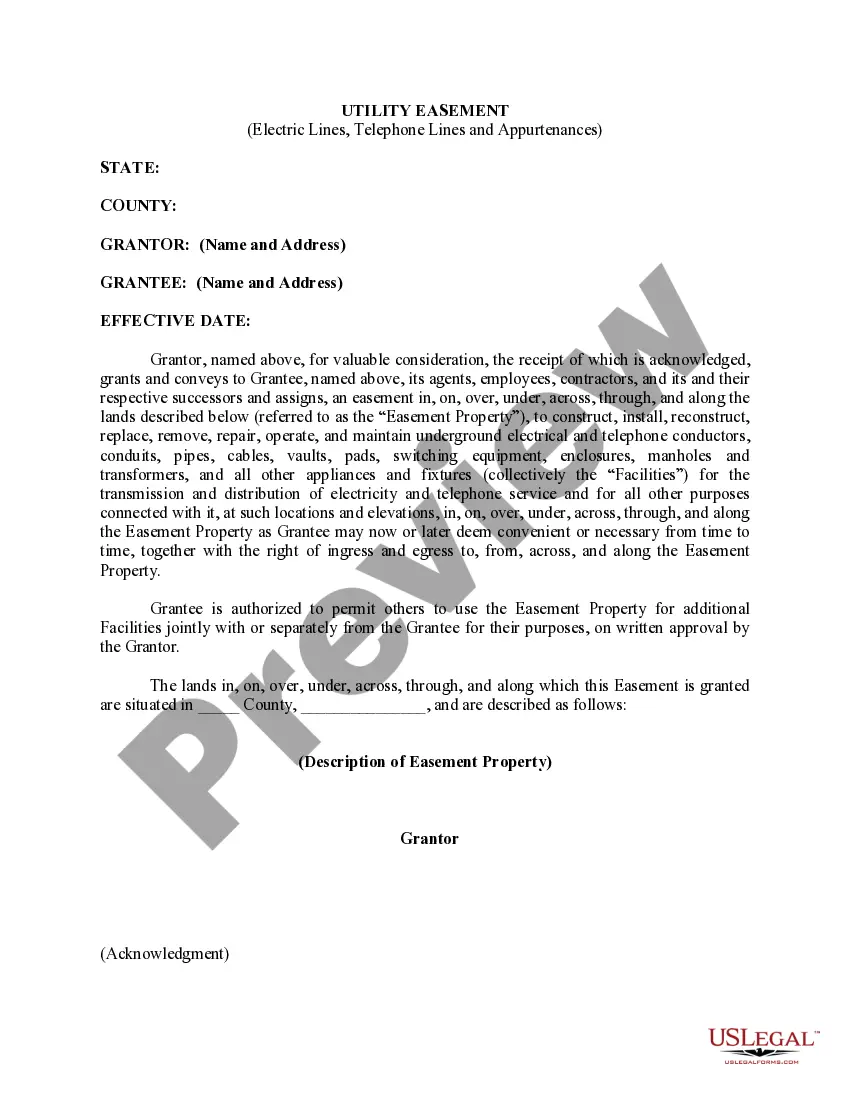
- Grantor and Grantee: Identifies the parties involved in the easement.
- Easement Description: Specifies the boundaries and location of the easement on the property.
- Rights Granted: Details the rights given to the utility company, including construction and maintenance of electric lines.
- Permitted Use: Allows the utility to permit others to use the easement for related facilities, with written consent from the Grantor.
- Effective Date: Indicates when the easement becomes effective.
Situations where this form applies
This form is useful when a utility company needs access to your property for installing or maintaining electric lines and related equipment. It can be used if you are a property owner granting easement rights, or if you are a utility representative seeking necessary permissions to work on a property. Typical scenarios include new construction, upgrades to existing systems, or maintenance activities that require access through a private property.
Intended users of this form
This form is intended for:
- Property owners who need to grant utility companies access for electric line installation or maintenance.
- Utility companies seeking to formalize their easement rights on private properties.
- Real estate professionals managing properties with existing utility easements.
Instructions for completing this form
- Identify the Grantor and Grantee: Fill in the names and addresses of the property owner and the utility company.
- Define the Easement Property: Provide a clear description of the land affected by the easement.
- Specify the Purpose: Indicate the scope of the easement, including any specific rights granted for installation and maintenance.
- Set the Effective Date: Enter the date when the easement will take effect.
- Obtain Signatures: Ensure that all parties sign the document to validate the agreement.
Does this form need to be notarized?
This document requires notarization to meet legal standards. US Legal Forms provides secure online notarization powered by Notarize, allowing you to complete the process through a verified video call, available 24/7.
Get your form ready online
Our built-in tools help you complete, sign, share, and store your documents in one place.
Make edits, fill in missing information, and update formatting in US Legal Forms—just like you would in MS Word.
Download a copy, print it, send it by email, or mail it via USPS—whatever works best for your next step.
Sign and collect signatures with our SignNow integration. Send to multiple recipients, set reminders, and more. Go Premium to unlock E-Sign.
If this form requires notarization, complete it online through a secure video call—no need to meet a notary in person or wait for an appointment.
We protect your documents and personal data by following strict security and privacy standards.

Make edits, fill in missing information, and update formatting in US Legal Forms—just like you would in MS Word.

Download a copy, print it, send it by email, or mail it via USPS—whatever works best for your next step.

Sign and collect signatures with our SignNow integration. Send to multiple recipients, set reminders, and more. Go Premium to unlock E-Sign.

If this form requires notarization, complete it online through a secure video call—no need to meet a notary in person or wait for an appointment.

We protect your documents and personal data by following strict security and privacy standards.
Mistakes to watch out for
- Failing to provide a clear and accurate description of the easement area.
- Not including the effective date of the easement.
- Omitting signatures from all necessary parties.
- Leaving out terms that specify maintenance responsibilities for the utility company.
Why use this form online
- Convenience: Easily access and download the form from anywhere at any time.
- Editability: Customize the form to fit your specific needs without hassle.
- Reliability: Utilize documents drafted by licensed attorneys to ensure legal validity.
Legal use & context
- The easement allows the utility company to operate legally within the defined boundaries of the property.
- It protects the rights of both the property owner and the utility provider by clearly outlining responsibilities.
- Ensures that utility services can be maintained without disrupting the property owner's rights.
Main things to remember
- Electric easements provide necessary access for utility companies to maintain services.
- Essential for property owners to understand their rights when granting an easement.
- Form completion includes accurate identification and clear descriptions to avoid legal issues.
Looking for another form?




Form popularity
FAQ
In order to acquire a prescriptive easement, a claimant must establish (1) that the use was continuous for five years; (2) the use was open, notorious and clearly visible to the owner of the property; and (3) the use was hostile and adverse to the owner.The actual use depends on the type of easement.
Dominant and Servient Heritage. Separate owners. Beneficial Enjoyment. Positive or Negative. Continuous or Discontinuous. Apparent or Non- Apparent. Express Grant. Implied Circumstances.
1Express Grant by Instrument. An express grant by written instrument is the most common source of an easement.2Implied. The owner of a large tract of land splits up the land with one or more parcels that do not abut a public highway or road.3Necessity.4Dedication.
In order to acquire a prescriptive easement over another's property, the following elements must be met: (1) actual use of the property; (2) open and notorious use of the property; (3) use that is hostile and adverse to the original owner; (4) continuous and uninterrupted use of the property; (5) use of the property
Easements can be created in a variety of ways. They can be created by an express grant, by implication, by necessity, and by adverse possession.An easement can be terminated if it was created by necessity and the necessity ceases to exist, if the servient land is destroyed, or if it was abandoned.
In order to acquire a prescriptive easement, a claimant must establish (1) that the use was continuous for five years; (2) the use was open, notorious and clearly visible to the owner of the property; and (3) the use was hostile and adverse to the owner.
Easements can be created in a variety of ways. They can be created by an express grant, by implication, by necessity, and by adverse possession.An easement can be terminated if it was created by necessity and the necessity ceases to exist, if the servient land is destroyed, or if it was abandoned.
The term easements by prescription implies to the acquisition of a title or right by the owner of a property in a manner prescribed by law. A person may acquire property or certain rights over a property by showing that he or she has been in possession of the property or enjoying rights for a long period of time.
Types of Easements An easement may be classified as either an easement appurtenant or an easement in gross. Easement Appurtenant. An easement appurtenant is an easement that benefits one parcel of land, known as the dominant tenement, to the detriment of another parcel of land, known as the servient tenement.