General Partnership Agreement with Managing Partners and Officers
What is this form?
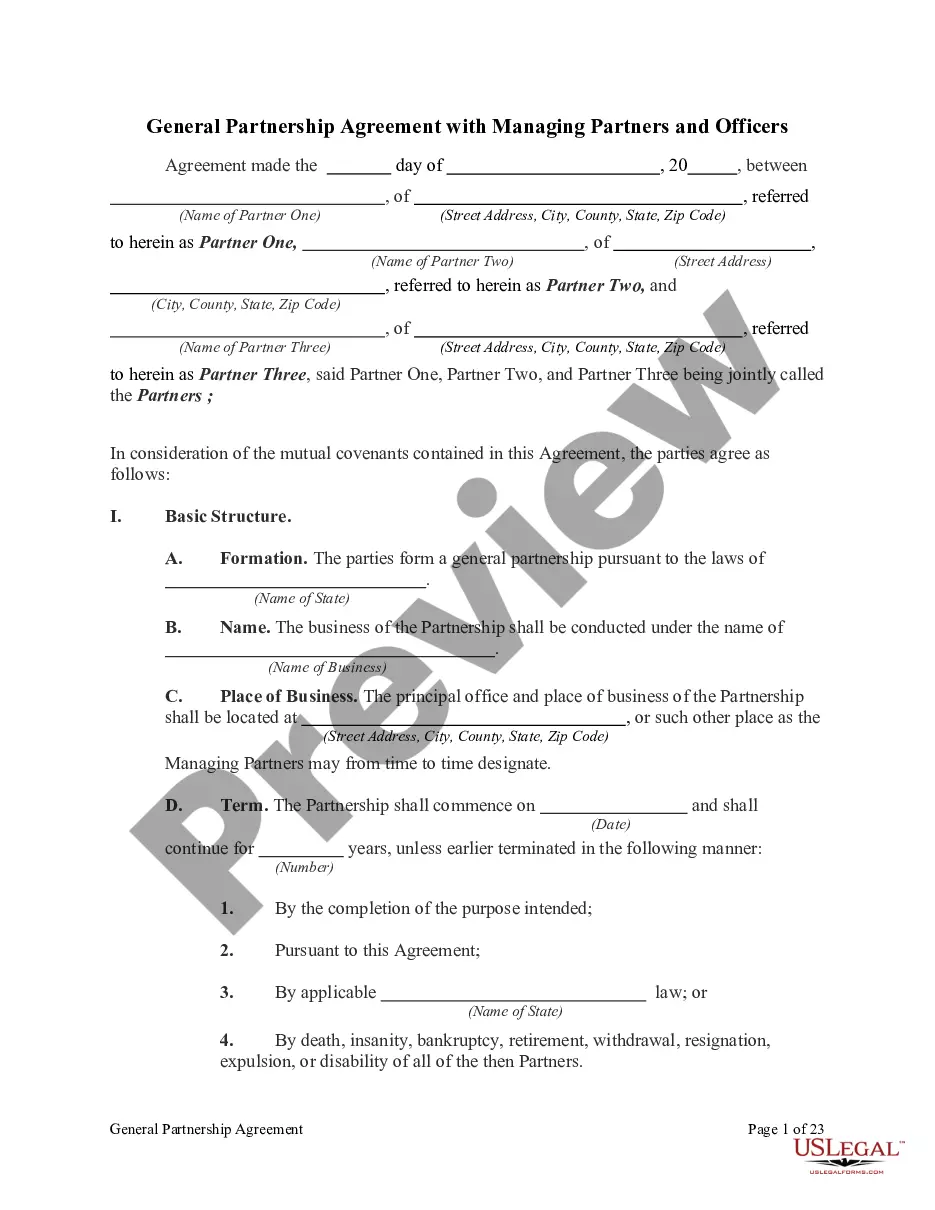
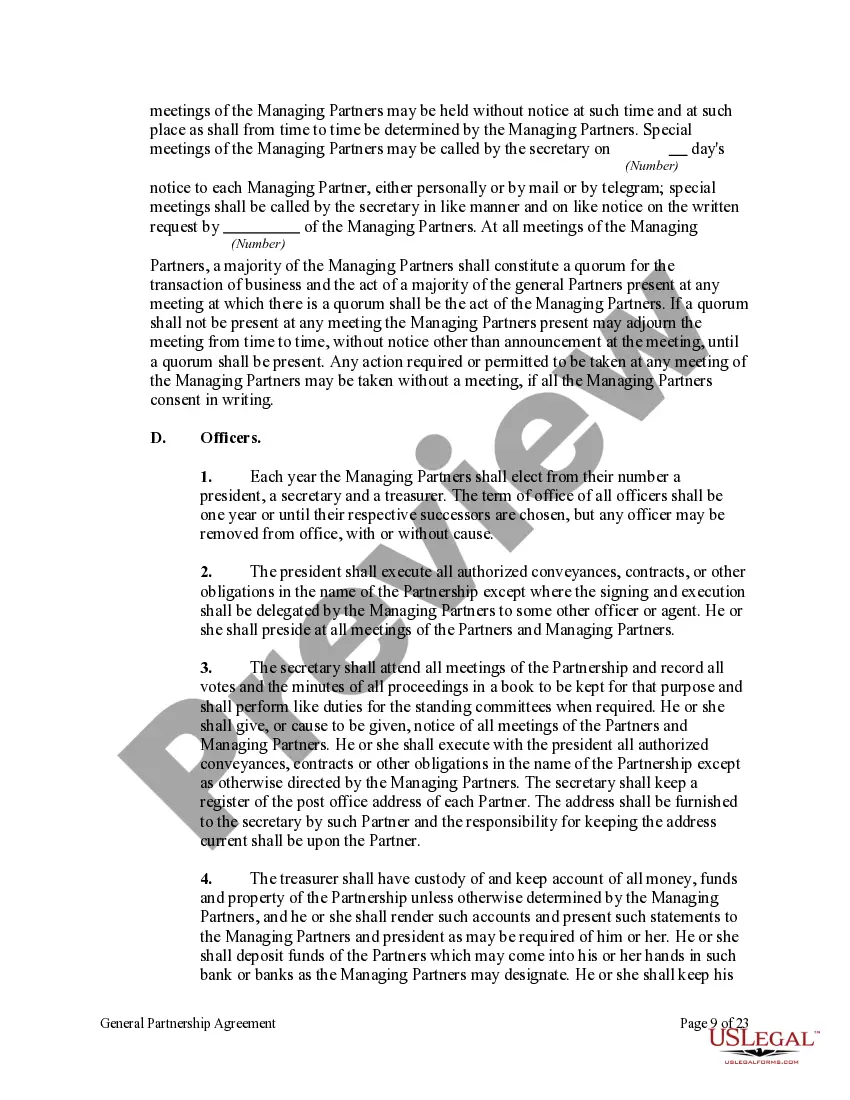
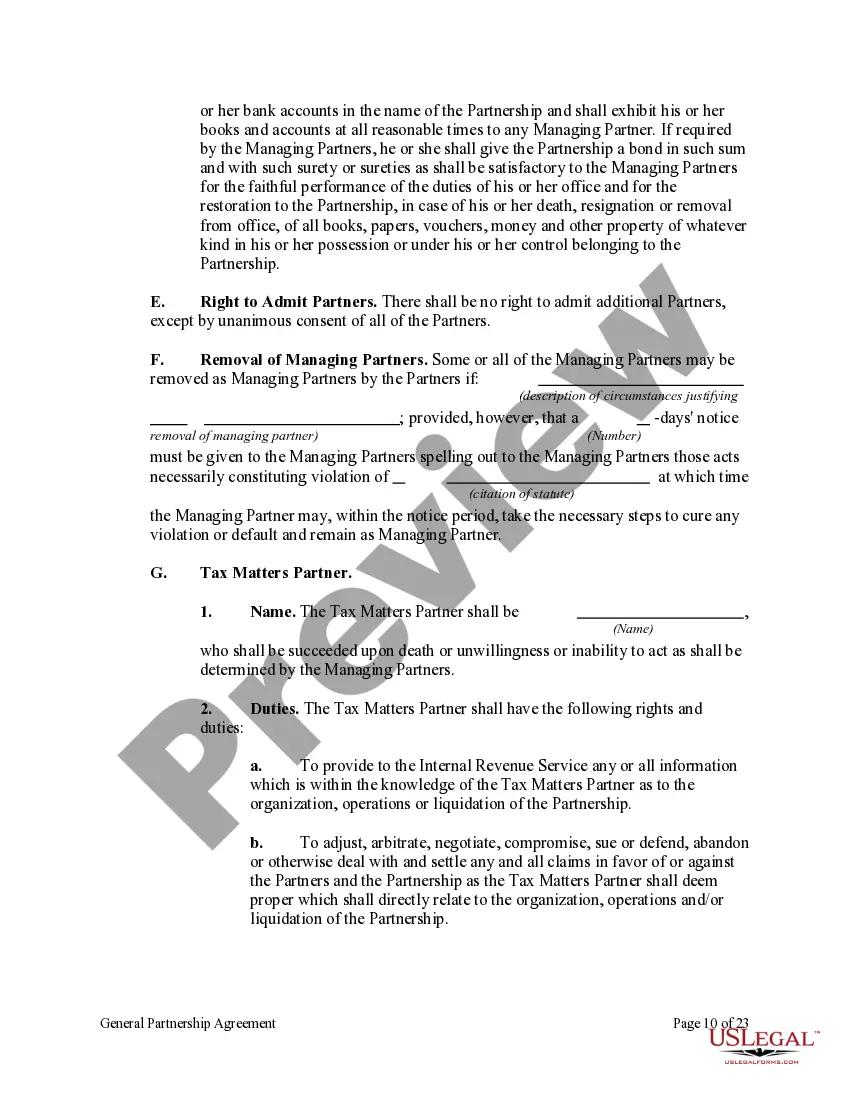
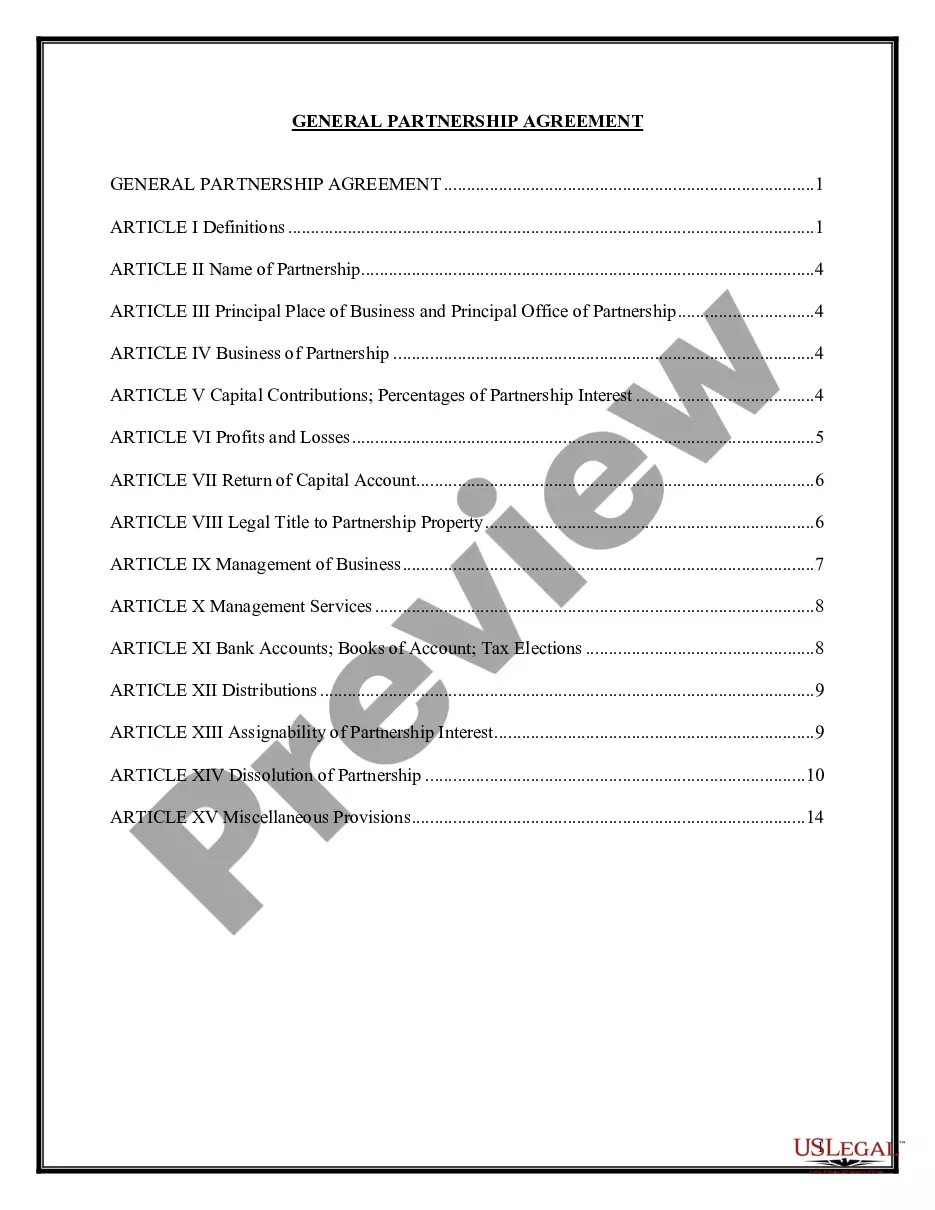
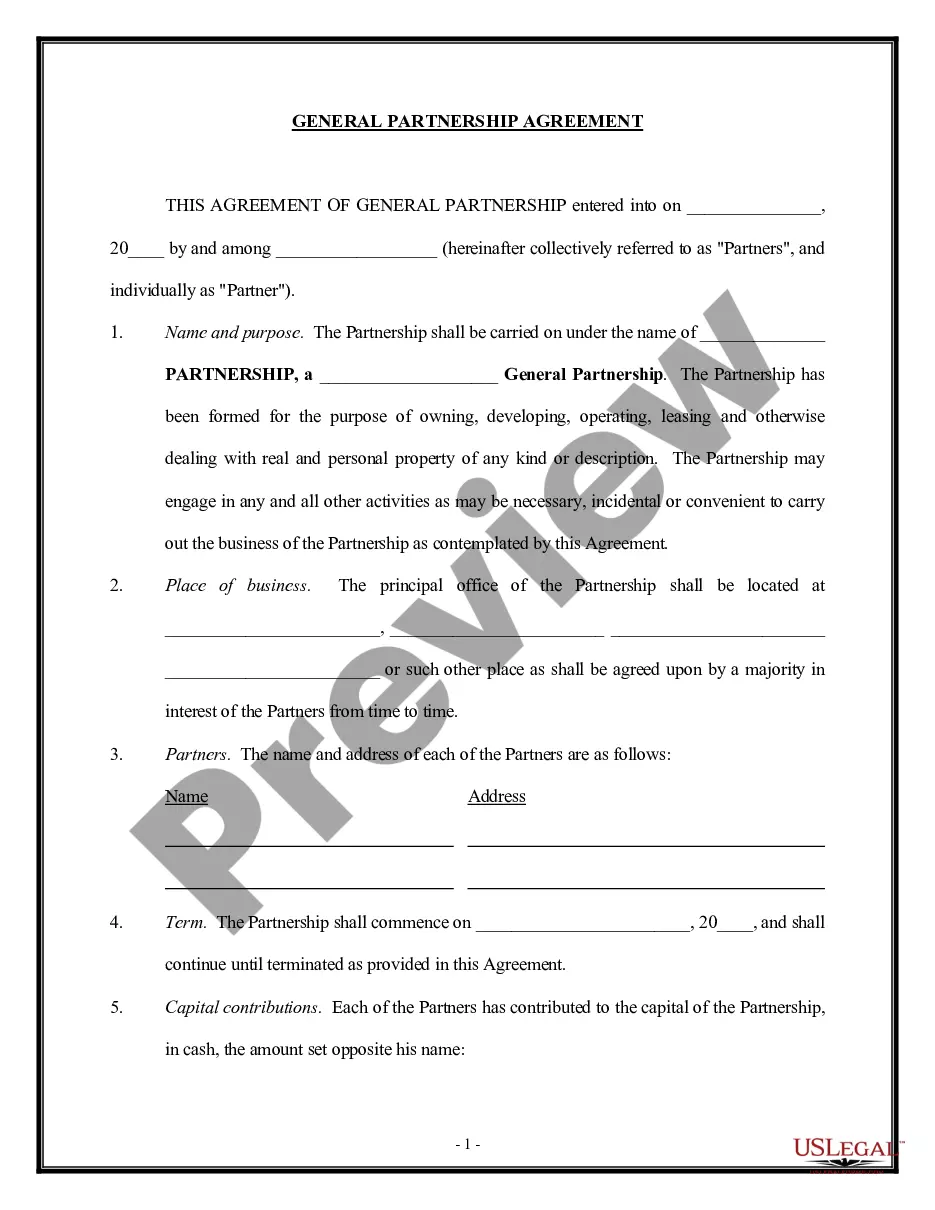
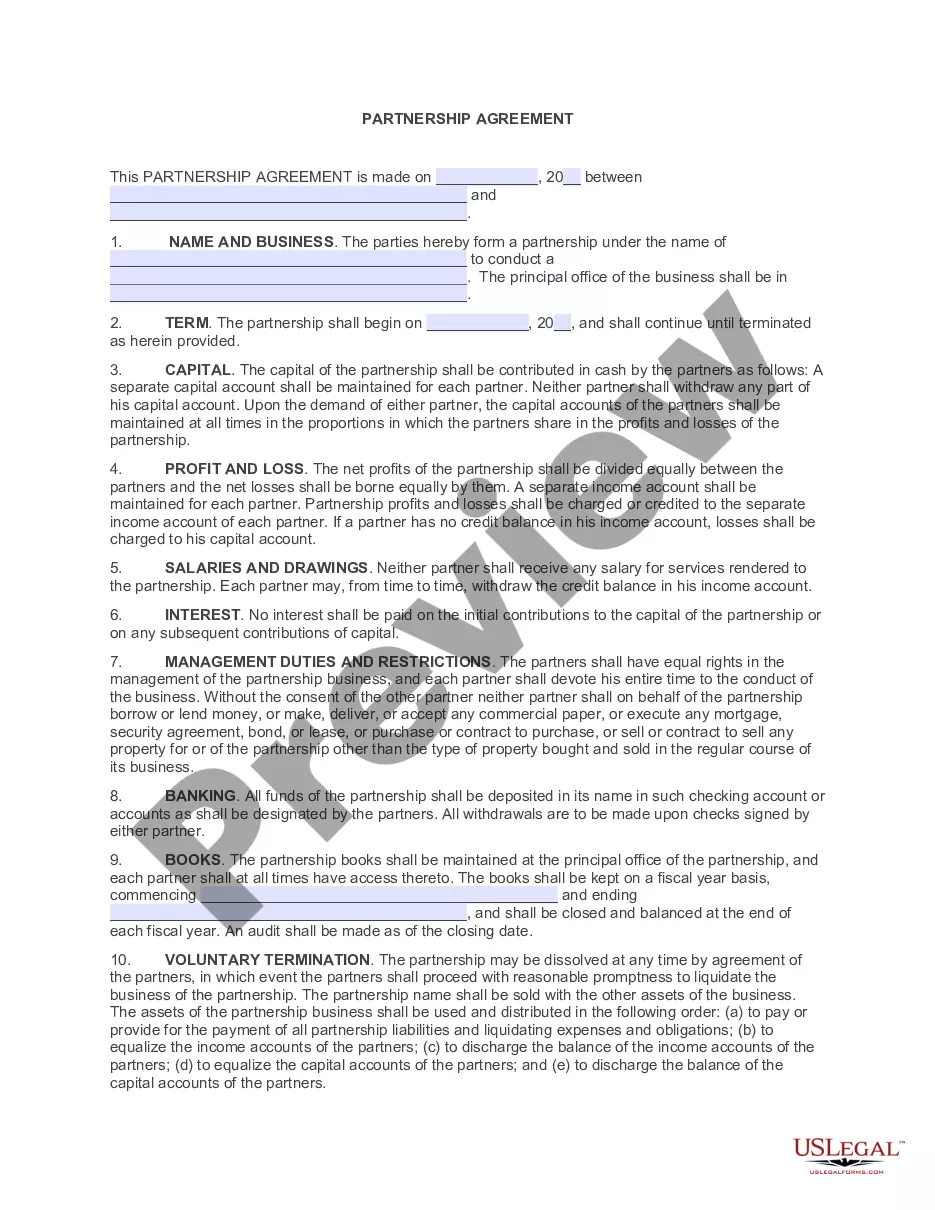
The General Partnership Agreement with Managing Partners and Officers is a legal document that outlines the terms and conditions under which a partnership operates. This agreement is essential for establishing the roles of partners, especially those designated as managing partners or officers, and differs from standard partnership agreements by specifically addressing management structure and responsibilities. It is vital for partners to have a clear understanding of their rights, contributions, and obligations within the partnership.
Key components of this form
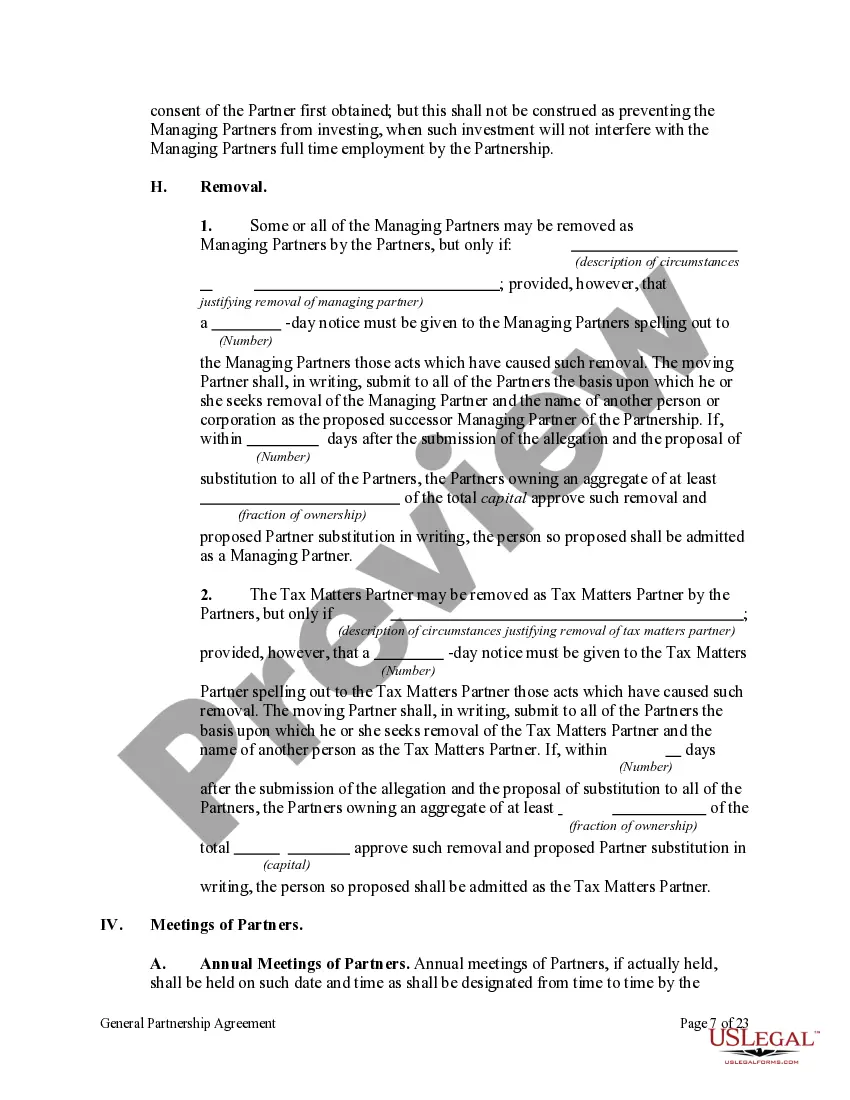
- Designation of a Tax Matters Partner responsible for handling tax-related issues.
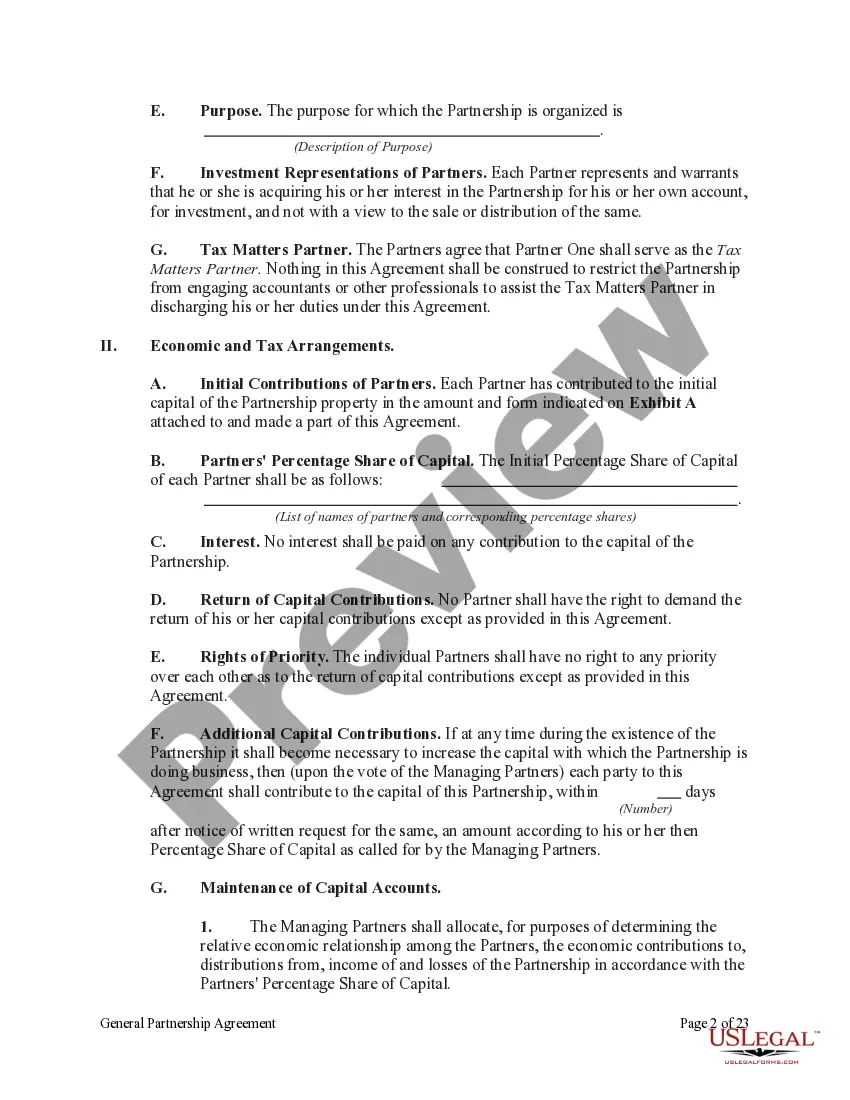
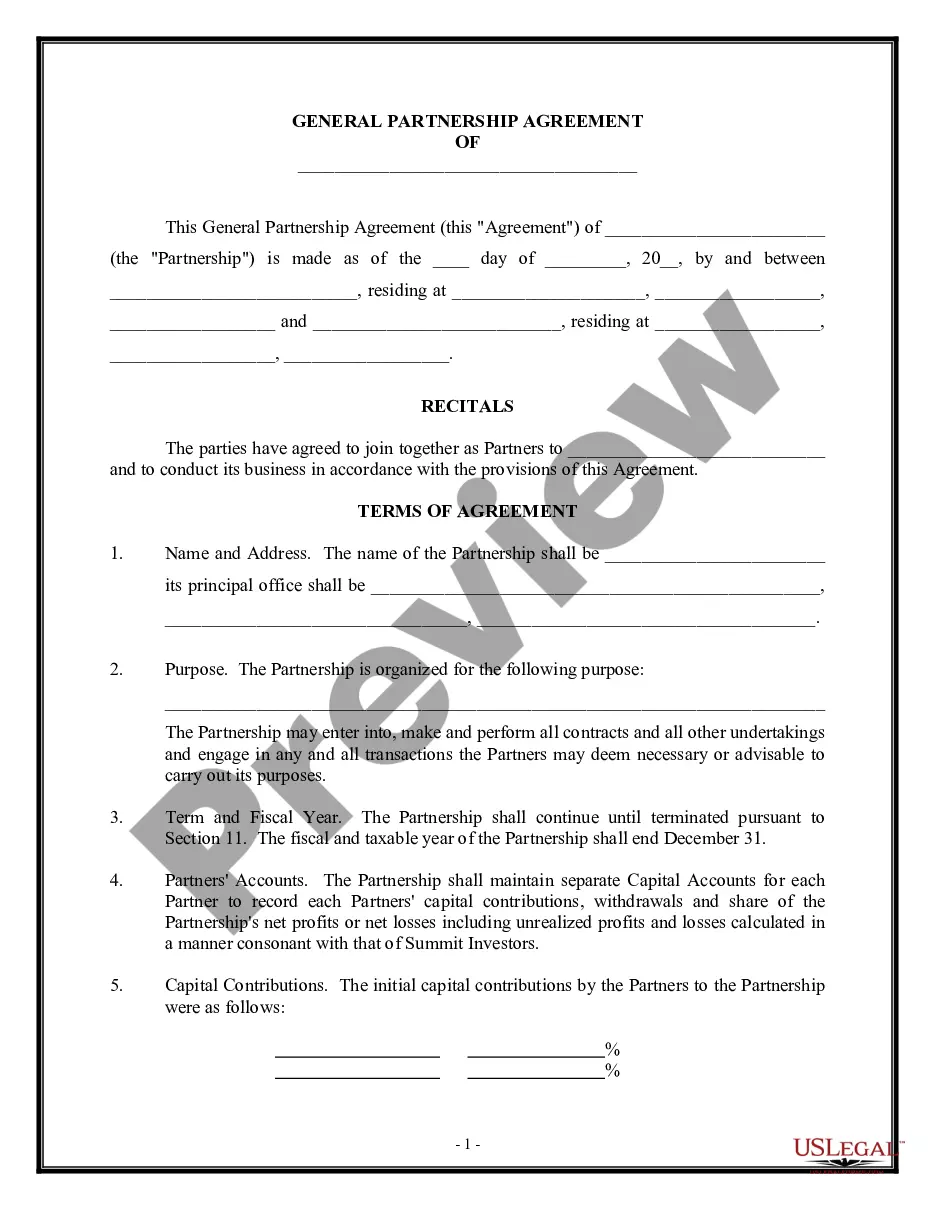
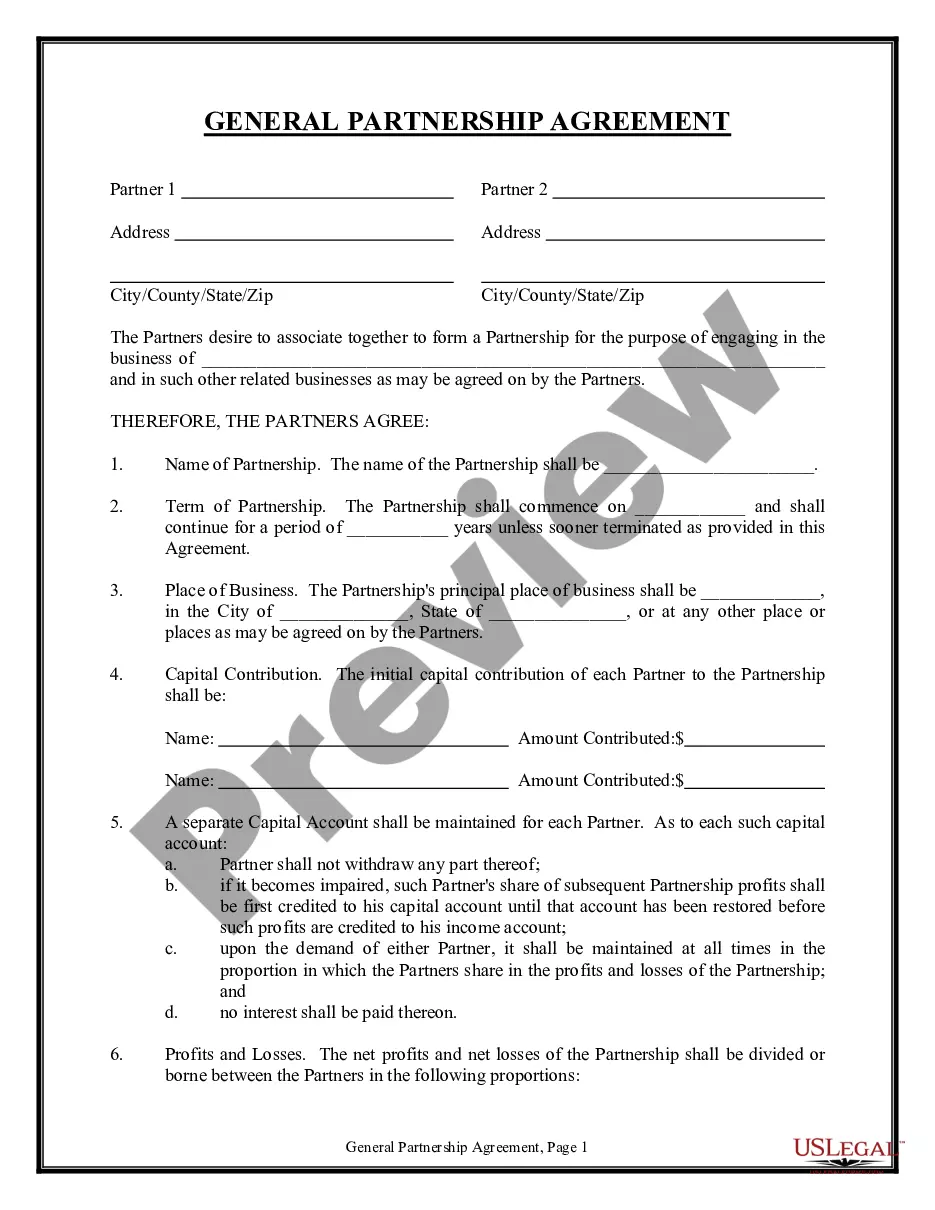
- Details on initial capital contributions from each partner.
- Rights regarding priority and return of capital contributions among partners.
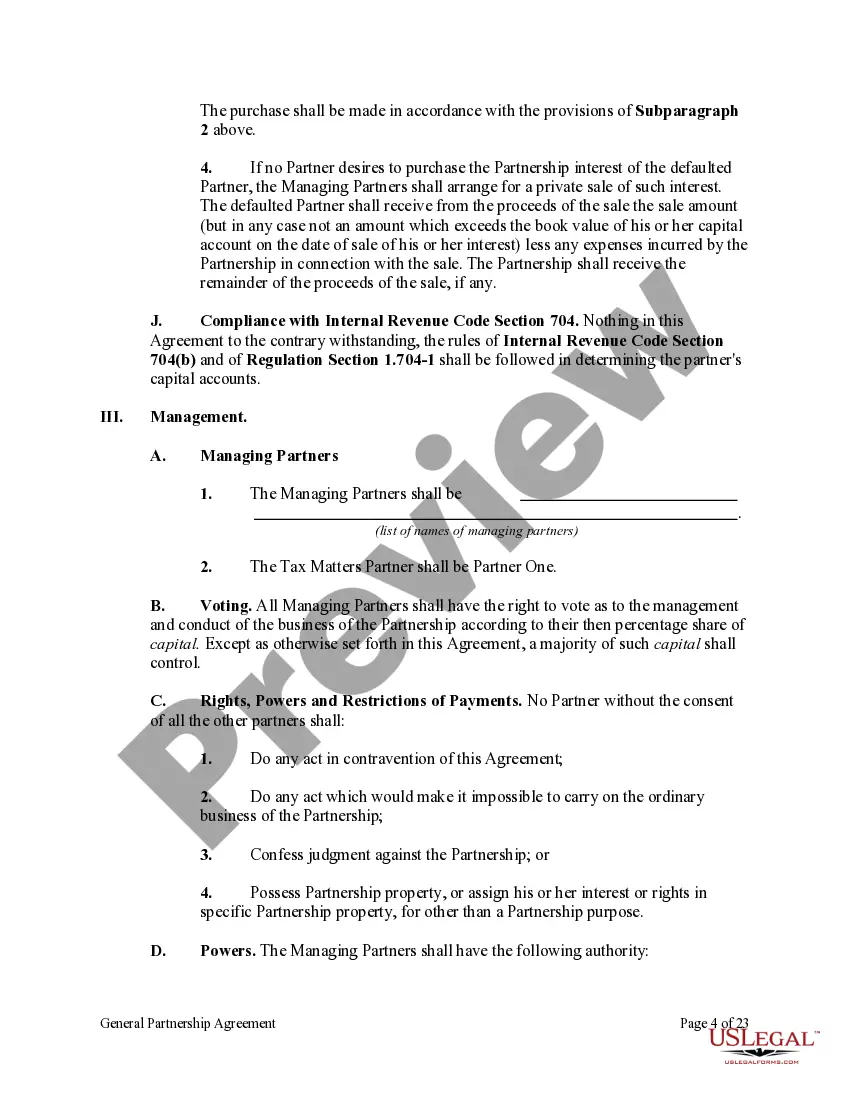
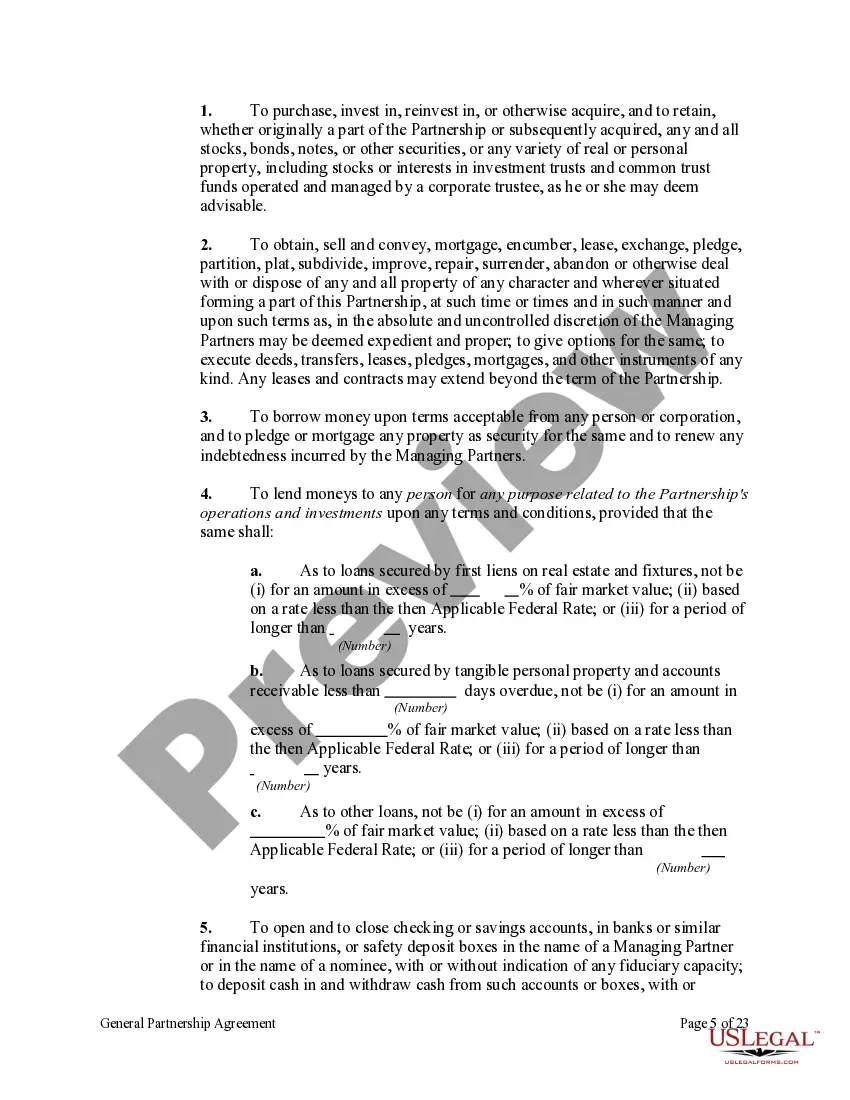
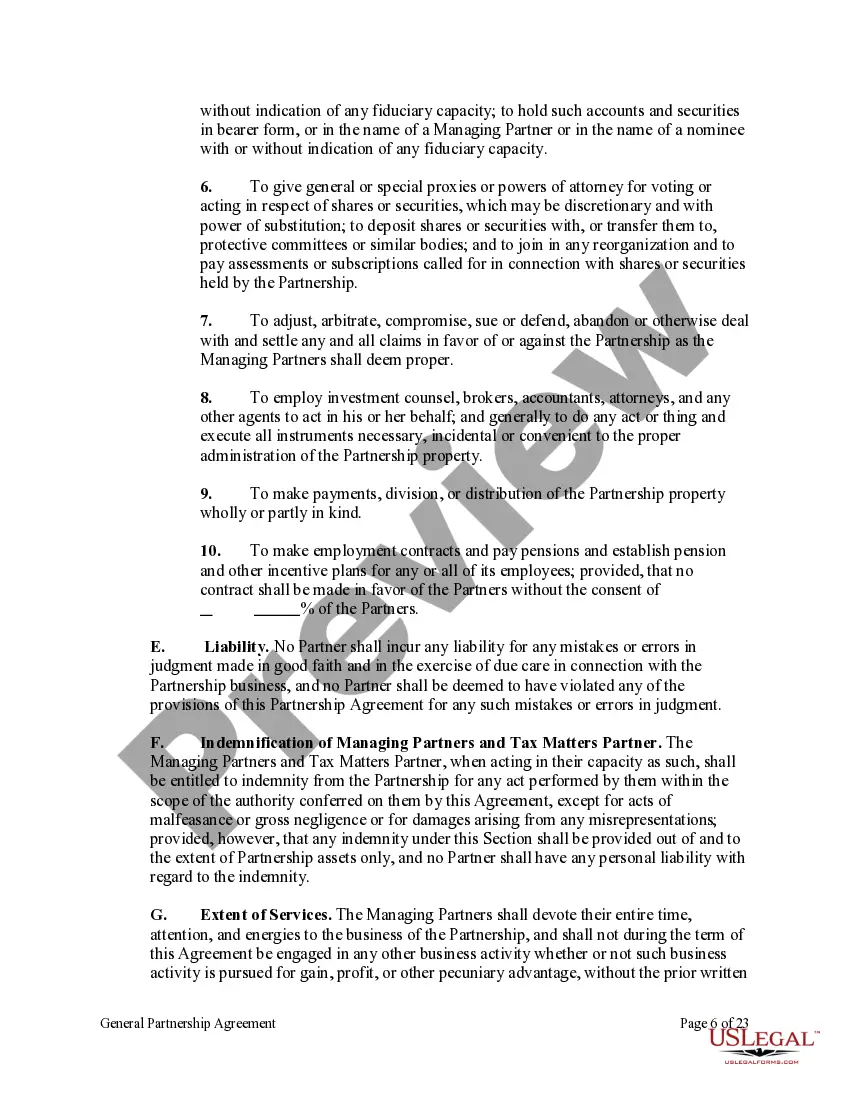
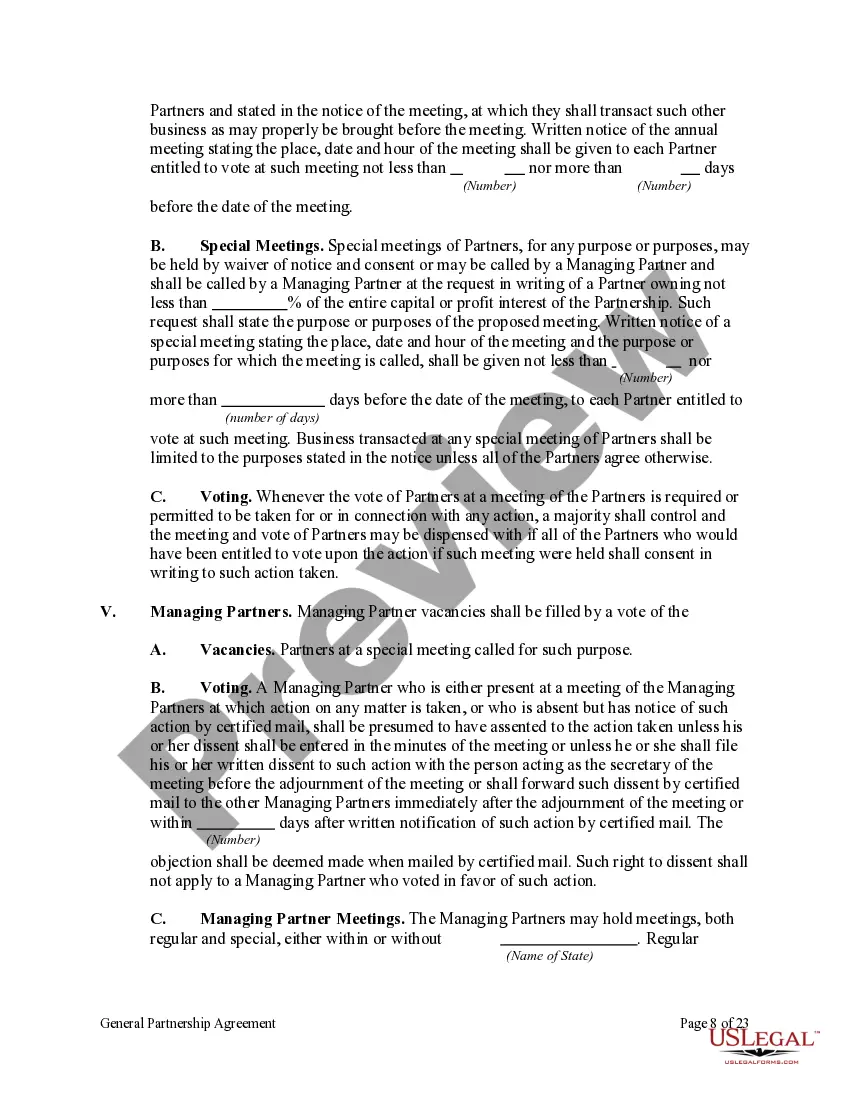
- Management authority granted to managing partners, including the power to make financial decisions.
- Provisions for handling the sale or transfer of partnership interests.
- Procedures for liquidating the partnership in case of dissolution.

When to use this form
This General Partnership Agreement should be used when two or more individuals or entities wish to enter into a business partnership and designate specific partners to manage the day-to-day operations. It is essential when partners need clear guidelines for contributions, financial management, decision-making authority, and dealing with potential partner defaults or ownership transitions. This agreement helps prevent misunderstandings and disputes down the line.
Who should use this form
- Business partners entering into a general partnership.
- Individuals looking to formalize their partnership roles and responsibilities.
- Partners who plan to manage the business by assigning specific roles to managing partners and officers.
- Businesses seeking to establish clear tax responsibilities and allocation of profits and losses.
Instructions for completing this form
- Identify all partners and their respective contributions to the partnership.
- Designate the Tax Matters Partner and specify their responsibilities.
- Outline the rights and powers of managing partners regarding partnership operations.
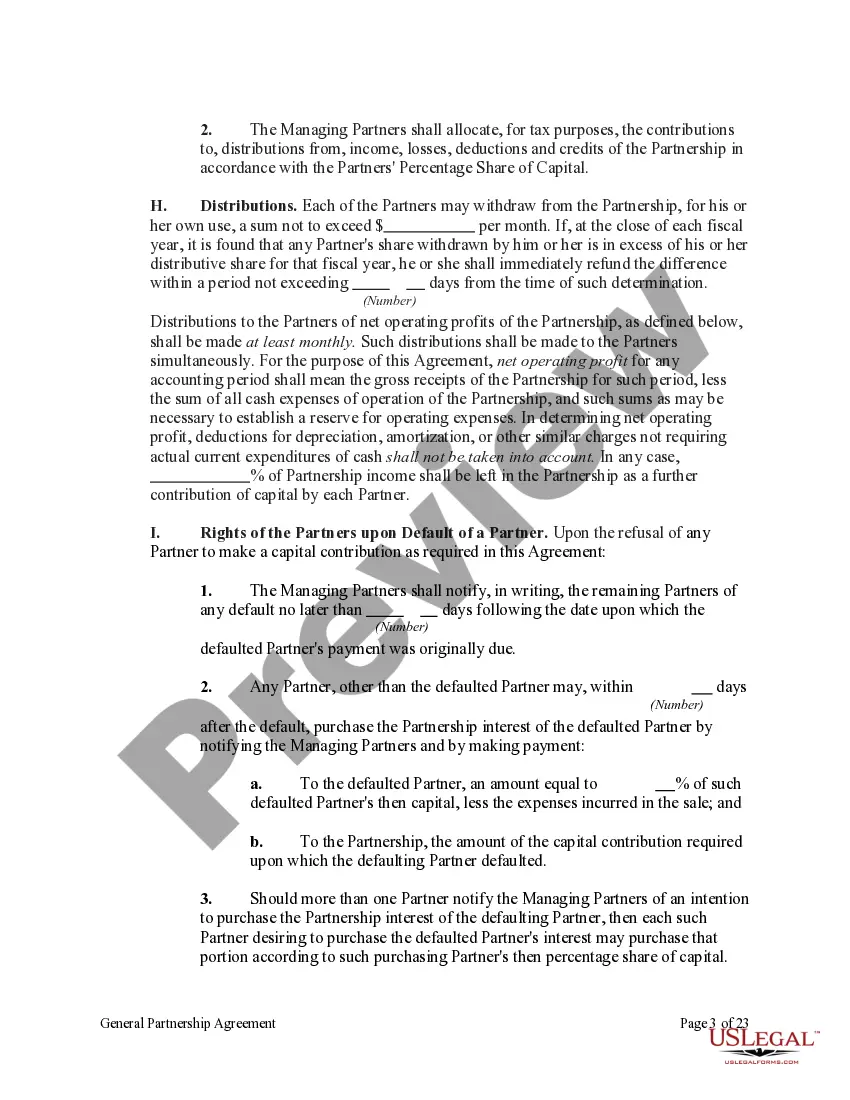
- Specify the procedures for addressing default by a partner.
- Include clauses on the sale or transfer of partnership interests and how financial distributions will occur during liquidation.
Does this form need to be notarized?
This form does not typically require notarization unless specified by local law. It is advisable to check local requirements to ensure compliance with regulations.
Get your form ready online
Our built-in tools help you complete, sign, share, and store your documents in one place.
Make edits, fill in missing information, and update formatting in US Legal Forms—just like you would in MS Word.
Download a copy, print it, send it by email, or mail it via USPS—whatever works best for your next step.
Sign and collect signatures with our SignNow integration. Send to multiple recipients, set reminders, and more. Go Premium to unlock E-Sign.
If this form requires notarization, complete it online through a secure video call—no need to meet a notary in person or wait for an appointment.
We protect your documents and personal data by following strict security and privacy standards.

Make edits, fill in missing information, and update formatting in US Legal Forms—just like you would in MS Word.

Download a copy, print it, send it by email, or mail it via USPS—whatever works best for your next step.

Sign and collect signatures with our SignNow integration. Send to multiple recipients, set reminders, and more. Go Premium to unlock E-Sign.

If this form requires notarization, complete it online through a secure video call—no need to meet a notary in person or wait for an appointment.

We protect your documents and personal data by following strict security and privacy standards.
Typical mistakes to avoid
- Not clearly defining roles and responsibilities of managing partners.
- Failing to include specific procedures for partner defaults.
- Omitting the designation of a Tax Matters Partner, leading to confusion during tax filings.
- Neglecting to update the agreement when new partners join or existing partners leave.
Why complete this form online
- Convenience of downloading and completing the form at your own pace.
- Editability allows for customization specific to your partnership needs.
- Access to reliable templates drafted by licensed attorneys ensures compliance with legal standards.
Looking for another form?

Form popularity
FAQ
In a general partnership, the partners equally divide management responsibilities, as well as profits. Joint ventures are the same as general partnerships except that the partnership only exists for a specified period of time or for a specific project.
General partners are entitled to receive compensation for their participation in the partnership. Partners aren't considered employees, so the compensation isn't in the form of a salary.
The amount of capital contributions to be made by each party. The circumstances under which arguments can be submitted to arbitration. The circumstances under which partners can be expelled. The circumstances under which partnership interests can be sold or transferred.
Like any contractual agreement, partnership agreements do not have to be in writing, as verbal agreements are also legally binding.In a partnership, each person is liable for the debts and actions of the other partners, so the contractual relationship and obligations need to be completely transparent.
Contributions. Money, money, money, and where is it coming from? Management. Decision-making. Authority of each partner. Division of profits. Admission of new partners. What if a partner wants to leave the business, or dies? Role of a spouse?
Having a Partner. In some cases, business partners become partners unnecessarily. Sharing Capital. Not Creating an Operating Agreement. Shared Liability. Not Planning for the End. Not Having a Non-Compete Agreement. Legal Assistance.
Percentage of ownership. Allocation of profits and losses. Who can bind the partnership? Making decisions. The death of a partner. Resolving disputes.
Although each partnership agreement differs based on business objectives, certain terms should be detailed in the document, including percentage of ownership, division of profit and loss, length of the partnership, decision making and resolving disputes, partner authority, and withdrawal or death of a partner.
Name of your partnership. Contributions to the partnership and percentage of ownership. Division of profits, losses and draws. Partners' authority. Withdrawal or death of a partner.