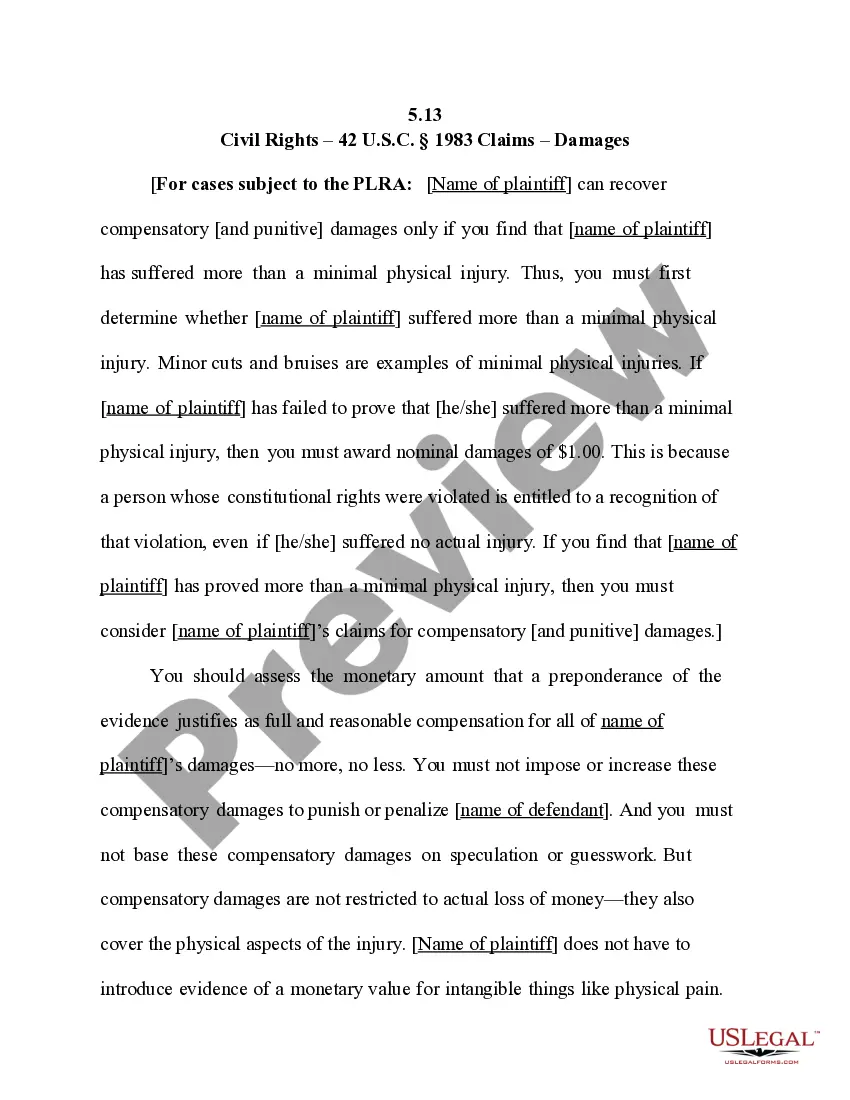
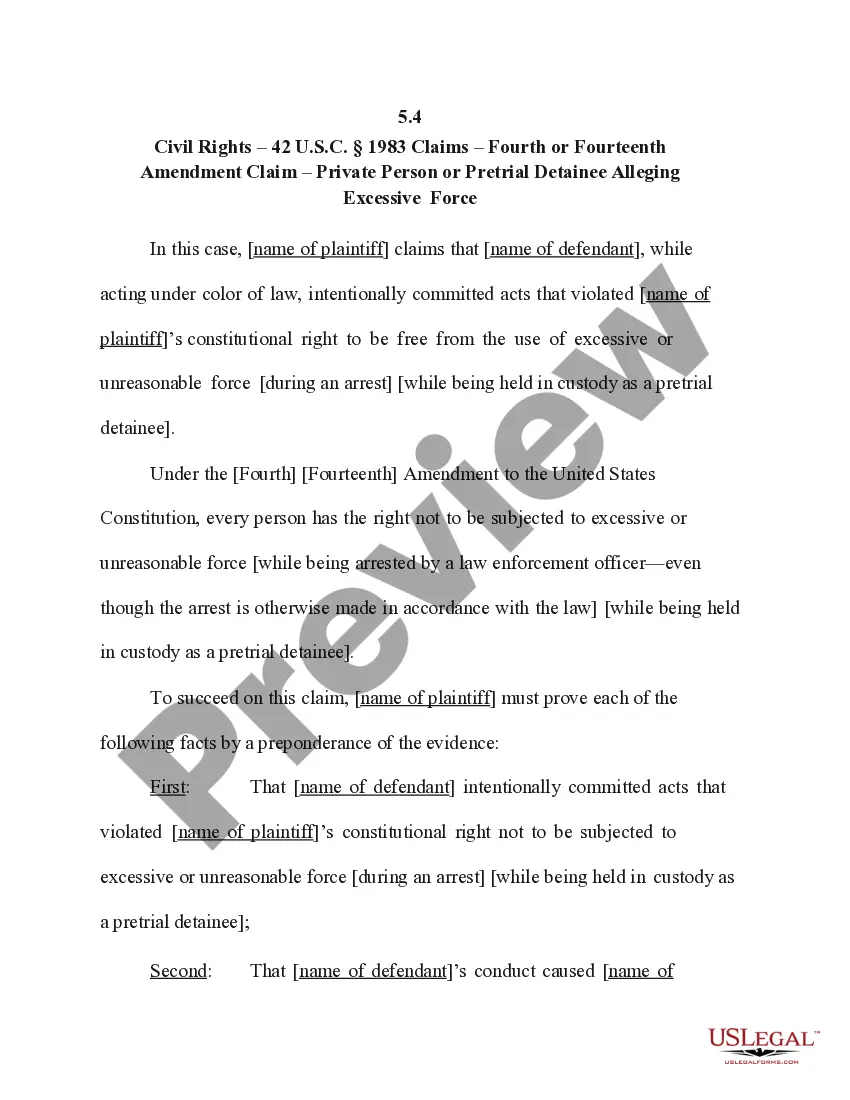
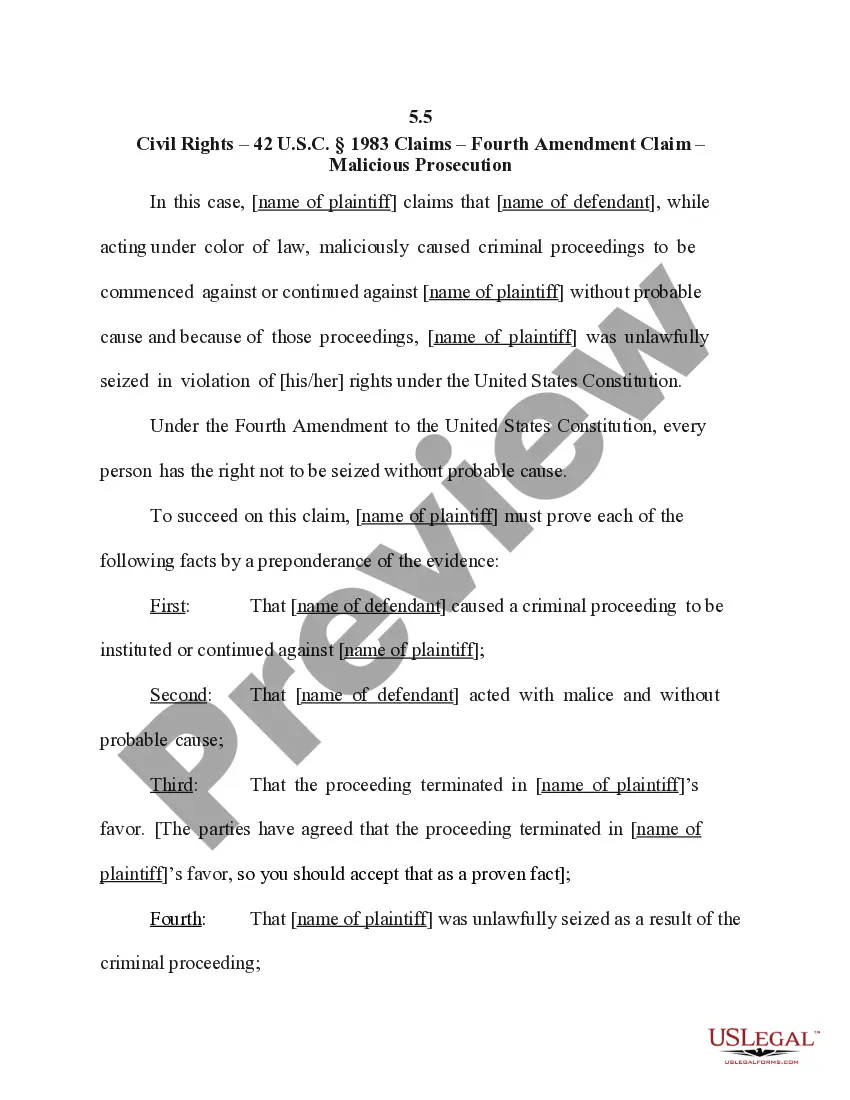
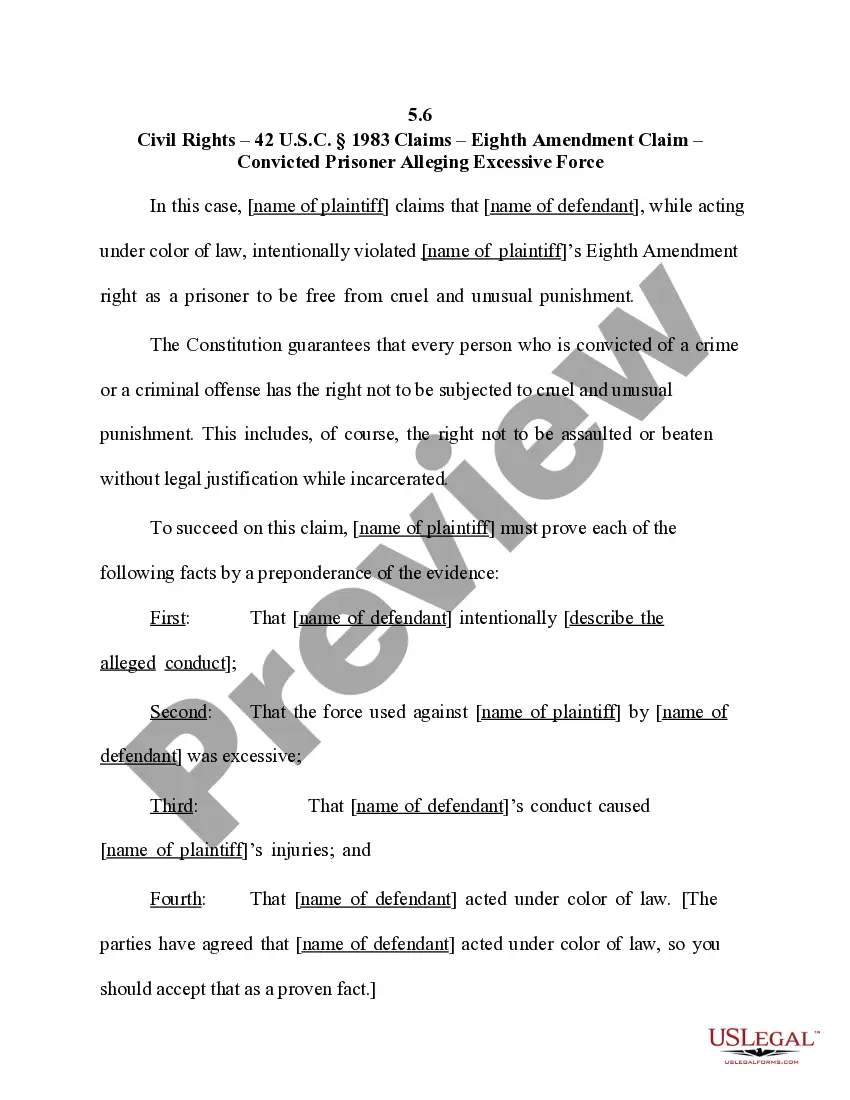
Civil Rights — 42 U.S.C. Sec. 1983 Claim— - Fourth Amendment Claim — Private Person Alleging Unlawful Arrest, Unlawful Search, or Unlawful Terry Stop is a legal action that can be taken by an individual against a state or federal government agency or employee for violating their constitutional rights under the Fourth Amendment. This type of civil rights claim is typically brought by a private person who alleges that they were unlawfully arrested, searched, or subjected to an unlawful Terry Stop. The two types of Civil Rights — 42 U.S.C. Sec. 1983 Claim— - Fourth Amendment Claim — Private Person Alleging Unlawful Arrest, Unlawful Search, or Unlawful Terry Stop are: 1. False Arrest Claim: This type of claim alleges that an individual was unlawfully arrested without probable cause or a valid arrest warrant. 2. Unlawful Search Claim: This type of claim alleges that an individual’s Fourth Amendment rights were violated when they were subjected to an unlawful search or seizure without a valid search warrant. 3. Unlawful Terry Stop Claim: This type of claim alleges that an individual was unlawfully stopped and detained without reasonable suspicion of criminal activity.
Civil Rights - 42 U.S.C. Sec. 1983 Claims - Fourth Amendment Claim - Private Person Alleging Unlawful Arrest, Unlawful Search, or Unlawful Terry Stop
Description


How to fill out Civil Rights - 42 U.S.C. Sec. 1983 Claims - Fourth Amendment Claim - Private Person Alleging Unlawful Arrest, Unlawful Search, Or Unlawful Terry Stop?
US Legal Forms is the most straightforward and cost-effective way to find appropriate formal templates. It’s the most extensive web-based library of business and personal legal paperwork drafted and verified by legal professionals. Here, you can find printable and fillable blanks that comply with federal and local regulations - just like your Civil Rights - 42 U.S.C. Sec. 1983 Claims - Fourth Amendment Claim - Private Person Alleging Unlawful Arrest, Unlawful Search, or Unlawful Terry Stop.
Getting your template takes only a few simple steps. Users that already have an account with a valid subscription only need to log in to the website and download the document on their device. Afterwards, they can find it in their profile in the My Forms tab.
And here’s how you can obtain a professionally drafted Civil Rights - 42 U.S.C. Sec. 1983 Claims - Fourth Amendment Claim - Private Person Alleging Unlawful Arrest, Unlawful Search, or Unlawful Terry Stop if you are using US Legal Forms for the first time:
- Read the form description or preview the document to ensure you’ve found the one meeting your demands, or find another one using the search tab above.
- Click Buy now when you’re certain about its compatibility with all the requirements, and select the subscription plan you prefer most.
- Create an account with our service, log in, and purchase your subscription using PayPal or you credit card.
- Choose the preferred file format for your Civil Rights - 42 U.S.C. Sec. 1983 Claims - Fourth Amendment Claim - Private Person Alleging Unlawful Arrest, Unlawful Search, or Unlawful Terry Stop and download it on your device with the appropriate button.
Once you save a template, you can reaccess it anytime - just find it in your profile, re-download it for printing and manual fill-out or import it to an online editor to fill it out and sign more proficiently.
Benefit from US Legal Forms, your trustworthy assistant in obtaining the corresponding formal documentation. Try it out!
Form popularity
FAQ
Section 1983 provides an individual the right to sue state government employees and others acting "under color of state law" for civil rights violations. Section 1983 does not provide civil rights; it is a means to enforce civil rights that already exist.
The elements of a § 1983 claim are (1) the action occurred ?under color of state law? and (2) the action resulted in the deprivation of a constitutional right or federal statutory right.
The elements of a § 1983 claim are (1) the action occurred ?under color of state law? and (2) the action resulted in the deprivation of a constitutional right or federal statutory right.
Pachtman, (U.S. Supreme Court, 1976) 424 U.S. 409; 42 U.S. Code § 1983 (?In any action brought against a judicial officer for an act or omission taken in such officer's judicial capacity, injunctive relief shall not be granted unless a declaratory decree was violated or declaratory relief was unavailable.?).
What are the elements of a section 1983 claim? a person subjected the plaintiff to conduct that occurred under color of state law, and. this conduct deprived the plaintiff of rights, privileges, or immunities guaranteed under the U.S. Constitution or federal law.
To state a Section 1983 claim, the plaintiff is required to allege that (1) the conduct complained of was committed by a person acting under the color of state law; and (2) the conduct deprived the plaintiff of a constitutional right.
Under 42 U.S.C. § 1983, you may sue state or local officials for the ?deprivation of any rights, privileges, or immunities secured by the Constitution and federal laws.? Under Bivens v.
What are the elements of a section 1983 claim? a person subjected the plaintiff to conduct that occurred under color of state law, and. this conduct deprived the plaintiff of rights, privileges, or immunities guaranteed under the U.S. Constitution or federal law.