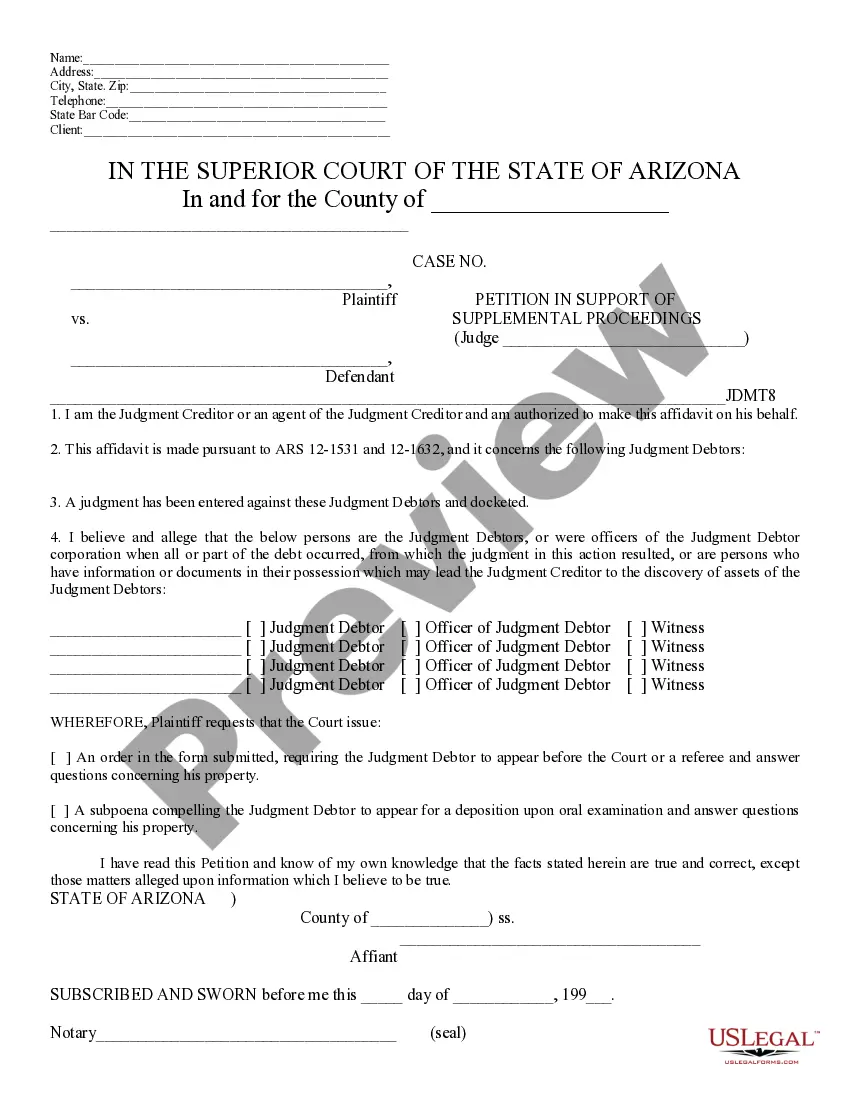
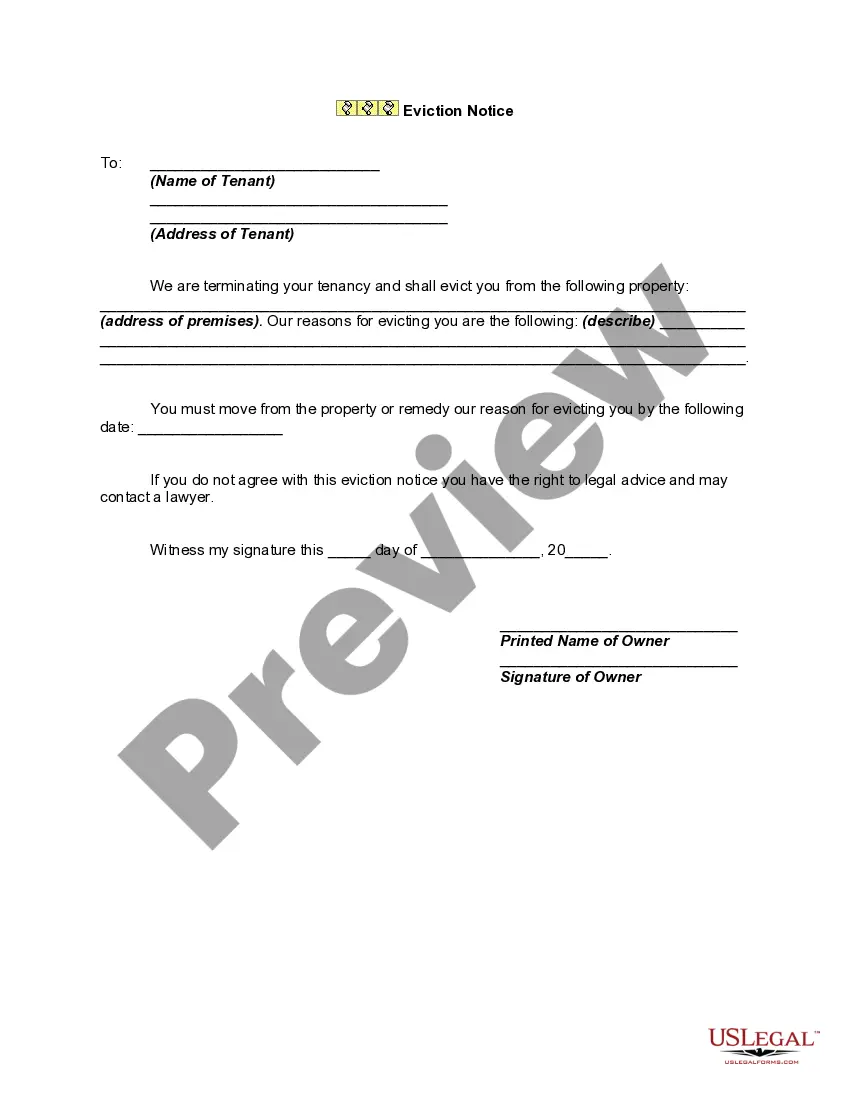
Eviction Notice

Overview of this form
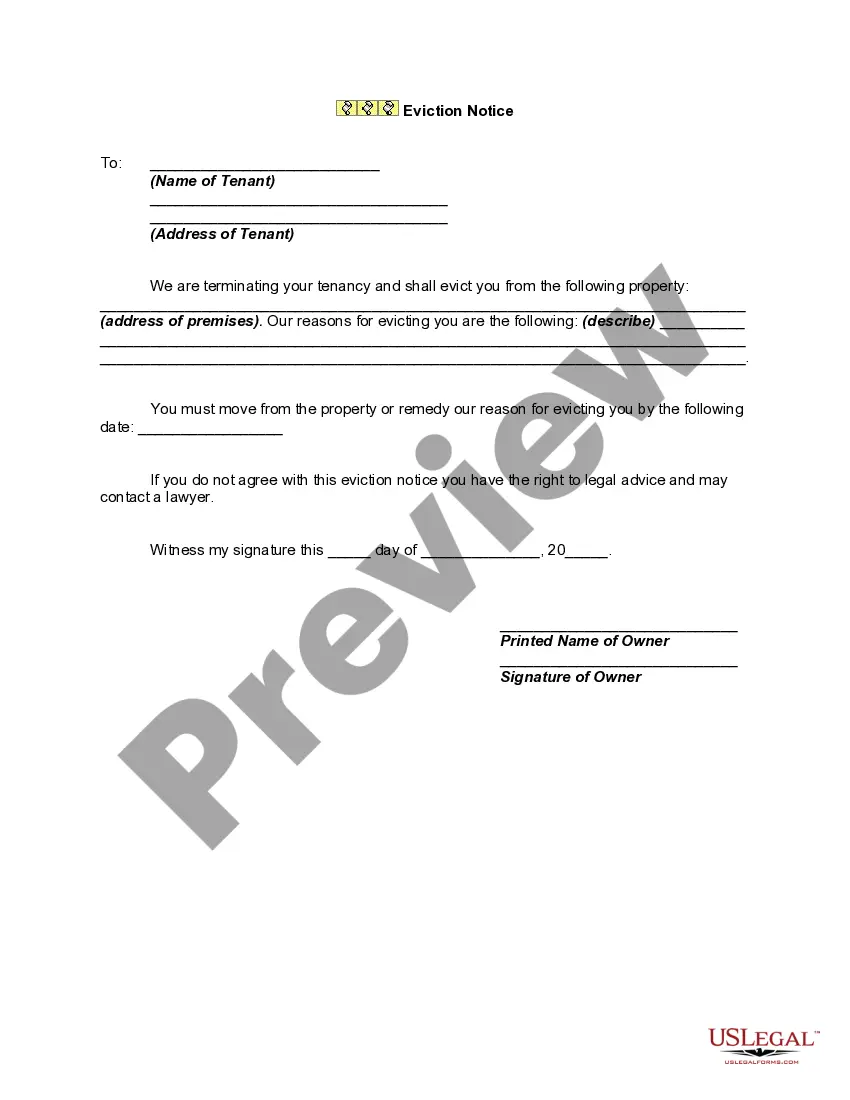
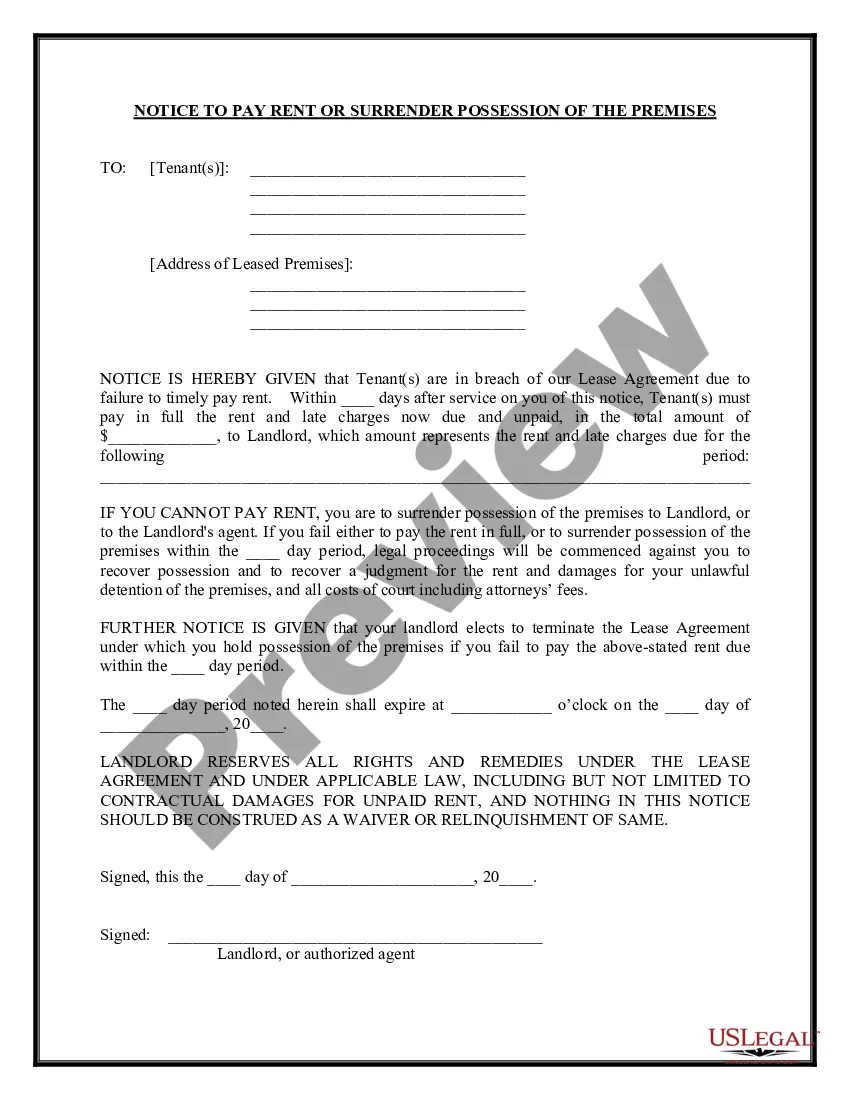
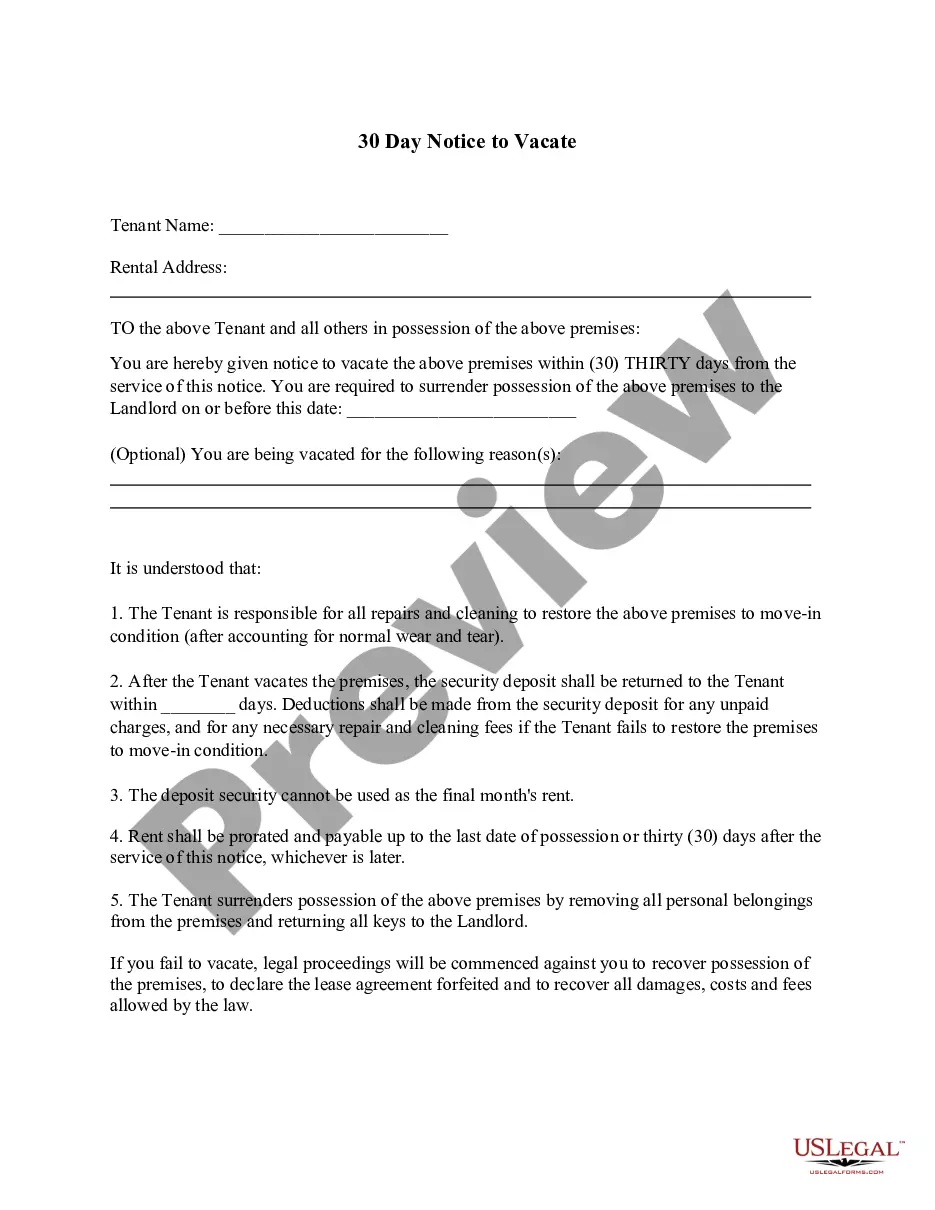
An eviction notice is a formal written statement by a landlord indicating the desire to terminate a tenant's lease. This document outlines the reasons for eviction and provides a deadline for the tenant to vacate the premises. It differs from other notices, such as a notice to cure, as it directly leads to eviction proceedings if not addressed. The eviction notice serves to inform tenants of their rights and the steps they must take moving forward.
What’s included in this form
- Name and address of the tenant
- Address of the rental property
- Specific reasons for eviction
- Deadline for moving out or remedying the issue
- Landlord's signature and printed name
Eviction Notice Requirements by State
Notice periods vary by state and by the reason for the eviction. Use this table to confirm the minimum notice required in your jurisdiction before serving a notice — each citation links to the official statute text.
How to Serve an Eviction Notice
These are the delivery methods states generally recognize. Which of them counts as valid service — and in what order you must attempt them — is decided by your state's statute, so confirm the rule that applies to your notice type before delivering.
-
Personal Delivery
Handing the notice to the tenant is the method least likely to be challenged, and it is recognized everywhere. Where the tenant is absent, many states allow delivery to another adult at the property instead.
-
Certified MailAvailable in US Legal Forms
Certified or registered mail with return receipt gives you a dated record of delivery. States differ on when mailing alone is enough, and several add days to the notice period to allow for transit.
-
Posting and Mailing
Affixing the notice to the door and mailing a copy is usually a fallback, permitted only after a documented attempt at personal delivery — and not permitted at all in some states.
Some states require a combination of methods, restrict who may serve the notice, or require a signed proof of service to be filed with the court. Email and text count as service only where the tenant has agreed to it in writing and the state allows it. Verify your state's service rules before delivering.
How to Write an Eviction Notice
The sequence below applies in most states. The details behind each step — required wording, how days are counted, who may sign, what must be attached — are set by state law and sometimes by city ordinance, so treat this as the general shape of a valid notice and confirm the specifics for your jurisdiction.
-
1
Identify every party
Name the landlord or managing agent serving the notice, and every adult tenant named on the lease — full legal names, as written in the lease. Some states also require the notice to be addressed to other adult occupants.
-
2
Identify the property
Give the complete address of the rental unit, including unit or apartment number. Where the lease describes the premises in a particular way, match that description.
-
3
State the ground for termination
Say plainly why the tenancy is ending and cite the lease clause or statute involved. Many states expect the underlying facts — dates, amounts, specific incidents — rather than a general statement, and a vague ground is one of the most common reasons a notice is thrown out.
-
4
Set the deadline using your state's notice period
Count the period from the date the notice is served, not the date it is written. Check whether your state counts calendar, business, court, or judicial days, and whether extra days are added when the notice is mailed.
-
5
Say what the tenant can do, if anything
For a curable ground, state exactly what would stop the eviction — the amount owed and how to pay it, or the violation to be fixed — and by when. For an uncurable ground, state that the tenancy ends with no opportunity to cure. Some states require an itemized amount or a specific payment address.
-
6
Sign, date, and document service
Sign as landlord or authorized agent, date the notice, and record how, when, and by whom it was delivered. Keep that proof of service: courts routinely ask for it, and some states limit who is allowed to serve the notice.
Requirements differ by state, and a notice that is short by a day or missing a required statement is usually invalid — the landlord has to start over. Some states also mandate specific language, a state-approved form, or a defined ground for termination. Check the state table above, and your local rules, before serving.
Situations where this form applies
This eviction notice should be used when a landlord needs to formally notify a tenant of the termination of their tenancy due to specific reasons, such as non-payment of rent, lease violations, or illegal activities. It is essential in situations where the landlord wants to start the eviction process while ensuring compliance with legal requirements.
Who needs this form
This form is intended for:
- Landlords seeking to evict a tenant
- Property managers handling tenant issues
- Residential property owners
Steps to complete this form
- Identify and enter the tenant's name and address.
- Specify the address of the property requiring eviction.
- Clearly describe the reasons for eviction.
- Set the date by which the tenant must move or remedy the issue.
- Sign the notice and print your name as the landlord.
Does this document require notarization?
This form does not typically require notarization unless specified by local law. Ensure that you review your state's requirements for added compliance.
Get your form ready online
Our built-in tools help you complete, sign, share, and store your documents in one place.
Make edits, fill in missing information, and update formatting in US Legal Forms—just like you would in MS Word.
Download a copy, print it, send it by email, or mail it via USPS—whatever works best for your next step.
Sign and collect signatures with our SignNow integration. Send to multiple recipients, set reminders, and more. Go Premium to unlock E-Sign.
If this form requires notarization, complete it online through a secure video call—no need to meet a notary in person or wait for an appointment.
We protect your documents and personal data by following strict security and privacy standards.

Make edits, fill in missing information, and update formatting in US Legal Forms—just like you would in MS Word.

Download a copy, print it, send it by email, or mail it via USPS—whatever works best for your next step.

Sign and collect signatures with our SignNow integration. Send to multiple recipients, set reminders, and more. Go Premium to unlock E-Sign.

If this form requires notarization, complete it online through a secure video call—no need to meet a notary in person or wait for an appointment.

We protect your documents and personal data by following strict security and privacy standards.
Avoid these common issues
- Failing to provide a valid reason for eviction.
- Not including the complete and accurate tenant details.
- Setting an unrealistic deadline for the tenant to comply.
- Not signing the notice or including the landlord's printed name.
Advantages of online completion
- Easy access to legally drafted templates tailored for your state.
- Quick and convenient download options.
- Editable templates that allow personalization as per your needs.
- Expert guidance on legal compliance throughout the process.
Legal use & context
Eviction notices serve as a formal legal basis for proceeding with eviction actions. Properly drafted notices can protect landlords against legal challenges should tenants dispute the eviction.
Summary of main points
- An eviction notice is essential for initiating the eviction process.
- Clear reasons and deadlines in the notice are crucial.
- Compliance with state-specific laws is necessary to avoid legal issues.
Looking for another form?
Form popularity
FAQ
Addresses. Date. Tenant names. Status and date of the lease. Why the eviction notice is served (clear and concise explanation) Date tenant must vacate the property. Proof of service or delivery of notice.
A landlord cannot legally evict you without a court order, whether or not you have a lease.) How long does it take for a landlord to evict a tenant? A landlord can evict a tenant only by going through a formal eviction proceeding, which can take a few weeks from start to finish.
Addresses. Date. Tenant names. Status and date of the lease. Why the eviction notice is served (clear and concise explanation) Date tenant must vacate the property. Proof of service or delivery of notice.