Clause Dealing with Fire Damage
What is this form?
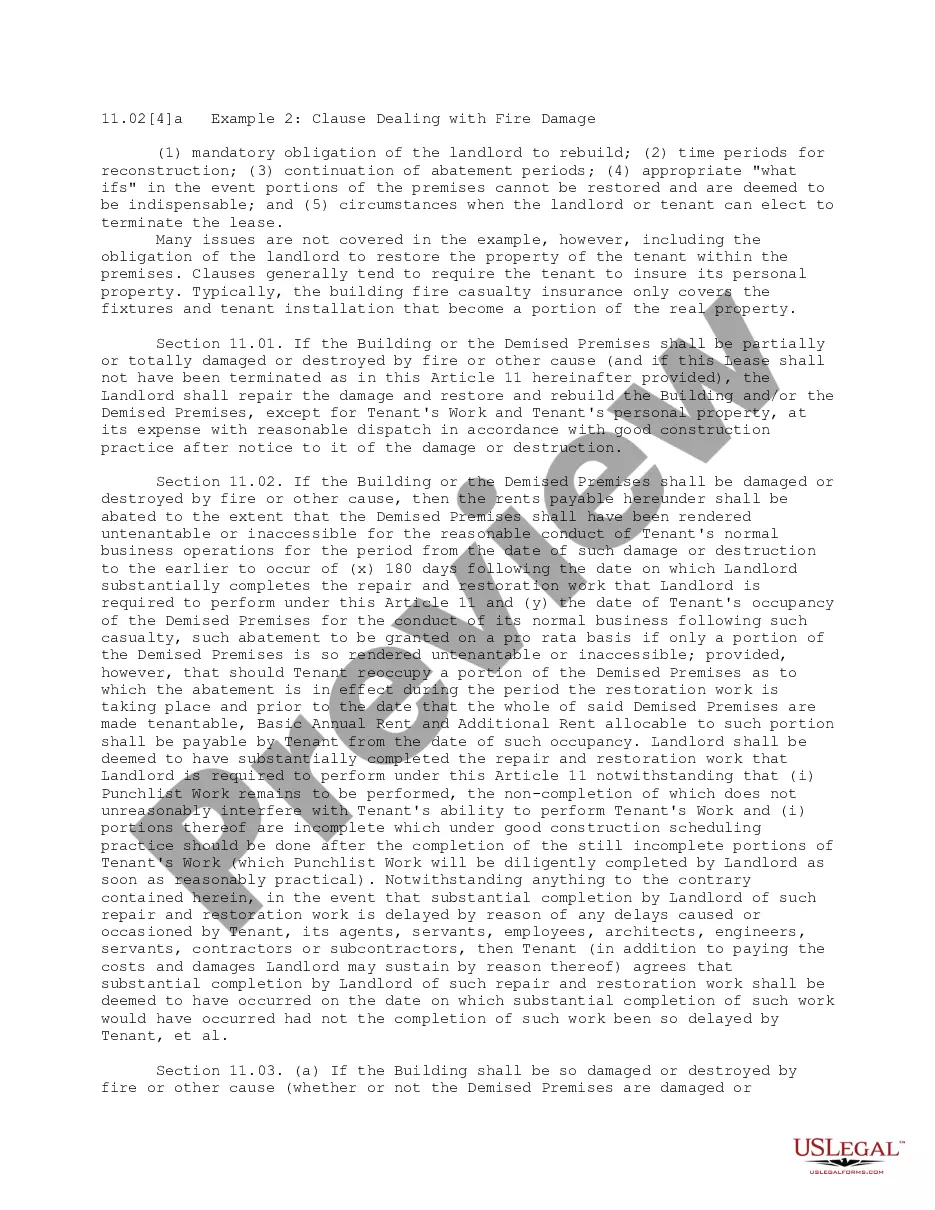
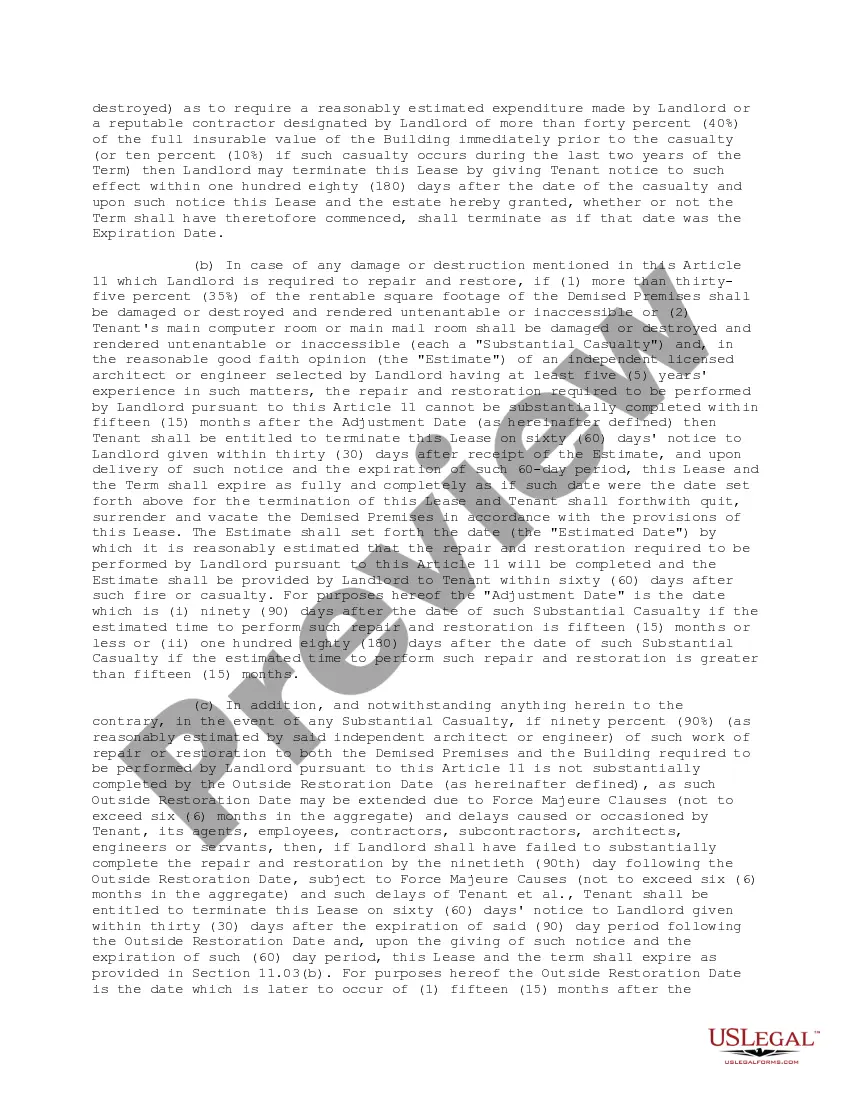
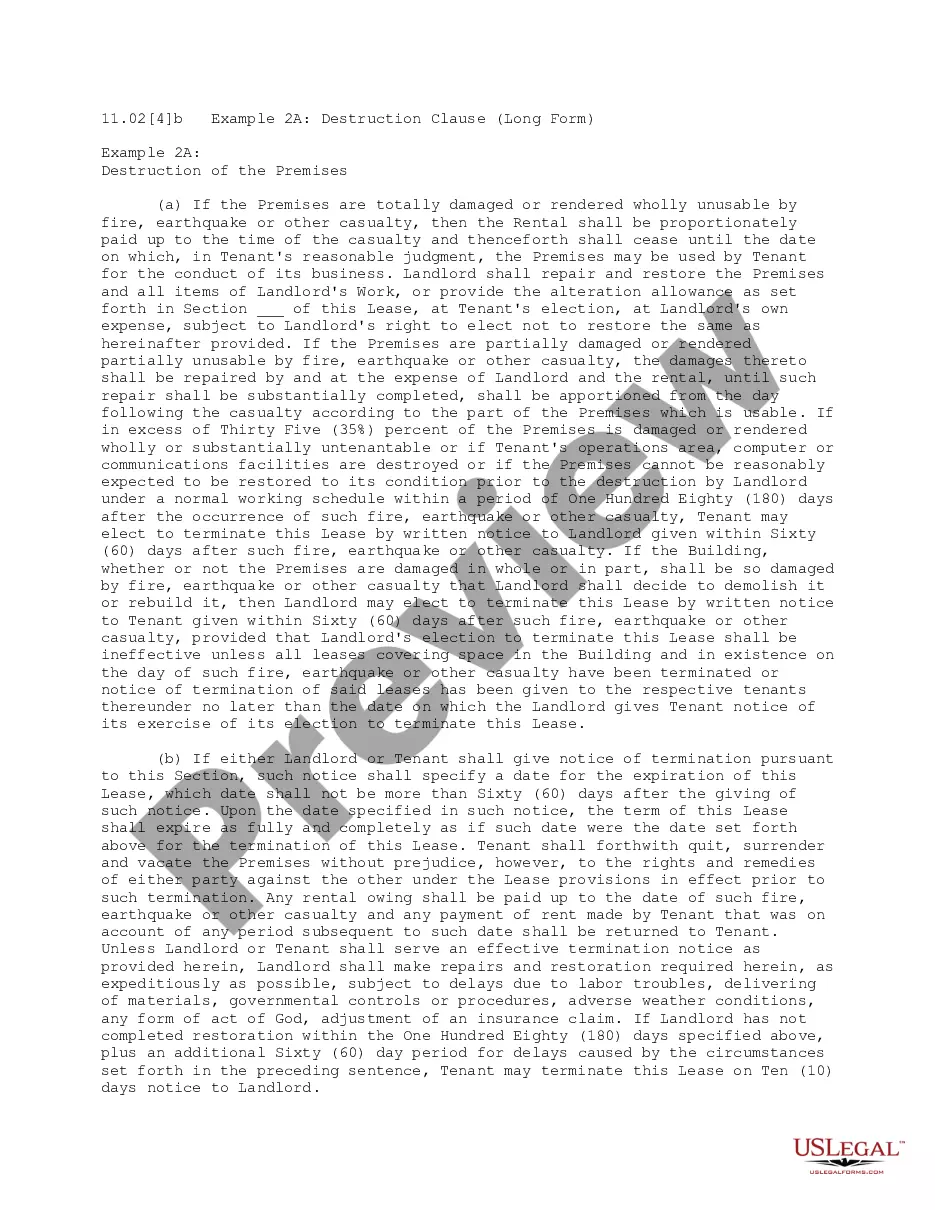
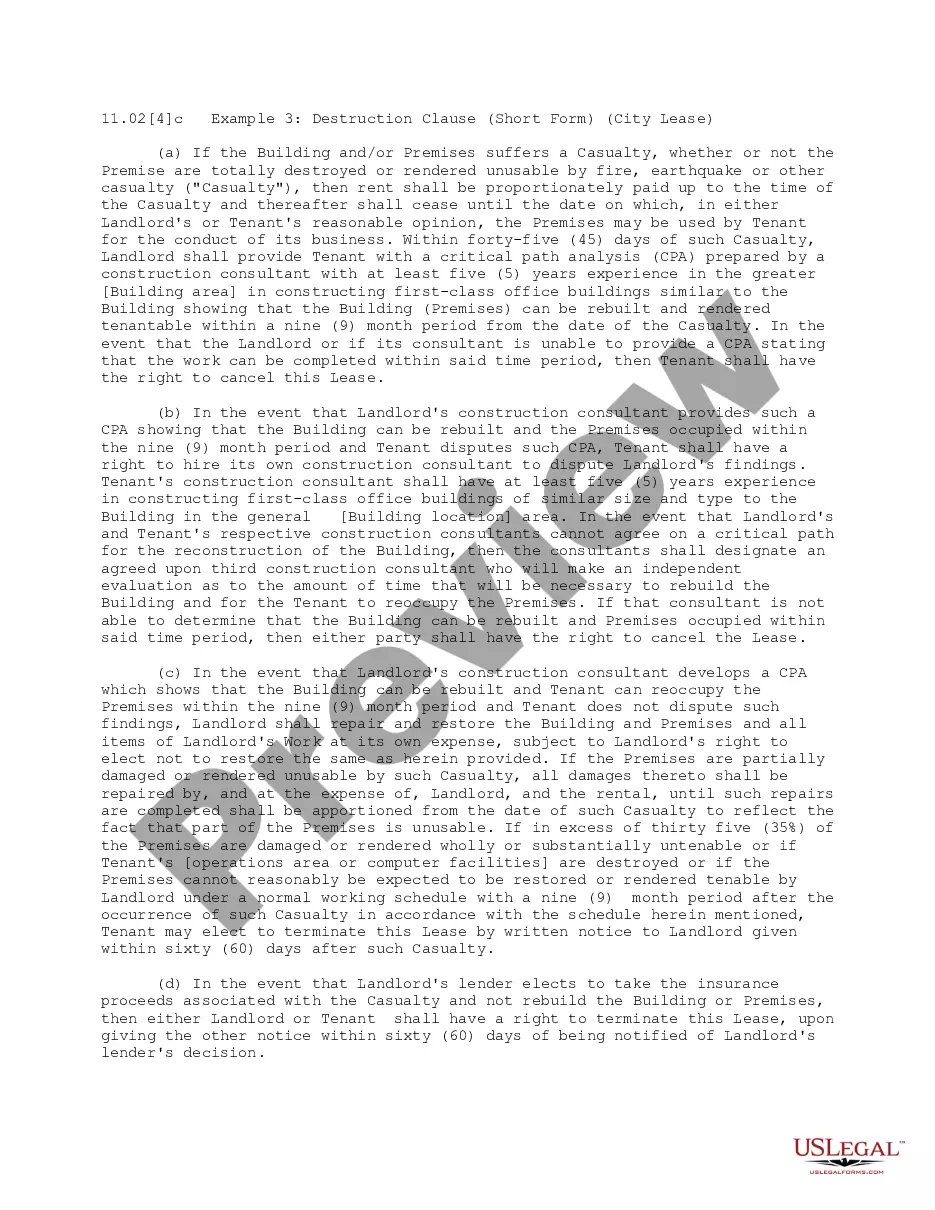
The Clause Dealing with Fire Damage is a legal provision included in an office lease. It outlines the responsibilities and obligations of both the landlord and the tenant in the event of fire damage or destruction of the leased premises. This form is essential for ensuring clarity and understanding regarding the rebuilding obligations, timelines for reconstruction, and the conditions under which the lease may be terminated, distinguishing it from other rental agreements that may not cover such specific scenarios in detail.
Key parts of this document
- Mandatory obligation for the landlord to repair and rebuild the premises after fire damage.
- Time periods for reconstruction and completion of repairs.
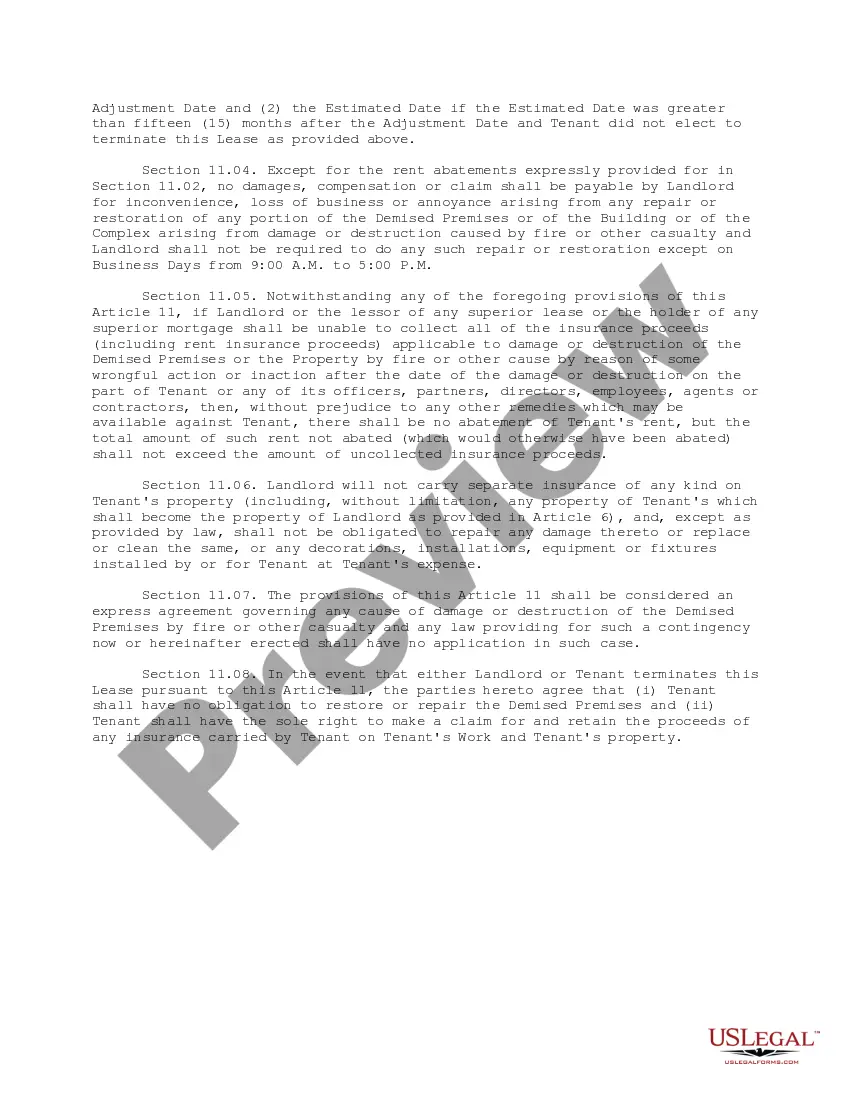
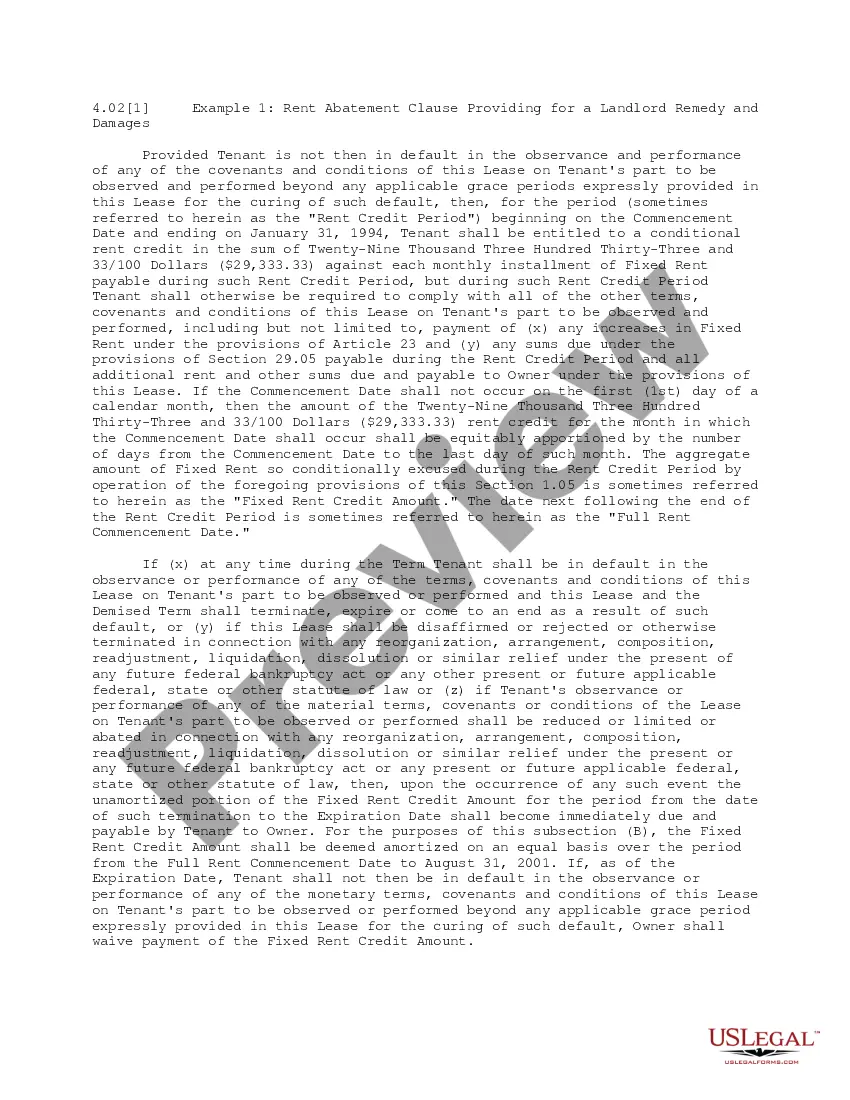
- Conditions for rent abatement if the premises become untenantable.
- Provisions for termination of the lease by either party under specific circumstances.
- Insurance obligations for the tenant regarding personal property.
- Clarification on which damages are the landlord's responsibility to repair.
Common use cases
This form should be used when entering into an office lease agreement that includes specific clauses related to fire damage. It is especially important for landlords and tenants where there is a risk of significant fire damage. Using this clause allows both parties to understand their rights, obligations, and the processes required for damage assessment and repair, ensuring alignment and clarity in business operations after incidents.
Who should use this form
- Landlords who are leasing commercial property.
- Tenants looking to lease office space.
- Real estate professionals facilitating lease agreements.
- Business owners wanting to ensure clear terms concerning fire damage in their leases.
- Attorneys drafting or reviewing commercial leases for clients.
Completing this form step by step
- Identify the parties involved in the lease (landlord and tenant).
- Specify the property address and description to be leased.
- Insert clear outlines of obligations regarding repairs after fire damage.
- Define timelines for construction and any related rent abatements.
- Include provisions for insurance responsibilities of the tenant.
- Ensure both parties review the clause to understand their rights and obligations.
Notarization requirements for this form
This form usually doesn’t need to be notarized. However, local laws or specific transactions may require it. Our online notarization service, powered by Notarize, lets you complete it remotely through a secure video session, available 24/7.
Get your form ready online
Our built-in tools help you complete, sign, share, and store your documents in one place.
Make edits, fill in missing information, and update formatting in US Legal Forms—just like you would in MS Word.
Download a copy, print it, send it by email, or mail it via USPS—whatever works best for your next step.
Sign and collect signatures with our SignNow integration. Send to multiple recipients, set reminders, and more. Go Premium to unlock E-Sign.
If this form requires notarization, complete it online through a secure video call—no need to meet a notary in person or wait for an appointment.
We protect your documents and personal data by following strict security and privacy standards.

Make edits, fill in missing information, and update formatting in US Legal Forms—just like you would in MS Word.

Download a copy, print it, send it by email, or mail it via USPS—whatever works best for your next step.

Sign and collect signatures with our SignNow integration. Send to multiple recipients, set reminders, and more. Go Premium to unlock E-Sign.

If this form requires notarization, complete it online through a secure video call—no need to meet a notary in person or wait for an appointment.

We protect your documents and personal data by following strict security and privacy standards.
Common mistakes to avoid
- Failing to clearly define the timeline for repairs.
- Not addressing the tenant's responsibilities for personal property insurance.
- Omitting conditions under which the lease can be terminated.
- Using vague terms that could lead to misinterpretation by either party.
- Not updating the clause in accordance with state-specific laws.
Benefits of completing this form online
- Convenient downloads that can be accessed anytime, anywhere.
- Editability to customize the form specifically for your lease situation.
- Reliability through professionally drafted legal content by licensed attorneys.
- Quick compliance with state and federal regulations.
Looking for another form?
Form popularity
FAQ
Confirm the Property Is Stabilized and Is Safe to Enter. Minimize Damage. Remove Soot and Debris. Remove Personal Possessions Too Damaged to Restore. Eliminate Excess Water and Dry Wet Surfaces. Begin Deodorizing, Deep Cleaning and Removing Stains.
Ask for an advance against your ultimate fire insurance claim. Make a list of everything you've lost and don't throw anything away. File your claim right away and press the insurance company to act ASAP.
Fire and homeowners insuranceFire damage claims are the costliest. The average homeowners insurance claim for fire is nearly $80,000, according to the Insurance Information Institute (III). However, fire claims are only the fourth most common after wind and hail, water damage and freezing, and other property damage.
If you lose your home to a fire, the standard homeowners insurance policy will cover the cost of damages. Just make sure you report the loss as soon as possible. You'll want to get in touch with your agent or broker and file a claim right away. Report how, when and where the damage occurred.
Make Use of any Available Financial or Resources Advance. Estimate the Losses. Approach the Insurance Provider and File a Claim. Estimation of Loss by the Surveyor. It's not Over until You Say So. Additional Documents. To Conclude.
File Your Claim as Soon as Possible. It is crucial to comply with your policy and file your claim within the appropriate timeframe. Request an Advance. Secure Your Property and Mitigate Damages. Keep Track of Your Expenses. Don't Feel Rushed.
Fire and homeowners insurance The average homeowners insurance claim for fire is nearly $80,000, according to the Insurance Information Institute (III). However, fire claims are only the fourth most common after wind and hail, water damage and freezing, and other property damage.
If your house catches fire and the things inside it are damaged or destroyed, your personal property coverage will help to pay for the cost to replace your stuff, up to your personal property coverage limit.