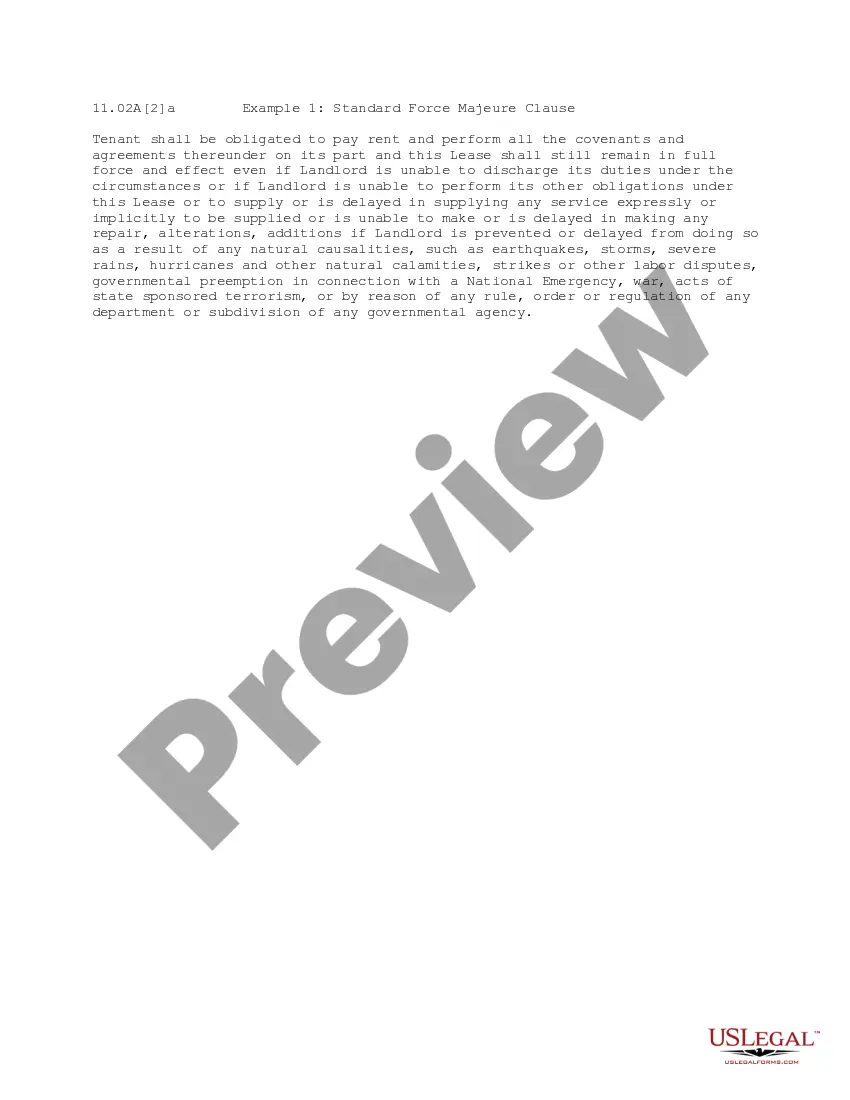
Standard Force Majeure Clause
What this document covers
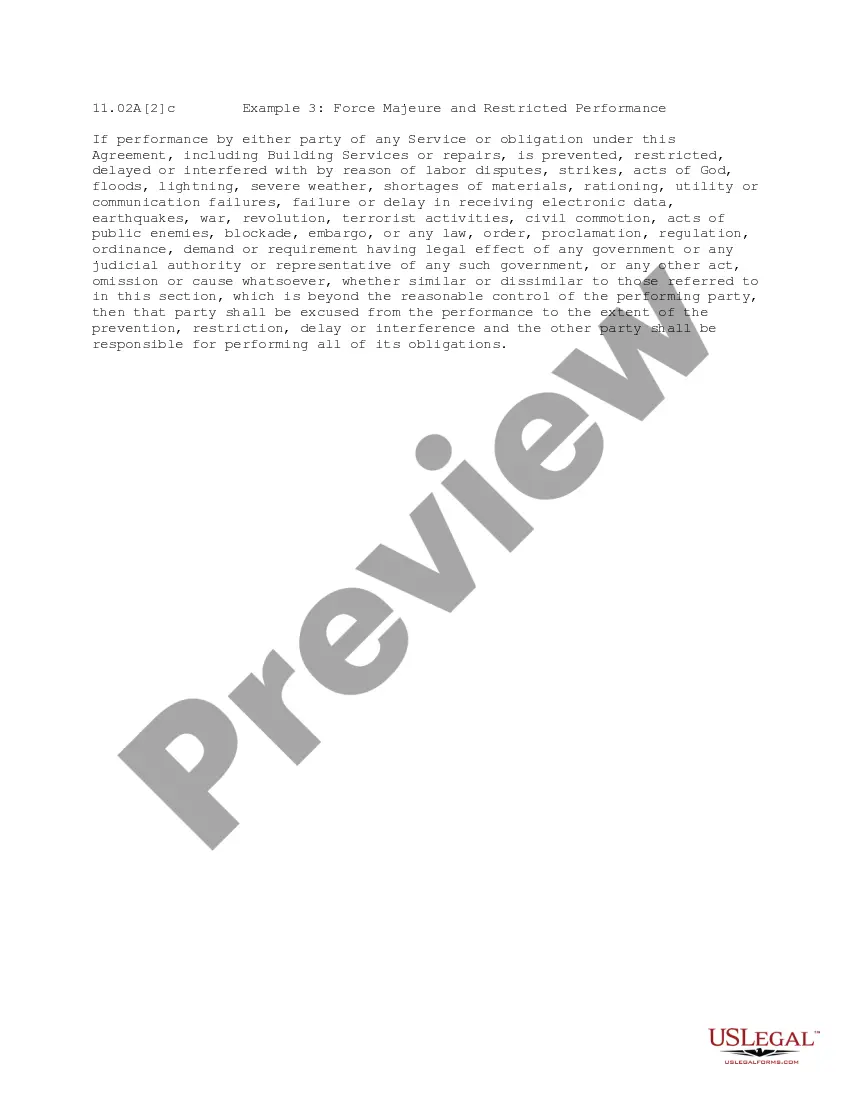
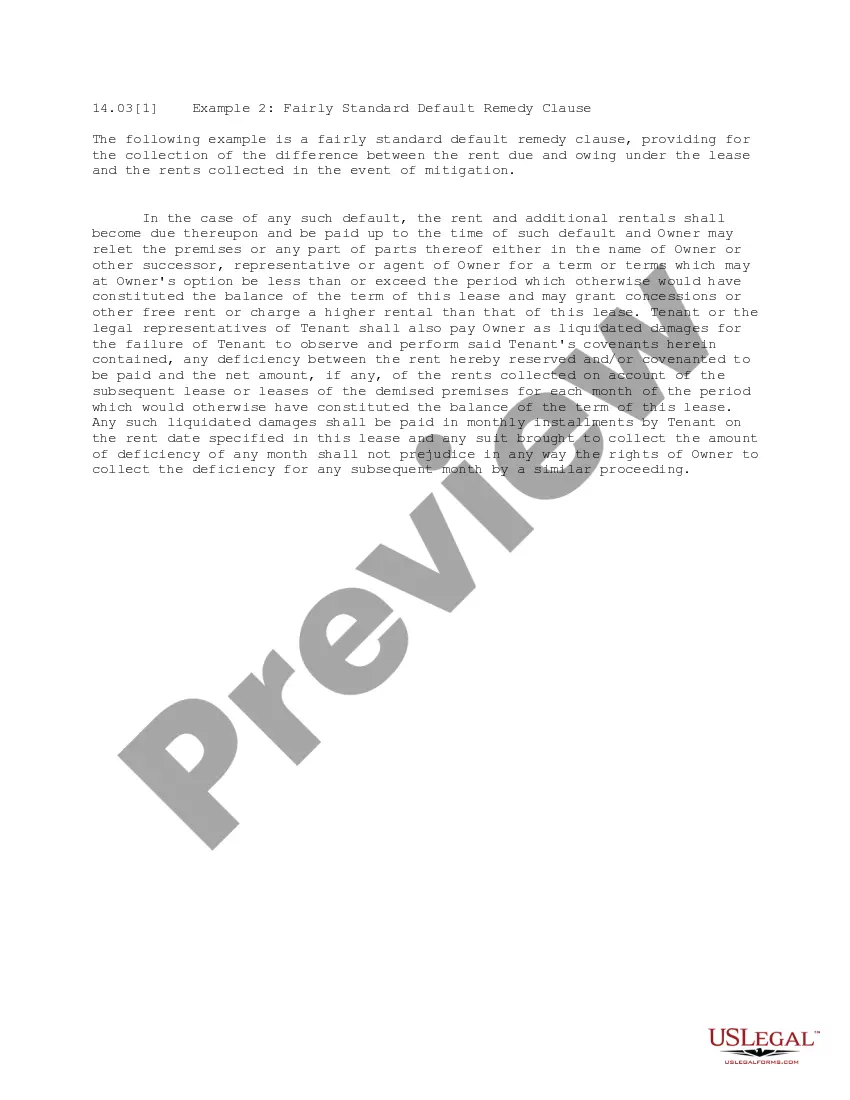
The Standard Force Majeure Clause is a legal document tailored for rental agreements, specifically addressing situations where the landlord cannot fulfill their obligations due to natural disasters or other unforeseen events. This clause ensures that the tenant remains responsible for paying rent and adhering to the lease terms, regardless of the landlord's inability to perform their duties. It is especially vital in protecting tenants and landlords from circumstances beyond their control, differentiating it from standard lease agreements that may not cover such exceptional situations.
Main sections of this form
- Tenant obligations, including continued rent payment despite issues faced by the landlord.
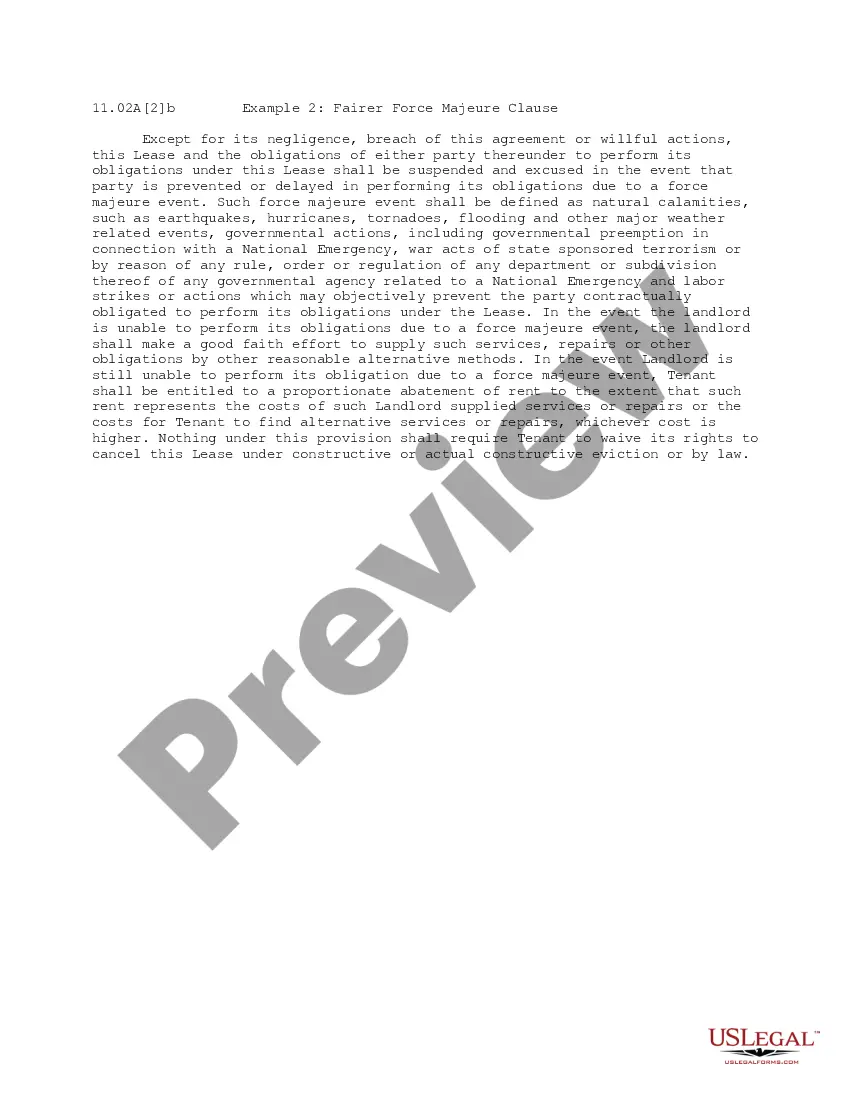
- Clear definition of events classified as force majeure, such as natural disasters, strikes, and governmental actions.
- Provisions that maintain the lease's validity even when the landlord is unable to fulfill their obligations.
- Statements addressing delays in repairs or services due to force majeure events.
When to use this document
This form should be used when entering a lease agreement where the potential for unforeseen natural events or circumstances could prevent a landlord from fulfilling their lease obligations. It is particularly useful in areas prone to natural disasters or in situations where labor disputes or governmental issues may arise, impacting the rental property services or repairs.
Who this form is for
- Commercial tenants looking to protect their rights in office lease agreements.
- Landlords who need to outline their obligations and the tenant's responsibilities during unforeseen events.
- Real estate professionals drafting lease agreements that include contingencies for force majeure.
How to complete this form
- Identify the parties involved: Ensure both the landlord and tenantâs information is accurately filled out.
- Specify the rental property: Clearly describe the location and specifics of the leased property.
- Define the force majeure events: List the natural disasters and other circumstances that qualify under this clause.
- Outline tenant obligations: Explicitly state the requirement for tenants to continue paying rent even in the event of a force majeure.
- Sign and date: Ensure both parties sign and date the document to make it legally binding.
Is notarization required?
This form does not typically require notarization unless specified by local law. However, it is advisable to consult a legal professional to confirm whether notarization is necessary based on your jurisdiction.
Get your form ready online
Our built-in tools help you complete, sign, share, and store your documents in one place.
Make edits, fill in missing information, and update formatting in US Legal Forms—just like you would in MS Word.
Download a copy, print it, send it by email, or mail it via USPS—whatever works best for your next step.
Sign and collect signatures with our SignNow integration. Send to multiple recipients, set reminders, and more. Go Premium to unlock E-Sign.
If this form requires notarization, complete it online through a secure video call—no need to meet a notary in person or wait for an appointment.
We protect your documents and personal data by following strict security and privacy standards.

Make edits, fill in missing information, and update formatting in US Legal Forms—just like you would in MS Word.

Download a copy, print it, send it by email, or mail it via USPS—whatever works best for your next step.

Sign and collect signatures with our SignNow integration. Send to multiple recipients, set reminders, and more. Go Premium to unlock E-Sign.

If this form requires notarization, complete it online through a secure video call—no need to meet a notary in person or wait for an appointment.

We protect your documents and personal data by following strict security and privacy standards.
Typical mistakes to avoid
- Failing to accurately define what constitutes a force majeure event.
- Not confirming that both parties understand their obligations under the clause.
- Leaving out the rental property details or tenant responsibilities.
Benefits of completing this form online
- Convenient access to legal forms that can be completed and downloaded at your own pace.
- Editability allows for customization to meet specific needs before finalization.
- Reliable templates created by licensed attorneys, ensuring legal compliance.
Legal use & context
- This clause helps clarify tenant obligations during extraordinary circumstances, which are often not covered by standard lease agreements.
- Enforceable agreements regarding force majeure can prevent disputes between parties in case of disaster.
Summary of main points
- The Standard Force Majeure Clause is crucial for rental agreements in unpredictable environments.
- Tenants should remain aware of their obligations even if they experience a disruption due to force majeure events.
- Landlords can protect their interests by including this clause in lease agreements.
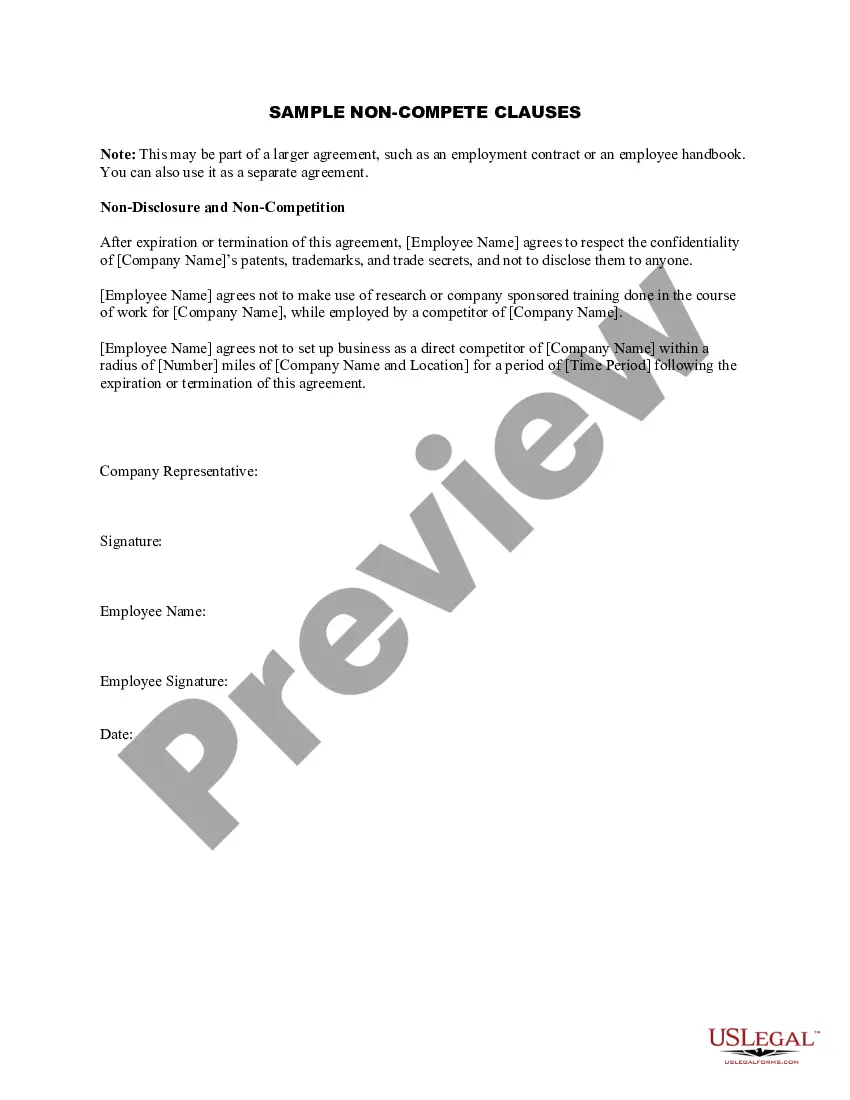
Looking for another form?


Form popularity
FAQ
For the purpose of this Agreement, an Event of Force Majeure means any circumstance not within the reasonable control of the Party affected, but only if and to the extent that (i) such circumstance, despite the exercise of reasonable diligence and the observance of Good Utility Practice, cannot be, or be caused to be
A force majeure clause (1) specifies the events which enable either party to declare a force majeure/act of God event, (2) how a party should notify its counterparty about the occurrence, and (3) the consequences after a force majeure event has occurred.
An example of an operative clause is: " . 1 Neither party is responsible for any failure to perform its obligations under this contract, if it is prevented or delayed in performing those obligations by an event of force majeure. .
What is Force Majeure?Examples of events that might trigger a force majeure clause into effect include a declaration of war, a disease epidemic, or a hurricane, earthquake, or other natural disaster events that fall under the legal term, act of God.
1, The company declared force majeure on its shipping commitments. 2, Damage is caused due to force majeure. 4, Any party to natural disasters and other force majeure causes of delay in performance of duty, incomplete or non-performance should not be treated as breach of contract.
Under most national laws, force majeure events must meet four criteria: (1) the event must be external to the contract and the parties; (2) the event must render the party0393CAs performance radically different from what the parties originally contemplated; (3) the event must have been unforeseeable; and (4) the