Default Remedy Clause
About this form
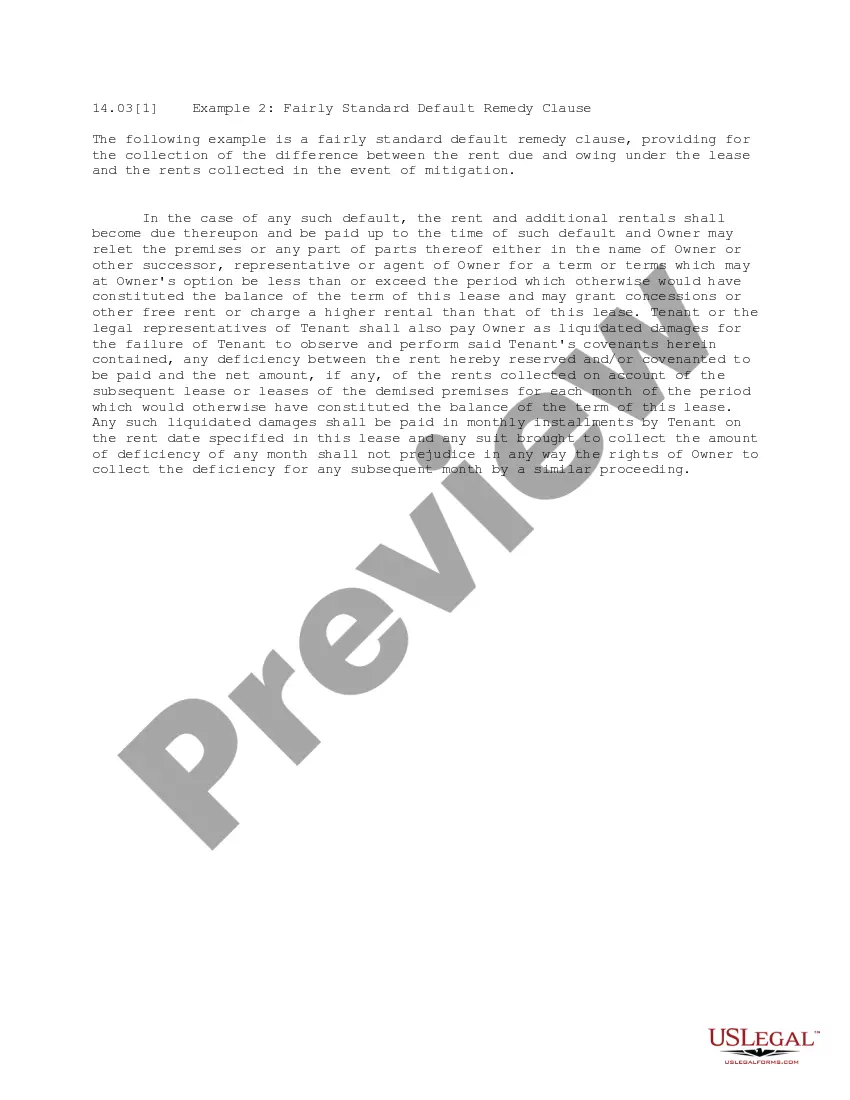
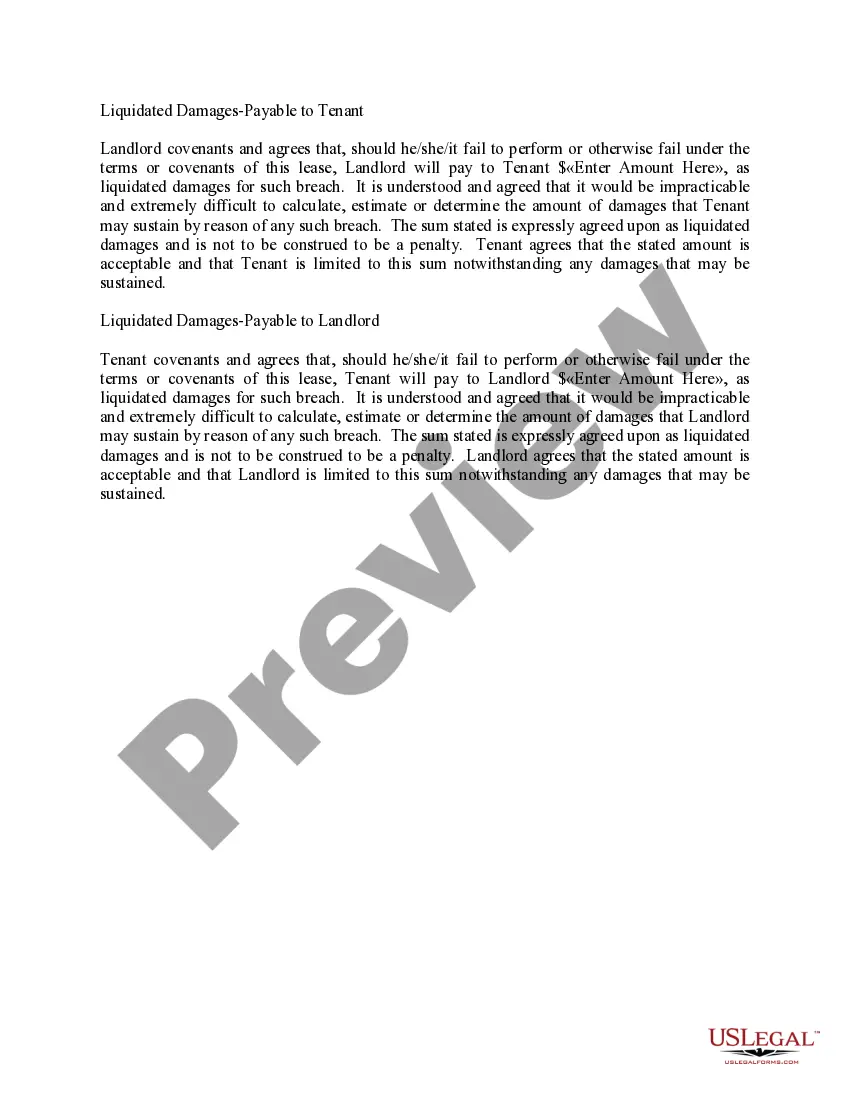
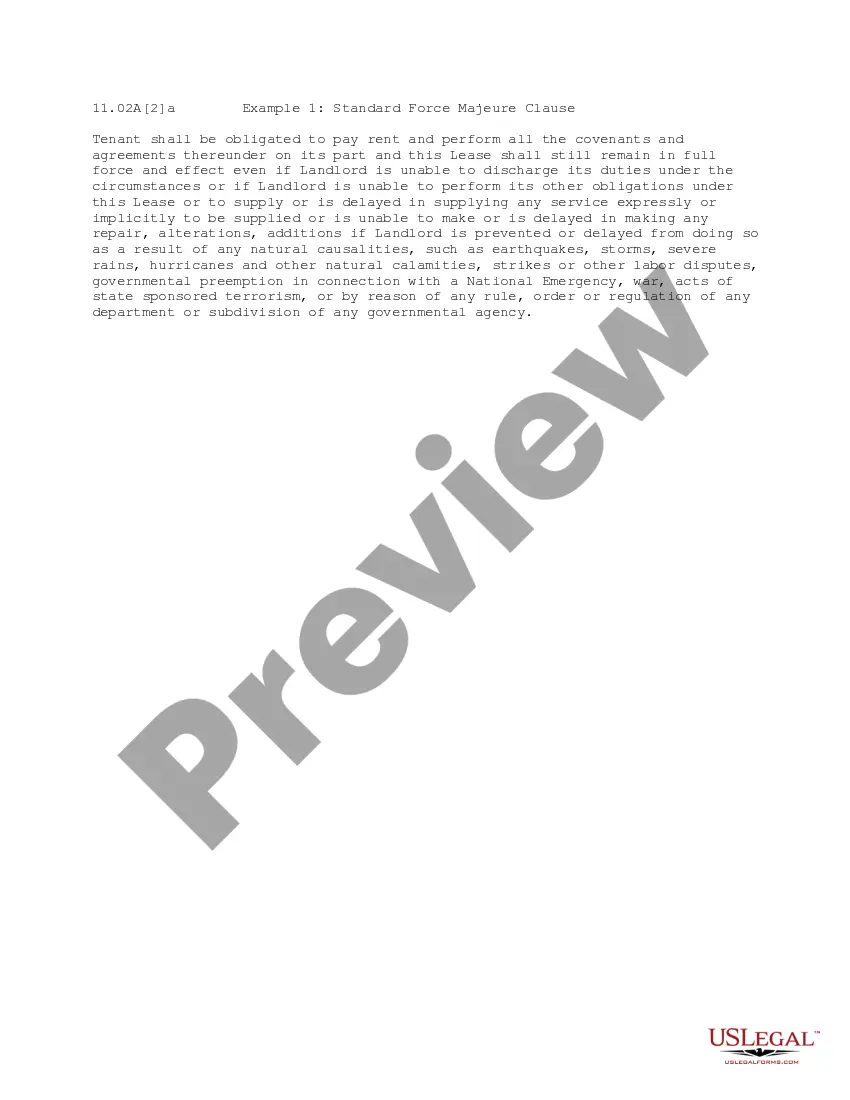
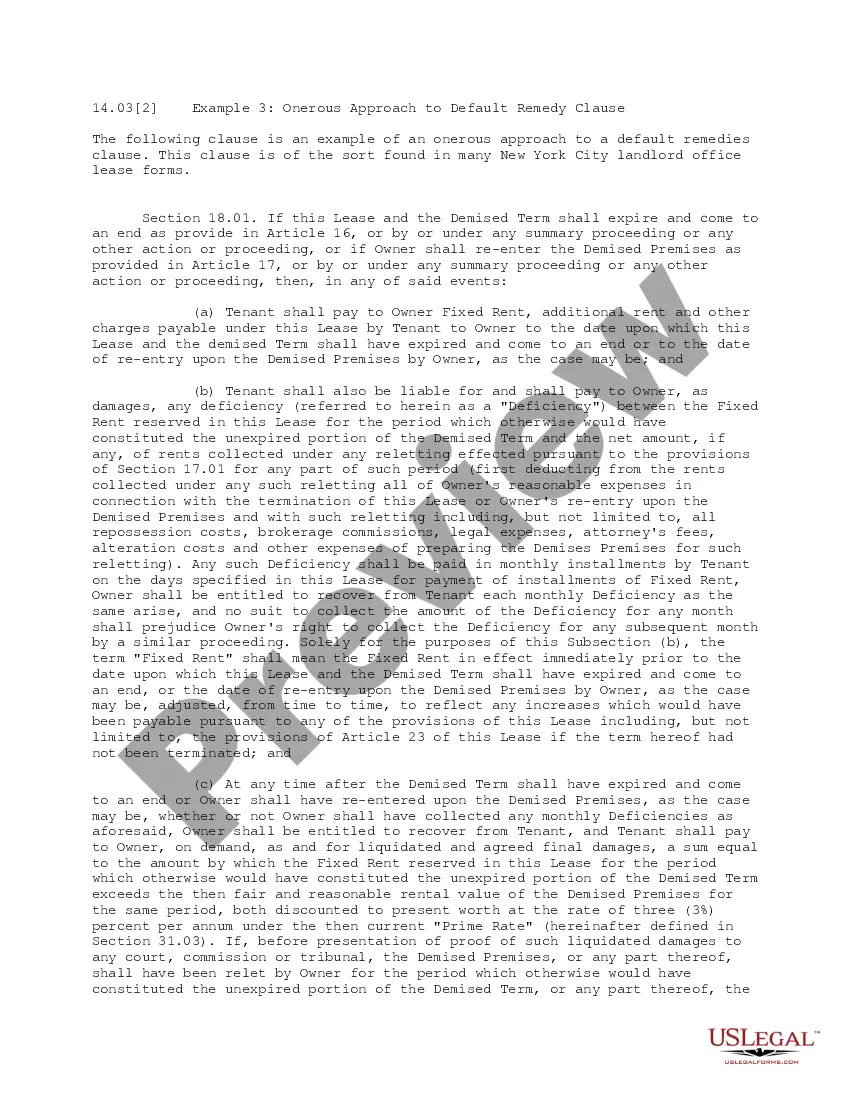
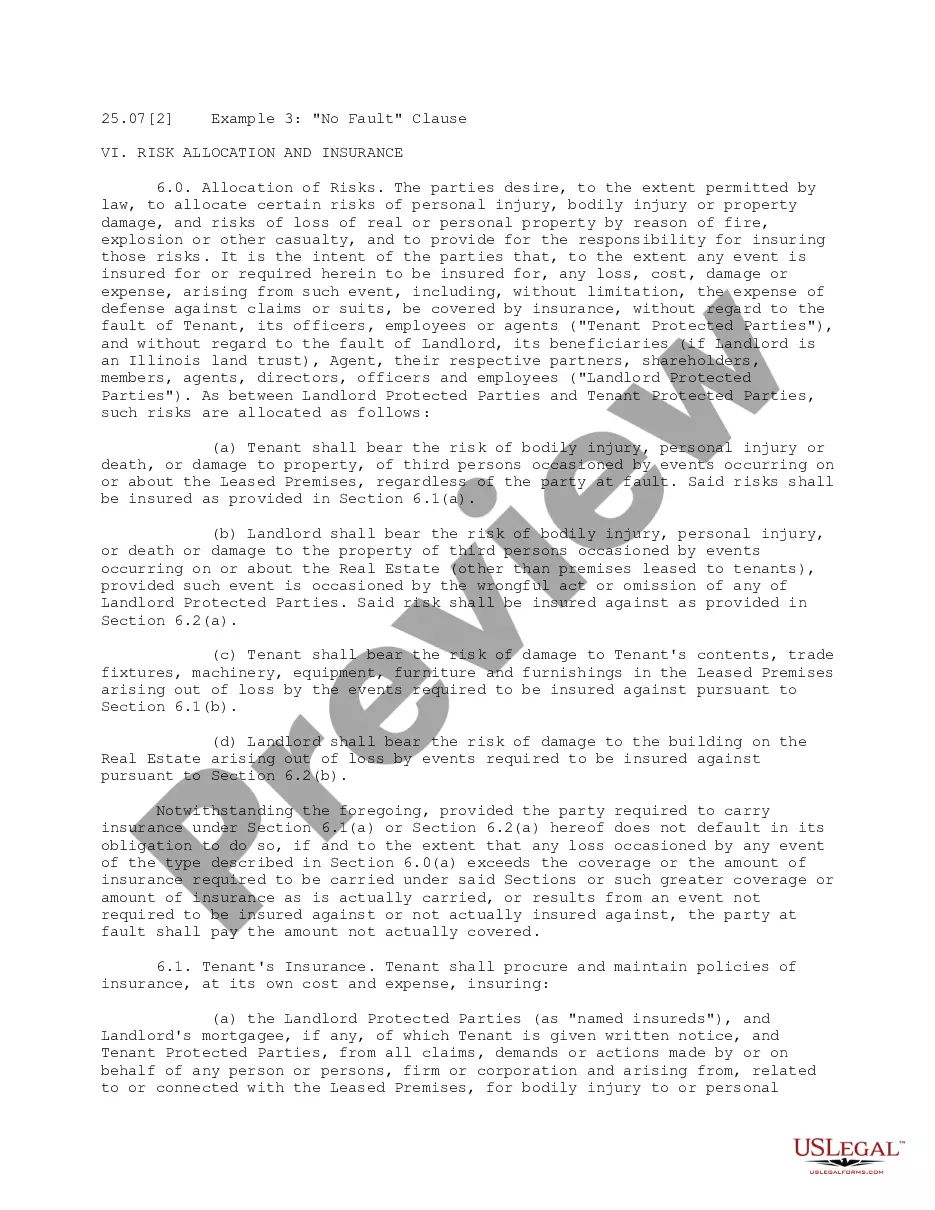
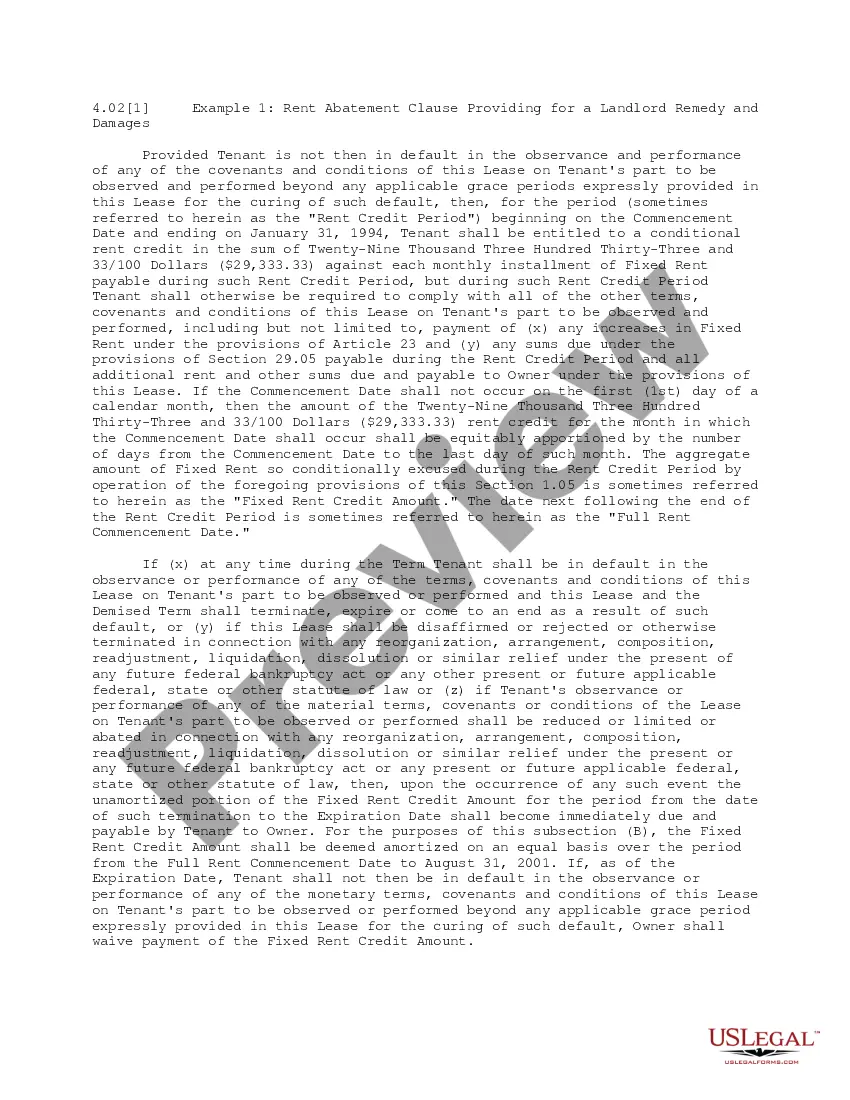
The Default Remedy Clause is a legal document typically included in commercial lease agreements. It outlines the landlord's rights and remedies in the event that the tenant defaults on their lease obligations. This clause specifically addresses the collection of unpaid rent by allowing the landlord to recover the difference between the rent due and any rent collected through mitigation efforts. Unlike general lease agreements, the Default Remedy Clause focuses on the conditions under which a landlord can reclaim rent following a tenant's default.
Form components explained
- Definition of default: Situations that constitute a breach of the lease.
- Calculation of damages: Method for calculating the difference between unpaid rent and collected rents.
- Landlord's rights: Rights of the landlord to relet the property or part of it.
- Payment terms: Schedule for payment of any liquidated damages by the tenant.
- Conditions for legal action: Specifies that actions taken for one month do not affect the landlord's rights for subsequent months.
Common use cases
This form is useful when entering into a commercial lease agreement, particularly when the landlord wants to ensure they can recover lost rent in the event the tenant does not fulfill their obligations. It is commonly used in scenarios where a tenant has failed to pay rent or otherwise breached the lease terms, allowing the landlord to seek remedy without prolonged disputes.
Who can use this document
- Landlords who are leasing commercial property.
- Property management companies handling leases on behalf of landlords.
- Tenants seeking to understand the potential implications of lease agreements.
- Legal professionals drafting or reviewing lease agreements.
Completing this form step by step
- Identify the parties involved: Enter the names and addresses of the landlord and tenant.
- Specify the property: Clearly describe the property being leased.
- Outline the terms of the lease: Include the duration of the lease and rental amounts.
- Detail the conditions of default: Clearly define what constitutes a default by the tenant.
- Provide payment terms: State how and when liquidated damages will be paid.
Is notarization required?
This form does not typically require notarization to be legally valid. However, some jurisdictions or document types may still require it. US Legal Forms provides secure online notarization powered by Notarize, available 24/7 for added convenience.
Get your form ready online
Our built-in tools help you complete, sign, share, and store your documents in one place.
Make edits, fill in missing information, and update formatting in US Legal Forms—just like you would in MS Word.
Download a copy, print it, send it by email, or mail it via USPS—whatever works best for your next step.
Sign and collect signatures with our SignNow integration. Send to multiple recipients, set reminders, and more. Go Premium to unlock E-Sign.
If this form requires notarization, complete it online through a secure video call—no need to meet a notary in person or wait for an appointment.
We protect your documents and personal data by following strict security and privacy standards.

Make edits, fill in missing information, and update formatting in US Legal Forms—just like you would in MS Word.

Download a copy, print it, send it by email, or mail it via USPS—whatever works best for your next step.

Sign and collect signatures with our SignNow integration. Send to multiple recipients, set reminders, and more. Go Premium to unlock E-Sign.

If this form requires notarization, complete it online through a secure video call—no need to meet a notary in person or wait for an appointment.

We protect your documents and personal data by following strict security and privacy standards.
Common mistakes to avoid
- Failing to clearly define what constitutes a default.
- Not including specific payment terms for reimbursement of damages.
- Using vague language that could lead to misunderstandings.
- Neglecting to consult local laws that may affect the enforcement of the clause.
Why complete this form online
- Convenience: Easily access and download the form at any time.
- Editability: Customize the document to fit specific needs before printing.
- Reliability: Forms drafted by licensed attorneys ensure legal compliance.
Looking for another form?
Form popularity
FAQ
Your lease agreement will state what constitutes a default of the lease as well as if there is any grace period in making lease payments. Not making a contractually required monthly payment will normally be a breach of the lease and the lessor can then repossess the vehicle from you.
The default provision sets forth the conditions under which one of the parties will not have fulfilled its obligations under the contract. For example, failing to deliver goods or services on time, or failing to pay on time would trigger a default.
Tenant default occurs when a Tenant breaches one of the tenant's covenants in its lease. Tenant default can arise in a number of different ways but will typically be for one of the following: Non-payment of rent or other sums reserved under the lease.
Step 1: Speak to your tenant. Step 2: Provide notice of contract breach. Step 3: Decide between an interdict or cancellation. Step 4: Eviction process. Step 5: Eviction notice. Final advice.
A default is a failure to comply with a provision in the lease. Curing or remedying the default means correcting the failure or omission. A common example is a failure to pay the rent on time.Typically a lease will give the parties adequate notice and time to fix the problem before more drastic action is taken.
Cross default is a provision in a bond indenture or loan agreement that puts a borrower in default if the borrower defaults on another obligation. For instance, a cross-default clause in a loan agreement may say that a person automatically defaults on his car loan if he defaults on his mortgage.
Default by landlord The most common form of landlord default is failure to provide services and maintain the property condition. When a landlord defaults on the terms of the lease, tenants may sue for damages.
A clause which operates by automatically defaulting a borrower under Agreement A when it defaults under Agreement B. A cross-default provision effectively gives the lender under Agreement A the benefit of the default provisions in Agreement B. Cross-default provisions therefore have a domino effect.
A default clause is a provision in a legal contract that states what will happen if either party in a contract defaults or fails to hold up their end of the agreement. These clauses can be found in any type of contract including loan agreements, lease agreements, and property agreements.