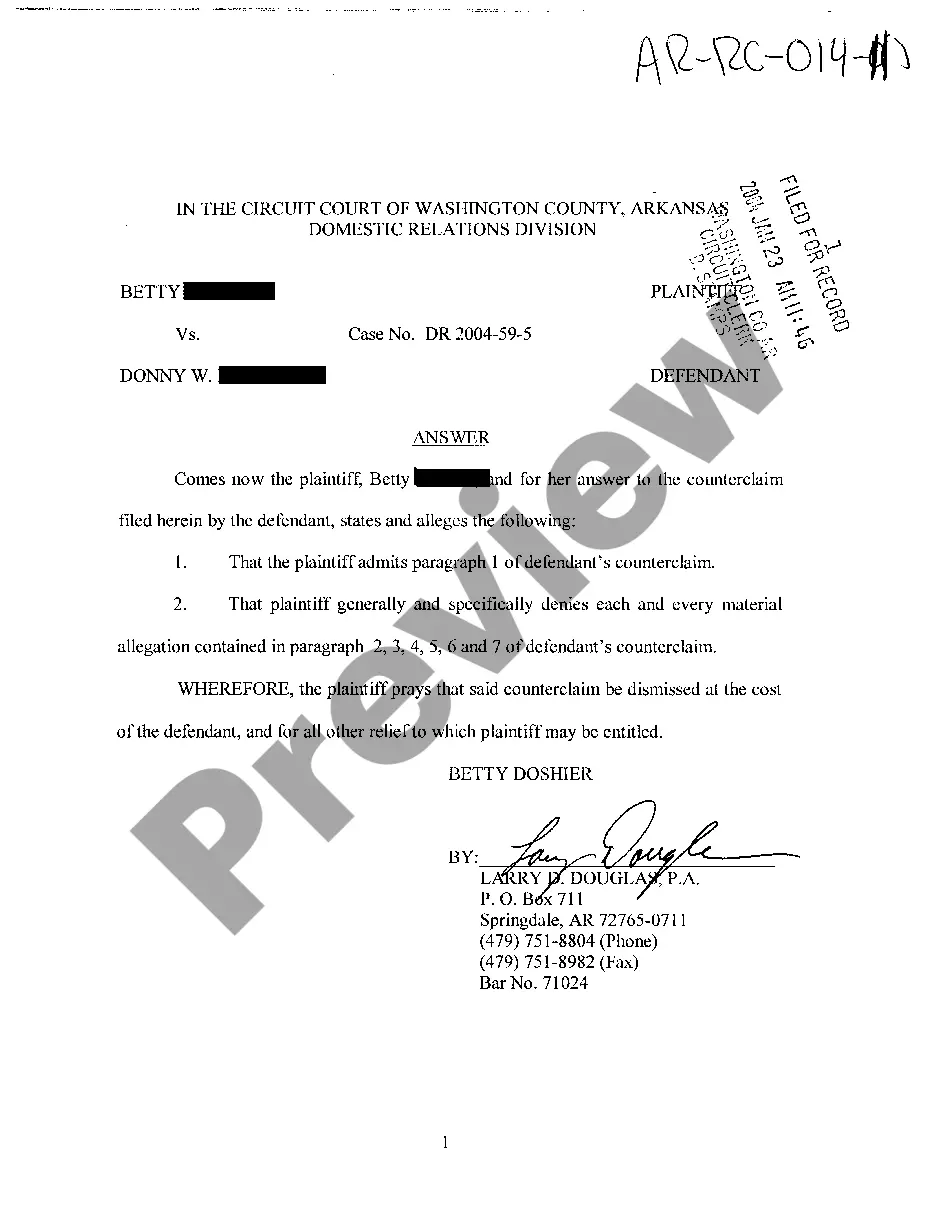
Mississippi Agreed Order Granting Additional Time to Complete Discovery in Circuit Court with Third Parties
What this document covers
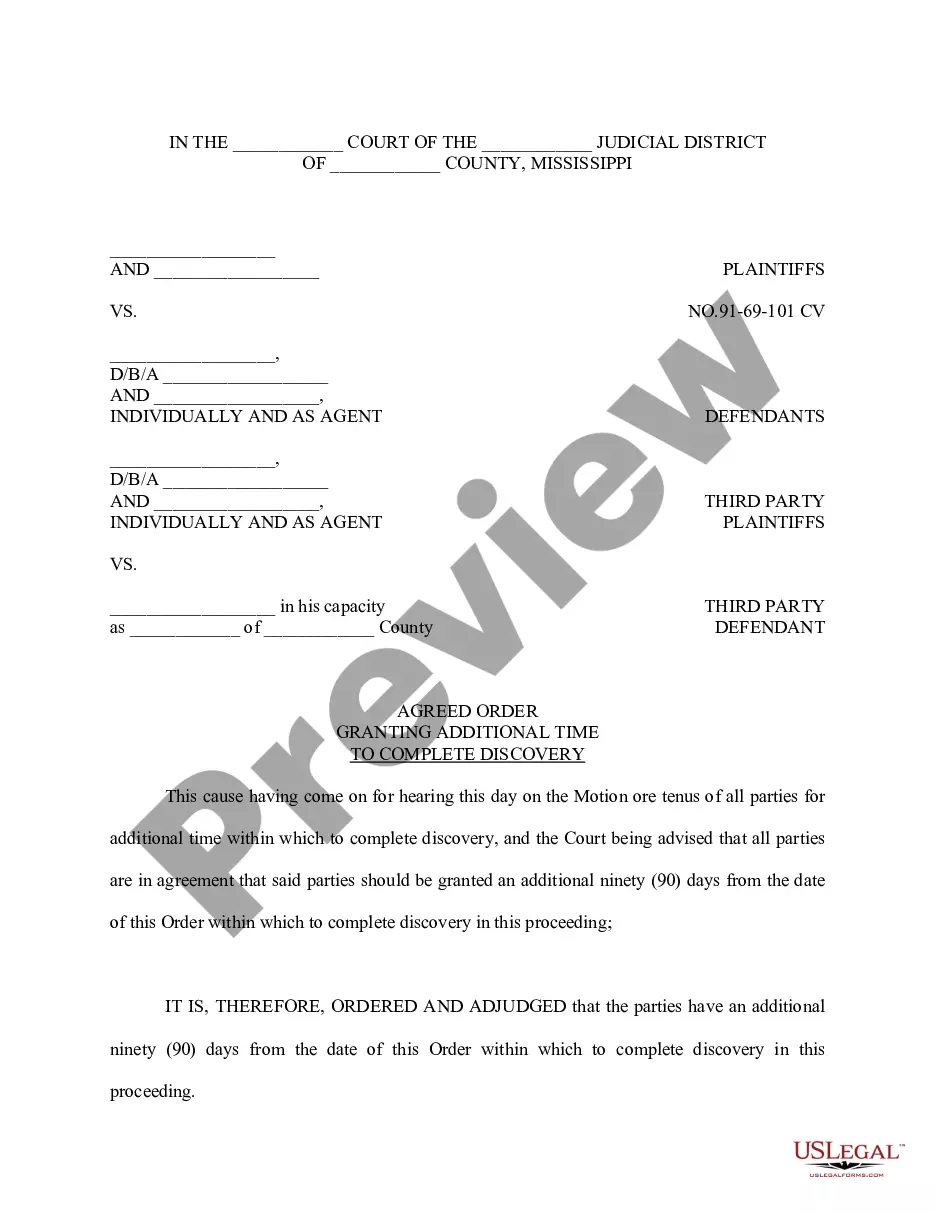
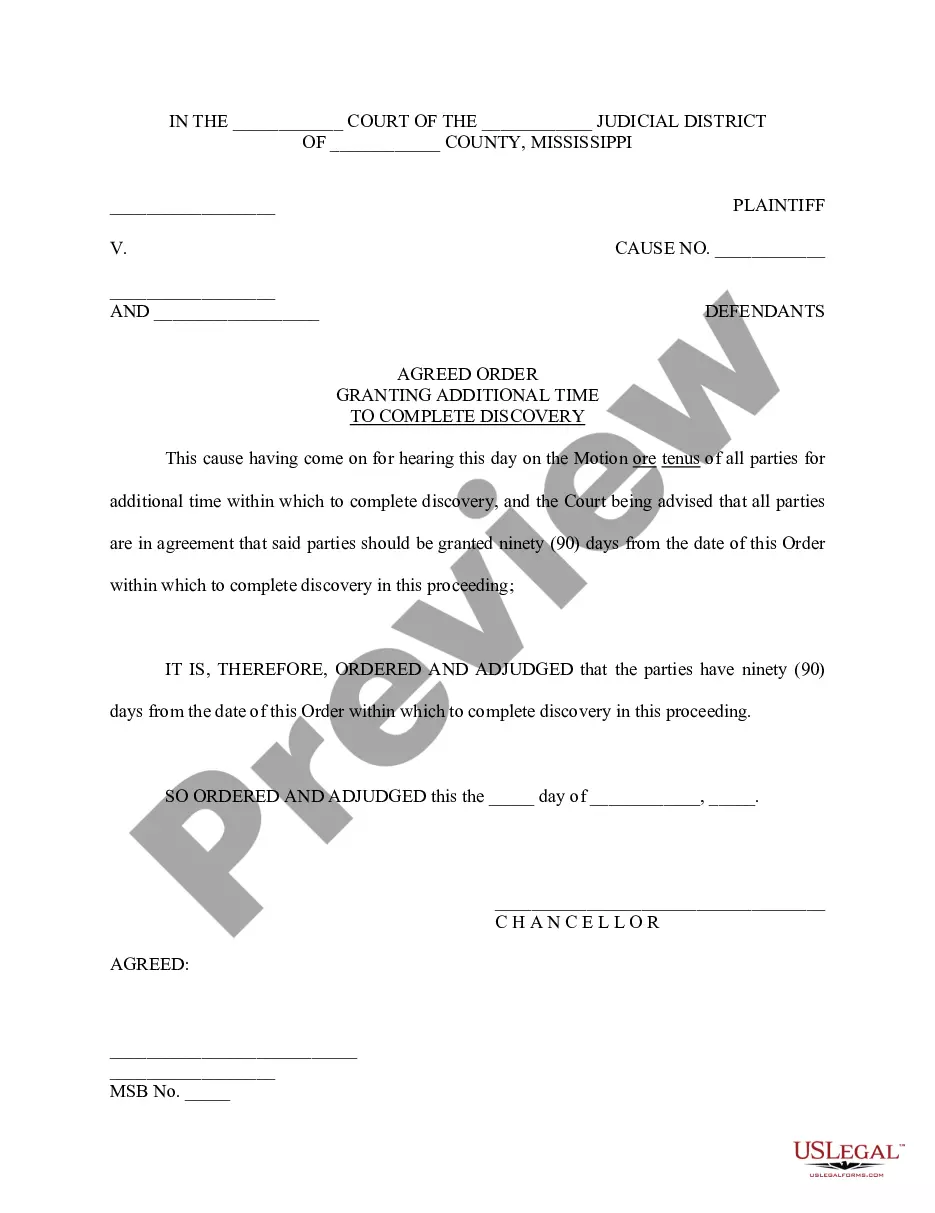
The Agreed Order Granting Additional Time to Complete Discovery in Circuit Court with Third Parties is a legal document that allows involved parties to extend the time frame for gathering and exchanging evidence in a court case. This form is mutually agreed upon by all parties involved, ensuring that each side has adequate time to complete discovery, a critical phase in litigation. This form is essential for cases that may require more time due to various circumstances such as the complexity of the case or unavailability of key evidence. Unlike standard discovery requests, this agreed order formalizes the extension with court approval.
Key parts of this document
- Preamble that identifies the court and parties involved in the case.
- Declaration of agreement among all parties to extend the discovery period.
- Specific time frame for the extension, typically an additional ninety days.
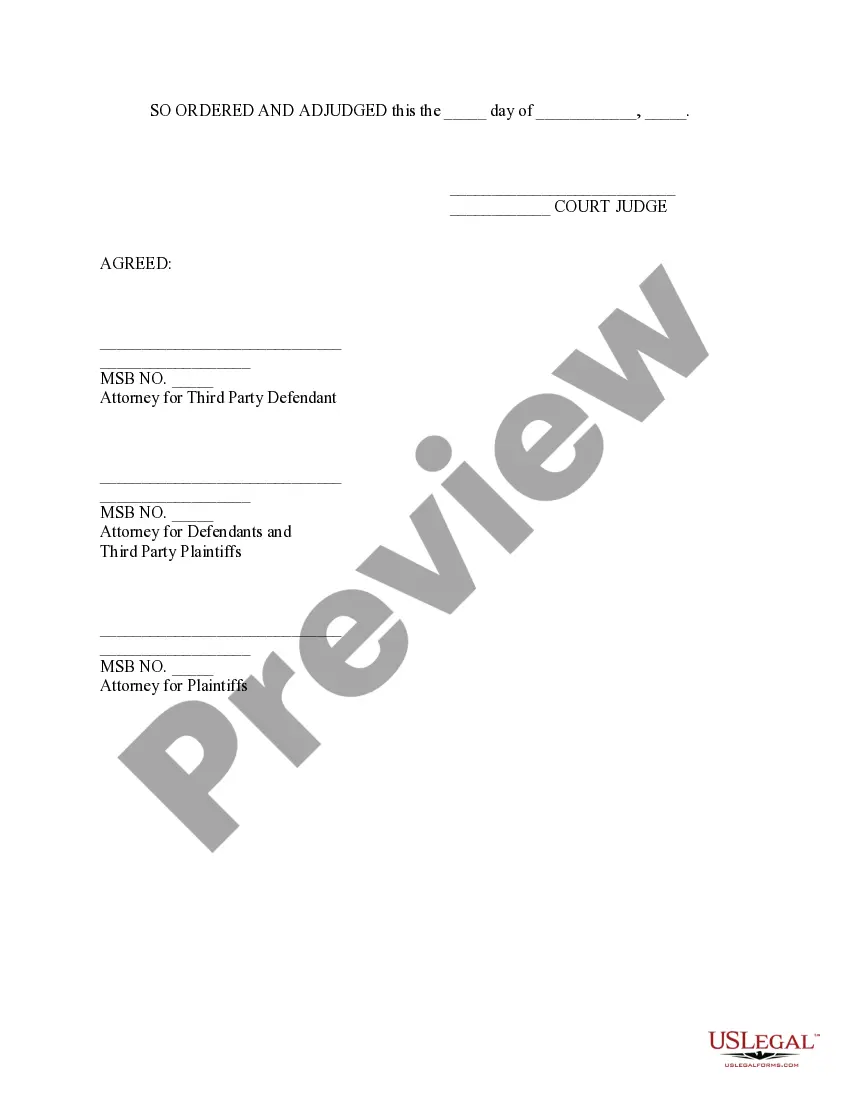
- Signature lines for the judge and attorneys representing the parties.
When to use this form
This form should be used when all parties involved in a legal case agree that additional time is necessary to complete the discovery process. Common scenarios include instances where parties need more time to gather documents, take depositions, or respond to interrogatories, particularly when third parties are involved, and their evidence is crucial to the case.
Who should use this form
- Litigants in a civil case in Circuit Court requiring more time to complete discovery.
- Attorneys representing either plaintiffs or defendants who have reached a consensus on the need for an extension.
- Third parties involved in the discovery process who require additional time to provide necessary information.
Instructions for completing this form
- Identify the court where the case is filed and list the parties involved in the case.
- Clearly state that all parties agree to the extension of time for discovery.
- Specify the length of the extension, typically ninety days, from the date of the order.
- Gather signatures from the judge and all attorneys involved in the case.
- File the completed order with the court for official approval.
Is notarization required?
This form does not typically require notarization unless specified by local law. It is important to follow any unique state requirements that may apply in Mississippi.
Get your form ready online
Our built-in tools help you complete, sign, share, and store your documents in one place.
Make edits, fill in missing information, and update formatting in US Legal Forms—just like you would in MS Word.
Download a copy, print it, send it by email, or mail it via USPS—whatever works best for your next step.
Sign and collect signatures with our SignNow integration. Send to multiple recipients, set reminders, and more. Go Premium to unlock E-Sign.
If this form requires notarization, complete it online through a secure video call—no need to meet a notary in person or wait for an appointment.
We protect your documents and personal data by following strict security and privacy standards.

Make edits, fill in missing information, and update formatting in US Legal Forms—just like you would in MS Word.

Download a copy, print it, send it by email, or mail it via USPS—whatever works best for your next step.

Sign and collect signatures with our SignNow integration. Send to multiple recipients, set reminders, and more. Go Premium to unlock E-Sign.

If this form requires notarization, complete it online through a secure video call—no need to meet a notary in person or wait for an appointment.

We protect your documents and personal data by following strict security and privacy standards.
Typical mistakes to avoid
- Failing to secure signatures from all necessary parties before submitting the form.
- Not specifying the deadline clearly, which can lead to confusion about the new timeline.
- Submitting the form without prior agreement from all parties involved.
Benefits of using this form online
- Easy access to the form from any device, allowing for quick and efficient completion.
- Editable format, so users can fill in their information and modify as needed.
- Reliable templates drafted by licensed attorneys, ensuring compliance with legal standards.
Quick recap
- The agreed order facilitates extending the discovery period in a court case.
- It requires agreement from all parties involved and must be filed with the court.
- Understanding how to properly fill this form can prevent mistakes and streamline legal processes.
Looking for another form?

Form popularity
FAQ
You have 30 days after the form or special interrogatories were served to you (35 days if served by mail from within California) to serve your responses to the interrogatories. Sometimes, rather than answering the interrogatory, you may wish to object to the request on legal grounds.
If you determine that you cannot obtain all the necessary information in 35 requests, you must file a motion with the court asking for permission to propound more discovery requests (California Code of Civil Procedure (CCP) § 95), or may even request that the court remove the case from the discovery restrictions of a
Step 1: Write Your Interrogatories. There is no Judicial Council form specifically for this procedure. Step 2: Make Photocopies. Make one photocopy of your special interrogatories for each party (other than you) in the case. Step 3: Have Your Requests Served. Step 4: Retain Your Originals for Your Records.
The purpose of discovery is to allow the parties to obtain full knowledge of the issues and facts of the lawsuit before going to trial. An experienced family law attorney will use discovery to help you identify the various strengths and weaknesses of each side of the case.
(1) Number. Unless otherwise stipulated or ordered by the court, a party may serve on any other party no more than 25 written interrogatories, including all discrete subparts. Leave to serve additional interrogatories may be granted to the extent consistent with Rule 26(b)(1) and (2).
As to the method of serving papers upon a party whose address is unknown, see Rule 5(b). The amendment makes clear that all papers relating to discovery which are required to be served on any party must be served on all parties, unless the court orders otherwise.
To garner responses that are usable at trial, propound requests that certain facts be admitted, instead of asking the other side to admit legal conclusions.
In certain cases, you might be able to write a letter to the other side and request the documents that you need. However, in more formal cases, you will likely have to draft more formal discovery demands. There are usually forms available for this in local law libraries, from the court clerk's office, or online.
That disclosure is accomplished through a methodical process called "discovery." Discovery takes three basic forms: written discovery, document production and depositions. See 's Stages of a Personal Injury Case section for related articles and resources.
(b) Except as provided in Section 2030.070, no party shall, as a matter of right, propound to any other party more than 35 specially prepared interrogatories. If the initial set of interrogatories does not exhaust this limit, the balance may be propounded in subsequent sets.