Agreement between Adjoining Owners Creating Easement for Common Driveway
What is this form?
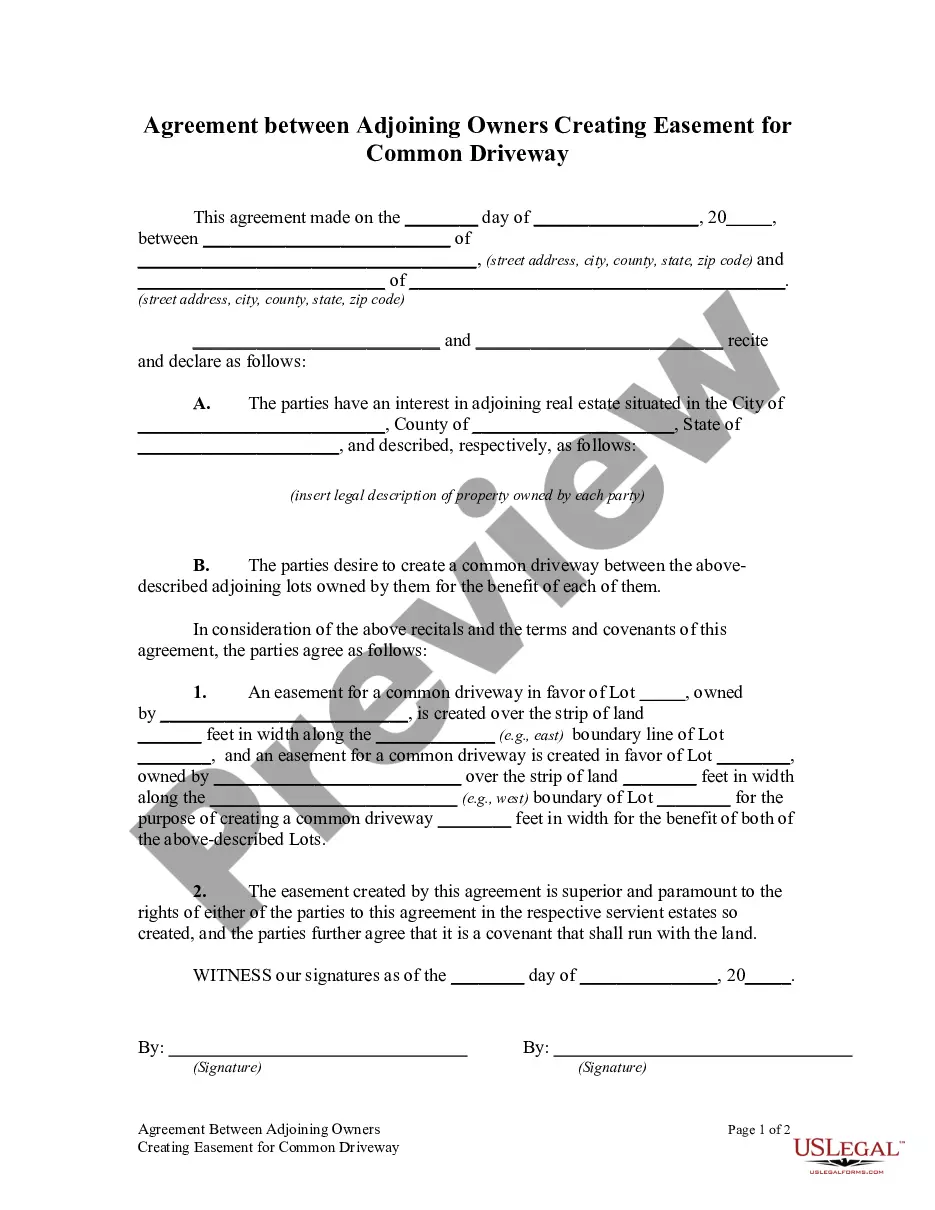
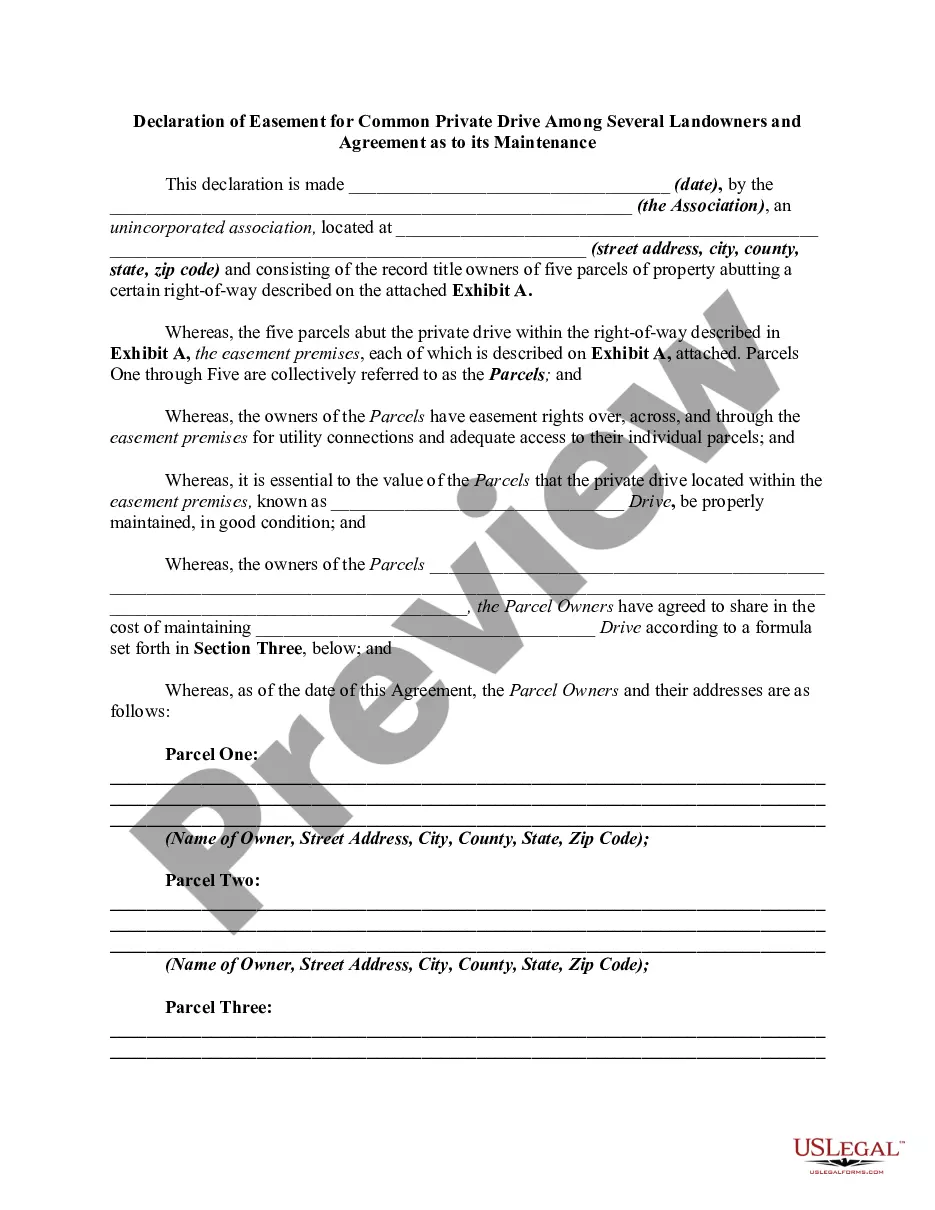
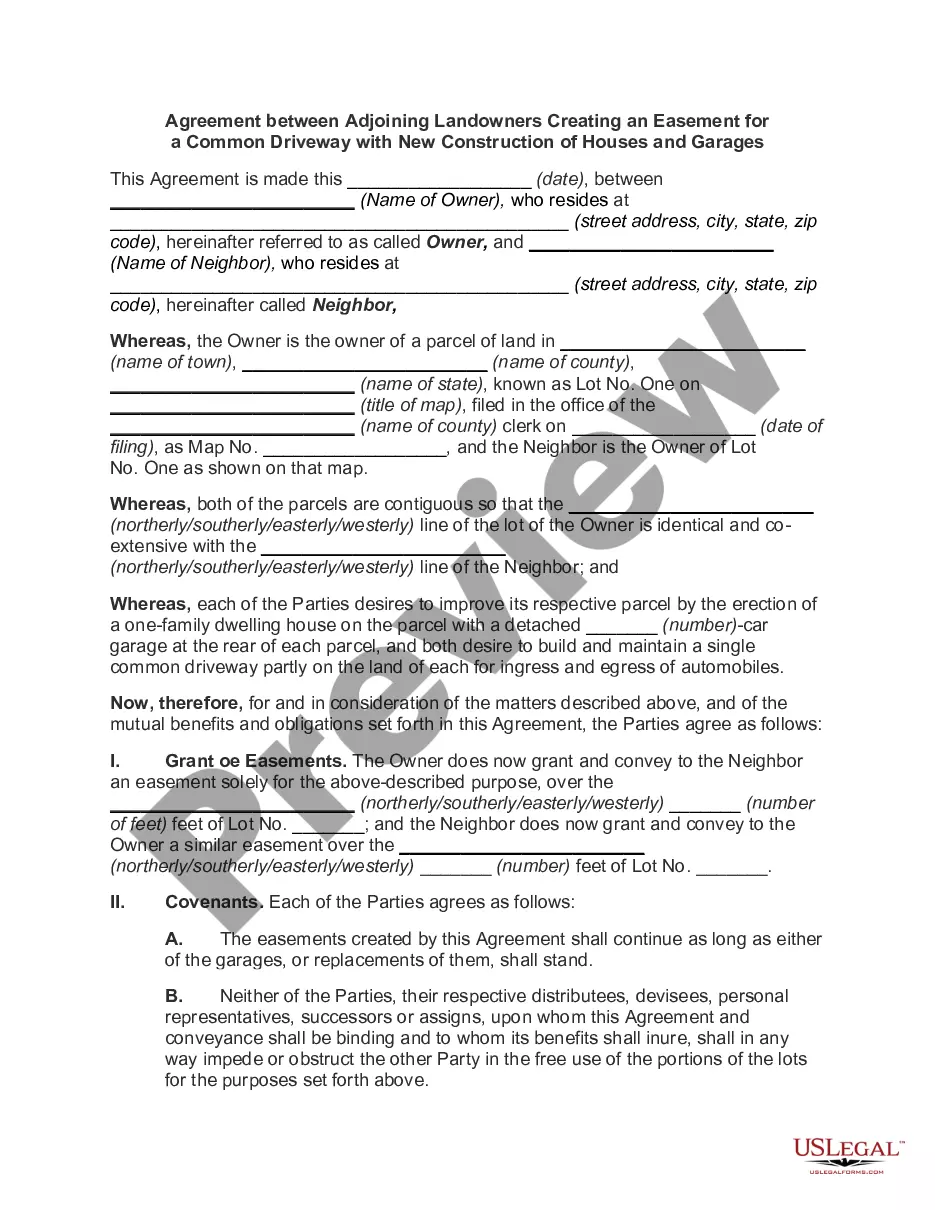
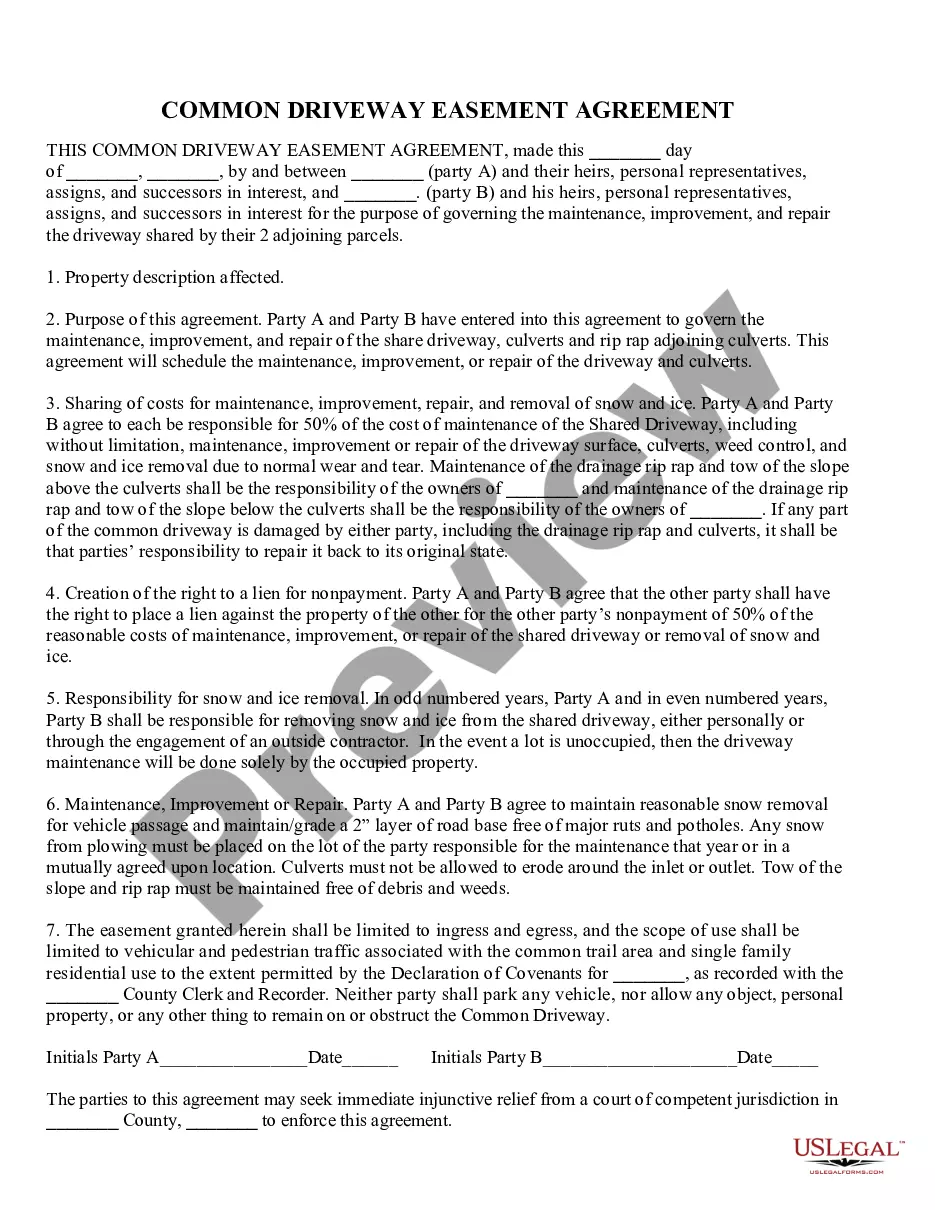
The Agreement between Adjoining Owners Creating Easement for Common Driveway is a legal document that allows one property owner to use a portion of another property owner's land for the purpose of accessing a common driveway. This type of easement is distinct from other easements because it specifically pertains to driveway access, ensuring both parties have designated rights to use the shared space while still maintaining ownership of their respective properties.
What’s included in this form
- Identification of the property owners involved in the agreement.
- Description of the specific area to be used for the common driveway.
- Terms of use, including any restrictions or conditions for accessing the driveway.
- Duration of the easement and any provisions for termination.
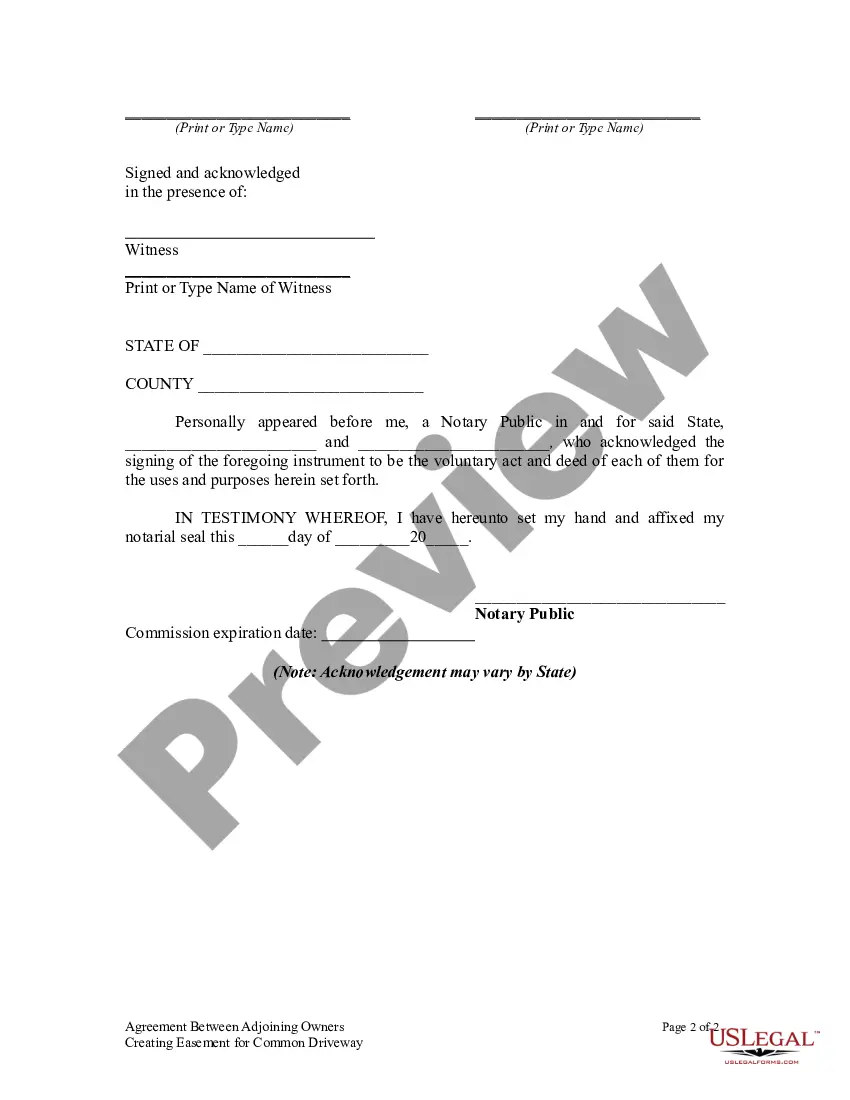
- Signatures of all parties involved to validate the agreement.
Situations where this form applies
This agreement is typically used when neighboring property owners wish to create a legal right for one owner to use a portion of the other's property for a common driveway. It is particularly useful in situations where access to public roads is limited, and cooperation between owners is necessary for convenient vehicular access. This easement document should be considered before construction of driveways or when conflicts arise regarding property access.
Who should use this form
This form is intended for:
- Property owners who are neighbors and wish to share a driveway.
- Individuals involved in real estate transactions that require access to another property.
- Homeowners associations managing common roads or shared driveways.
- Developers planning residential areas with shared access points.
Completing this form step by step
- Identify the names and addresses of each property owner involved in the easement.
- Clearly describe the portion of land to be used for the common driveway.
- Specify any restrictions or conditions related to the use of the driveway.
- Determine the duration of the easement and conditions for renewal or termination.
- Sign the agreement in the presence of witnesses or a notary if required.
Notarization requirements for this form
This form does not typically require notarization unless specified by local law. However, having it notarized can provide an additional layer of legal validity and assurance for both parties involved in the easement agreement.
Get your form ready online
Our built-in tools help you complete, sign, share, and store your documents in one place.
Make edits, fill in missing information, and update formatting in US Legal Forms—just like you would in MS Word.
Download a copy, print it, send it by email, or mail it via USPS—whatever works best for your next step.
Sign and collect signatures with our SignNow integration. Send to multiple recipients, set reminders, and more. Go Premium to unlock E-Sign.
If this form requires notarization, complete it online through a secure video call—no need to meet a notary in person or wait for an appointment.
We protect your documents and personal data by following strict security and privacy standards.

Make edits, fill in missing information, and update formatting in US Legal Forms—just like you would in MS Word.

Download a copy, print it, send it by email, or mail it via USPS—whatever works best for your next step.

Sign and collect signatures with our SignNow integration. Send to multiple recipients, set reminders, and more. Go Premium to unlock E-Sign.

If this form requires notarization, complete it online through a secure video call—no need to meet a notary in person or wait for an appointment.

We protect your documents and personal data by following strict security and privacy standards.
Avoid these common issues
- Failing to define the specific area of the easement clearly.
- Not including terms for maintenance responsibilities of the driveway.
- Omitting signatures or not following legal binding procedures.
- Overlooking local jurisdiction requirements for easements.
Why complete this form online
- Convenient download and access from anywhere at any time.
- Edit the document easily to fit specific needs without additional legal fees.
- Ensures reliable and professionally drafted content by licensed attorneys.
Legal use & context
- An easement is a legal right that is binding and enforceable in real estate law.
- It is important to inform all parties about their rights and obligations regarding the use of shared property.
- Legal advice may be beneficial to address any unique situations or disputes.
Summary of main points
- The Agreement between Adjoining Owners Creating Easement for Common Driveway establishes essential rights for shared property access.
- It is crucial to clearly define terms and responsibilities within the agreement.
- Using this form can streamline the process of creating a legal easement and provide clarity for both property owners.
Looking for another form?
Form popularity
FAQ
The easement can be acquired through express grant made by inserting the clause of granting such a right in the deed of sale, mortgage or through any other form of transfer. This involves expressing by the grantor of his clear intention. If the value of the immovable property is Rs.
Utility Easements. Private Easements. Easements by Necessity. Prescriptive Easements. Legal Disputes Over Easements. More Help with Easements.
In order to acquire a prescriptive easement, a claimant must establish (1) that the use was continuous for five years; (2) the use was open, notorious and clearly visible to the owner of the property; and (3) the use was hostile and adverse to the owner.
Typically, reciprocal easement agreements ("REAs") are used when a property is owned by more than one person or entity, and the persons or entities wish to develop the property as an integrated shopping center.These contractual obligations will run with the land of the property that comprises the shopping center.
Easements can be created in a variety of ways. They can be created by an express grant, by implication, by necessity, and by adverse possession.
An easement is created by necessity when a single lot has been divided and one lot is left with no reasonable access to a main road or utilities without use of the other lot.
Basically, the person or party using an easement, known as an easement holder, has a duty to maintain it. Easement holders don't become owners of the land attached to their easements, though, and within limits the actual landowners retain most rights over it.
Easements are usually created by a transfer in a deed or some other written document such as a will or contract. Creating an easement requires the same formalities as the transferring or creating of other interests in land. It typically requires a written document, a signature, and proper delivery of the document.
Since an easement on your property typically forms some type of burden on you, you have the right to deny that easement if you choose. However, with both public and private easements, the entity may take you to court in specific cases and a judge may force the easement on you when they deem it a necessity or relevant.