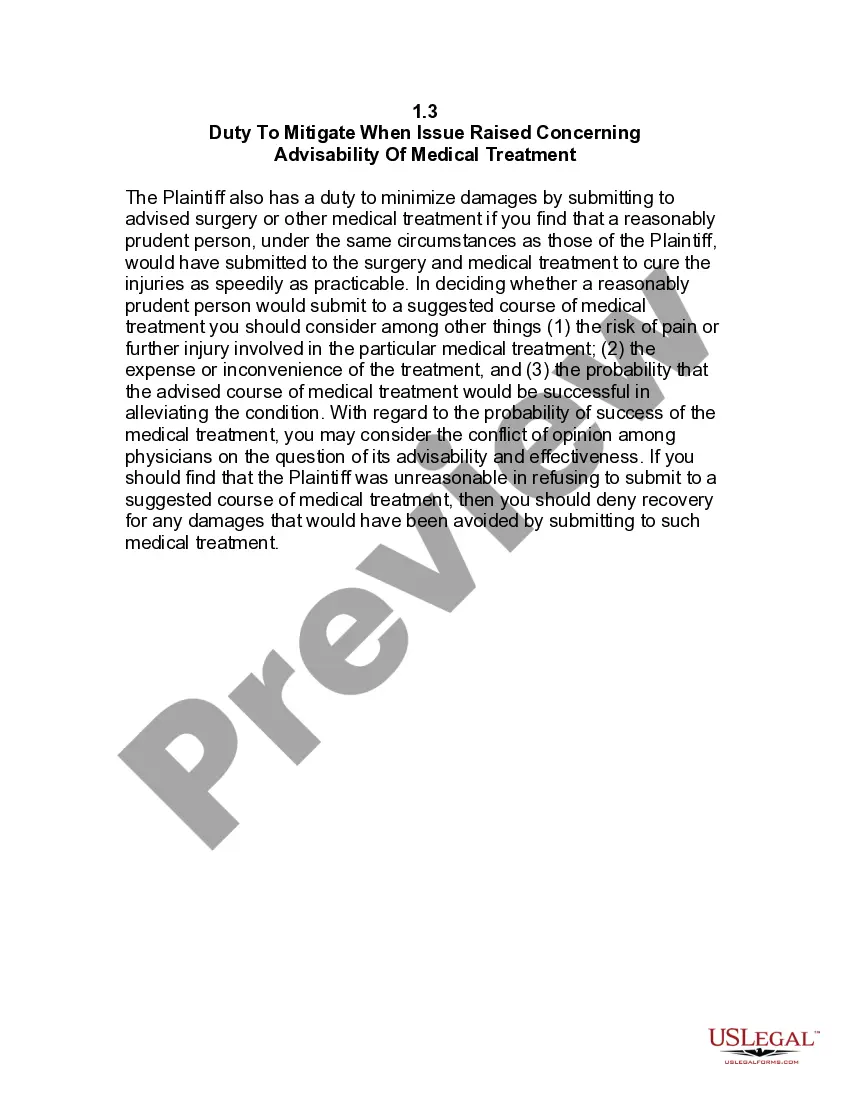
Jury Instruction - 1.3 Duty To Mitigate In General Pursuing Medical Care
Understanding this form
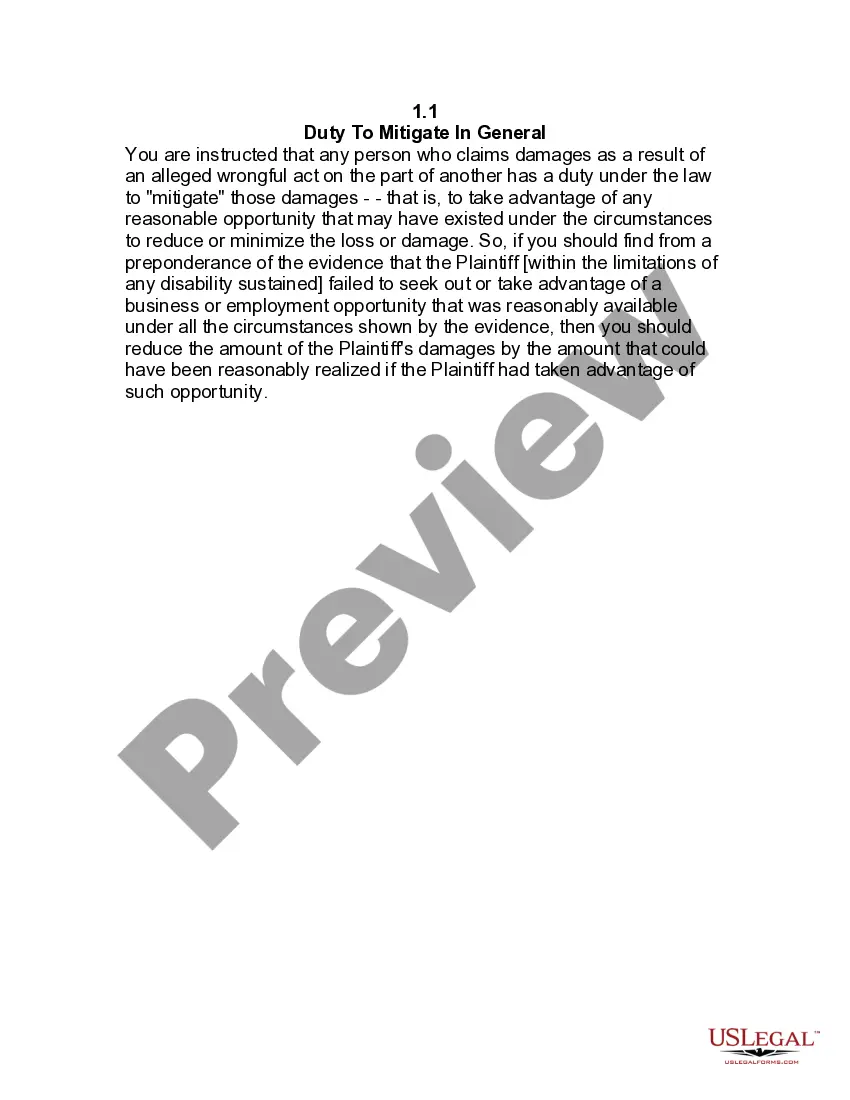
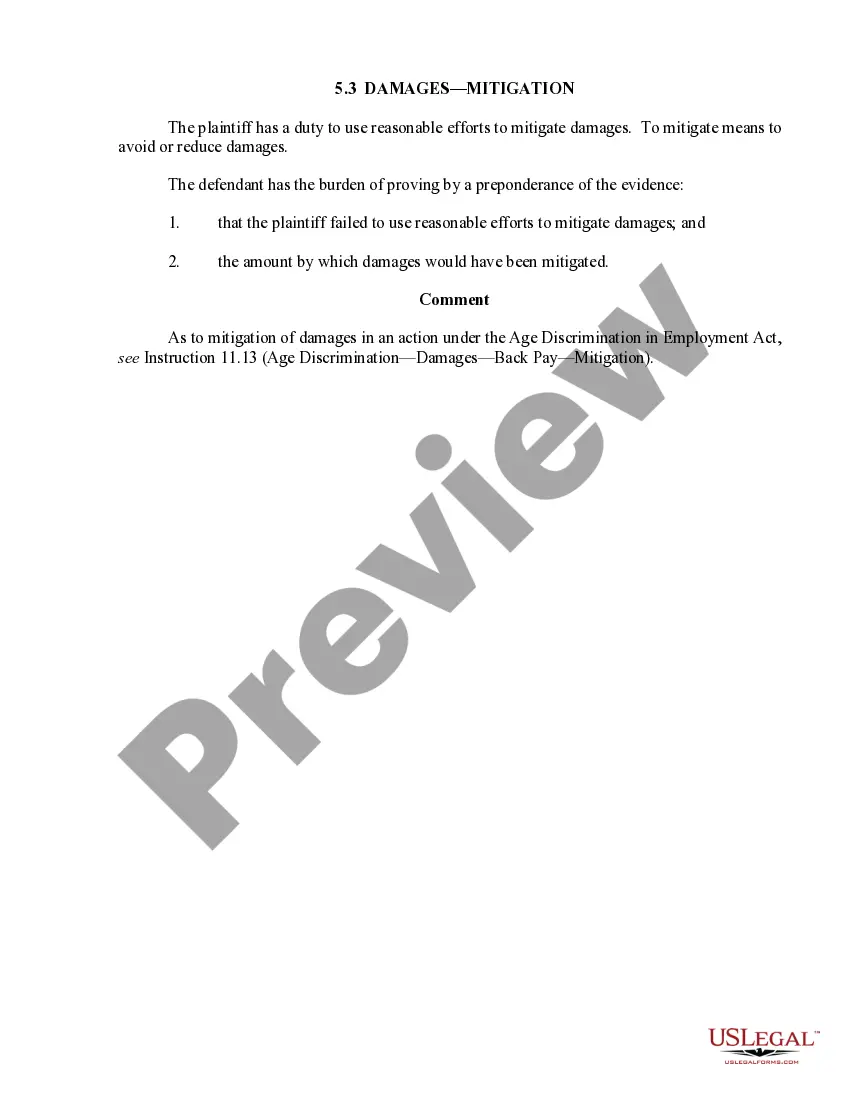
This Jury Instruction - 1.3 Duty to Mitigate In General Pursuing Medical Care provides essential guidance for jury members regarding the plaintiff's responsibility to minimize damages by seeking appropriate medical treatment. It is a vital tool in ensuring that juries understand the legal principle of mitigation in personal injury cases. This form differs from other jury instructions by specifically addressing the necessity for the plaintiff to act prudently when medical treatment is advised as part of the case evaluation.
Key parts of this document
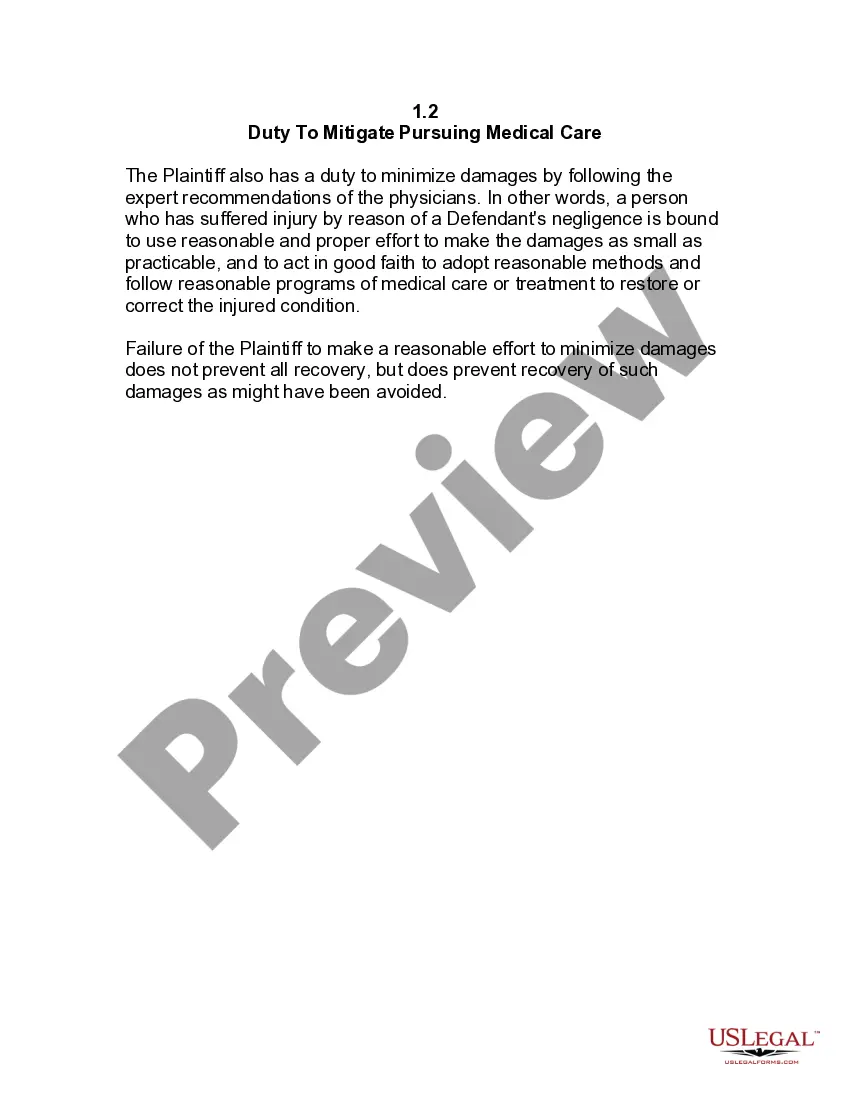
- Explanation of the plaintiff's duty to mitigate damages.
- Criteria for evaluating the advisability of medical treatment.
- Factors to consider regarding the reasonableness of the plaintiff's actions.
- Consequences of failing to seek recommended medical care.

When to use this document
This jury instruction is used in personal injury litigation where the issue of the plaintiff's failure to pursue necessary medical treatment arises. It is particularly relevant when determining the extent to which a plaintiff's damages may be reduced based on their actions following an injury or during recovery.
Who can use this document
- Judges overseeing personal injury cases.
- Attorneys representing either plaintiffs or defendants in litigation.
- Jury members needing clear instructions on mitigating damages.
Instructions for completing this form
- Review the jury instruction and adapt it to the specifics of the case being tried.
- Identify any local laws or precedents that may influence the instruction's content.
- Ensure clear and concise presentation to communicate effectively to the jury.
- Incorporate appropriate examples or scenarios relevant to the plaintiff's circumstances.
Is notarization required?
This form usually doesn’t need to be notarized. However, local laws or specific transactions may require it. Our online notarization service, powered by Notarize, lets you complete it remotely through a secure video session, available 24/7.
Get your form ready online
Our built-in tools help you complete, sign, share, and store your documents in one place.
Make edits, fill in missing information, and update formatting in US Legal Forms—just like you would in MS Word.
Download a copy, print it, send it by email, or mail it via USPS—whatever works best for your next step.
Sign and collect signatures with our SignNow integration. Send to multiple recipients, set reminders, and more. Go Premium to unlock E-Sign.
If this form requires notarization, complete it online through a secure video call—no need to meet a notary in person or wait for an appointment.
We protect your documents and personal data by following strict security and privacy standards.

Make edits, fill in missing information, and update formatting in US Legal Forms—just like you would in MS Word.

Download a copy, print it, send it by email, or mail it via USPS—whatever works best for your next step.

Sign and collect signatures with our SignNow integration. Send to multiple recipients, set reminders, and more. Go Premium to unlock E-Sign.

If this form requires notarization, complete it online through a secure video call—no need to meet a notary in person or wait for an appointment.

We protect your documents and personal data by following strict security and privacy standards.
Mistakes to watch out for
- Failing to tailor the jury instruction to the specific facts of the case.
- Overlooking local legal standards that may affect mitigation duties.
- Using overly complex language that confusingly presents the concept to jurors.
Advantages of online completion
- Convenient access to templates designed by licensed attorneys.
- Editable forms allow for customization based on specific case details.
- Reliable resources ensure accuracy and legal compliance.
Main things to remember
- The form highlights the importance of the duty to mitigate damages in personal injury cases.
- Clear criteria for jurors help evaluate the reasonableness of the plaintiff's medical treatment decisions.
- Adapting the instruction to fit specific jurisdictional requirements is essential for effective use.
Looking for another form?









Form popularity
FAQ
Jury Instructions. instructions that are given by the trial judge that specifically state what the defendant can be found guilty of and what the prosecution or plaintiff has to prove in order for a guilty verdict.
The jury listens to the evidence during a trial, decides what facts the evidence has established, and draws inferences from those facts to form the basis for their decision. The jury decides whether a defendant is "guilty" or "not guilty" in criminal cases, and "liable" or "not liable" in civil cases.
Personal knowledge about a party to the case or someone connected to the case. Personal experiences that might affect the person's ability to judge the case.
A curative instruction is given to a jury by the judge in a case to negate the prejudicial effect of an erroneous instruction or tainted evidence.
They must reach a unanimous/majority verdict. They have split function. Discussions are conducted in secret.
Jury. a group of citizens who will decide the issues or questions of facts at trial.
When the jury's verdict contradicts the great weight of the evidence, the trial judge is authorized to set aside that verdict and order a new trial. This power, sometimes called the thirteenth juror rule, dates back to the Blackstonian era. It exists in both civil and criminal cases, in both state and federal court.
Jury instructions, directions to the jury, or judge's charge are legal rules that jurors should follow when deciding a case.