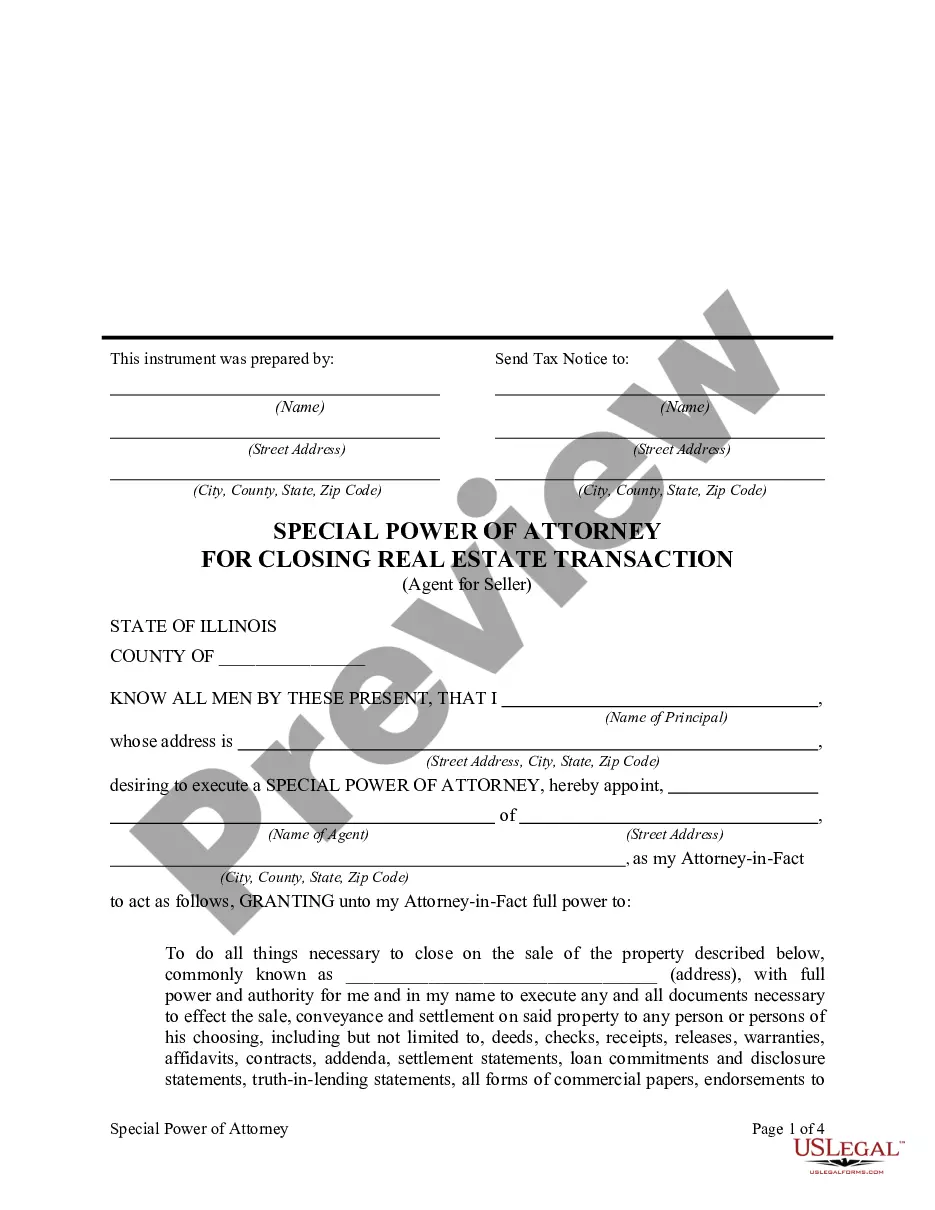
The Illinois Special or Limited Power of Attorney for Real Estate Sales Transaction by Seller is a legal document that grants a designated person, known as the Attorney-in-Fact, the authority to act on behalf of the seller in a real estate transaction. This document empowers the agent to handle various aspects of the sale, including signing contracts, executing deeds, and managing settlement processes, ensuring that the sale proceeds smoothly and legally.
To properly complete the Illinois Special or Limited Power of Attorney, follow these steps:
This form is ideal for individuals selling real estate in Illinois who want to delegate their authority to another person to manage the transaction. It is particularly useful for sellers who may be unable to attend the closing in person or who wish to appoint someone they trust to handle the sale on their behalf.
The Illinois Special or Limited Power of Attorney includes several critical components:
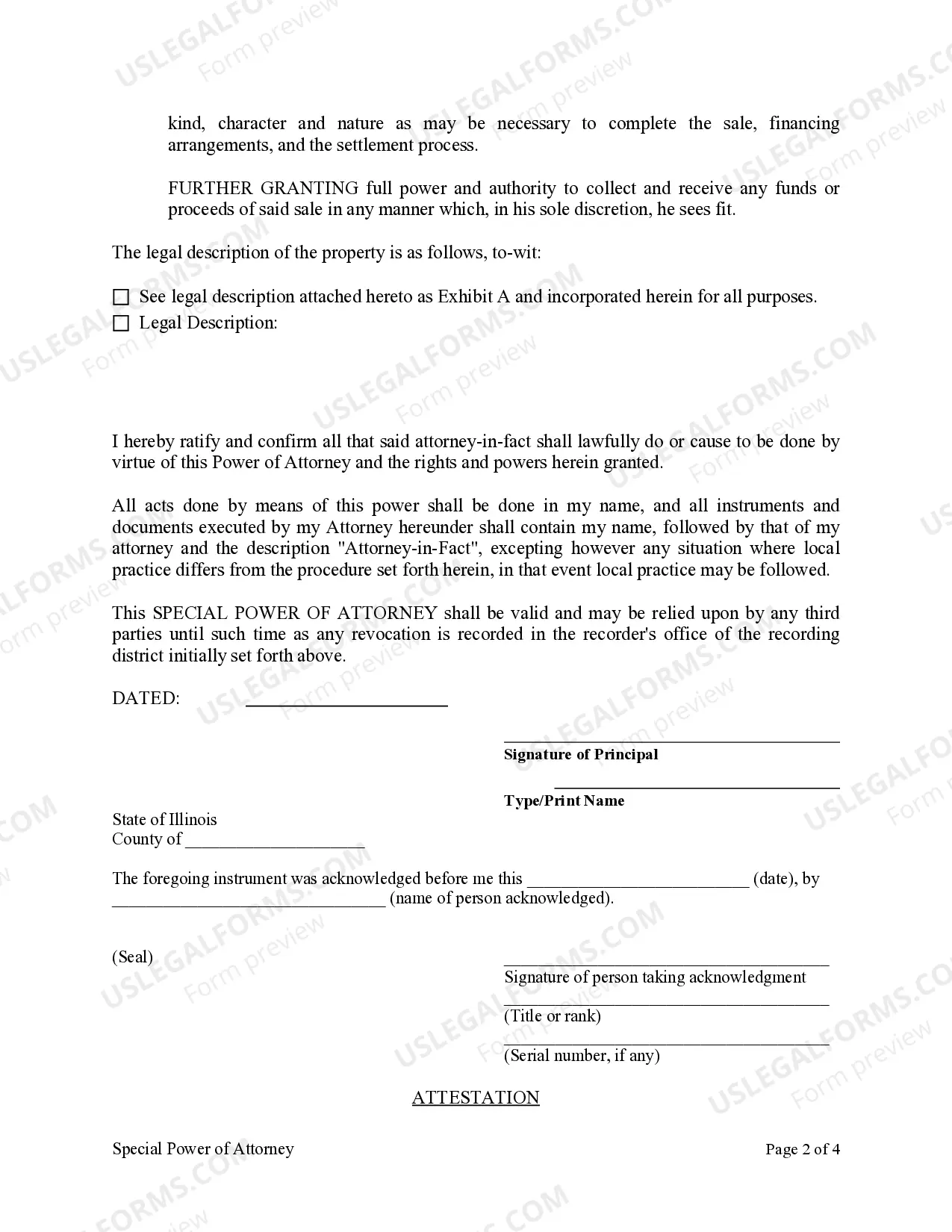
When notarizing the Illinois Special or Limited Power of Attorney, the principal must present valid identification to the notary. The notary will verify the identity of the principal, confirm their willingness to sign, and then affix their seal to the document. This process provides legal recognition to the document and is essential for its validity in real estate transactions.
Choosing between a General Power of Attorney and a Special Power of Attorney depends on your needs. A General Power of Attorney grants broad authority, while a Special Power of Attorney limits the agent's powers to specific tasks. If you're focused solely on a real estate transaction, an Illinois Special or Limited Power of Attorney for Real Estate Sales Transaction By Seller is often the better choice.
In many states, notarization is required by law to make the durable power of attorney valid. But even where law doesn't require it, custom usually does. A durable power of attorney that isn't notarized may not be accepted by people with whom your attorney-in-fact tries to deal.
The POA can be a useful tool in residential real estate transactions when a necessary party will be unavailable to execute documents prior to or attend the closing.In order to be recorded, the POA presented must contain the original signature of the principal, and it must be notarized.
By giving someone the power to sign on their behalf, the Principal is giving the attorney-in-fact power to make decisions for them. When signing a POA, the Principal's signature must be notarized at the time and place it is signed. A local notary in any state of the U.S. is acceptable.
A power of attorney (POA) for a real estate closing is permissible if not all parties can make it to the settlement table, but is not to be used as a matter of convenience. A POA is written authorization to act in a legal capacity on another's behalf, in certain circumstances, which are laid out in the document.
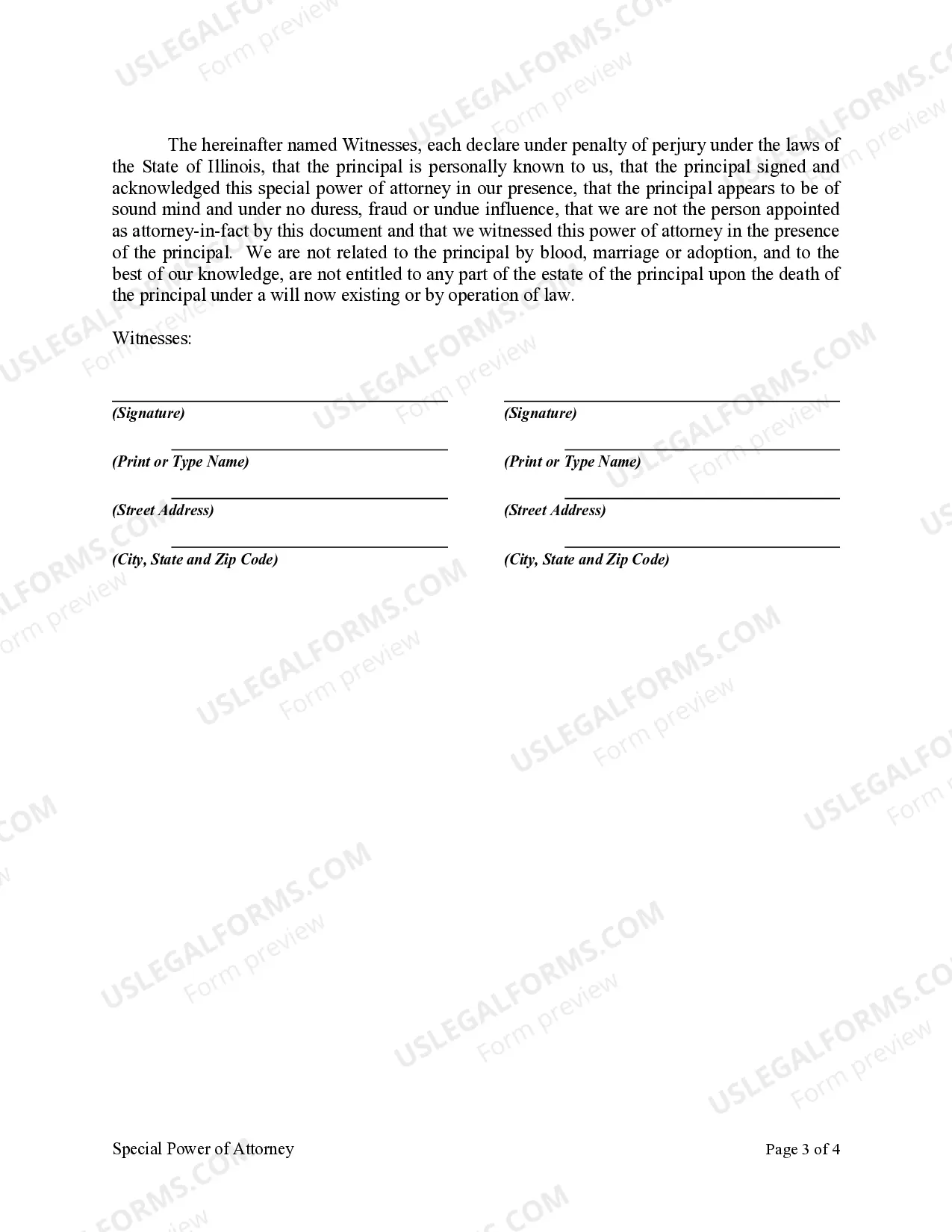
Finally, the power of attorney document requires the principal's notarized signature and at least one witness to be effective. Please note, according to Section 3-3.6 of the Illinois Power of Attorney Act, the requirement of at least one witness's signature applies to agencies created after June 9, 2000.
Do I Need to Have My Will Notarized? No, in Illinois, you do not need to notarize your will to make it legal.However, Illinois allows your will to be self-proved without a self-proving affidavit, as long as you sign and witness it correctly.
Finally, the power of attorney document requires the principal's notarized signature and at least one witness to be effective. Please note, according to Section 3-3.6 of the Illinois Power of Attorney Act, the requirement of at least one witness's signature applies to agencies created after June 9, 2000.
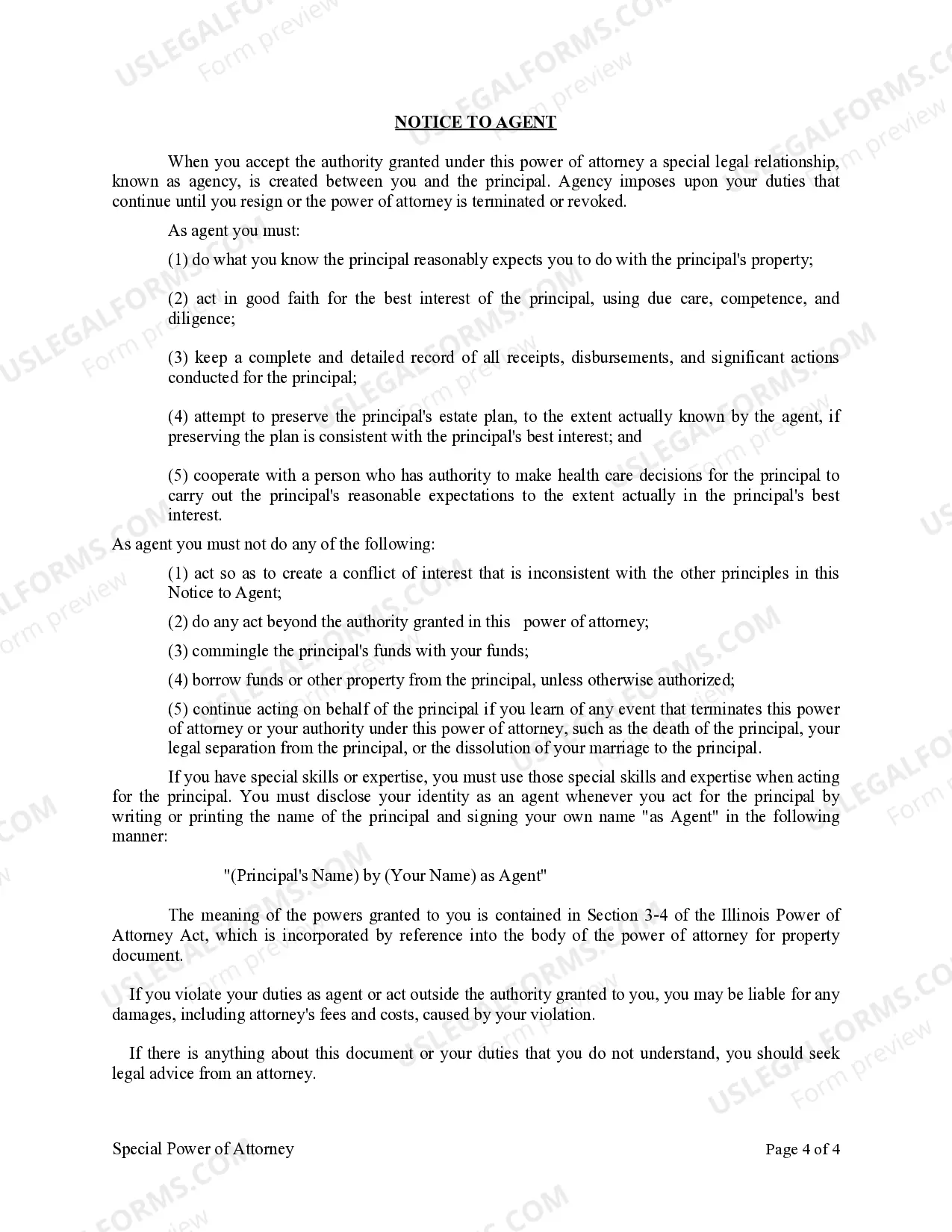
After the principal's name, write by and then sign your own name. Under or after the signature line, indicate your status as POA by including any of the following identifiers: as POA, as Agent, as Attorney in Fact or as Power of Attorney.
Name, signature, and address of the principal. Name, signature, and address of the agent. Properties and activities under the authority of the agent. Date of effect and termination of authority. Compensation to services of the agent.