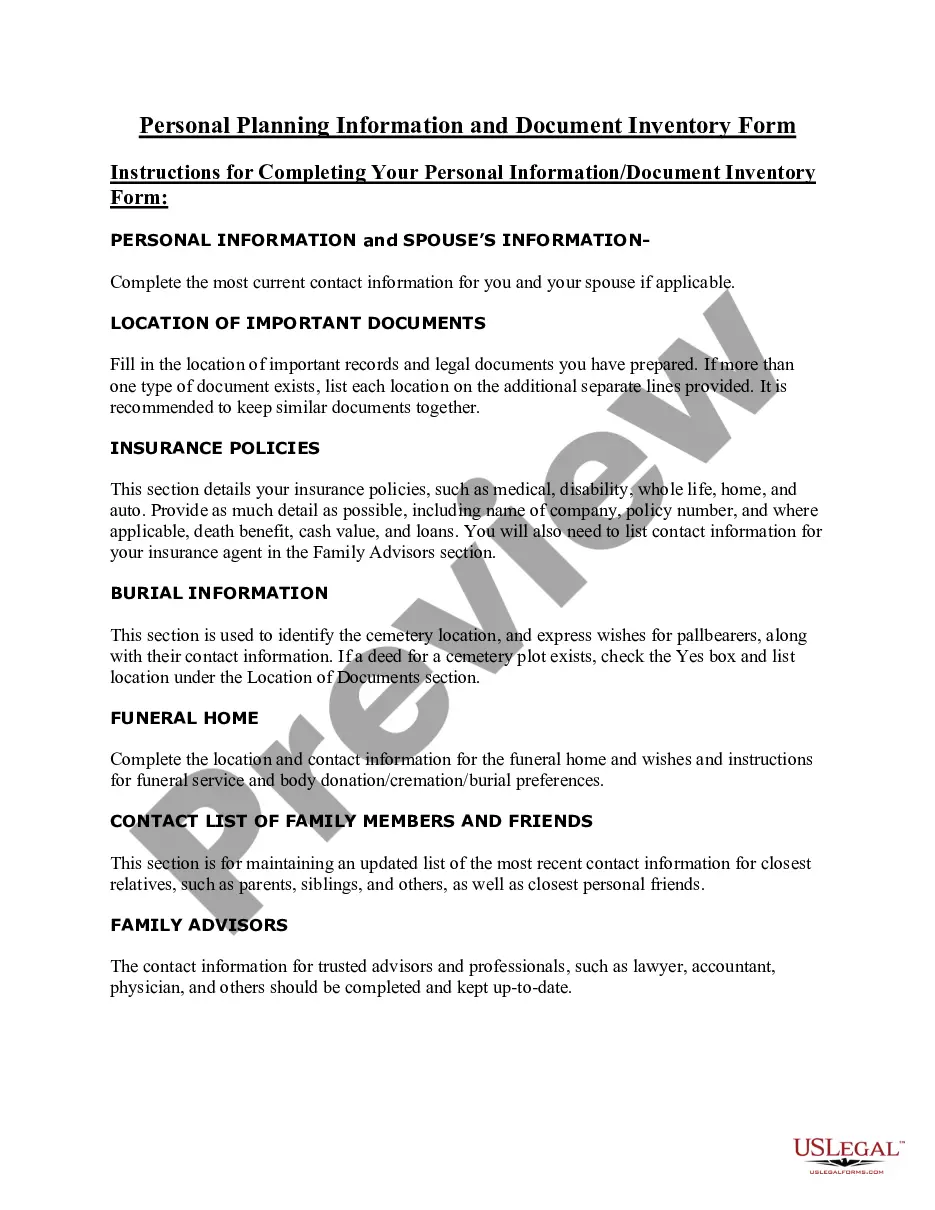
Personal Planning

Personal planning documents help organize health, financial, and family decisions for the future. Access attorney-drafted templates that are straightforward, reliable, and quick to complete online.

intro Personal Planning

Common Personal Planning documents

  • Last Will and Testament — Directs how property and assets are distributed after death.
  • Durable Power of Attorney — Grants someone authority to handle financial or legal matters if you can’t.
  • Advance Healthcare Directive — States medical preferences and names a health care decision-maker.
  • Personal Financial Statement — Summarizes income, assets, and liabilities for estate or retirement planning.
  • Living Trust — Allows management and transfer of property outside of probate.
  • Emergency Contact and Information Form — Lists key personal and medical contacts for emergencies.
  • Estate Planning Worksheet — Helps organize documents, assets, and decision-makers in one place.

Similar documents: key differences

  • Will vs. Living Trust — A will takes effect after death; a trust operates during life and after.
  • Power of Attorney vs. Health Care Proxy — The first handles finances; the second covers medical decisions.
  • Advance Directive vs. Living Will — Often overlap; an advance directive can include a living will.
  • Durable vs. Non-Durable Power of Attorney — Durable continues through incapacity; non-durable ends if you can’t act.
  • Preneed Planning vs. Estate Planning — Preneed covers end-of-life services; estate planning covers property and legacy.
  • Emergency Plan vs. Long-Term Care Plan — Emergency plans handle immediate needs; long-term plans address future care and housing.

How to get started

Start organizing your personal planning documents with these simple steps.

  • Choose the form or package that fits your personal or family needs.
  • Review the description, preview, and signing instructions.
  • Get full access with a subscription.
  • Complete the documents easily in the online editor.
  • Export or send — download, email, mail, notarize online, or e-sign (Premium).

FAQs

It protects your wishes, simplifies decision-making for loved ones, and keeps your affairs organized during any stage of life.

Yes. A will controls what happens after death, while a power of attorney manages financial matters if you’re alive but unable to act.

Check your documents every two to three years or after significant personal or financial changes.

Absolutely. Many people appoint separate agents for medical and financial decisions.

Courts or state laws may decide who manages your property or makes decisions, which can delay or complicate matters for your family.

Glossary

  • Personal Planning — Organizing legal and financial affairs in advance.
  • Advance Directive — States medical wishes and designates a healthcare agent.
  • Durable Power of Attorney — Remains valid if the signer becomes incapacitated.
  • Living Trust — Manages assets during life and after death.
  • Will — Directs property distribution after death.
  • Health Care Proxy — Person named to make medical decisions.
  • Beneficiary — Person or entity receiving property or benefits.
  • Estate Plan — Collection of documents managing assets and wishes.
  • Executor — Person appointed to carry out a will.
  • Long-Term Care Plan — Strategy for managing health and living needs over time.

Trusted by over 3 million people of the world’s leading companies