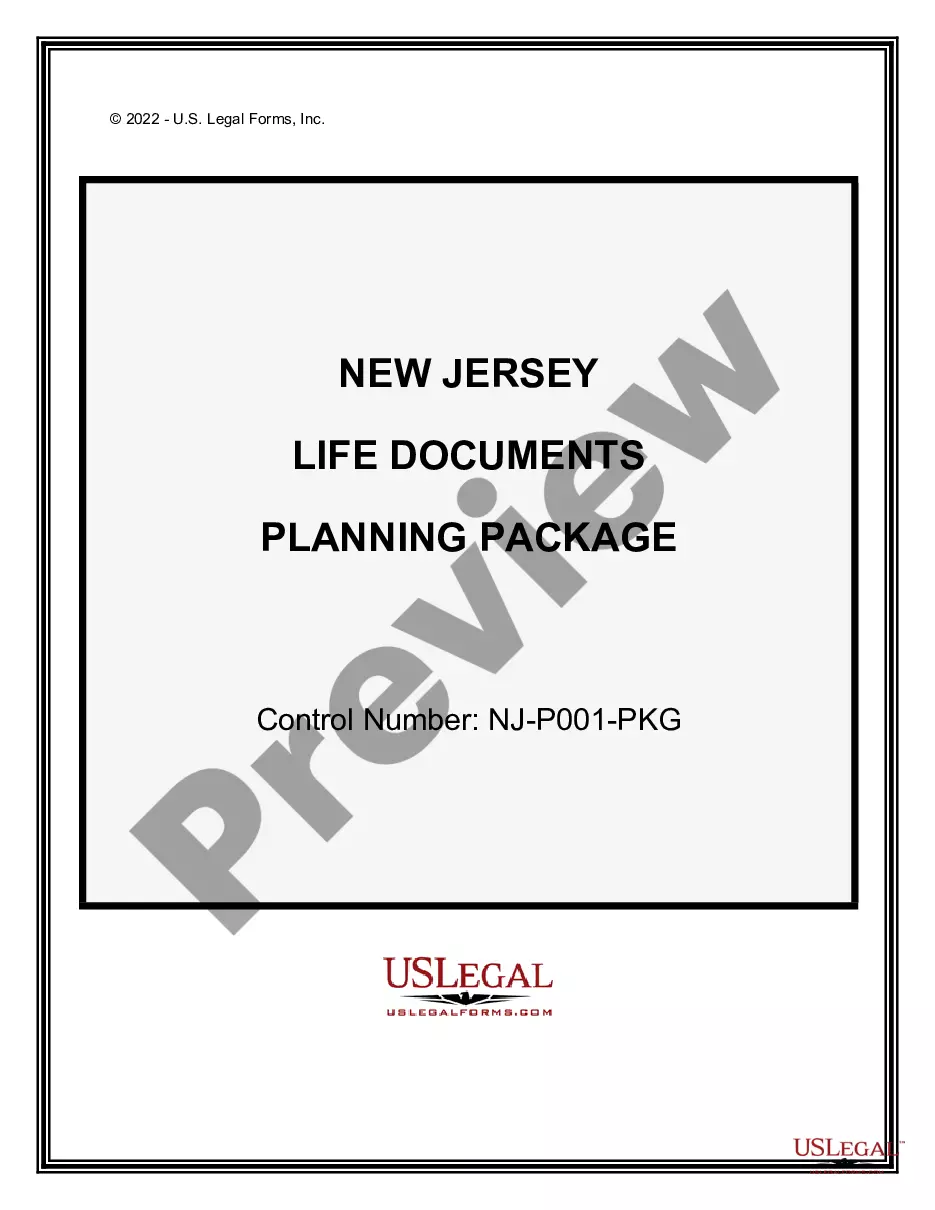
New Jersey Life Documents Planning Package, including Will, Power of Attorney and Living Will

What this form package covers
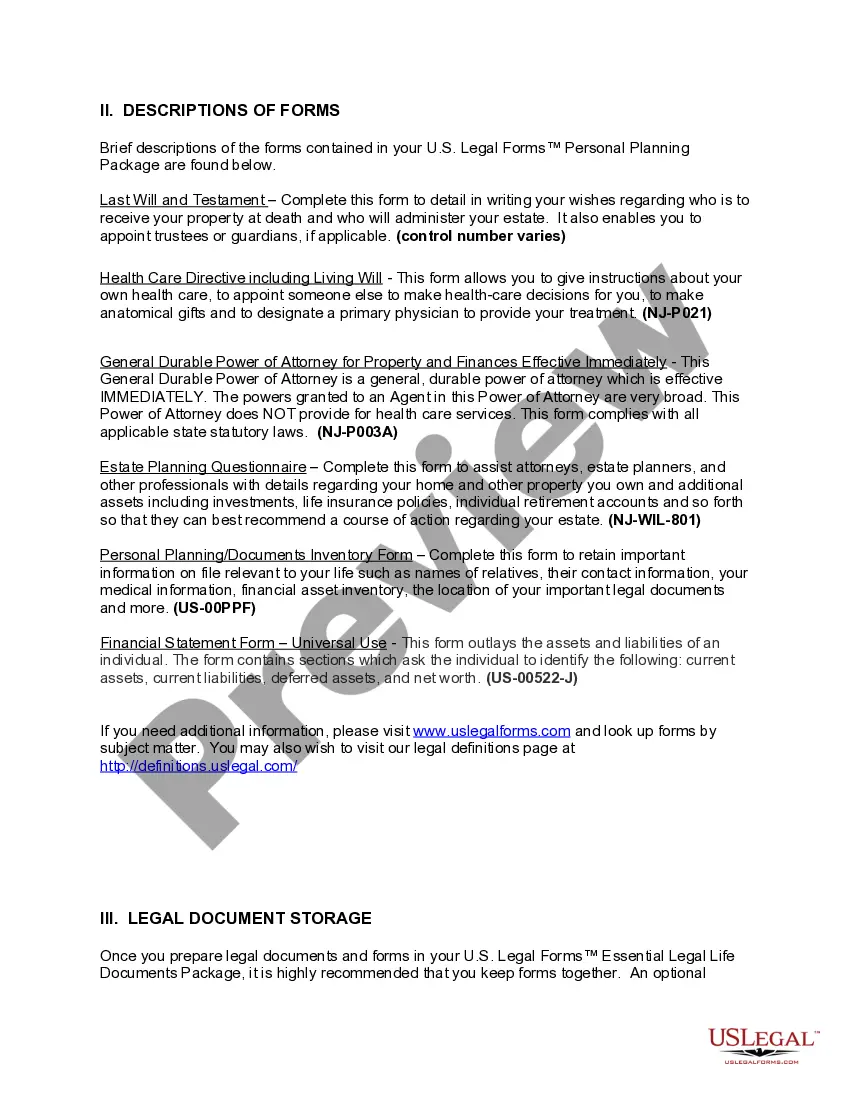
The New Jersey Life Documents Planning Package is a comprehensive set of essential legal documents that assists individuals in planning for their future and ensuring their wishes are honored. This package includes state-specific forms such as a Will, Power of Attorney, and a Living Will, each tailored to meet New Jersey's legal requirements. By using this package, you can gain peace of mind knowing that you have outlined your preferences for healthcare decisions and asset distribution in the event of unforeseen circumstances.
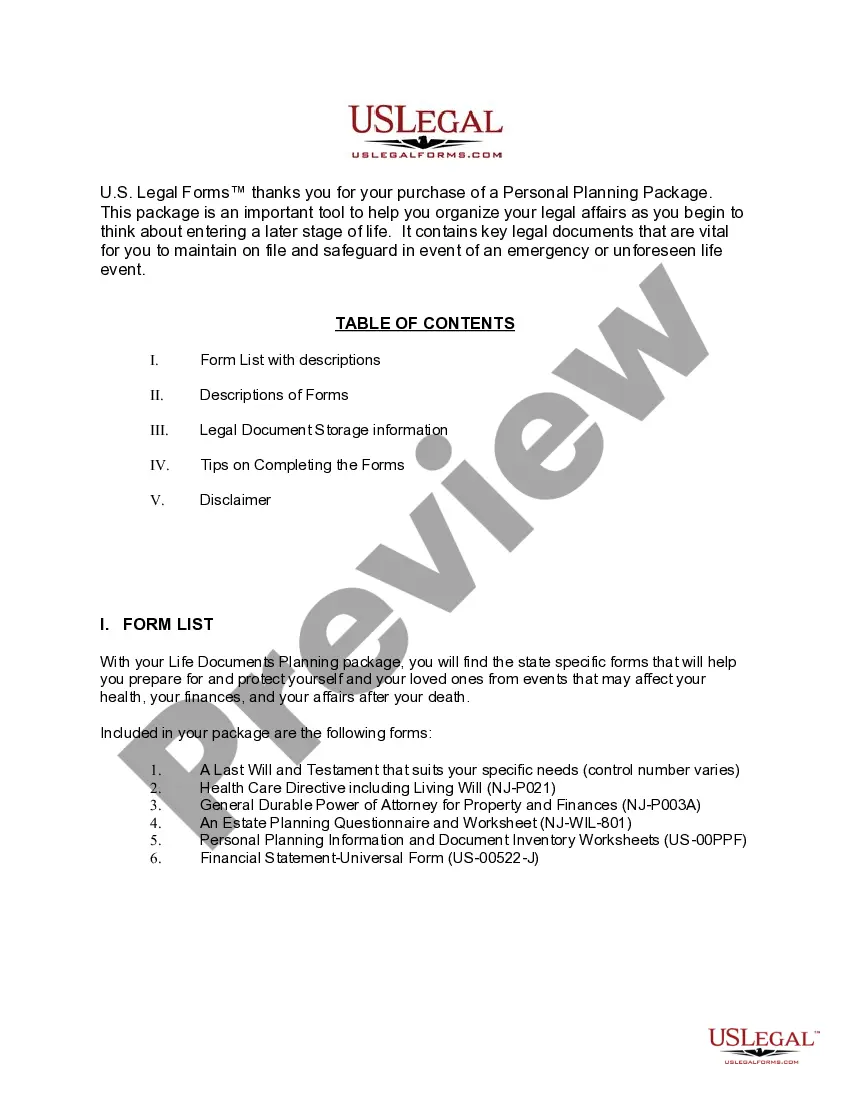
Forms included in this package
- Last Will and Testament
- General Durable Power of Attorney for Property and Finances or Financial Effective Immediately
- Designation of Standby Guardian - Statutory
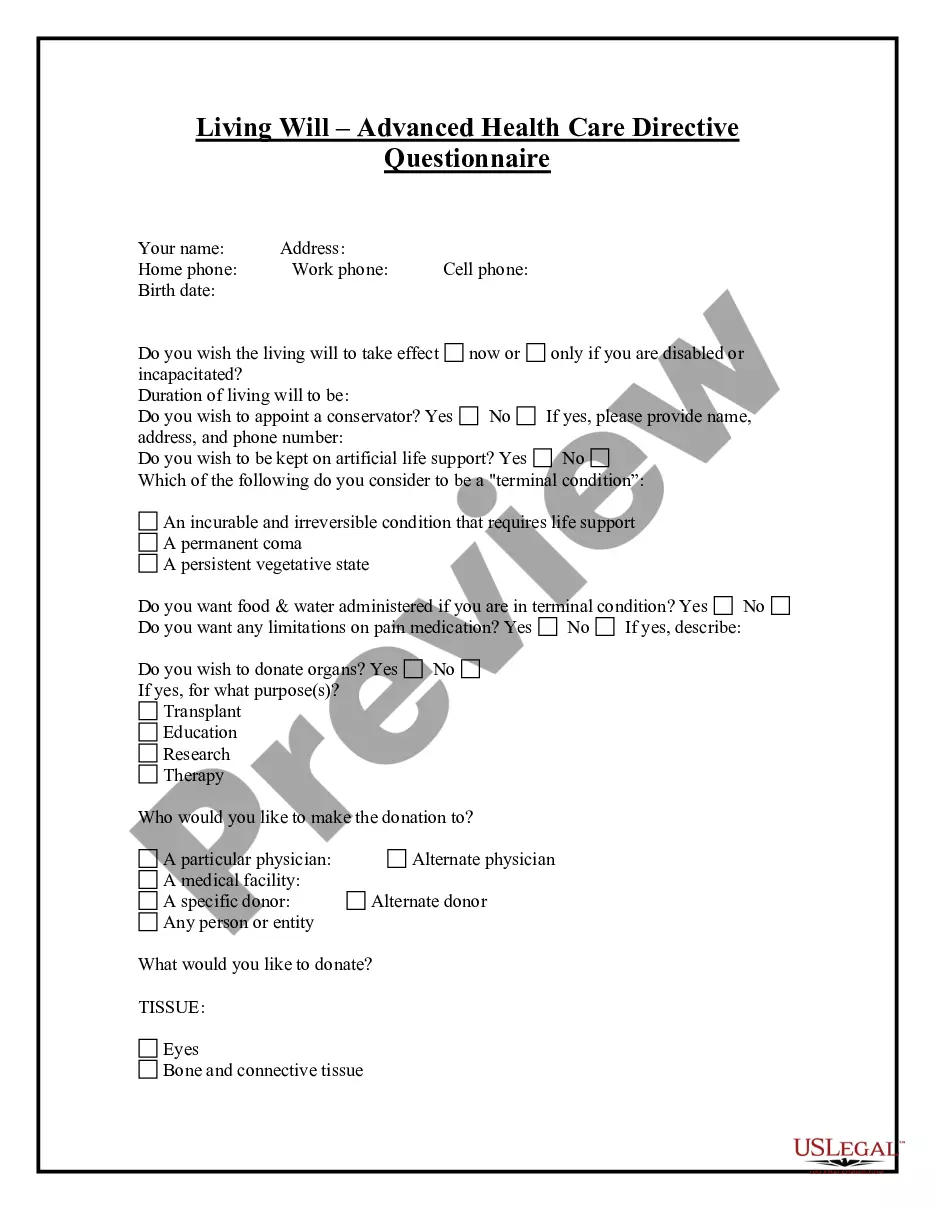
- Health Care Directive including Living Will
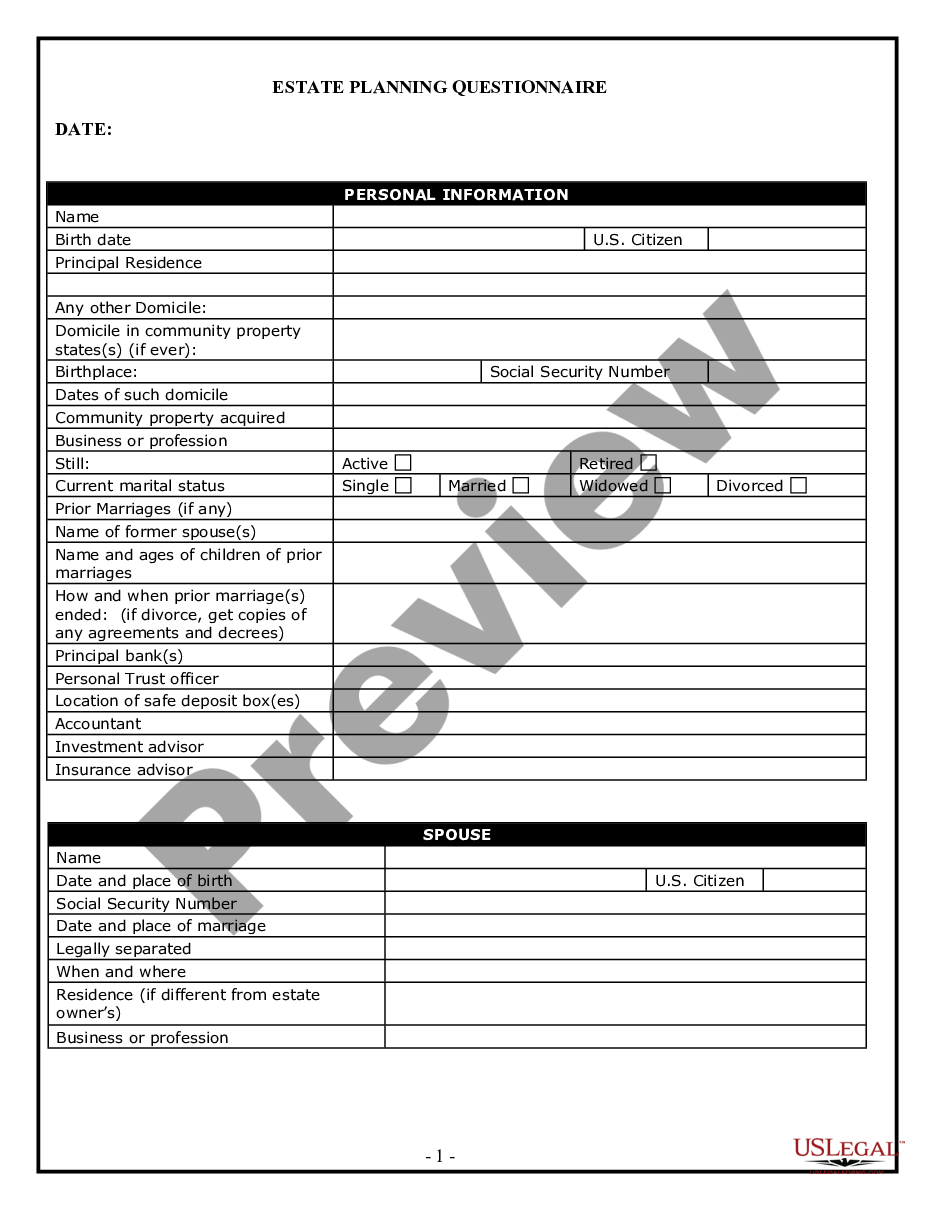
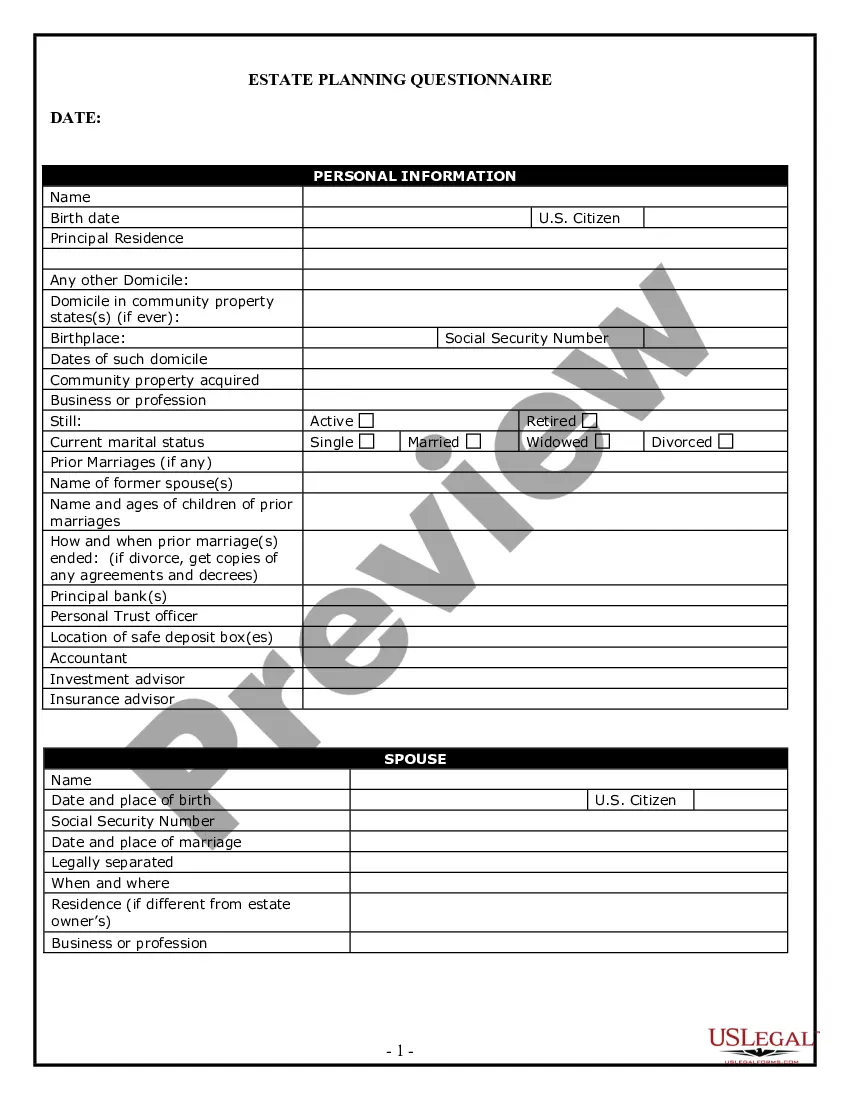
- Estate Planning Questionnaire and Worksheets
- Sample Letter for Request for Free Credit Report Allowed by Federal Law
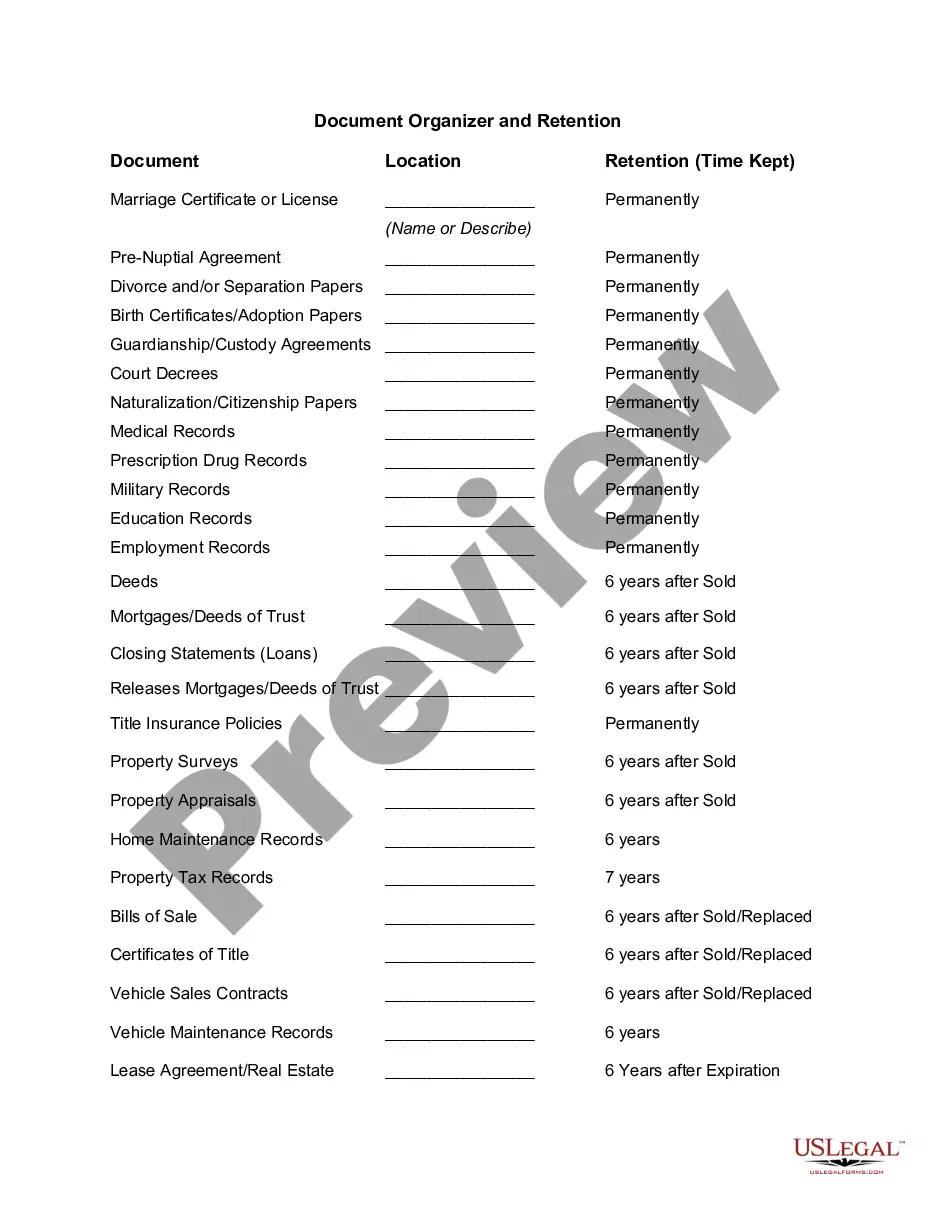
- Personal Planning Information and Document Inventory Worksheets - A Legal Life Document
- Estate Planning Questionnaire

When this form package is needed
Consider using the New Jersey Life Documents Planning Package in the following situations:
- You want to ensure that your property and assets are distributed according to your wishes after your passing.
- You need to assign a guardian for your minor children in case you become unable to care for them.
- You wish to communicate your health care preferences and appoint someone to make decisions on your behalf when you cannot.
- You are planning for your financial and health-related affairs, particularly as you age or face unexpected health challenges.
Who should use this form package
- Individuals looking to create a legally binding Will in New Jersey.
- Parents who need to designate a standby guardian for their children.
- Anyone wanting to establish a Power of Attorney for financial matters.
- People interested in planning their health care decisions through a Living Will.
- Those who wish to organize important personal and financial information relevant to their estate.
Steps to complete these forms
- Carefully review all included forms in the package to understand their purpose.
- Gather relevant personal and financial information needed to complete each document accurately.
- Fill out the Last Will, Power of Attorney, and Living Will, providing clear and specific instructions.
- Sign the documents in accordance with New Jersey law, ensuring appropriate witnesses if necessary.
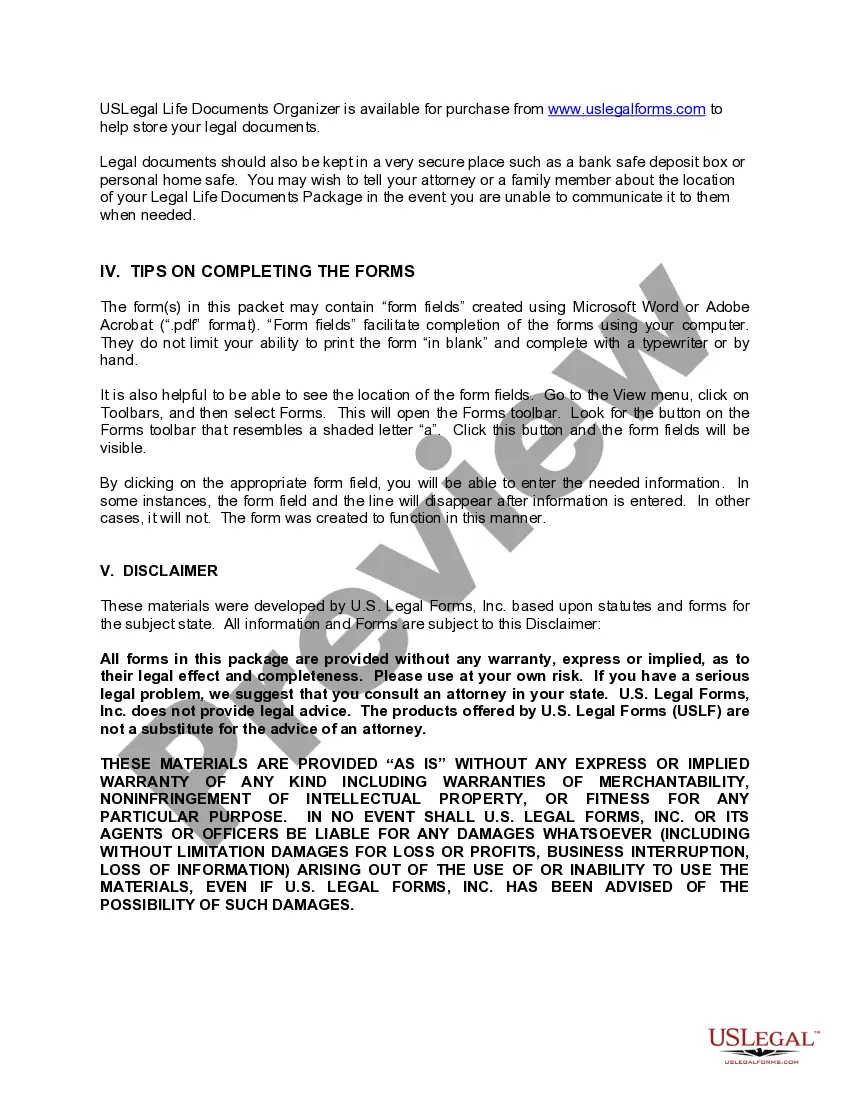
- Store the completed forms securely and inform trusted individuals about their location.
Notarization guidance for this package
Some forms in this package need notarization to be legally binding. Our online notarization service, powered by Notarize, lets you verify and sign documents remotely through an encrypted video session, available 24/7.
Get your form ready online
Our built-in tools help you complete, sign, share, and store your documents in one place.
Make edits, fill in missing information, and update formatting in US Legal Forms—just like you would in MS Word.
Download a copy, print it, send it by email, or mail it via USPS—whatever works best for your next step.
Sign and collect signatures with our SignNow integration. Send to multiple recipients, set reminders, and more. Go Premium to unlock E-Sign.
If this form requires notarization, complete it online through a secure video call—no need to meet a notary in person or wait for an appointment.
We protect your documents and personal data by following strict security and privacy standards.

Make edits, fill in missing information, and update formatting in US Legal Forms—just like you would in MS Word.

Download a copy, print it, send it by email, or mail it via USPS—whatever works best for your next step.

Sign and collect signatures with our SignNow integration. Send to multiple recipients, set reminders, and more. Go Premium to unlock E-Sign.

If this form requires notarization, complete it online through a secure video call—no need to meet a notary in person or wait for an appointment.

We protect your documents and personal data by following strict security and privacy standards.
Common mistakes to avoid
- Failing to have the documents properly witnessed or notarized, where required.
- Neglecting to update the forms after major life changes, such as marriage, divorce, or the birth of children.
- Overlooking details when filling out the forms, leading to ambiguity or confusion.
- Not discussing your wishes with designated individuals, leaving them unprepared to act on your behalf.
Benefits of using this package online
- Convenience: Access and download your legal forms from the comfort of your home at any time.
- Editability: Customize the forms easily to fit your specific needs without the hassle of manual paperwork.
- Reliability: Vital legal documents prepared by licensed attorneys to ensure compliance with New Jersey laws.
- Affordability: Save money on legal fees by using professionally drafted documents tailored to your situation.
Looking for another form?



Form popularity
FAQ
No, in New Jersey, you do not need to notarize your will to make it legal. However, New Jersey allows you to make your will "self-proving" and you'll need to go to a notary if you want to do that. A self-proving will speeds up probate because the court can accept the will without contacting the witnesses who signed it.
To be valid, a living will must meet state requirements regarding notarization or witnesses. A living will can be revoked at any time. The document can take effect as soon as it's signed, or only when it's determined that the person can no longer communicate his or her wishes about treatment.
The living will. Durable power of attorney for health care/Medical power of attorney. POLST (Physician Orders for Life-Sustaining Treatment) Do not resuscitate (DNR) orders. Organ and tissue donation.
Under New Jersey law, a handwritten Will can be valid as a writing intended as a Will if the material portions of the document are in the handwriting of the decedent and signed by the decedent.
New Jersey requires that a person is at least 18 years old in order to execute a valid will.New Jersey requires that a typed will be signed by at least two people who witnessed the testator sign the will, or witnessed the testator acknowledge their signature on the will or the will itself.
When a Living Will or Power of Attorney for Healthcare Ends Your living will and the power of attorney for healthcare are generally extinguished upon your death. This also means that your healthcare agent, if you designate one, can only make healthcare decisions for you while you are alive and incapacitated.
An advance directive is a set of instructions someone prepares in advance of ill health that determines his healthcare wishes. A living will is one type of advance directive that becomes effective when a person is terminally ill.
The Probate process is required by the state of NJ whenever someone dies. It is the government's way of making sure the assets of the deceased pass properly to their decedents. And of course to insure that any taxes or lien's owed to the state or other parties are fully paid.You still have to go through probate.
A living will is a vital part of the estate plan. You can alter it as your preferences and needs change over time.But your family cannot override your living will. They cannot take away your authority to make your own treatment and care plans.