Mississippi Life Documents Planning Package, including Will, Power of Attorney and Living Will

About this form package
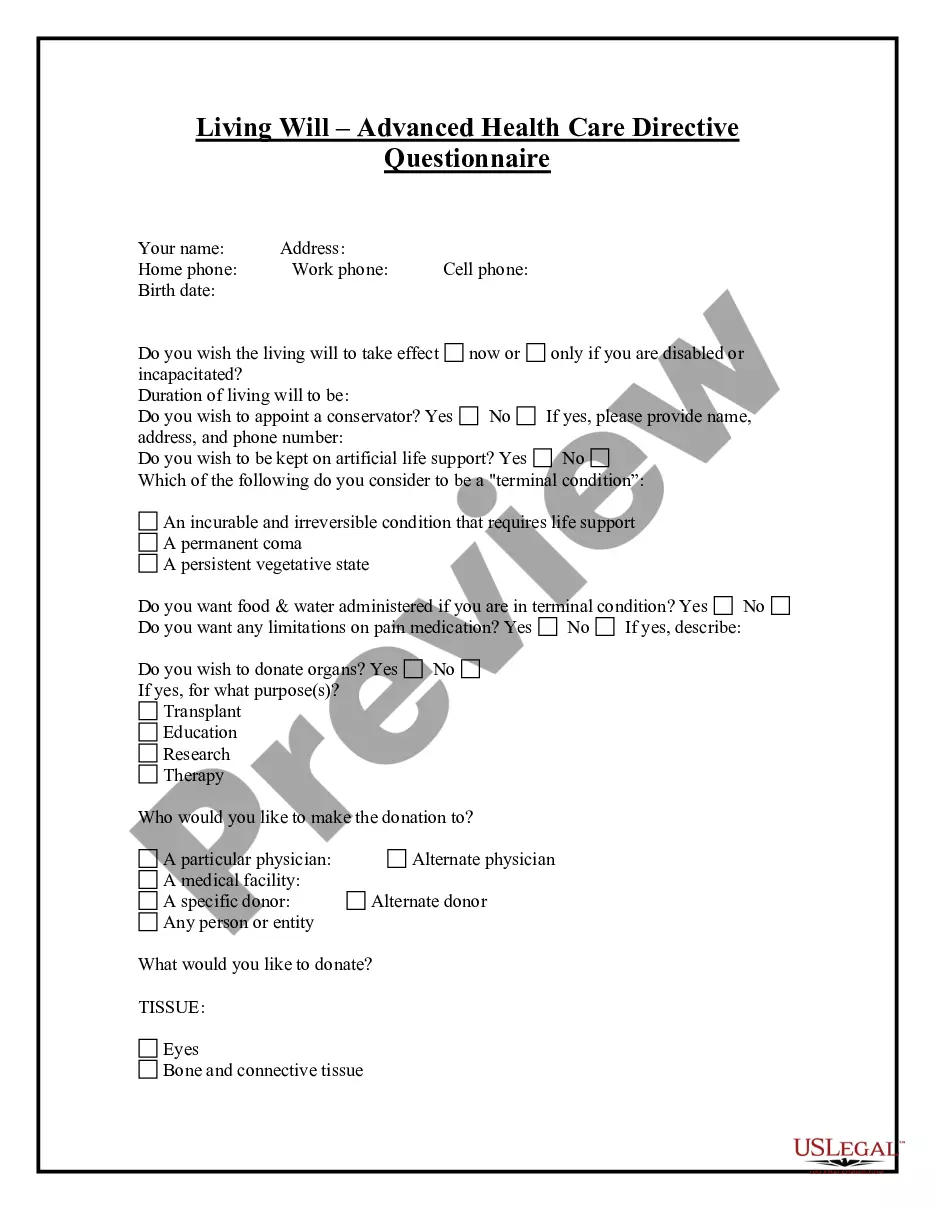
The Mississippi Life Documents Planning Package is a comprehensive resource for creating essential legal documents that help you manage your estate and health care decisions. This form package includes a Last Will, a General Durable Power of Attorney, an Advance Health Care Directive, and various planning worksheets tailored to Mississippi law. Unlike generic options, this package is state-specific and ensures compliance with local regulations, making it a vital tool for individuals planning for their future.
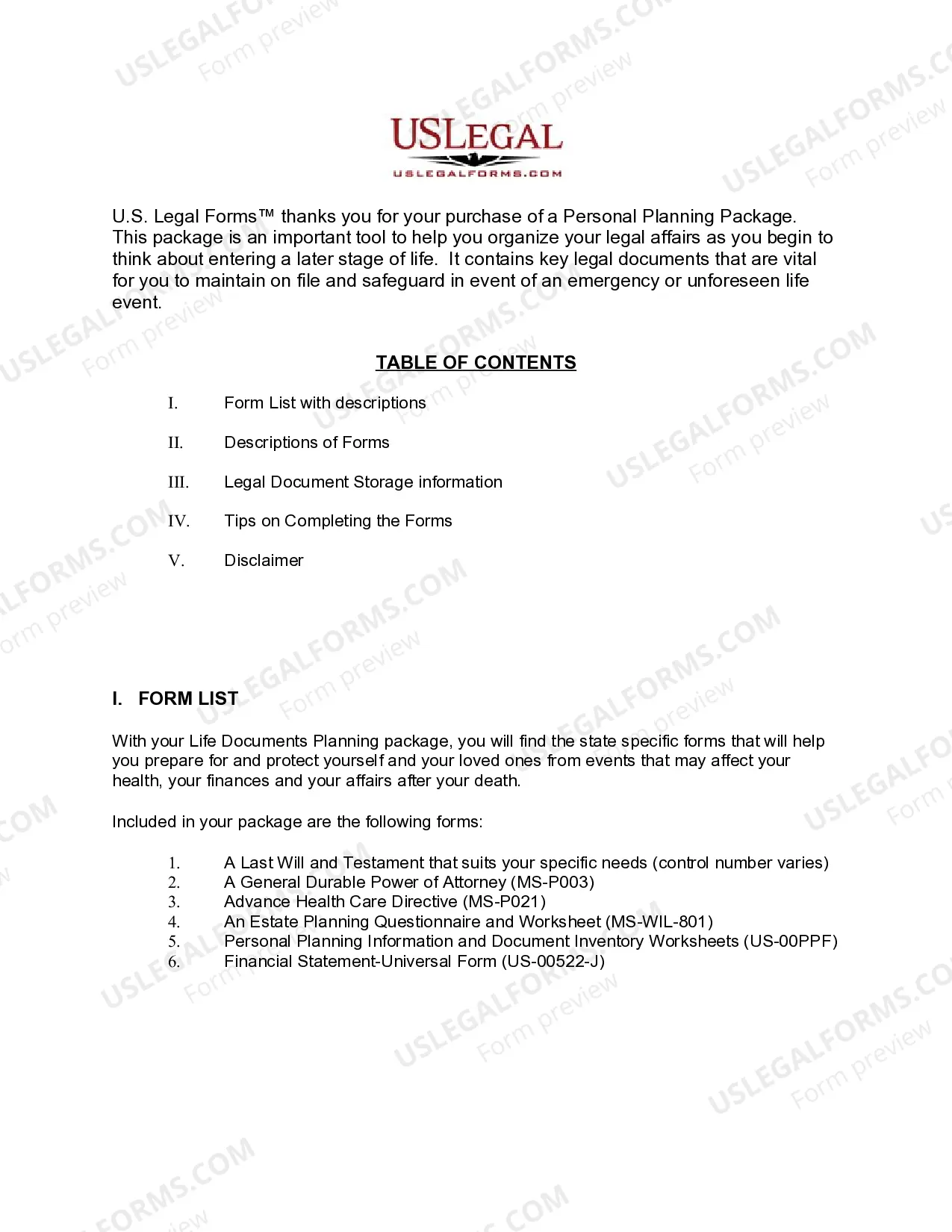
What’s included in this form package
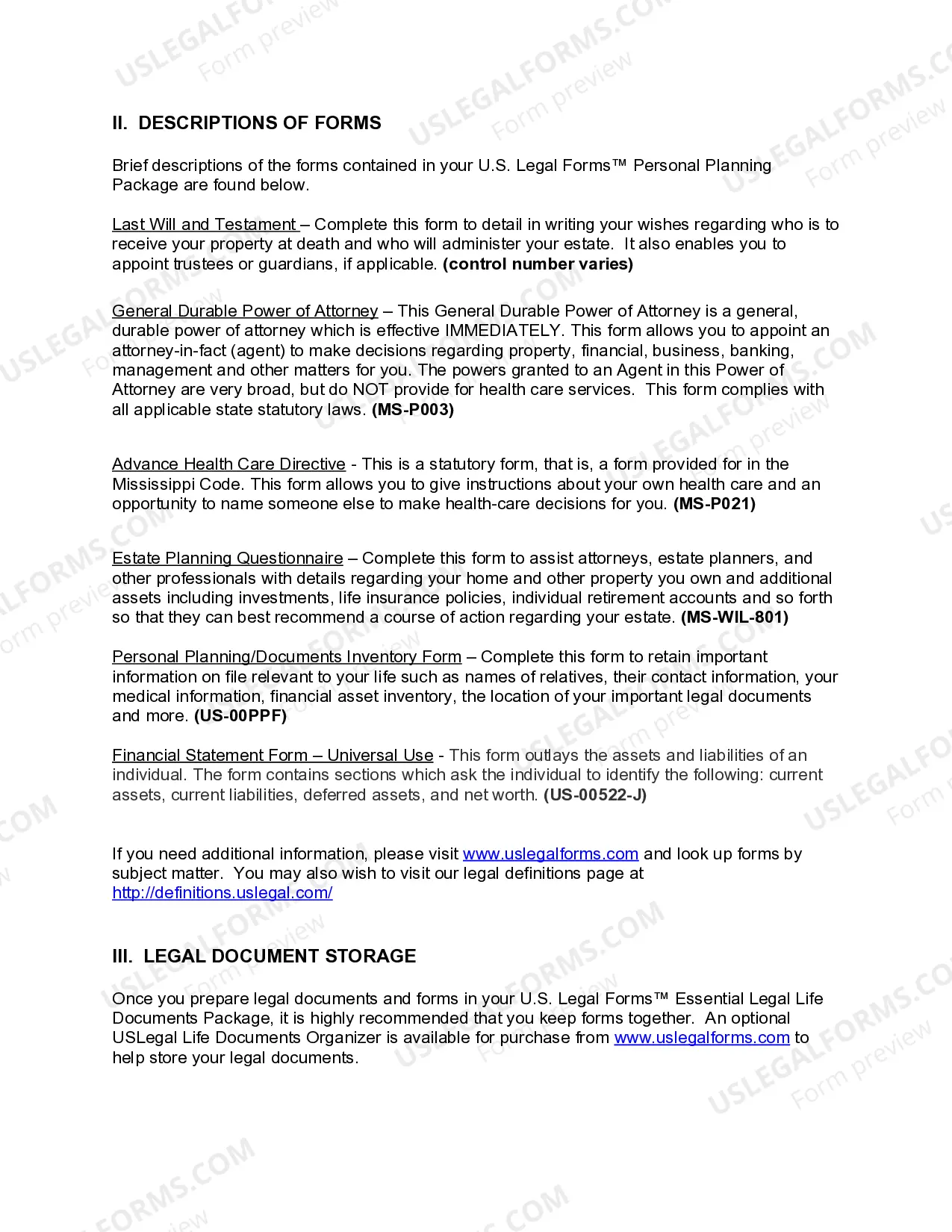
- Last Will and Testament
- General Durable Power of Attorney
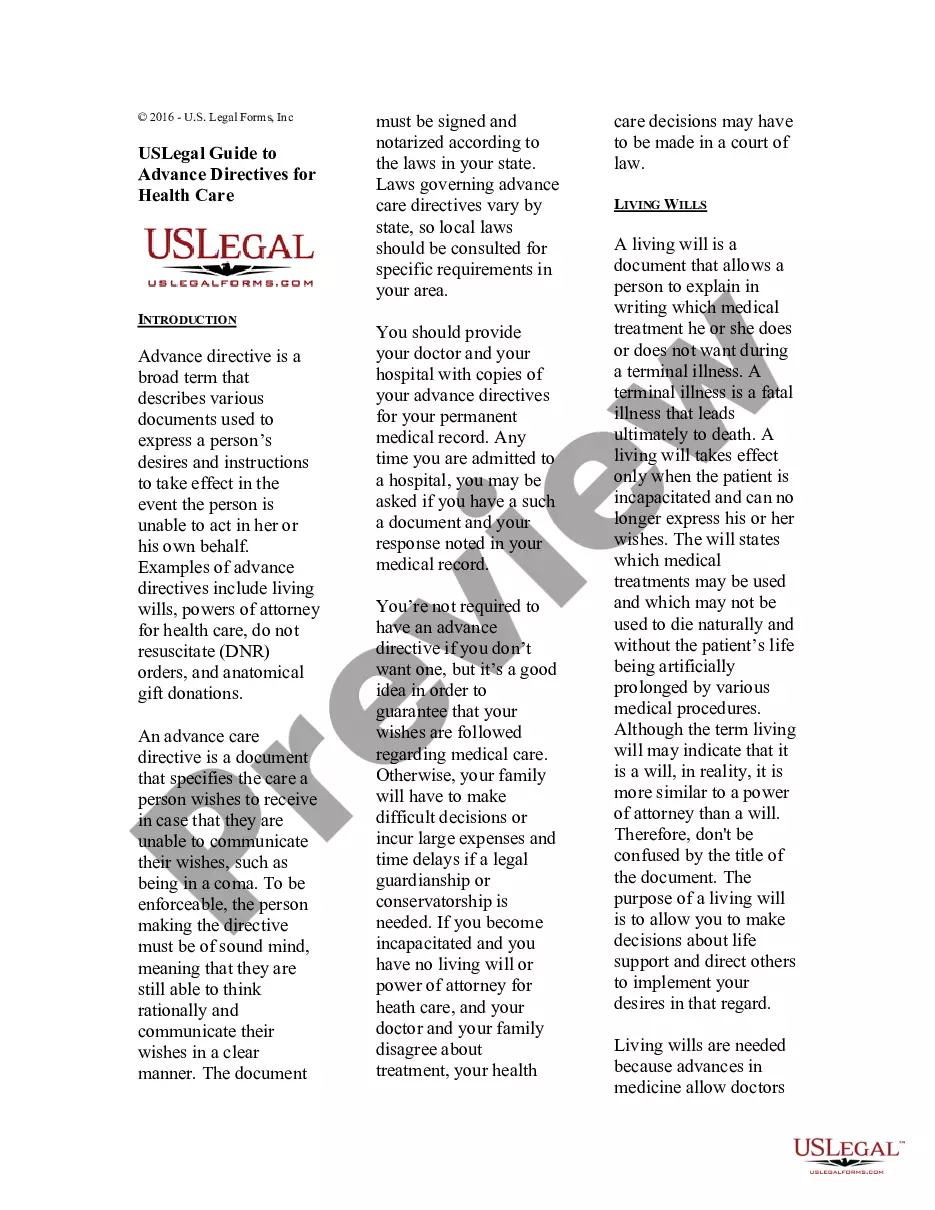
- Advance Health Care Directive Statutory Form includes Living Will
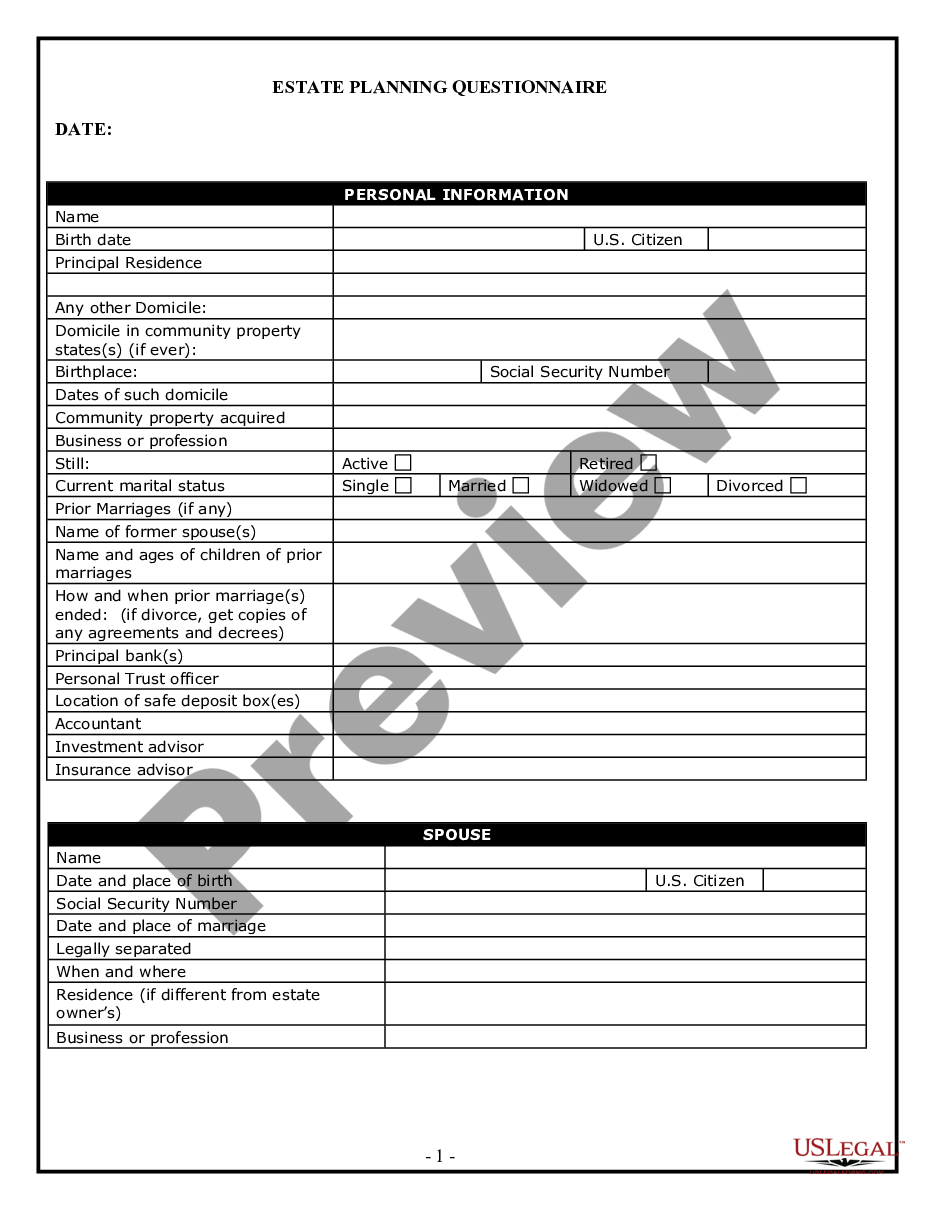
- Estate Planning Questionnaire and Worksheets
- Sample Letter for Request for Free Credit Report Allowed by Federal Law
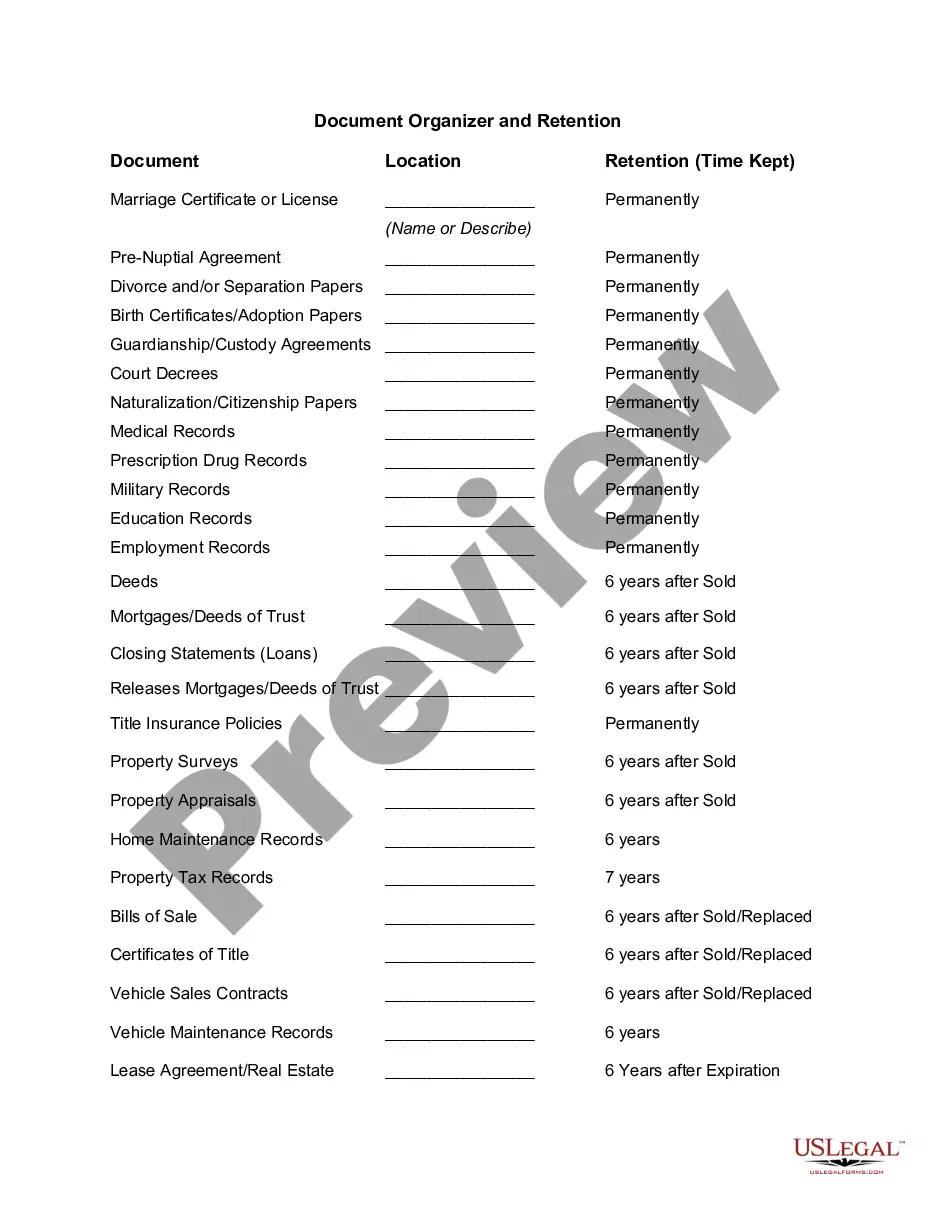
- Personal Planning Information and Document Inventory Worksheets - A Legal Life Document
- Estate Planning Questionnaire
When to use this form package
This form package is useful in various life situations, including:
- Establishing a clear plan for distributing your assets after your death.
- Designating someone to manage your financial affairs in case of incapacity.
- Making health care decisions in advance to ensure your wishes are followed.
- Organizing your personal and financial information for better estate management.
- Preparing for the unexpected events that affect your health or property.
Who needs this form package
- Individuals who want to ensure their final wishes are respected.
- Adults planning for future health care and financial decisions.
- Anyone looking to organize their estate and personal affairs.
- Residents of Mississippi seeking documents compliant with state laws.
- Families wishing to mitigate potential confusion or disputes after death.
Steps to complete these forms
- Review all included forms thoroughly to understand your options
- Gather necessary information, such as asset details and health care preferences
- Complete the Last Will, General Durable Power of Attorney, and Advance Health Care Directive using clear language
- Ensure all signatories and witnesses, if required, are present during signing
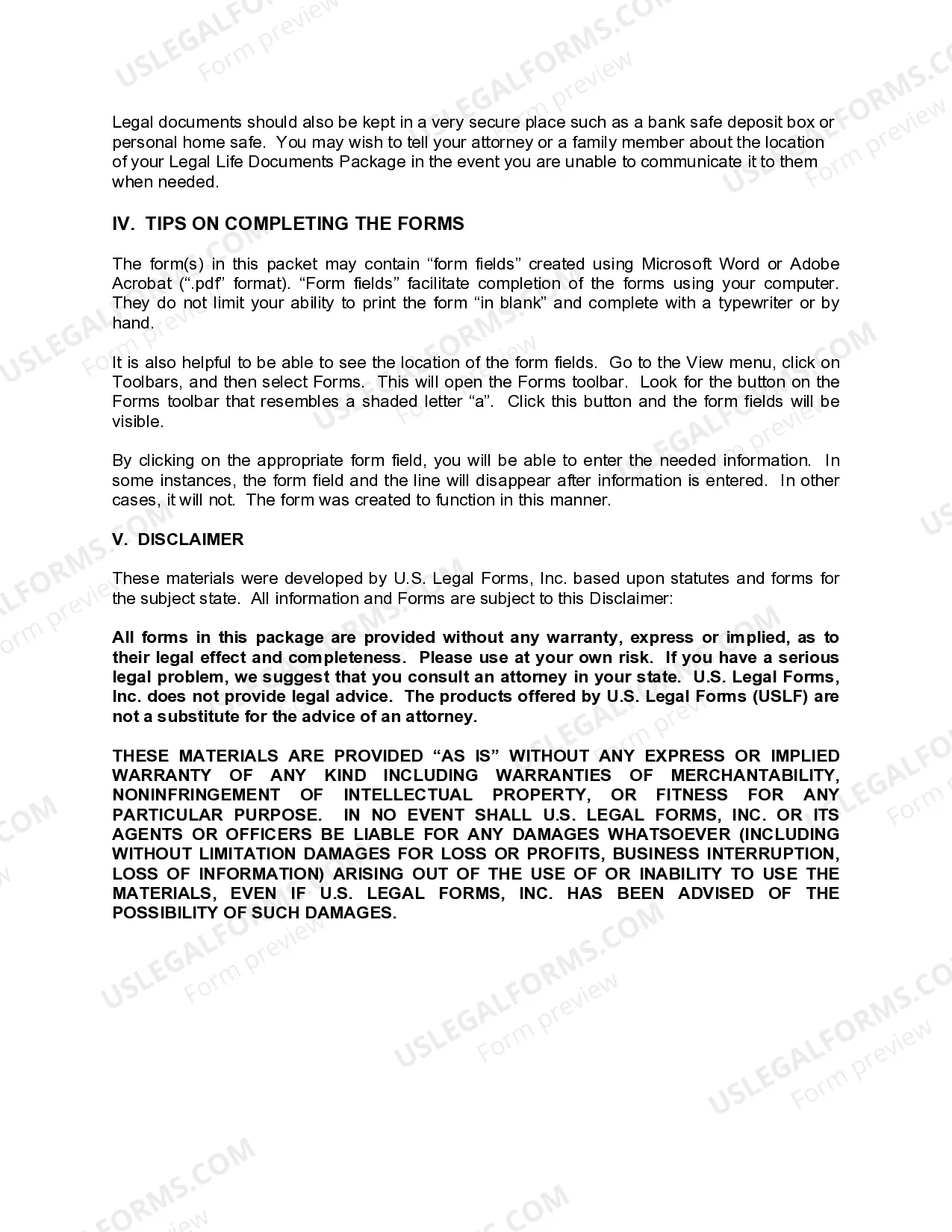
- Securely store your completed documents in a safe location and inform trusted family members or advisors of their location
Notarization requirements for forms in this package
Forms in this package typically do not require notarization unless mandated by local law. It is essential, however, to verify any specific signing requirements based on the type of document and local jurisdiction. If needed, U.S. Legal Forms offers online notarization services, available 24/7 through secure video calls, ensuring legal compliance without the need for travel.
Get your form ready online
Our built-in tools help you complete, sign, share, and store your documents in one place.
Make edits, fill in missing information, and update formatting in US Legal Forms—just like you would in MS Word.
Download a copy, print it, send it by email, or mail it via USPS—whatever works best for your next step.
Sign and collect signatures with our SignNow integration. Send to multiple recipients, set reminders, and more. Go Premium to unlock E-Sign.
If this form requires notarization, complete it online through a secure video call—no need to meet a notary in person or wait for an appointment.
We protect your documents and personal data by following strict security and privacy standards.

Make edits, fill in missing information, and update formatting in US Legal Forms—just like you would in MS Word.

Download a copy, print it, send it by email, or mail it via USPS—whatever works best for your next step.

Sign and collect signatures with our SignNow integration. Send to multiple recipients, set reminders, and more. Go Premium to unlock E-Sign.

If this form requires notarization, complete it online through a secure video call—no need to meet a notary in person or wait for an appointment.

We protect your documents and personal data by following strict security and privacy standards.
Mistakes to watch out for
- Failing to update documents as life circumstances change.
- Not having witnesses present when required for signing the Last Will.
- Leaving sections blank or unclear in the health care directive.
- Not storing the documents safely, leading to loss or damage.
- Overlooking state-specific requirements, which may render a document invalid.
Benefits of using this package online
- Convenient access to legal forms from the comfort of your home.
- Editability allows you to customize documents according to your needs.
- Reliability of documents drafted to meet state legal standards.
- Immediate download enables you to complete your planning without delay.
- Guidance provided within the package helps simplify the documentation process.
Legal use & context
- All provided forms are compliant with Mississippi state laws and regulations.
- Using these documents helps ensure your wishes are honored during incapacity or after death.
- It is recommended to consult with a legal professional if you have complex needs or circumstances.
Key takeaways
- The Mississippi Life Documents Planning Package includes essential legal documents for estate and health care planning.
- This package is tailored to reflect Mississippiâs legal requirements, ensuring validity.
- Proper completion and storage of these documents can provide peace of mind and clarity for your family.
- Online resources facilitate easy access and completion of necessary legal forms.
Looking for another form?



Form popularity
FAQ
Living will. A living will is a written, legal document that spells out medical treatments you would and would not want to be used to keep you alive, as well as your preferences for other medical decisions, such as pain management or organ donation. In determining your wishes, think about your values.
Living will. A living will is a written, legal document that spells out medical treatments you would and would not want to be used to keep you alive, as well as your preferences for other medical decisions, such as pain management or organ donation. In determining your wishes, think about your values.
The basic difference between a will and a living will is the time when it is executed. A will takes legal effect upon death. A living will, on the other hand, gives instructions to your family and doctors about what medical treatment you do and don't wish to have, should you become incapacitated.
The living will. Durable power of attorney for health care/Medical power of attorney. POLST (Physician Orders for Life-Sustaining Treatment) Do not resuscitate (DNR) orders. Organ and tissue donation.
An advance directive is a set of instructions someone prepares in advance of ill health that determines his healthcare wishes. A living will is one type of advance directive that becomes effective when a person is terminally ill.
Advance directives are oral and written instructions about future medical care should your parent become unable to make decisions (for example, unconscious or too ill to communicate).A living will is one type of advance directive. It takes effect when the patient is terminally ill.
What is an advanced health care directive? What are the components? How are they used? When do they become effective? What happens if I don't have one? Can I change my mind? If I have a living will, does that mean I won't get treatment? Where do I get these forms?
A living will is a vital part of the estate plan. You can alter it as your preferences and needs change over time.But your family cannot override your living will. They cannot take away your authority to make your own treatment and care plans.