Washington HVAC Contractor Package
What this form package covers
The Washington HVAC Contractor Package is a comprehensive set of legal documents designed specifically for HVAC contractors operating in Washington state. This package includes essential forms to help assert legal rights, manage contracts, and address key issues related to residential HVAC projects, ensuring compliance with state law. It stands out from other form packages by focusing solely on HVAC contractor needs, streamlining legal processes for this specialized field.
What’s included in this form package
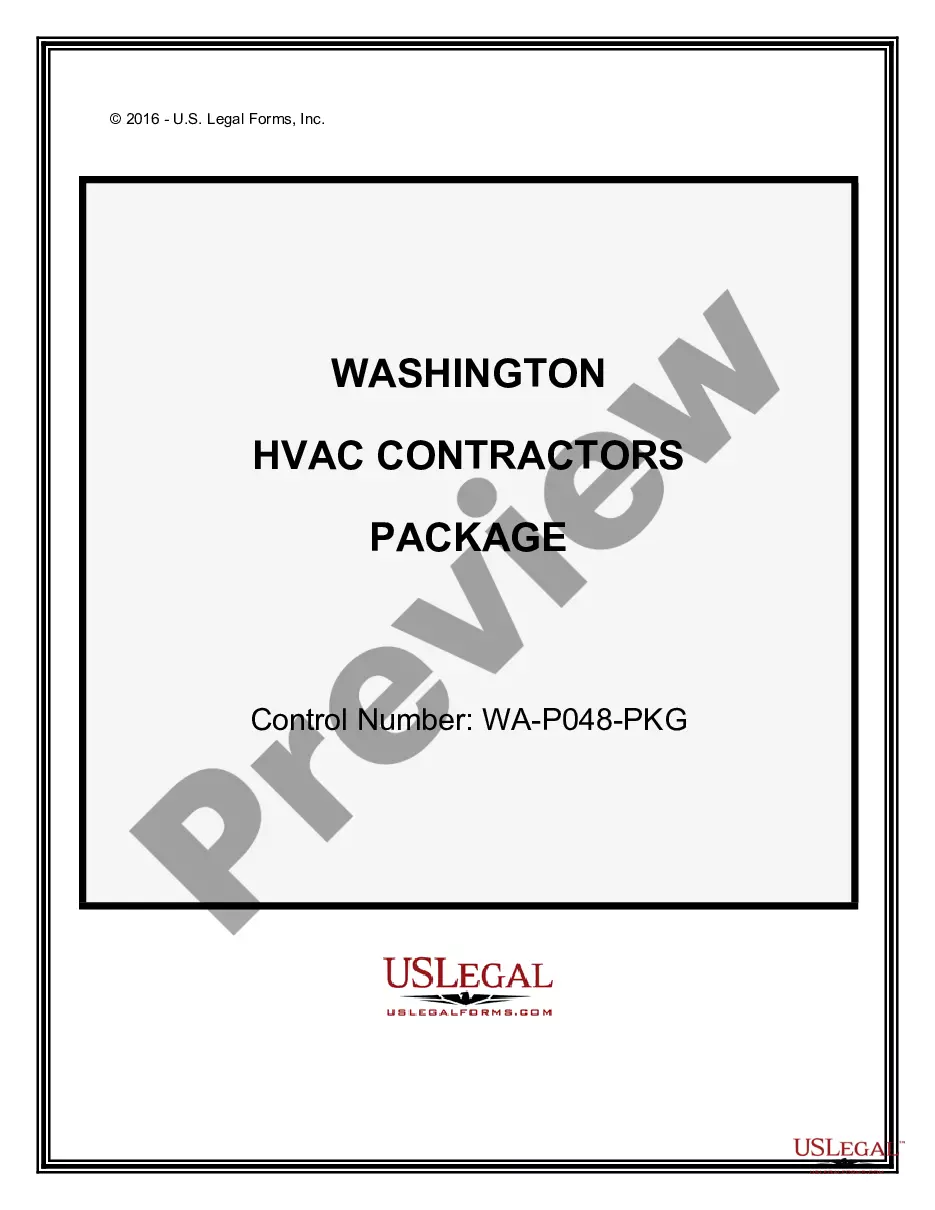
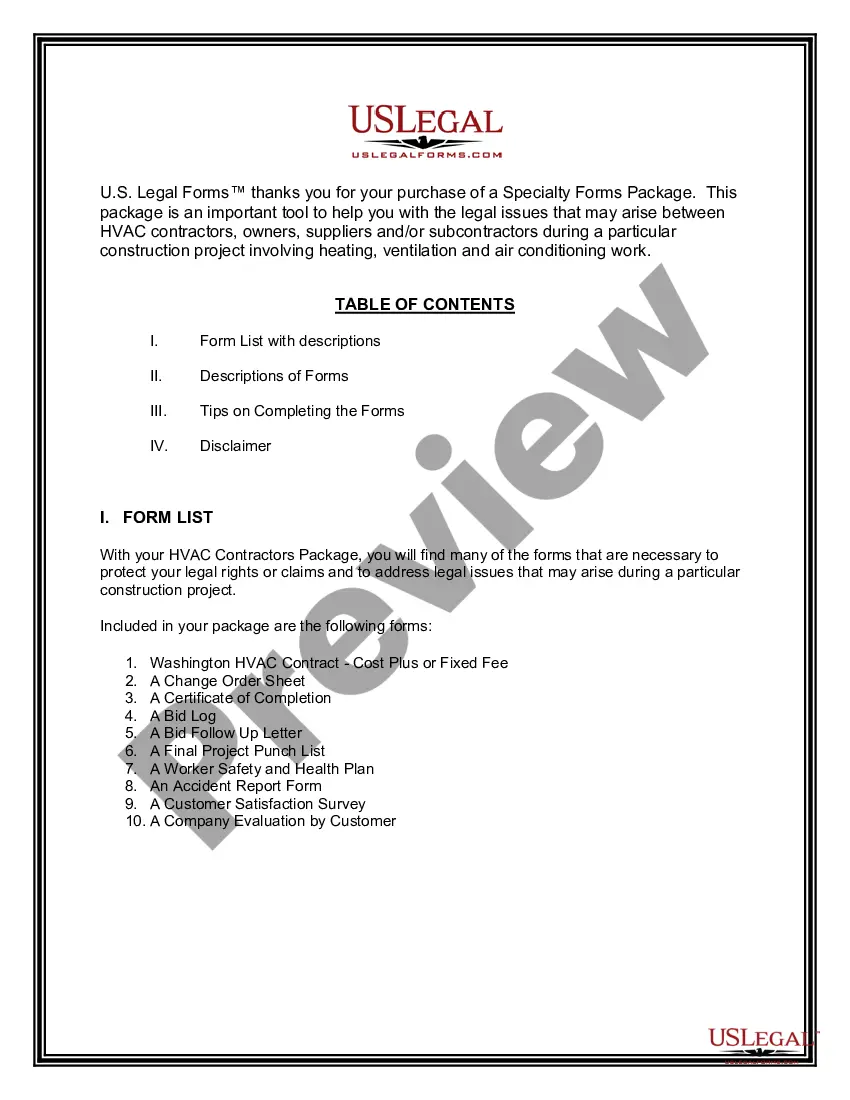
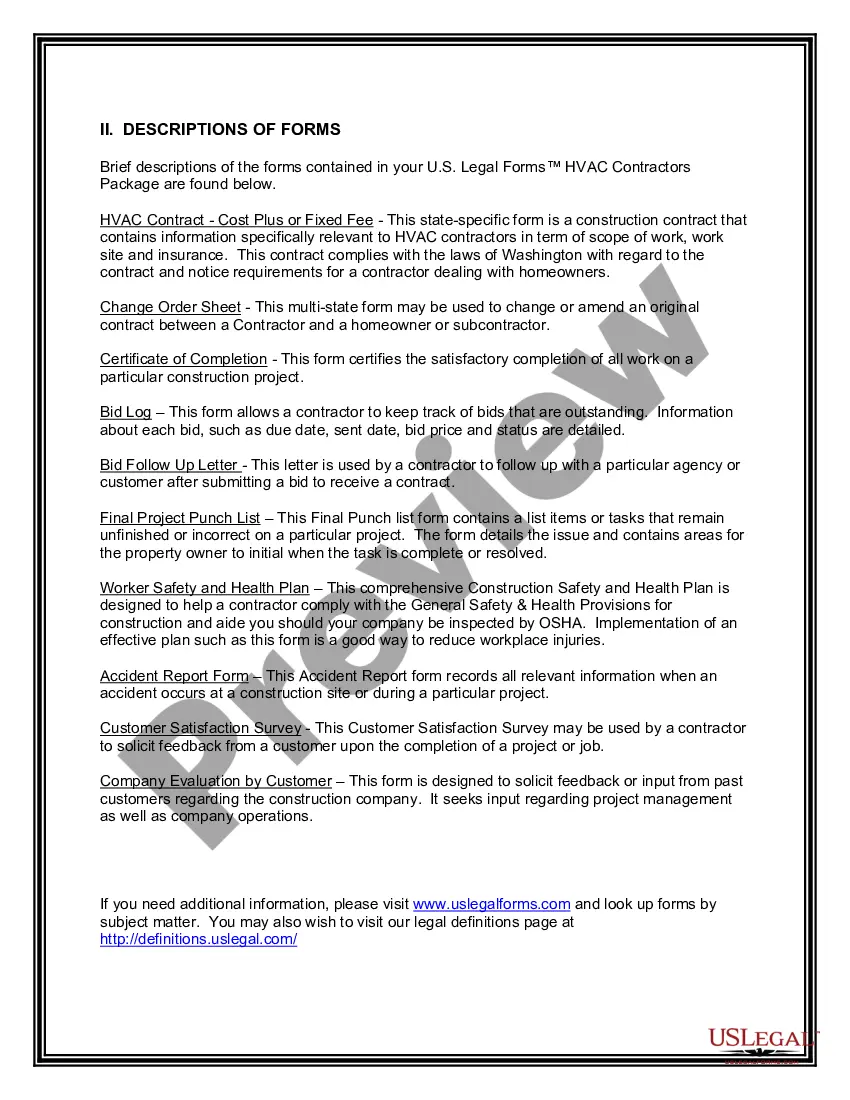
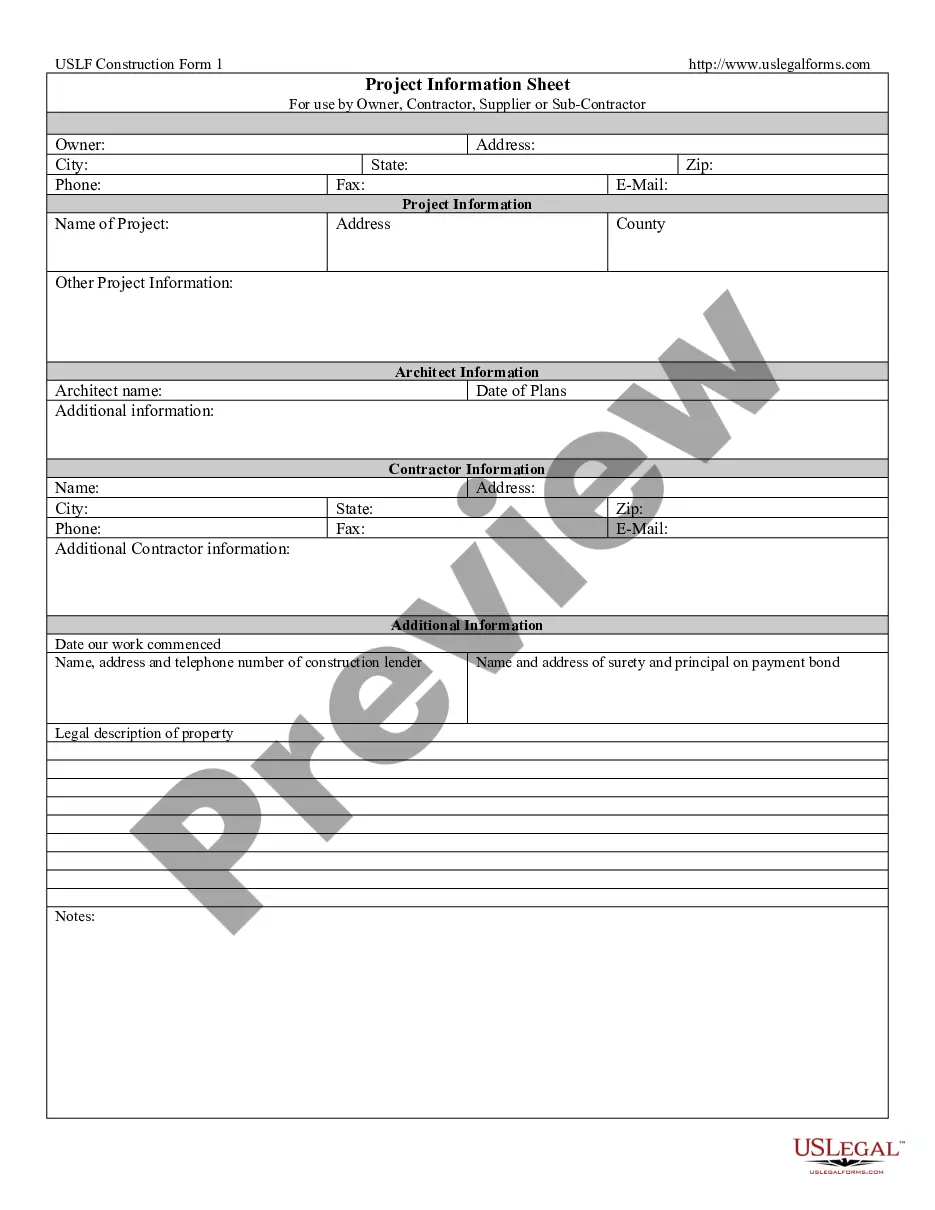
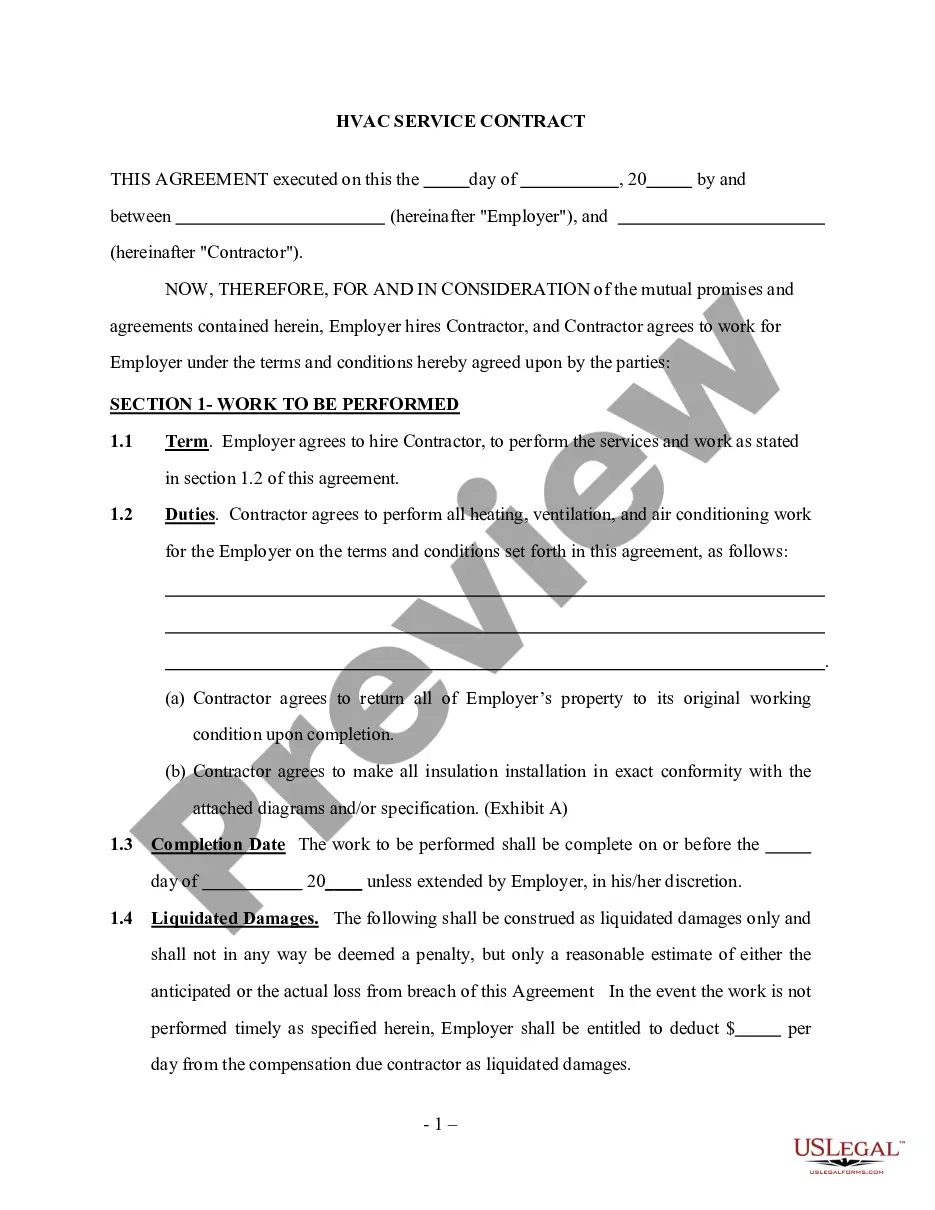
- HVAC Contract for Contractor
- Contractor's Bid Log
- Contractor's Bid Follow Up Letter
- Contractor's Final Punch List
- Customer Satisfaction Survey
- Construction Company Evaluation by a Customer
- Construction Accident Report
- Construction Safety and Health Plan
- Change Order for Construction or Repairs by Contractor
- Certification of Completion by Contractor


Common use cases
This form package is beneficial in several scenarios, including:
- When starting a new HVAC project with residential clients.
- If changes or modifications to an existing contract are necessary.
- At the completion of a project to confirm all work is done satisfactorily.
- To ensure proper safety protocols are in place for workers.
- When conducting follow-ups with customers regarding satisfaction and feedback.
Who needs this form package
- HVAC contractors and subcontractors.
- Business owners in the HVAC industry in Washington state.
- Individuals managing residential HVAC projects.
- Legal professionals seeking standard forms for HVAC contracts.
Steps to complete these forms
- Review all included forms in the package for clarity and relevance.
- Identify the parties involved in the HVAC contract, such as the contractor and homeowner.
- Fill in necessary details, including project scope, payment terms, and timelines in the HVAC contract.
- Use the change order sheet to document any modifications to the original agreement.
- Sign, date, and distribute copies of the forms to all relevant parties upon completion.
Notarization requirements for forms in this package
Forms in this package usually don’t need notarization, but certain jurisdictions or signing circumstances may require it. US Legal Forms provides a secure online notarization option powered by Notarize, accessible 24/7 from anywhere.
Get your form ready online
Our built-in tools help you complete, sign, share, and store your documents in one place.
Make edits, fill in missing information, and update formatting in US Legal Forms—just like you would in MS Word.
Download a copy, print it, send it by email, or mail it via USPS—whatever works best for your next step.
Sign and collect signatures with our SignNow integration. Send to multiple recipients, set reminders, and more. Go Premium to unlock E-Sign.
If this form requires notarization, complete it online through a secure video call—no need to meet a notary in person or wait for an appointment.
We protect your documents and personal data by following strict security and privacy standards.

Make edits, fill in missing information, and update formatting in US Legal Forms—just like you would in MS Word.

Download a copy, print it, send it by email, or mail it via USPS—whatever works best for your next step.

Sign and collect signatures with our SignNow integration. Send to multiple recipients, set reminders, and more. Go Premium to unlock E-Sign.

If this form requires notarization, complete it online through a secure video call—no need to meet a notary in person or wait for an appointment.

We protect your documents and personal data by following strict security and privacy standards.
Common mistakes
- Failing to include essential details in the HVAC contract, which can lead to disputes.
- Not updating the change order sheet when modifications occur.
- Overlooking safety requirements outlined in the Worker Safety and Health Plan.
- Not following up with clients to obtain feedback and improve service.
- Neglecting to document project completion with the Certificate of Completion.
Why complete this package online
- Immediate access to all necessary legal forms in one convenient package.
- Easily editable documents that can be customized to fit individual project needs.
- Reliable content drafted by licensed attorneys, ensuring compliance with local laws.
- Saves time and costs by providing a complete package at a reduced rate over individual forms.
Legal use & context
- These forms are designed to support contractors in maintaining industry standards and legal rights.
- Using these forms can help prevent misunderstandings and disputes between contractors and clients.
- Following the correct legal processes as outlined in the forms can enhance the enforceability of the agreements.
Main things to remember
- The Washington HVAC Contractor Package contains essential documents for HVAC projects.
- It helps contractors assert their rights and navigate legal obligations effectively.
- All documentation complies with Washington state laws to ensure legal reliability.
Looking for another form?
Form popularity
FAQ
If the contractor requests a large sum of money before work has begun, Mozen says you should ask specifically what types of work or materials those payments are covering.Contractors sometimes have other motives, other than purchasing materials, when they ask for large amounts of money in advance, Fowler says.
A: It's not uncommon for contractors to ask for a down payment up front to secure your spot on their schedule or purchase some of the job materials in advance. Asking for more than half of the project cost up front, though, is a big red flag.I recommend tying payments to progress made during the job.
Construction Contractors Must Be Registered. Washington State requires all construction contractors to register with L&I.Once registered, contractors can bid, advertise, and perform construction work. This can include constructing, remodeling, repairing and demolishing buildings, roads and other real property.
While a general contractor is hired to oversee the total status and completion of a construction job, a specialty contractor specializes in the completion of a particular task.Depending on the project, specialty contractors can be hired to do more than one task if they have the necessary licenses.
Avoid companies that require an upfront deposit of more than 10 percent. Try to include language in the contract that holds back a percentage of the total price, called a retainage, until you're sure the work was done well. A 10 percent retainage is common for residential remodeling work.
L&I is a diverse state agency dedicated to the safety, health, and security of Washington's 3.3 million workers. We help employers meet safety and health standards, and we inspect workplaces when alerted to hazards.
You shouldn't pay more than 10 percent of the estimated contract price upfront, according to the Contractors State License Board.
Licensed general contractors can perform a wide variety of work. It can be earthmoving, plumbing, electrical, foundations, framing, or roofing work.In the State of California there are three distinct classes of general contractor. General Contractor Type A can perform large projects that require engineering knowledge.
Estimates, generally, must be professionally reasonable. A 10-20% overage might be considered reasonable, especially if the contractor discovered issues along the way that he couldn't have been aware of initially (for example, mold or flooding).