HVAC Service Contract - Self-Employed
Understanding this form
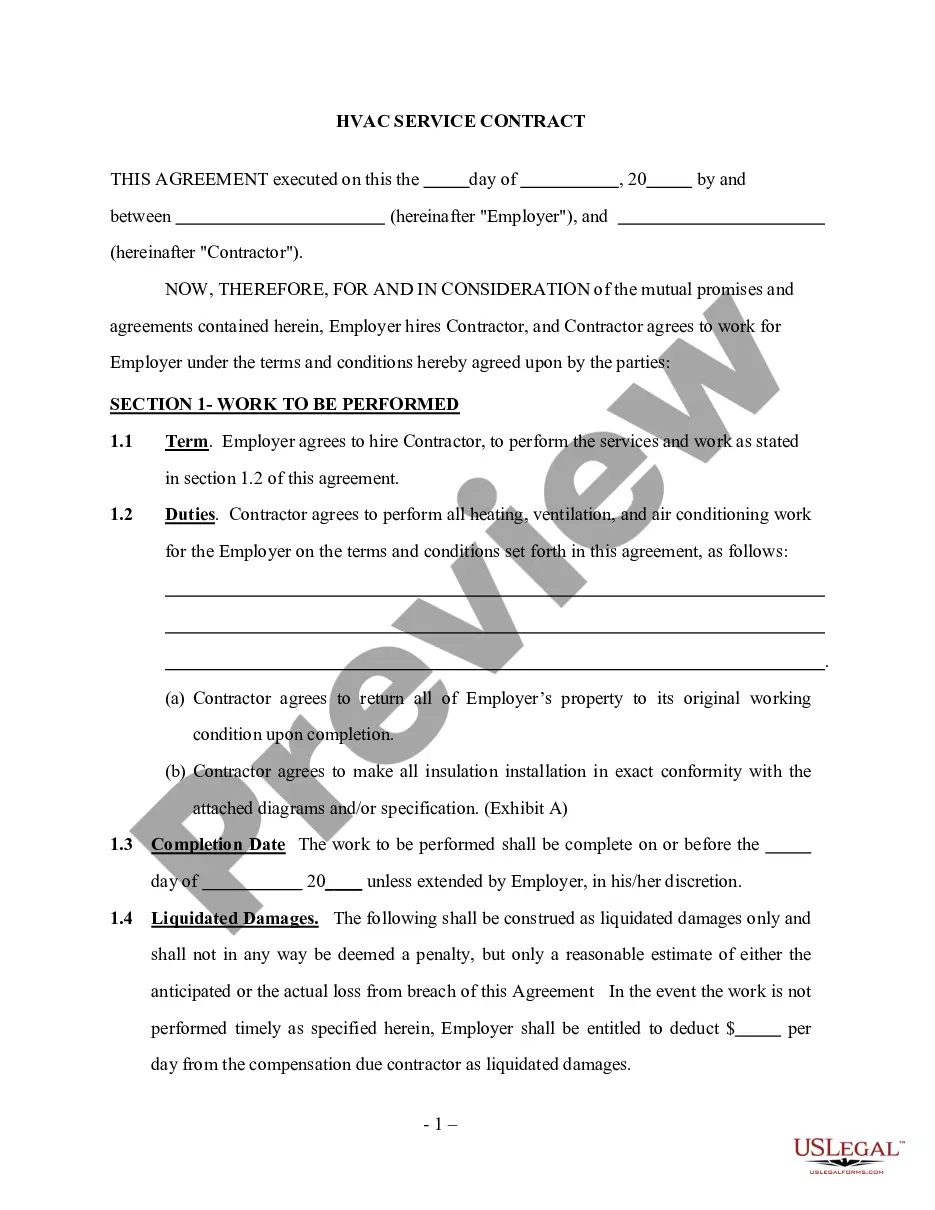
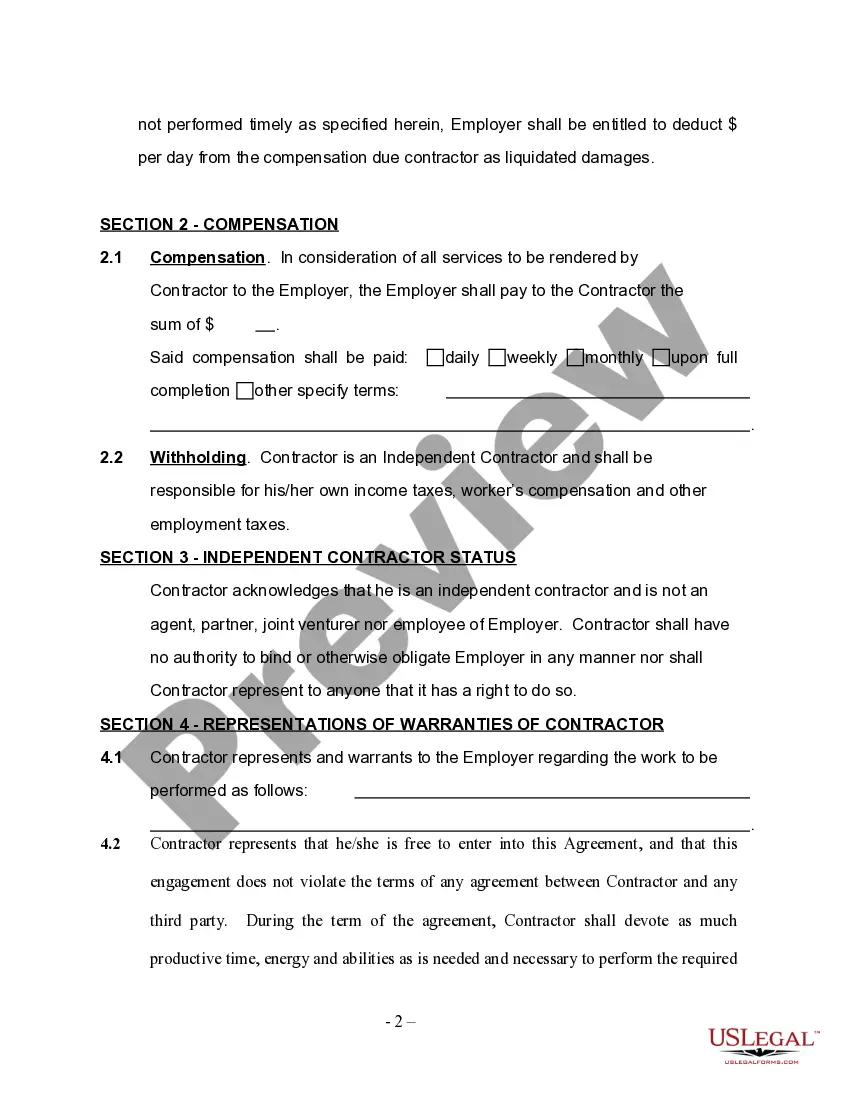
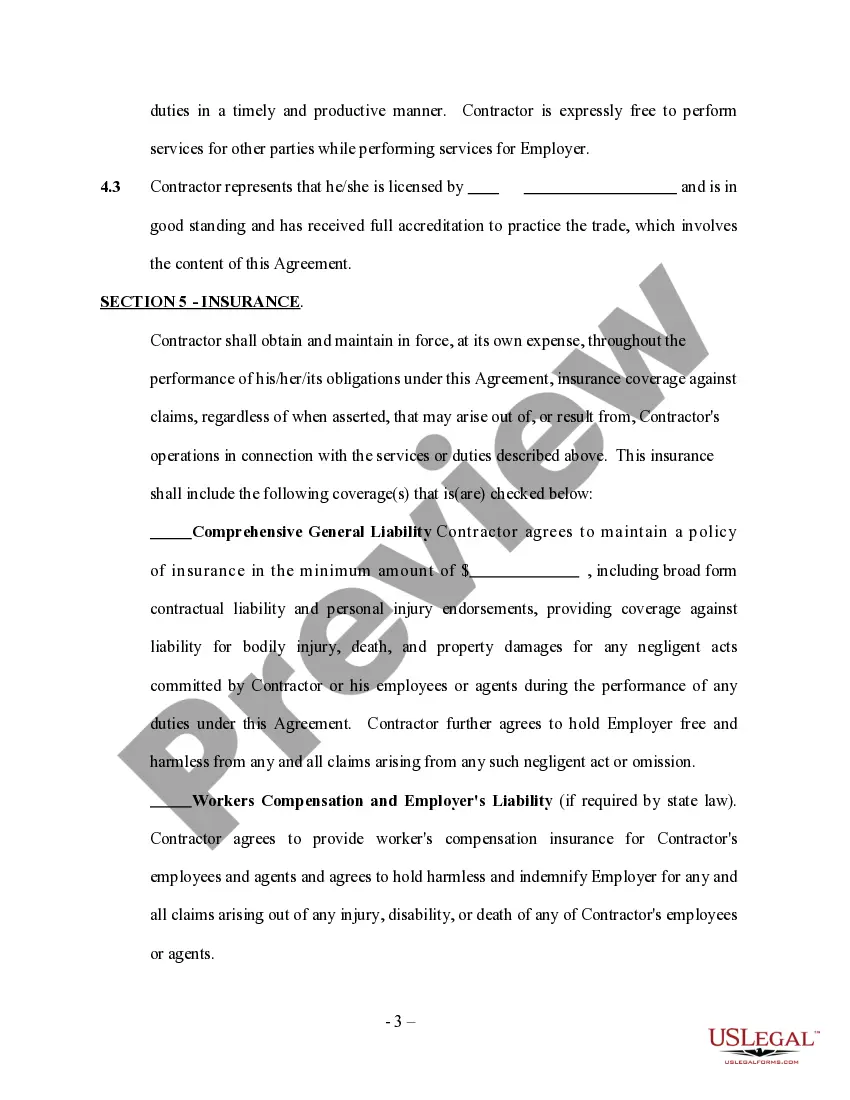
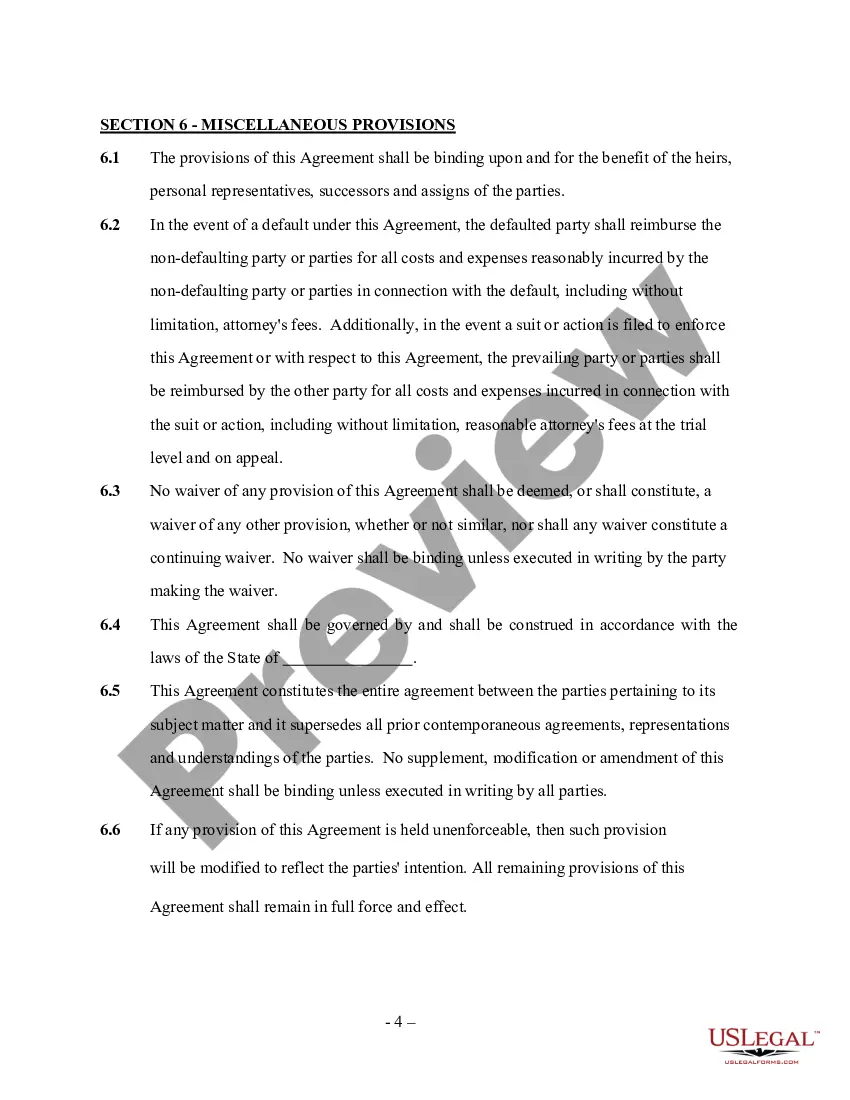
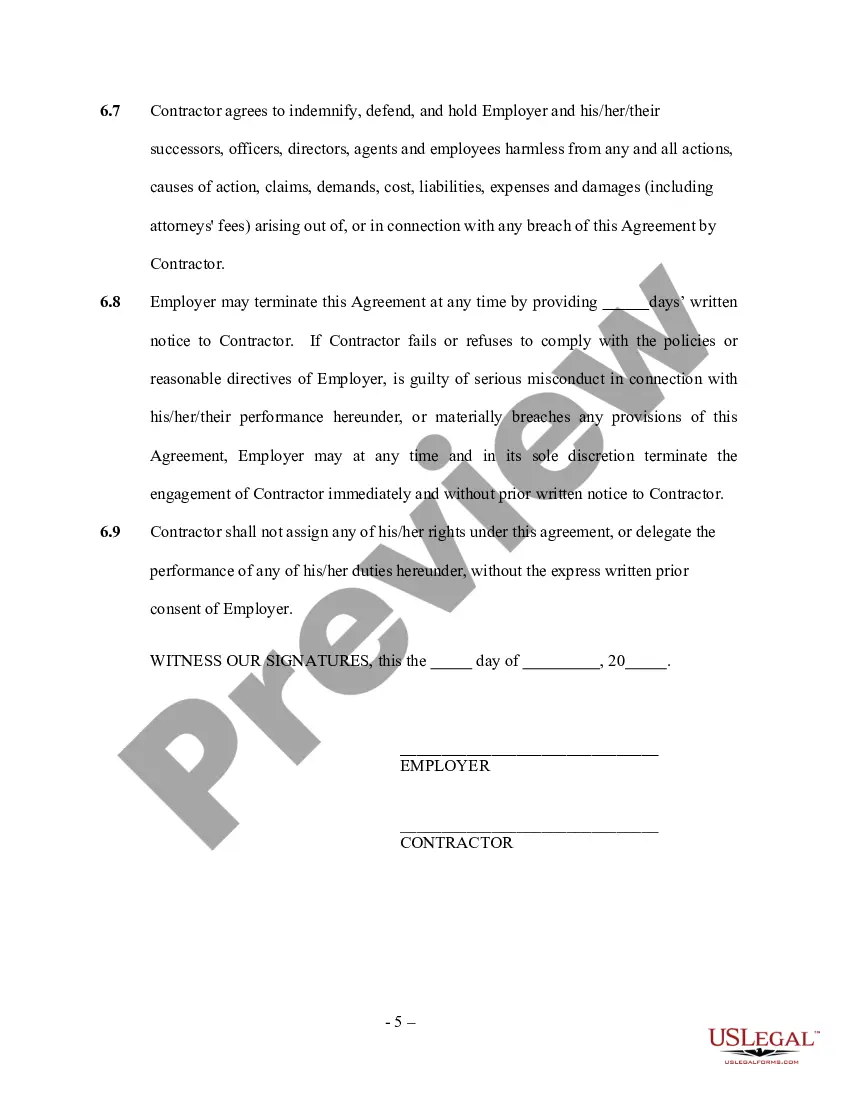
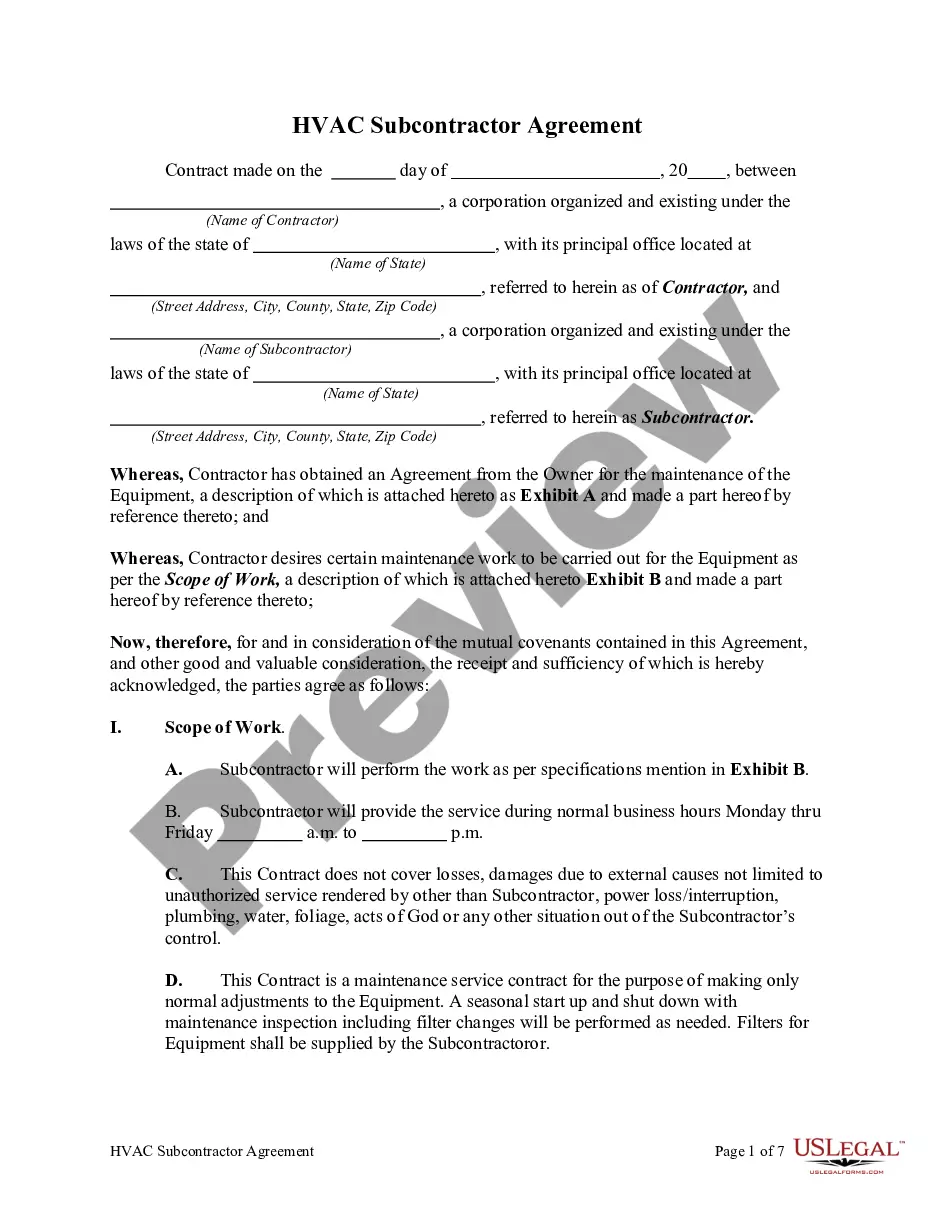
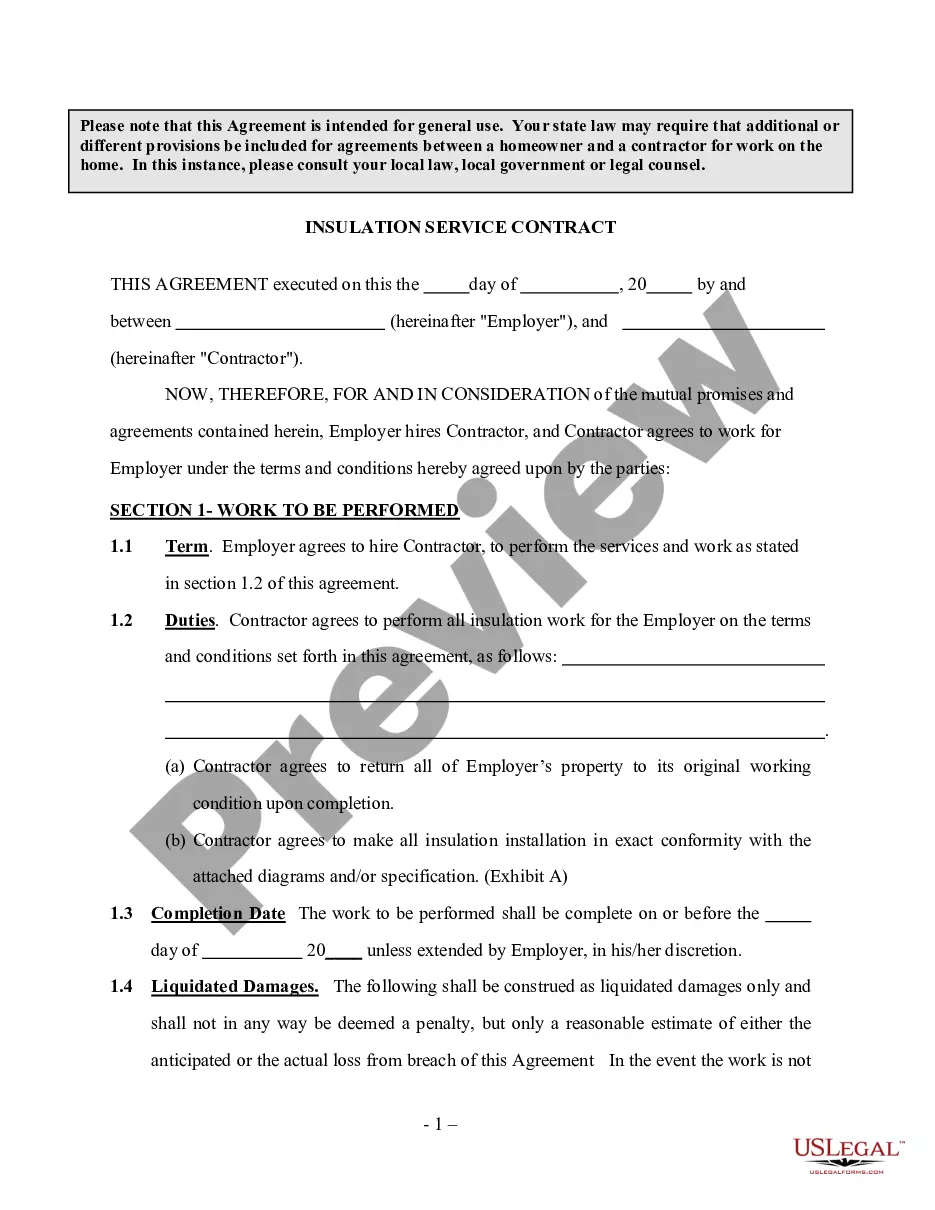
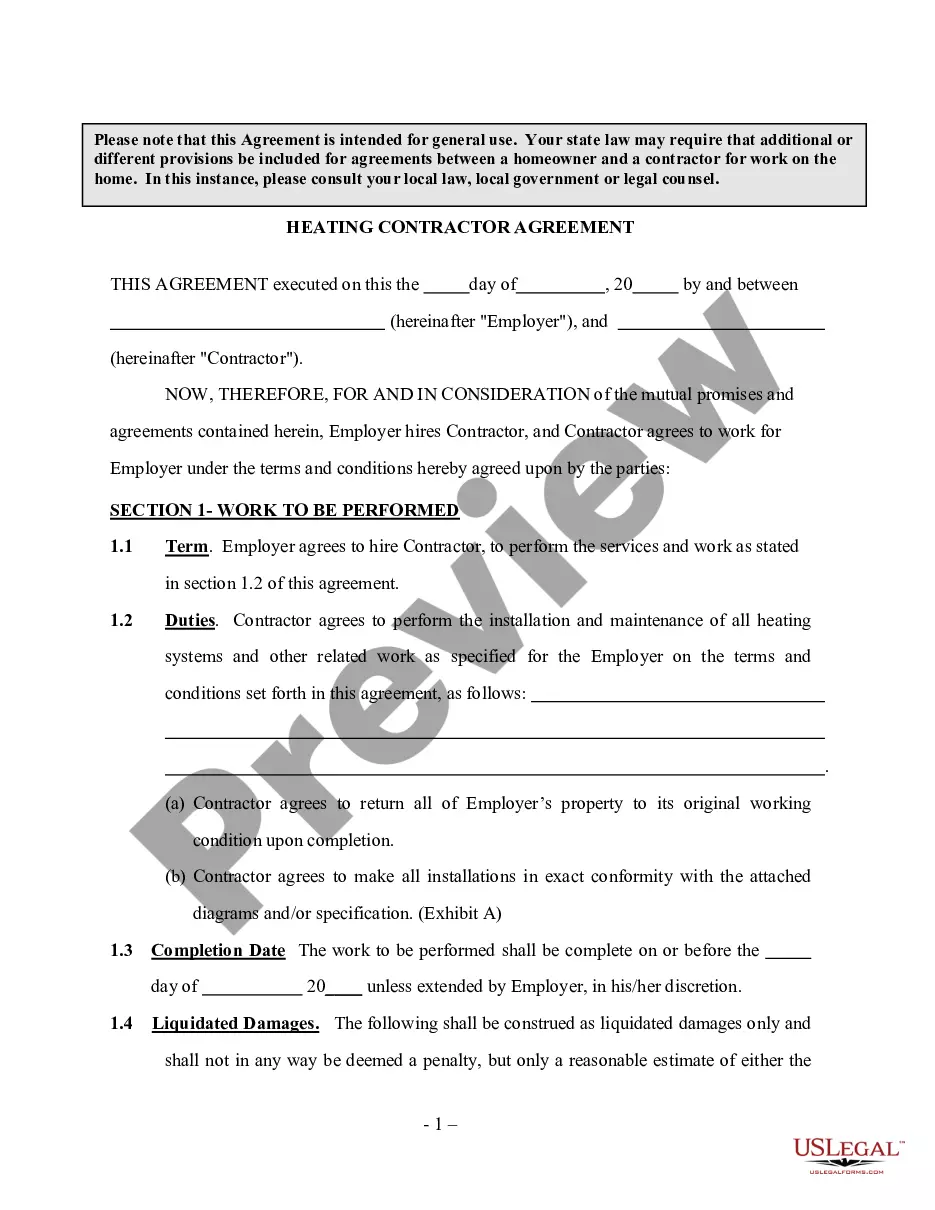
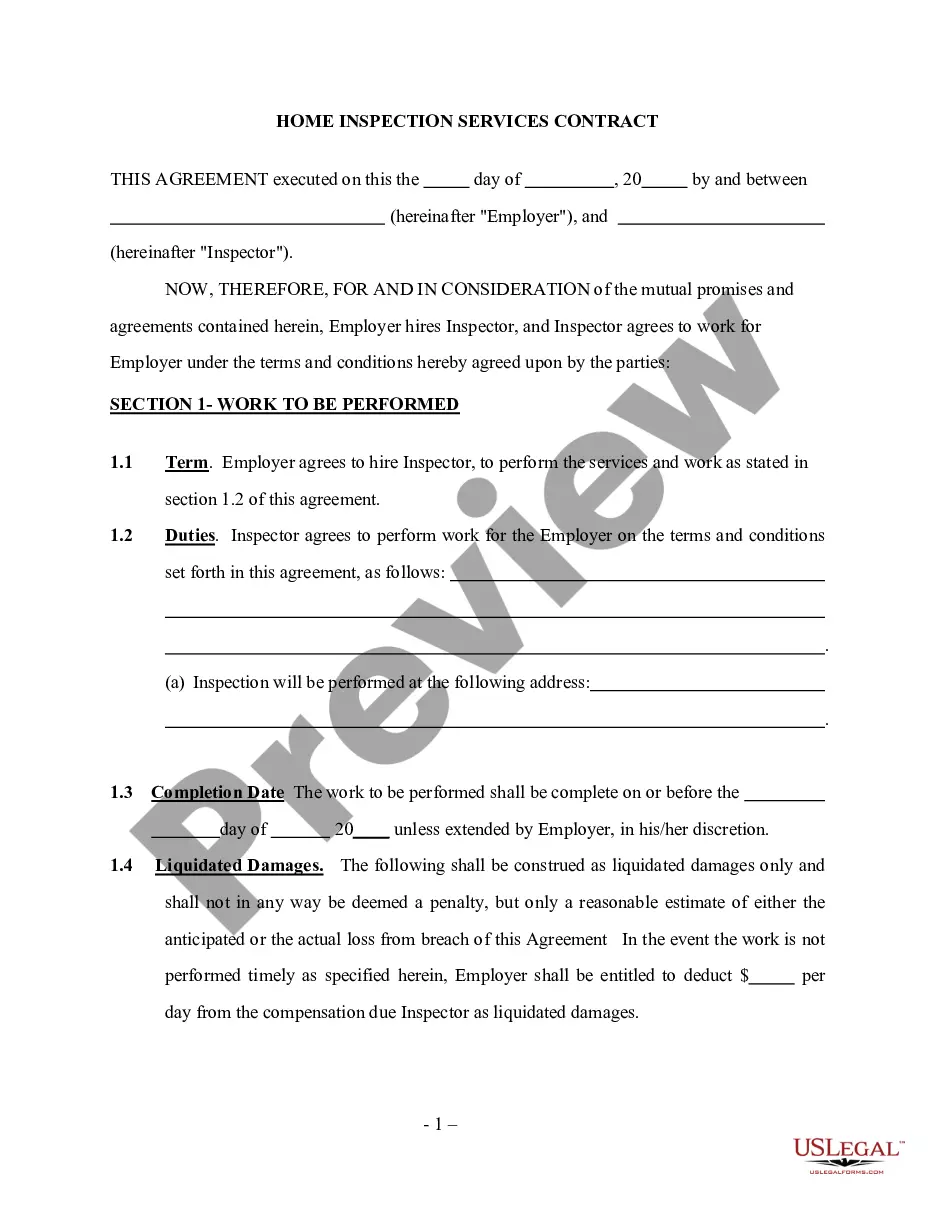
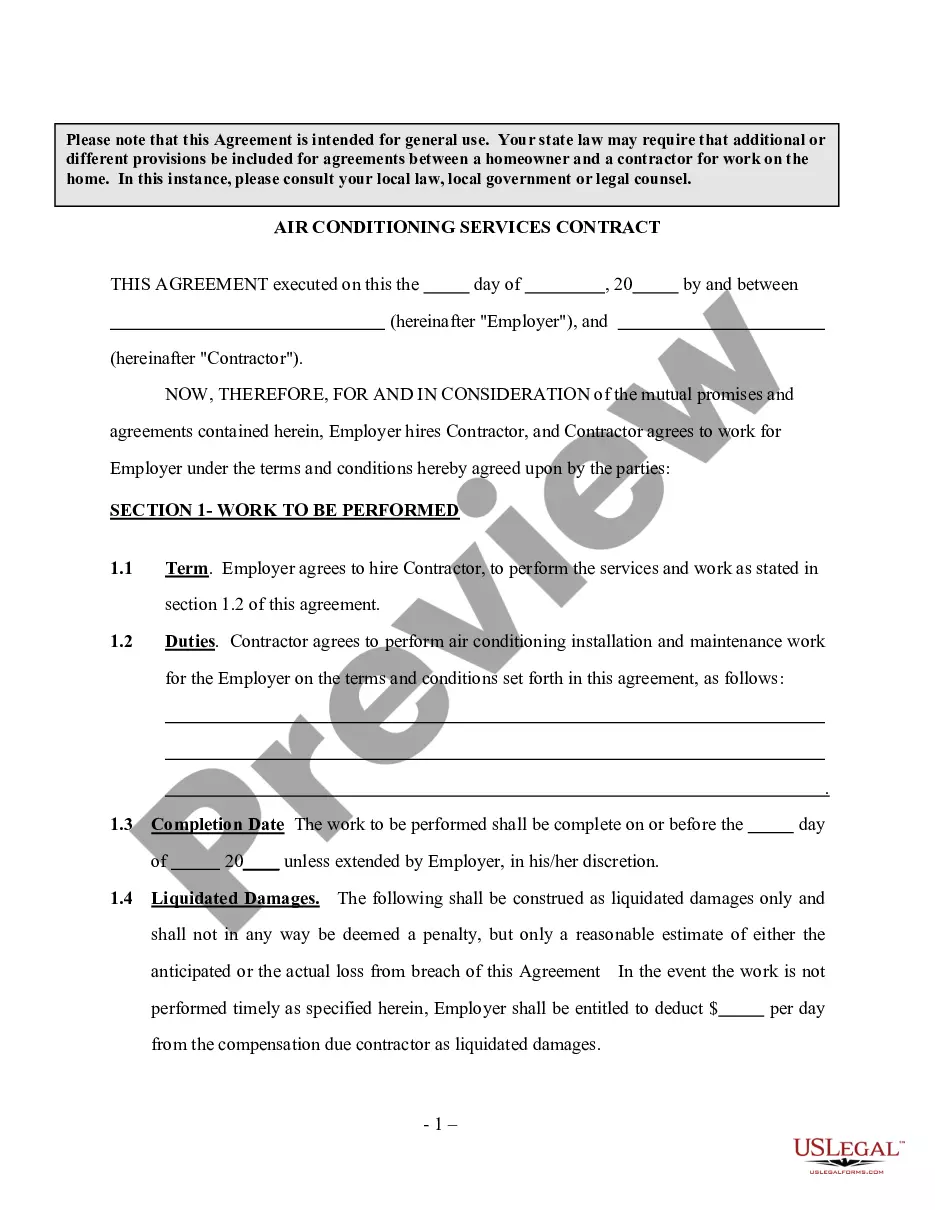
The HVAC Service Contract - Self-Employed is a legal document that establishes an agreement between an employer and an independent contractor for the provision, installation, and servicing of heating, ventilation, and air conditioning (HVAC) systems. This contract clarifies the nature of the relationship, emphasizing the independent status of the contractor, and outlines the specific services to be performed. It is distinct from employment contracts because it delineates the independent contractor's autonomy and responsibilities without creating an employer-employee relationship.
Key components of this form
- Work to be performed: Details the specific HVAC services to be completed.
- Term: Defines the duration of the contract and project timeline.
- Independent contractor status: Affirms that the contractor operates independently and is not an employee of the employer.
- Compensation: Outlines payment terms and conditions for the services rendered.
- Termination clause: Conditions under which either party may terminate the contract.

Common use cases
This form is typically used when a homeowner or business requires HVAC services from a self-employed contractor. It is essential when engaging a contractor for projects such as installing a new HVAC system, performing routine maintenance, or undertaking emergency repairs. The contract helps establish clear expectations and protects both parties by ensuring that responsibilities and rights are clearly outlined.
Who can use this document
This form is suitable for:
- Homeowners hiring HVAC contractors for installation or repair work
- Self-employed HVAC contractors seeking to formalize their service agreements
- Businesses requiring HVAC services and wanting to engage independent contractors
- Parties seeking to establish a clear understanding of services, costs, and project expectations
How to prepare this document
- Identify the parties involved: Include names and contact information for the employer and the independent contractor.
- Specify the work to be performed: Clearly list the HVAC services to be provided.
- Define the term of the agreement: State the agreed-upon start and end dates for the project.
- Outline payment terms: Detail how and when the contractor will be compensated for their services.
- Include relevant clauses: Ensure termination conditions and other essential provisions are clearly stated.
Does this form need to be notarized?
Notarization is not commonly needed for this form. However, certain documents or local rules may make it necessary. Our notarization service, powered by Notarize, allows you to finalize it securely online anytime, day or night.
Get your form ready online
Our built-in tools help you complete, sign, share, and store your documents in one place.
Make edits, fill in missing information, and update formatting in US Legal Forms—just like you would in MS Word.
Download a copy, print it, send it by email, or mail it via USPS—whatever works best for your next step.
Sign and collect signatures with our SignNow integration. Send to multiple recipients, set reminders, and more. Go Premium to unlock E-Sign.
If this form requires notarization, complete it online through a secure video call—no need to meet a notary in person or wait for an appointment.
We protect your documents and personal data by following strict security and privacy standards.

Make edits, fill in missing information, and update formatting in US Legal Forms—just like you would in MS Word.

Download a copy, print it, send it by email, or mail it via USPS—whatever works best for your next step.

Sign and collect signatures with our SignNow integration. Send to multiple recipients, set reminders, and more. Go Premium to unlock E-Sign.

If this form requires notarization, complete it online through a secure video call—no need to meet a notary in person or wait for an appointment.

We protect your documents and personal data by following strict security and privacy standards.
Mistakes to watch out for
- Failing to clearly define the scope of work, leading to misunderstandings.
- Not including payment terms, which can lead to disputes about compensation.
- Overlooking necessary state-specific provisions required by law.
- Confusing independent contractor status with employee status, affecting rights and liabilities.
Benefits of using this form online
- Convenience of downloading and customizing the form at your own pace.
- Editability allows users to tailor the contract to specific needs and situations.
- Reliable templates drafted by licensed attorneys ensure compliance with legal standards.
- Access to forms anytime, allowing for immediate use whenever an agreement is needed.
Legal use & context
- This contract serves as a legally binding agreement that can be enforced in a court of law.
- It is essential for protecting both the contractor's and employer's interests in a legally defined manner.
- Completing this form accurately ensures clarity in the obligations and rights of both parties.
Key takeaways
- The HVAC Service Contract - Self-Employed formalizes the relationship between a contractor and employer.
- Ensure all terms are detailed to avoid confusion or disputes.
- Consult local laws for specific requirements based on jurisdiction.
- This form promotes professional standards and legal protection for contractors and employers alike.
Looking for another form?



Form popularity
FAQ
Step 1 Power Off The Unit/Mains. Step 2 Clear debris and areas around the unit. Step 3 Clean And Straighten the Air Conditioner Fins. Step 4 Cleaning the Condenser Fan. Step 5 Cleaning Fins Inside Out. Step 1 Clean the Evaporator Coil.
Local Business License: First, check with your local authorities. State Contractor's License: You also need a Contractor's License. HVAC Contractor's License: Once you pass, you'll file for your HVAC Contractor's License and pick a name.
The good news is that you absolutely can spray water on your air conditioner if it needs a cleaning, and nothing bad will happen. Spraying water on your AC's condenser also helps it run more efficiently. In fact, your condenser needs a regular spritzing in order to keep doing a good job.
While 87 percent of U.S. households use some type of air conditioning, central AC systems are the most sought-after for both convenience and accessibility. If flipping a switch for whole-house cooling is what you're after, you may wonder whether it's possible to install your own. And the answer is, you definitely can.
Making 3 to $20M a year usually about 6% of the overall revenue of the company. If you do some math, this means the average HVAC company is bringing in between $580K and 1.25M a year.
It's possible to add Freon to your air conditioner unit yourself, but you'll need some general knowledge about ACs and a few specific tools to do it correctly.Once confirmed, then make sure the inside of the air conditioner is clean before you begin.
Change the AC Filters. Keep Plants Away. Clean the Drain Line. Check the Overflow Pan. Straighten the Fins. Check the Insulation. Wash the Unit.
As of Apr 7, 2021, the average annual pay for a Self Employed HVAC Technician in the United States is $53,329 a year.
Per BLS data, the median salary of HVAC technicians as of May 2016 was $45,910. The highest 10 percent of earners in the HVAC field earned upwards of $73,000.