HVAC Subcontractor Agreement
What this document covers
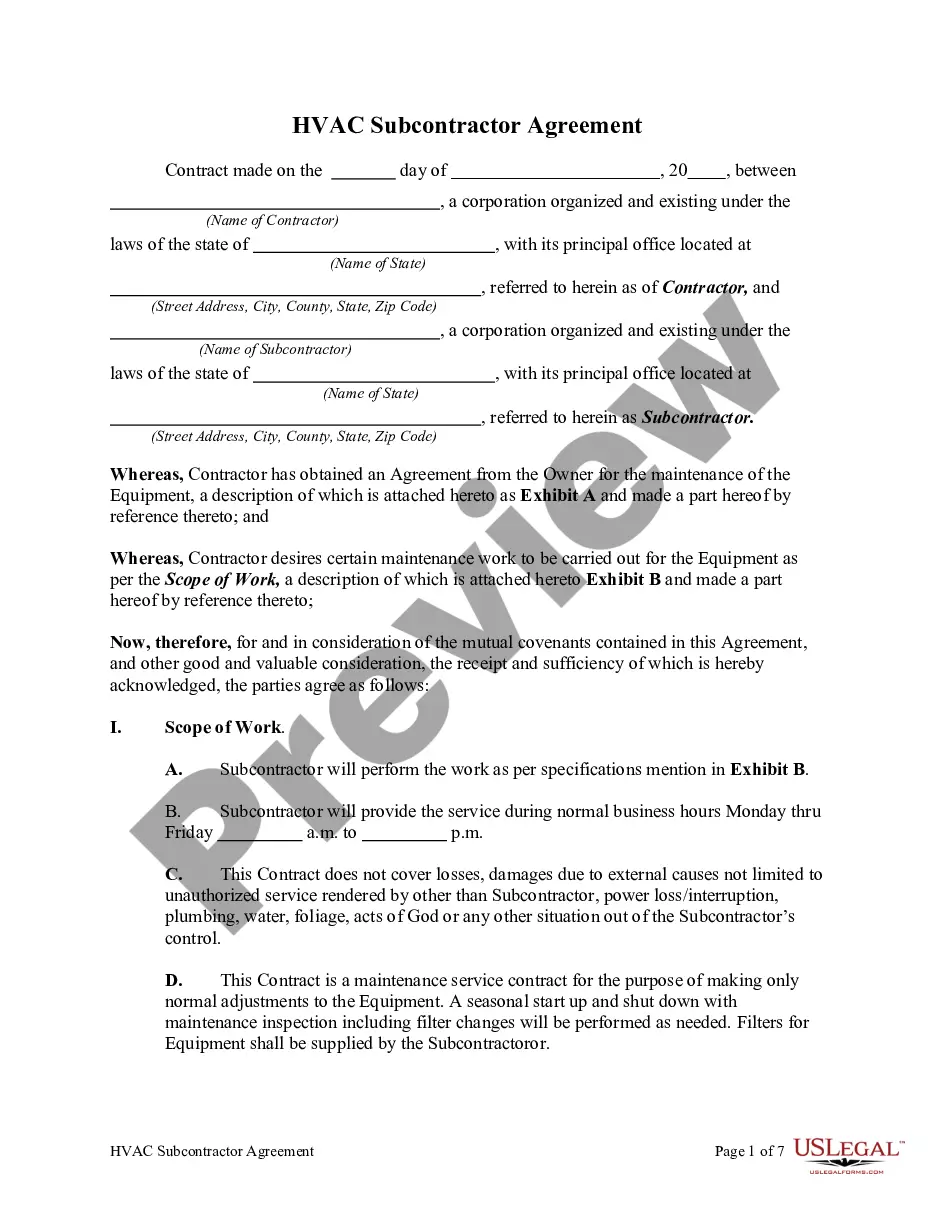
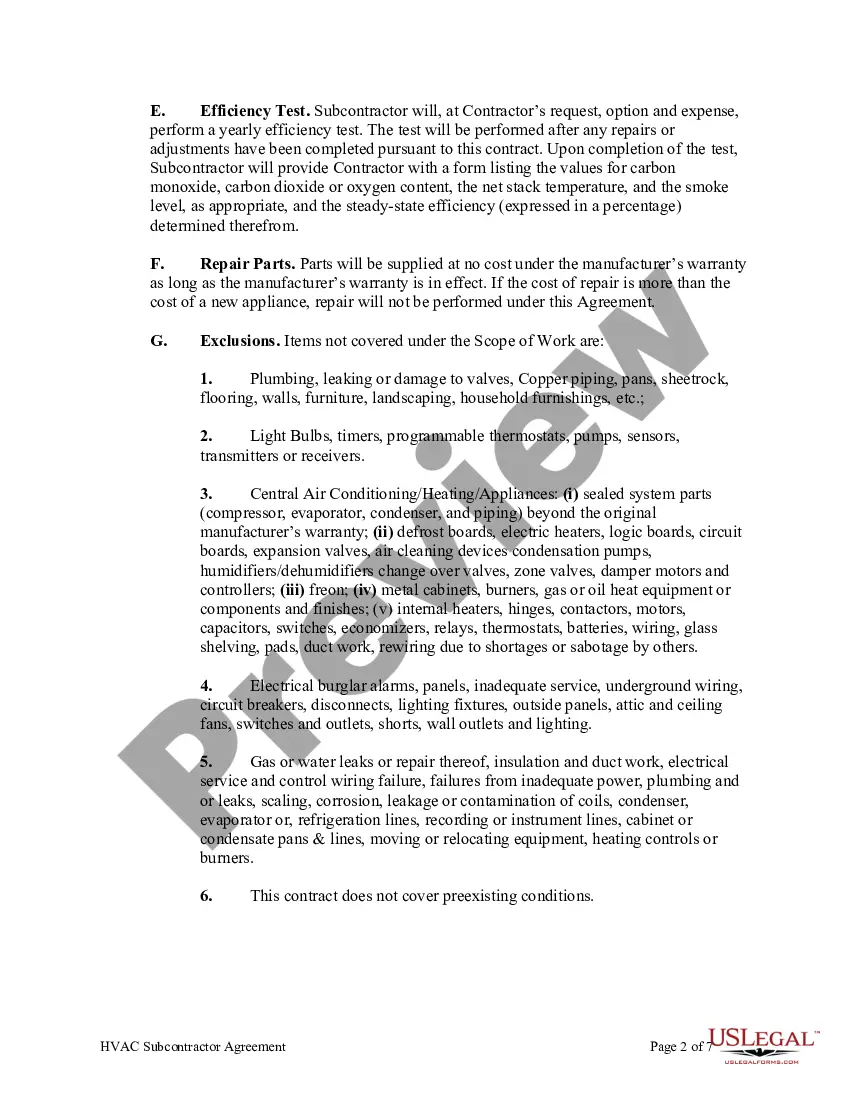
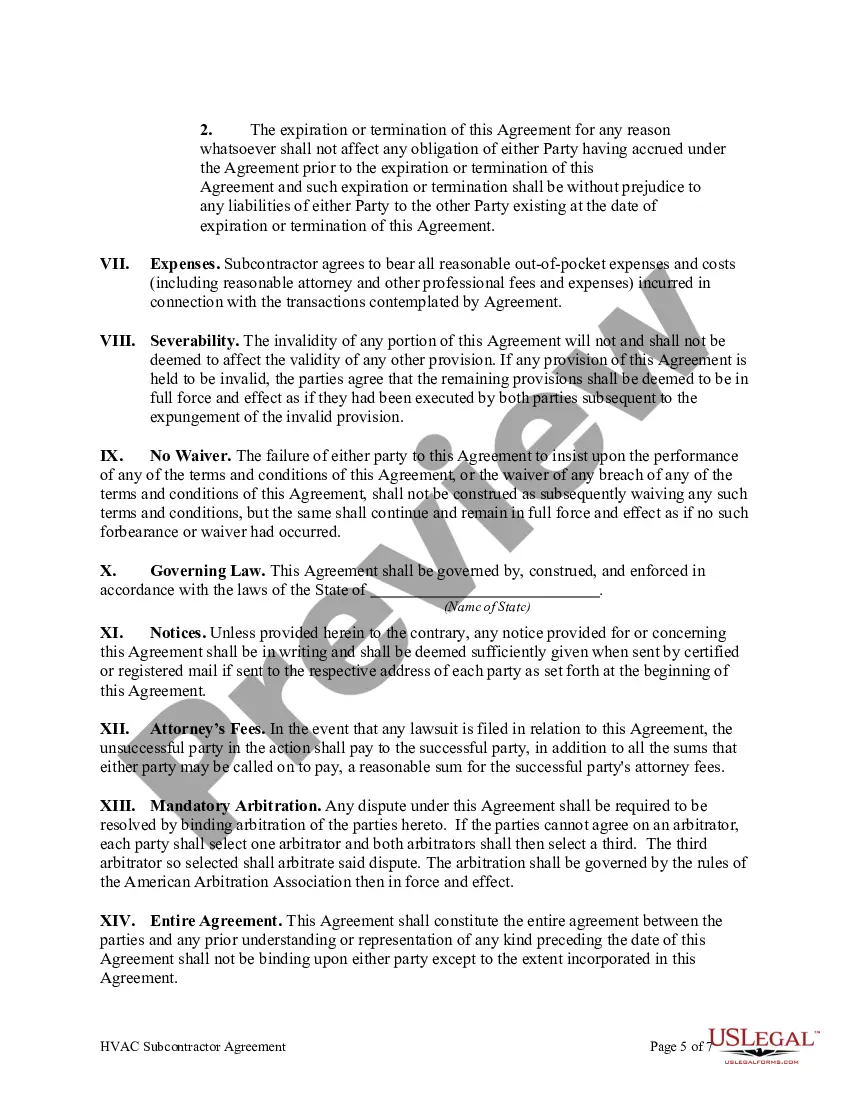
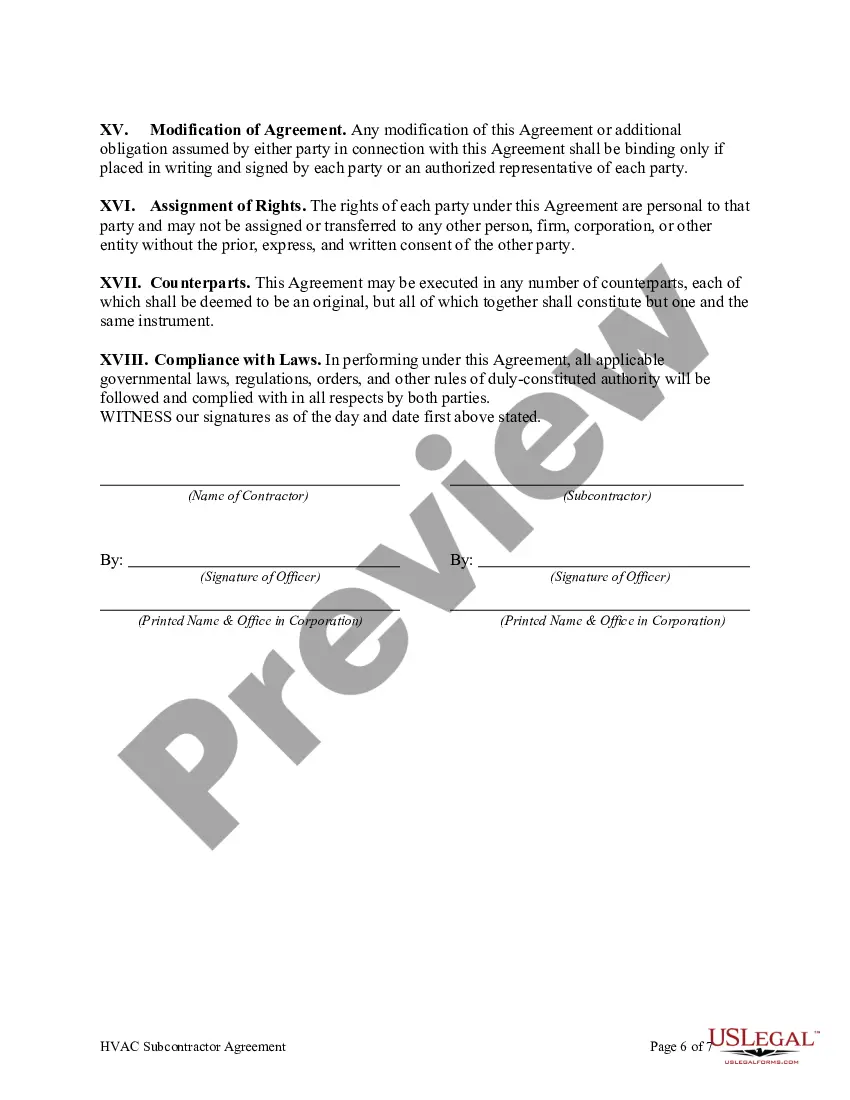
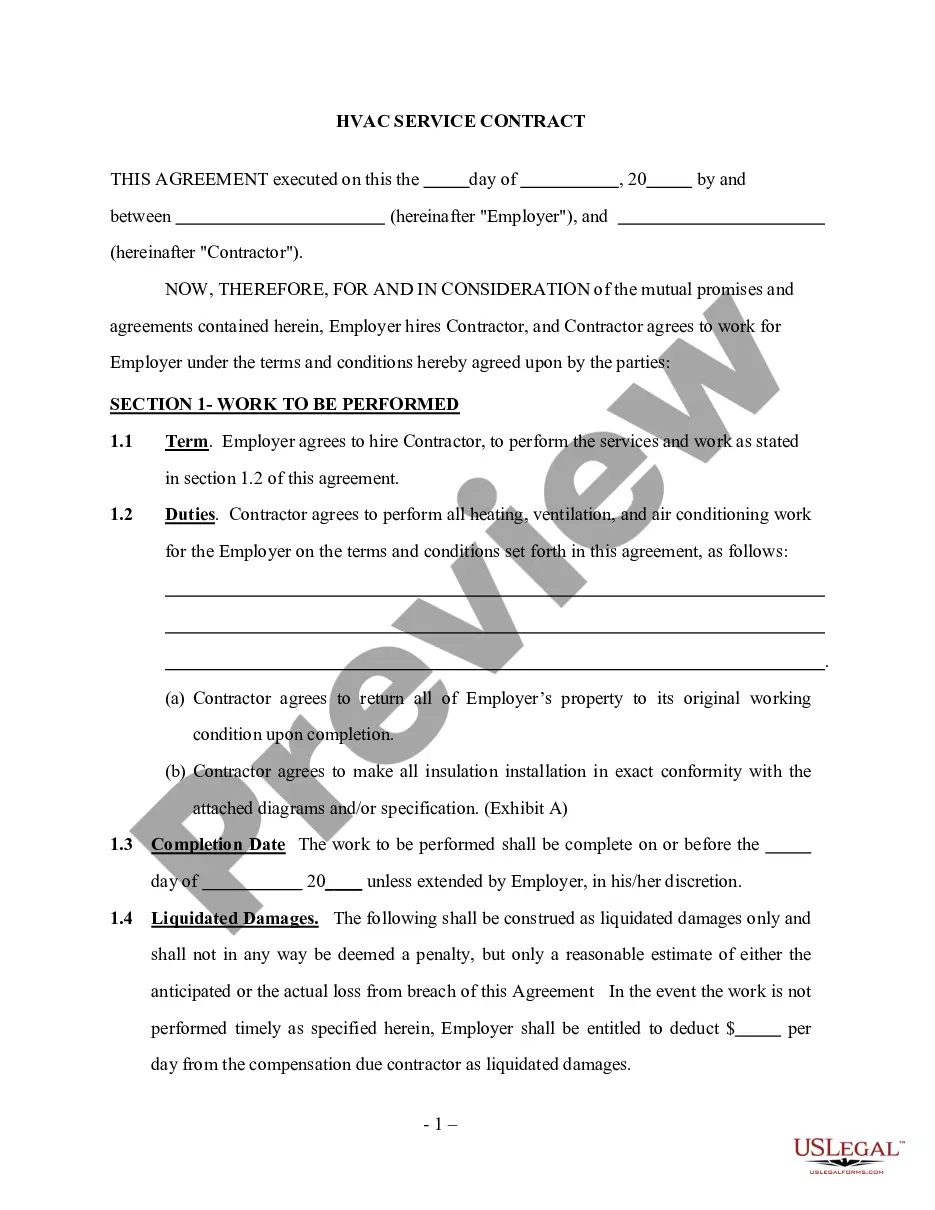
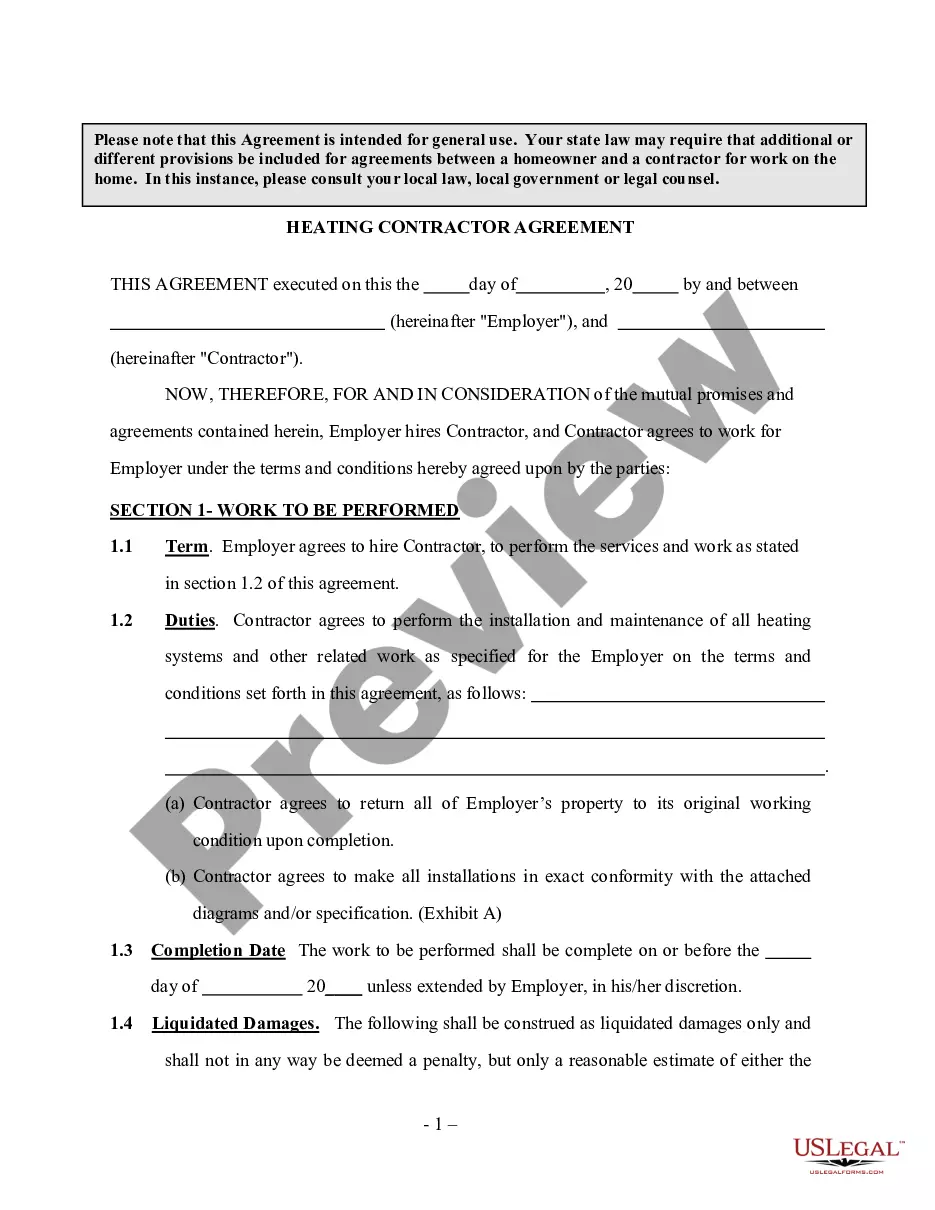
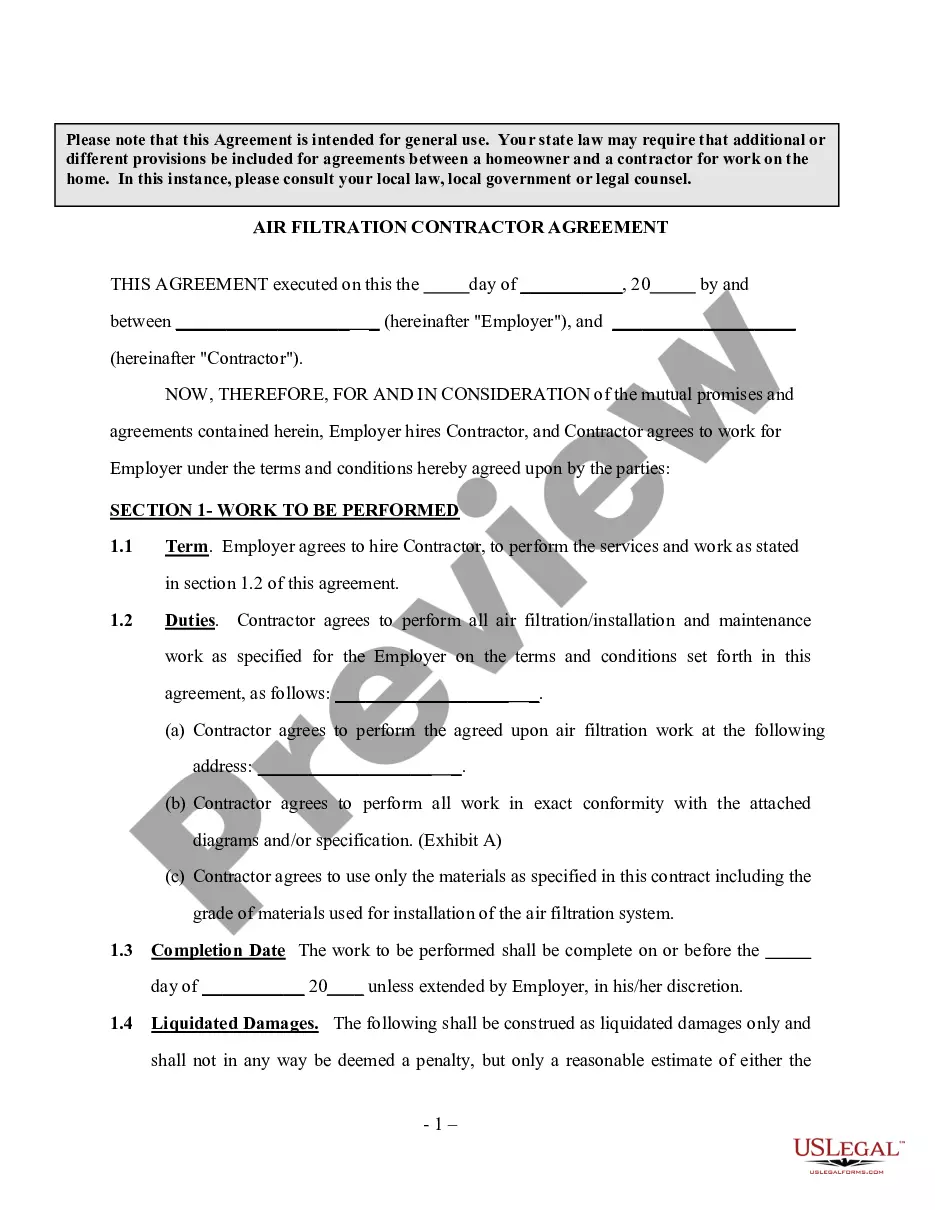
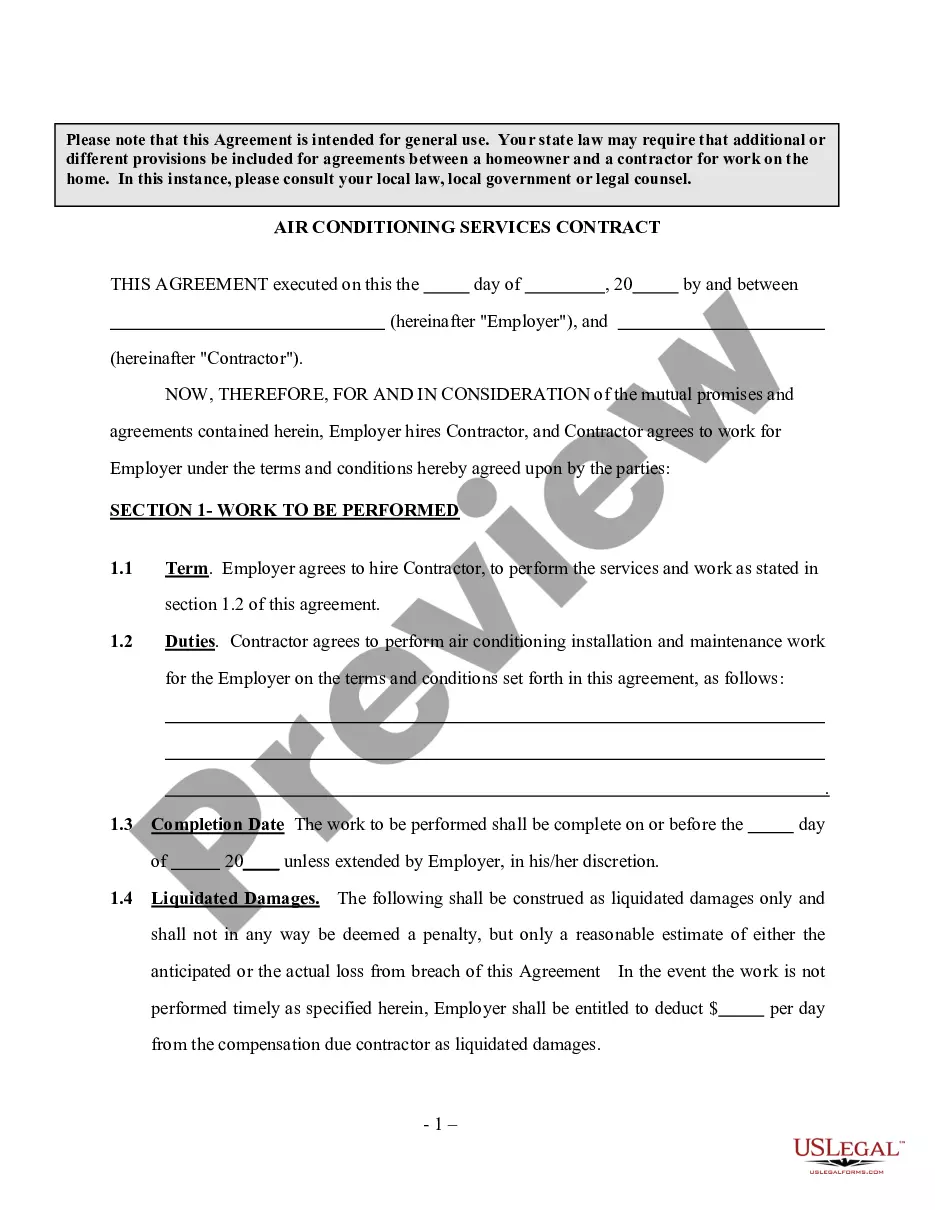
The HVAC Subcontractor Agreement is a legal document that establishes the relationship between a contractor and a subcontractor hired to carry out heating, ventilation, and air conditioning (HVAC) services. This agreement clearly outlines the scope of work, payment details, and other essential terms, ensuring both parties understand their responsibilities and rights. Unlike verbal agreements or informal arrangements, this written contract provides legal protection and clarity regarding the expected services and obligations of the subcontractor.
Main sections of this form
- Scope of Work: Details the specific HVAC services to be performed by the subcontractor.
- Quality Assurance: Specifies the qualifications and standards expected from the subcontractor.
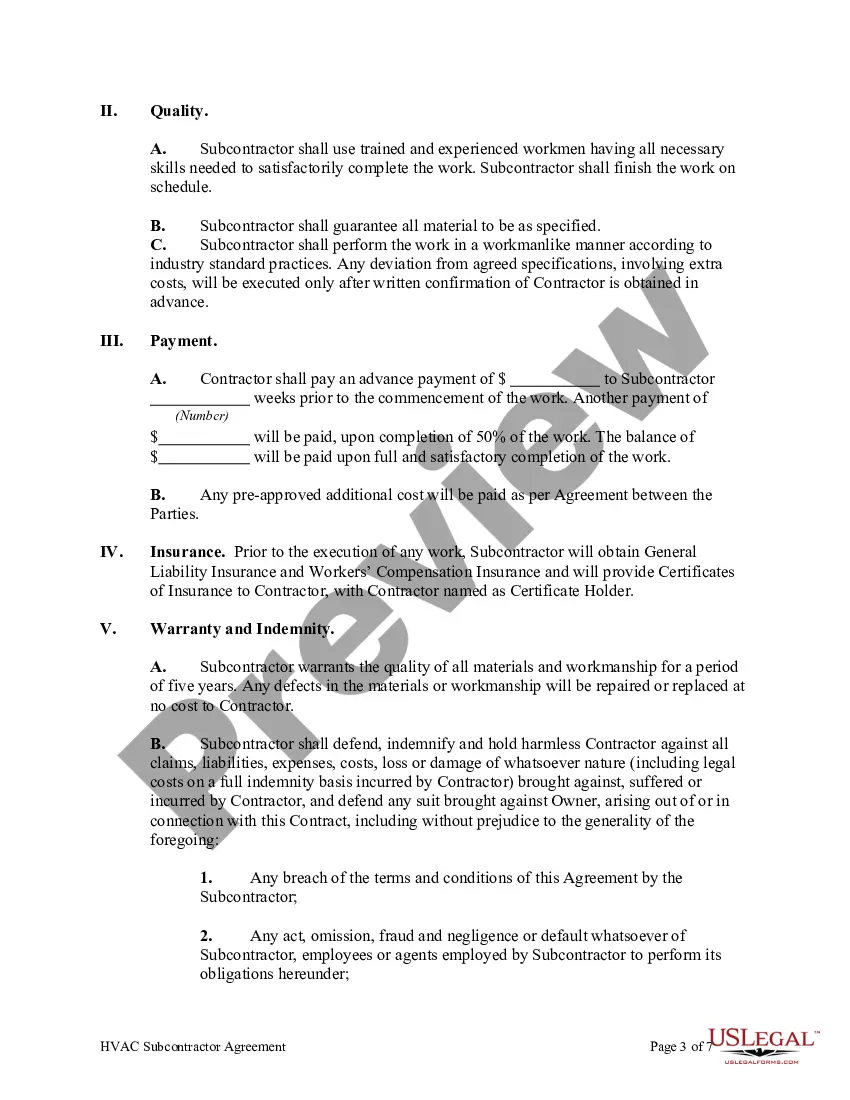
- Payment Terms: Outlines how and when the subcontractor should be compensated for their work.
- Insurance Requirements: States the necessity for the subcontractor to obtain insurance coverage.
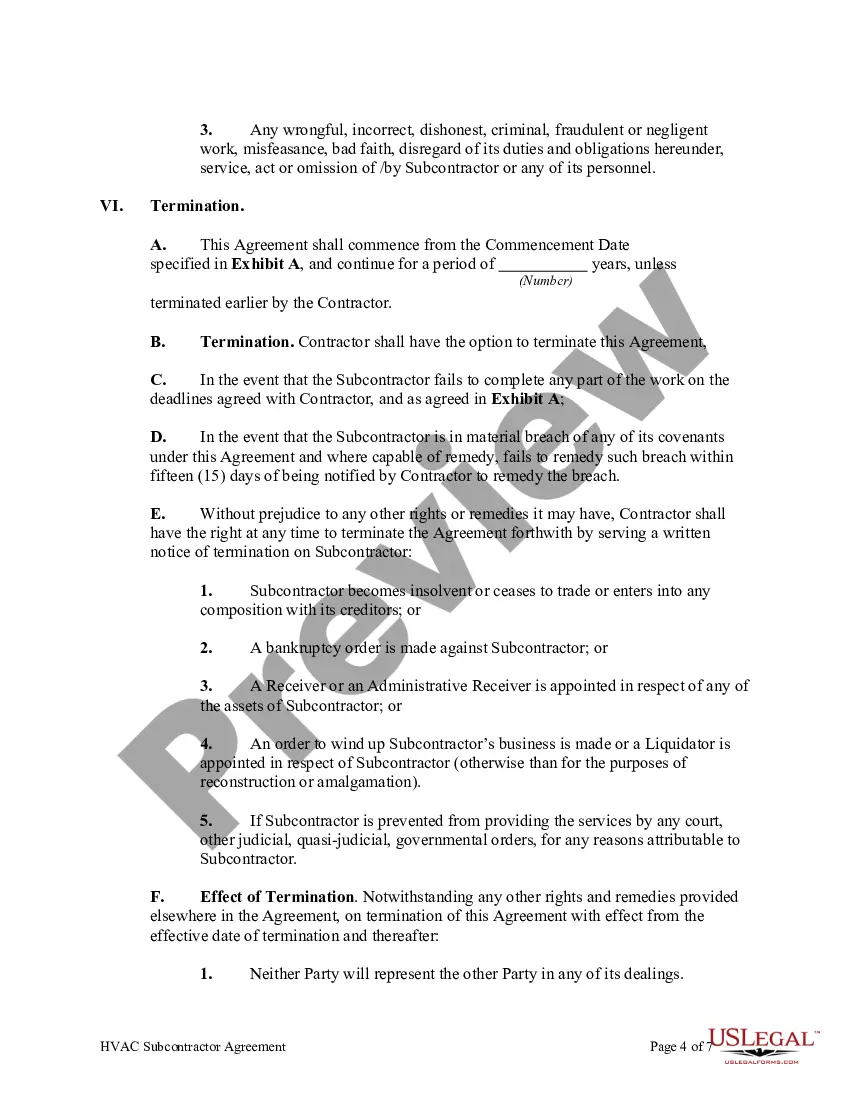
- Warranties and Indemnity: Covers the subcontractor's responsibilities regarding quality and liability.

When this form is needed
This form is needed when a contractor requires assistance with HVAC services and wishes to hire a subcontractor. It is beneficial in scenarios where specific projects require specialized skills in heating and cooling systems, such as routine maintenance, installations, and repairs. The agreement ensures that expectations are clearly defined, minimizing the potential for disputes.
Who can use this document
- General contractors looking to outsource HVAC work.
- Subcontractors who provide HVAC services and need formal agreements.
- Business owners in the construction or maintenance industry requiring HVAC support.
- Individuals or companies seeking clarity and legal protection in subcontracting HVAC tasks.
Completing this form step by step
- Identify the parties involved: Clearly list the contractor and subcontractor's names and contact details.
- Specify the scope of work: Clearly define the HVAC services that the subcontractor is expected to perform.
- Enter payment details: Specify the amount to be paid and the payment schedule or terms.
- Include insurance information: Confirm that the subcontractor will provide the required insurance certificates.
- Review and sign: Ensure that both parties read the agreement thoroughly and sign to affirm their consent.
Is notarization required?
This form does not typically require notarization to be legally valid. However, some jurisdictions or document types may still require it. US Legal Forms provides secure online notarization powered by Notarize, available 24/7 for added convenience.
Get your form ready online
Our built-in tools help you complete, sign, share, and store your documents in one place.
Make edits, fill in missing information, and update formatting in US Legal Forms—just like you would in MS Word.
Download a copy, print it, send it by email, or mail it via USPS—whatever works best for your next step.
Sign and collect signatures with our SignNow integration. Send to multiple recipients, set reminders, and more. Go Premium to unlock E-Sign.
If this form requires notarization, complete it online through a secure video call—no need to meet a notary in person or wait for an appointment.
We protect your documents and personal data by following strict security and privacy standards.

Make edits, fill in missing information, and update formatting in US Legal Forms—just like you would in MS Word.

Download a copy, print it, send it by email, or mail it via USPS—whatever works best for your next step.

Sign and collect signatures with our SignNow integration. Send to multiple recipients, set reminders, and more. Go Premium to unlock E-Sign.

If this form requires notarization, complete it online through a secure video call—no need to meet a notary in person or wait for an appointment.

We protect your documents and personal data by following strict security and privacy standards.
Avoid these common issues
- Not clearly defining the scope of work, leading to misunderstandings.
- Failing to include payment terms, causing payment disputes later.
- Neglecting to verify the subcontractor's insurance coverage.
- Not having both parties sign the agreement, invalidating the contract.
Why use this form online
- Convenient access to professionally drafted legal forms, saving time.
- Editable templates allow for tailored agreements to fit specific project needs.
- Instant download capability, providing quick access to legal documents.
- Reliable resources drafted by licensed attorneys for legal assurance.
Looking for another form?




Form popularity
FAQ
A subcontractor has a contract with the contractor for the services provided - an employee of the contractor cannot also be a subcontractor.
A subcontractor agreement is a contract between contractors or project managers and subcontractors. This solidifies any agreement between the two parties and assures work. Subcontractors should read the subcontractor agreement and assure specifics to protect themselves from unfair risk.
: an individual or business firm contracting to perform part or all of another's contract.
Start with procurement standards. Execute all subcontracts prior to starting your projects. Help those who help you. Award the job to the lowest fully qualified bidder. Use contract scope checklists. Make sure you have tight clauses. Meet to review the proposed subcontract.
A subcontractor is a worker who is not your employee. You give a Form 1099 to a subcontractor showing the amounts you paid him. The subcontractor is responsible for keeping his or her own records and paying his or her own income and self-employment taxes.
When clients hire you to work on a specific project or on a freelance basis, you are usually considered a contractor. You provide the labor, services, and sometimes whatever equipment is needed to get the project done.Subcontractors are companies or individual people that you hire to help you complete a project.
Subcontractor agreements outline the responsibilities of each party, to ensure that if a claim were to arise, the responsible party is accountable. A subcontractor agreement provides protection to the company that hired the vendor or subcontractor by transferring the risk back to the party performing the work.