Checklist - Communicating with Prospective Clients
About this form
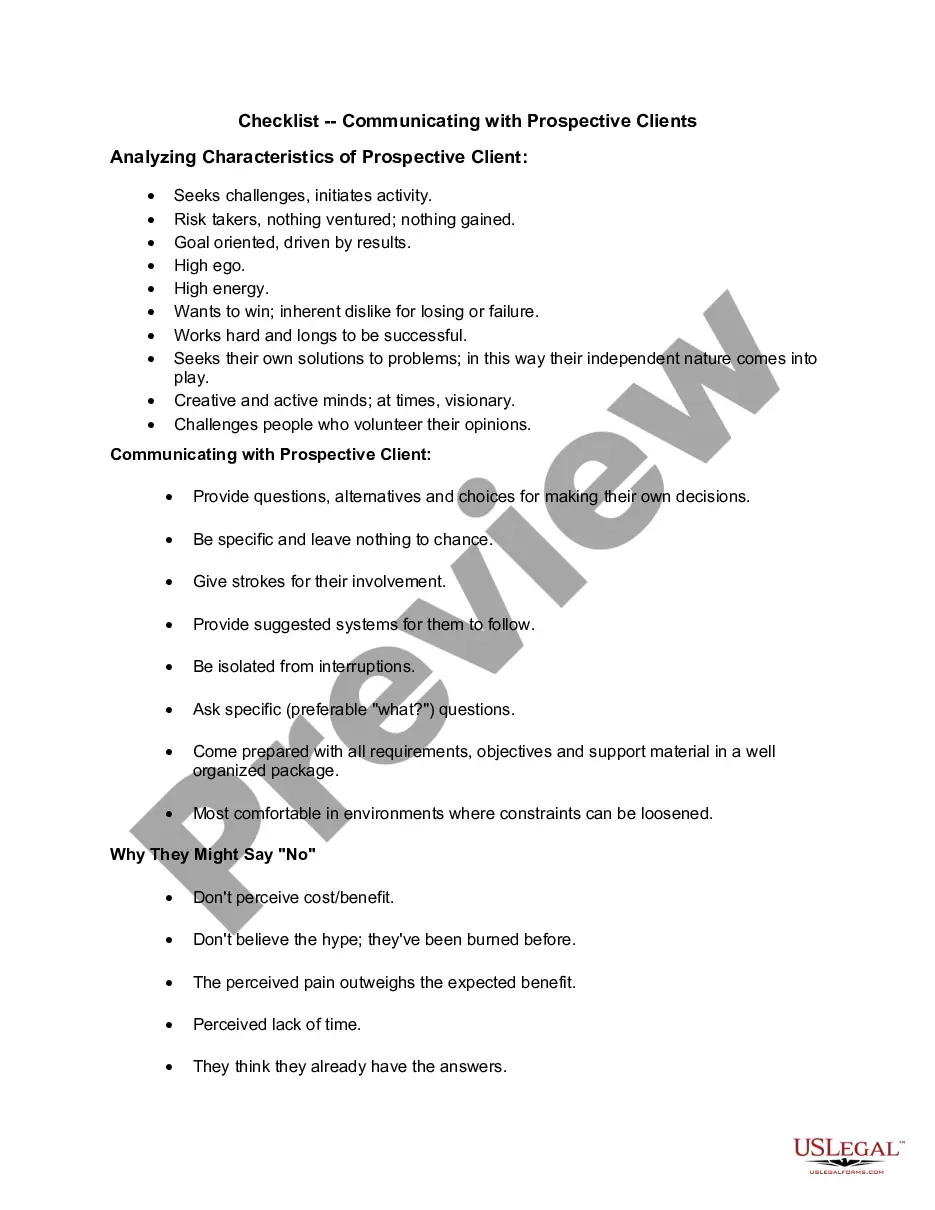
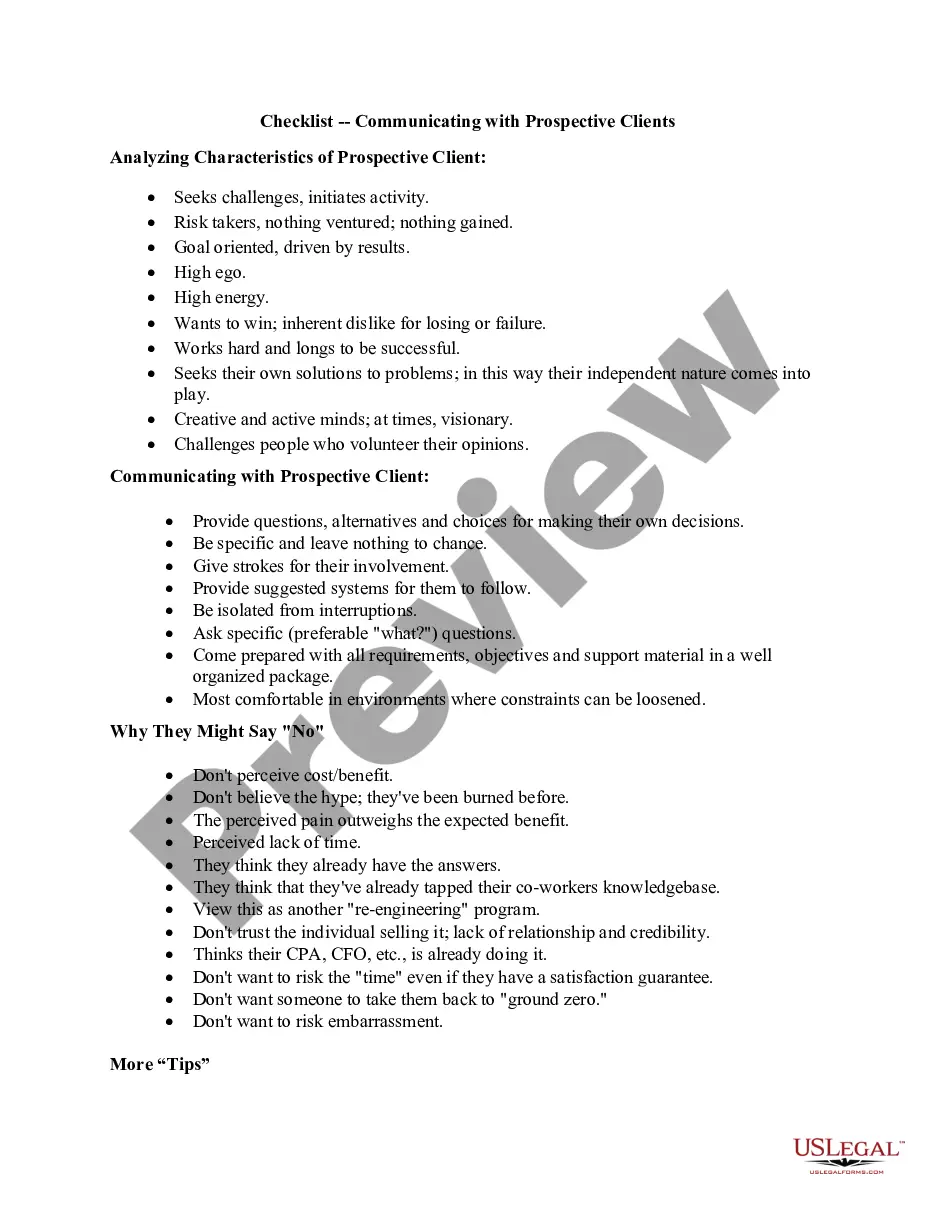
The Checklist - Communicating with Prospective Clients is a tool designed to assist professionals in effectively engaging with potential clients or customers. This form outlines important strategies and tips for successful communication, ensuring that you approach each interaction with clarity and confidence. Unlike other generic communication guides, this checklist is tailored to the nuances of client engagement, focusing on characteristics and preferences that can influence outcomes.
Main sections of this form
- Analysis of prospective client characteristics
- Effective communication strategies
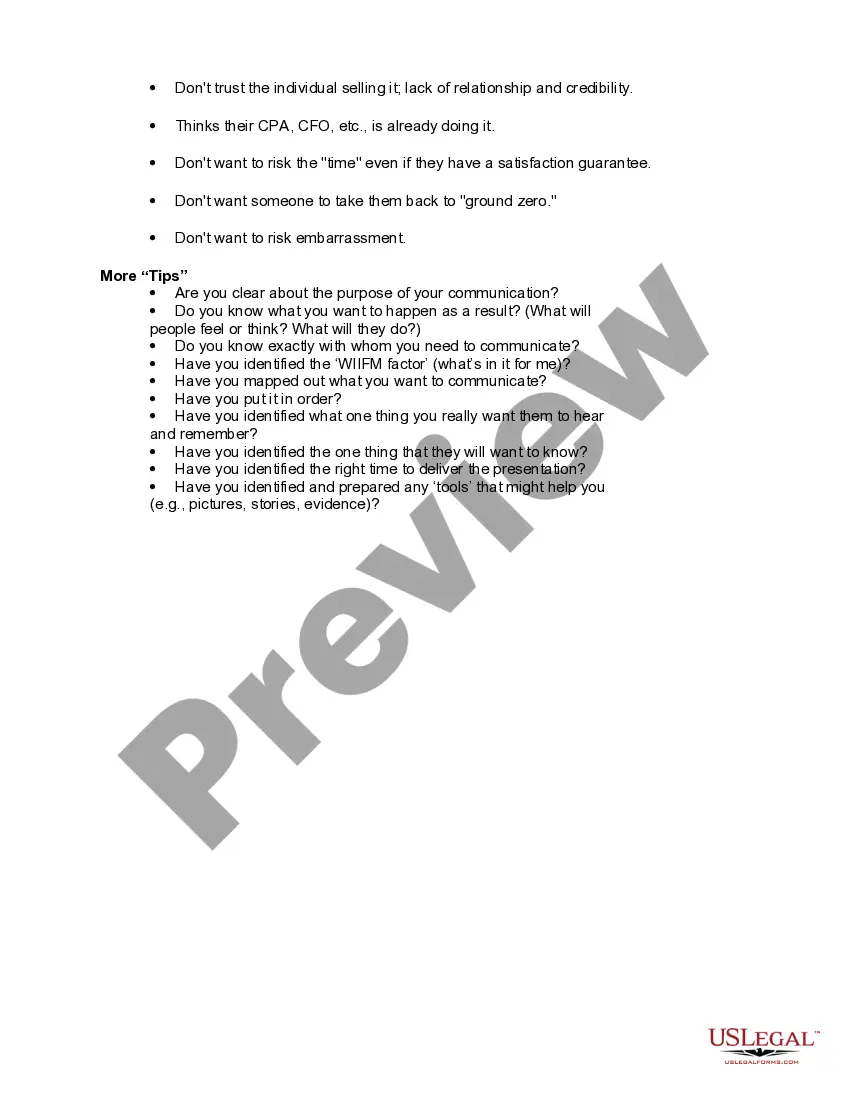
- Common objections and how to address them
- Clarifying the purpose and expected outcomes of communication
- Preparation tips for a structured approach
Situations where this form applies
This form is ideal for professionals such as salespeople, consultants, or service providers who frequently engage with new clients. Use this checklist when preparing for initial meetings, consultations, or presentations to ensure you are equipped to communicate effectively and address any concerns that may arise during discussions.
Who can use this document
- Sales professionals seeking to attract new clients
- Consultants preparing for client interactions
- Legal and financial service providers engaging with potential clients
- Anyone looking to enhance their communication skills in a client-facing role
Instructions for completing this form
- Review the characteristics of your prospective client and analyze their needs.
- Prepare specific, targeted questions to guide the conversation.
- Organize your materials and objectives in a clear format.
- Identify the best time to reach out and communicate your key messages.
- Create an environment conducive to focused discussion, free from interruptions.
Is notarization required?
Notarization is generally not required for this form. However, certain states or situations might demand it. You can complete notarization online through US Legal Forms, powered by Notarize, using a verified video call available anytime.
Get your form ready online
Our built-in tools help you complete, sign, share, and store your documents in one place.
Make edits, fill in missing information, and update formatting in US Legal Forms—just like you would in MS Word.
Download a copy, print it, send it by email, or mail it via USPS—whatever works best for your next step.
Sign and collect signatures with our SignNow integration. Send to multiple recipients, set reminders, and more. Go Premium to unlock E-Sign.
If this form requires notarization, complete it online through a secure video call—no need to meet a notary in person or wait for an appointment.
We protect your documents and personal data by following strict security and privacy standards.

Make edits, fill in missing information, and update formatting in US Legal Forms—just like you would in MS Word.

Download a copy, print it, send it by email, or mail it via USPS—whatever works best for your next step.

Sign and collect signatures with our SignNow integration. Send to multiple recipients, set reminders, and more. Go Premium to unlock E-Sign.

If this form requires notarization, complete it online through a secure video call—no need to meet a notary in person or wait for an appointment.

We protect your documents and personal data by following strict security and privacy standards.
Common mistakes to avoid
- Failing to adequately prepare for the meeting.
- Assuming the client already understands the value being offered.
- Not being specific enough in questions, leading to vague responses.
- Overlooking the client's potential objections without addressing them.
Why complete this form online
- Convenience of accessing and downloading the checklist at any time.
- Editability allows you to customize the form based on specific client needs.
- Reliability of using professionally drafted content by licensed attorneys.
Key takeaways
- Effective communication is vital for engaging prospective clients.
- Understanding client motivations can lead to better interactions.
- Preparation and clarity are key to successful presentations.
- Be aware of and address potential objections proactively.
Looking for another form?
Form popularity
FAQ
11 Ways to Start a Conversation With a Potential Customer That Work 100 Percent of the Time. Ask a question (not related to the sale). Say something about the weather. Ask if they are enjoying the event. Ask about their work. Comment on the venue. Praise something they did. Compliment them on their clothing.
STEP 1: Zero In On Your Target Market. It's a no-brainer that you'll save time and money by marketing to people who not only want what you've got, but also are willing and able to pay for it. STEP 2: Build a Potential Customer and Client List. STEP 3: Make Contact. STEP 4: Follow-Up and then Follow-Up Again.
The difference between prospects, leads, contacts, and opportunities. Each term refers to the specific stage of the sales funnel that the person is in.For example, someone at the top of the funnel is always a prospect, and a contact is always a qualified customer.
This means "possible clients", or people that aren't clients now but might be in the future.
Identify Your Ideal Client. Discover Where Your Customer Lives. Know Your Business Inside and Out. Position Yourself as the Answer. Try Direct Response Marketing. Build Partnerships. Follow Up.
Get Familiar with Demographics. Evaluating the Psychographics. Do Research on Successful Competitor Brands. Analyze your Product to see who will buy from you. Read Industry Blogs and Forums.
A prospective customer, or prospect, is a person or organization interested in making a purchase, with financial resources required, and the power to make purchasing decisions.
Listen first, speak second. It is important to let the client do most of the talking. Identify needs. When speaking with the customer, ask questions that will help identify exactly what they need. Take notes. Throughout the conversation, take notes of what the customer says or asks. Have an open conversation.
A prospective customer, or prospect, is a person or organization interested in making a purchase, with financial resources required, and the power to make purchasing decisions.