Tennessee Heirship Affidavit - Descent

About this form
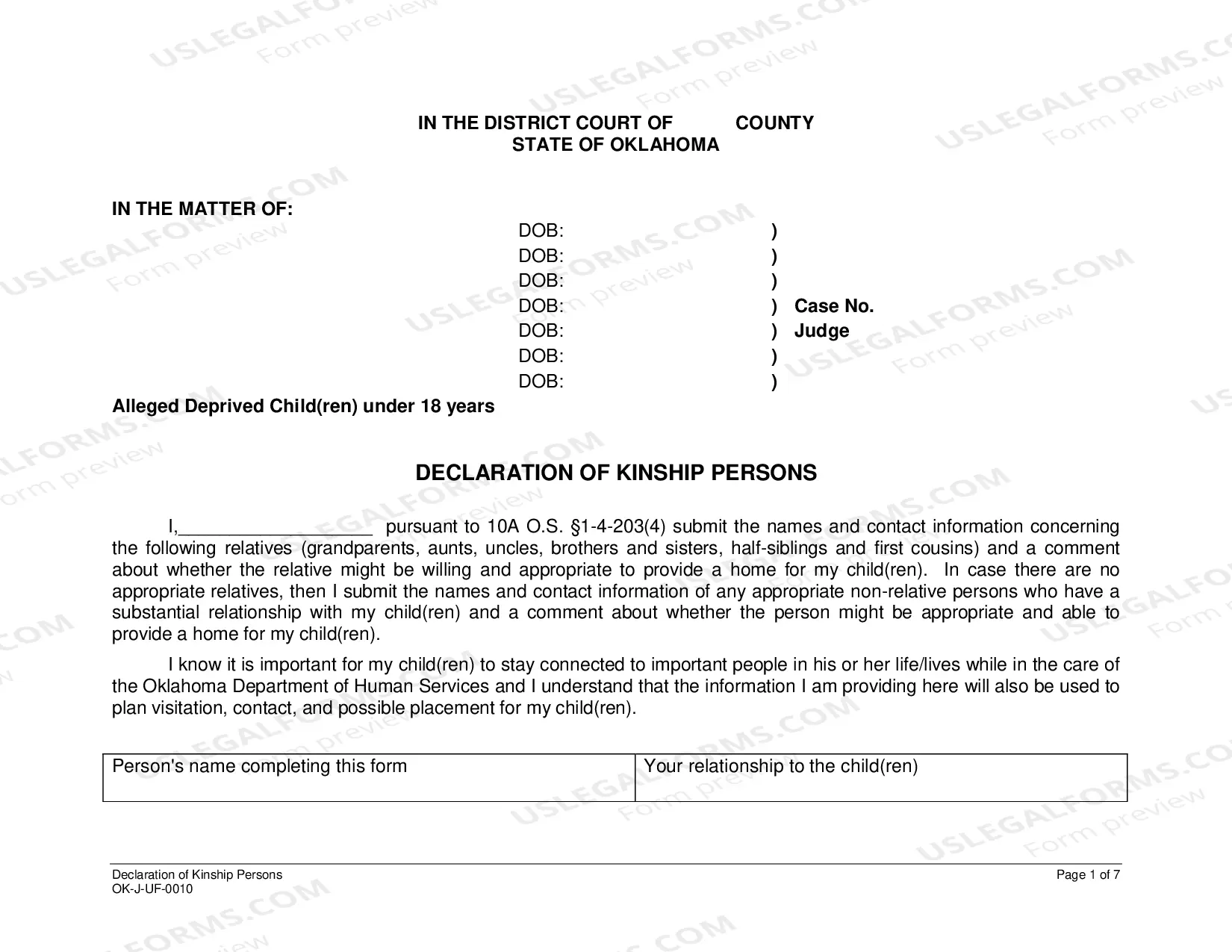
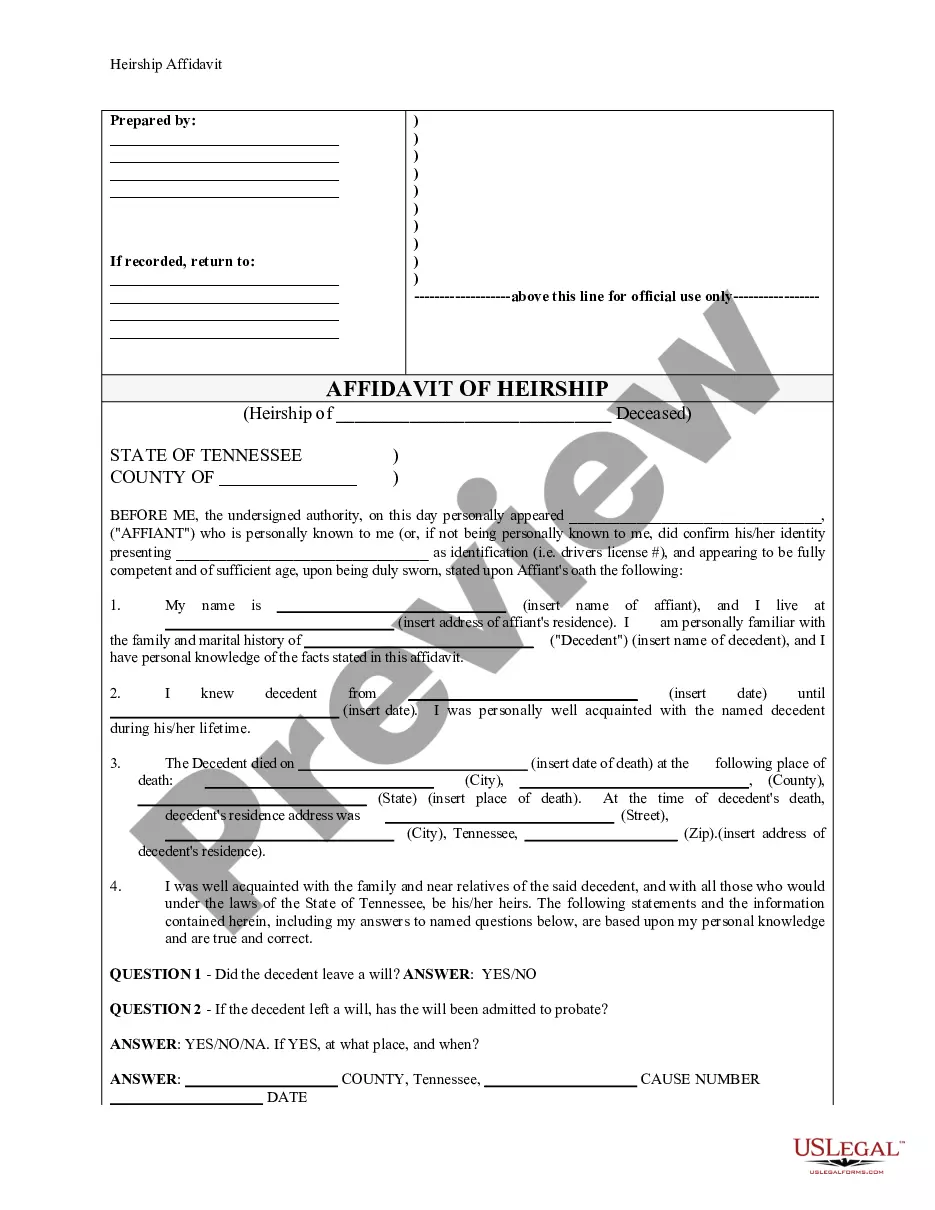
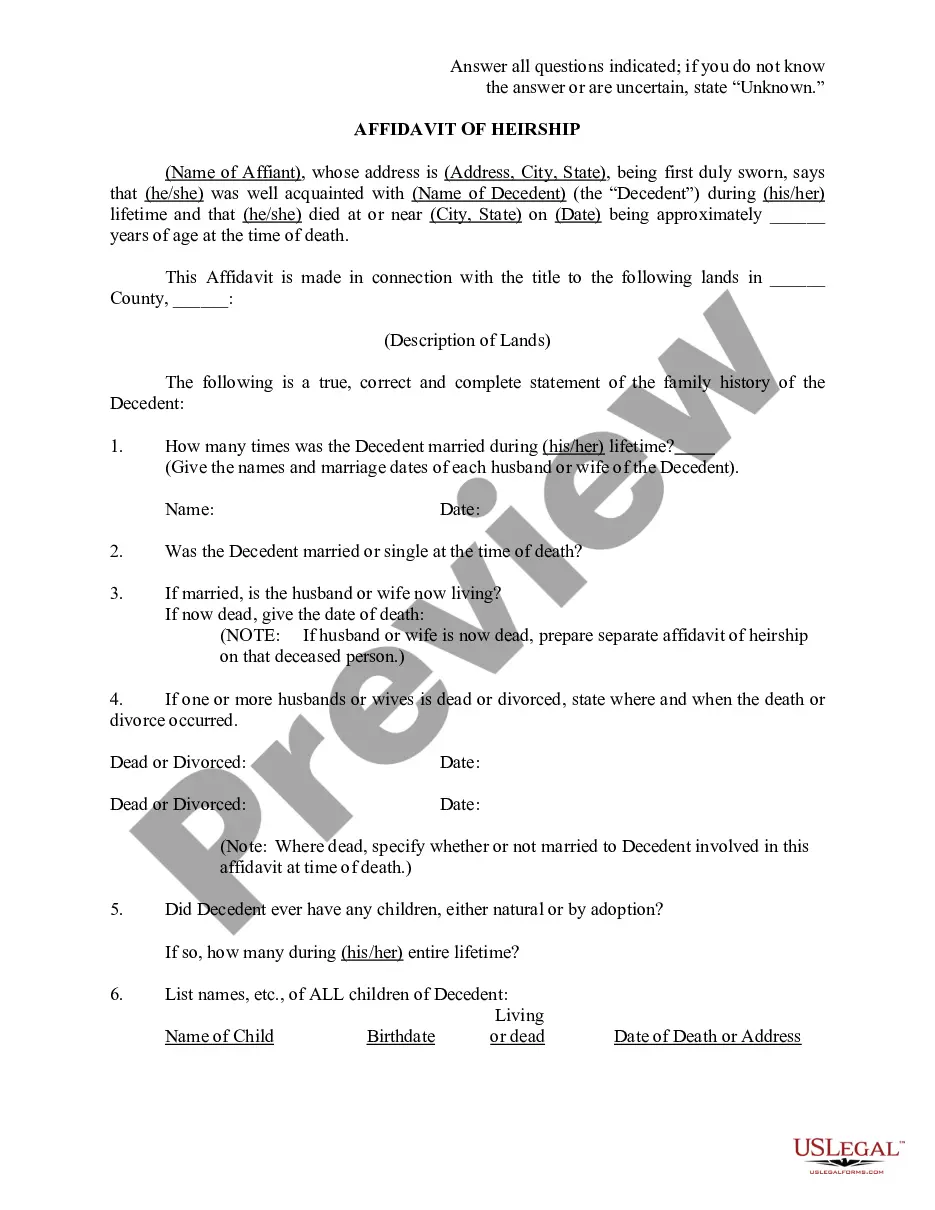
The Heirship Affidavit - Descent is a legal document used to declare the heirs of a deceased individual. This form is essential in establishing ownership of both personal and real property when someone passes away without a will. Unlike a will, which outlines a decedent's wishes, the Heirship Affidavit focuses on identifying and validating the rightful heirs. This document can be recorded in official land records to support transactions involving the deceased's assets.
Form components explained
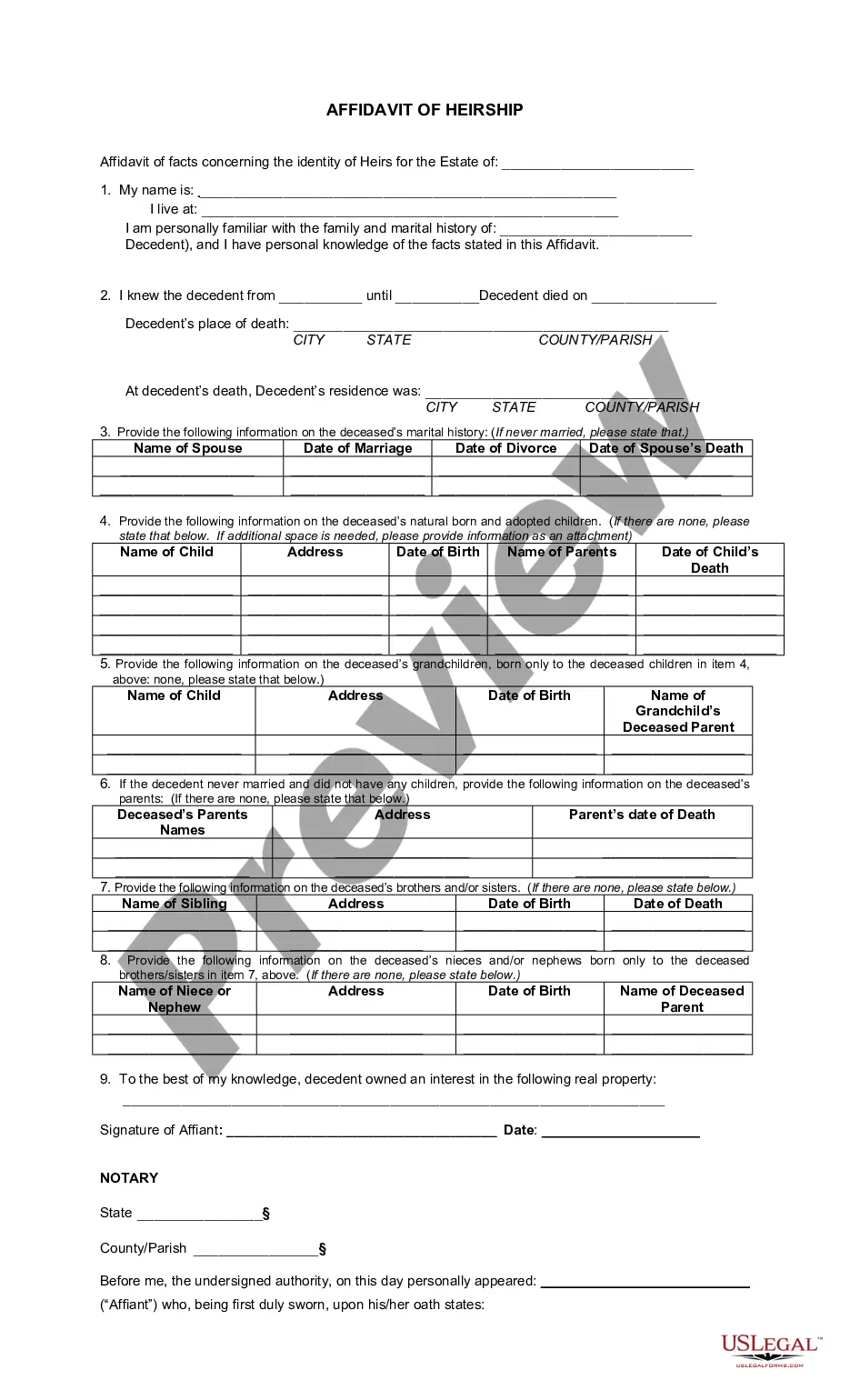
- Name and address of the affiant (the person completing the affidavit).
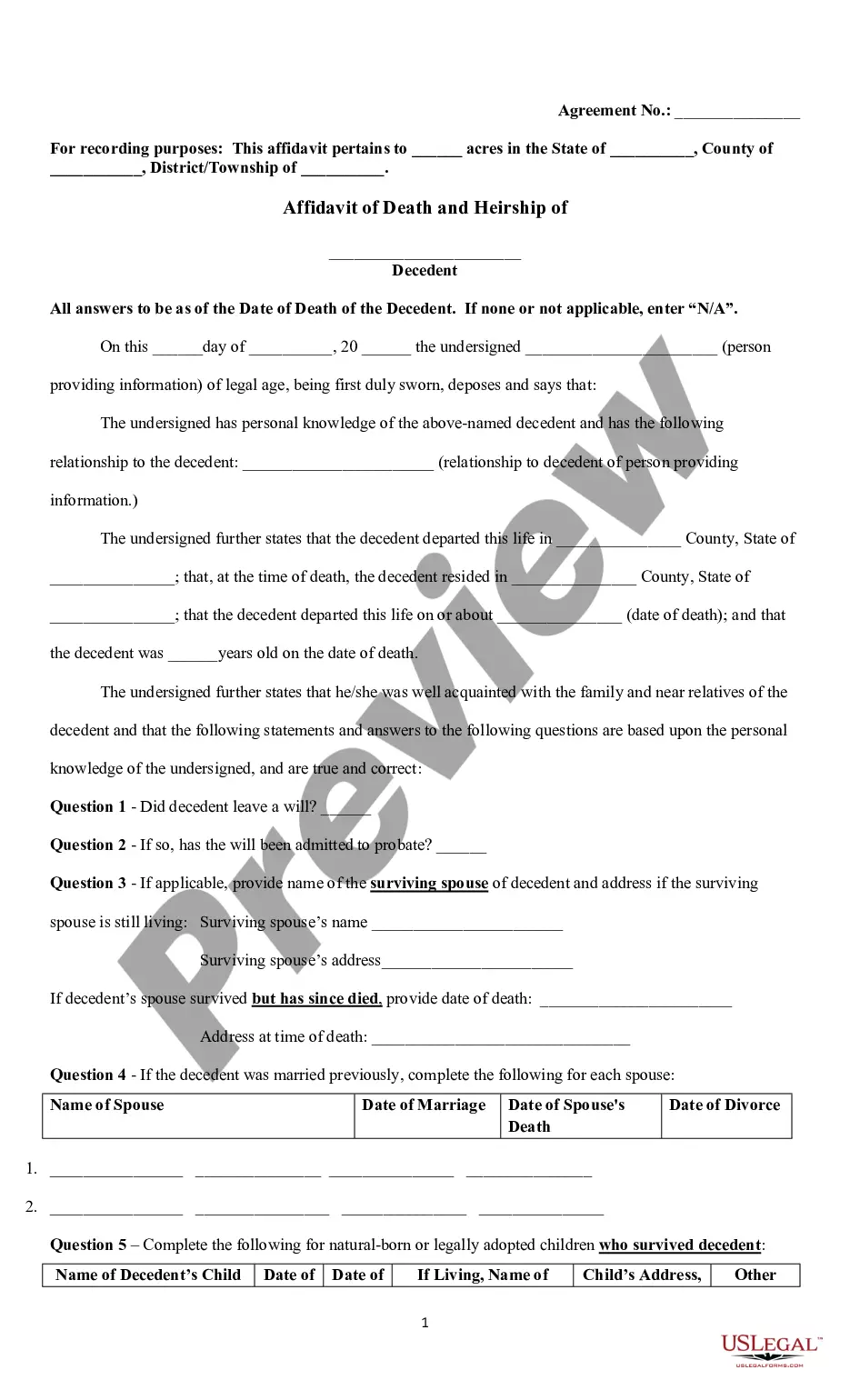
- Details about the deceased, including name, date of death, and address.
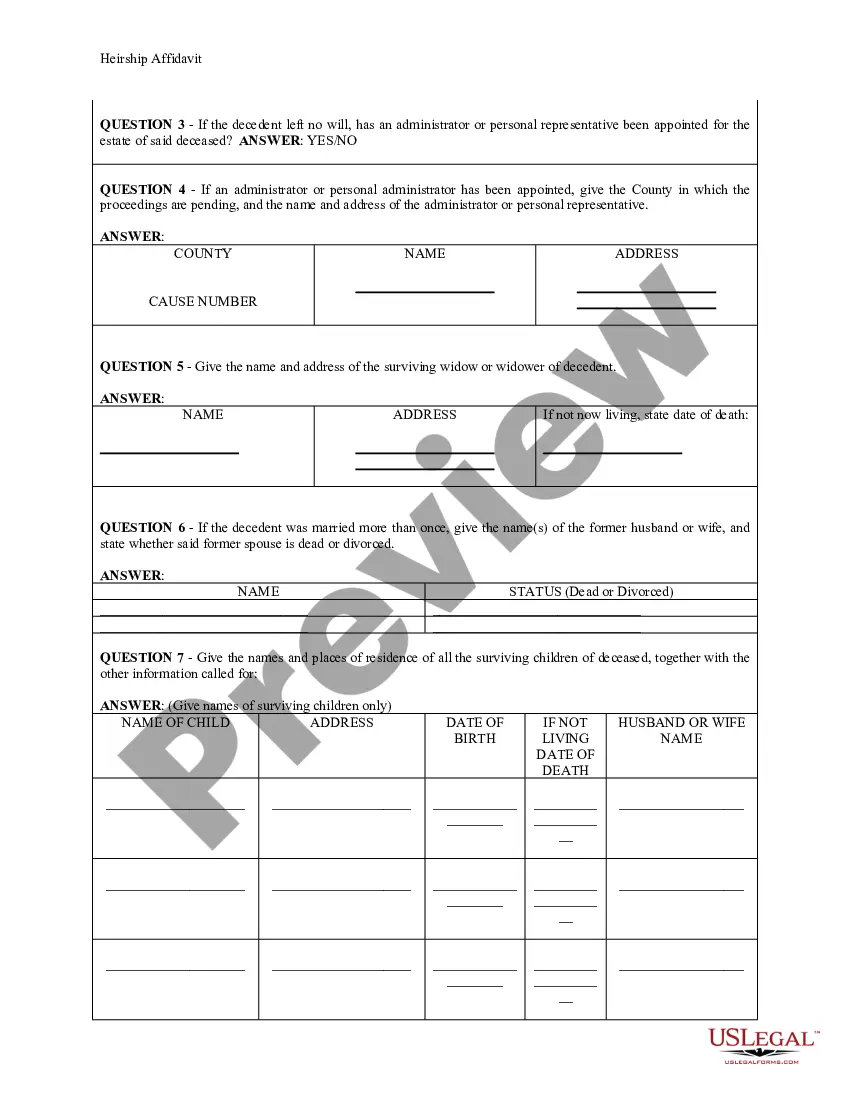
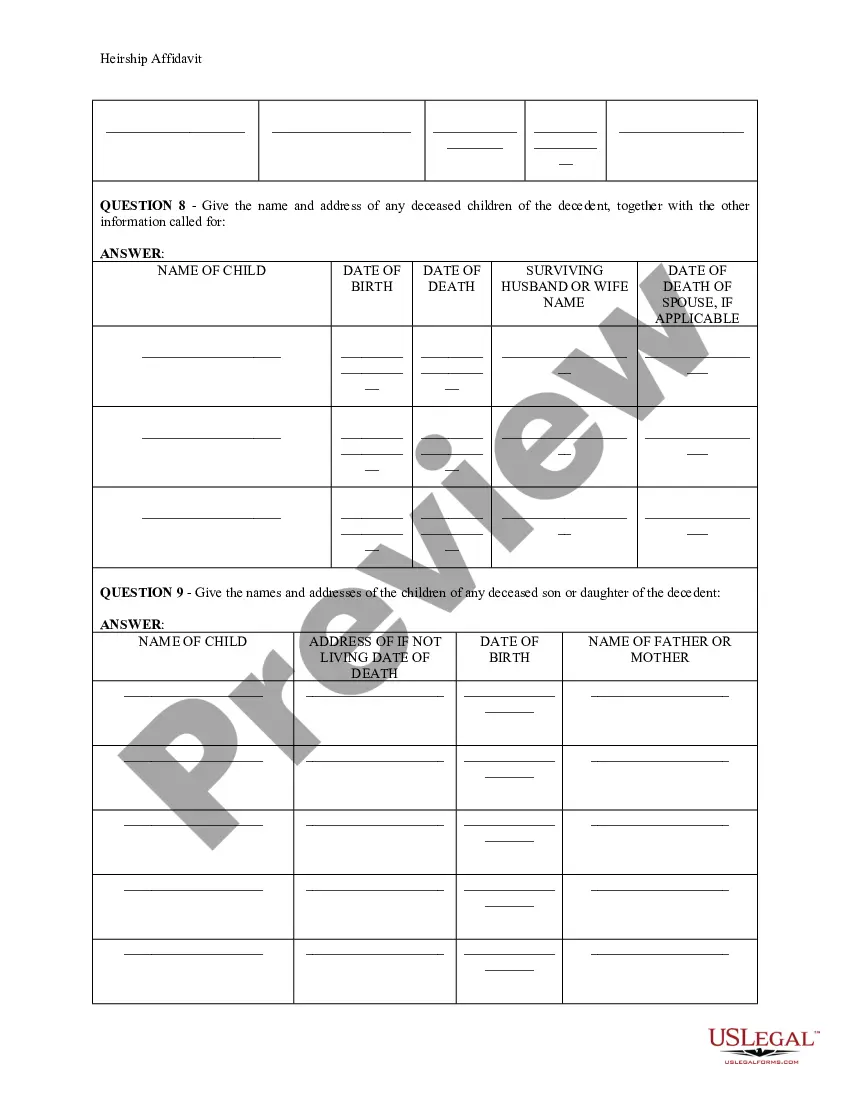
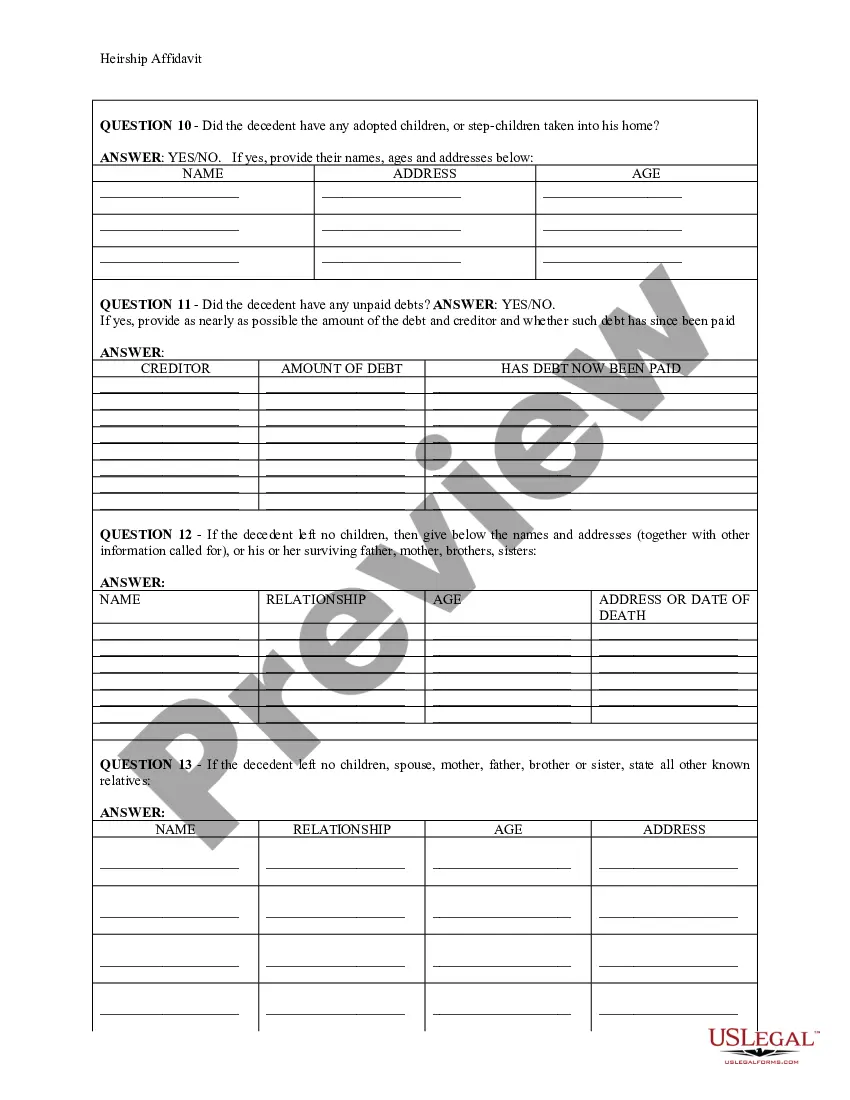
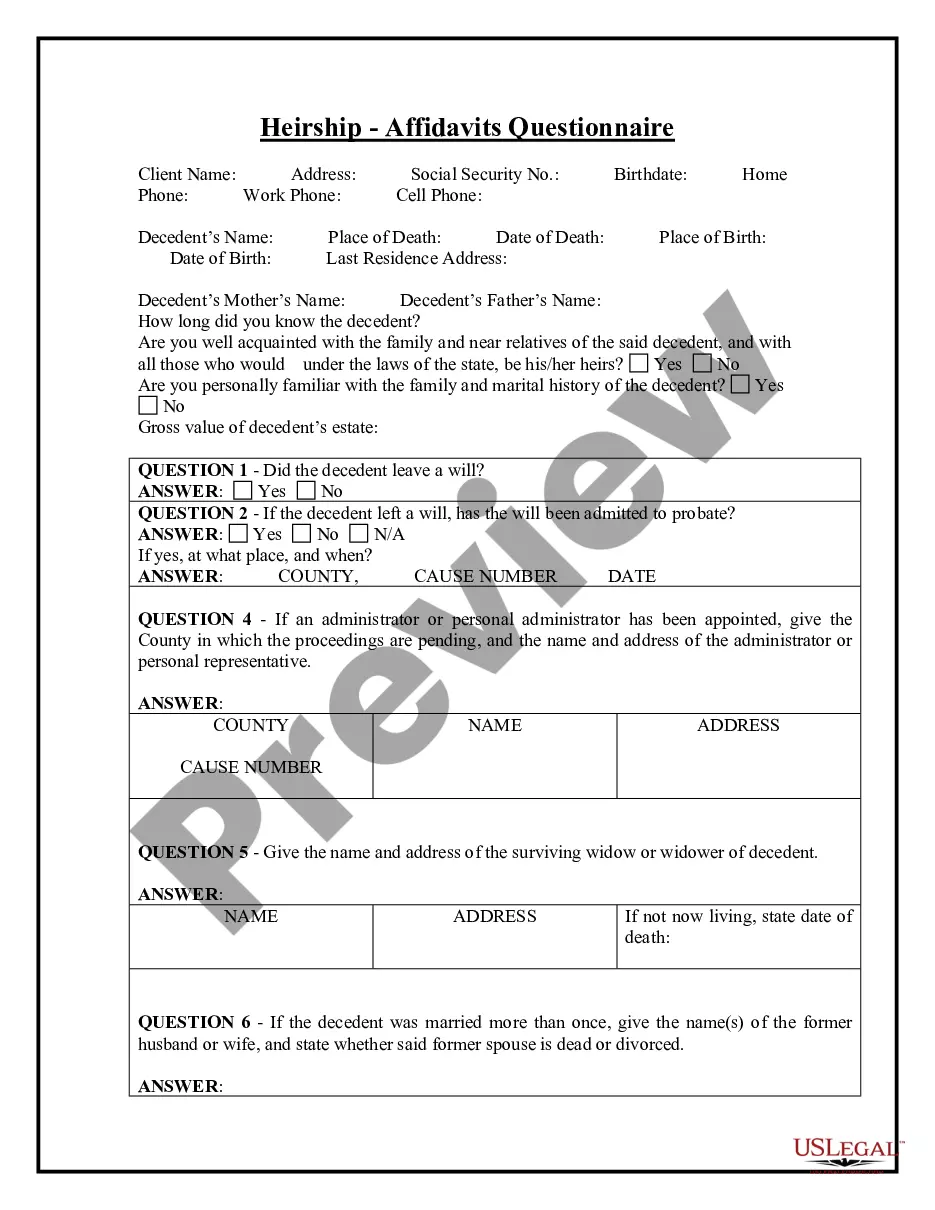
- Questionnaire addressing the existence of a will, administration of the estate, and details of the heirs.
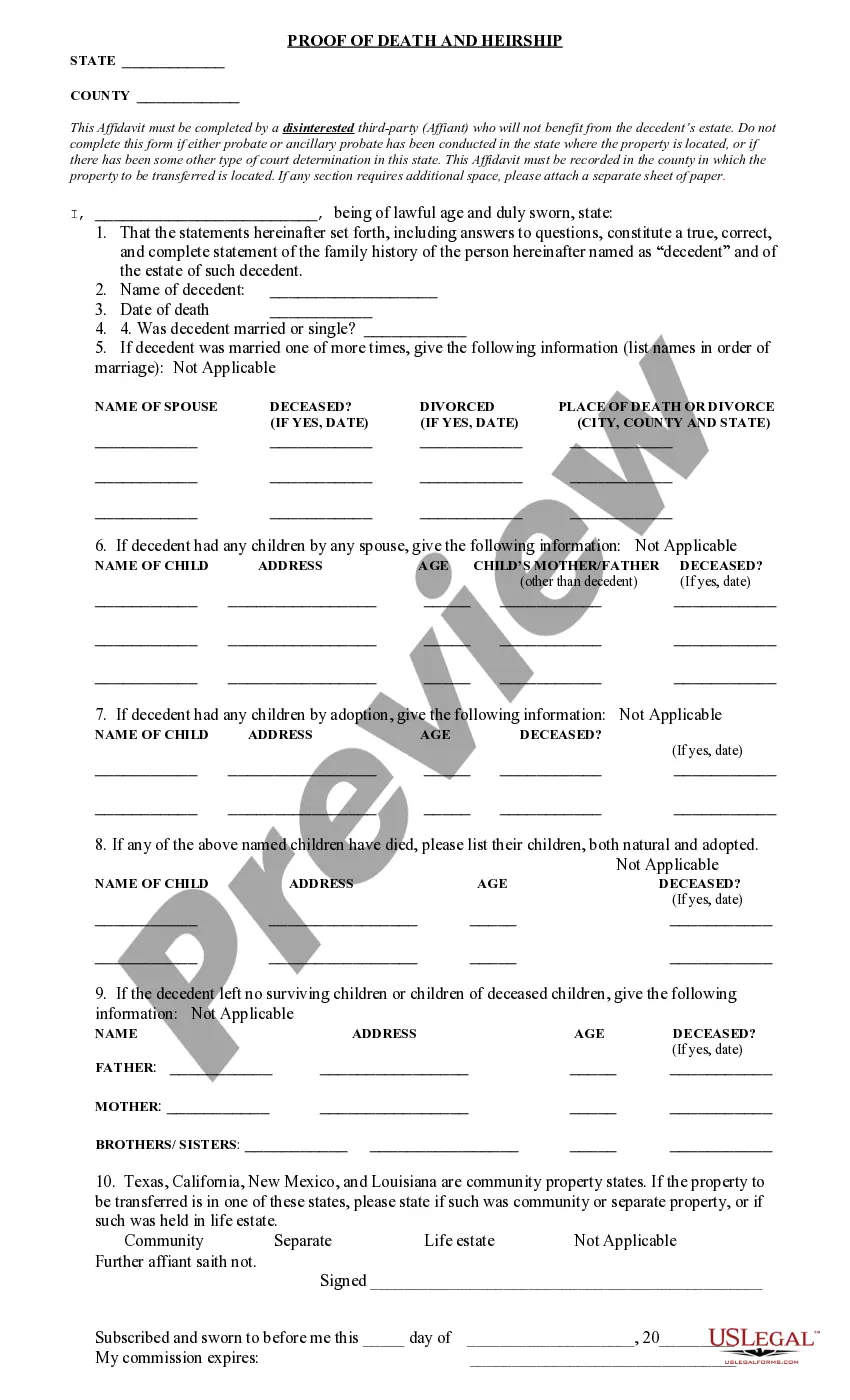
- Information about surviving relatives, including children, spouse, and other family members.
- Affirmation of the affiant's knowledge regarding the family and marital history of the deceased.
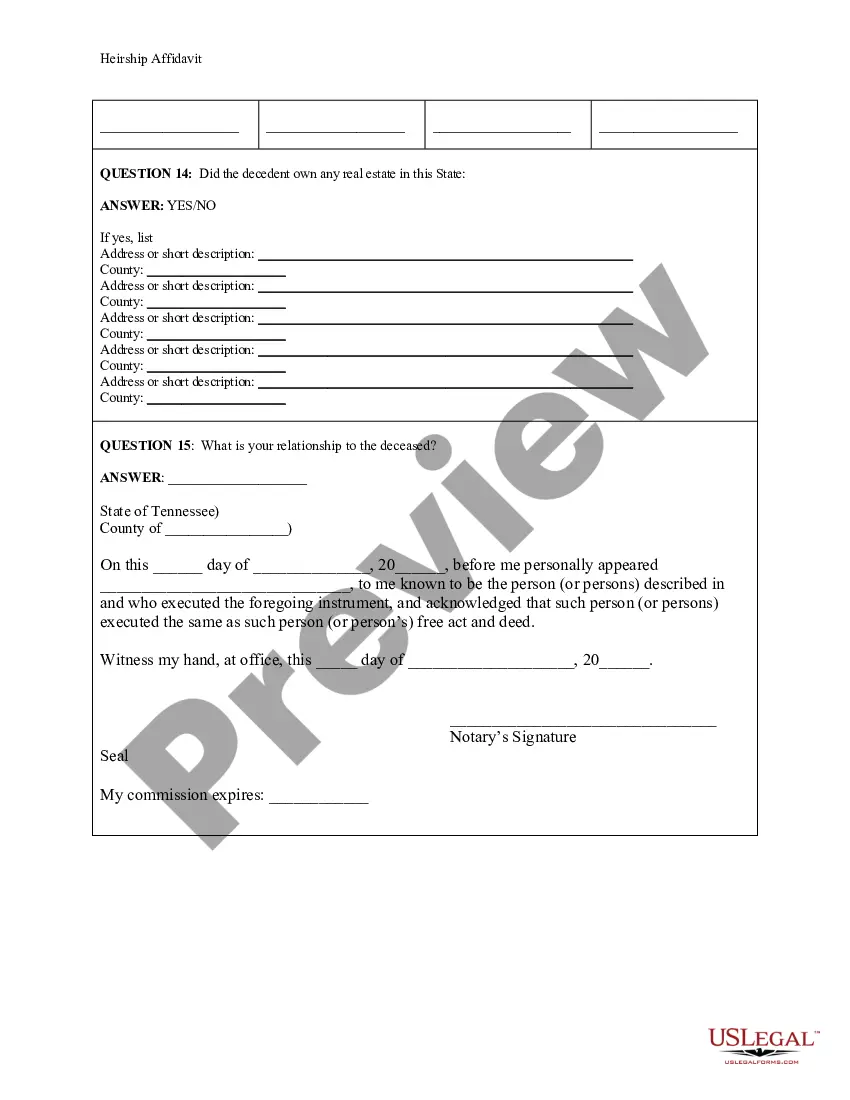
- Signature and notarization section to verify the document's authenticity.
Situations where this form applies
This form is commonly used when an individual dies intestate (without a will) and family members need to establish their rights to the deceased's property. Situations may include selling or transferring real estate owned by the deceased, settling debts, or resolving disputes among heirs. It ensures that the legal rights of heirs are recognized and protected, facilitating a smooth transition of property ownership.
Who needs this form
- Individuals acting on behalf of heirs who wish to establish their rights to the deceased's property.
- Family members of the deceased, including children, spouses, and siblings.
- Those involved in the administration of the deceased's estate, such as personal representatives.
- Anyone needing to confirm heirship for transfer or sale of property.
Instructions for completing this form
- Identify the affiant's name and address at the top of the form.
- Fill in the details about the deceased, including their full name, date of death, and residence address.
- Answer the questionnaire regarding the existence of a will, the appointment of an estate administrator, and the identities of the heirs.
- Provide information about surviving relatives, including children and previous spouses.
- Sign the affidavit in front of a notary public to validate the document.
Notarization guidance
This document requires notarization to meet legal standards. US Legal Forms provides secure online notarization powered by Notarize, allowing you to complete the process through a verified video call, available 24/7.
Get your form ready online
Our built-in tools help you complete, sign, share, and store your documents in one place.
Make edits, fill in missing information, and update formatting in US Legal Forms—just like you would in MS Word.
Download a copy, print it, send it by email, or mail it via USPS—whatever works best for your next step.
Sign and collect signatures with our SignNow integration. Send to multiple recipients, set reminders, and more. Go Premium to unlock E-Sign.
If this form requires notarization, complete it online through a secure video call—no need to meet a notary in person or wait for an appointment.
We protect your documents and personal data by following strict security and privacy standards.

Make edits, fill in missing information, and update formatting in US Legal Forms—just like you would in MS Word.

Download a copy, print it, send it by email, or mail it via USPS—whatever works best for your next step.

Sign and collect signatures with our SignNow integration. Send to multiple recipients, set reminders, and more. Go Premium to unlock E-Sign.

If this form requires notarization, complete it online through a secure video call—no need to meet a notary in person or wait for an appointment.

We protect your documents and personal data by following strict security and privacy standards.
Common mistakes
- Failing to complete all required fields, particularly identifying details about the deceased.
- Inaccurate or incomplete answers to the questionnaire regarding the will and beneficiaries.
- Not obtaining a notarized signature before submitting the affidavit.
- Using outdated or incorrect information about the deceased's family structure.
Benefits of completing this form online
- Instant access to a professionally drafted form tailored to meet legal requirements.
- Convenience of completing the form at your own pace, with no need for physical visits to legal offices.
- Editable electronic format, allowing you to easily make changes and ensure accuracy.
- Affordability compared to hiring an attorney for simple estate matters.
Looking for another form?
Form popularity
FAQ
The heirship of a deceased person is determined through a document called an Affidavit of Heirship. This is a form that gives a detailed explanation of the heirs at law of the deceased person at the time of his/her death.The deceased, DOROTHY, died at Anytown, Illinois on January 1, 2015.
An affidavit of heirship is needed to transfer a deceased person's interest in real or personal property to his or her heirs when the decedent dies without leaving a last will and testament or without disposing of all of his or her property in a will.
(A judgment in this case is a court order, in writing, reciting that the deceased person is dead, the date of death and a list of who are the heirs.) Proof. Once the judgment is issued, copies of the judgment can be used to show proof as to who is entitled to estate assets.
If a person dies intestate without any children, the spouse recovers the entire estate. If the person left a spouse and children, the surviving spouse will receive either one-third of the entire estate or a child's share of the estate, whichever is greater.
A fee of $15 for the first page and $4 for each additional page is common. Ask if you can file the two affidavits of heirship as one document. Some counties let you file the two affidavits of heirship as one document if the decedent and property descriptions are the same.
Tennessee inheritance laws protect the inheritance rights of any children who were conceived prior to their parent's death, but were born following it. However, that child must have lived for at least 120 hours and been born in the 10-month window that comes after the parent's death.
This law states that no matter what your will says, your spouse has a right to inherit one-third or one-half (depending on the state and sometimes depending on the length of the marriage) of your total estate. To exercise this right, your spouse has to petition the probate court to enforce the law.
When a person who owns real property dies intestate, and there is no survivor mentioned in the deed, the heirs of the decedent, must file an affidavit of descent to establish their chain of title to the property. This affidavit, is known as an affidavit of descent.