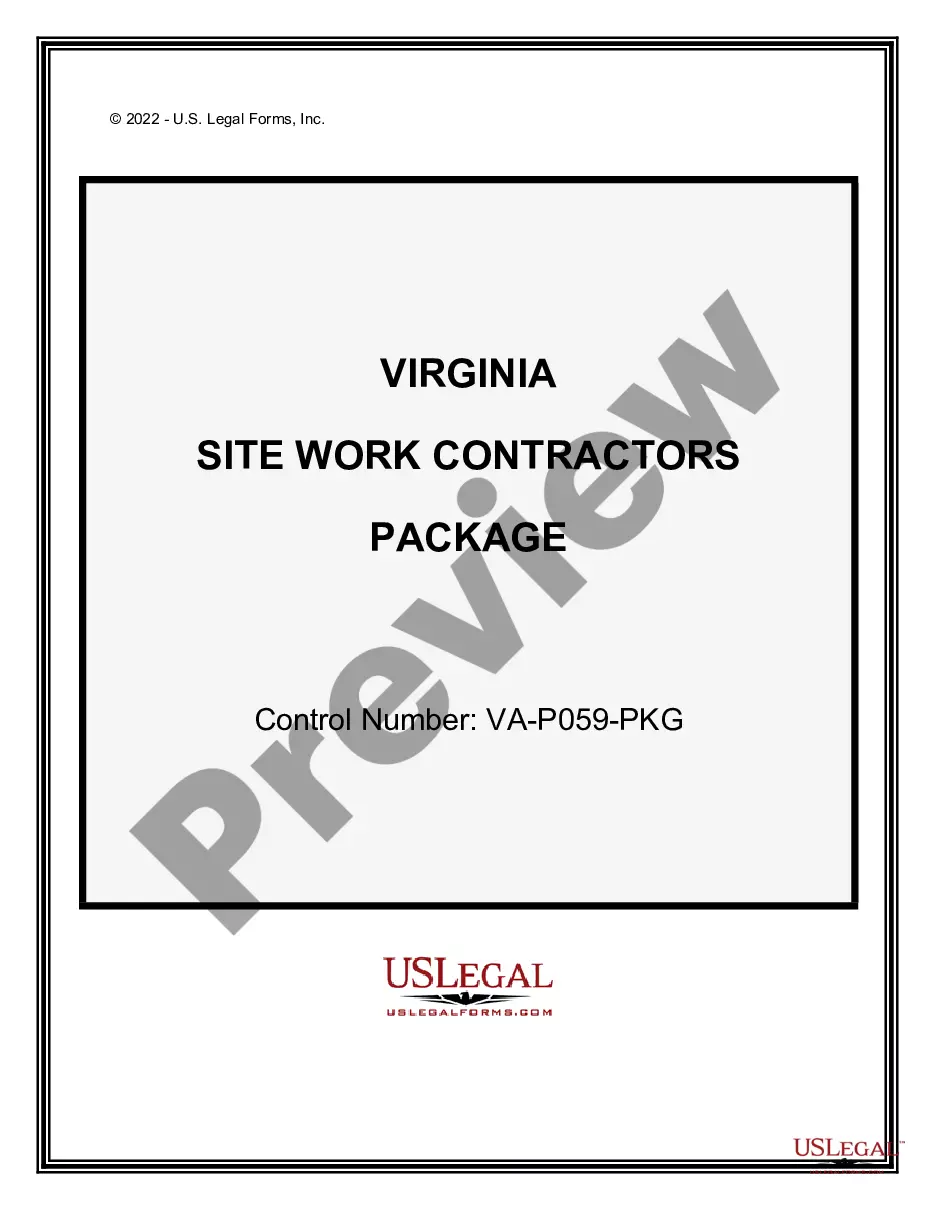
Virginia Site Work Contractor Package
What this form package covers
The Virginia Site Work Contractor Package includes essential legal documents tailored for site work contractors, homeowners, suppliers, and subcontractors involved in residential construction projects. This package is designed to assert legal rights, address claims, and navigate legal challenges during the clearing and preparation of property for construction. With a focus on compliance with Virginia state law, this package offers significant savings compared to purchasing forms independently.
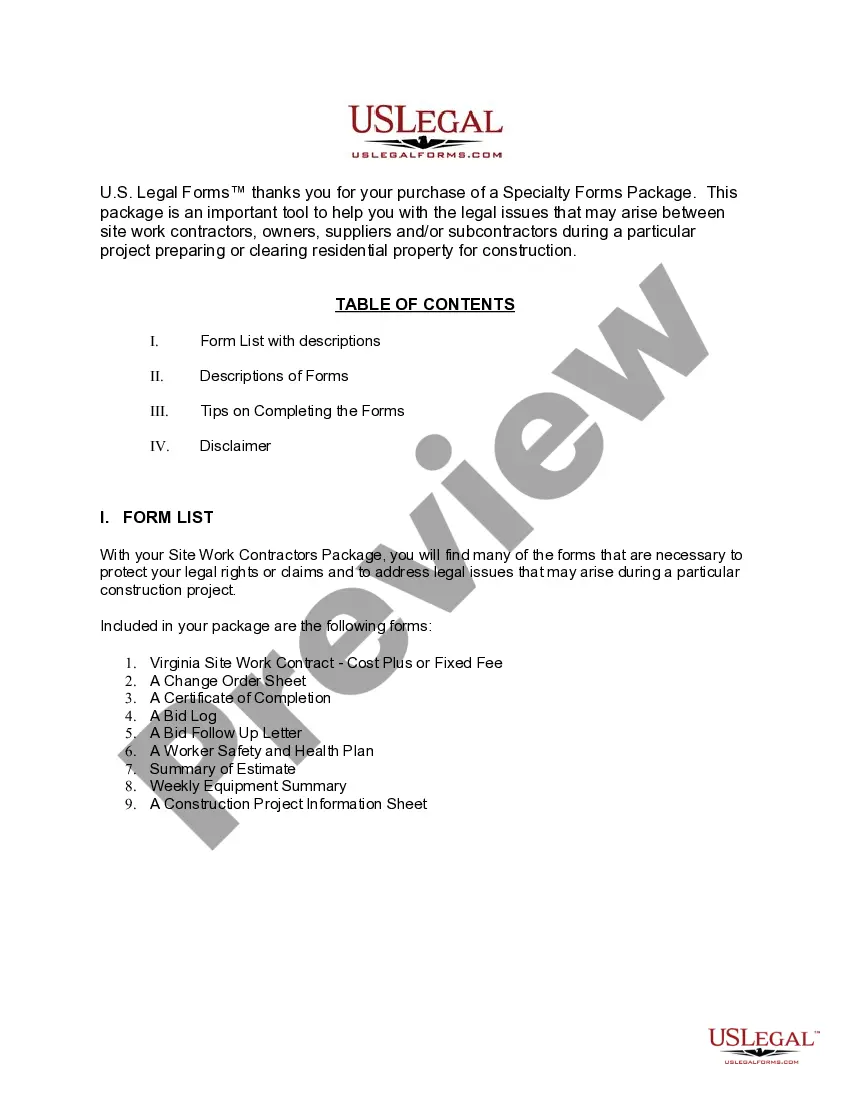
Forms included in this package
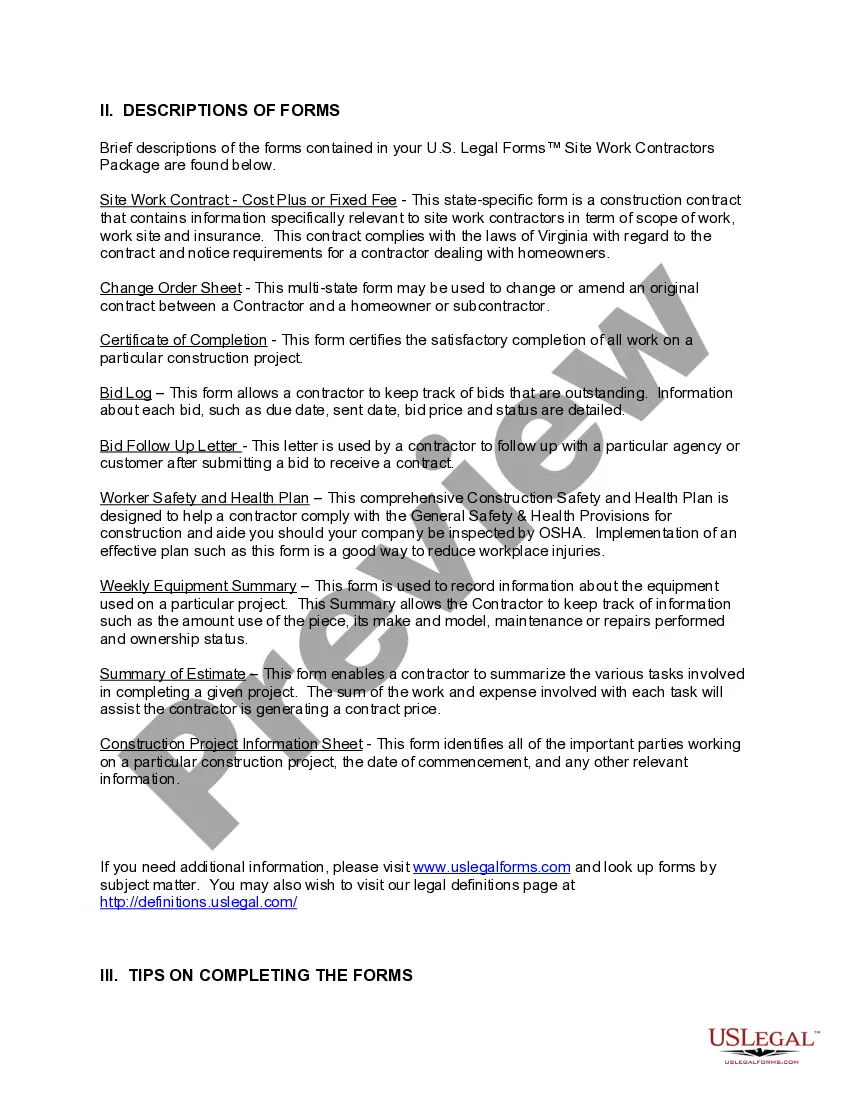
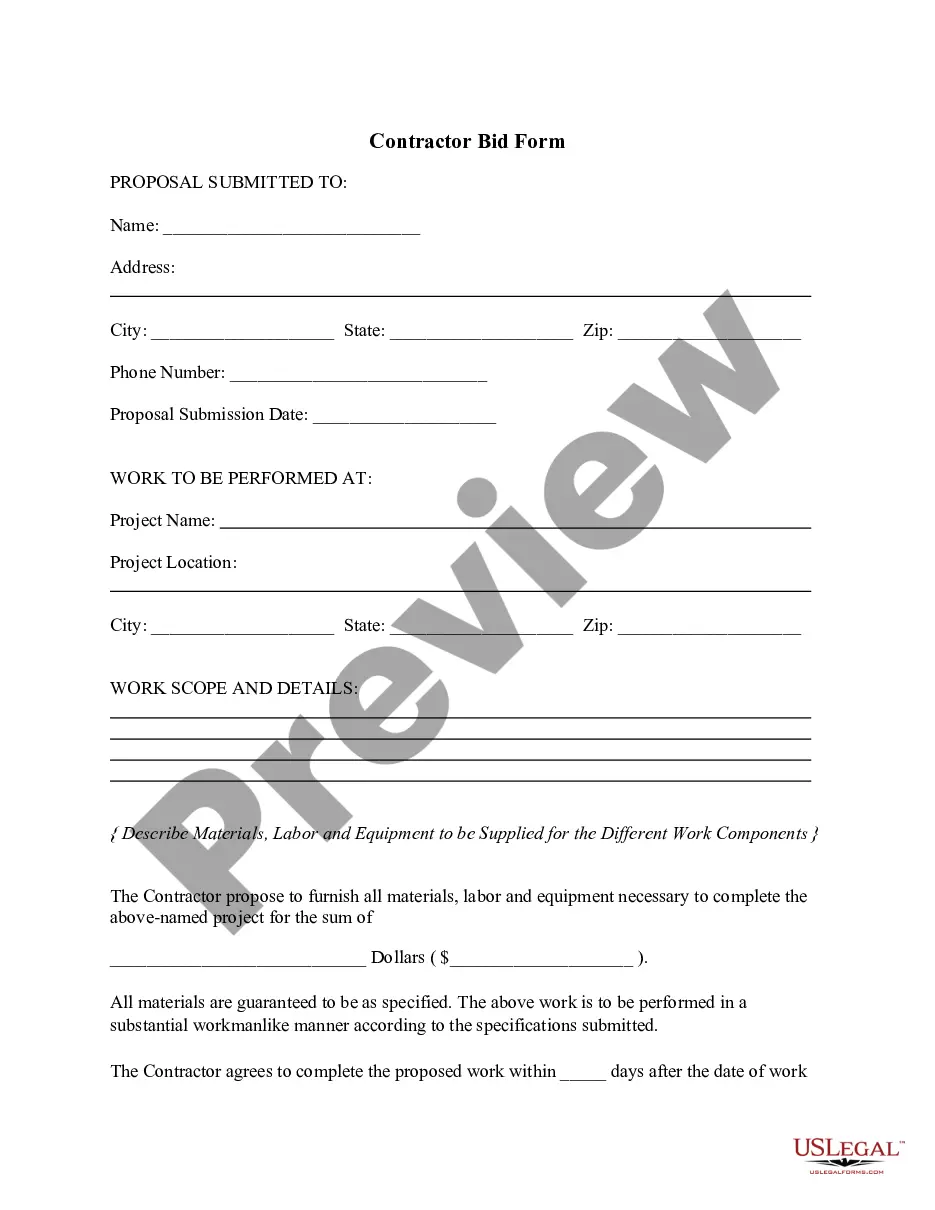
- Site Work Contract for Contractor
- Contractor's Weekly Equipment Summary
- Contractor's Bid Log
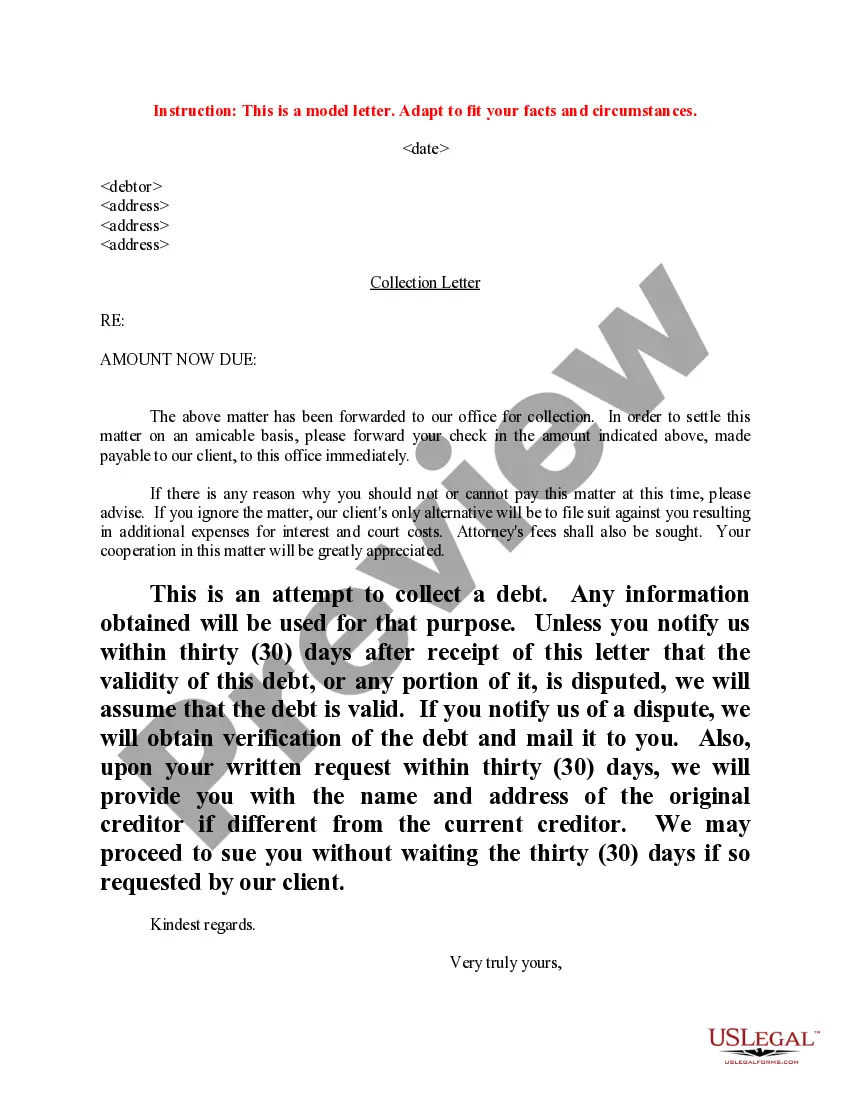
- Contractor's Bid Follow Up Letter
- Contractor's Summary of an Estimate
- Construction Safety and Health Plan
- Change Order for Construction or Repairs by Contractor
- Certification of Completion by Contractor
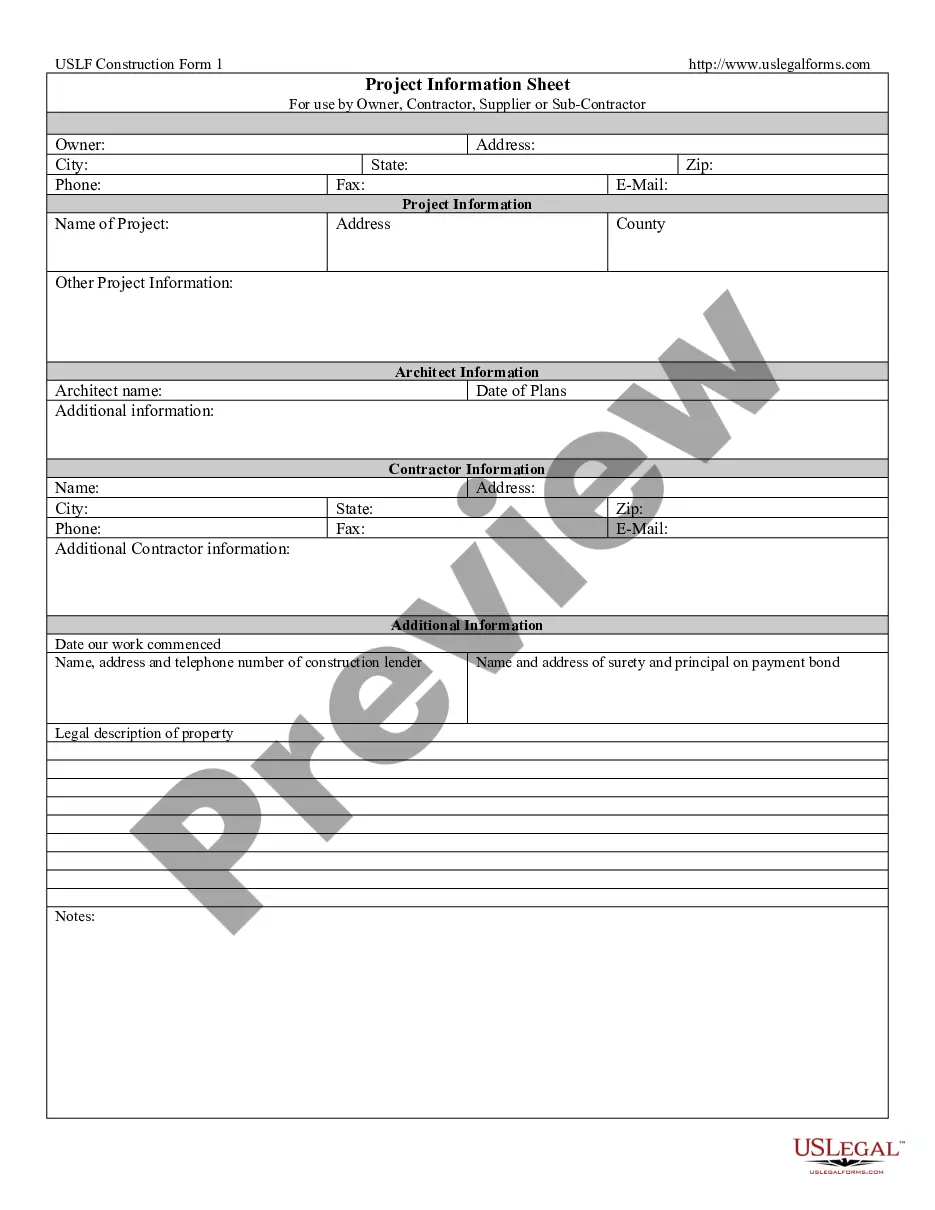
- Construction Project Information Sheet

When to use this document
This package is useful in various real-world scenarios, including:
- Contracting site work for new residential construction projects.
- Modifying existing contracts through change orders.
- Documenting the completion of work and providing certificates to clients.
- Keeping detailed records of bids and project progress.
- Ensuring compliance with safety regulations during the construction process.
Who this form package is for
- Site work contractors looking to formalize agreements and protect their rights.
- Homeowners hiring contractors for site preparation work.
- Suppliers and subcontractors needing documentation for bids and changes.
- Anyone involved in a residential construction project who requires legal forms to manage claims and responsibilities.
Instructions for completing these forms
- Review all included forms to understand their purpose and requirements.
- Identify all parties involved in the contract and accurately fill in their details.
- Clearly define the scope of work and costs in the site work contract.
- Complete the change order sheet if modifications to the original contract are needed.
- Execute the certificate of completion once the work is finished and satisfactory.
- Keep accurate records using the bid log and weekly equipment summary.
Notarization requirements for forms in this package
Most forms in this package do not require notarization. However, local laws or specific situations may demand it. Our online notarization service, powered by Notarize, lets you complete the process through a verified video call, available anytime.
Get your form ready online
Our built-in tools help you complete, sign, share, and store your documents in one place.
Make edits, fill in missing information, and update formatting in US Legal Forms—just like you would in MS Word.
Download a copy, print it, send it by email, or mail it via USPS—whatever works best for your next step.
Sign and collect signatures with our SignNow integration. Send to multiple recipients, set reminders, and more. Go Premium to unlock E-Sign.
If this form requires notarization, complete it online through a secure video call—no need to meet a notary in person or wait for an appointment.
We protect your documents and personal data by following strict security and privacy standards.

Make edits, fill in missing information, and update formatting in US Legal Forms—just like you would in MS Word.

Download a copy, print it, send it by email, or mail it via USPS—whatever works best for your next step.

Sign and collect signatures with our SignNow integration. Send to multiple recipients, set reminders, and more. Go Premium to unlock E-Sign.

If this form requires notarization, complete it online through a secure video call—no need to meet a notary in person or wait for an appointment.

We protect your documents and personal data by following strict security and privacy standards.
Common mistakes
- Failing to fully complete all sections of the forms, leading to potential disputes.
- Not providing clear descriptions of the work to be performed in the contract.
- Neglecting to document all changes through the change order sheet.
- Forgetting to obtain signatures from all parties involved, which can invalidate the documents.
Why use this package online
- Convenience of downloading and accessing forms from anywhere, at any time.
- Editable documents that can be customized to fit specific project needs.
- Reliable, attorney-drafted forms that adhere to applicable state laws.
- Ability to track changes and maintain versions easily compared to printed forms.
Looking for another form?



Form popularity
FAQ
Under the CARES Act, self-employed workers and independent contractors can apply for temporary unemployment benefits. RICHMOND, Va.If you are self-employed, you won't have to submit proof of earnings, like a 1099 or tax filing at this time.
Normally they cannot. Sole proprietor and partner compensation is not reportable and they cannot pay unemployment tax on themselves. As such, unless they have wages from covered employment with another employer, they will not have any recorded earnings on which to base a claim.
When you receive the payment has more impact on your unemployment benefits than how much you receive. As long as you meet the other requirements for collecting unemployment, payment for 1099 work reduces or eliminates your benefits only for the week you receive payment, no matter the size of that payment.
Create a business entity. Decide which license you need (A,B, or C as listed previously). Take a mandatory 8-Hour pre-license course (required for all license types) Pass the required exams. Complete your application and submit to the Board with the appropriate fee.
You will be disqualified if the deputy determines that you quit your job without good cause, or you were fired from your job for misconduct in connection with your work. You and your employer have the right to appeal the deputy's determination if either of you disagrees with the results.
All contractors of any kind must complete an 8-hour Contractor Basic Business course. Courses may be taken online or in a classroom as long as they are approved by the Commonwealth of Virginia.
In the state of Virginia (VA), a contractor's license is legally required for any work that exceeds $1,000 in labor and materials.
Under the CARES act allowed anyone who qualified like those who were self-employed or gig workers to receive up to 39 weeks of benefits.
A Class C Contractor is any contractor that has single contracts from $1,000 or more but less than $10,000 or contracts totaling less than $150,000 over a one-year period. Virginia does not require Continuing Education for the Class C Contractor classification.