Issues-Claim for Damages Based Upon Conversion of Personal Property
Overview of this form
The Issues-Claim for Damages Based Upon Conversion of Personal Property is a legal document used to assert a claim for damages resulting from the unlawful conversion of personal property. This form is specifically designed to help individuals seek compensation for the unauthorized taking or control of their belongings, which distinguishes it from other property-related claims. It provides a structured approach to present your case and outlines the necessary elements required to establish a successful claim.
Key components of this form
- Identification of the plaintiff and defendant
- Specific details of the personal property involved
- Statement of how the conversion occurred
- Evidence and documentation to support the claim
- Legal basis for the claim under applicable statutes
- Request for compensation for damages suffered
When this form is needed
This form should be used when an individual believes their personal property has been wrongfully taken or controlled by another party without permission. Situations may include disputes involving stolen personal items, disagreements over property ownership, or instances where property was not returned upon request. This form assists individuals in formally claiming their rights and seeking appropriate damages related to the conversion of their property.
Who needs this form
- Individuals who have had their personal property wrongfully converted
- Lawyers representing clients in property disputes
- Anyone seeking to understand their rights regarding property possession and ownership
Instructions for completing this form
- Identify the plaintiff and defendant by entering their full names.
- Clearly describe the personal property involved in the conversion.
- Specify the circumstances surrounding the conversion of the property.
- Gather evidence and attach any relevant documentation supporting your claim.
- State the legal basis for your claim and detail the damages sought.
- Review the completed form for accuracy before submitting it to the appropriate court or tribunal.
Notarization requirements for this form
Notarization is generally not required for this form. However, certain states or situations might demand it. You can complete notarization online through US Legal Forms, powered by Notarize, using a verified video call available anytime.
Get your form ready online
Our built-in tools help you complete, sign, share, and store your documents in one place.
Make edits, fill in missing information, and update formatting in US Legal Forms—just like you would in MS Word.
Download a copy, print it, send it by email, or mail it via USPS—whatever works best for your next step.
Sign and collect signatures with our SignNow integration. Send to multiple recipients, set reminders, and more. Go Premium to unlock E-Sign.
If this form requires notarization, complete it online through a secure video call—no need to meet a notary in person or wait for an appointment.
We protect your documents and personal data by following strict security and privacy standards.

Make edits, fill in missing information, and update formatting in US Legal Forms—just like you would in MS Word.

Download a copy, print it, send it by email, or mail it via USPS—whatever works best for your next step.

Sign and collect signatures with our SignNow integration. Send to multiple recipients, set reminders, and more. Go Premium to unlock E-Sign.

If this form requires notarization, complete it online through a secure video call—no need to meet a notary in person or wait for an appointment.

We protect your documents and personal data by following strict security and privacy standards.
Mistakes to watch out for
- Failing to provide sufficient details about the property and the incident.
- Neglecting to attach supporting documents and evidence.
- Submitting the form without reviewing for typos or inaccuracies.
Why use this form online
- Convenience of accessing legal forms from anywhere at any time.
- Editability allows you to customize details to fit your specific situation.
- Reliable legal templates crafted by licensed attorneys ensure compliance with legal standards.
Summary of main points
- This form is essential for claiming damages from the conversion of personal property.
- It is crucial to include detailed descriptions and supporting evidence.
- Ensure you understand the specific requirements in your jurisdiction when using this form.
Looking for another form?
Form popularity
FAQ
For example, a person who picks up a necklace off the ground with the intent to resell it because they erroneously believed it was abandoned still converted that necklace. The standard remedy for conversion is return of the property in question or damages for the fair market value of the property.
Conversion can occur when someone, acting without your consent, does any of the following with your property: Takes and fails to return your property. Sells your property. Substantially changes your property, like cutting down trees to use the wood in construction. Severely damages or misuses your property.
A conversion occurs when a person without authority or permission intentionally takes the personal property of another or deprives another of possession of personal property. It is a tort which allows the injured party to seek legal relief. This article shall discuss the basic law involving conversion.
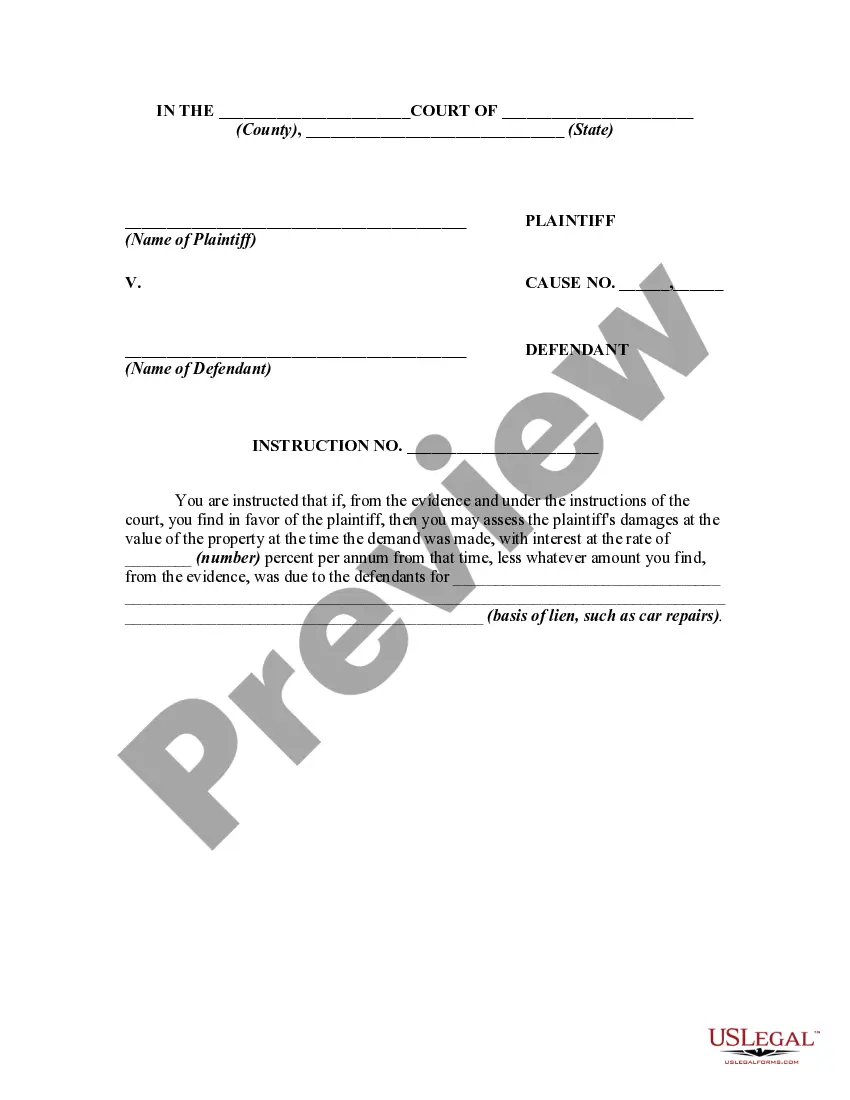
A plaintiff is entitled to damages equal to the full value of the chattel at the time and place of conversion. The measure of damages in conversion is the fair market value of the property at the time and place of the conversion.
In fact, a lawsuit for conversion is not only done with the purpose of returning the property but rather to sue for money damages to compensate the plaintiff for the loss of the personal property or its use for a certain period of time.
For example, if I ask you to hold $500 in cash with the expectation that this money will be returned to me when I ask for it and it is not, a claim for conversion of money arises.
Damages for conversion are the awards someone seeks in a conversion case. They are compensation for actual losses of personal property. Conversion is depriving an individual's rights to use or possess his or her personal property.
For example, a person taking, selling or modifying goods that belong to another (therefore depriving the other person of their right to possess the goods) is conversion. The defendant does not necessarily need to be aware that the goods belong to someone else or intend to challenge the owner's right to possession.